Hologram free using only a rotary polisher?

Your dust article is quite interesting and anyone who has owned a car and took care of it for any length of time, completely understands this. So this begs the question: Wouldn't these water activated sealants like McKee's Hydro Blue of Hydro Graphene (or the many others available like CarPro's, etc) prevent the static since you aren't wiping it on by hand, be the best choice to keep dusting down? Then drying with filtered blown air? You completely eliminate the hand wiping.

Your idea or wishful thinking is a great idea on paper, the problem is anything you do to eliminate static electricity (from the world) is temporary.

It's the physics of the material and the world we live in.


:)
 
So true. Maybe this should be a different thread since the topic is changing, but I think it is a question worth a very short response. What is your view on these detailers who are big proponents of drying the cars after wash with a leaf blower? Never sounded right to me given the lack of filtered air supply and blowing dust and other particulates at 150-180 mph into the paint. The environment can change dramatically as well. From a highly filtered air specialty garage to being outside. I imagine those two environments make a huge difference. I know here in San Diego, we have a lot of dry sandy natural surfaces throughout the wild landscape, not just by the beach. It is particularly grainy and does a job on your windshield over the years. Can't imagine that wouldn't be detrimental to the paint coming through a leaf blower at such force.
 
So true. Maybe this should be a different thread since the topic is changing, but I think it is a question worth a very short response. What is your view on these detailers who are big proponents of drying the cars after wash with a leaf blower? Never sounded right to me given the lack of filtered air supply and blowing dust and other particulates at 150-180 mph into the paint. The environment can change dramatically as well. From a highly filtered air specialty garage to being outside. I imagine those two environments make a huge difference.

I think you nailed it - what you do depends on the environment you're doing it in.

Also - the type of leaf blower and just as important - are you doing, A Prep Wash or a Maintenance Wash.


I know here in San Diego, we have a lot of dry sandy natural surfaces throughout the wild landscape, not just by the beach. It is particularly grainy and does a job on your windshield over the years. Can't imagine that wouldn't be detrimental to the paint coming through a leaf blower at such force.

I lived in Apple Valley, California, the Mojave Desert for those reading this that might not know. It's windy and sanding in the desert.

For a Prep Wash, I use a EGO 650 for blowing out cracks, crevices, wheels, lug barrels, fuel doors, grills, pretty much anything where water pools and is not obvious.

It's useless in most cases to try to blow water off a car that you're doing a Prep Wash too because the reason you're doing a Prep Wash is because the car NEEDS to be detailed and thus it's not beading water and thus water won't blow off easily.

For a Maintenance Wash - a leaf blow solves one problem but "could" include the problems you listed, just depends on where you live. If the car in question has a good coat of wax, sealant or coating - then water will simply blast off and this enables you to dry the car without "touching" the paint. I think I touched on the topic of "touching" the paint already in this thread.

The biggest problem most people have is they don't have a process in place to keep the things that touch paint from becoming contaminated. Thus the things that touch paint become contaminated. And this leads to swirls and scratches.

From this write-up

How to apply the McKee's 37 Graphene Deep Gloss Ceramic Sealant by hand or machine for a show car finish


Orange Brushed Edgeless 365 Premium Microfiber Terry Towel​

Orange Brushed Edgeless 365 Premium Microfiber Terry Towel at AutoForge.net Mike Phillips

Besides the McKee's 37 Graphene Deep Gloss Ceramic Sealant, you'll also need a lot of quality microfiber towels. I'm a HUGE fan of short pile or short nap towels because it is my opinion and experience that these types of towels not only work great but just as important are dramatically easier to prevent from becoming contaminated over time.
And, when you do discover some type of contaminant in the weave of the towel, with a short pile nap, it's much easier to pick the contaminant out to save the towel and prevent you from putting scratches back into the paint.

Inspecting Microfiber Towels​

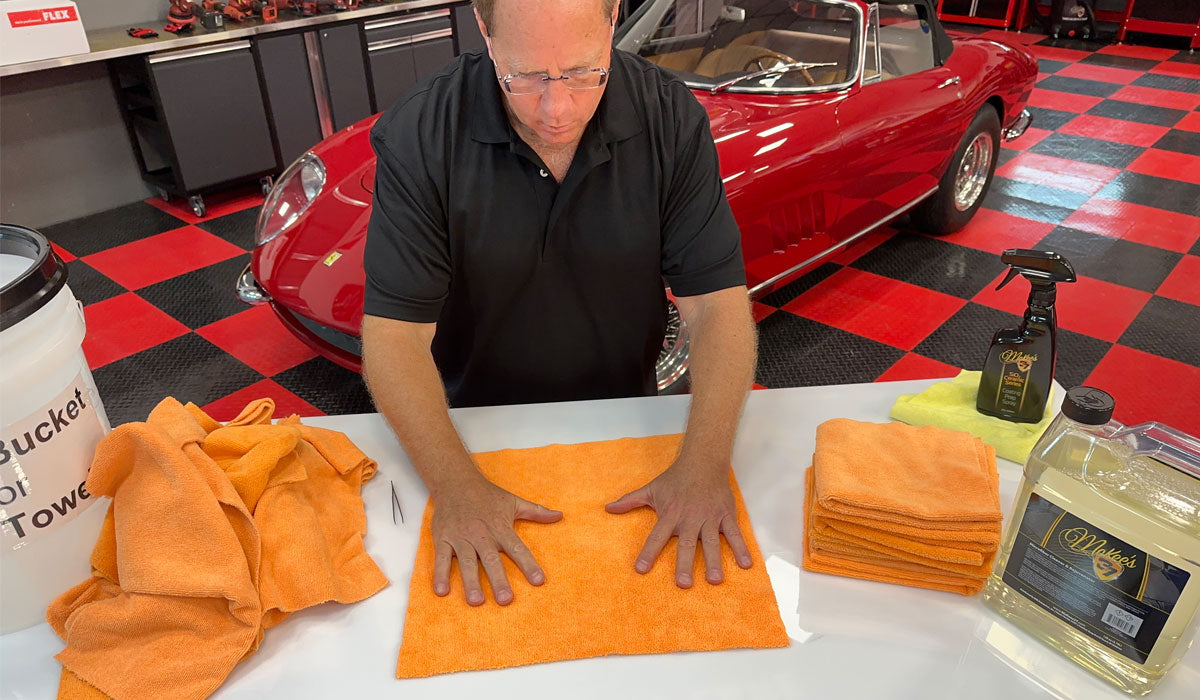
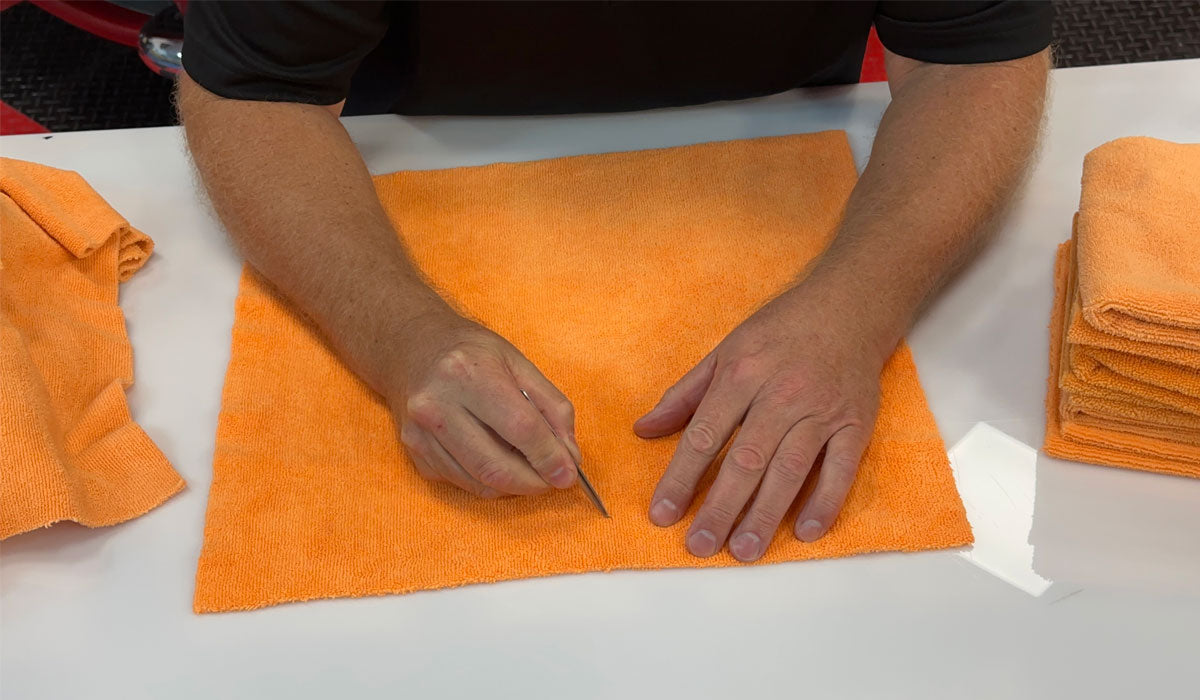
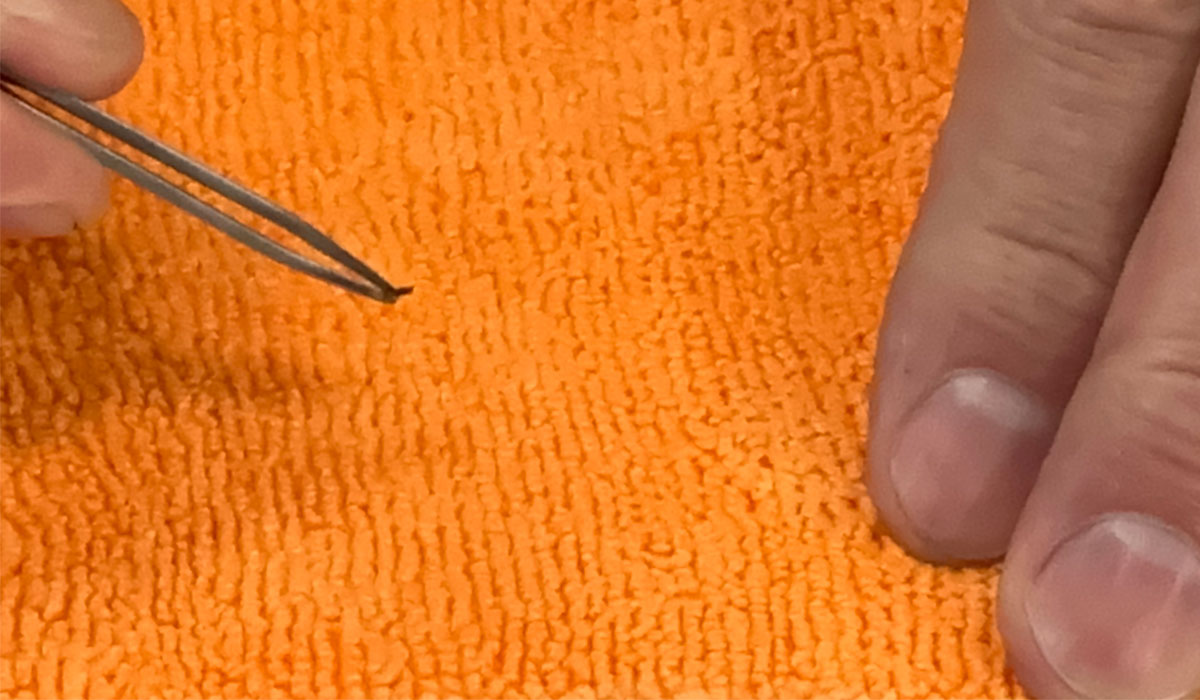
I inspect my towels BEFORE washing and AFTER they come out of the dryer. I visually inspect them with my eyes and also feel them with my hands and anytime I find any type of particulate - if I can't remove the particulate with my fingers I keep a pair of tweezers handy and pluck the particulate out with the tweezers.
If I cannot remove the offending particulate with my fingers or a set of tweezers - I remove the towel from my microfiber towel collection and use it for some other function like wiping excess tire dressing off of tire sidewalls. I never use contaminated towels on paint or plastic surfaces, like Piano Plastic trim on modern cars.
Inspecting microfiber towels with tweezers Mike Phillips Autoforge.net

Inspecting microfiber towels with tweezers Mike Phillips Autoforge.net


The little things are the big things...
I don't know what this tiny black particulate is but I know I don't want to rub it over the paint of the Ferrari behind me or ANY car.
Inspecting microfiber towels with tweezers Mike Phillips Autoforge.net


If you can't see it - you can't remove it and this means you're going to RUB it, (the contaminant embedded in the nap of the towel), over your car's paint.
At this time, my favorite towel is the Orange Brushed Edgeless 365 Premium Microfiber Terry Towel.
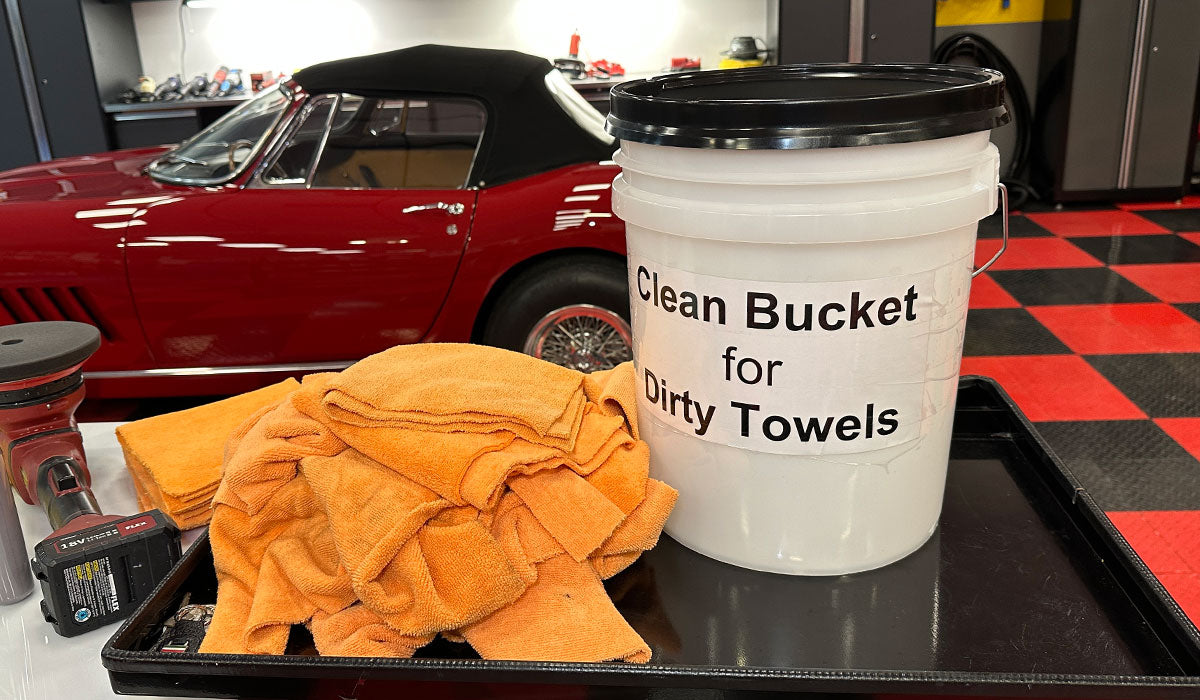
My Clean Bucket for Dirty Towels was empty when I started working on the Ferrari. As I worked through the various steps, after using a towel I would place it into the bucket. At the end of the detail job, I poured the towels out of the bucket onto a clean table, (to keep them from becoming contaminated), and counted them.


Me? I never like to get OCD about anything but I do about keeping my microfiber tools uncontaminated because to not do so creates a lot more work down the road.


Good discussion Bill.


:)
 
For a Prep Wash, I use a EGO 650 for blowing out cracks, crevices, wheels, lug barrels, fuel doors, grills, pretty much anything where water pools and is not obvious.

It's useless in most cases to try to blow water off a car that you're doing a Prep Wash too because the reason you're doing a Prep Wash is because the car NEEDS to be detailed and thus it's not beading water and thus water won't blow off easily.

Mike, did you mean to say for a "Maintenance Wash, I use a EGO 650 ,,," in that first line? Because you then go on to say in second paragraph that "it is useless to try and blow off for a Prep Wash ........"

I imagine on a ceramic coating the blowing is also kept to a minimum as it blows off so fast. Not using a leaf blower, I have found that a light spray of McKee's N914 works pretty well for a drying agent and I never wipe the towel across the paint. I just lay it down and blot it. A great drying towel will suck up the water with no problem and my process yields no swirls. I then use the MetroVac blower for all the cracks. Takes more time with that unit, but it is better than time spent polishing out swirls and/or blowing sandy particulates over my car at high speeds.

Look forward to meeting you and Nick sometime within the next year as I hope to get to your classes.

Thanks for all your time and a smidgeon of your knowledge. Very helpful.

All the Best
 
Mike, did you mean to say for a "Maintenance Wash, I use a EGO 650 ,,," in that first line? Because you then go on to say in second paragraph that "it is useless to try and blow off for a Prep Wash ........"

Yes. A maintenance wash is for cars that are in great shape. By great shape I mean they have some kind of wax, sealant or coating that beads-up water thus the water will blow off.

A car in bad or neglected condition, normally means it does NOT have a good coat of wax, sealant or some type of coating thus no water beading thus the water will not blow off. This is why I only use compressed air to blow out cracks and crevices.

I do a LOT of Prep Washes. In fact, last week I just finished typing out a very detailed chapter on how to do a Prep Wash for my new upcoming how-to book.

I rarely do a maintenance wash unless it's my own car. I detail cars professionally. When someone brings me a car to detail it's not in GREAT shape - it's in neglected shape. No care means now wax, no anything thus no water beading thus compressed air would be useless to dry standing water off body panels.

In about 30 minutes, I'm going outside to do a wash on a 1935 Ford Pickup Streetrod. Super high-end build.

full


She's really dirty. I tried to take a picture of the film of dirt on the roof but I'm not sure it can be seen in a picture. Normally I don't wash cars like this but she's really dirt, she's really complicated to wash and the OWNER says he washes it all the time. So if he washes it I'm happy to wash it. But normally, as a professional courtesy to any classic, muscle car or streetrod, that has already been restored, I don't introduce running water into places that rust can form. My own code of detailing ethics.

Tomorrow night I start sanding this,

1967 Mustang California Special - Dry Sand - Cut & Buff + Graphene Ceramic Coat Project

full


I practice what I preach. Some "instructors" do, some don't. I do.


I imagine on a ceramic coating the blowing is also kept to a minimum as it blows off so fast. Not using a leaf blower, I have found that a light spray of McKee's N914 works pretty well for a drying agent and I never wipe the towel across the paint. I just lay it down and blot it. A great drying towel will suck up the water with no problem and my process yields no swirls. I then use the MetroVac blower for all the cracks. Takes more time with that unit, but it is better than time spent polishing out swirls and/or blowing sandy particulates over my car at high speeds.

The above is a great maintenance process.


Look forward to meeting you and Nick sometime within the next year as I hope to get to your classes.

Thanks for all your time and a smidgeon of your knowledge. Very helpful.

All the Best

Always glad to help...


-Mike
 
Last edited:
But normally, as a professional courtesy to any classic, muscle car or streetrod, that has already been restored, I don't introduce running water into places that rust can form. My own code of detailing ethics.

Interesting you say you "don't introduce running water into places that rust can form" on those cars. So waterless or rinseless primarily for washing those cars? I know you used waterless for the '67 Ferrari 275GTB, but I assume it came to you pretty clean already, or is that all you use for these collector cars?

And that Mustang already looks done :)
 
Back
Top