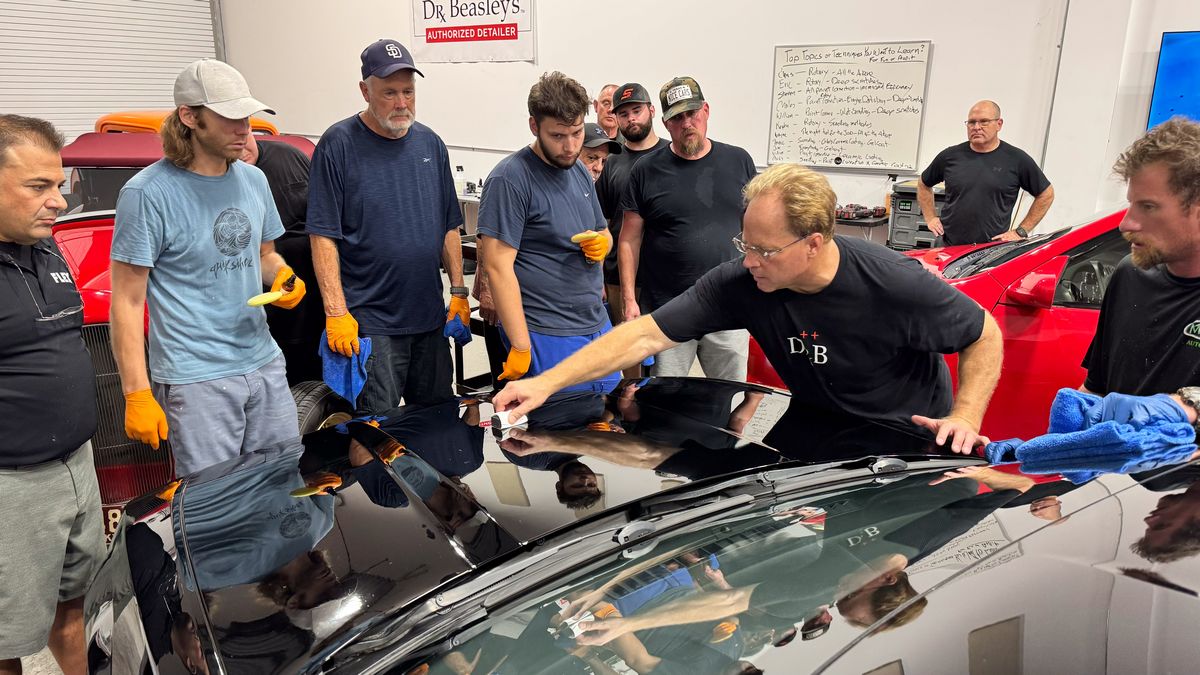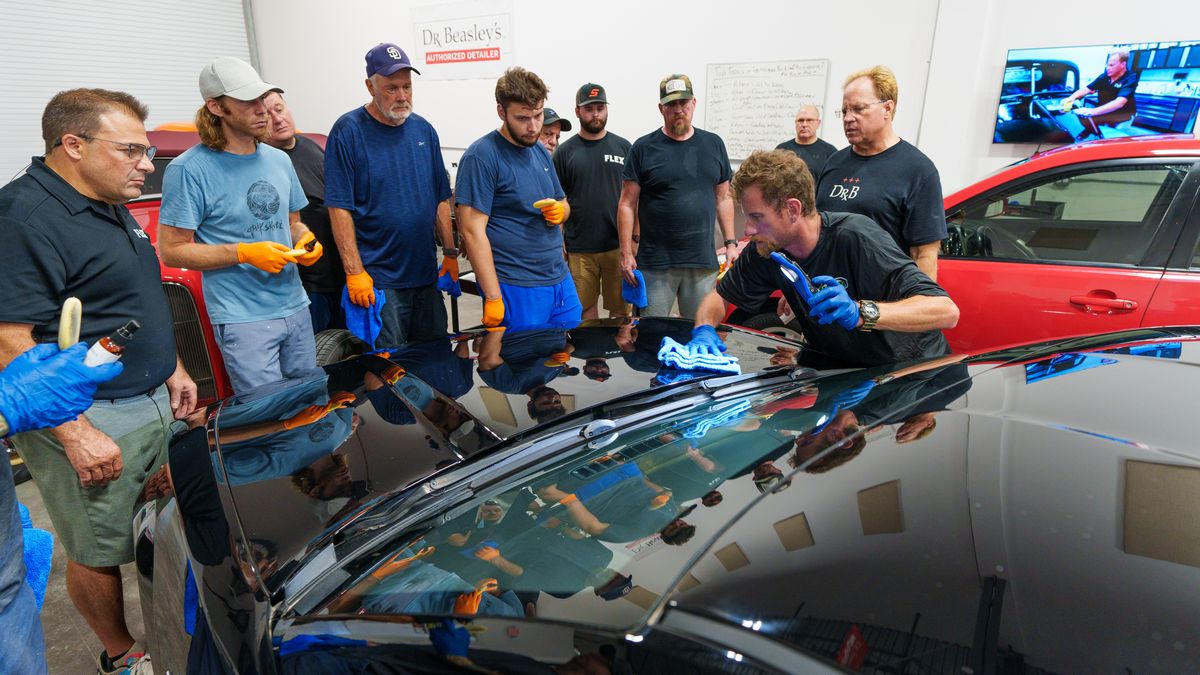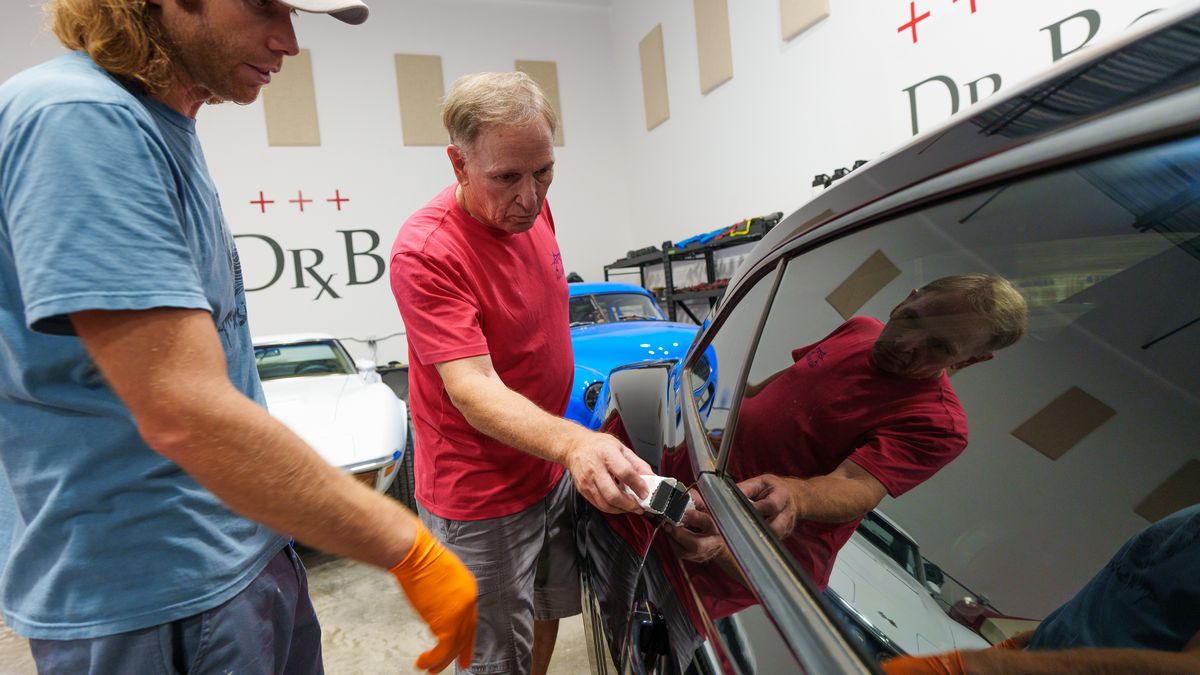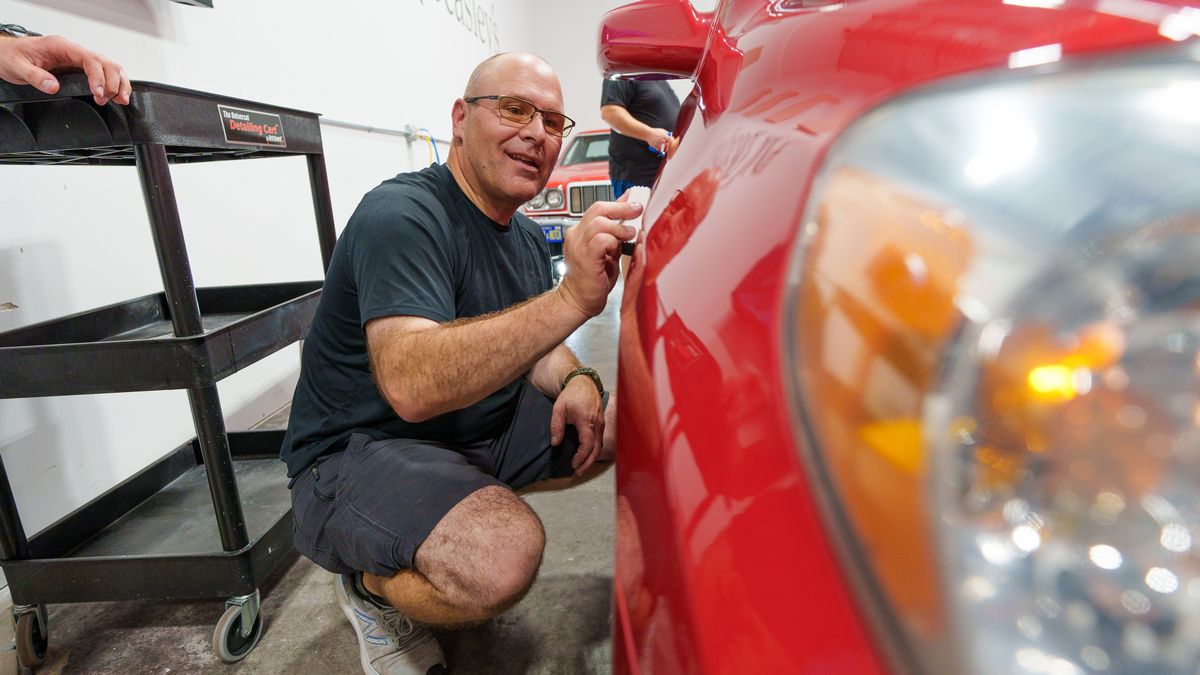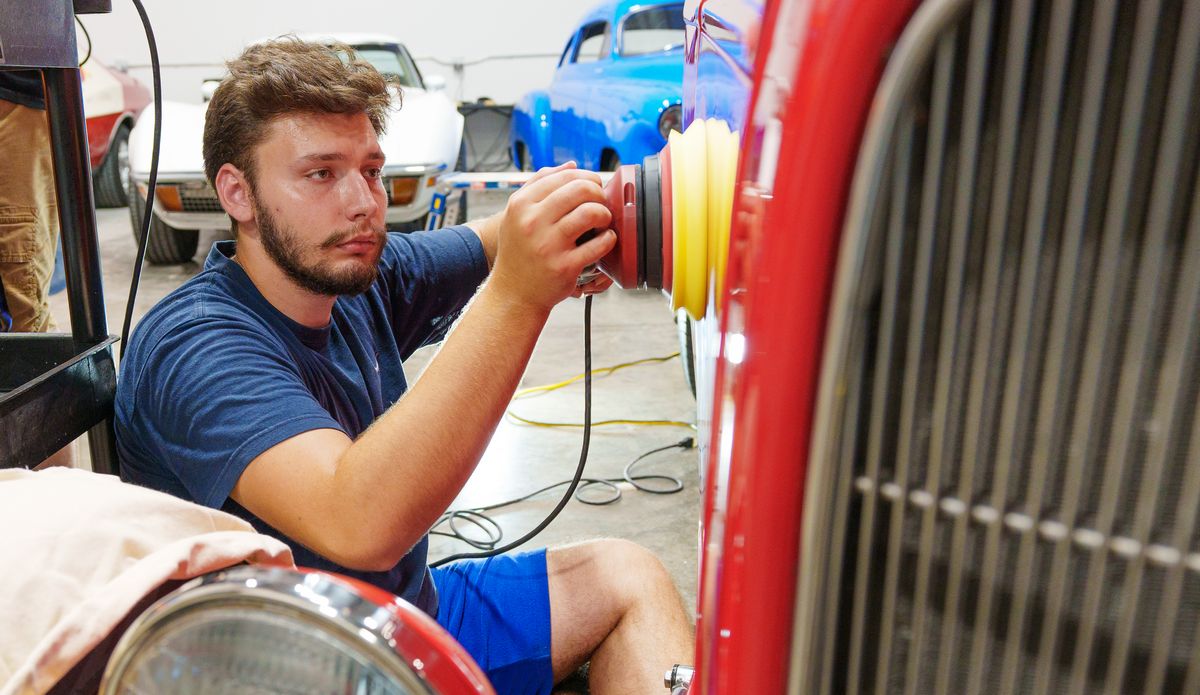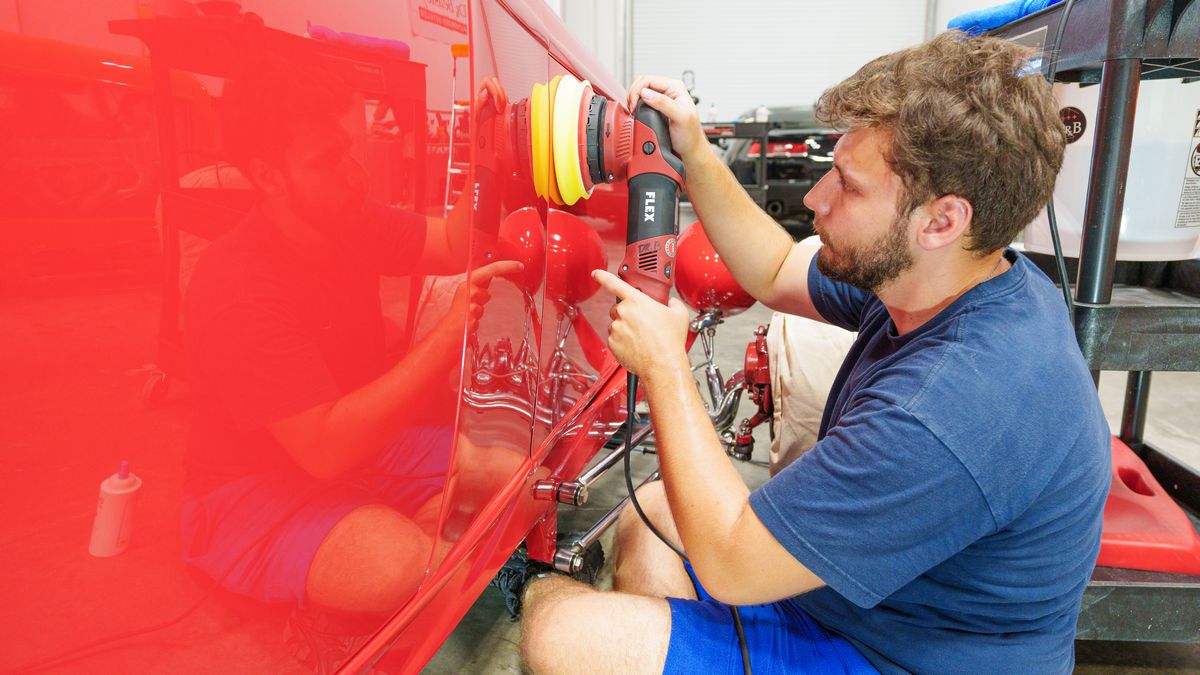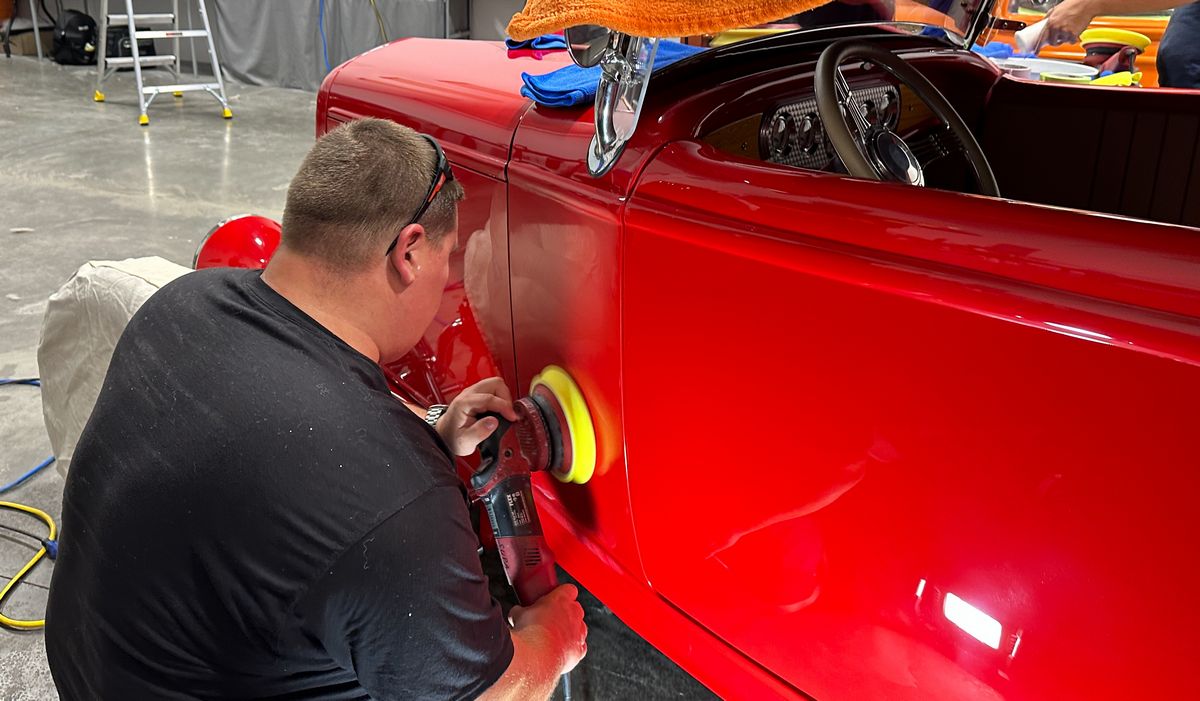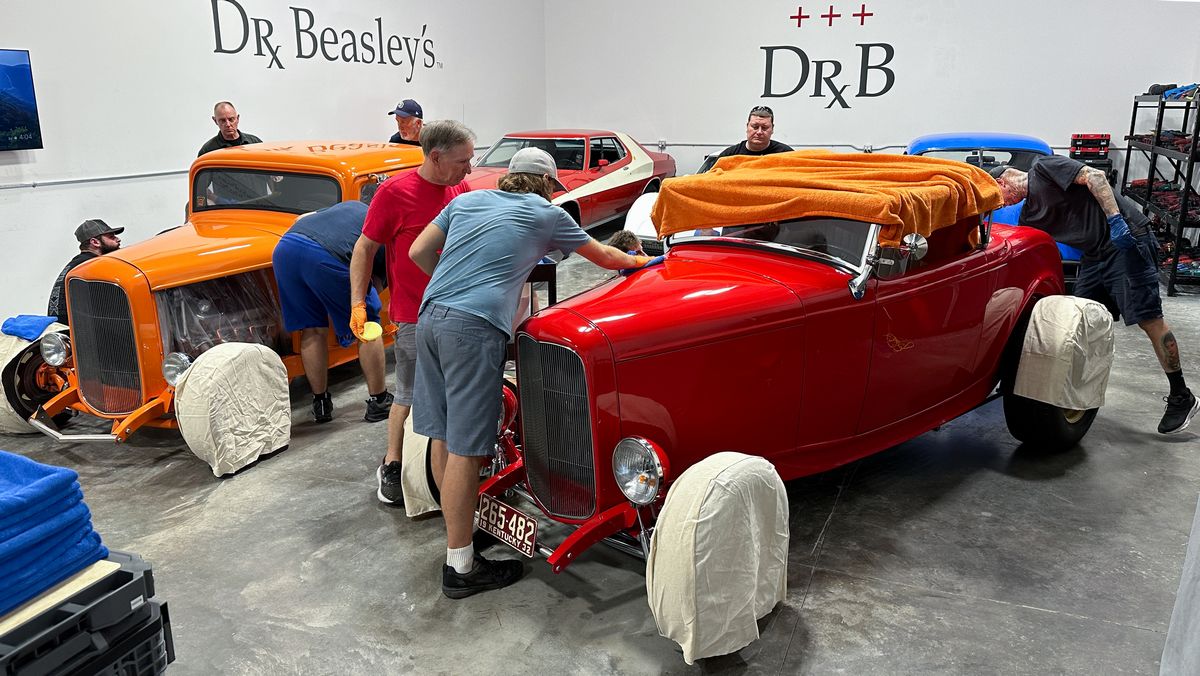

587 Pictures - No Chairs! No Sitting! September 2024 Detailing Class with Mike Phillips

Mike Phillips

Administrator
Staff member
Joined
May 21, 2021
Messages
2,530
Reaction score
1,496
Points
113
Location
Stuart, Florida
Website
themikephillipsforum.com
587 Pictures - No Chairs! No Sitting! September 2024 Detailing Class with Mike Phillips


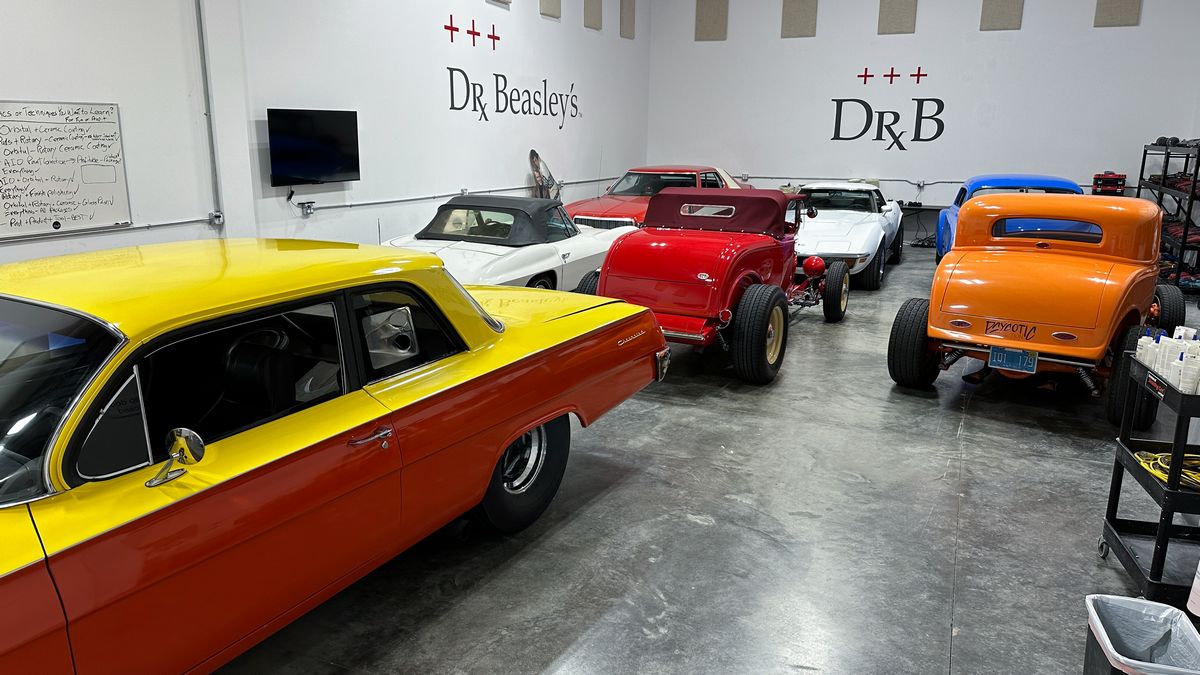
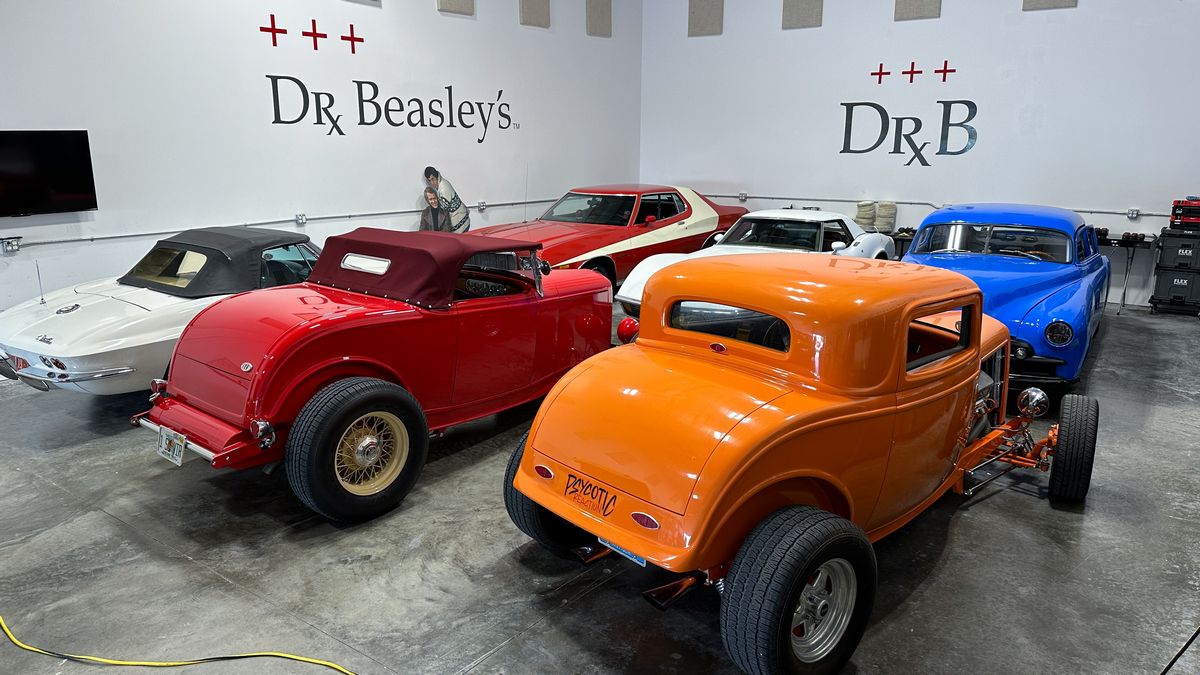
Full Garage!
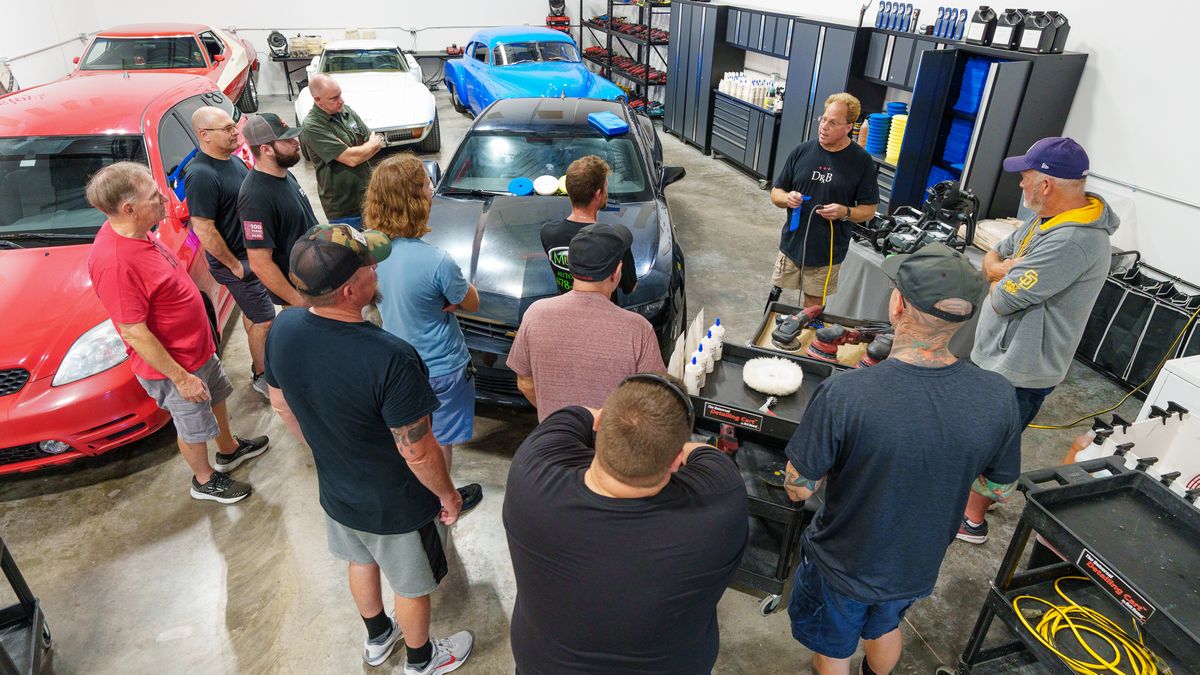
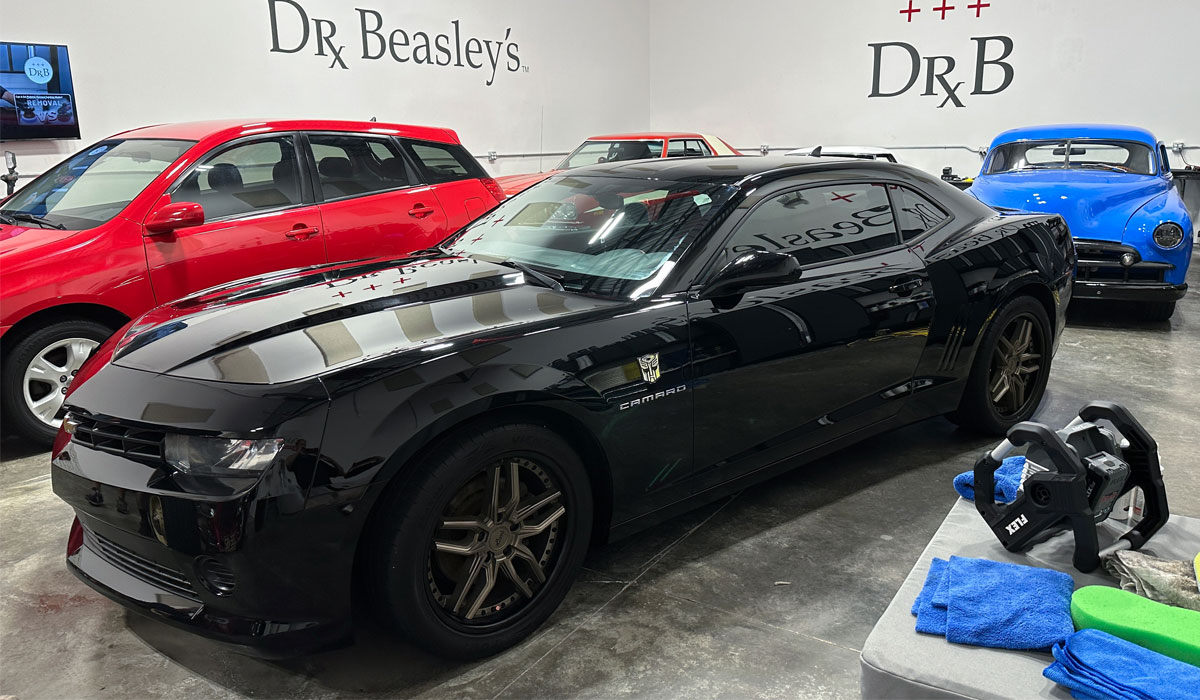
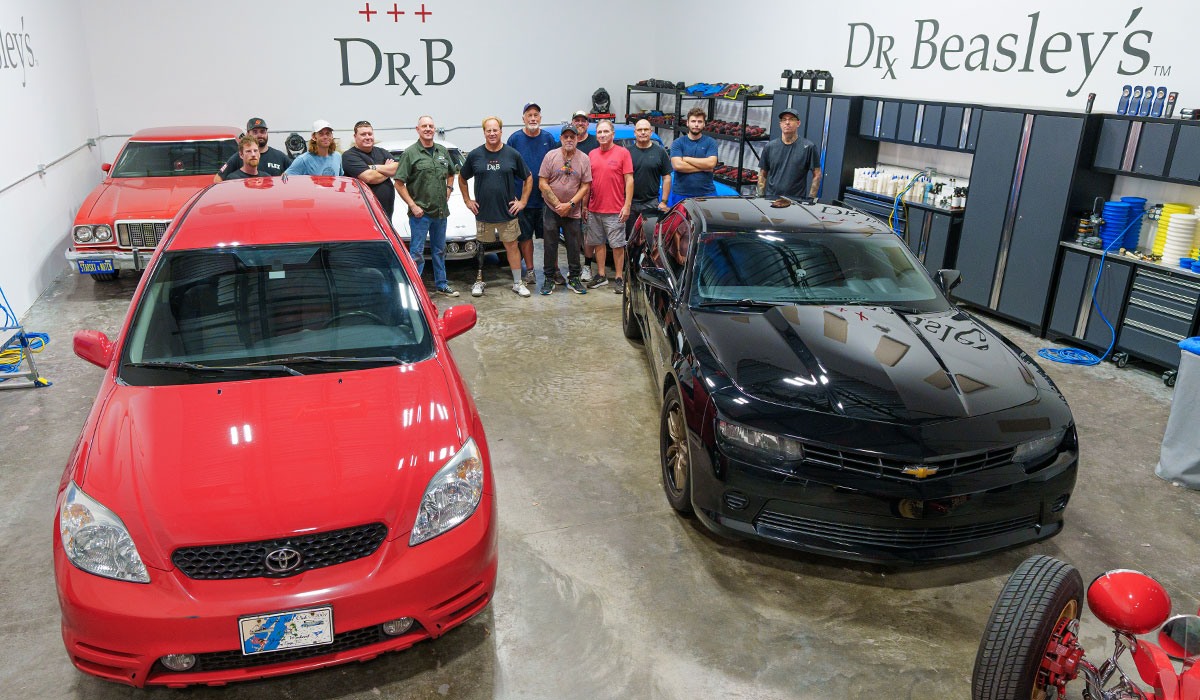
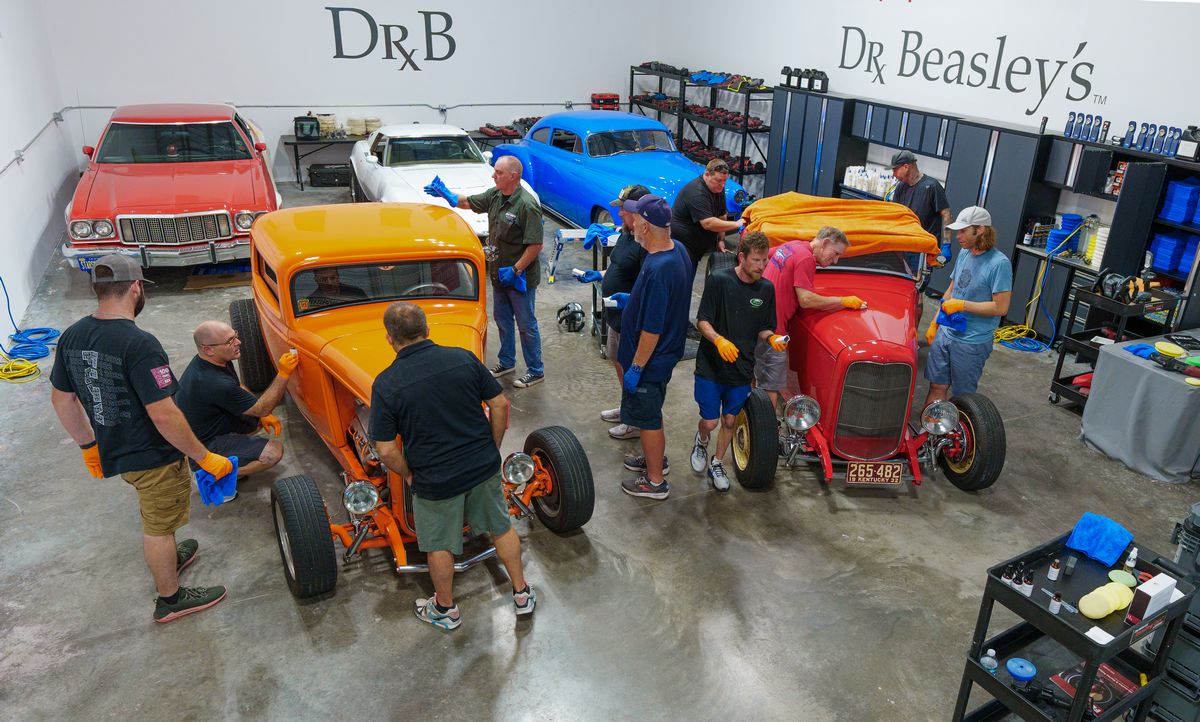
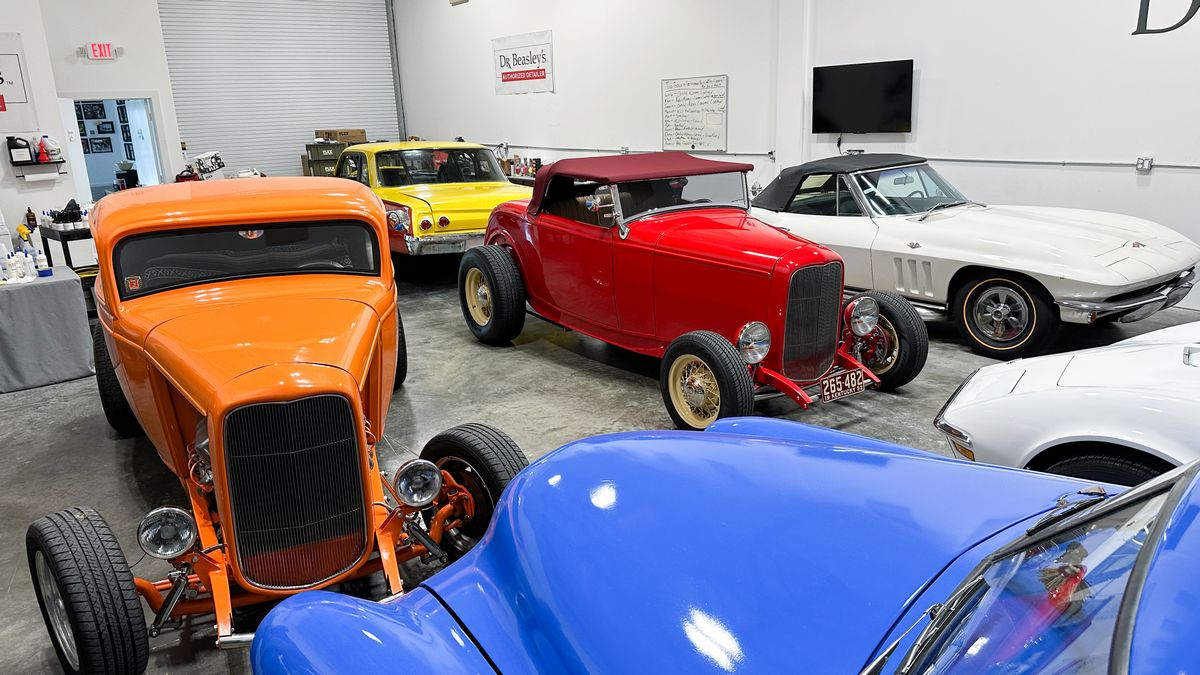
I took the pictures below the night before the class. You'll see 7 cars in the garage, and there's 2 more cars parked outside for a total of 9 training cars for the first 2-days of this 3-day class. You'll also see the 24' Sea Hunt Center Console detailed on the 3rd day.

If you're looking to take the most hands-on car or boat detailing class, these are the classes to take. No one else shows you the actual cars and boats you'll be training on BEFORE you pay for the class. I always do this so you can have confidence, it's going to be a GREAT class.

And while this class is over, future class dates and topics can be found here,

Future Detailing Classes for 2025


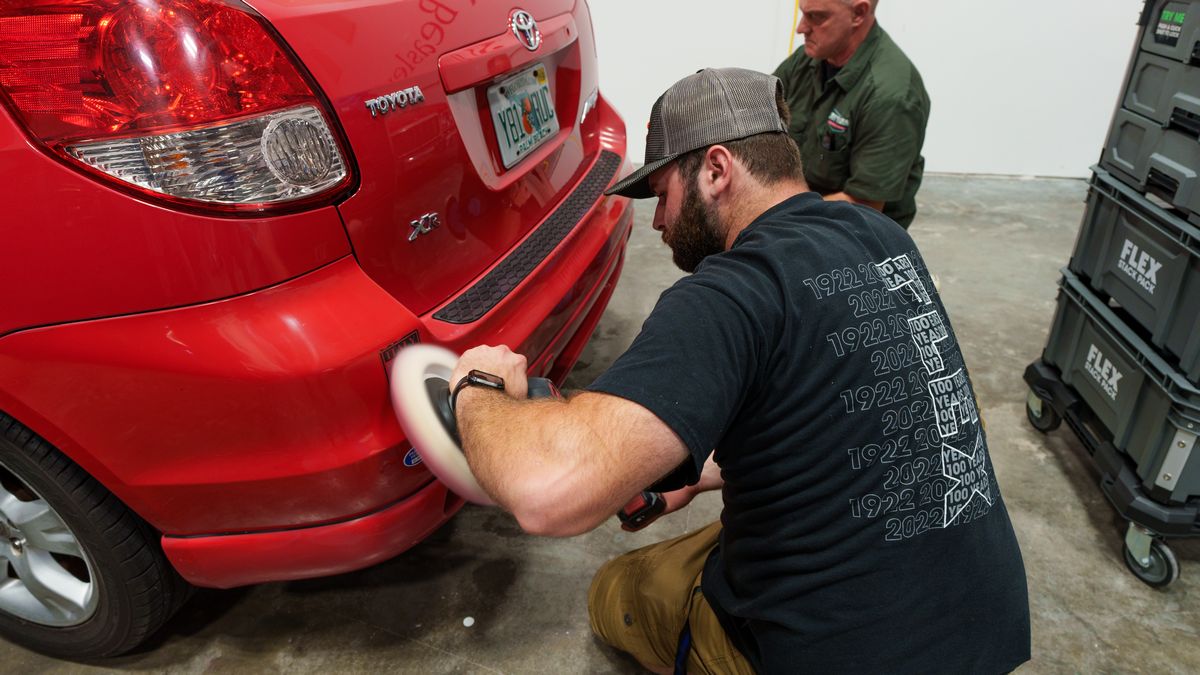
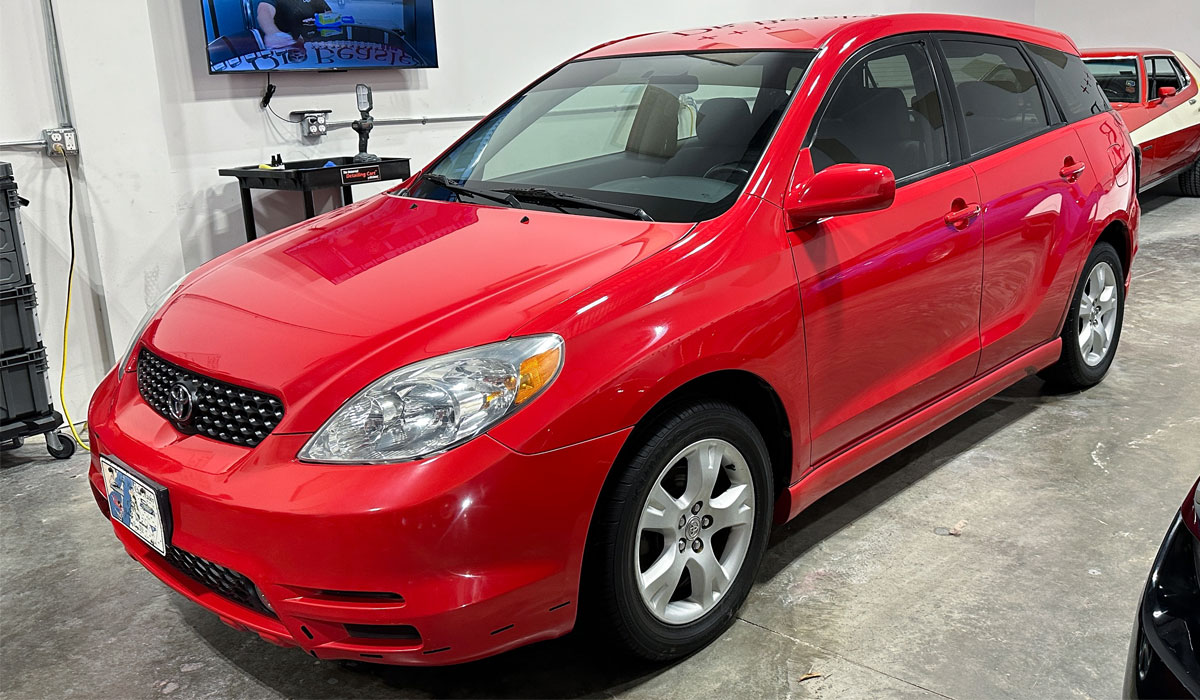
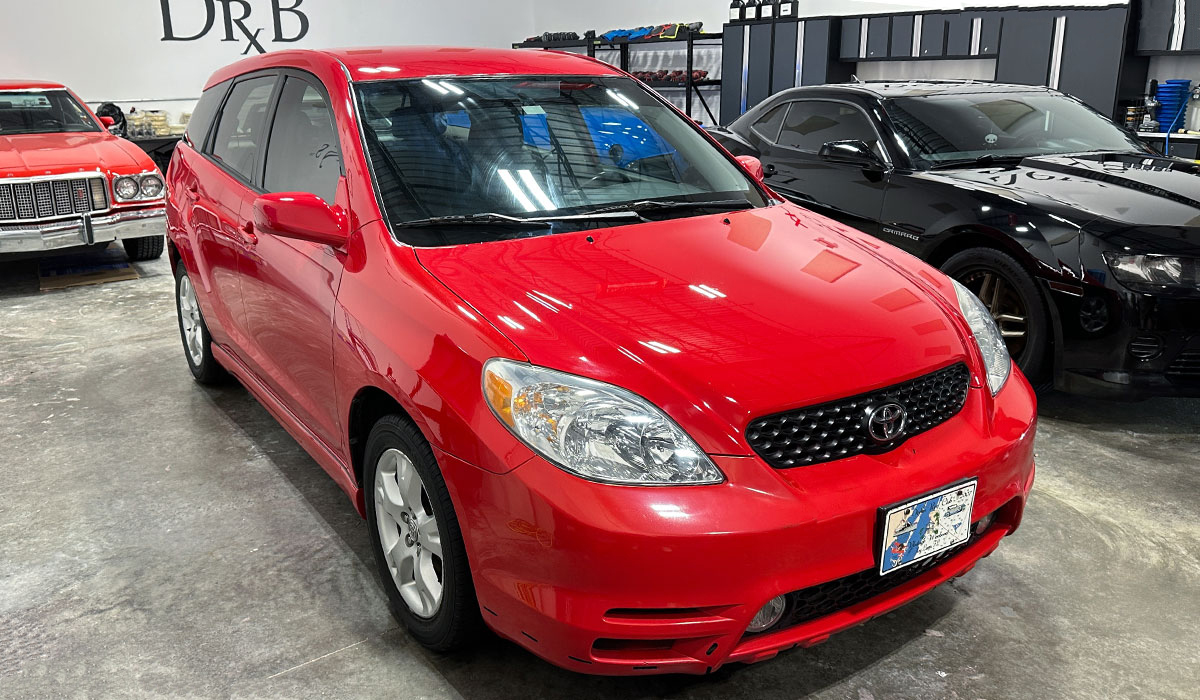
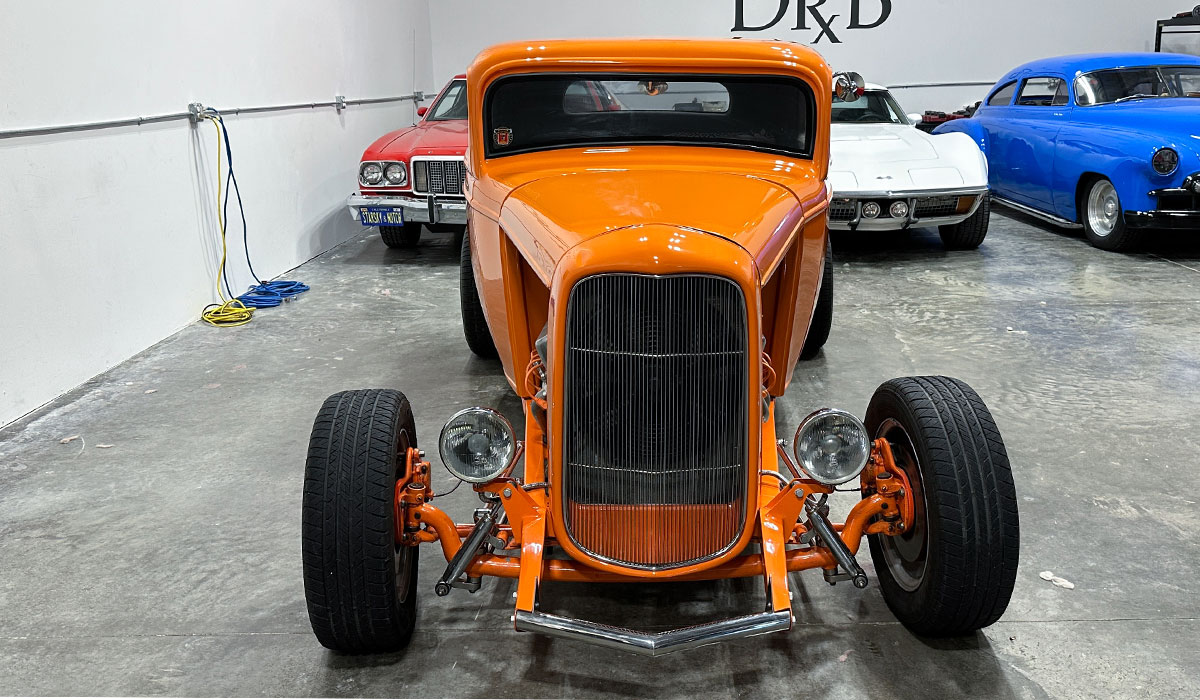
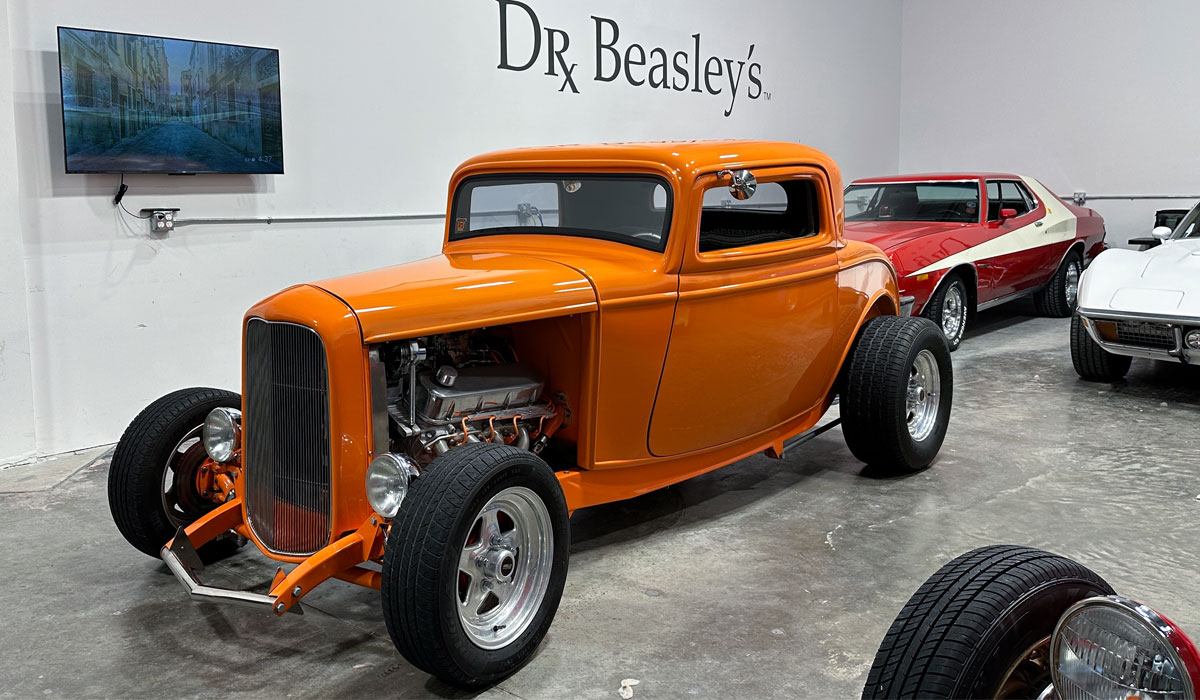
Here's 7 of the cars, with 2 more parked outside, the 2020 Camaro and the 2013 Toyota Matrix.
full


full


full


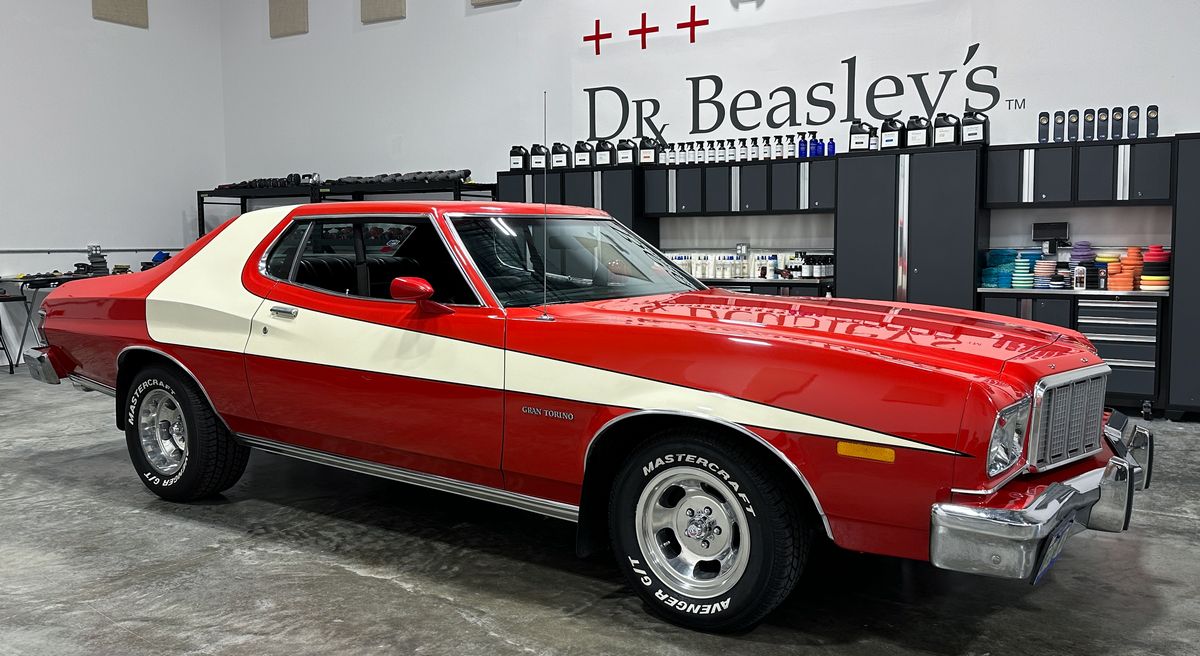
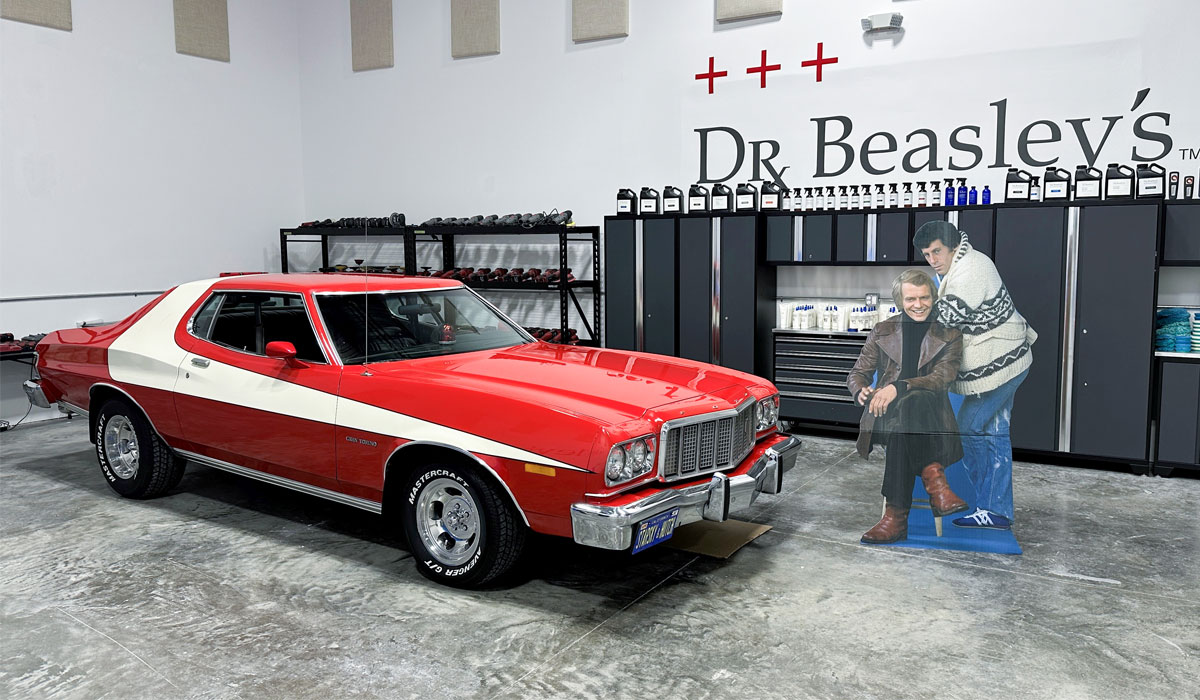
I've never seen any other detailing class with a real Starsky & Hutch Police Car for the students to train on.
full


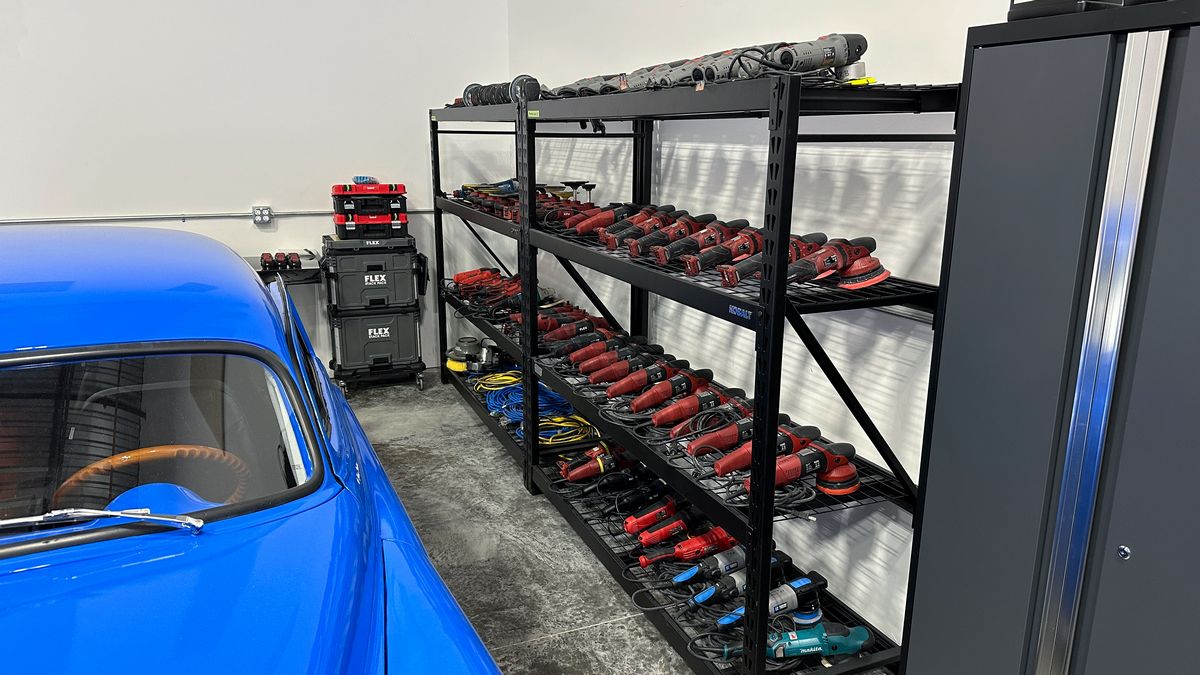
More than enough tools and the power to run them.
full


Here's the two cars that were parked outside as there just wasn't enough room to bring them into the garage.

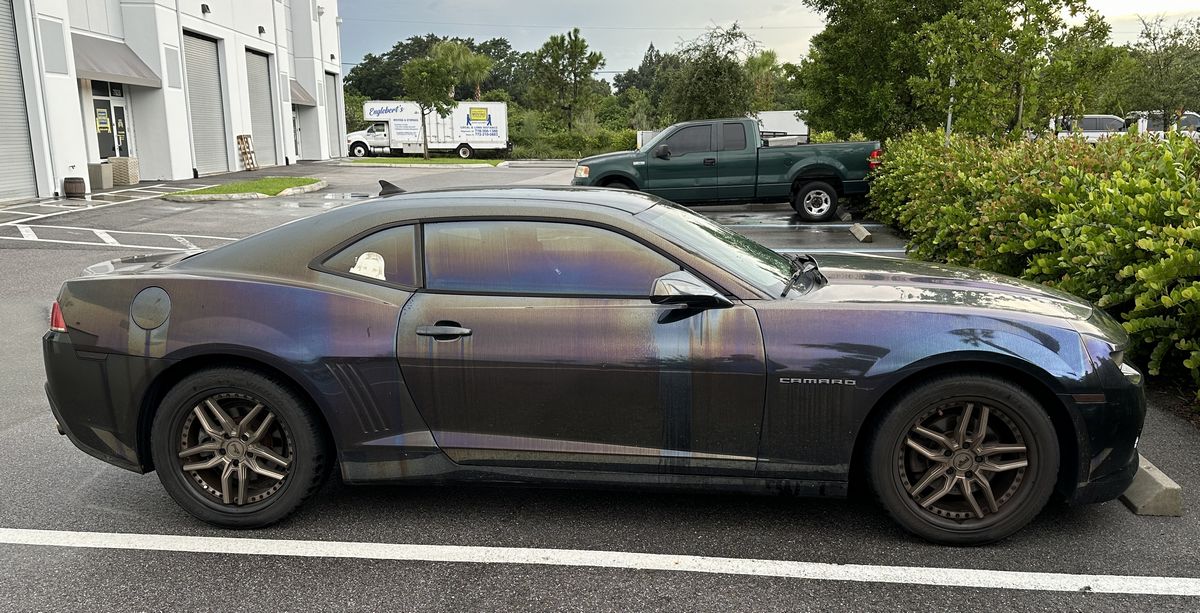
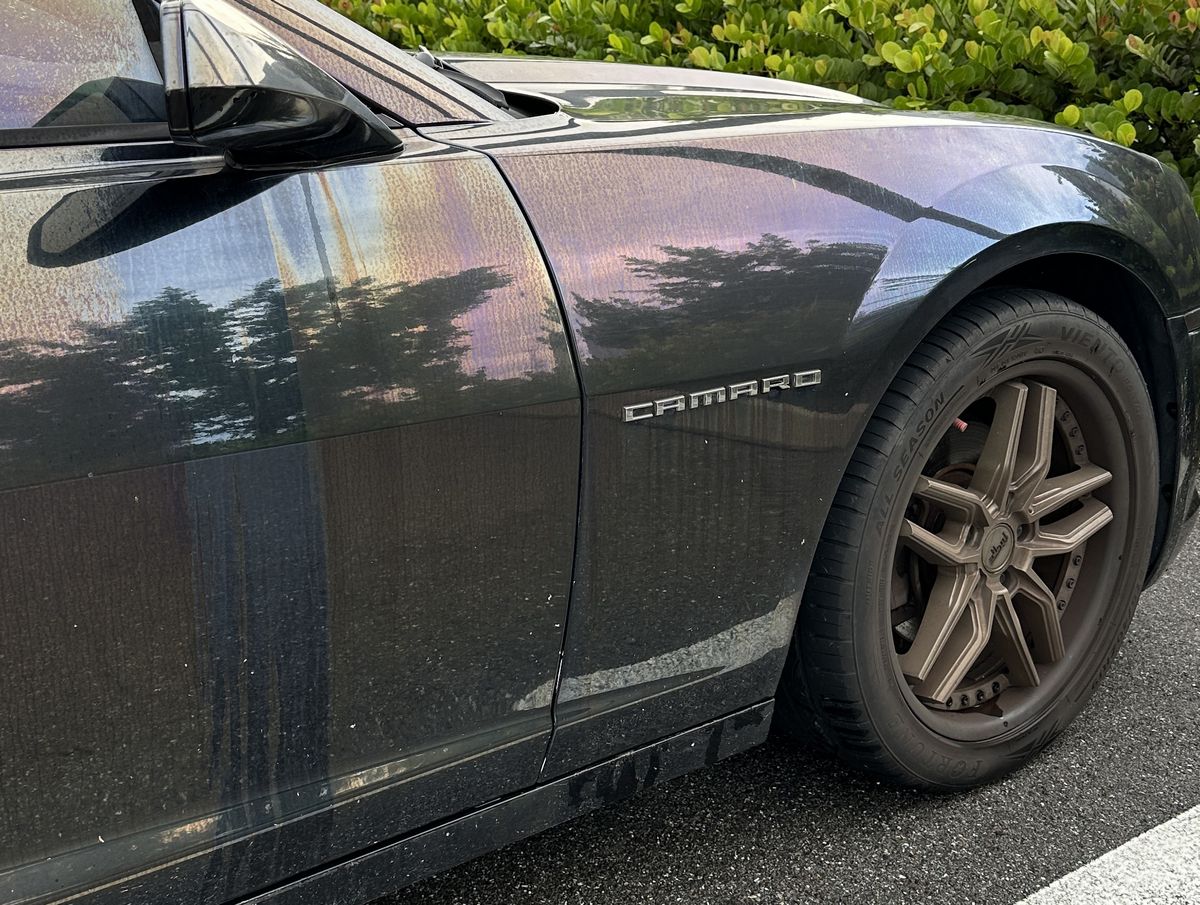
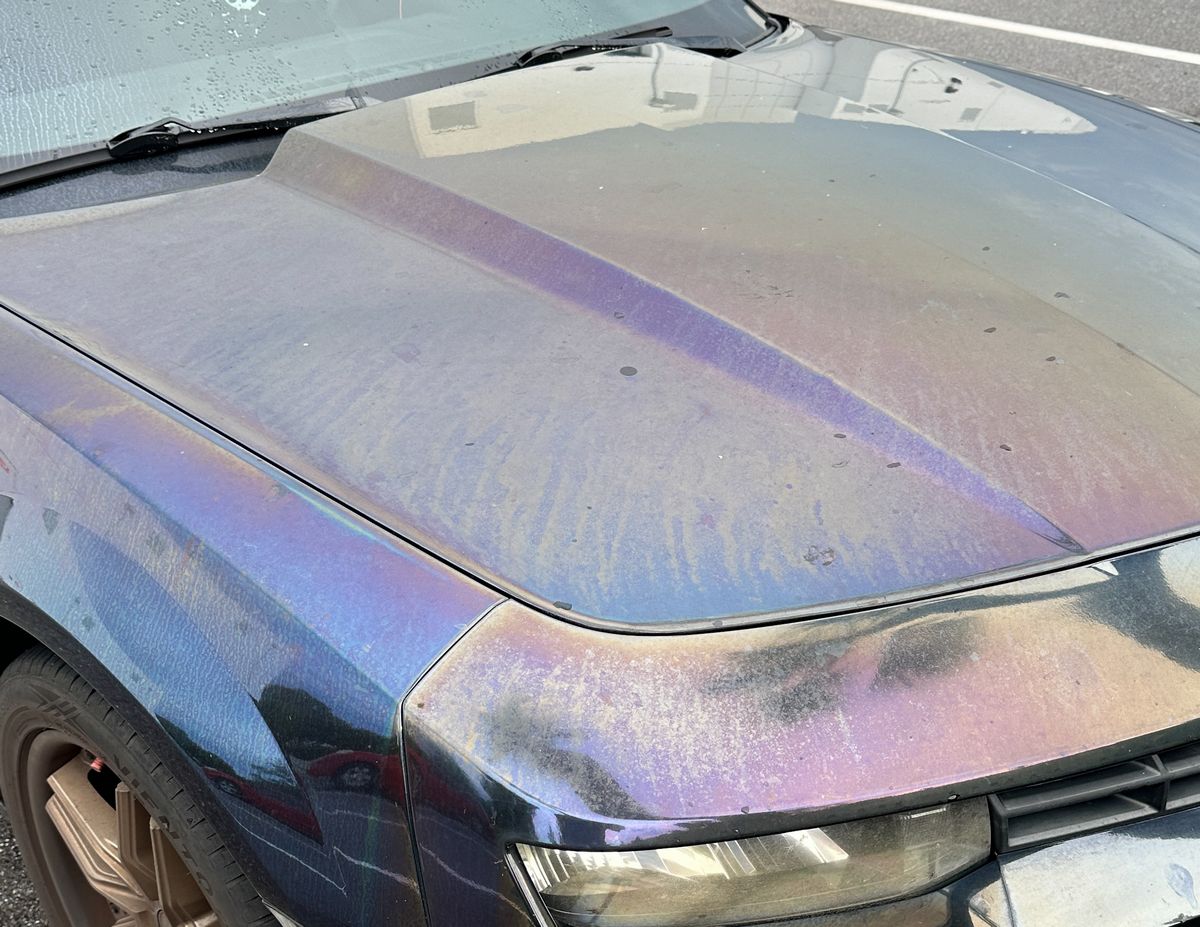
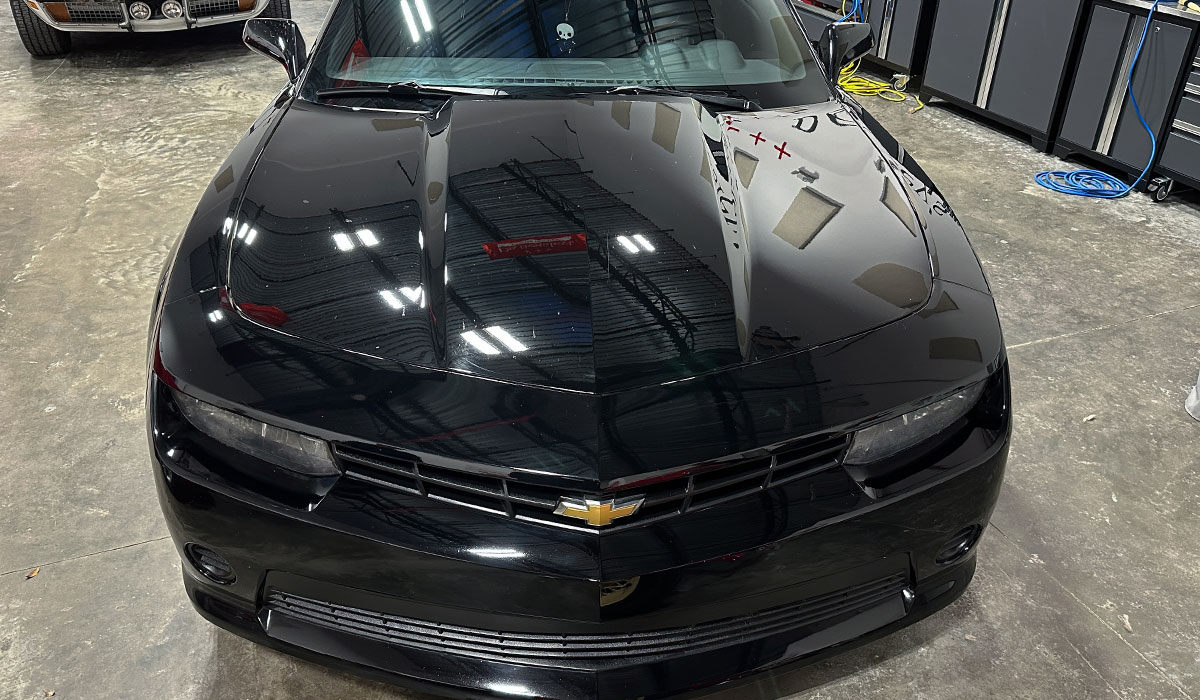
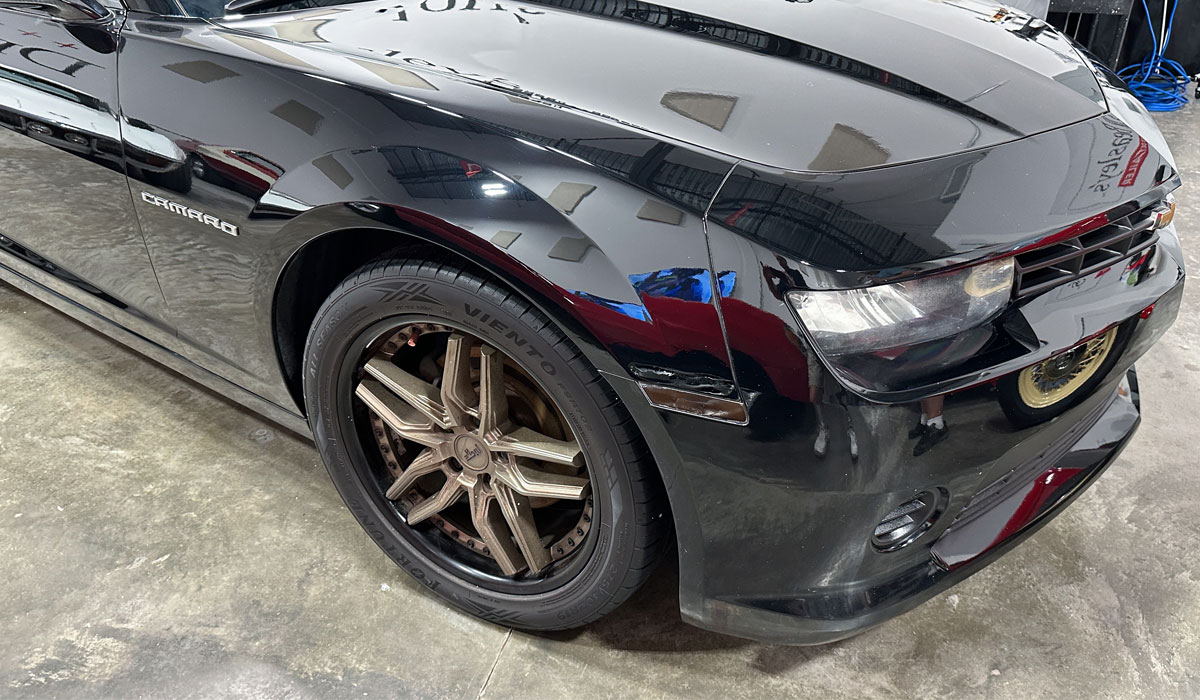
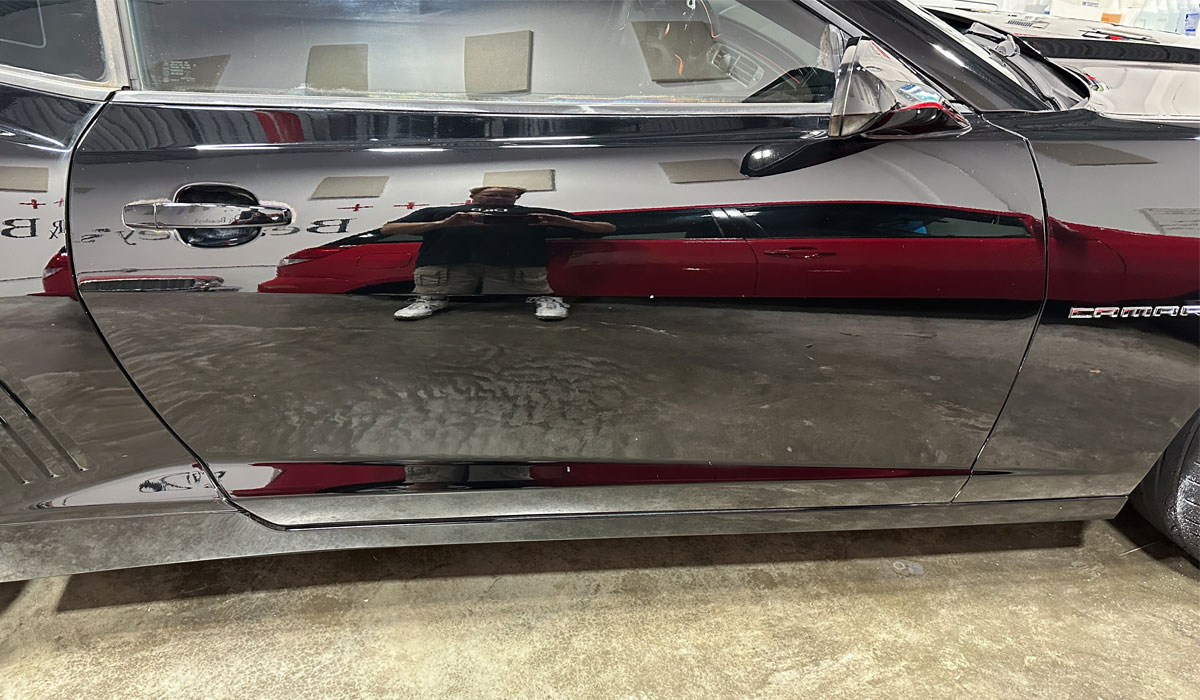
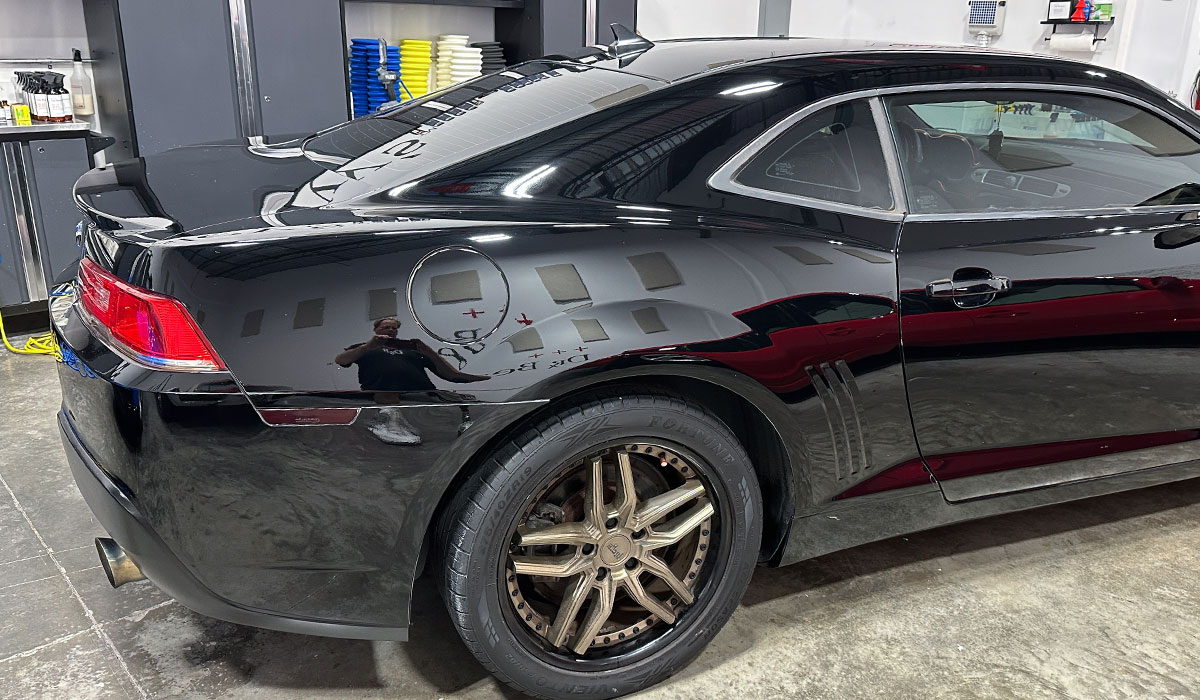
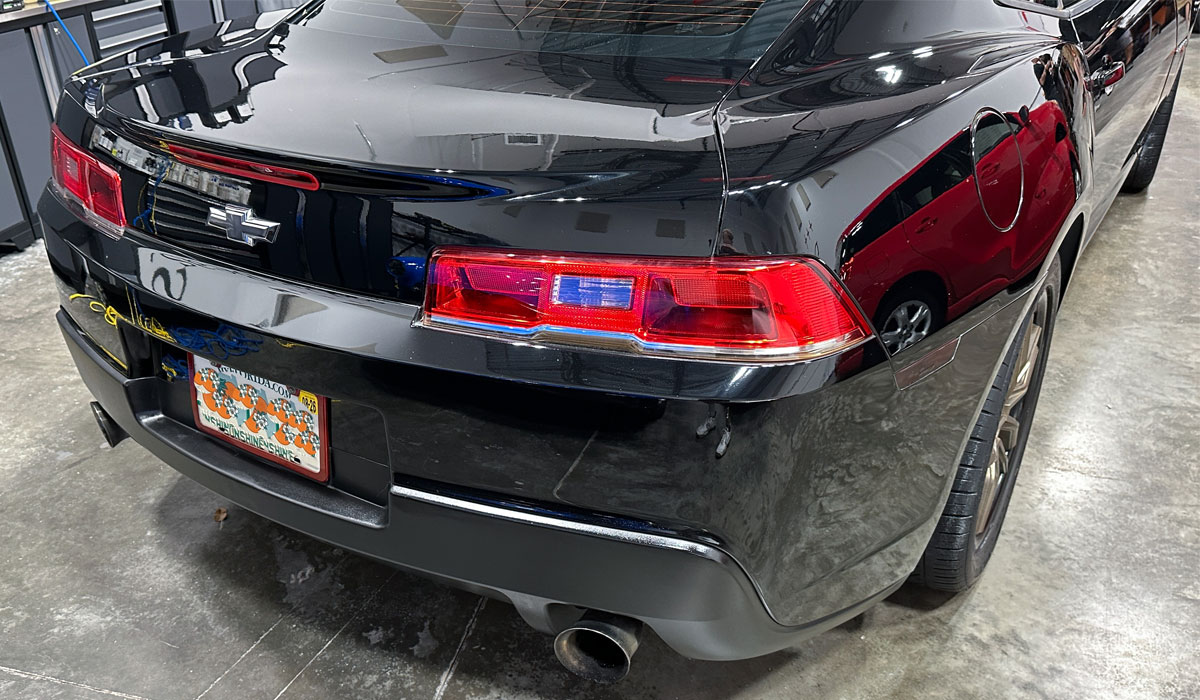
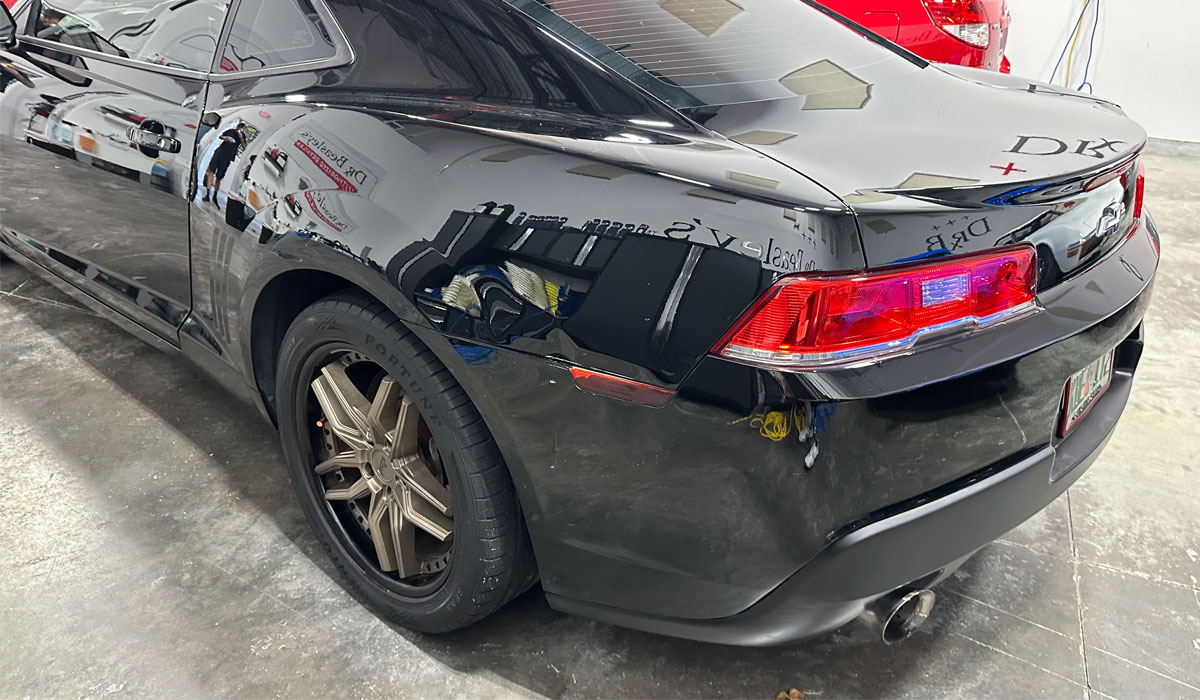
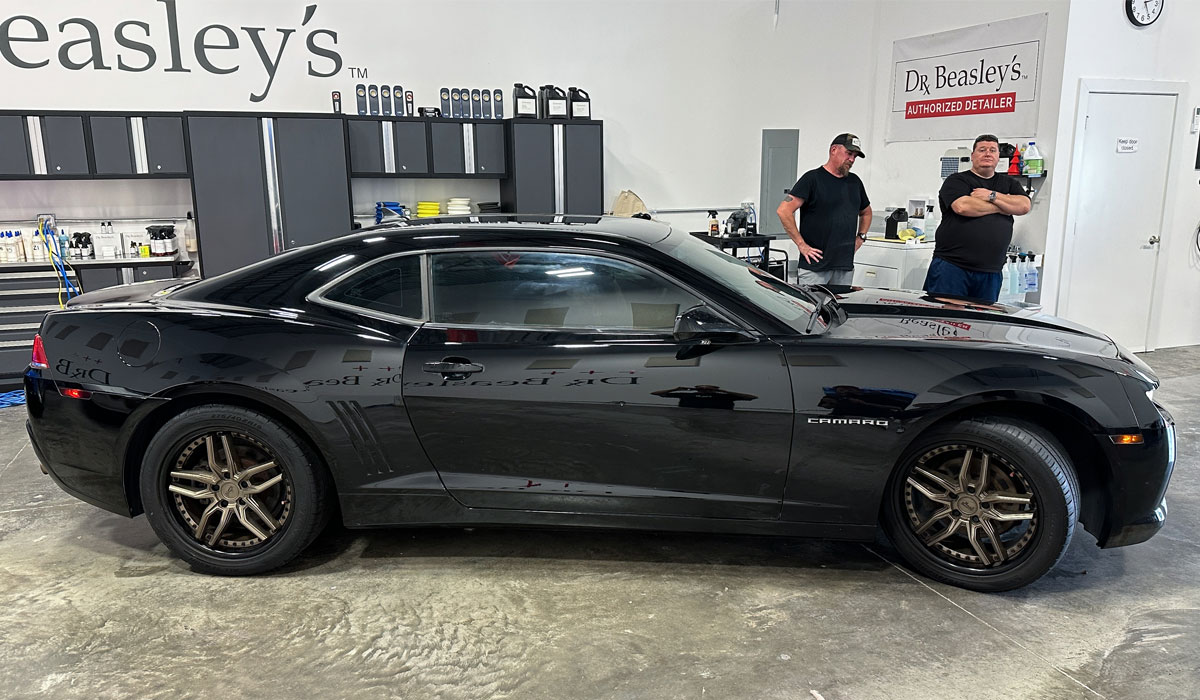
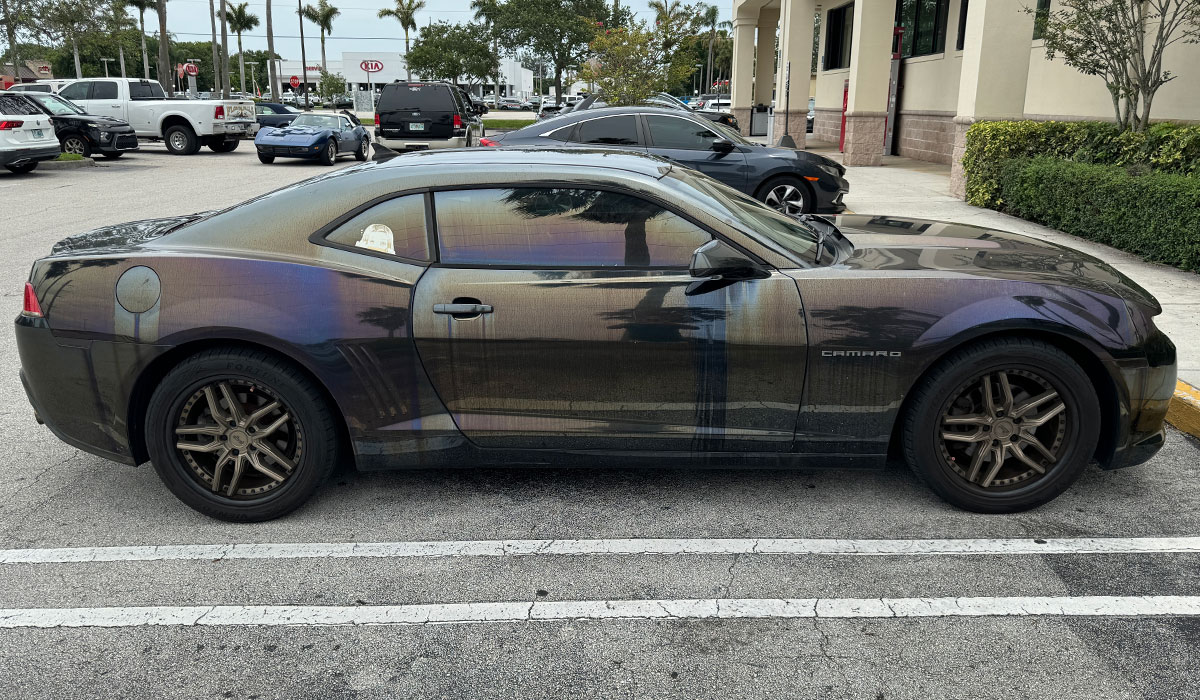
2020 Camaro - Horrendous Hard Water Mineral Staining
I met the owner at a local Walgreens, and she agreed to let us use her Camaro for the September class. As you can see by the pictures, the paint is in absolutely horrible condition.
full


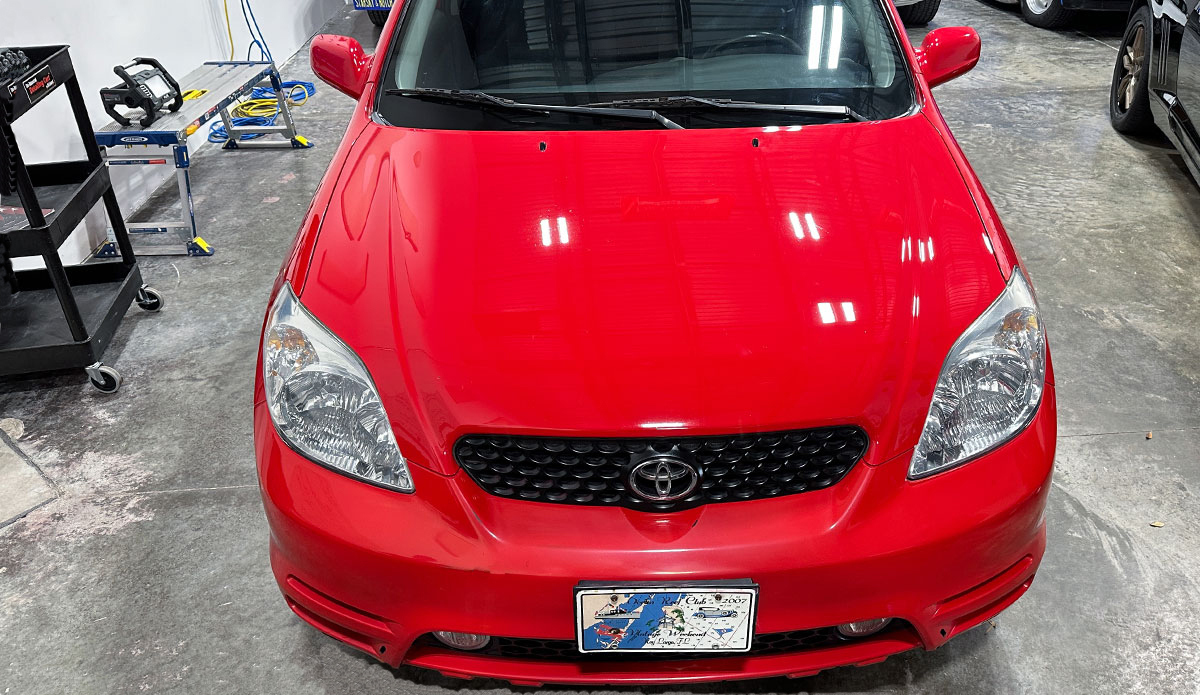
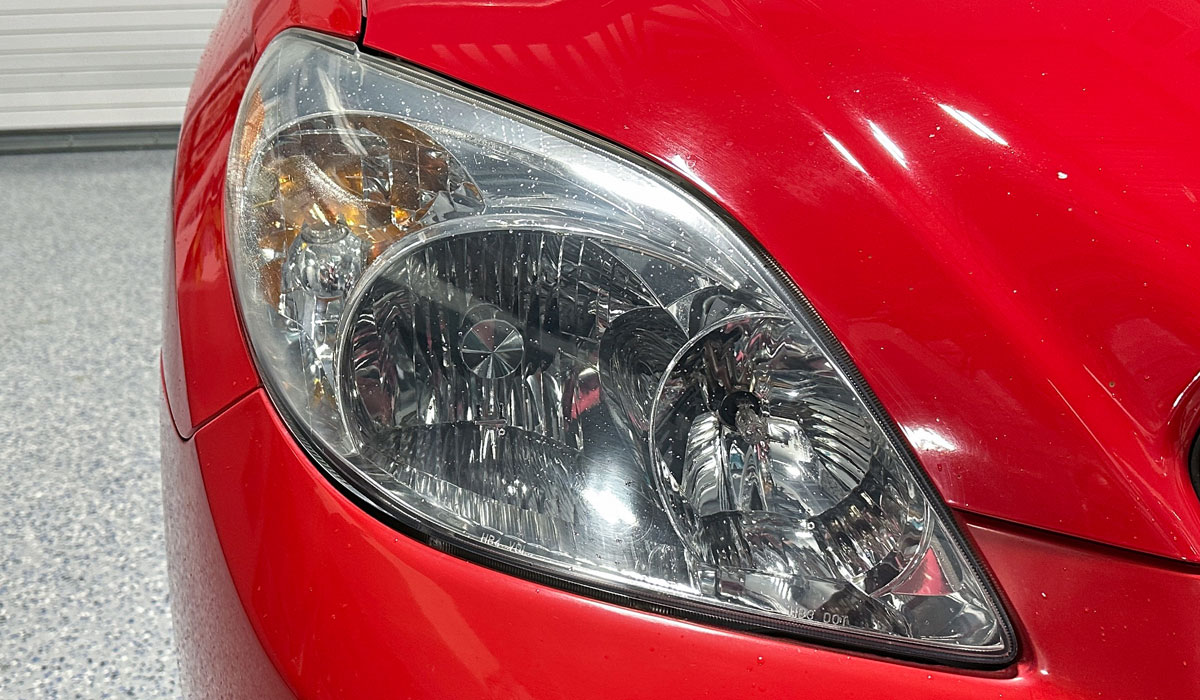
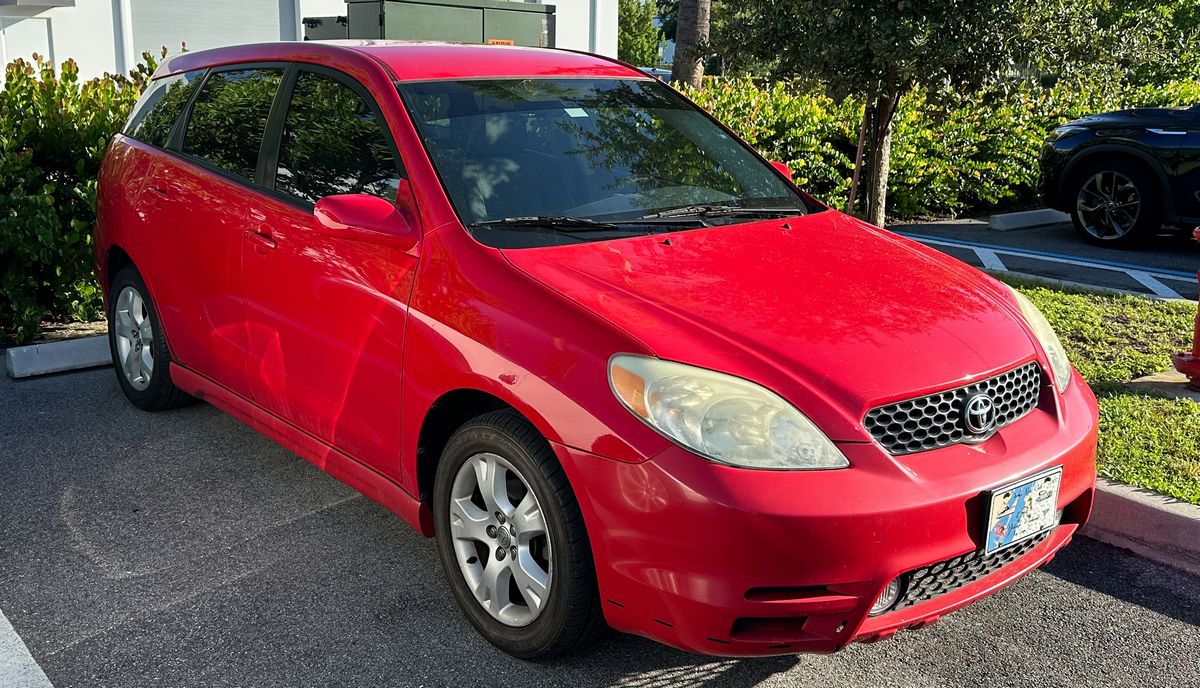
2013 Toyota Matrix
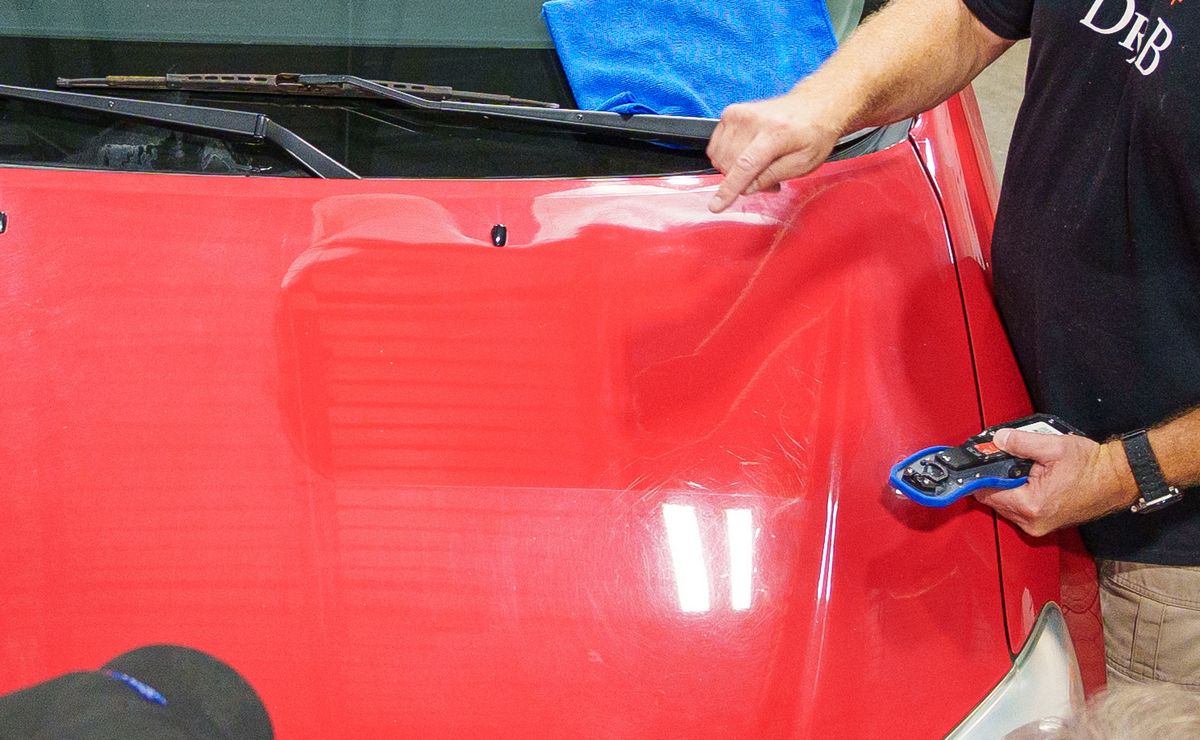
This belongs to my buddy's grandma. With around 80,000 miles on the odometer, my experienced assessment is this car has NEVER been detailed at any level outside of taking the car through a swirl-o-matic car wash.
full


Mike
 
Last edited:
Continued...


7:30am and it's Go Time!

full


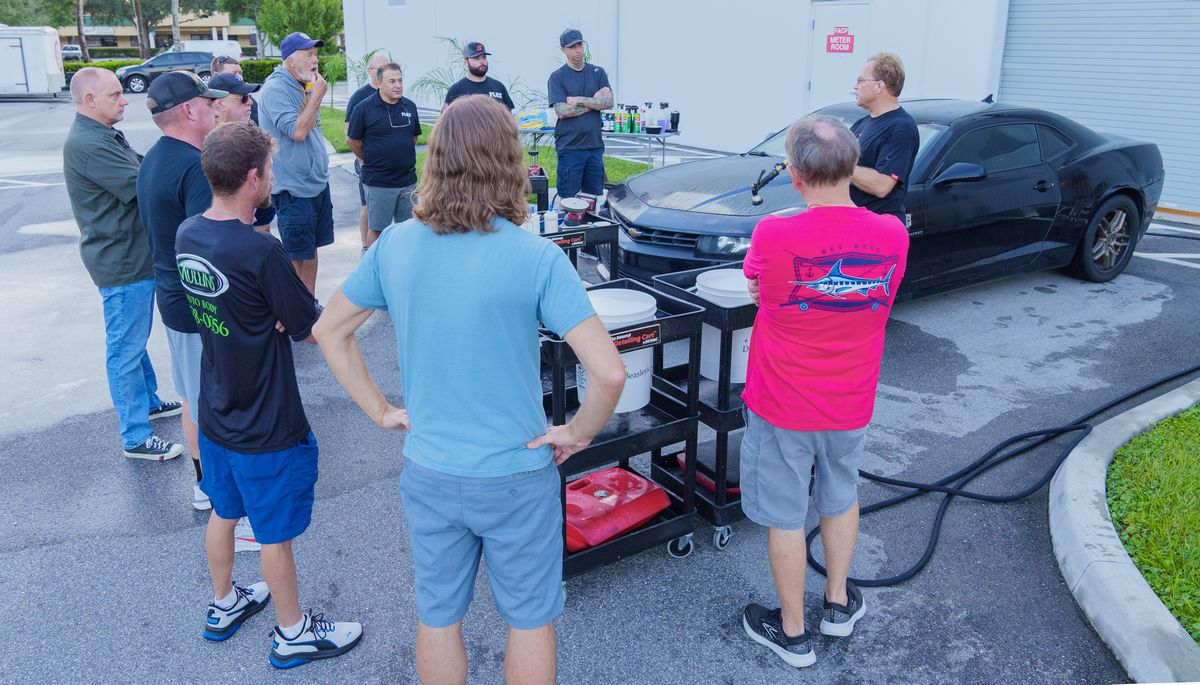
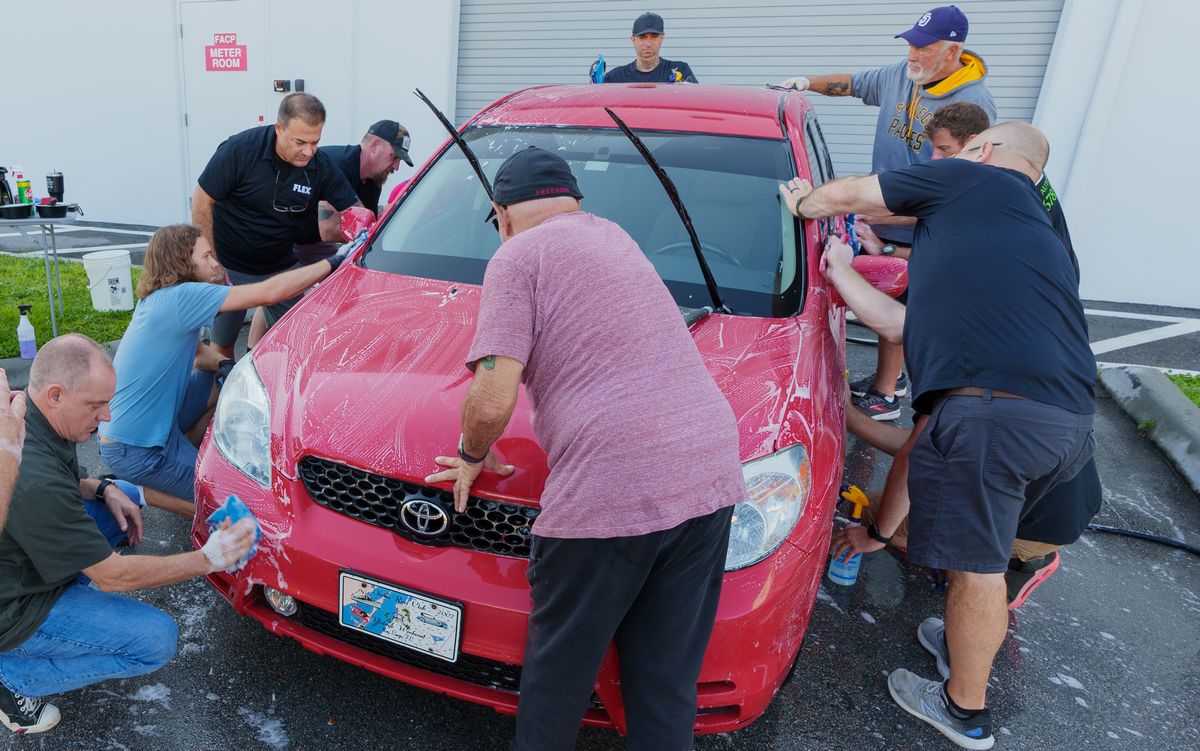
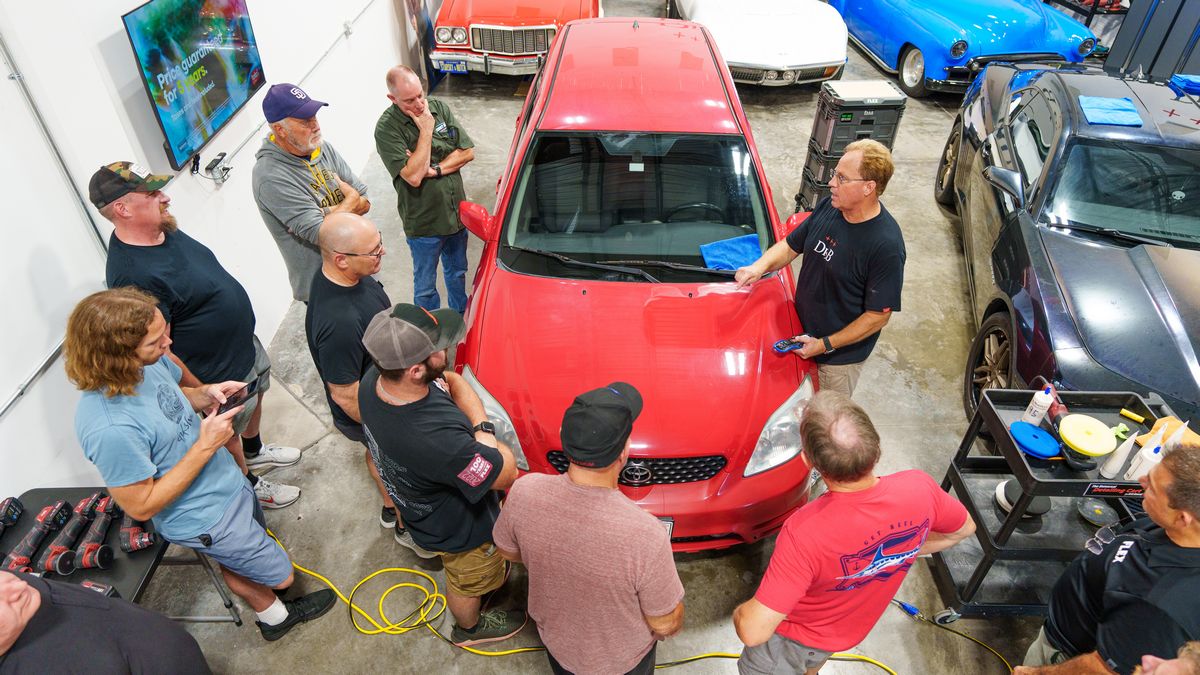
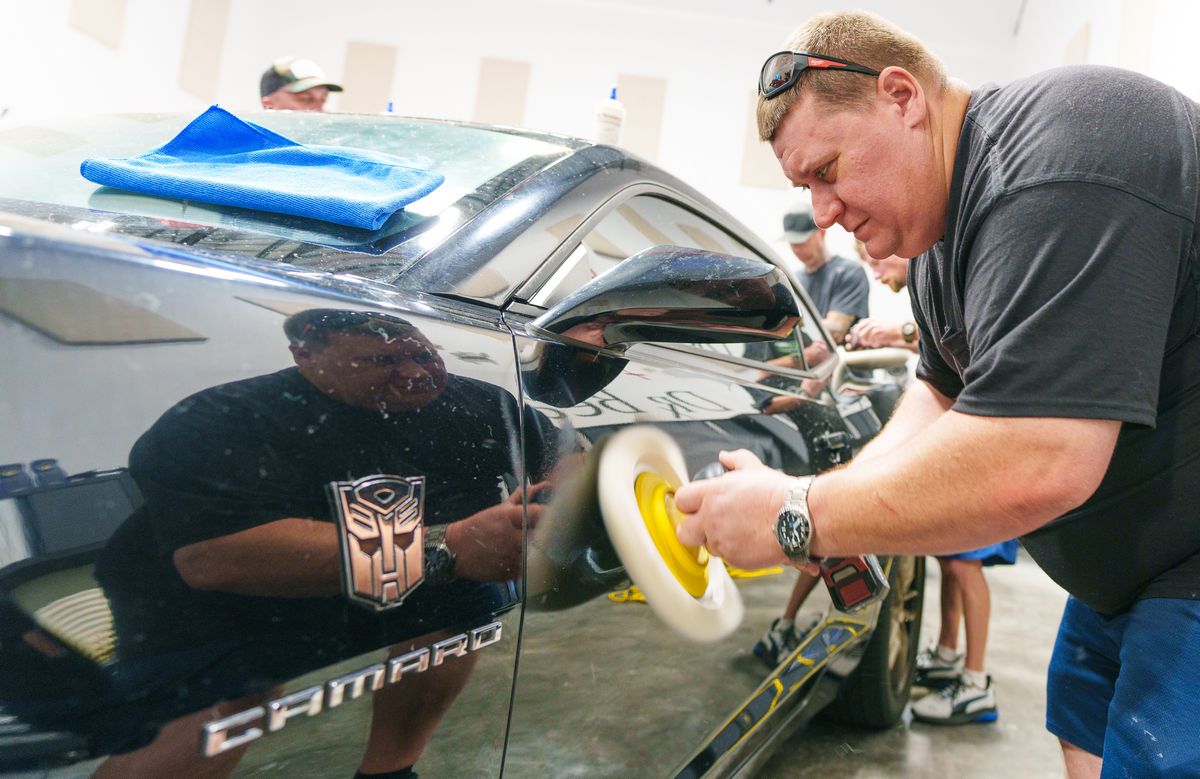
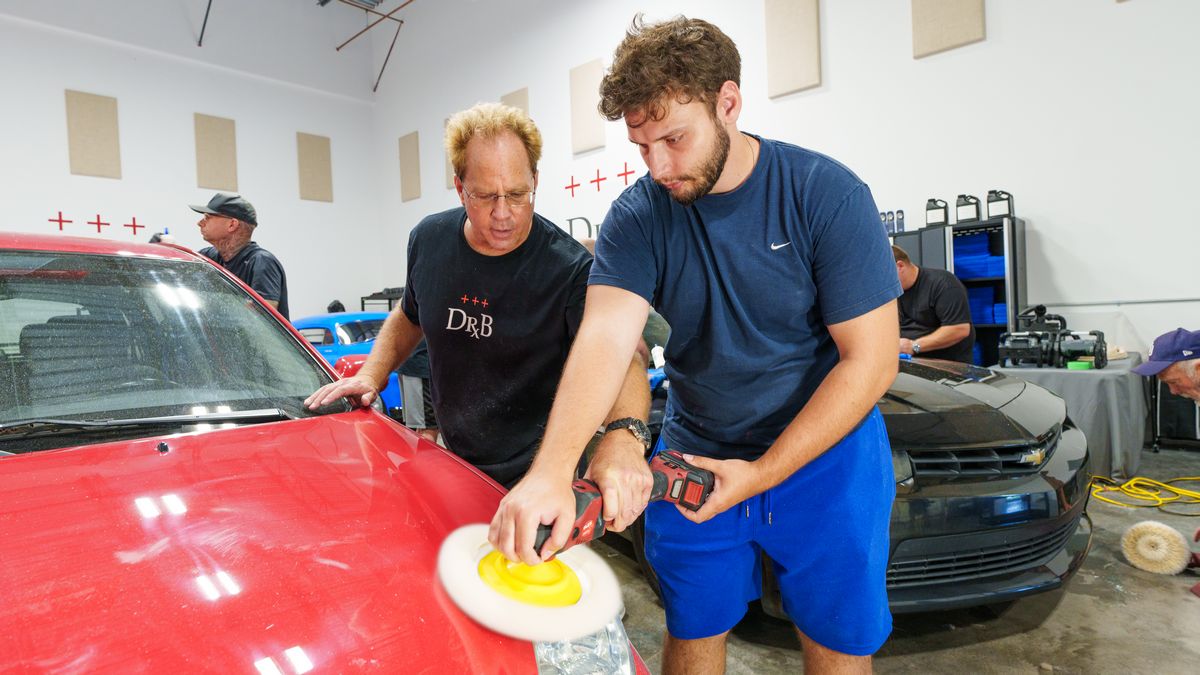
I normally cover Extreme Prep Wash on the second day simply because I don't like it when people spend a lot time and money to travel here to Stuart, Florida only to wash cars first thing in the morning. My preferred way to start is with a rotary polisher on a hacked-up car, which is what you see in all the write-ups for past classes.


Extreme Prep Wash
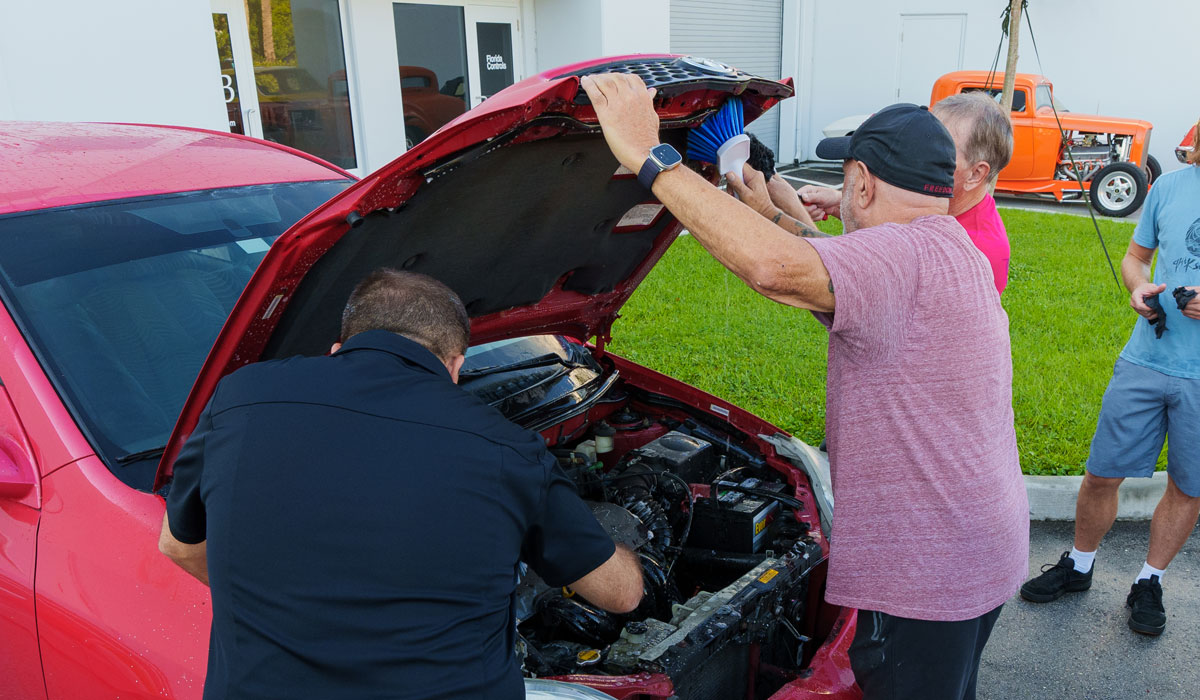
Most people only know about car washing. I don't teach car washing. I teach EXTREME PREP WASH and this includes all the things you can do/clean during the wash process instead of doing it later, where you're going to get the car dirty again or waste time, energy, steps and products. This includes,

  1. Topical Glass Polishing
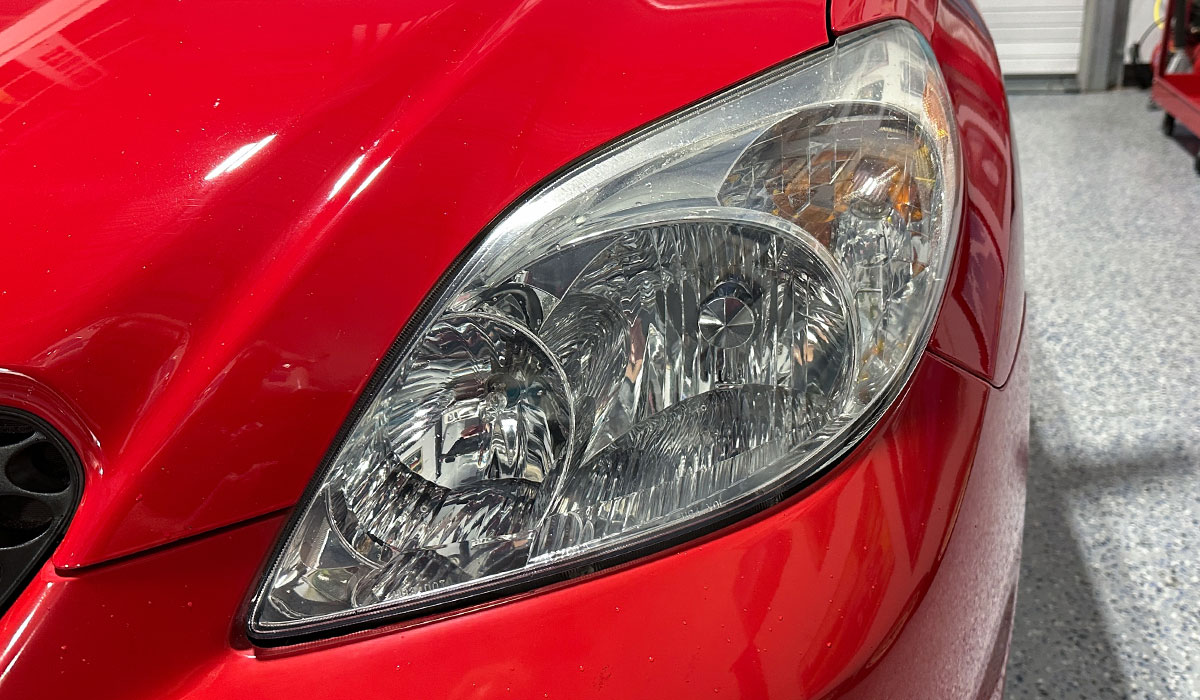
  2. Headlight Correction
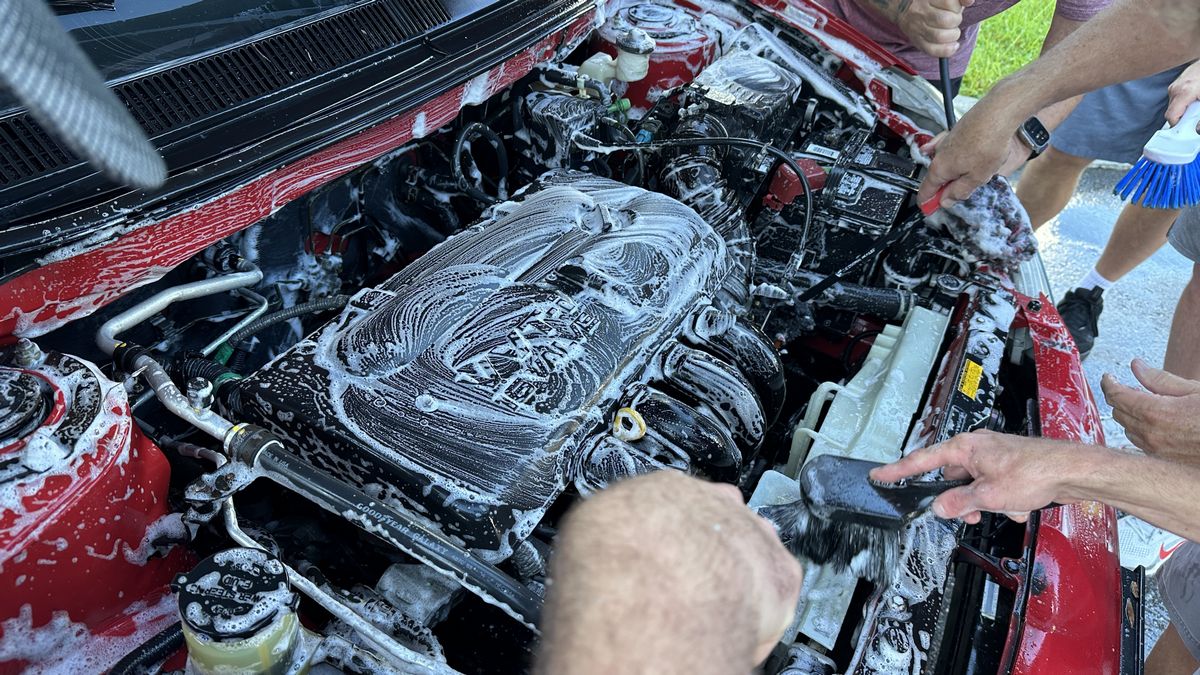
  3. Wet Wash Engine Detail
  4. Wheels and Tires including Machine Scrubbing Tires
  5. Full Body Wash and Rinse
  6. Mechanical Decontamination

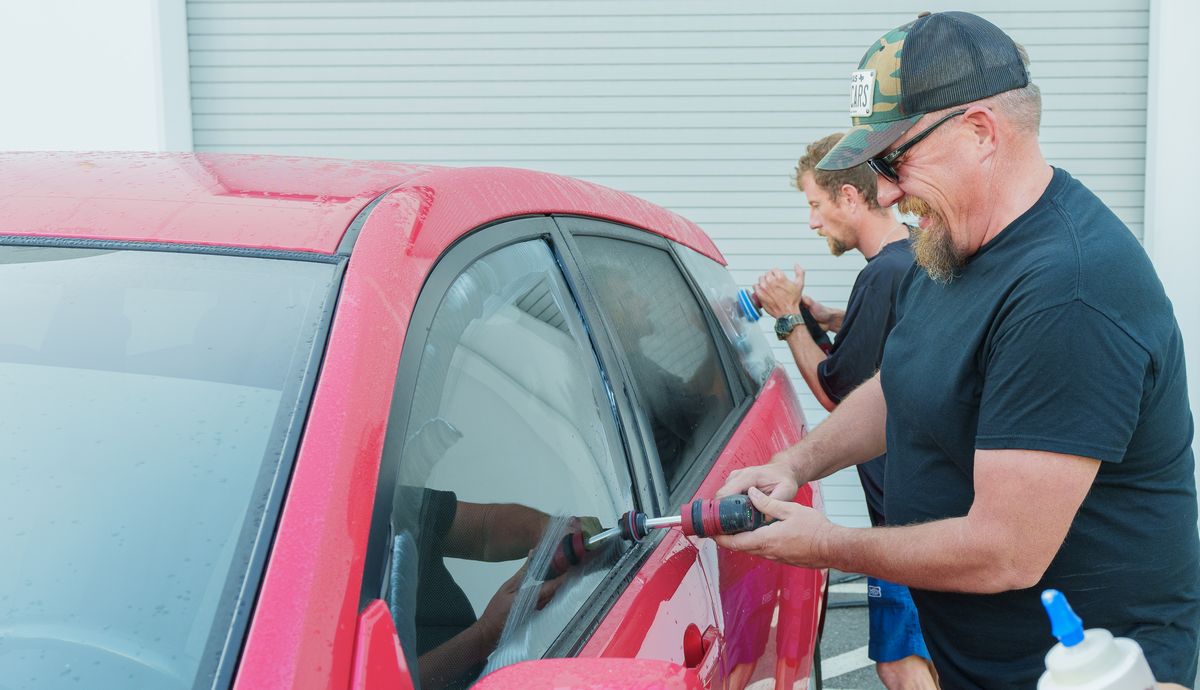
First up, I explain the difference between TOPICAL glass polishing and Sub-Surface glass polishing. Both can be done before washing the car and the BENEFTIT to this is any polish splatter around the window frames or on the car will be removed when you wash the car. If you do this AFTER washing the car, (when you've moved the car into the garage), now you'll spend or waster more time cleaning around the windows and wiping splatter off body panels. The car doesn't care which order you detail it so I teach people the old cliche,

Work smarter, not harder

full


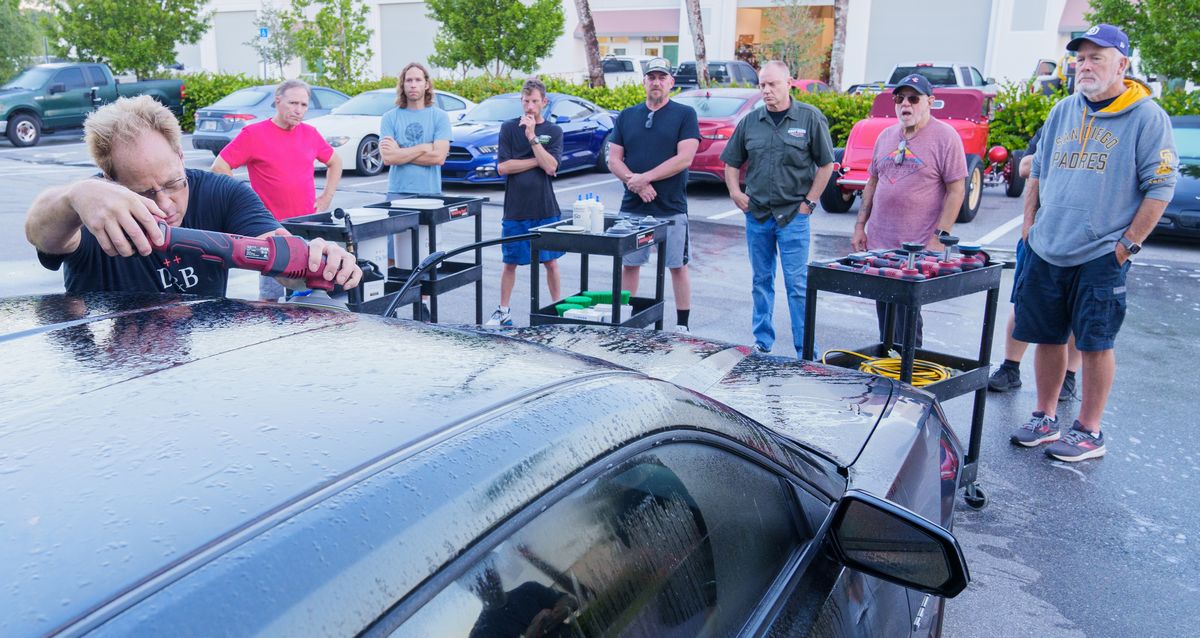
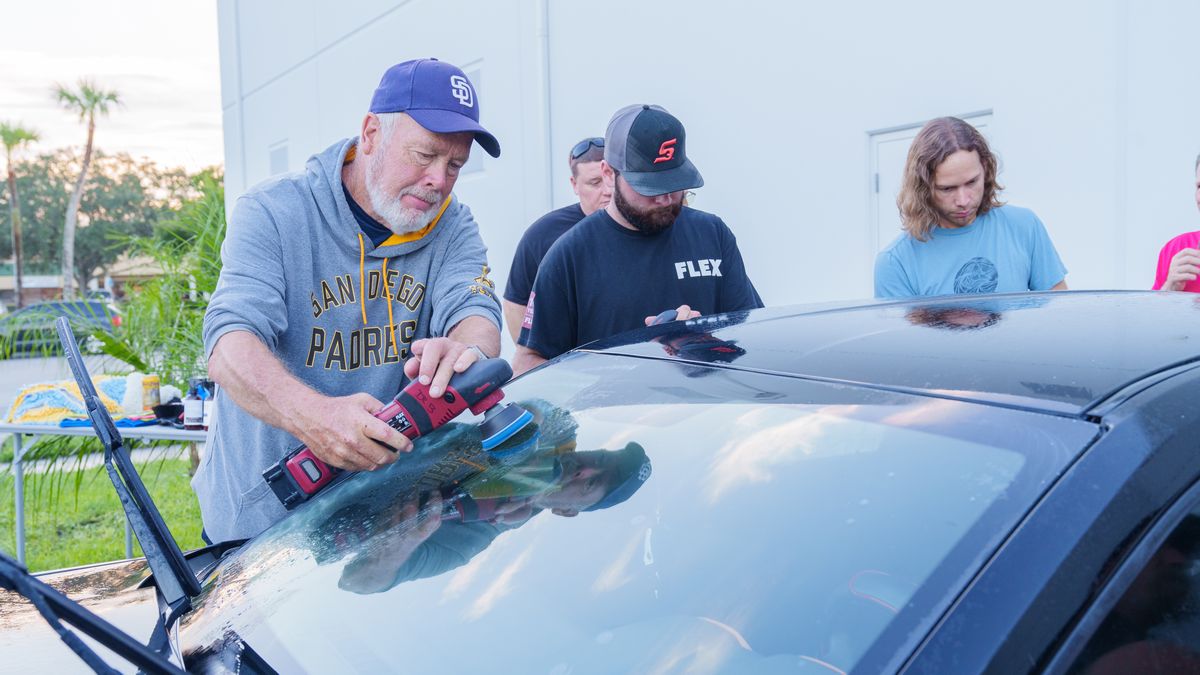
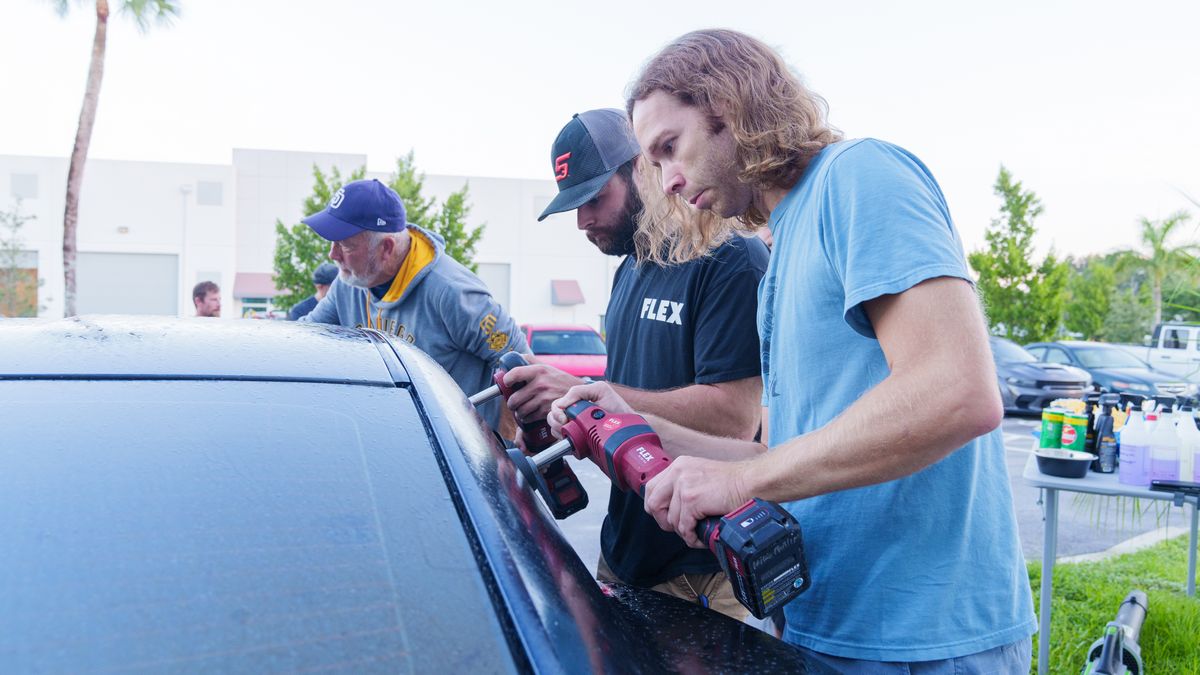
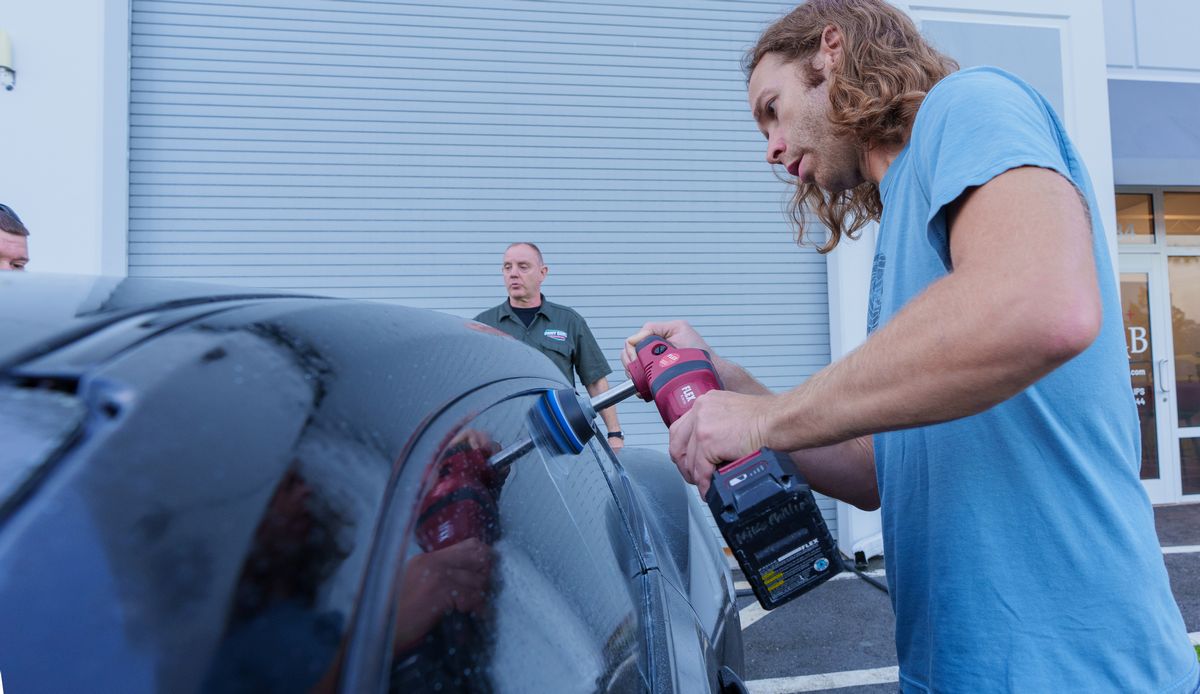
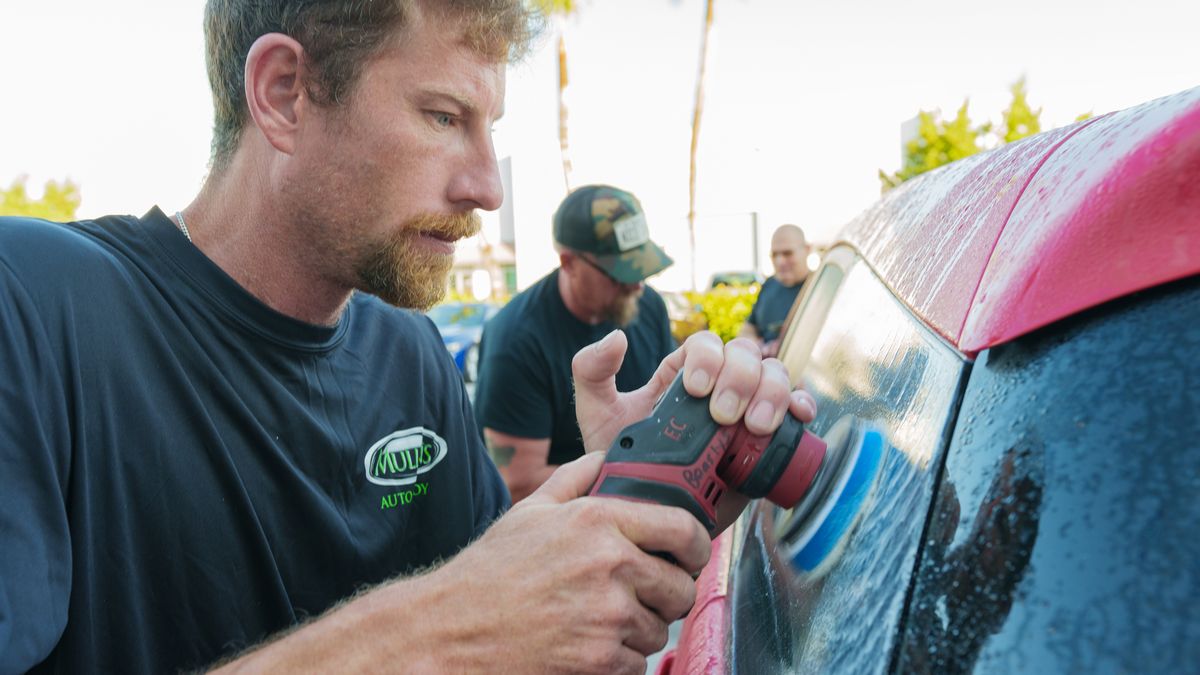
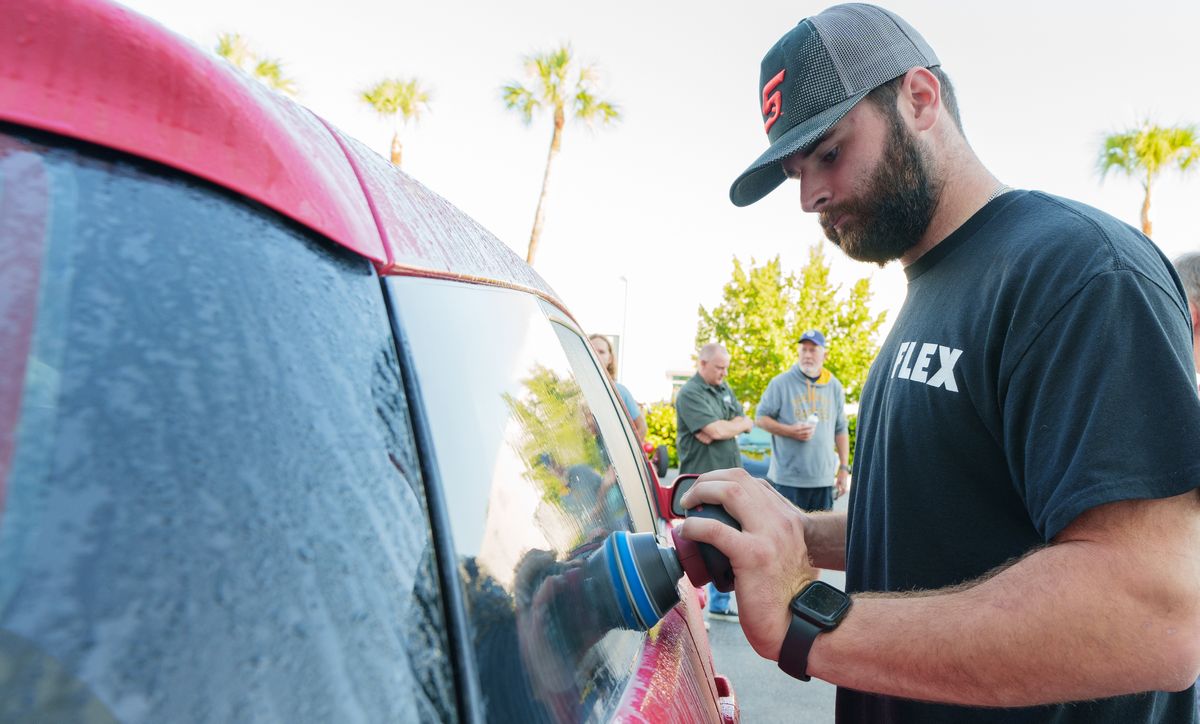
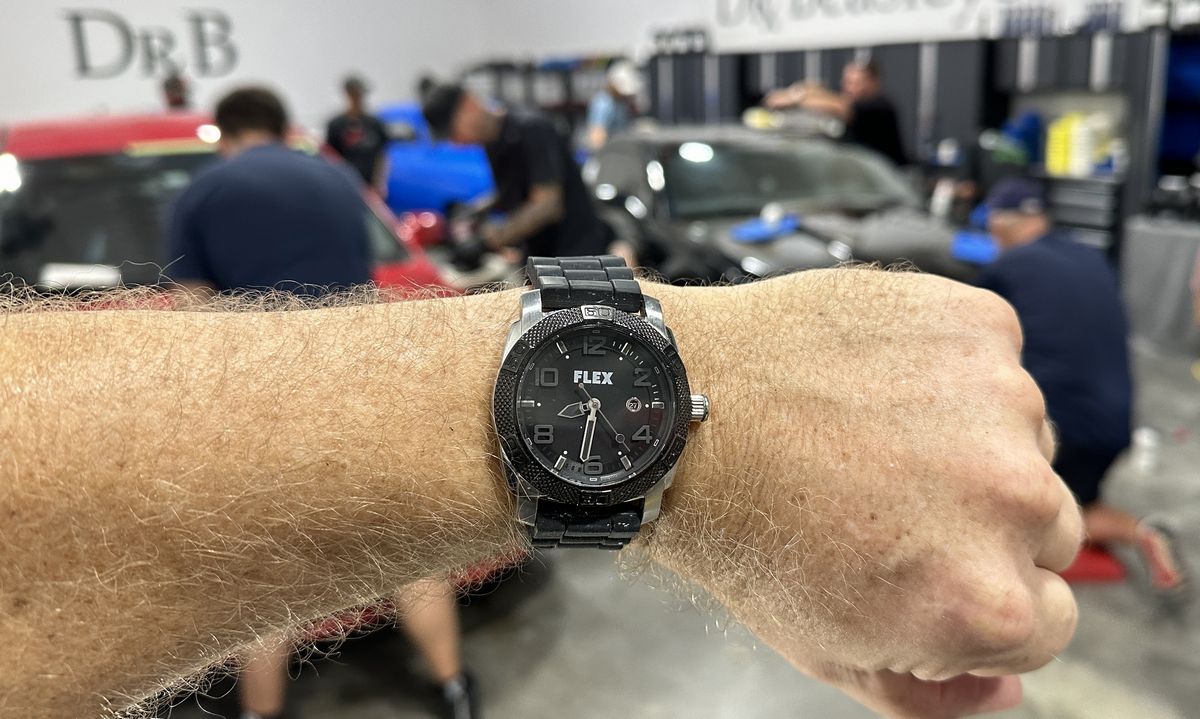
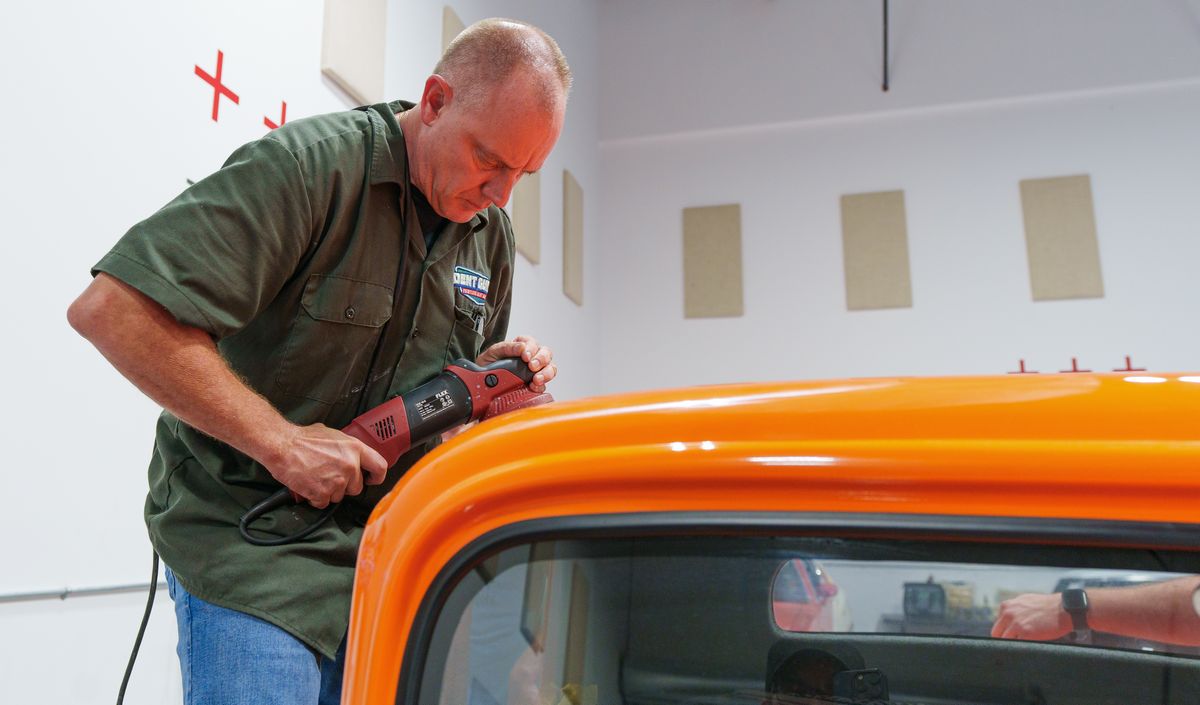
Topical Glass Polishing using the Cordless FLEX PE-150 Rotary Polisher with a microfiber pad and Dr. Beasley's NSP 150

full


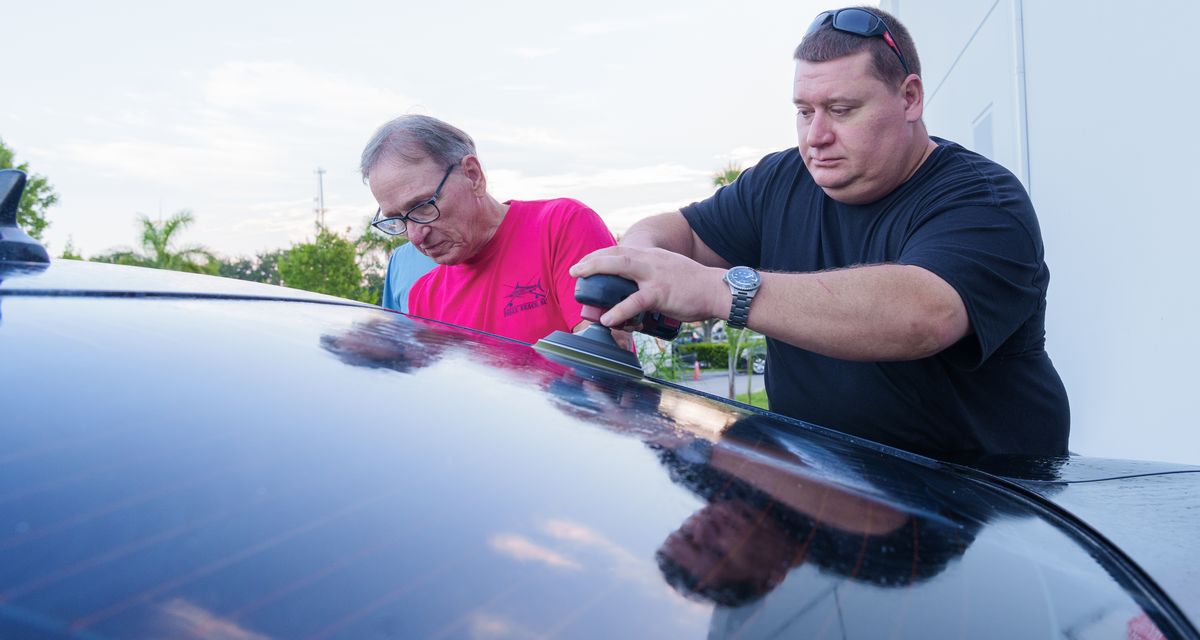
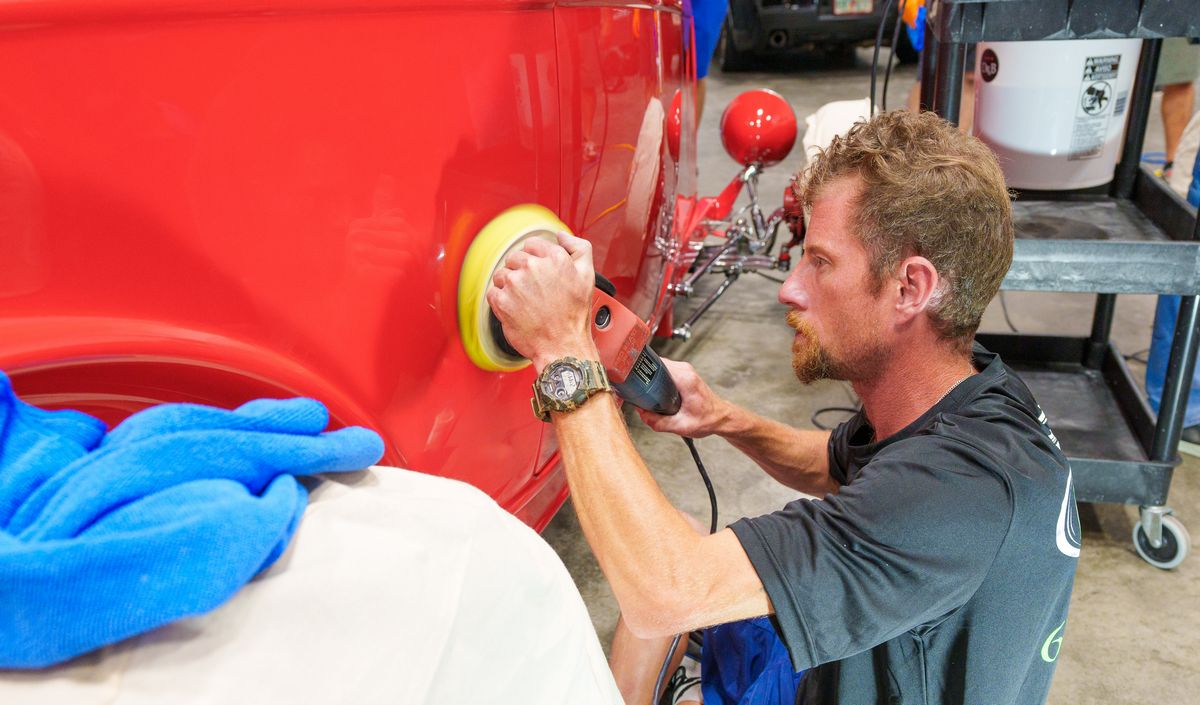
After demonstrating how to use rotary polisher to polish glass I turn the class loose and then walk around the car and monitor everyone and if needed, suggest tweaks to their technique.

full


full


full


full


Wheels and Tires
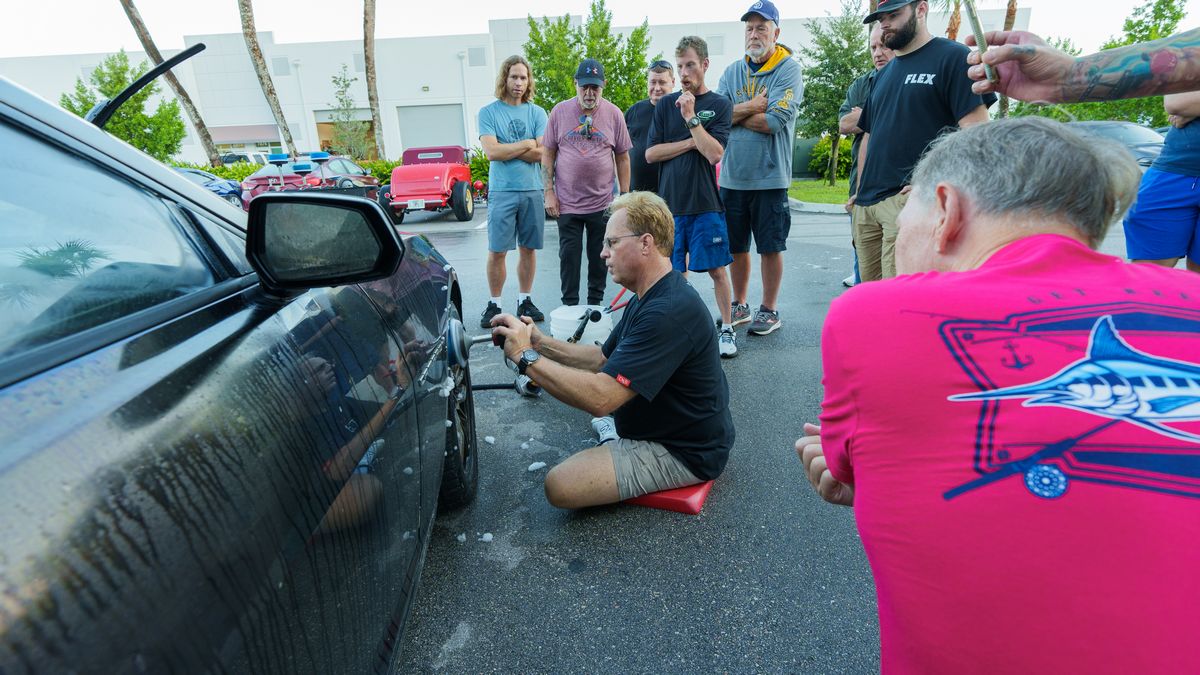
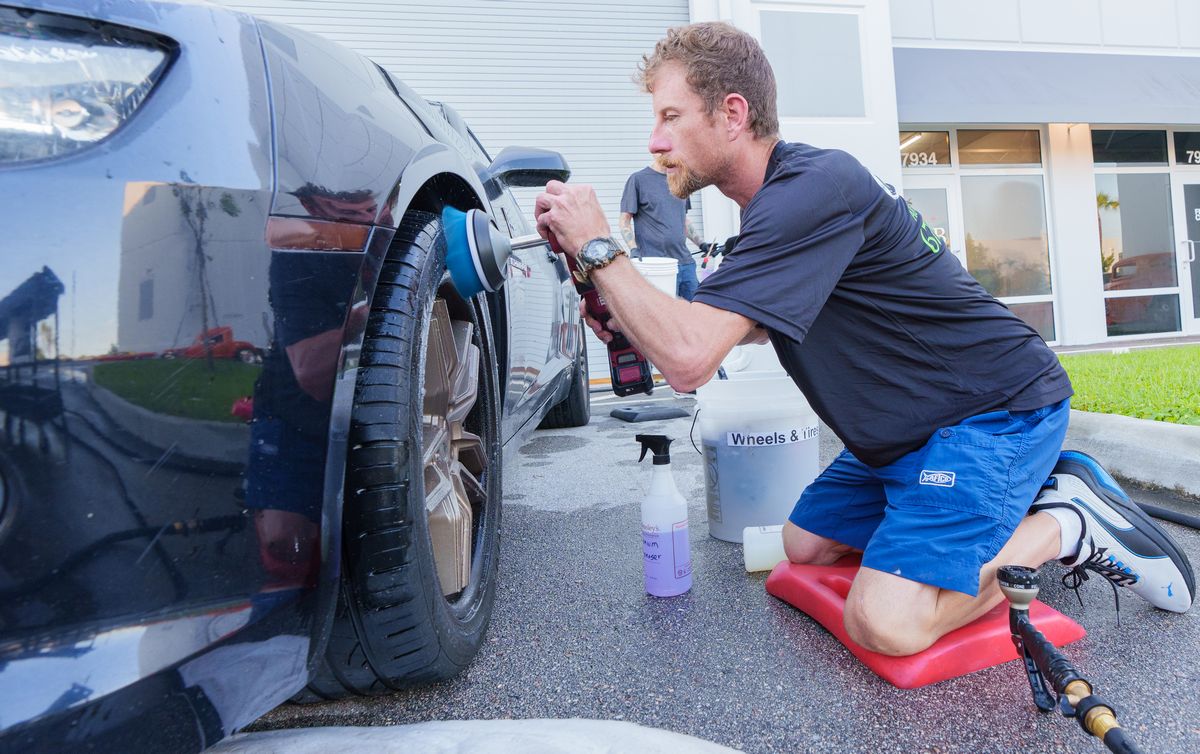
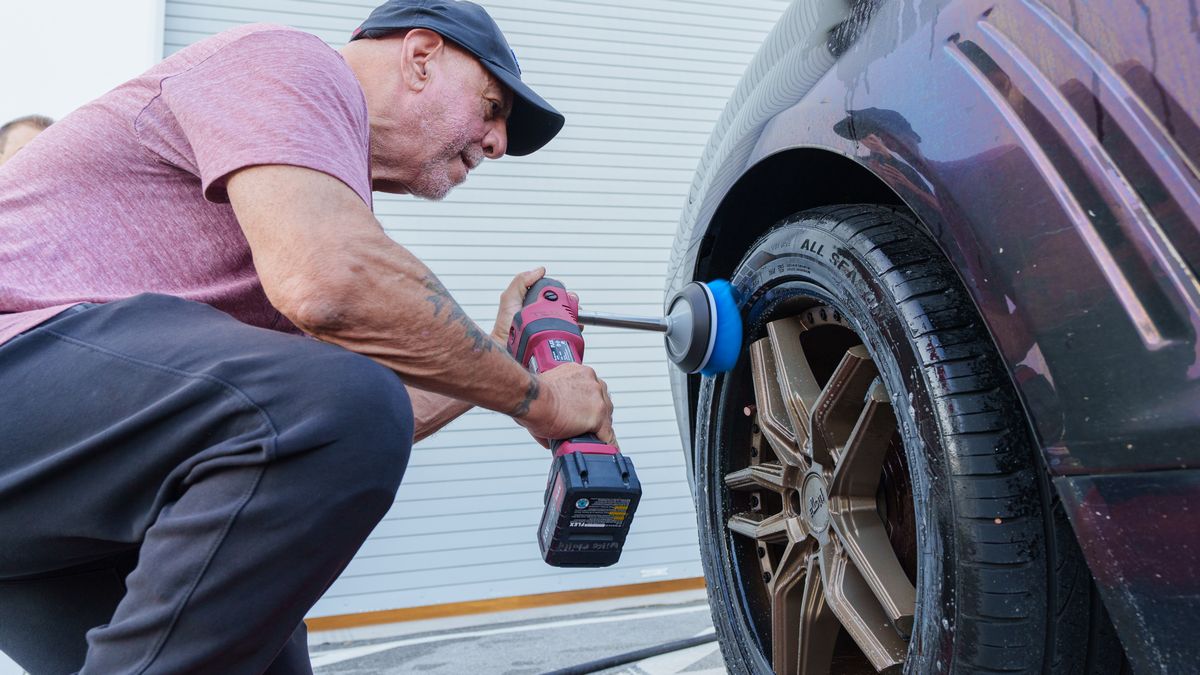
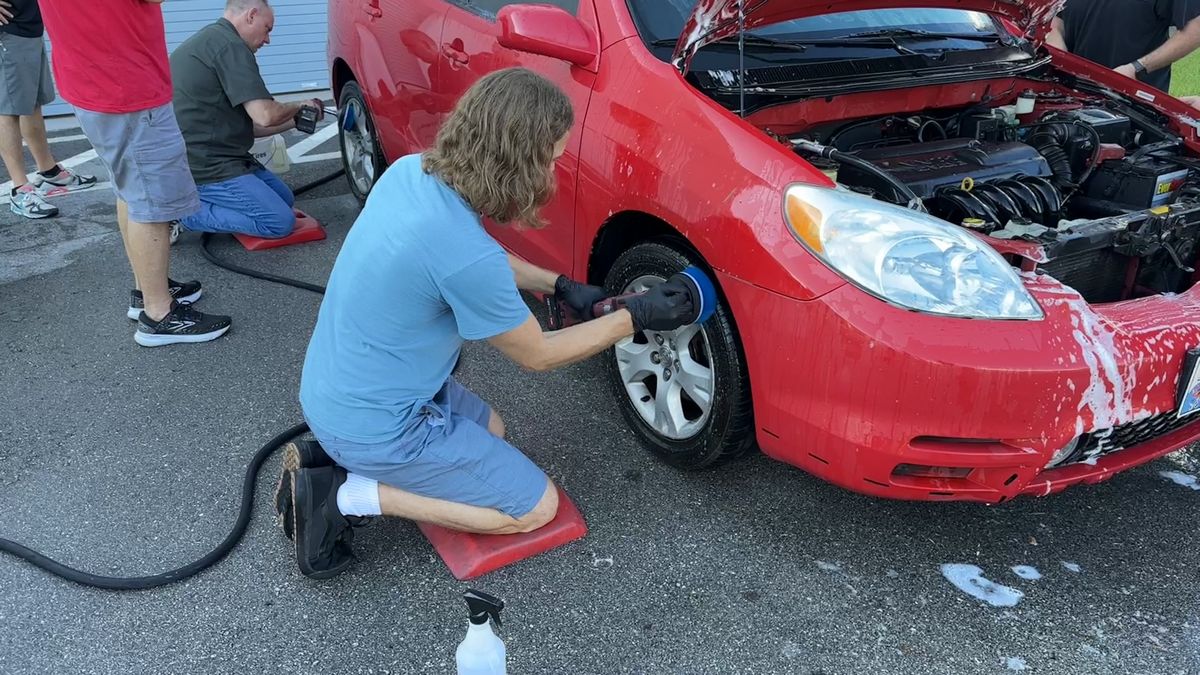
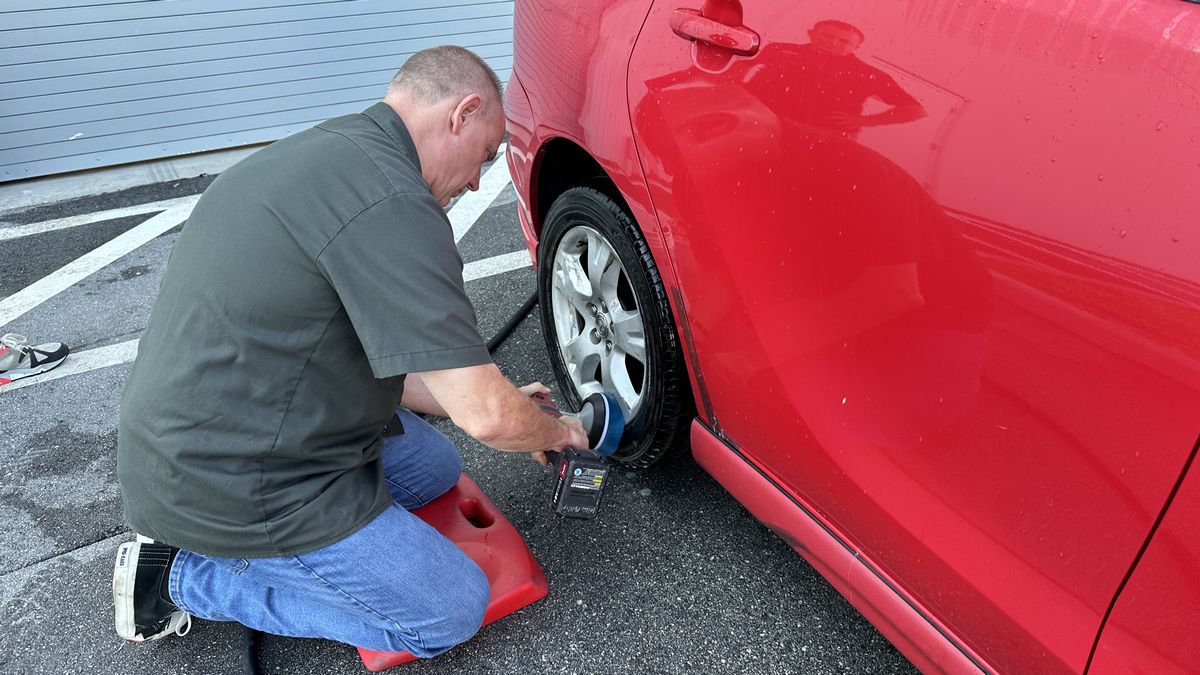
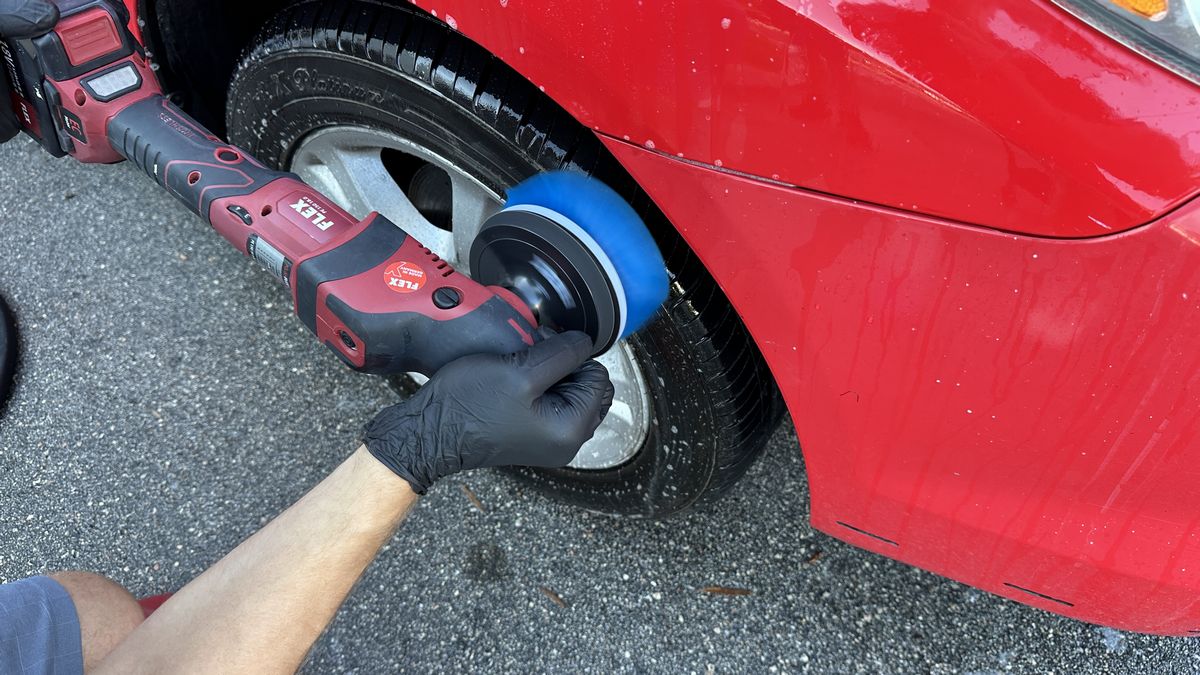
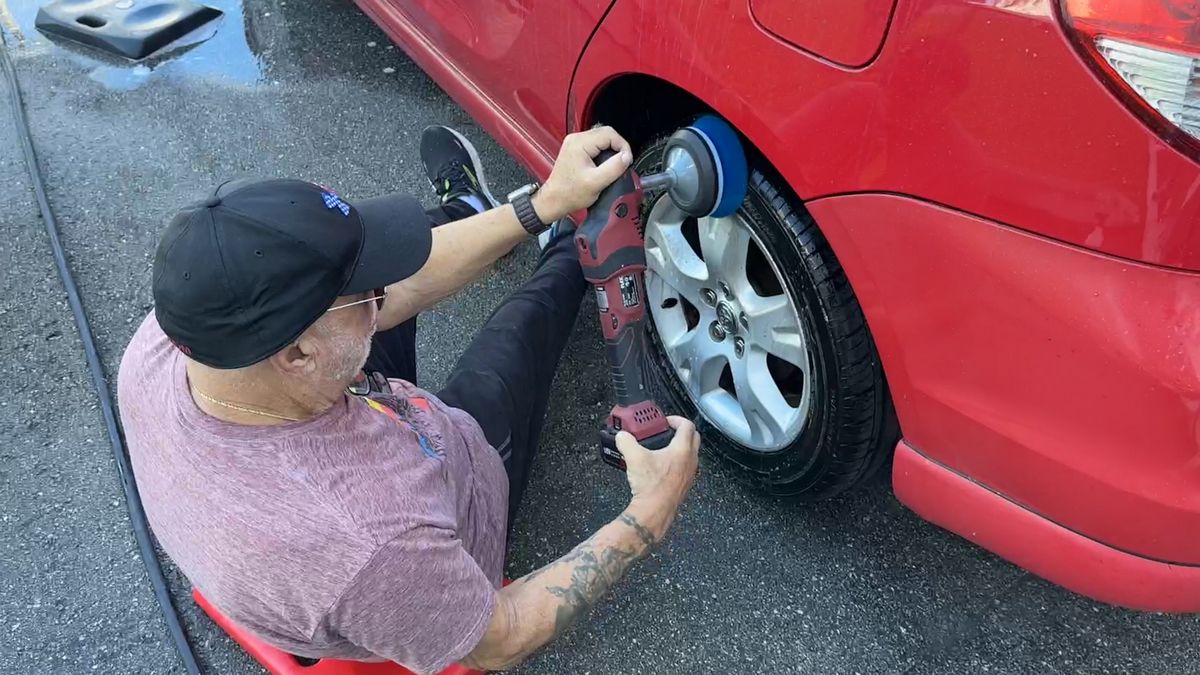
Next, I always lead by example and show everyone the best and fastest way to get the wheels and tires clean. One of the things I introduced to our industry back in 2013 is machine scrubbing tires because it's faster and the machine always does a better job than the human.

full


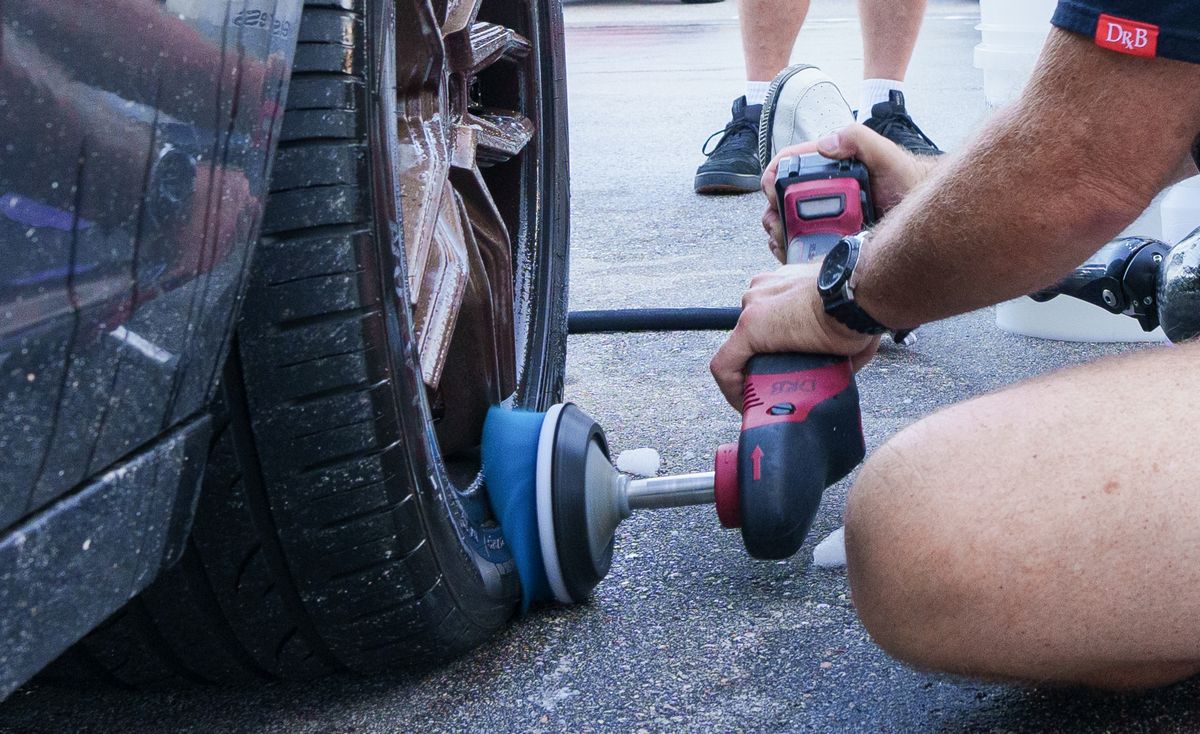
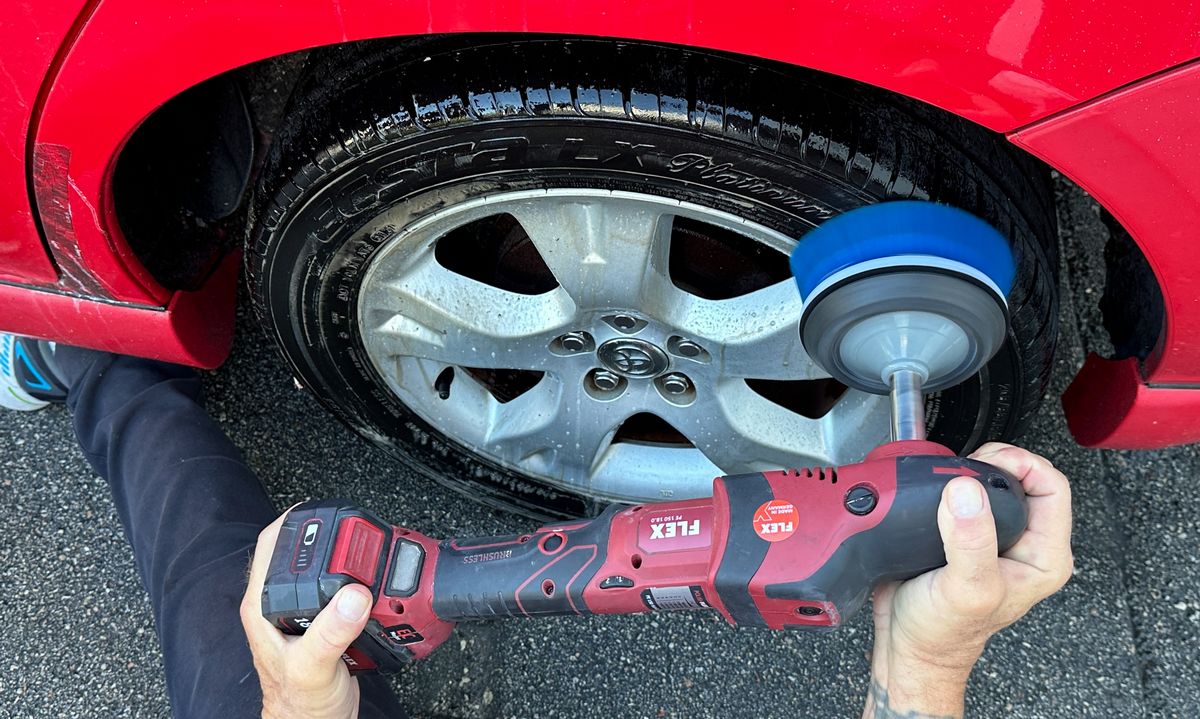
Rotary Polisher Extensions
Here's another unique technique from yours truly. By attaching a 3" rotary polisher extension, this moves the BODY of the tool away from the brush and it makes it much easier to scrub the flat spot on the tire where the tire meets pavement. Look at this amazing picture Yancy took that tells the story.

full


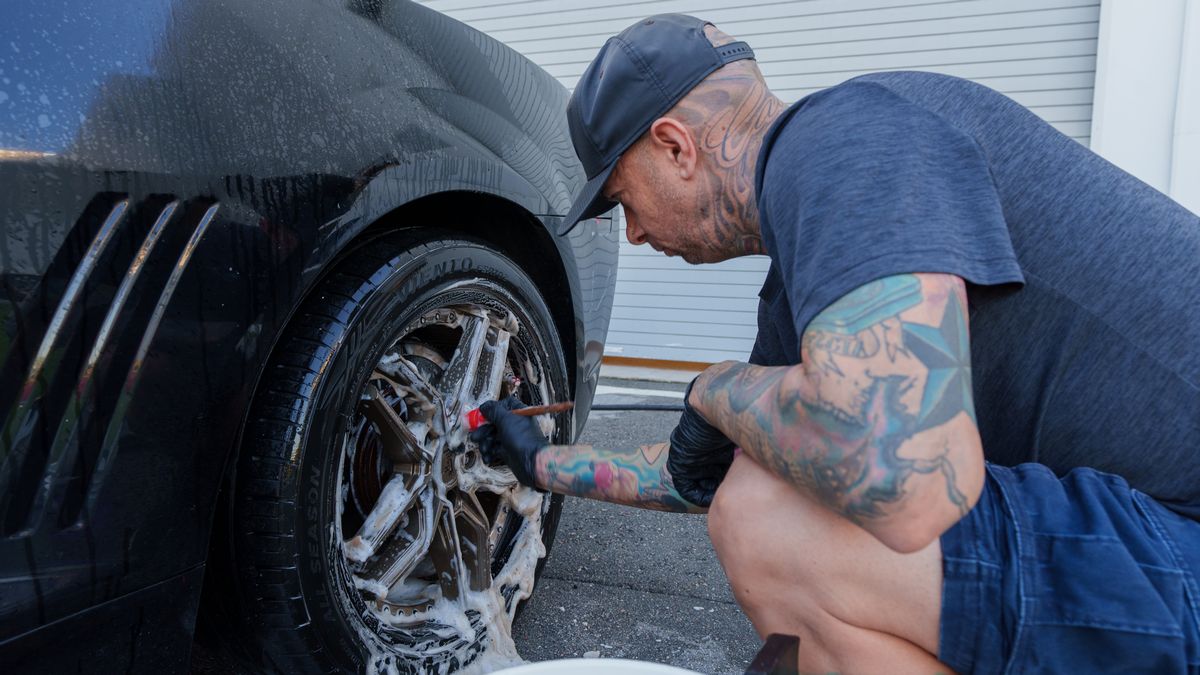
After machine scrubbing tires, I share multiple great wheel cleaning brushes from Braun Brush and EZ Detail.

full


full


full


full


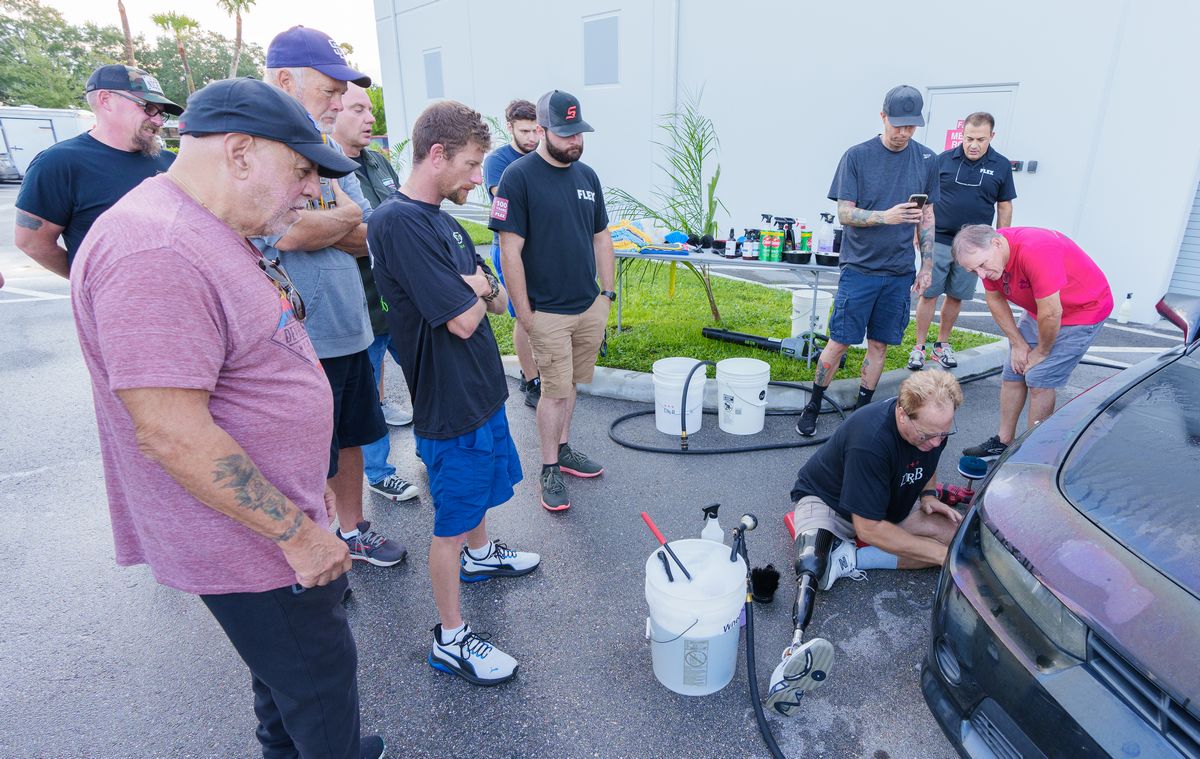
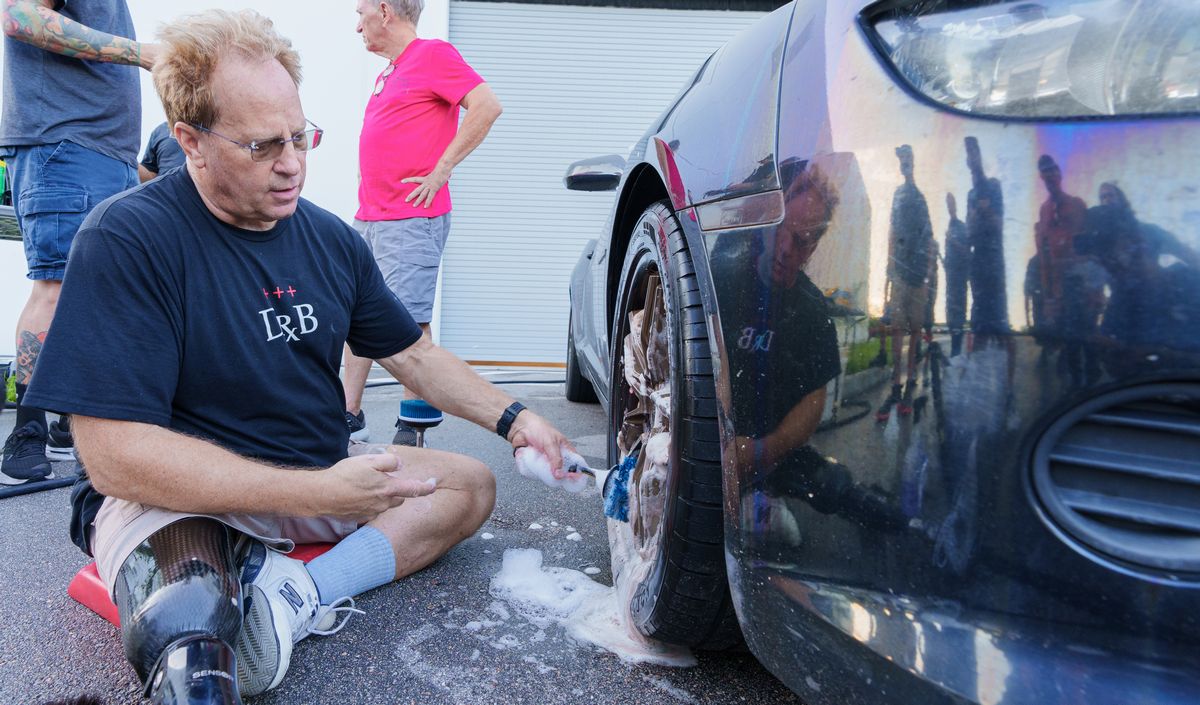
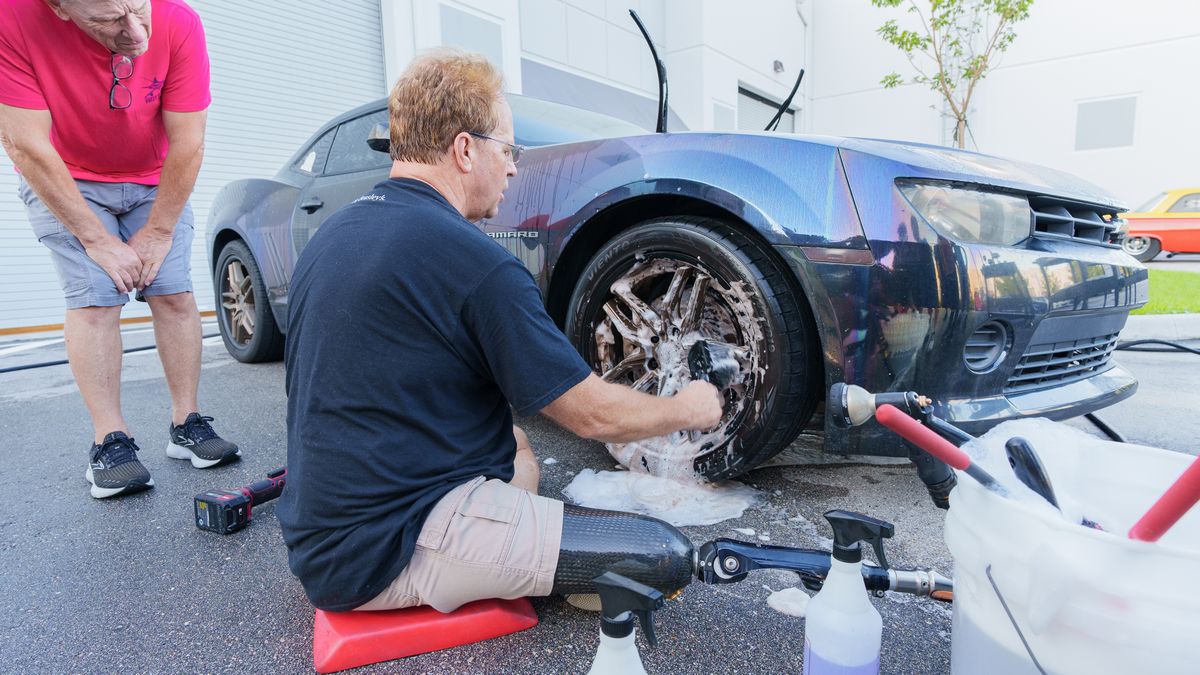
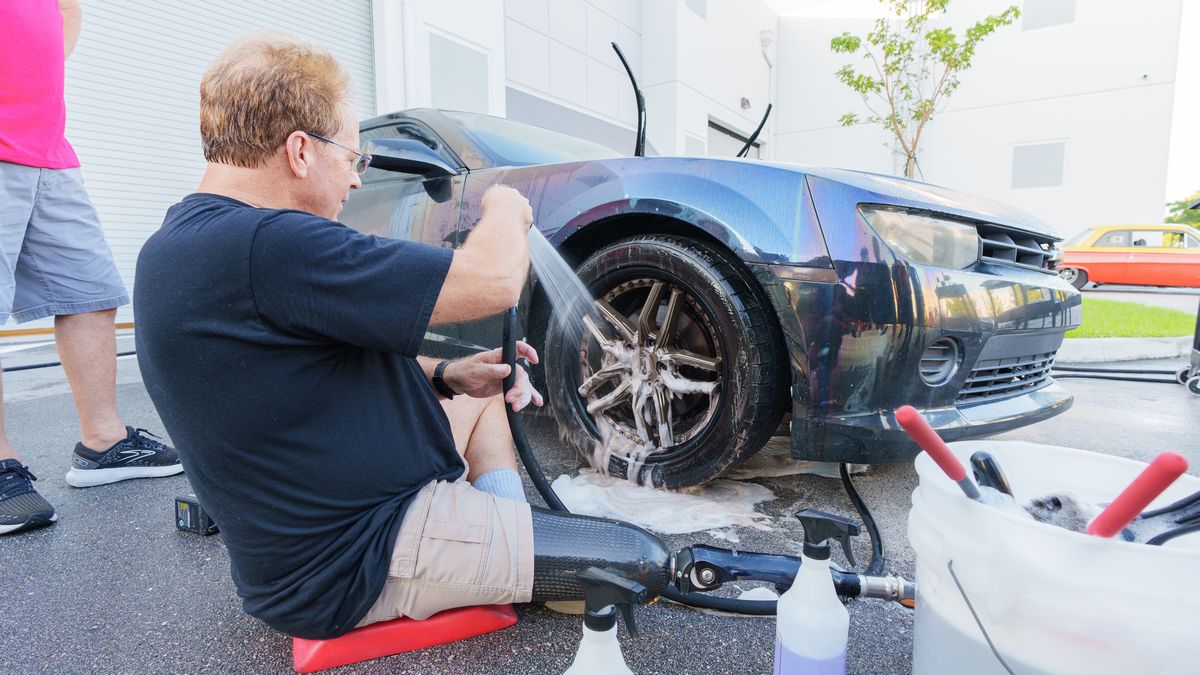
After demonstrating how to use the various tools with Dr. Beasley's wheel and tire cleaners, I turn the class loose, but I always start this by sitting my own butt on the ground and leading by example. I would never ask someone to do something I'm not also willing to do.

full


full


full


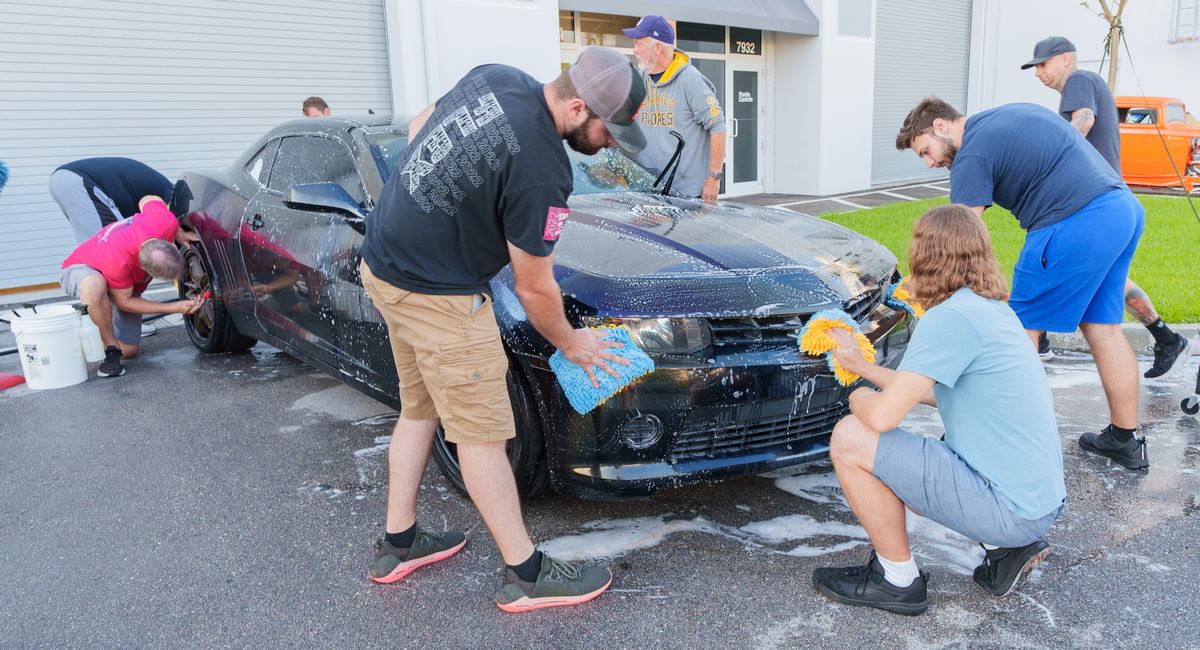
Full Contact Body Wash
After topical glass polishing and wheels and tires, we wash the car starting at the top and working our way down. Not pictured, after washing, we rinsed thoroughly and the use clay towels and mitts to mechanically decontaminate the paint as a part of working smarter, not harder. Then a final rinse and move the Camaro inside as one of the first paint correction cars for this class.

full


Next - 2013 Toyota Matrix - Never been detailed
After the Camaro, we moved the Matrix into position and dove straight into Topical Glass Polishing.

full


full


full


Mike
 
Last edited:
Continued...


Headlight Correction - Machine Wet Sanding with Rotary Polishers
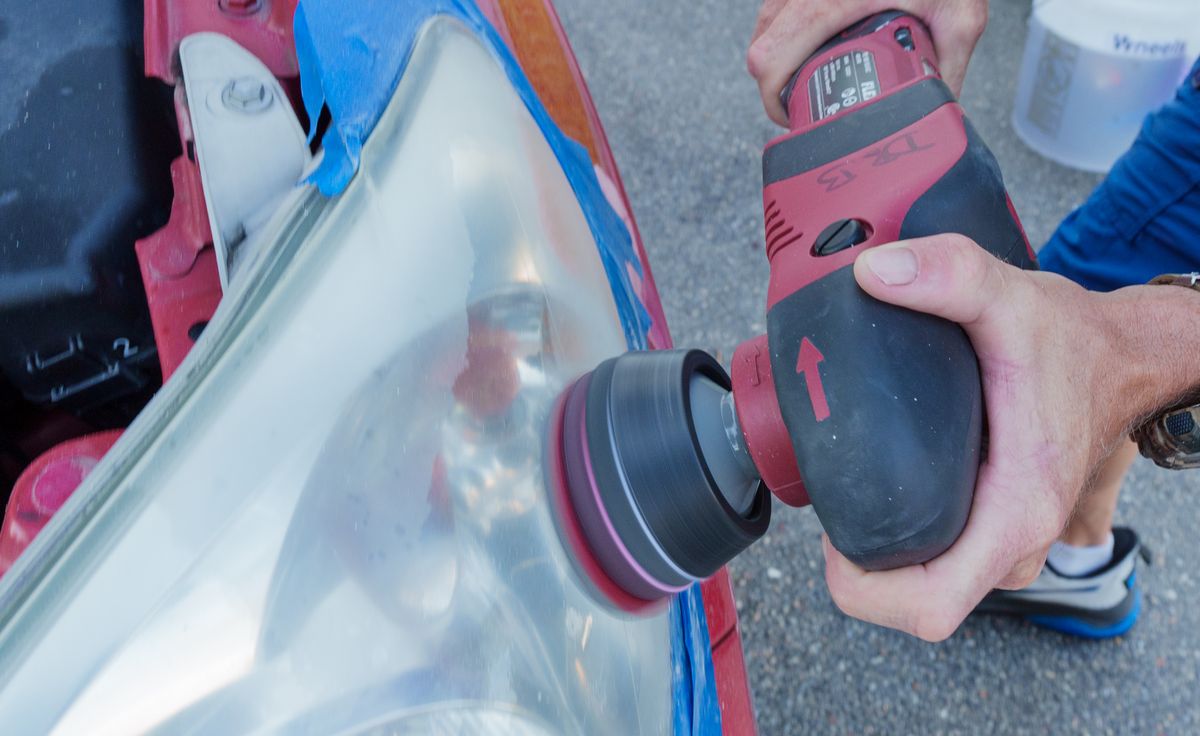
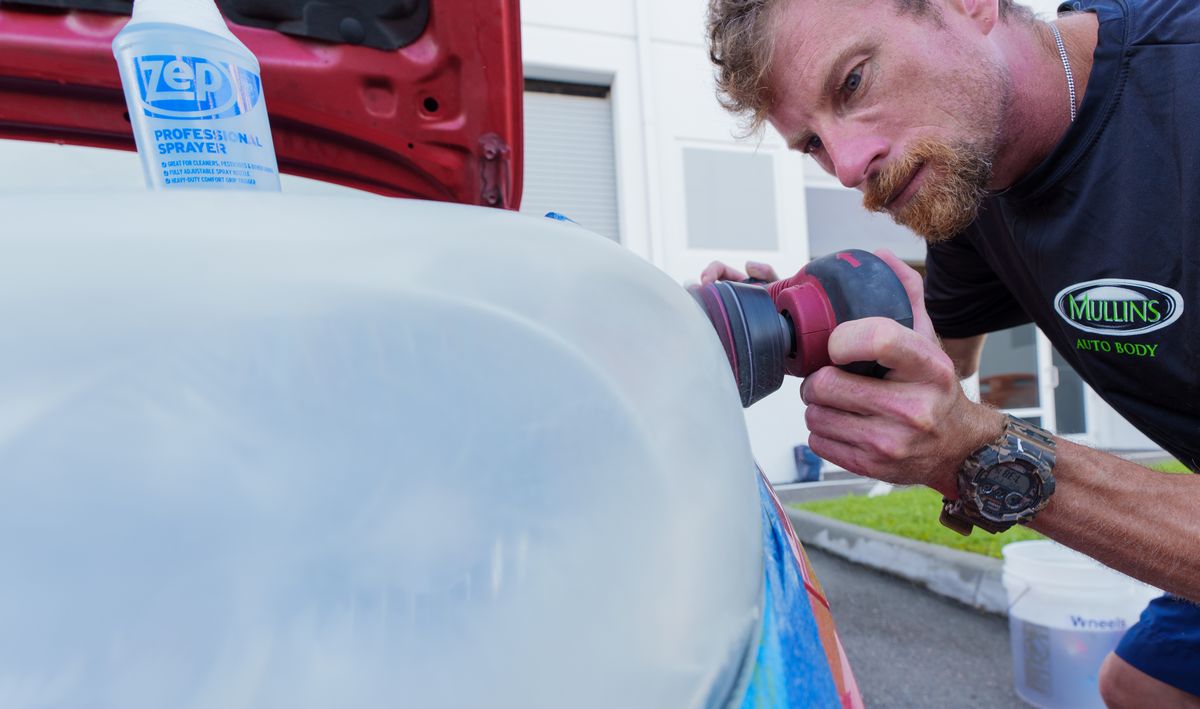
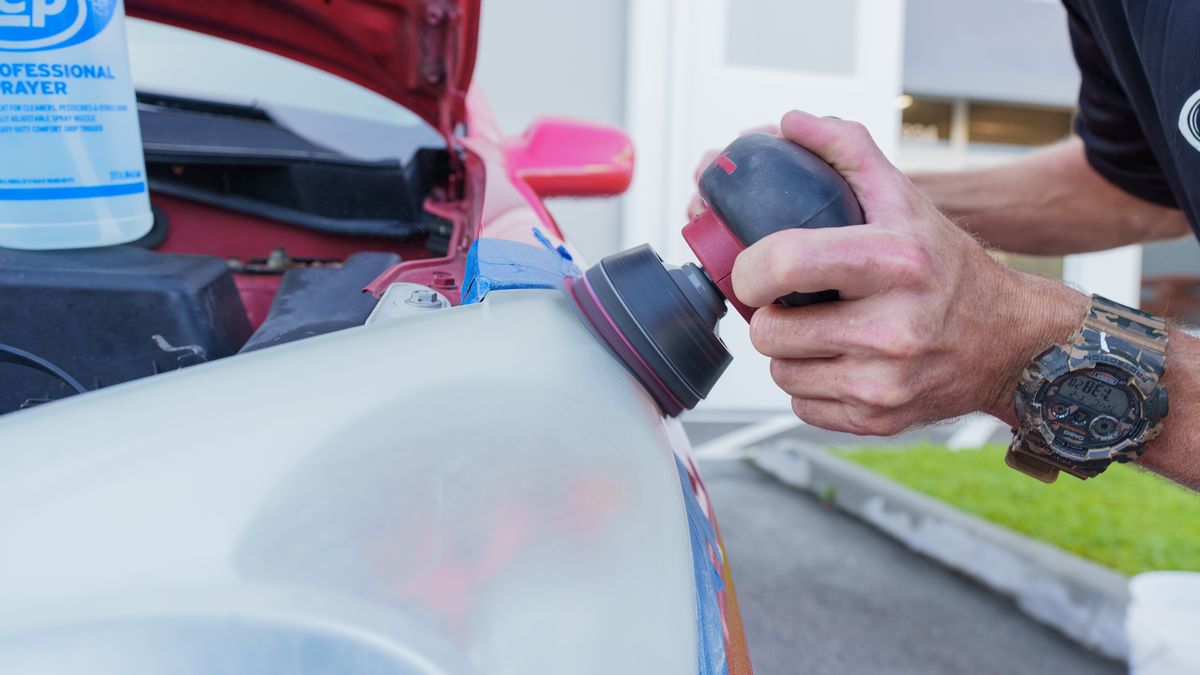
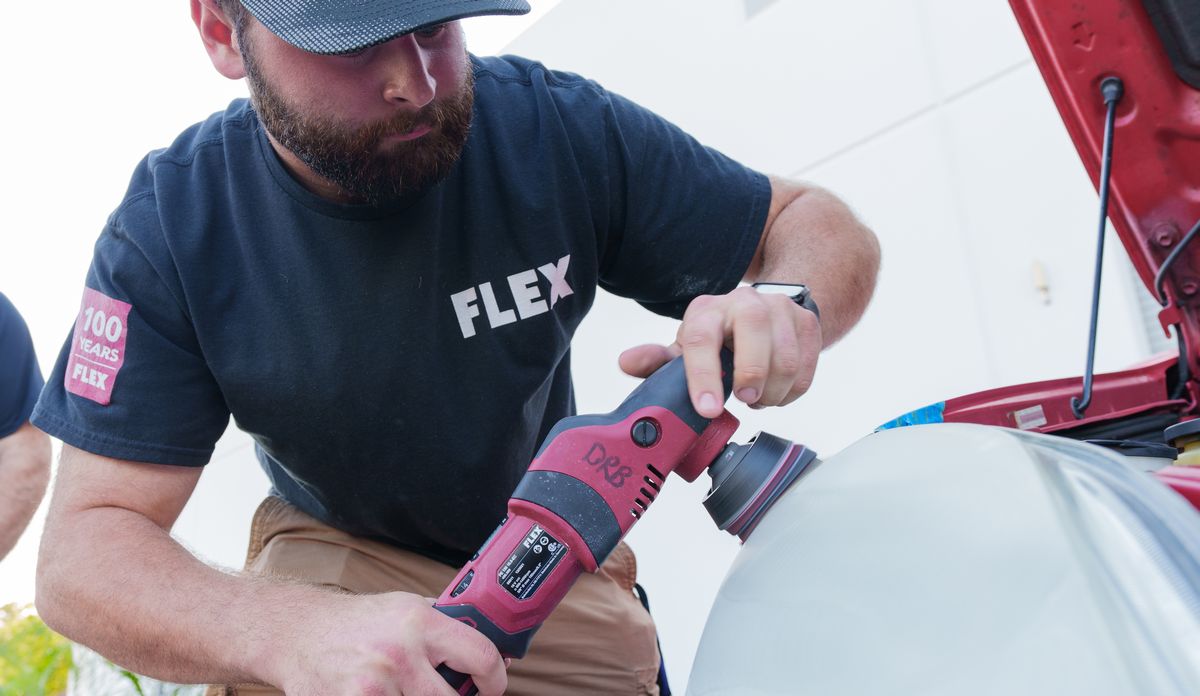
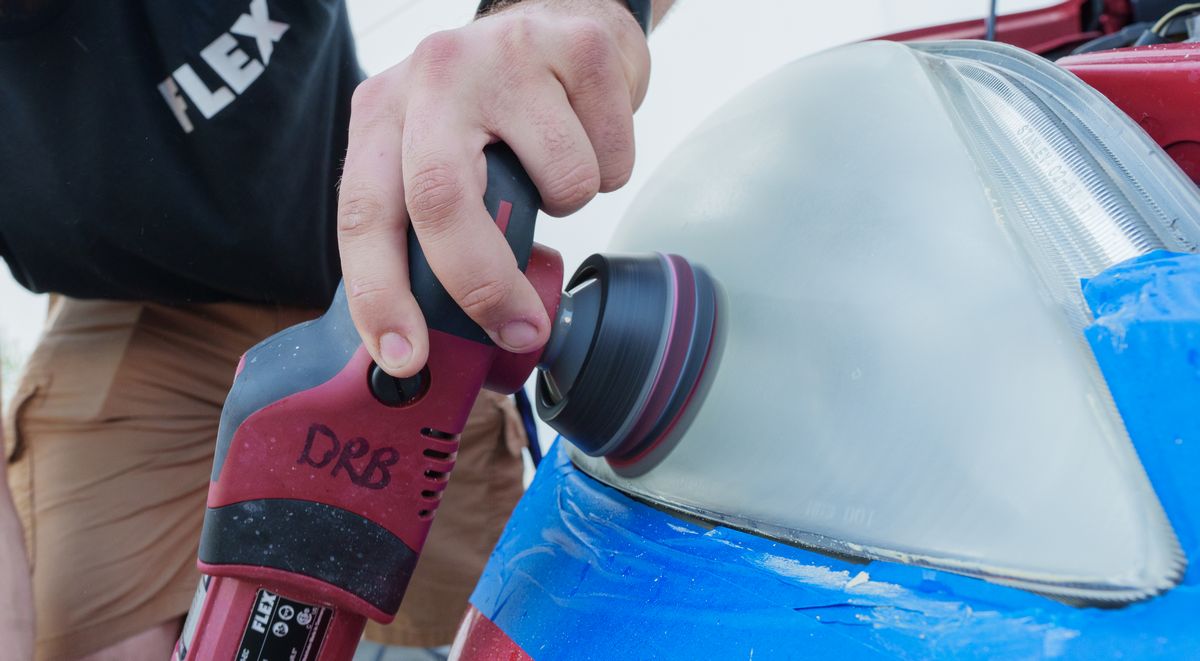
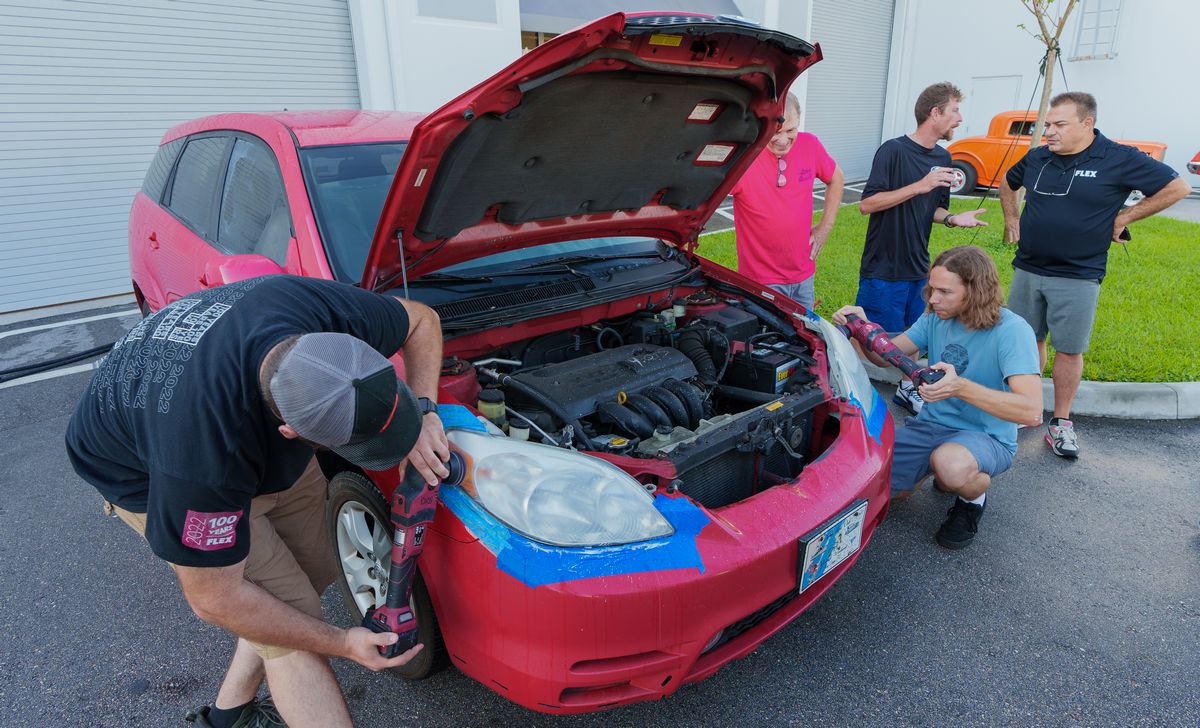
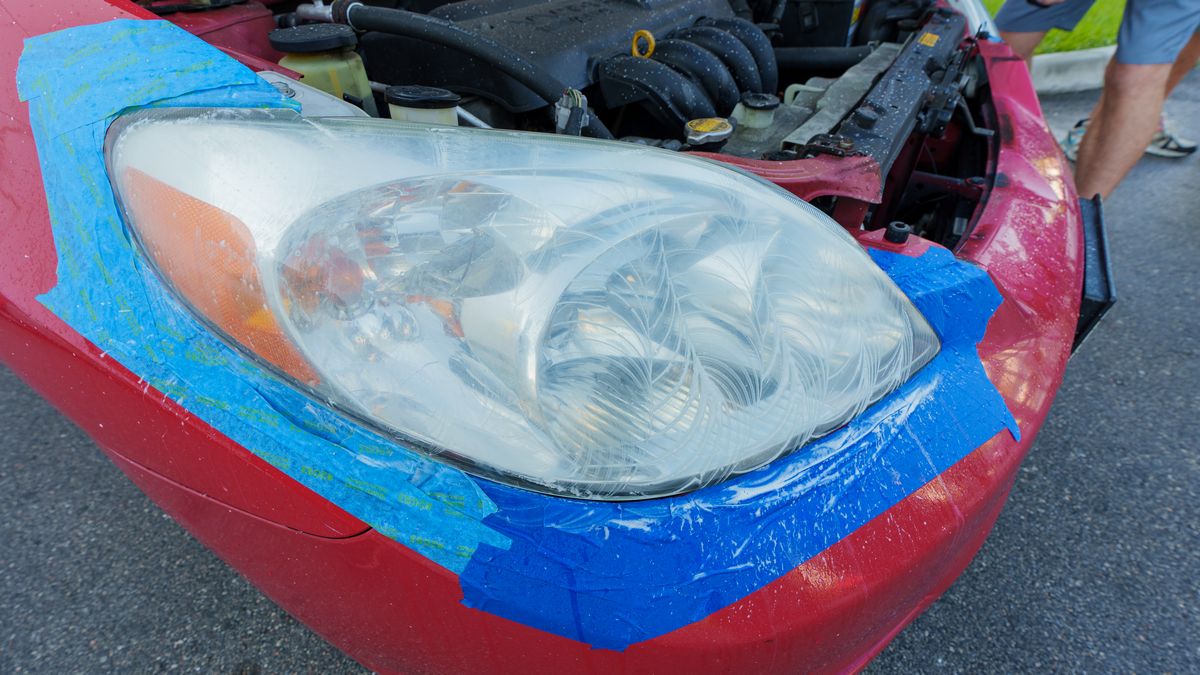
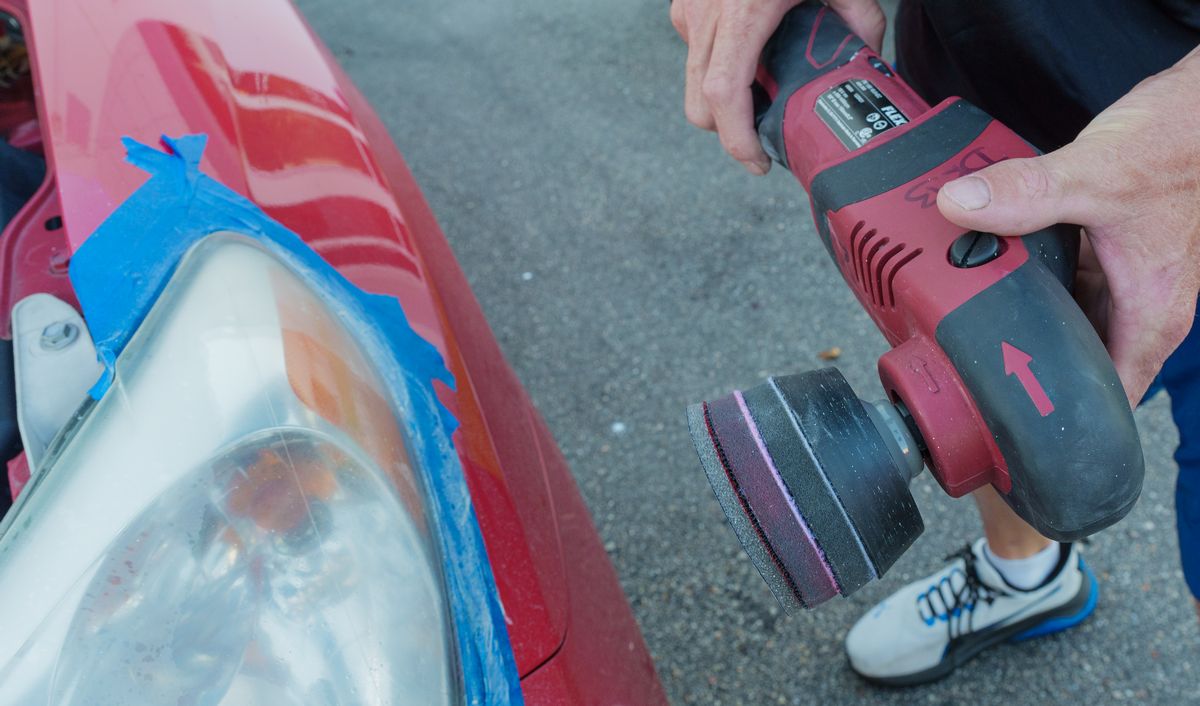
For headlight correction, we no longer waste time using ANY size, brand or style of free spinning random orbital polisher to do headlight correction. What I practice and teach others is how to SAFELY use a cordless rotary polisher to machine sand faded, oxidized and yellowed headlights. The SECRET is to use 2-3 interface pads between the backing plate and the sanding discs. The important reason for this is because with the interface pads, you remove the RISK for GOUGING the plastic with a fast-spinning sanding disc on a hard backing plate. Been there done that in a class at the geek and after a student gouged the plastic on a headlight, yours truly then block sanded the headlight until the gouge was removed and the surface was flat again.

Again, teaching people how to work smarter instead of hard by using the FASTEST way to sand away years of dead plastic. With a rotary, just like with paint correction, there's ZERO sanding disc stalling, which wastes time and is nowhere near as effective.

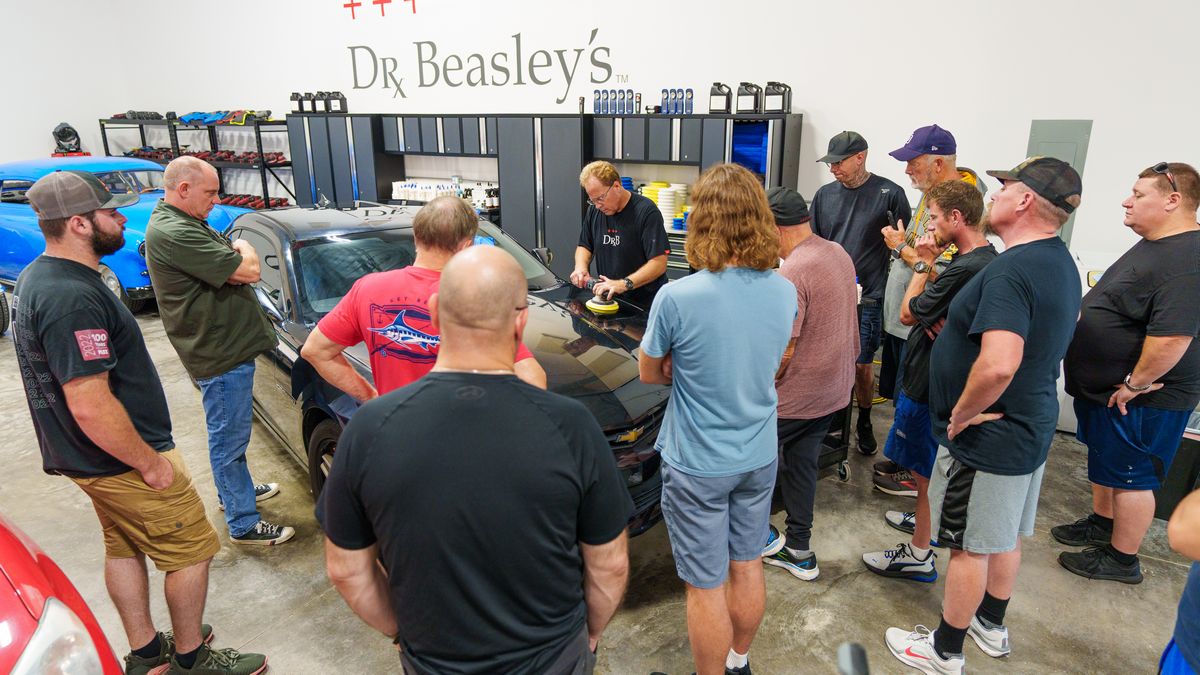
First, another demonstration on how to correctly use a rotary polisher and then I turn the class loose.


full


See the interface pads?
Share this but remember to tell others where you learned this time-saving technique.

full


full


full


full


full


full


More working smarter instead of harder while saving time
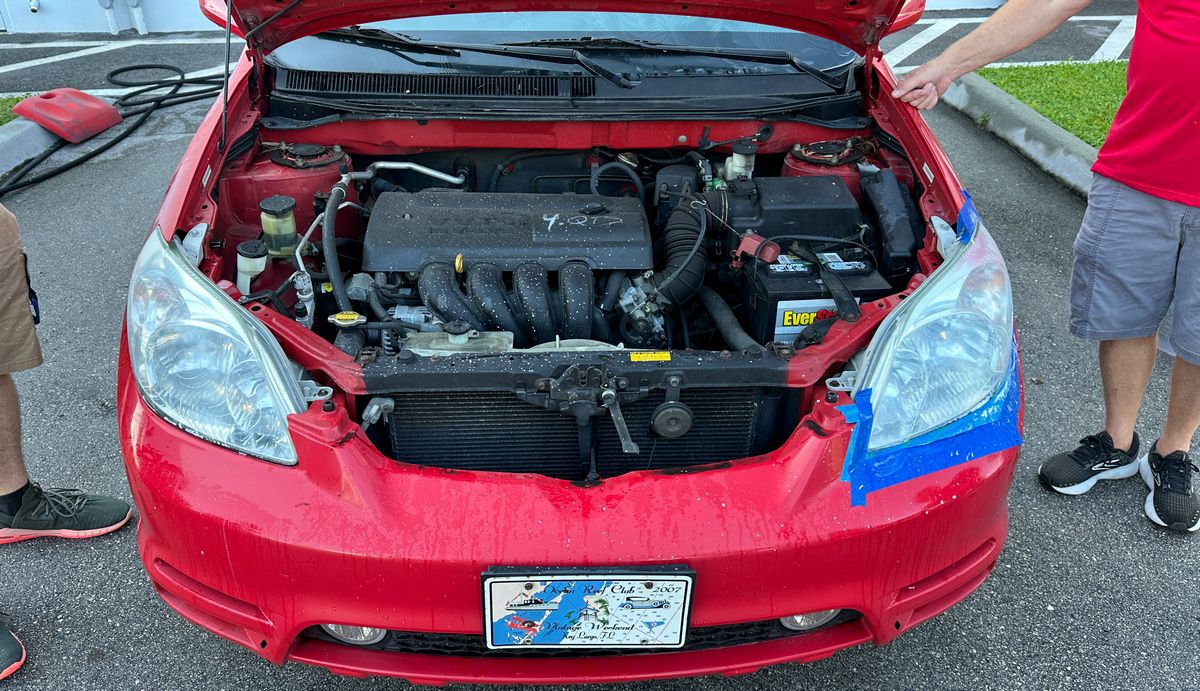
Note the hood is up for the headlight correction step? This is for 2 reasons.

1: By opening the hood, we remove ALL RISK for someone to accidently machine sand the clearcoat paint next to the headlight.
We start out with 500 grit sanding discs. If you run a 500 grit sanding disc into a layer of clearcoat paint that is thinner than a Post-It Note, by the time you refine the 500 grit sanding marks to 1000 grit, then 2000 grit and then 3000 grit in order to buff them out, you're going to buff through the clearcoat when you get to the compounding step.

2: For this car, we're going to go over how to do a Wet Wash Engine Detail. This means ANY sanding slurry splatter that gets on the engine doesn't matter BECAUSE we're going to wash the engine and engine compartment. Thus, you save time by working smarter. IF we were not going to do a Wet Wash Engine Detail, then we would have only POPPED the hood open, to remove the hood and thus the paint away from the headlight. This avoids sanding the clearcoat paint on the hood and avoids getting sanding slurry splatter onto the engine and engine compartment. We do place 2 layers of painter's tape around all other surrounding paint by the headlights.


full


The words are thorough and fast.

full


Mike
 
Last edited:
Continued...

Why to do the Headlight Correction BEFORE the Wet Wash Engine Detail
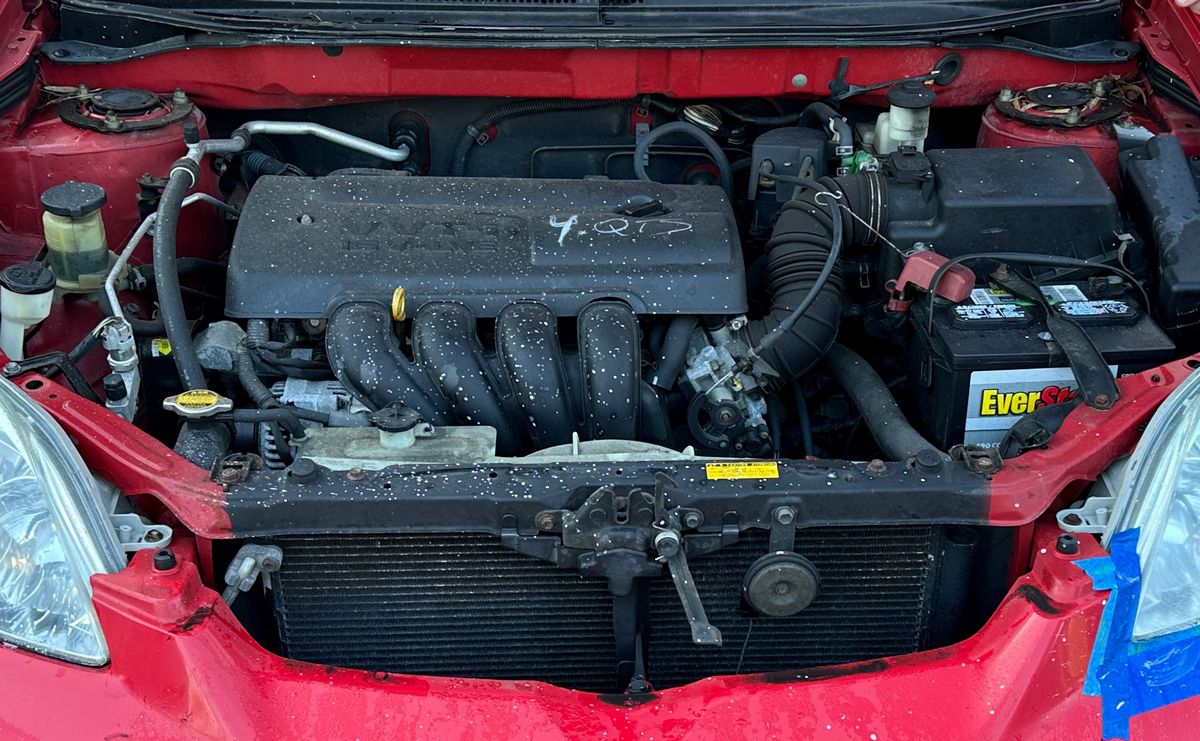
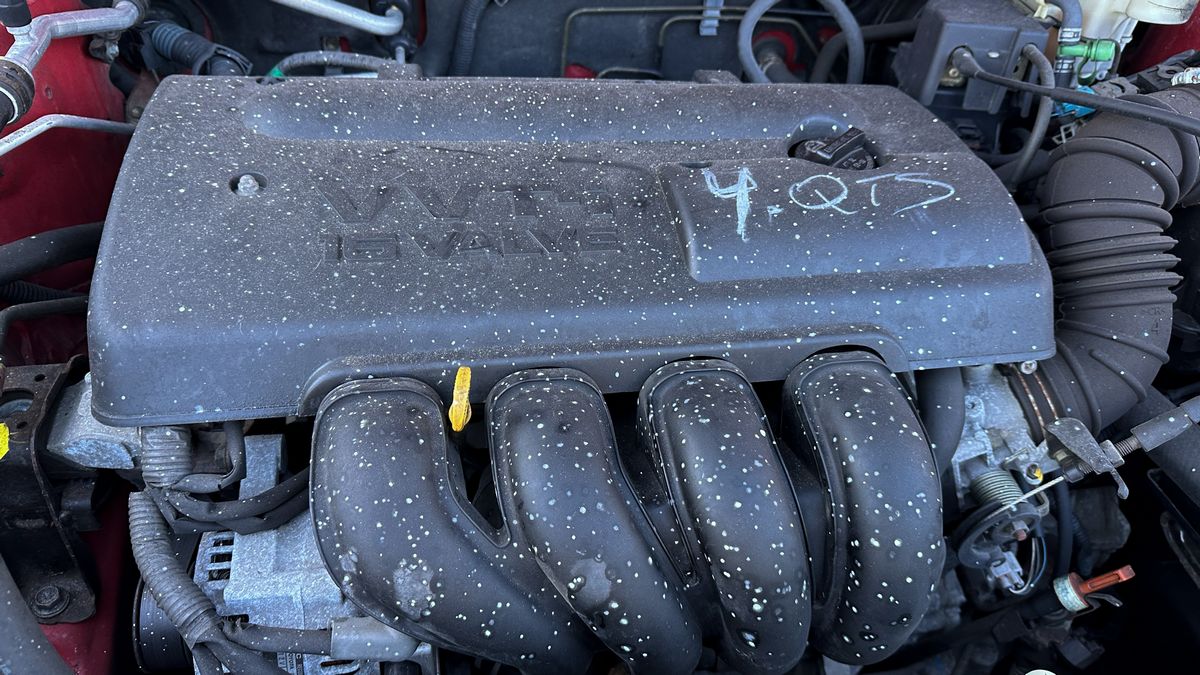
So, this smarter order to work only applies if you are in fact doing the headlight correction step as a part of the Extreme Prep Wash. When this is the case, the reason you want to do the engine AFTER you to the headlights is because headlight correction gets the engine compartment dirty with sanding water slurry from machine wet sanding and the slurry shows up as SPLATTER DOTS all over the place.

full


By doing the headlight correction first, with the hood opened or even partially opened, you REMOVE any paint away from the sanding process to protect it better than painter's tape and because you're going to do a Wet Wash Engine detail, it simply doesn't matter if you get slurry splatter dots all over the place BECAUSE - next, you're going to clean the engine and engine compartment.

Make sense? Another example of working smarter instead of harder, which means saving time, saving step and even saving on chemicals and supplies.

full


Machine Sanding Slurry Splatter Dots - that's a mouthful. :)

full


Wet Wash Engine Detail
If you're reading this and you're NOT familiar with the Wet Wash Engine Detail, this is the type of engine and engine compartment cleaning you do for super dirty engines. The other type of engine cleaning is called, Kosmetic Engine Detailing, and this is where you primarily use a spray-on cleaner (like an APC or even a Glass Cleaner), to clean all the plastic cladding found on and over the engine and also in the engine compartment and then apply a dressing to restore a factory-new look.

With the Wet Wash Engine Detail, you're doing a traditional process that includes,
  • Blowing out any loose dirt, leaves, sticks, bugs, pine needle, etc.
  • Taping-off and covering over any water-sensitive areas or components.
  • Using degreasers to loosen and dissolve oil, grease and sludge.
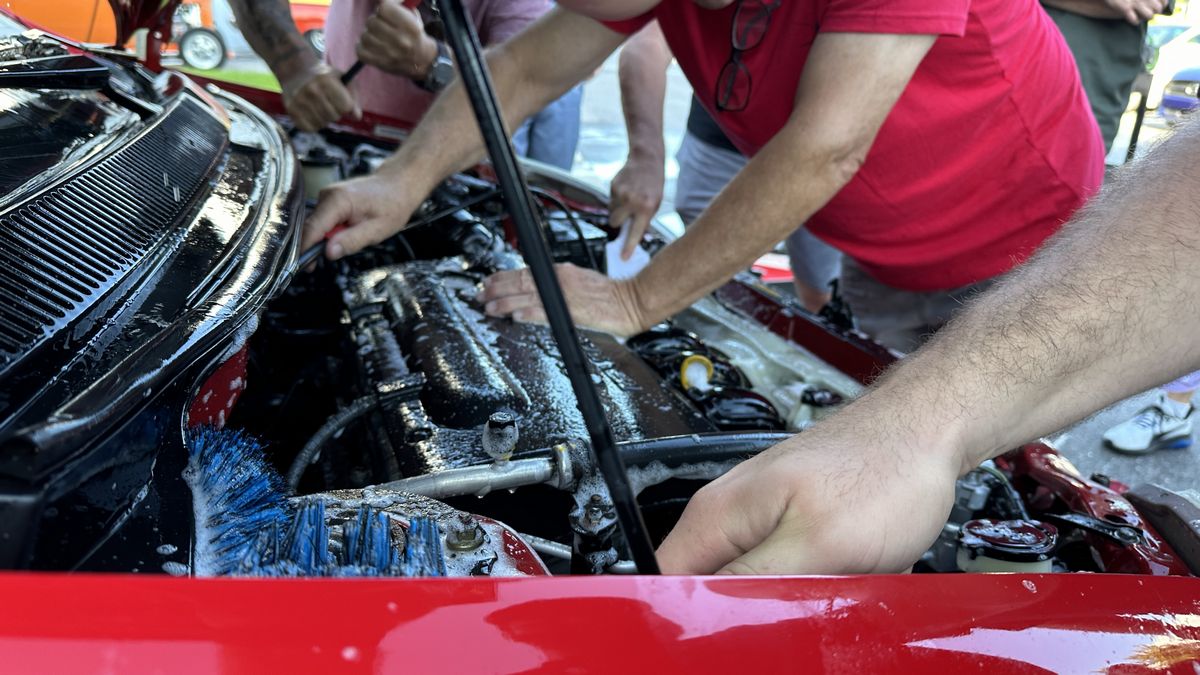
  • Using a variety of brushes to agitate the degreasers.
  • Using a water sprayer or pressure washer to flush and rinse the degreaser and everything its loosened.
  • Blowing the engine compartment out to remove standing water using compressed air.
  • Running the engine to burn-off any residues that get onto areas of the engine that you cannot fully rinse to eliminate any residue-burning odors.
  • Checking the Check Engine Light to make sure nothing negative happened from the process.


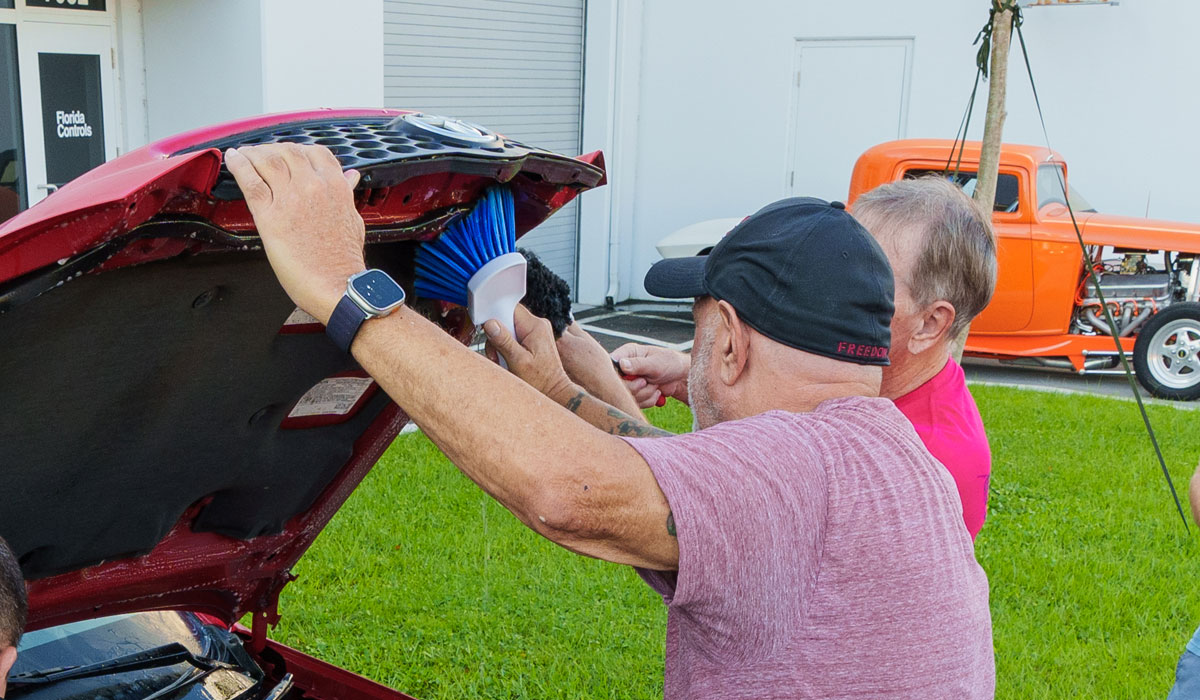
Here's class starting up high, cleaning the underneath of the hood.

full


full


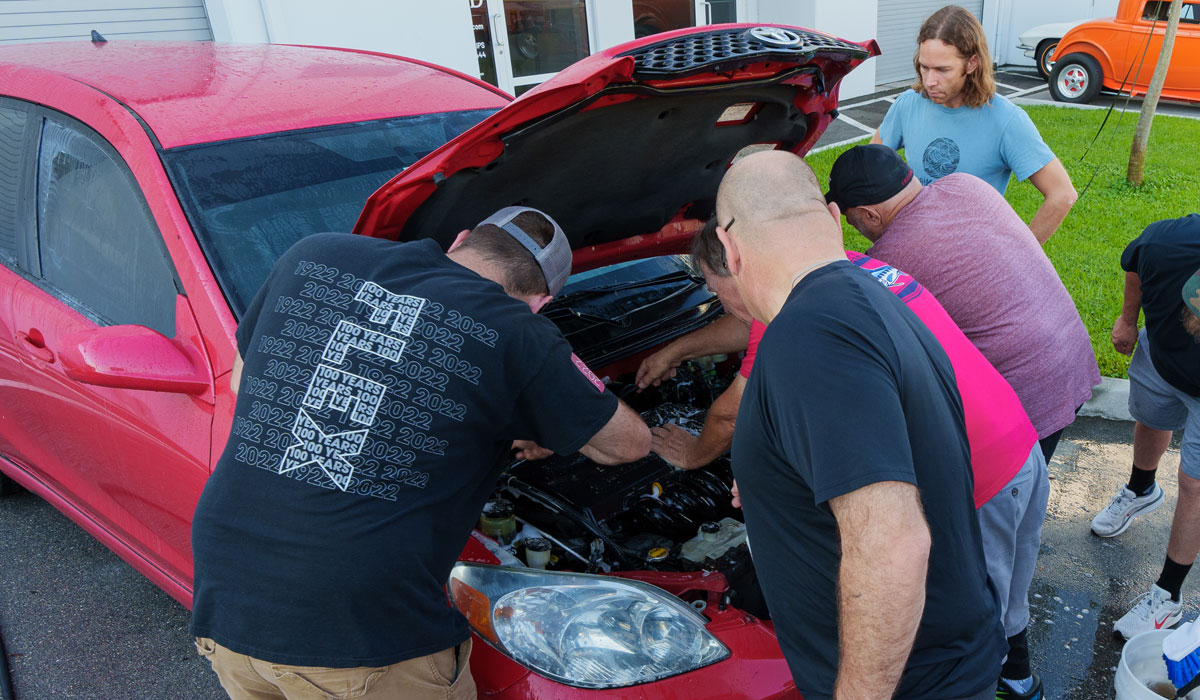
Here's students scrubbing Dr. Beasley's Premium Degreaser with an assortment of brushes.

full


full


full


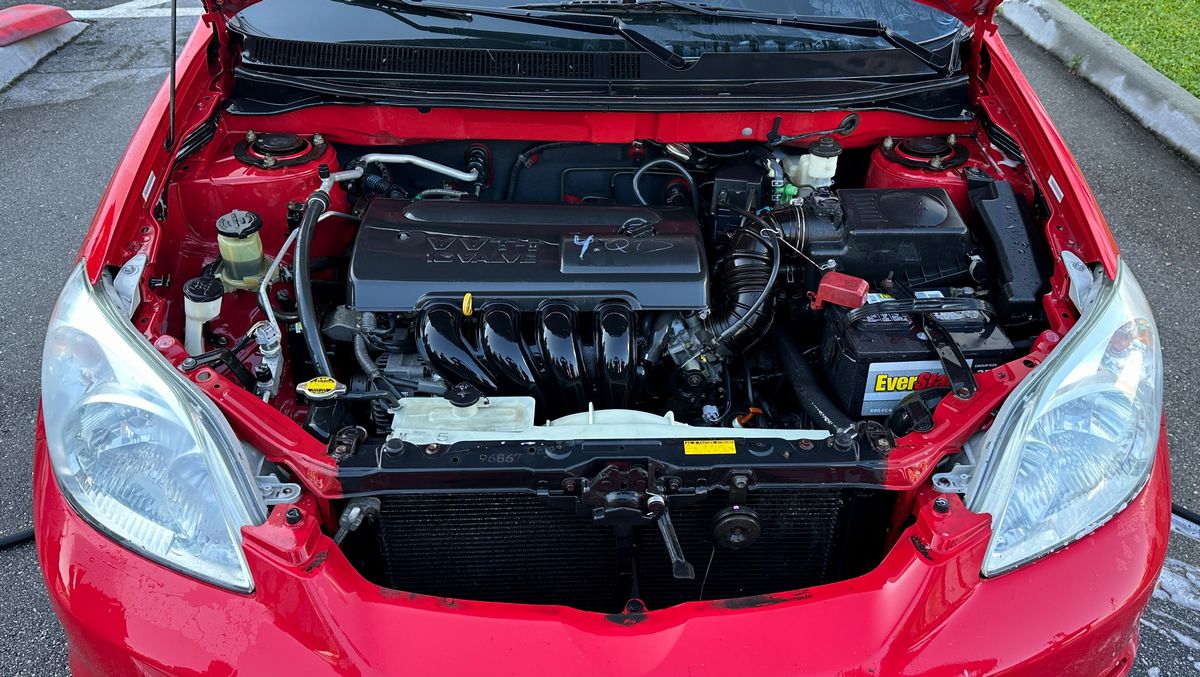
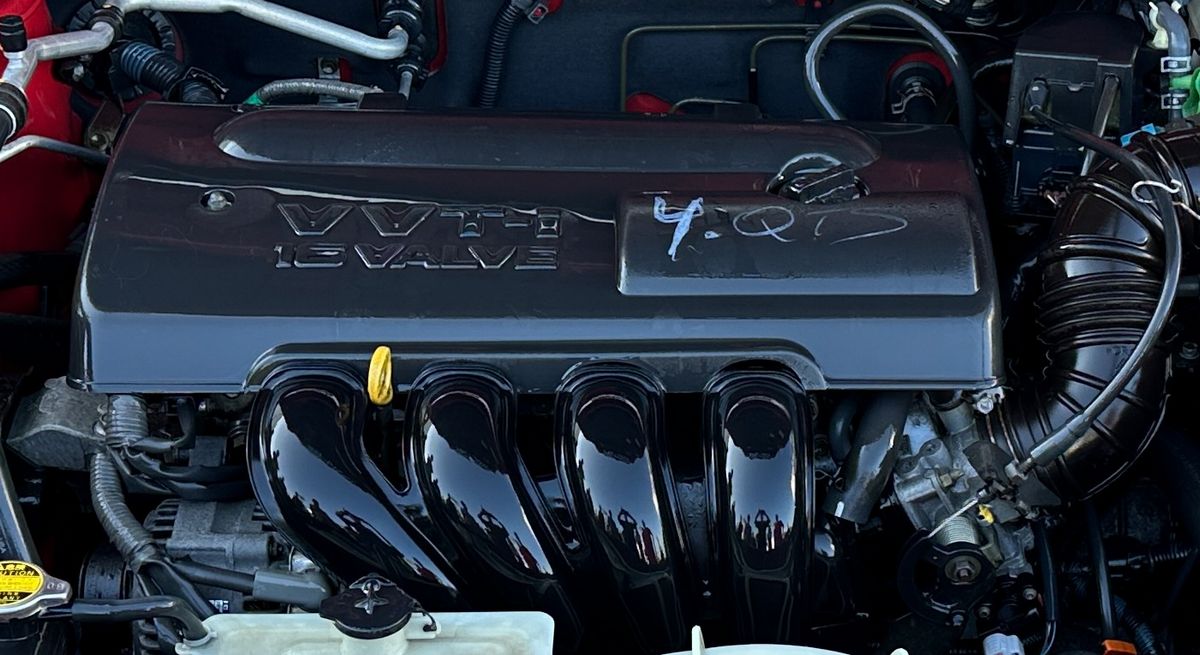
Here's after rinsing.

full


full


Wheels and Tires
After polishing the glass, machine sanding the headlights, cleaning the engine and engine compartment, next up is cleaning the wheels and tires.

full


full


full


full


full


Full Contact Body Wash
After wheels and tires, next we wash the entire outside of the vehicle. This also washes off any polish residues off the glass and any splatter on body panels from cleaning the engine compartment.


Mechanical Decontamination
After washing and thoroughly rinsing all body panels, next the class uses clay towels and clay mitts to mechanically decontaminate the paint during the Extreme Prep Wash. This saves time, steps and supplies. This also means after drying the car, you won't get the car wet a SECOND TIME using Clay Lube because you've already processed this while the car was wet. Another example of working smarter instead of harder.

full


The Proper Way to Clean Canvas, Cloth Convertible Tops
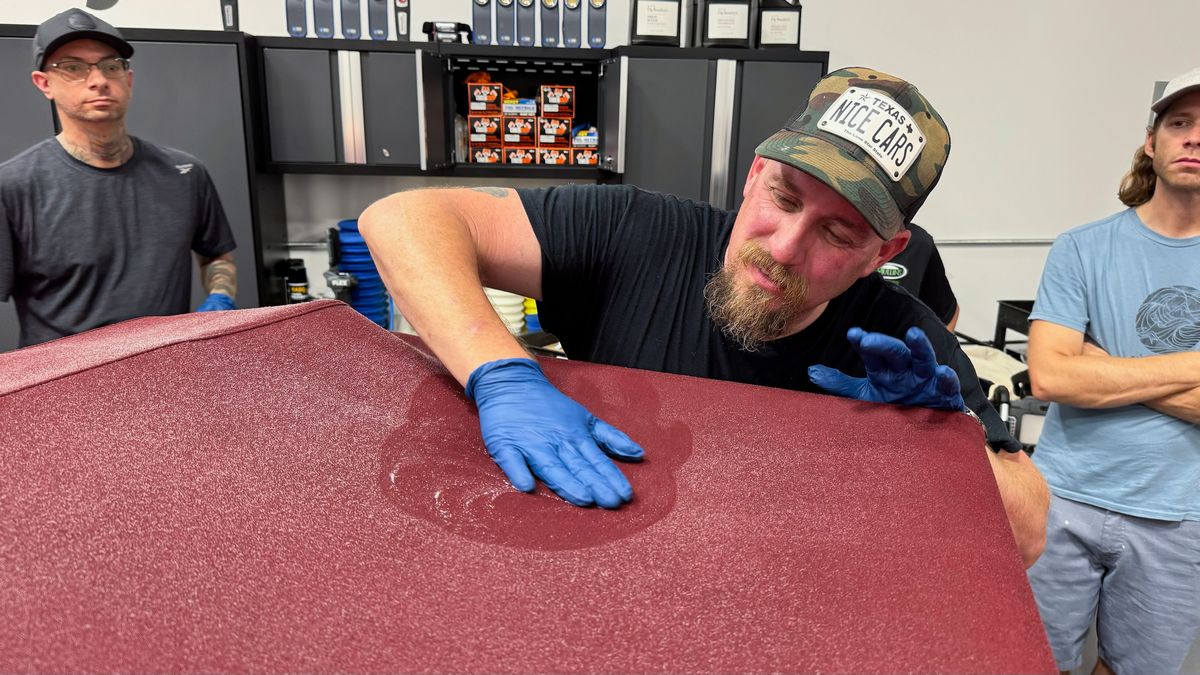
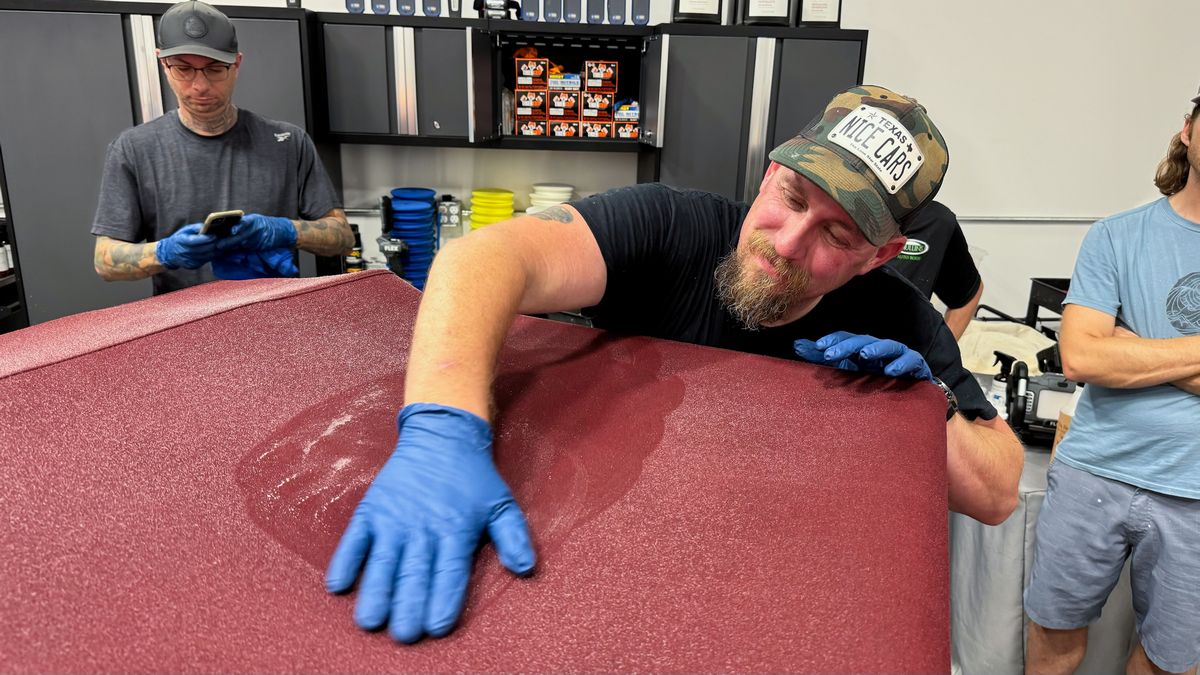
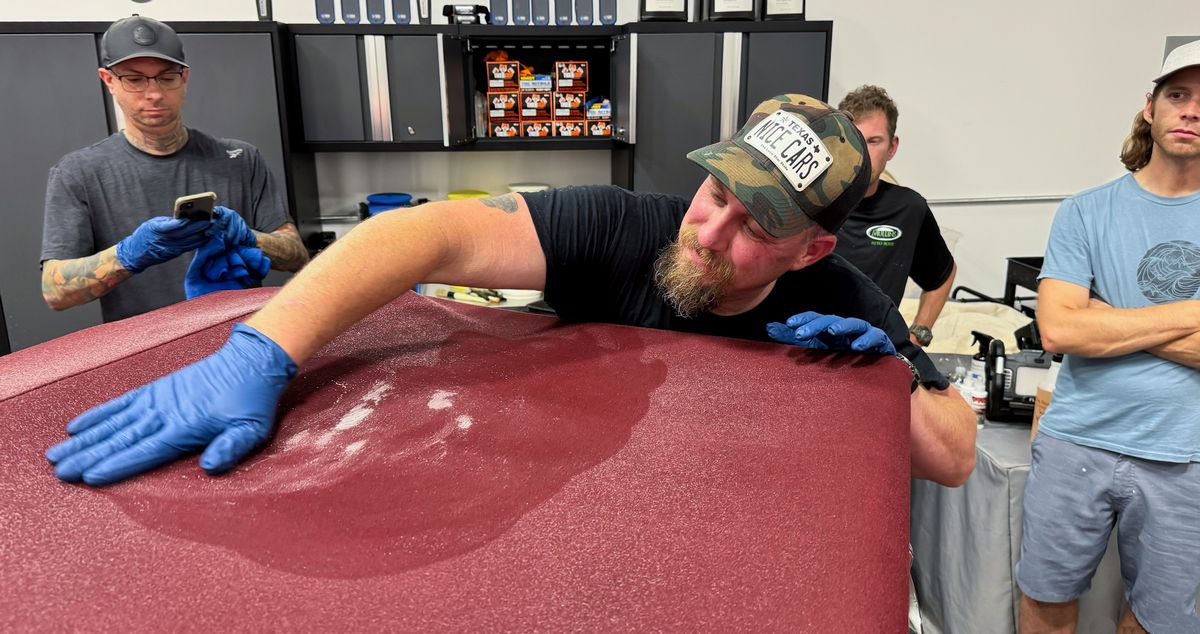
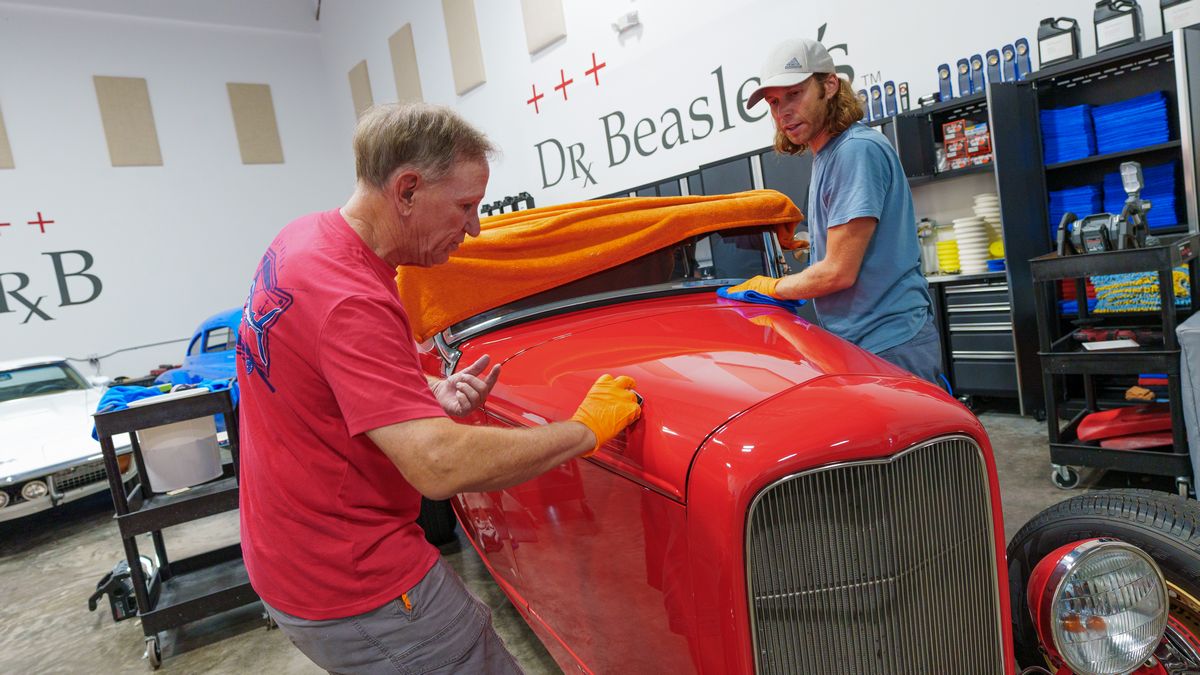
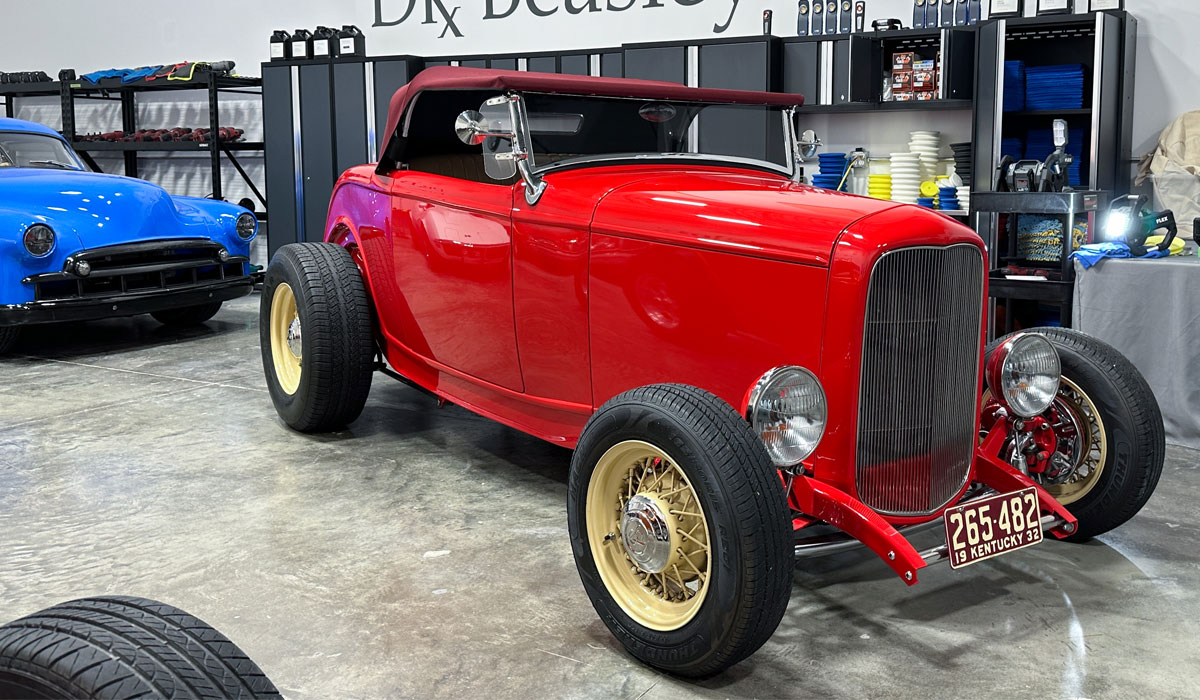
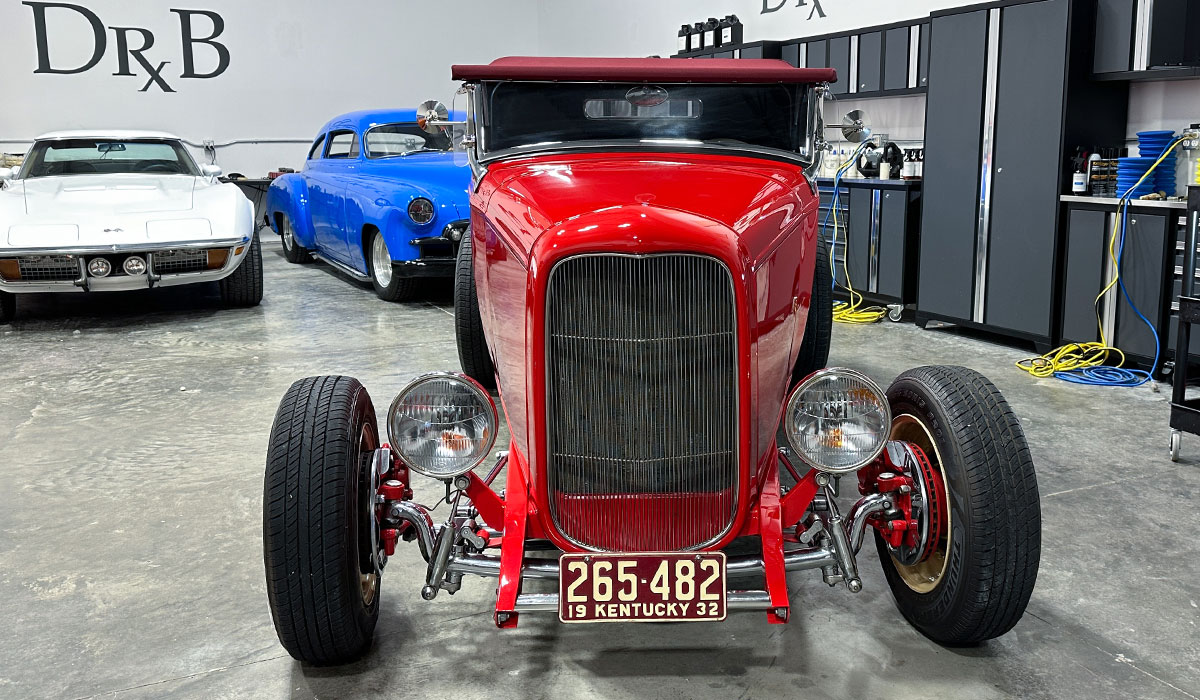
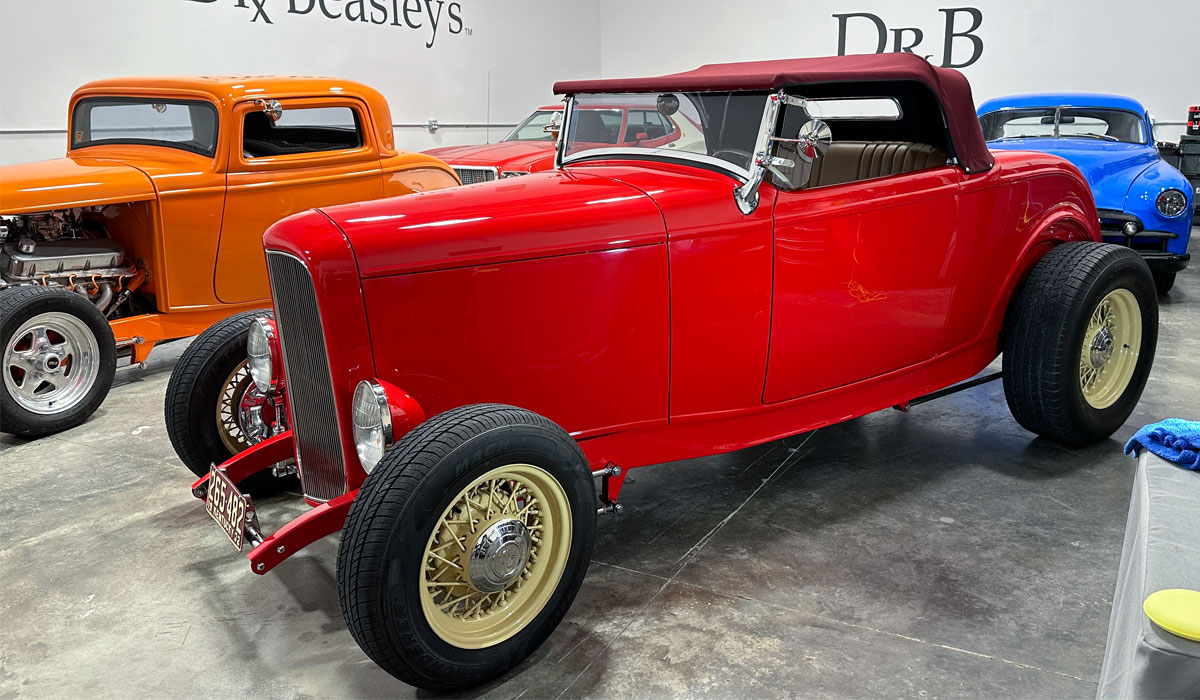
I always do my best to bring in a canvas, cloth top convertible to share the correct and safe tools, products and techniques to clean these types of tops. For this class we have a high-end build, 1932 Ford Roadster Streetrod. Apologies, we didn't get any action shots showing the products, tools and techniques, but when you sign-up for a future class, you'll get to experience this hands-on.

full


Mike
 
Continued....

Day 1 - Morning Session - Multiple-Step or Show Car Detailing
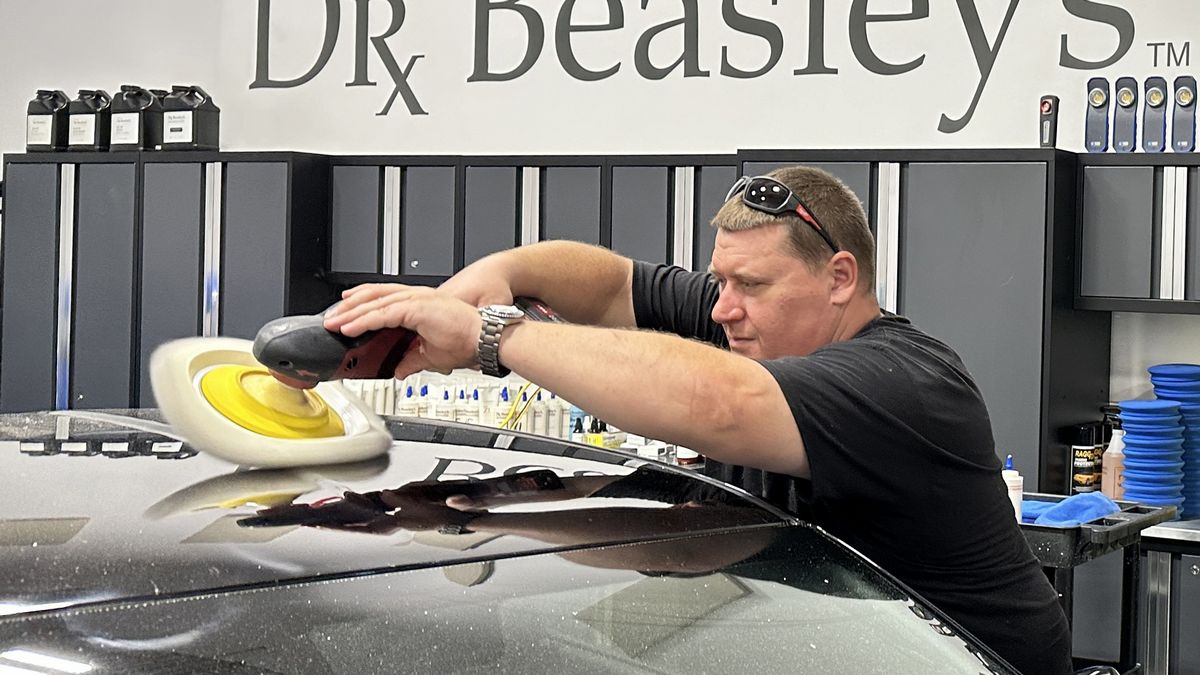
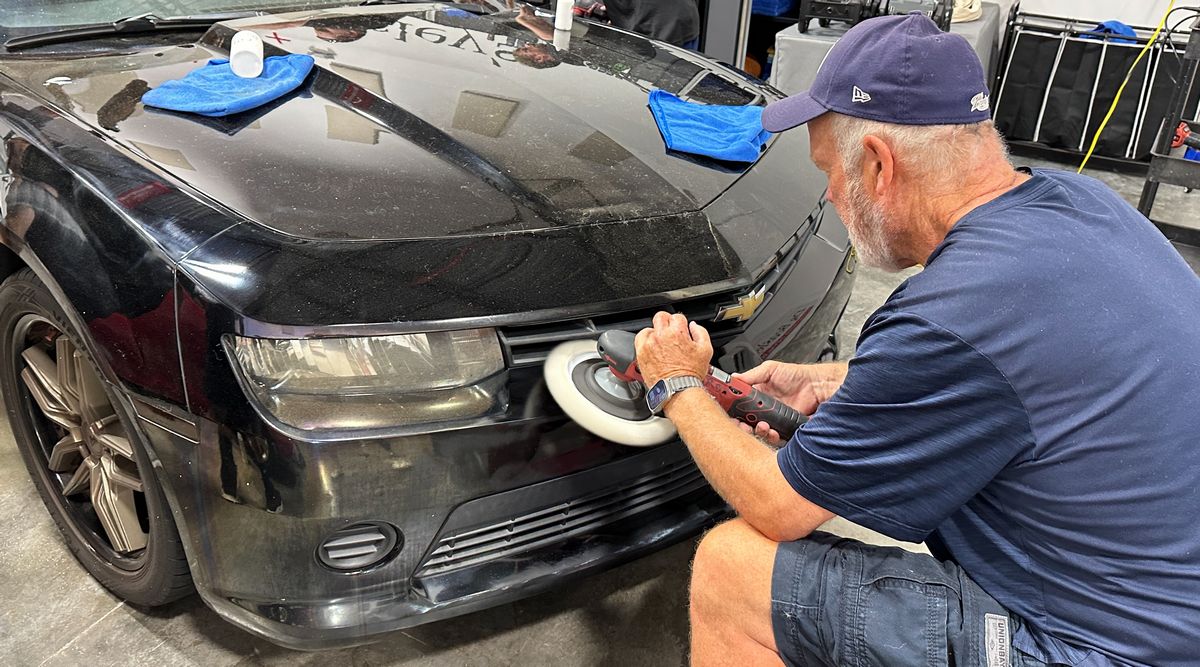
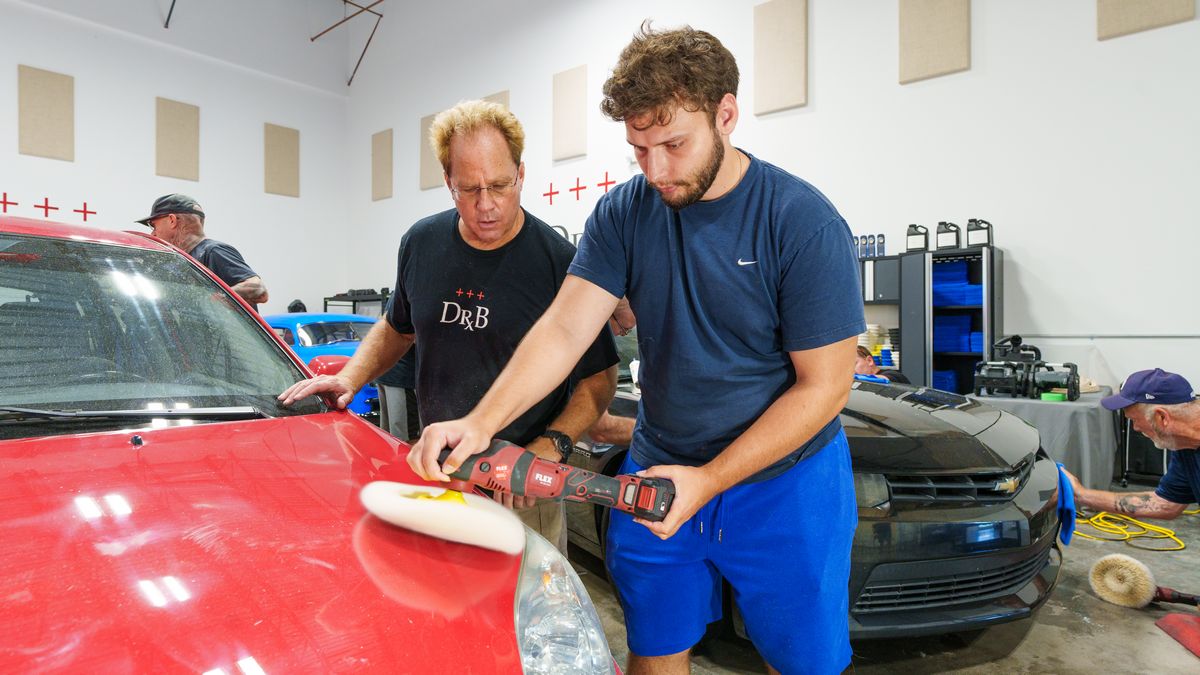
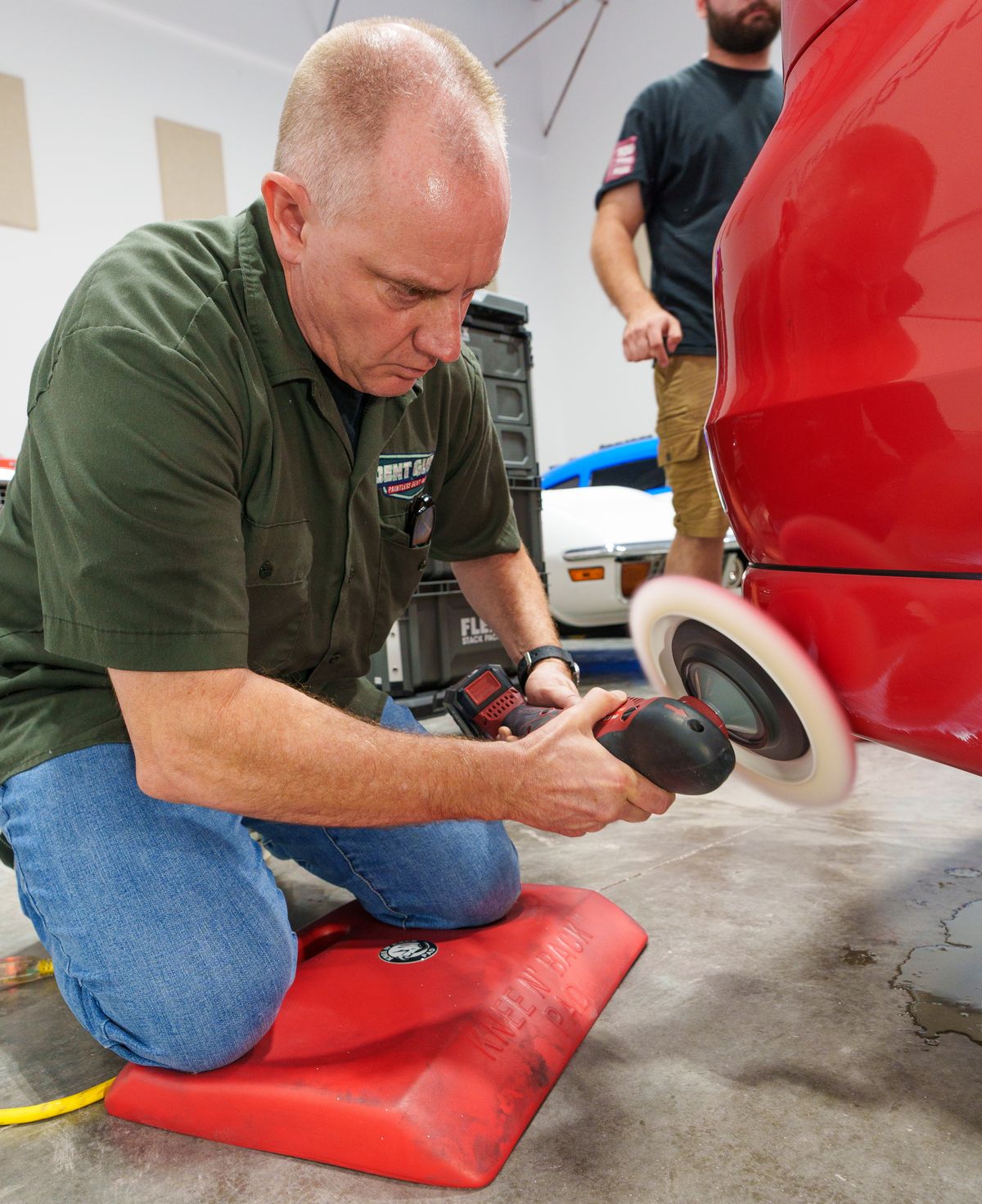
After the Extreme Prep Wash, it's time to learn how to use a rotary polisher. Not only is this the first tool you will use first thing on the first day, you'll also be using it more and more of the course of the class. My goal is when you leave here, you are confident with your skill level and memory muscle when it comes to using a rotary.


2020 Camaro - Horrendous Hard Water Mineral Staining
I met the owner at a local Walgreens, and she agreed to let us use her Camaro for the September class. As you can see by the pictures, the paint is in absolutely horrible condition.

full


full


full


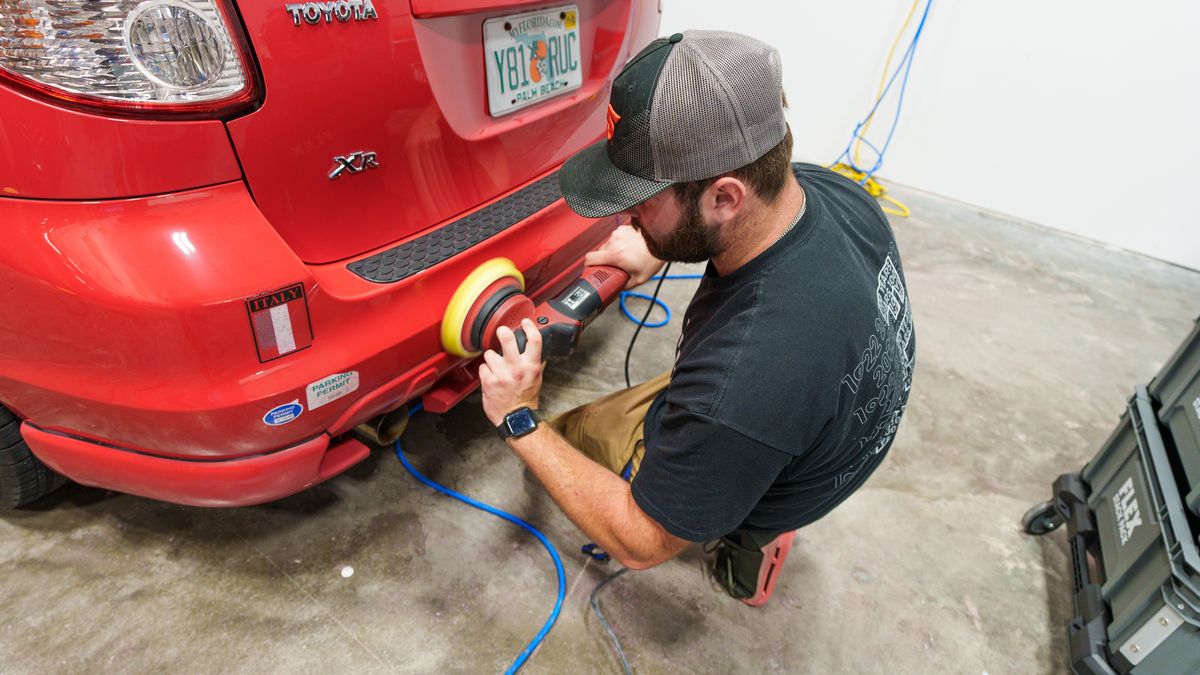
2013 Toyota Matrix
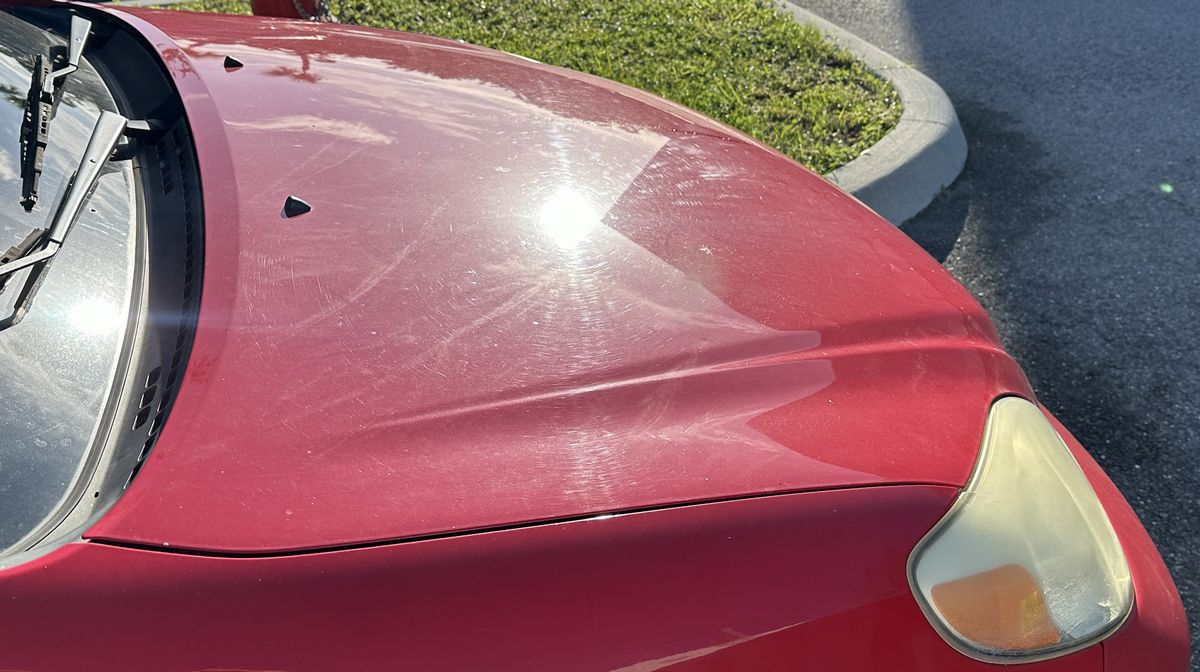
This belongs to my buddy's grandma. With around 80,000 miles on the odometer, my experienced assessment is this car has NEVER been detailed at any level outside of taking the car through a swirl-o-matic car wash.

full


Swirls, Scratches, Water Spots and Oxidation
The entire car looked just like the paint on the hood. Not only is all the paint filled with swirls and scratches, this clearcoat paint system was also very oxidized, which clearcoat paints take a lot of neglect before they will fade with oxidation.

full


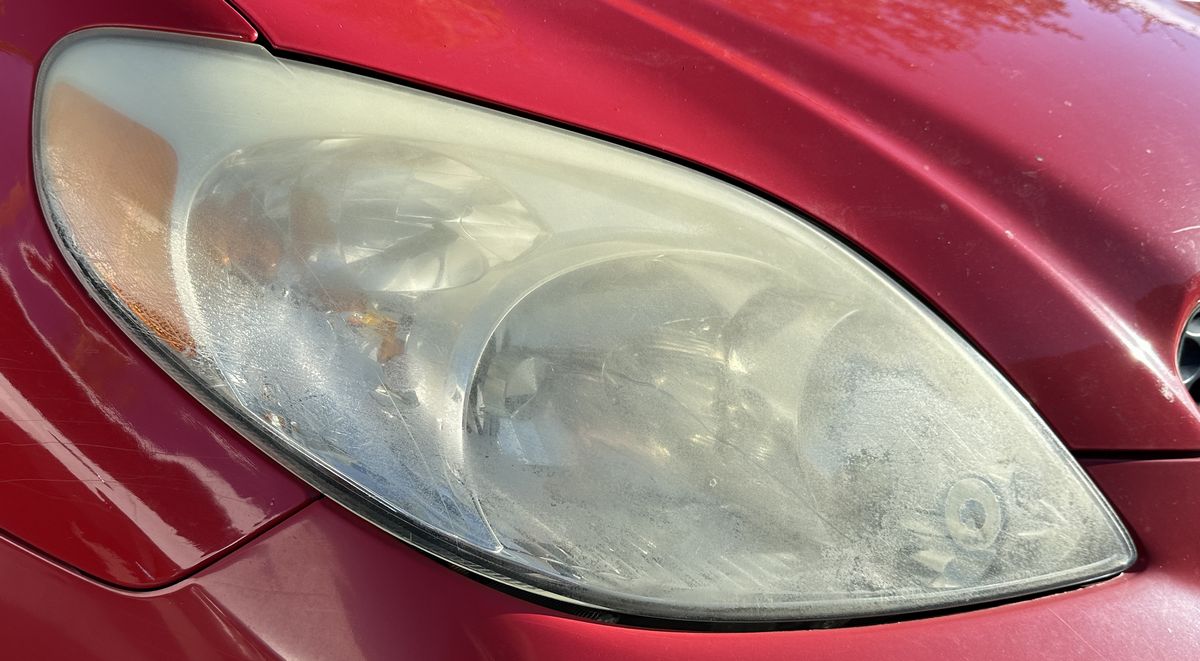
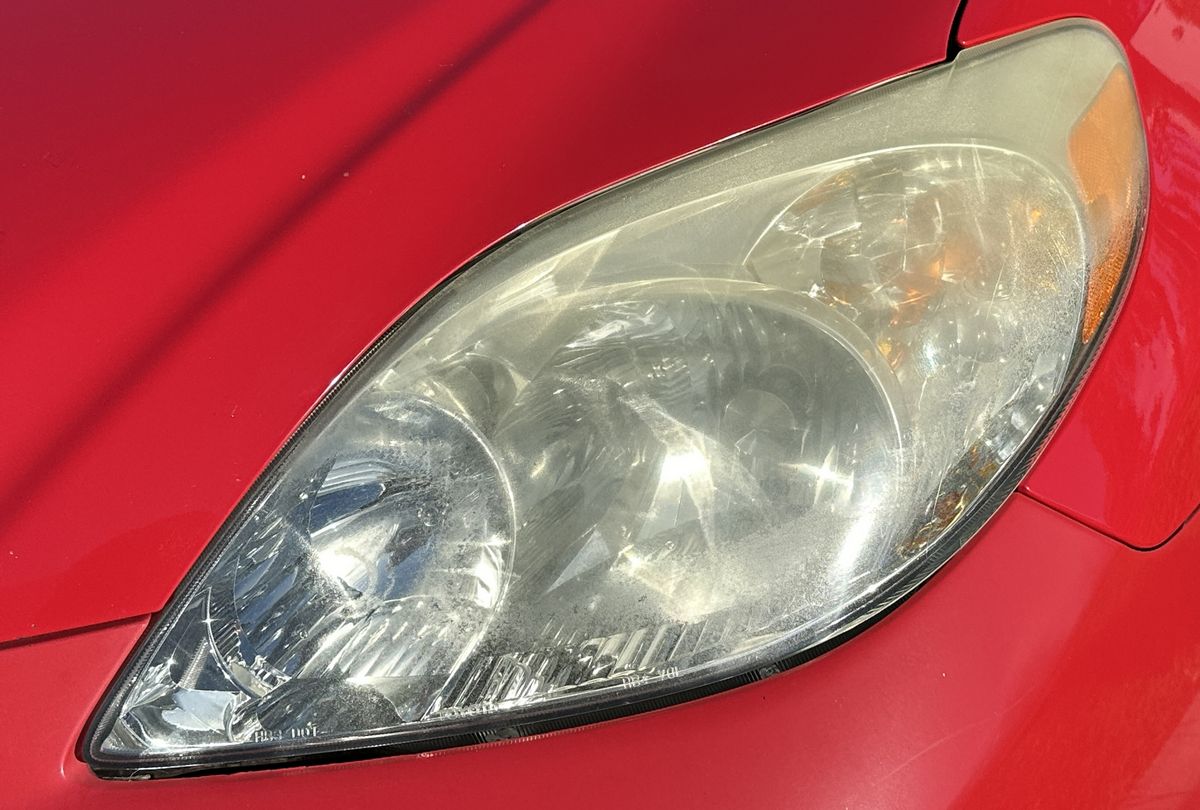
Severely Oxidized Headlights
Besides working great to learn multiple-step paint correction, starting with a rotary polisher, I also brought this car in to teach headlight correction. These are the before pictures, but if you looked at the previous pictures, you would have seen the class machine wet sanding these plastic headlights using 3" Mirka Abralon Sanding Discs on FLEX Cordless Rotary Polishers.

full


full


Always On Time
Our classes start early, and they start on time. By 8:30am in the morning, you'll have a rotary polisher in your hands and training with it on a hacked-up, neglected car.

full


How To Do a Proper Test Spot
As the guy that coined the term Test Spot and the practice of doing a Test Spot before buffing out a car, I understand the importance for each person to not only understand why it's important to do a Test Spot, but also HOW to do a Test Spot correctly, and when needed, how to do multiple Test Spots.


First up - doing a Test Spot on the Camaro to dial in a process and prove it before turning the class loose.

full


full


Next up, doing a Test Spot on the Toyota Matrix to dial in and prove our process.

full


Oxidized Clearcoats
If you look carefully, you can see how clear the paint is after the Test Spot and how faded the surrounding paint is and this milky look is what oxidation looks like when clearcoats oxidize.

full


Here's a close-up after cropping the below out of the above picture.

full


It's Go Time!
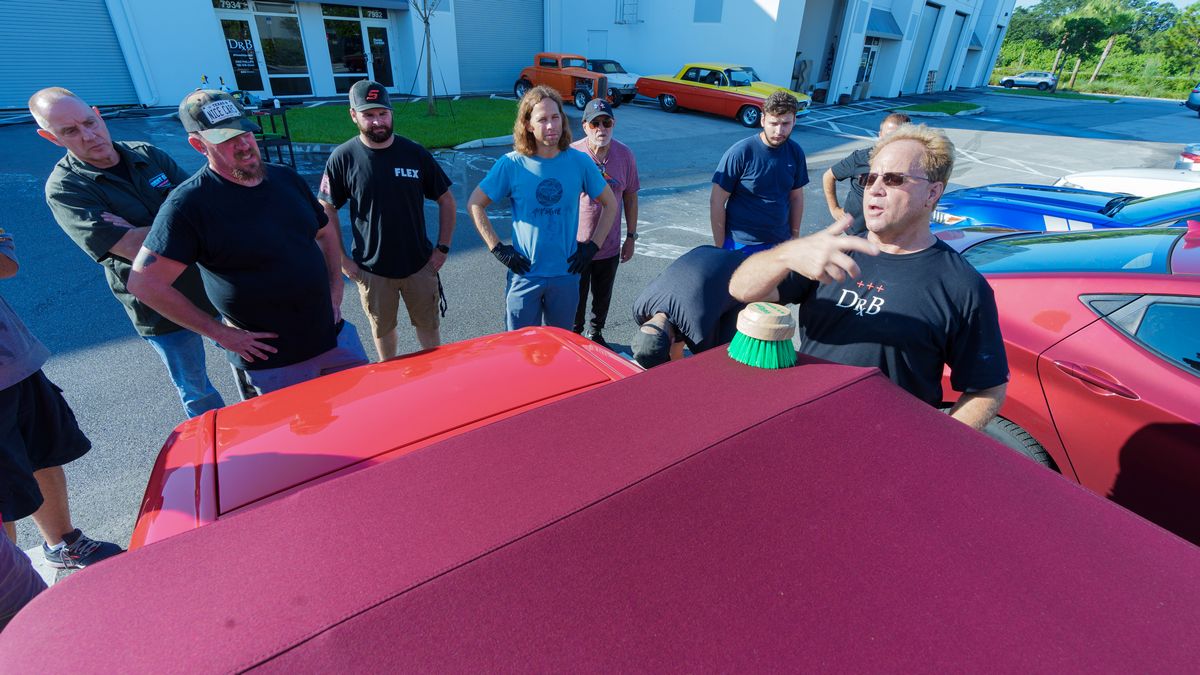
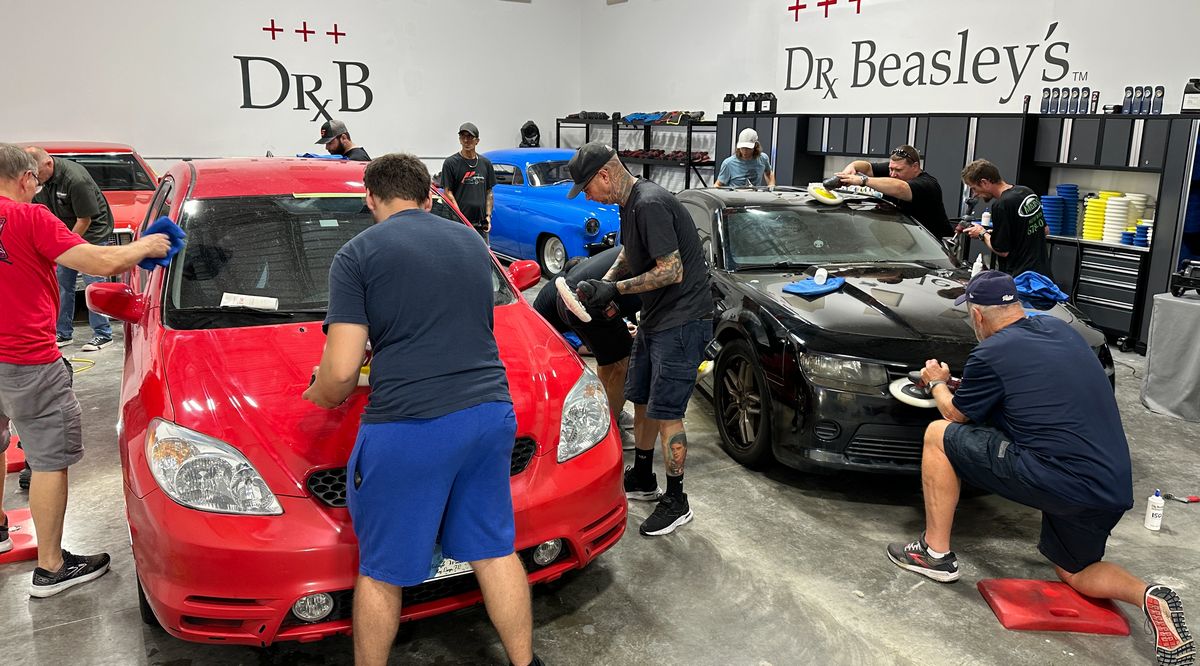
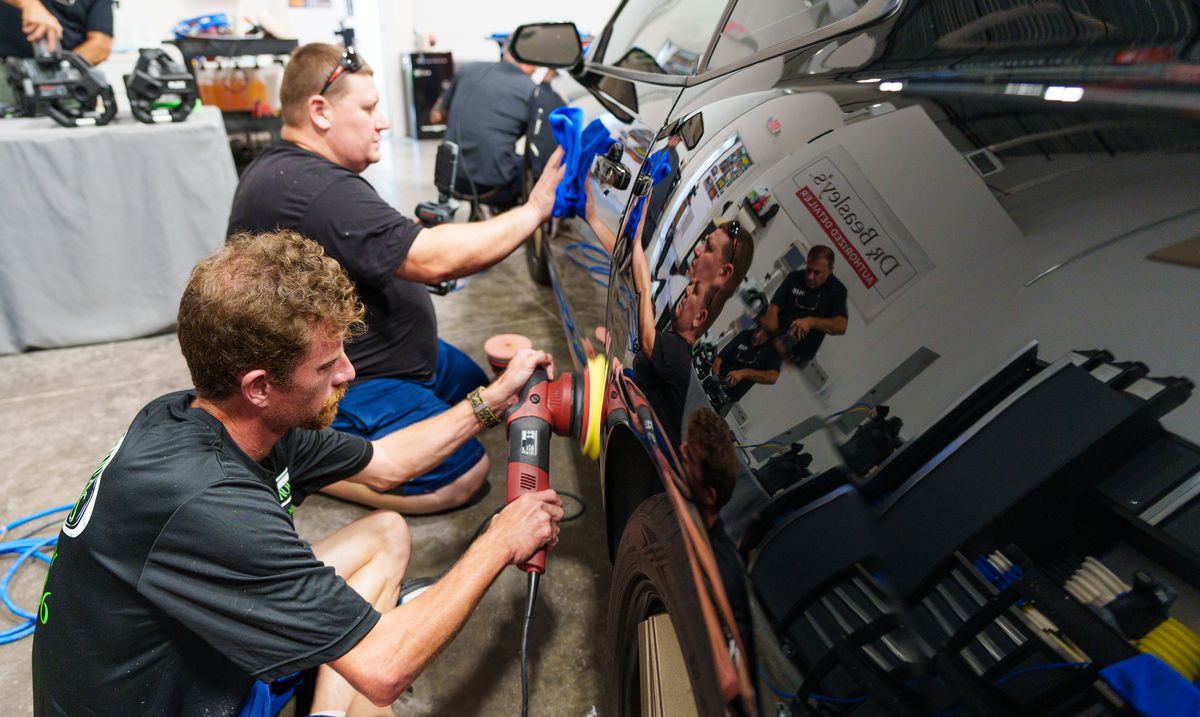
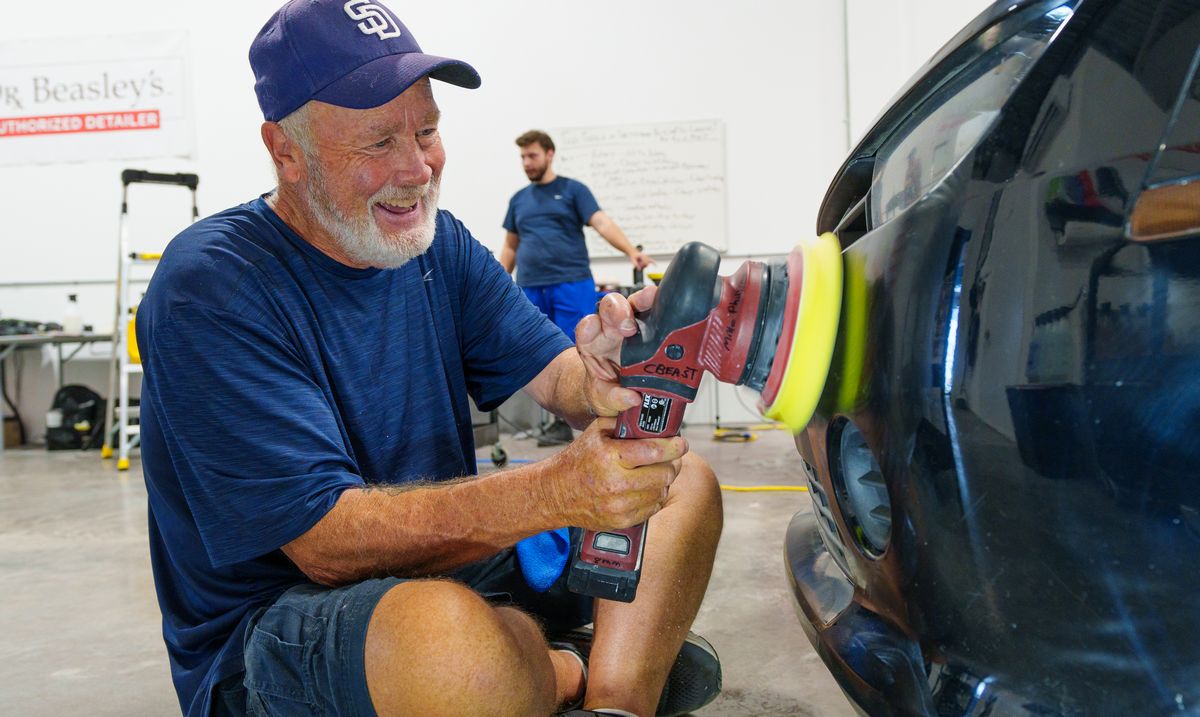
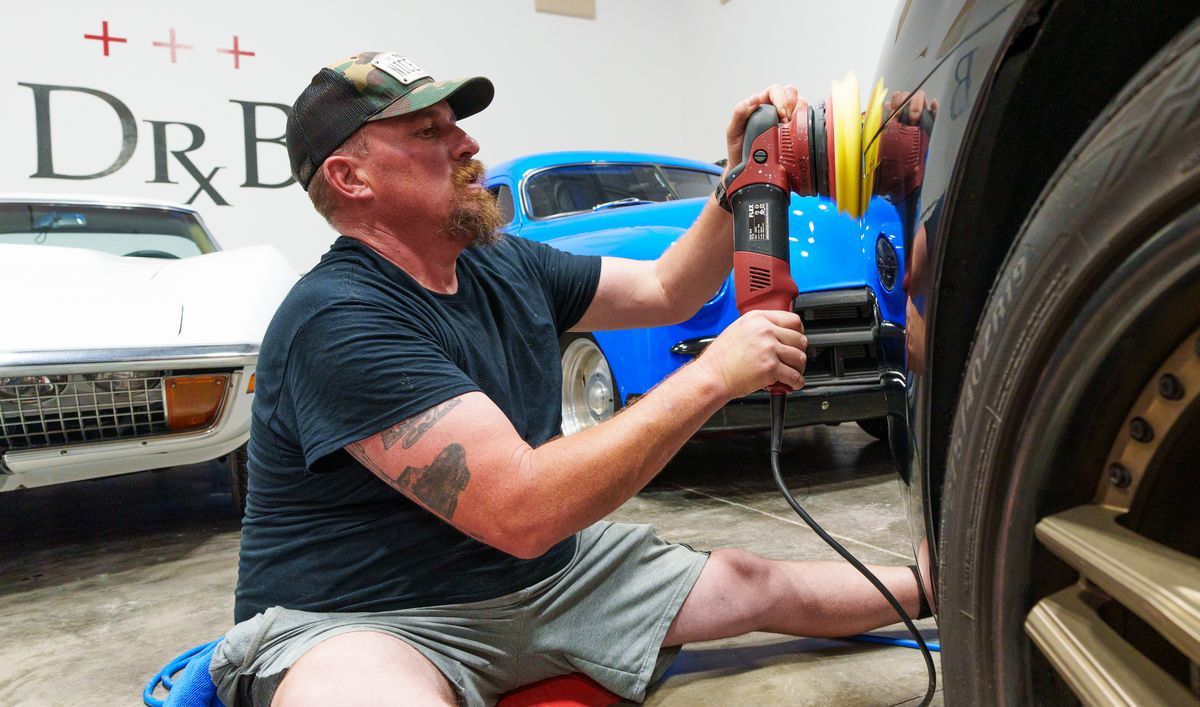
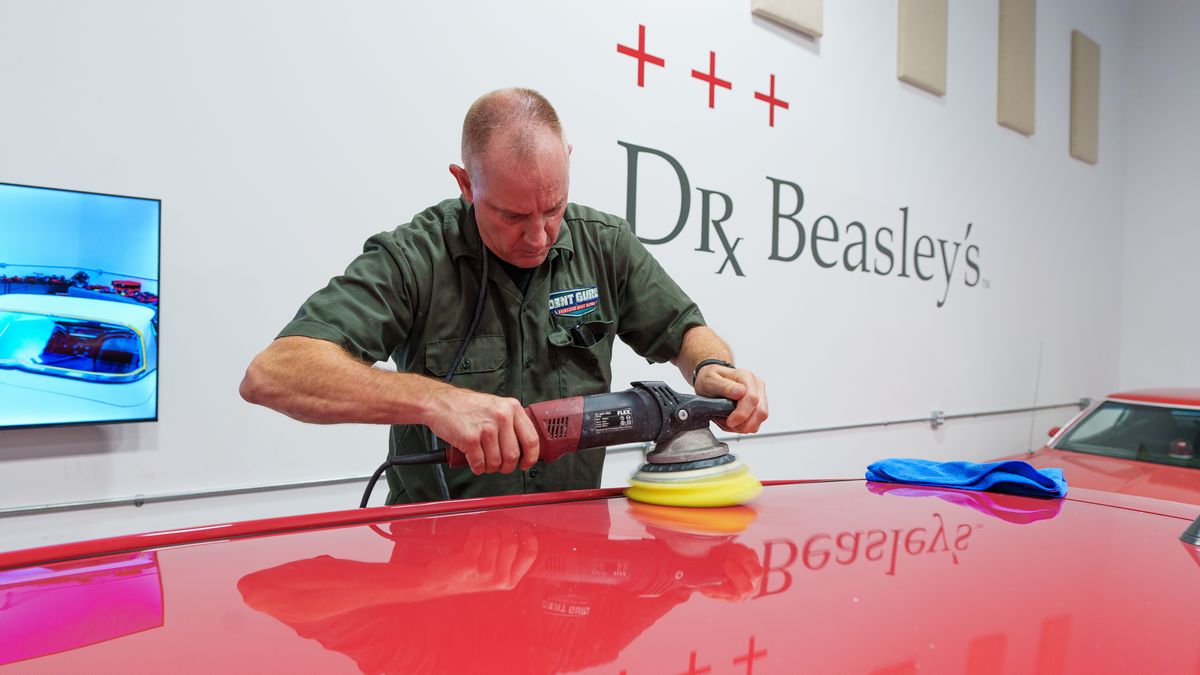
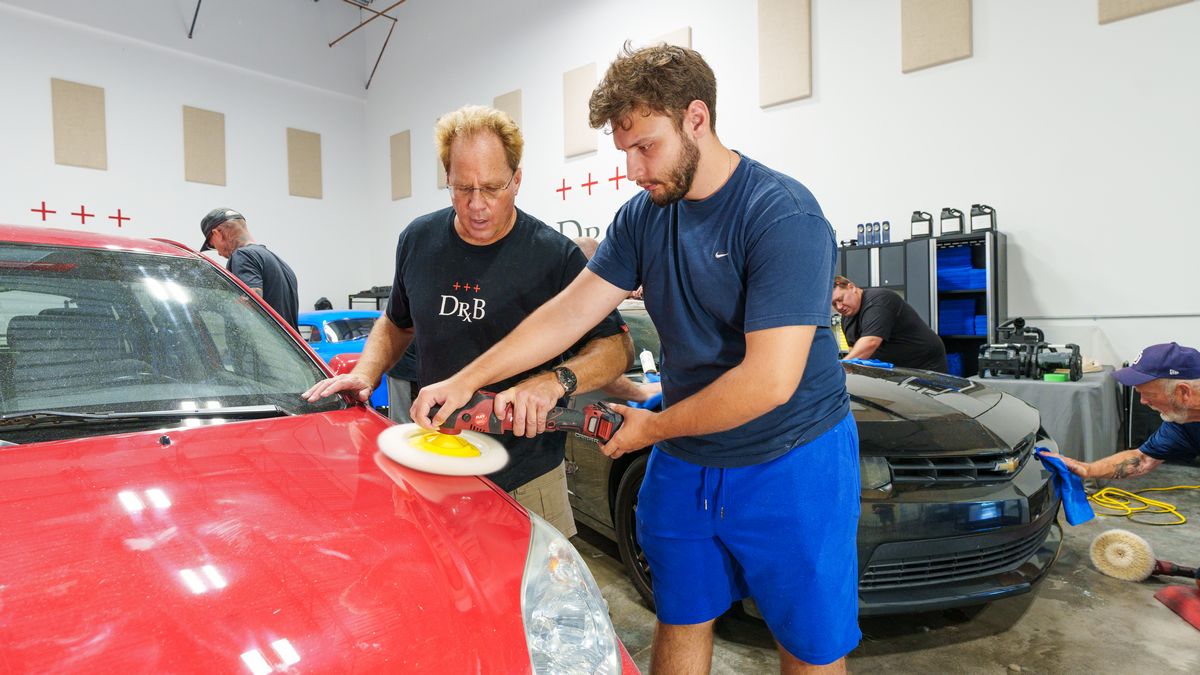
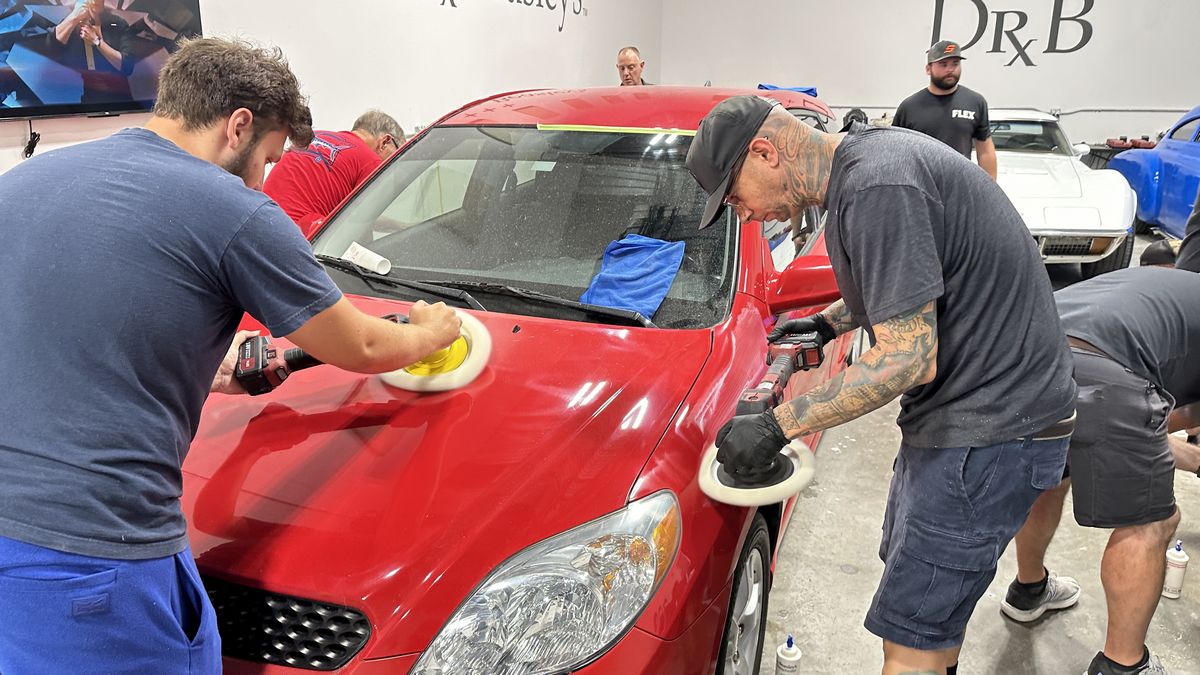
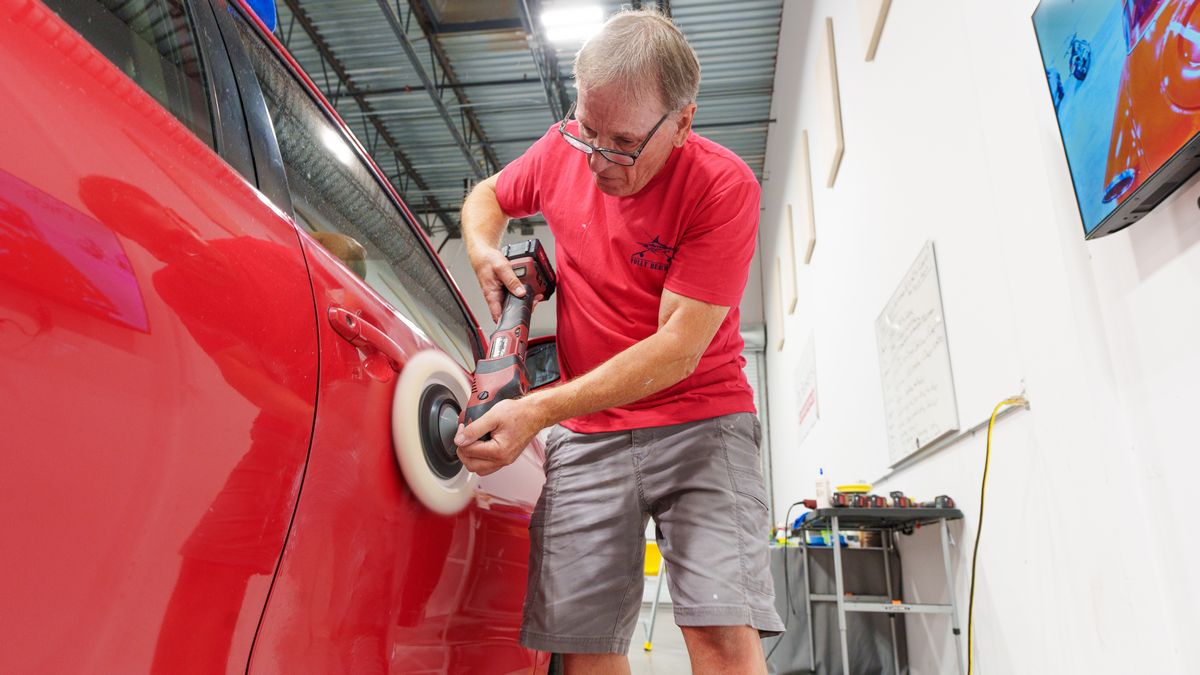
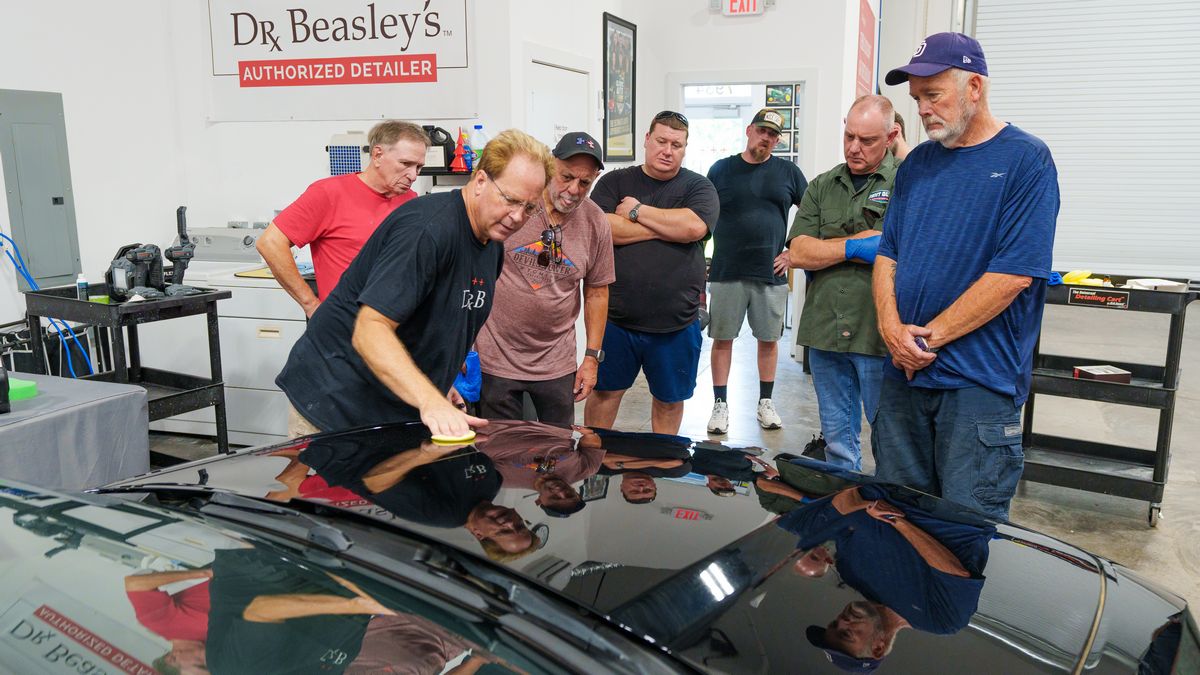
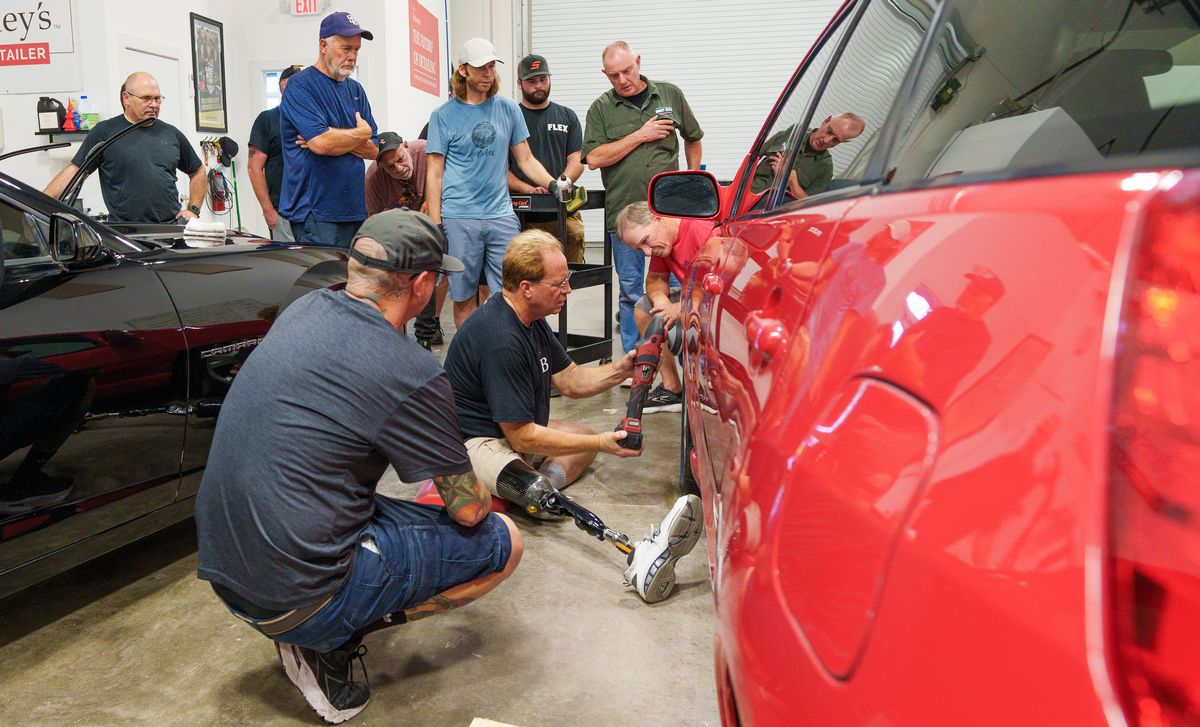
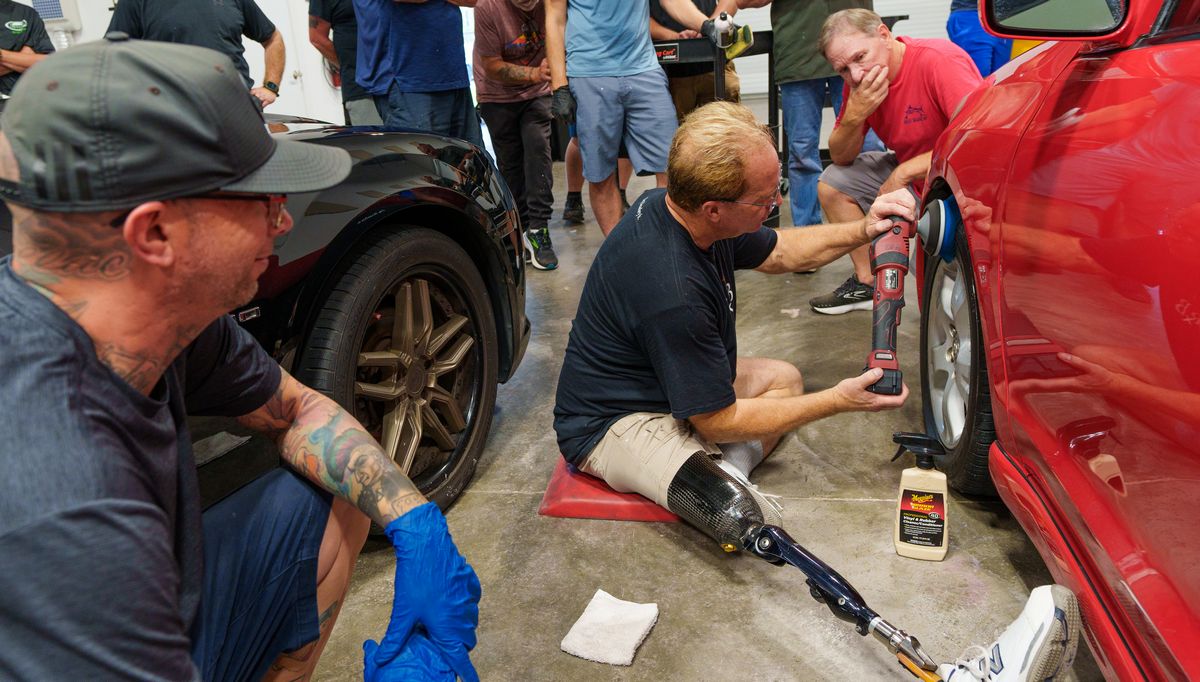
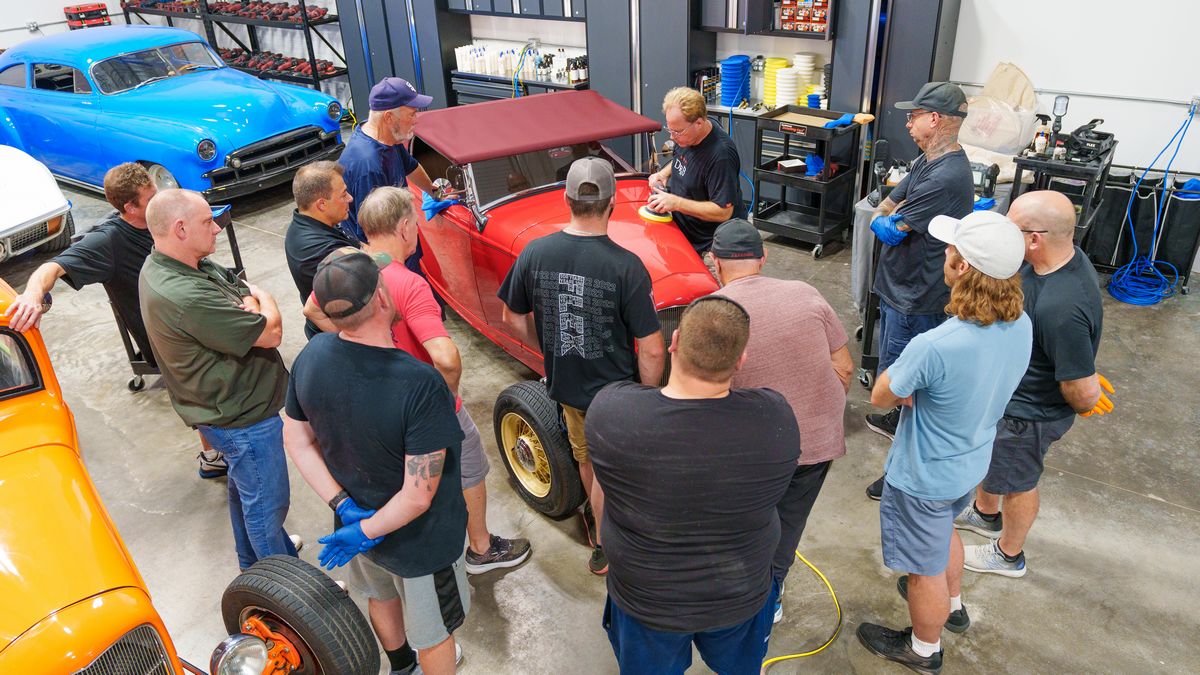
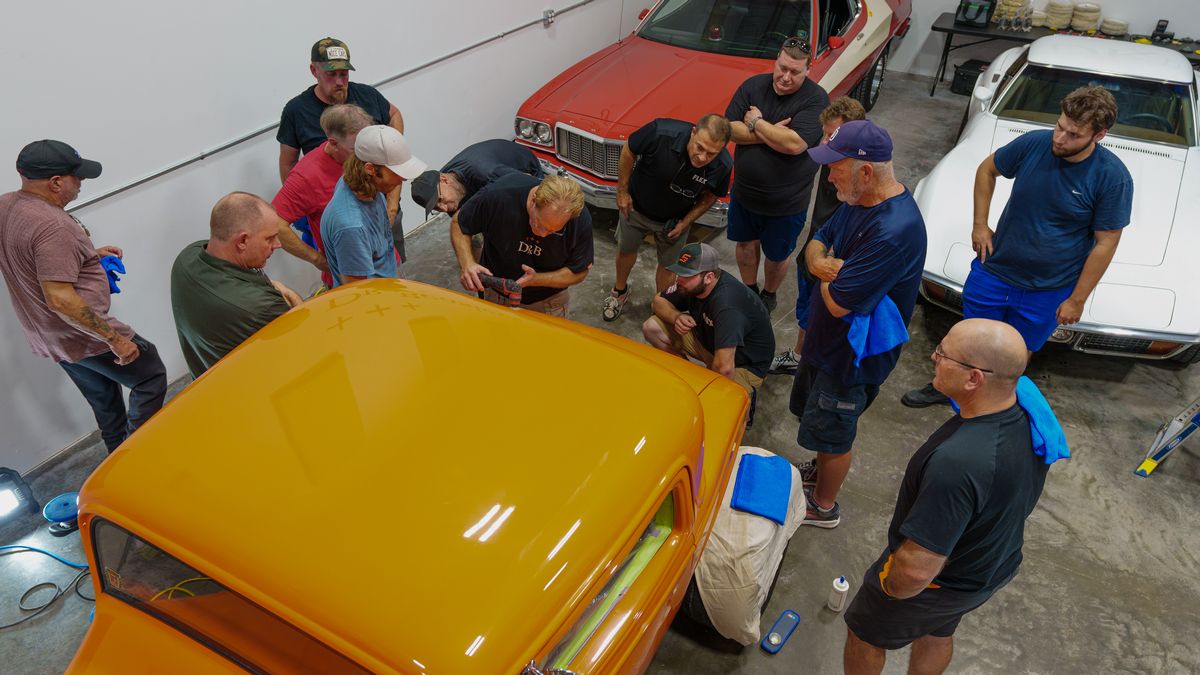
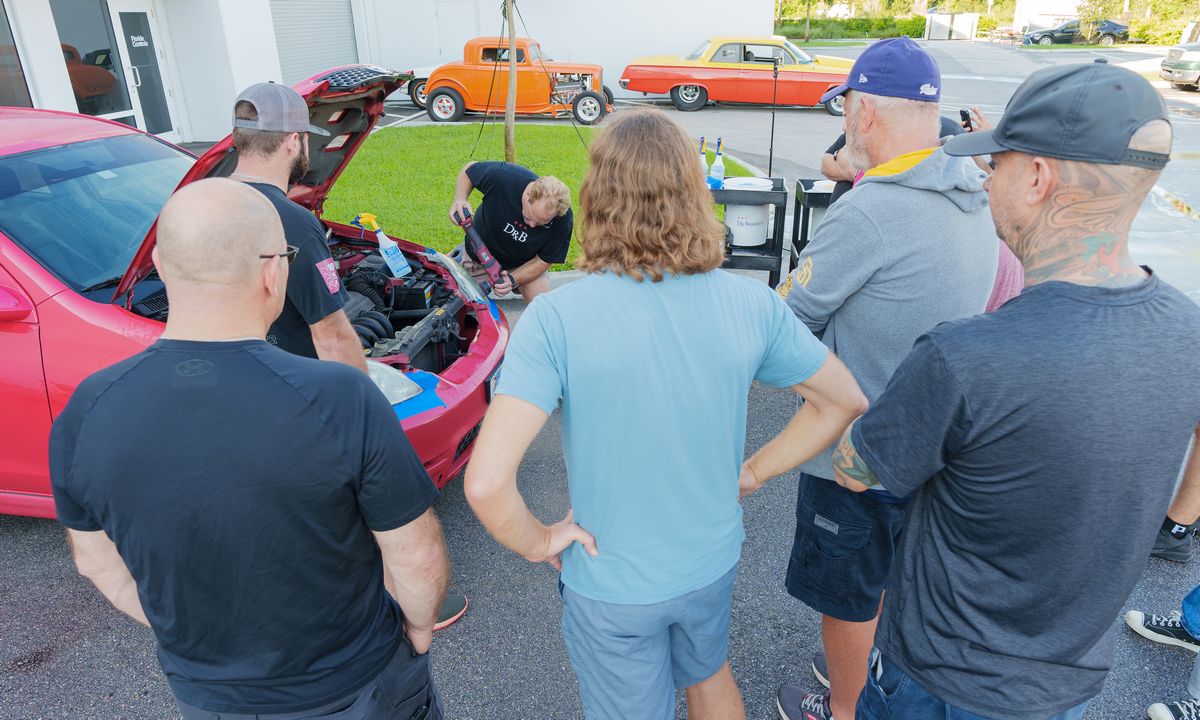
After dialing in our process and proving it works to our goals, I turn the class loose. No chairs. No sitting. No PowerPoint. Nothing wrong with chairs, sitting and PowerPoints, it's just no longer my style of teaching car or boat detailing classes.

full


full


full


full


full


Foam after Fiber
We all see a lot of swirled-out cars from the misuse of a rotary polisher with a wool cutting pad. There's nothing wrong with a rotary polisher, it's just important to always finish with foam pads. The uniform texture provided by foam together with your choice of abrasive technology will remove the holograms left by the fibers from the wool cutting pad.

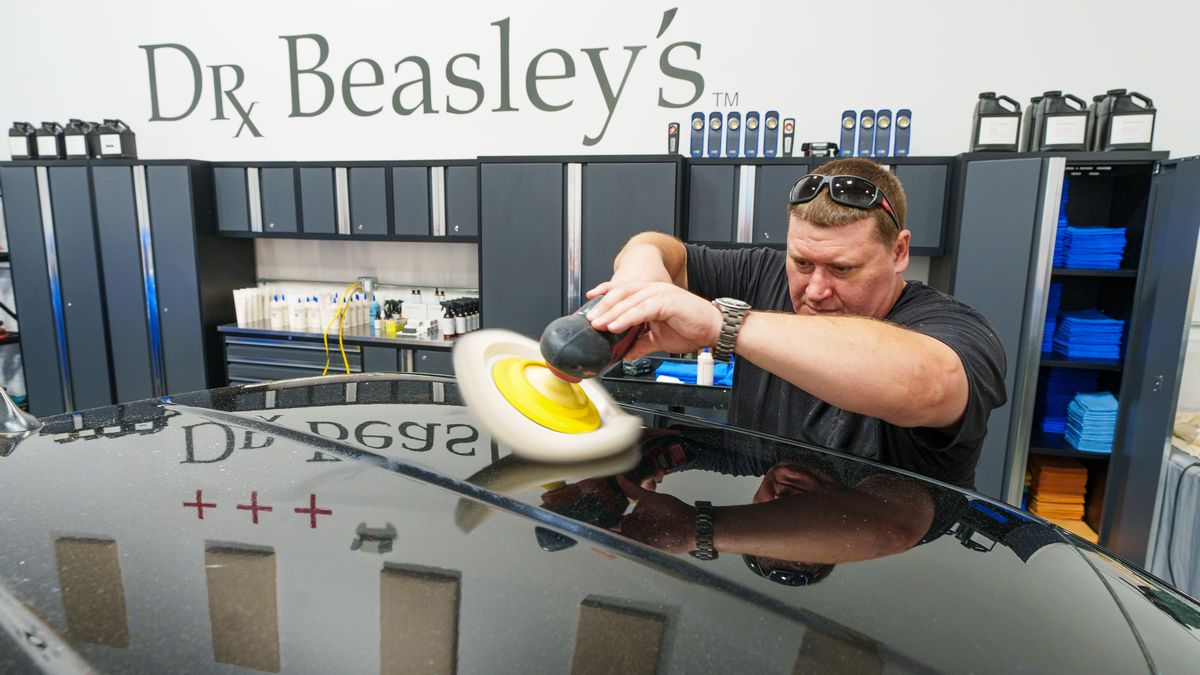
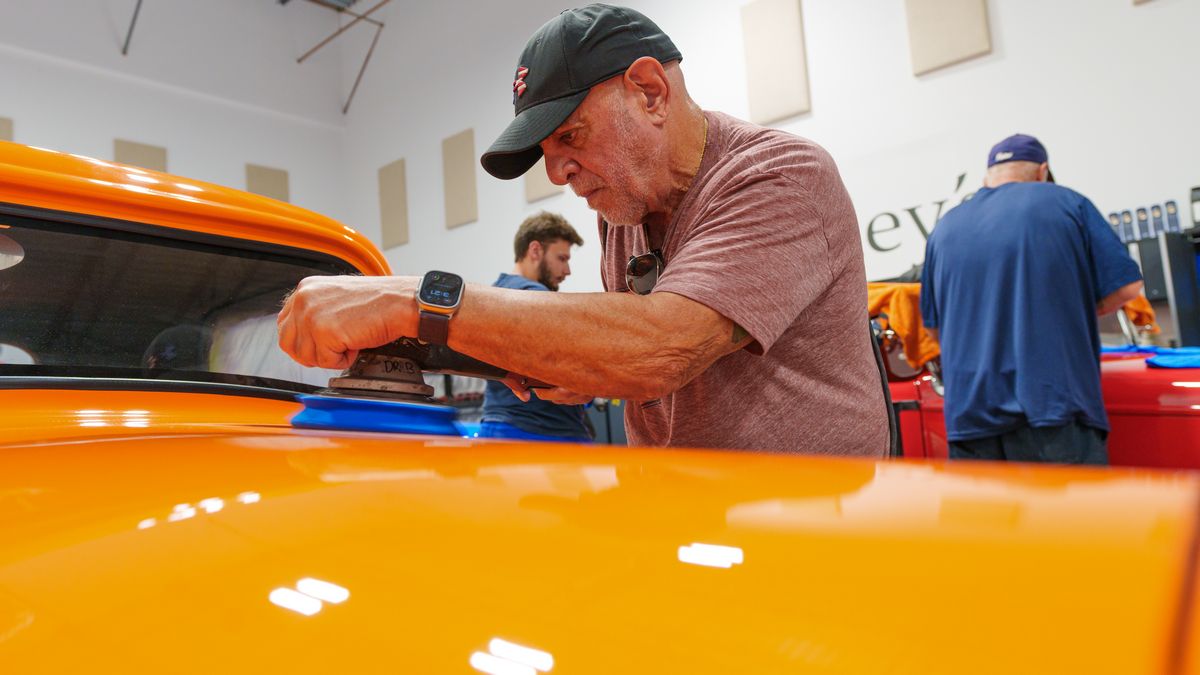
After the first step, the cutting step, next the class switches over to gear-driven orbital polishers to remove the holograms. I put a strong focus on using gear-driven orbital polishers in order to teach the class how to work fast while keeping their quality high. With a gear-driven orbital, there's ZERO pad stalling and thus ZERO wasted time. With free spinning random orbital polishers, you get pad stalling and not only does this waste a lot of time. Monitoring pad stalling leads to Brain Drain, which is mentally tiring.

Here's what I mean, when using free spinning random orbital polishers, most people MARK the side of the backing plates and buffing pads to make seeing if the pad is either rotating or stalling out easier. But this also means the ENTIRE time you're buffing; you MUST LOOK TO SEE if the paint is in fact rotating or simply jiggling and vibrating against the paint.

Later in the class, everyone has the opportunity to use a wide variety of free spinning random, orbital polishers and by the time the class is over, everyone will understand the speed differences and they can make-up their own mind, which style of polisher is best for their style of detailing.

full


full


full


Mike
 
Last edited:
Continued....

While half the class is working on the Camaro, the other half tackle the Toyota Matrix.

full


Facebook, YouTube and Instagram Experts
I always see people on social media tell others, you don't need to take a detailing class, just watch YouTube and then go out to your garage and practice. Nothing wrong with this and I have taught myself how to do things using this approach. (like taking apart the control panel on our Clothes Dryer and installing a new mother board).

That said, no amount of watching YouTube videos will ever have the same impact as taking a REAL hands-on class. In a quality detailing class, the instructor flattens out the learning curve and makes learning new topics, tools and techniques fast and easy.


First a little hands-on guidance...

full


full


Then I remove my hand and let the student take over on their own.

full


Success!

full


full


full


full


Foam after Fiber
After the class does the heavy paint correction with wool pads on rotary polishers, next they switch over to foam pads on gear-driven orbital polishers.

full


How to Install a Ceramic Coating
After all the paint correction steps, it's time to seal the deal by going over the proper techniques for installing a ceramic coating.

full


full


full


full


full


Remember those horrible headlights?
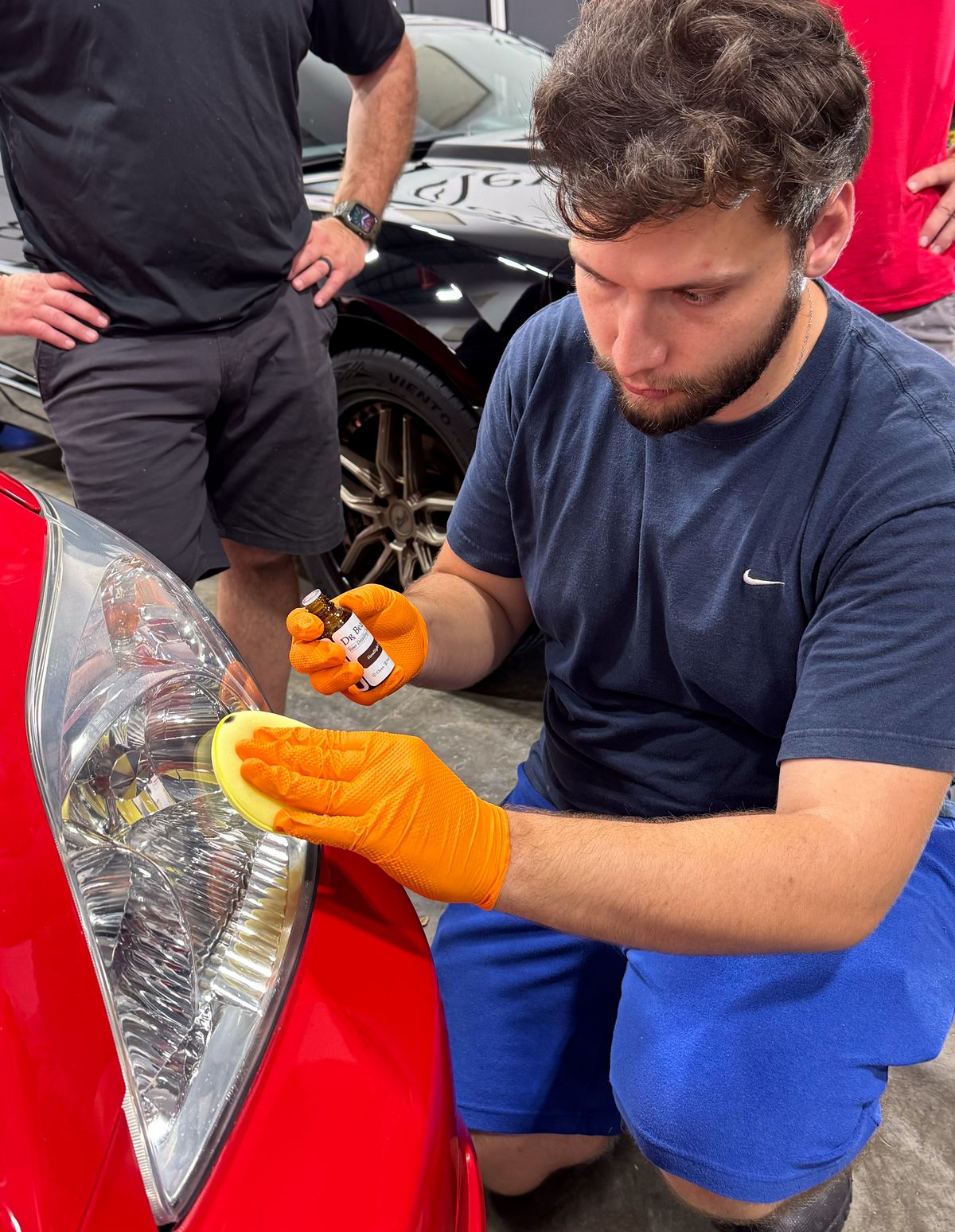
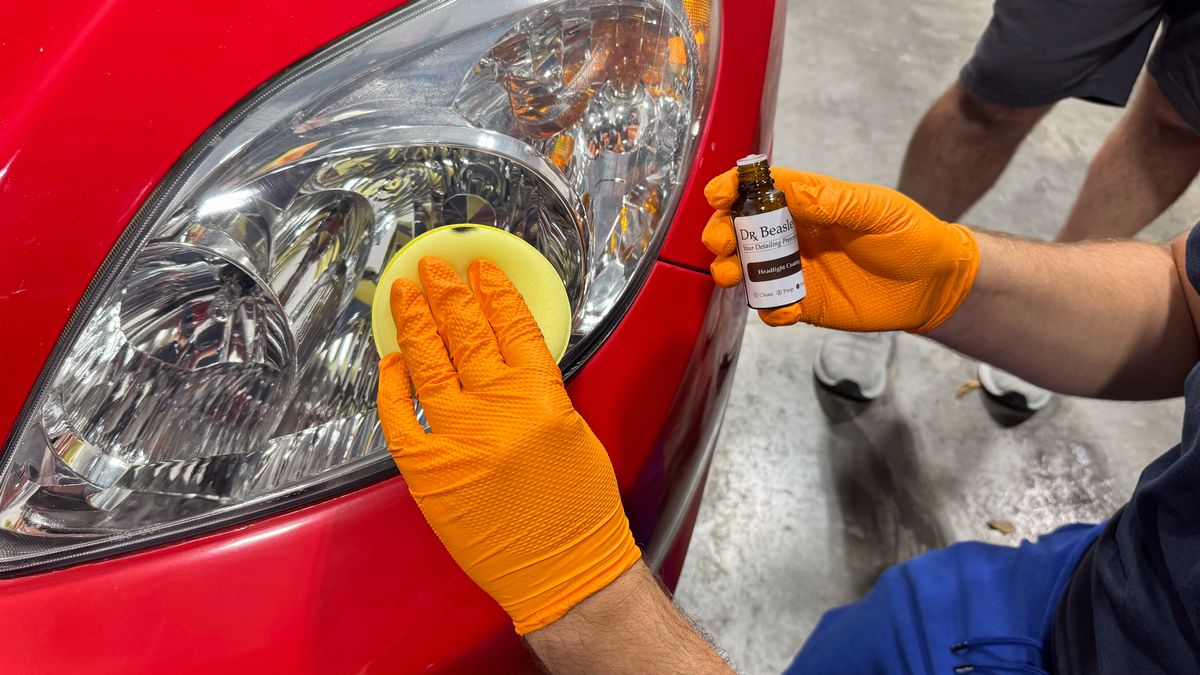
While using the rotary polishers on the car paint, we also went over how to remove sanding scratches out of headlights. Rotary with wool pads first, followed by foam pads on orbital polishers to remove the holograms out of the plastic, and then sealing the restored plastic using Dr. Beasley's Headlight Coating.

full


full


Machine Applying a Tire Dressing
Not only did the class machine scrub the tires to clean them, I also shared how to use the same rotary polisher with a 5" rotary brush to machine apply tire dressings. So much faster and effective than the human hand.

full


full


Mike
 
Last edited:
Continued....

Here's the final results for the 2013 Toyota Matrix

full


full


full


Here's the final results for the 2020 Chevrolet Camaro

full


full


full


full


full


full


full


full


And just to show how bad this car was before the class worked their magic.

full


Here's the before and after for the headlights

full


full


And here's the after results

full


full


These headlights, which are 11 years old and from my own experience, have NEVER been touched since this car left the dealership.


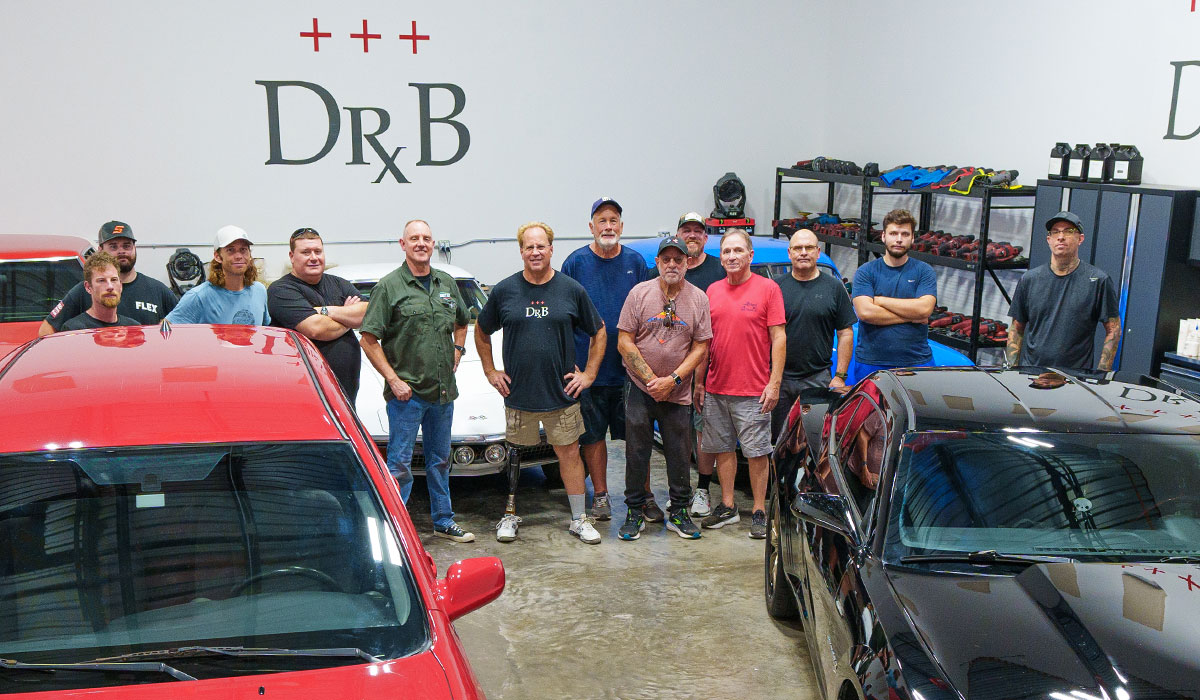
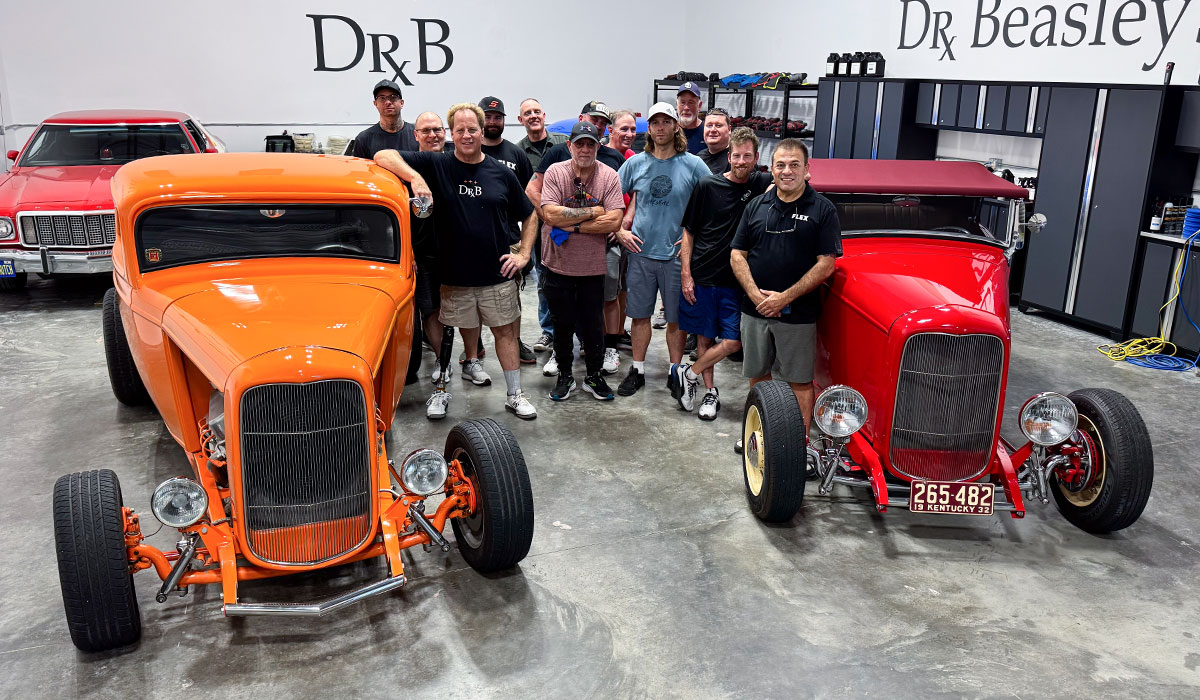
Here's the team that made the magic happen!
And this is just the first two cars for this class, 7 more cars to go, each teaching different tools, products and techniques, and then of course on the third day, the Extreme Boat Detailing Class.

Nice work everyone!

full


full


Mike
 
Last edited:
Continued....

Day 1 - Afternoon Session - One-Step Paint Correction - Your mid-level detailing package
Now that I have everyone warmed up using a rotary polisher to bust out two severely neglected cars, it's time to learn how to do a proper one-step process.


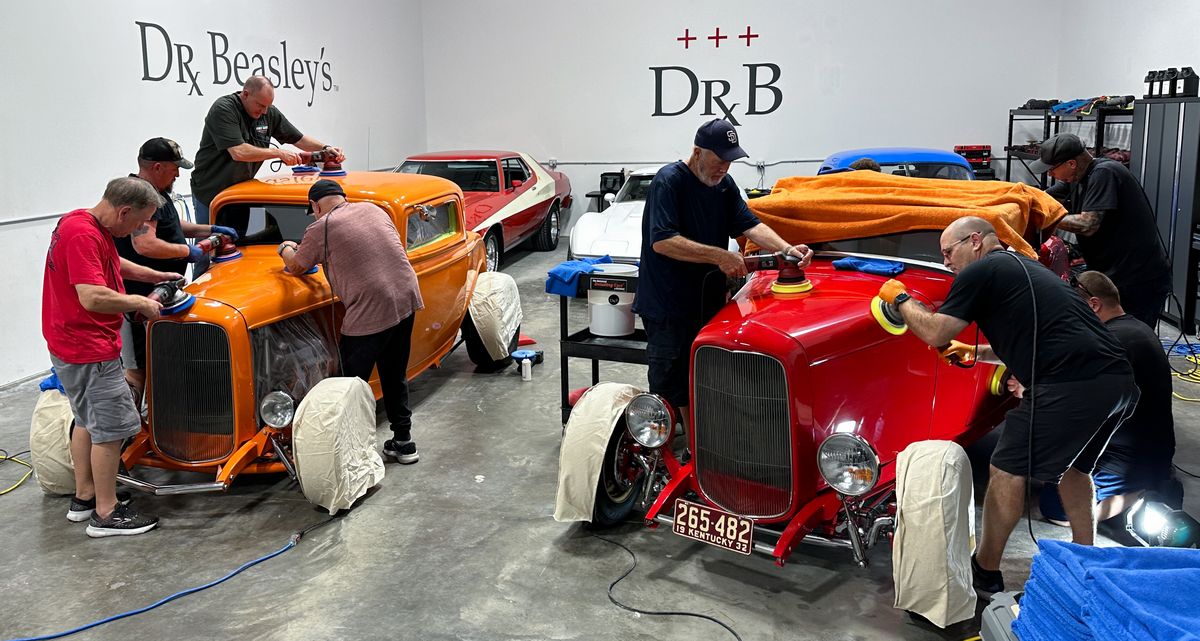
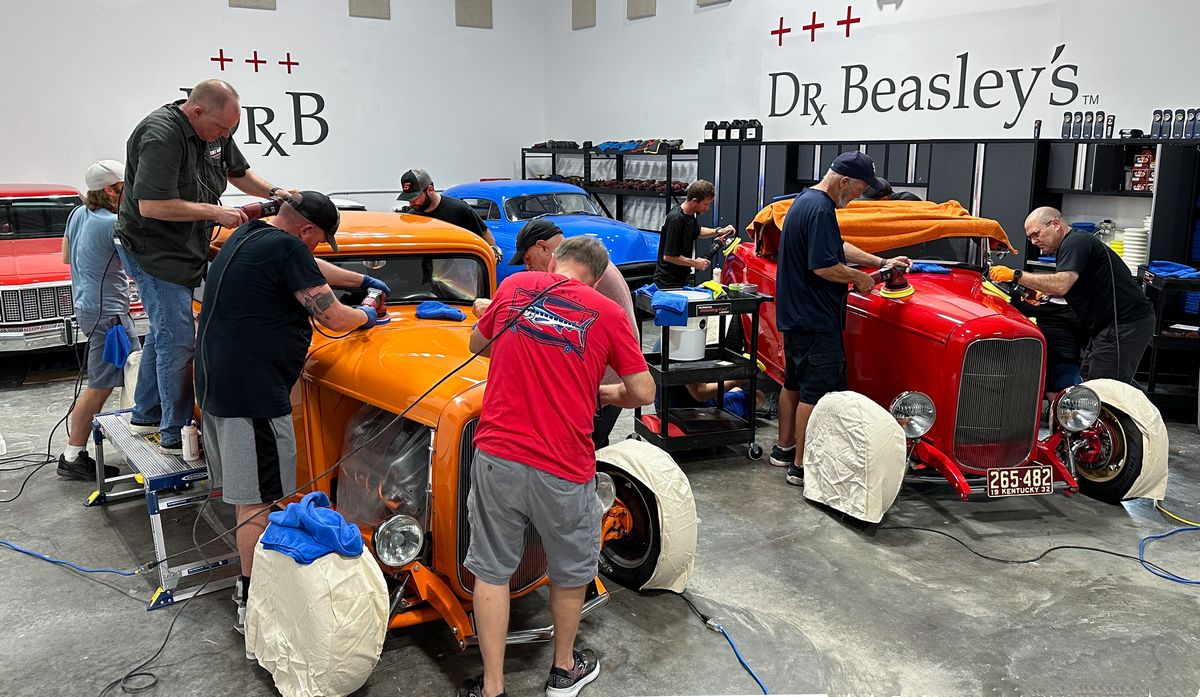
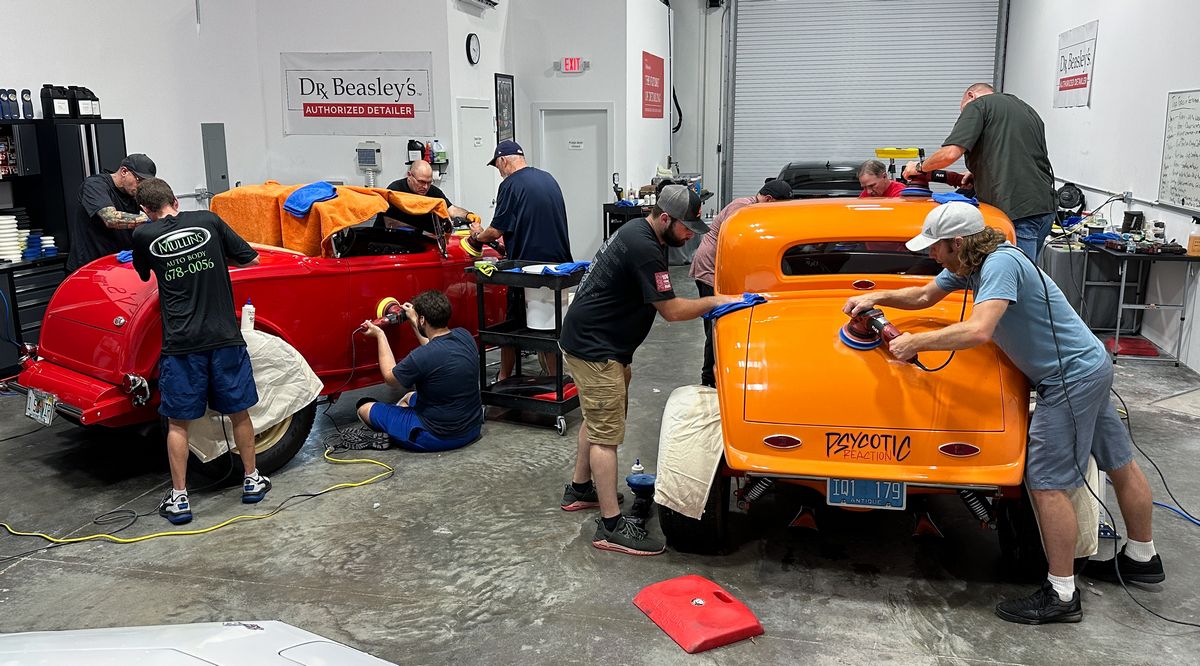
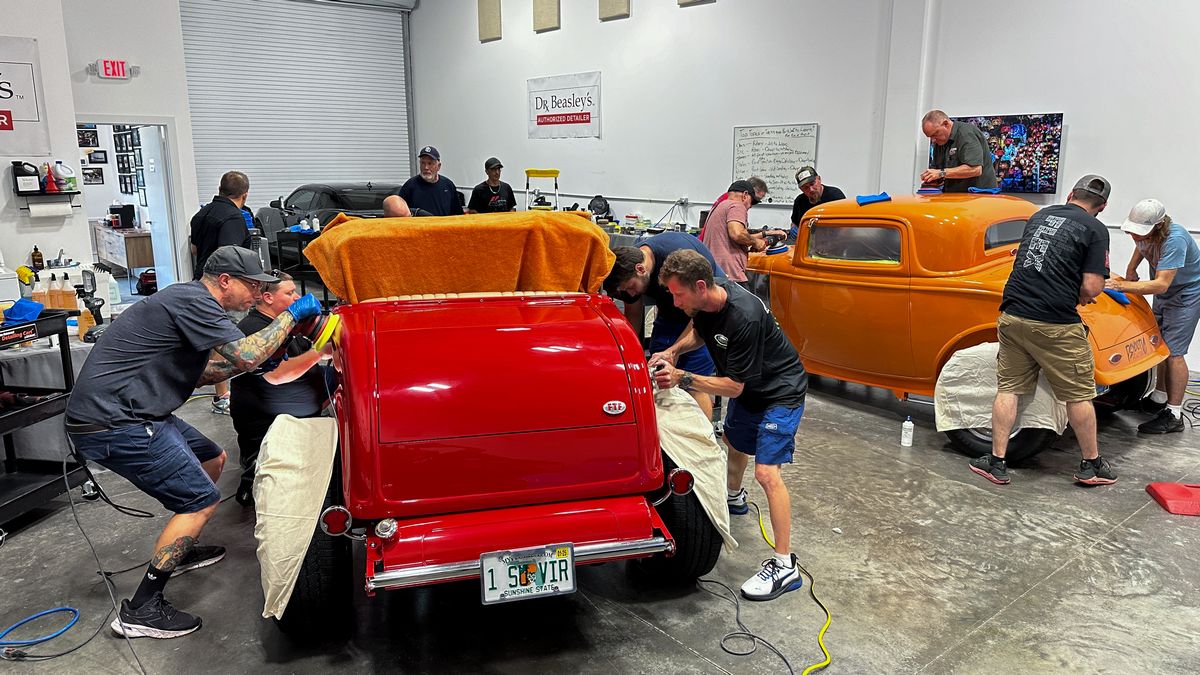
TWO - 1932 Ford Streetrods
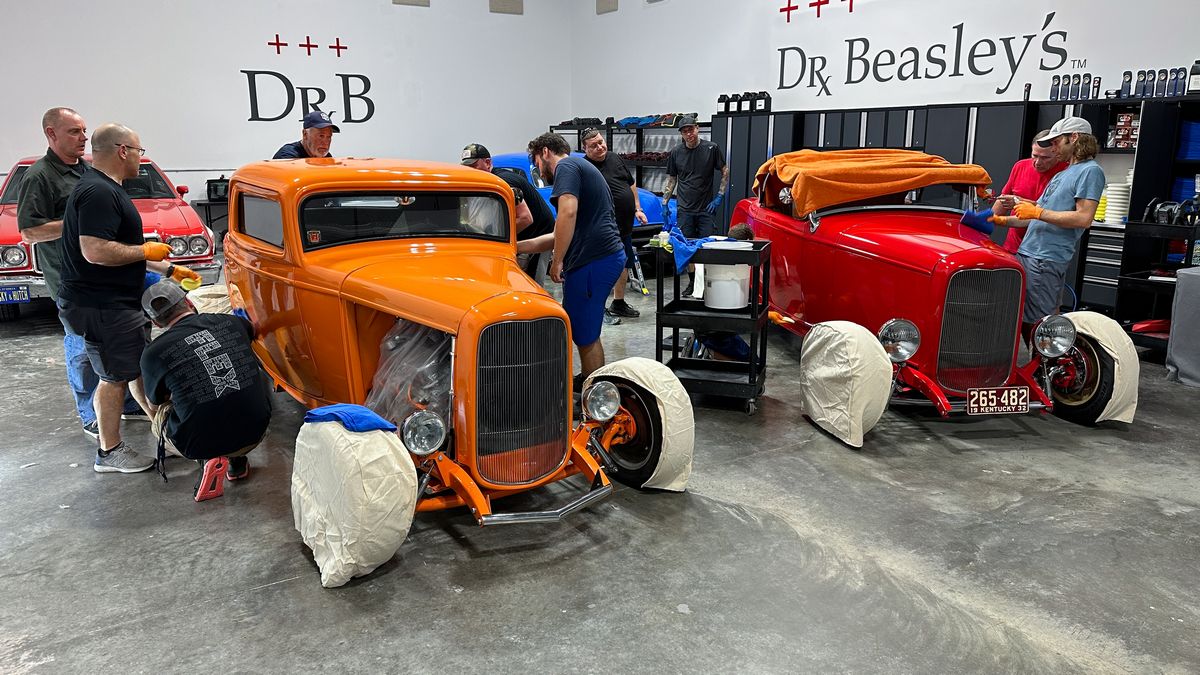
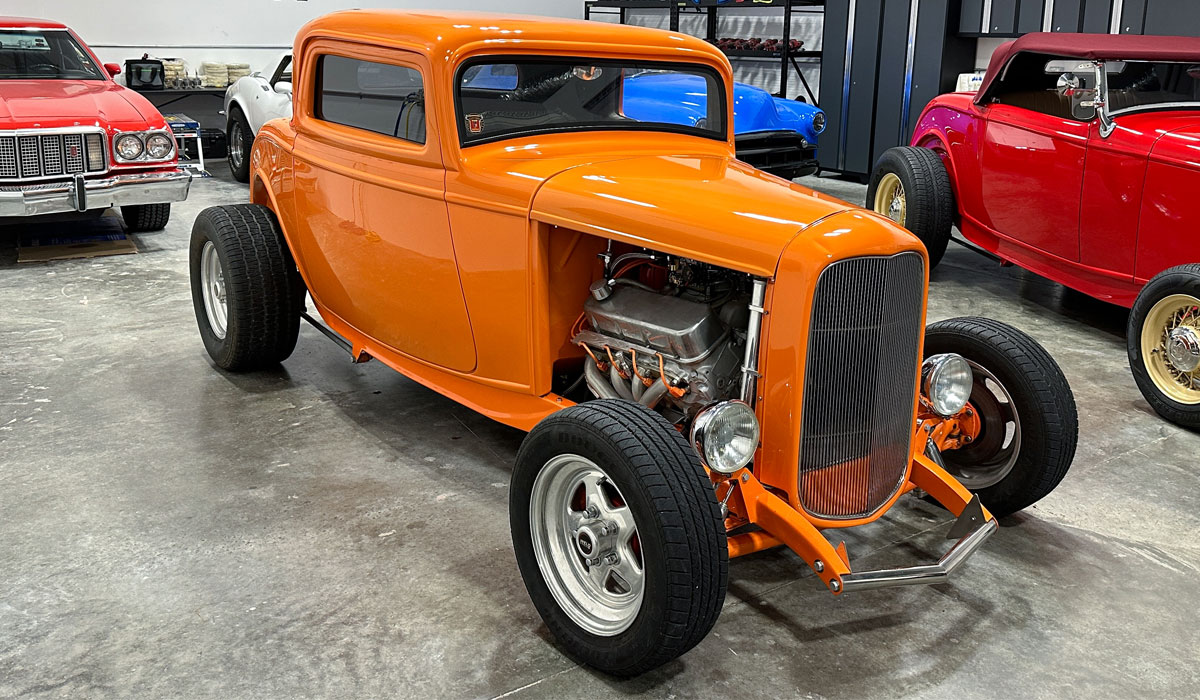
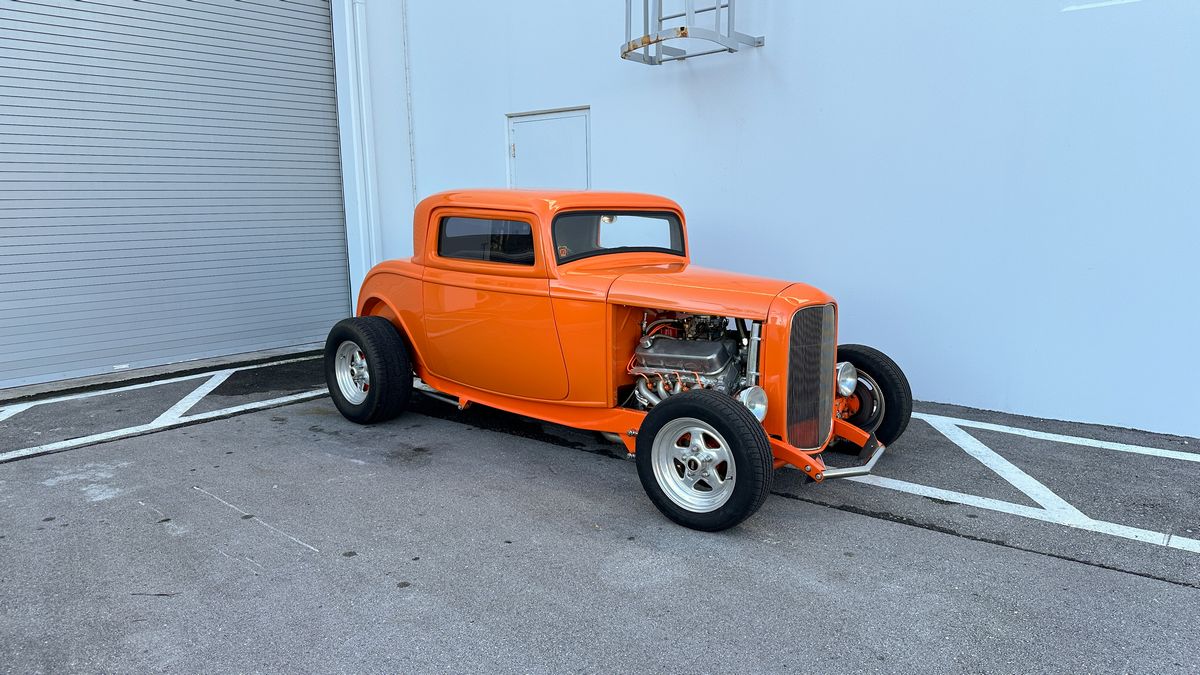
For this class session, I have two HIGH-END 1932 Ford Streetrods. One of them is a deuce coupe, or a 1932 Ford 3-Window Coupe and the other is a 1932 Ford Roadster.

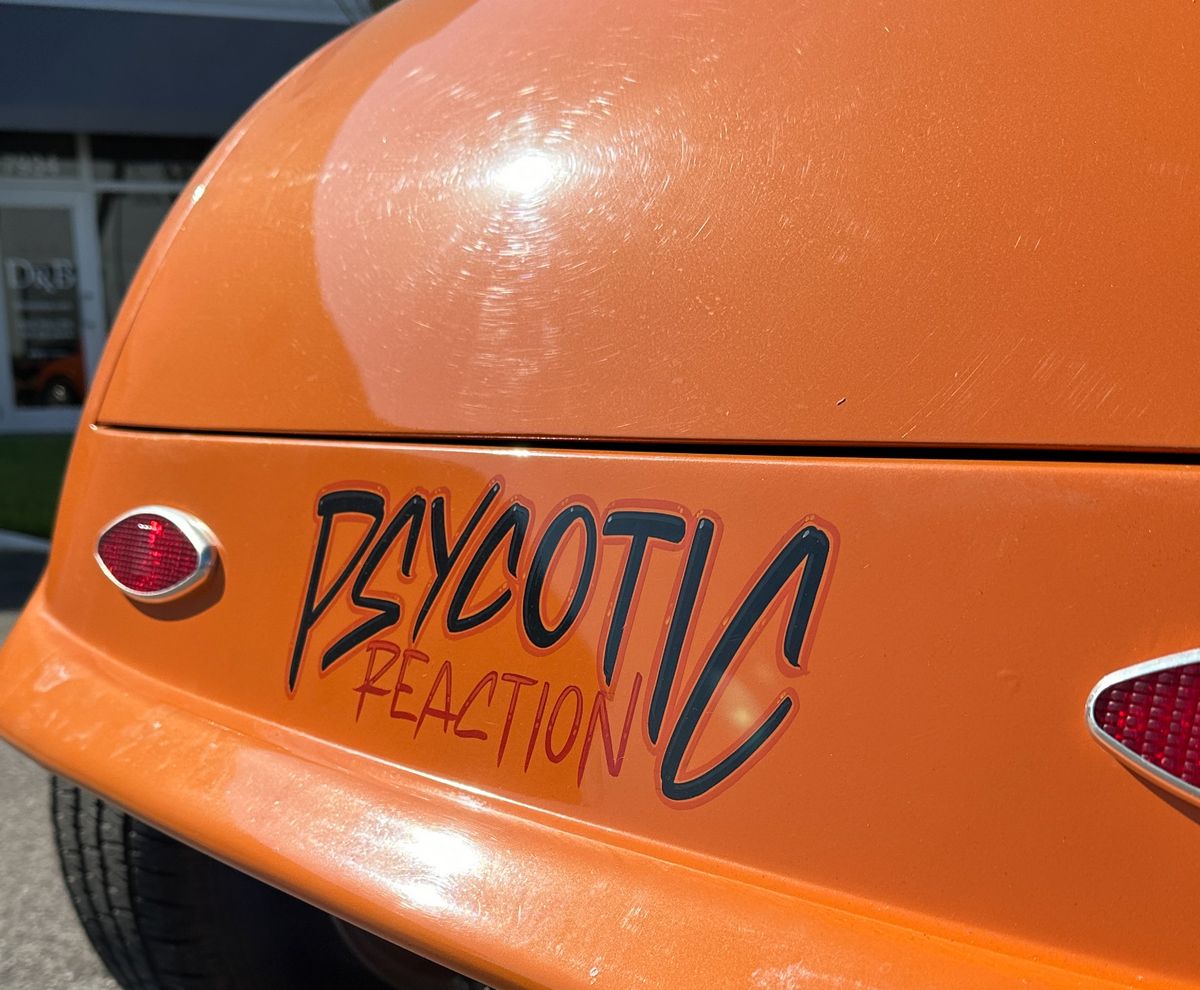
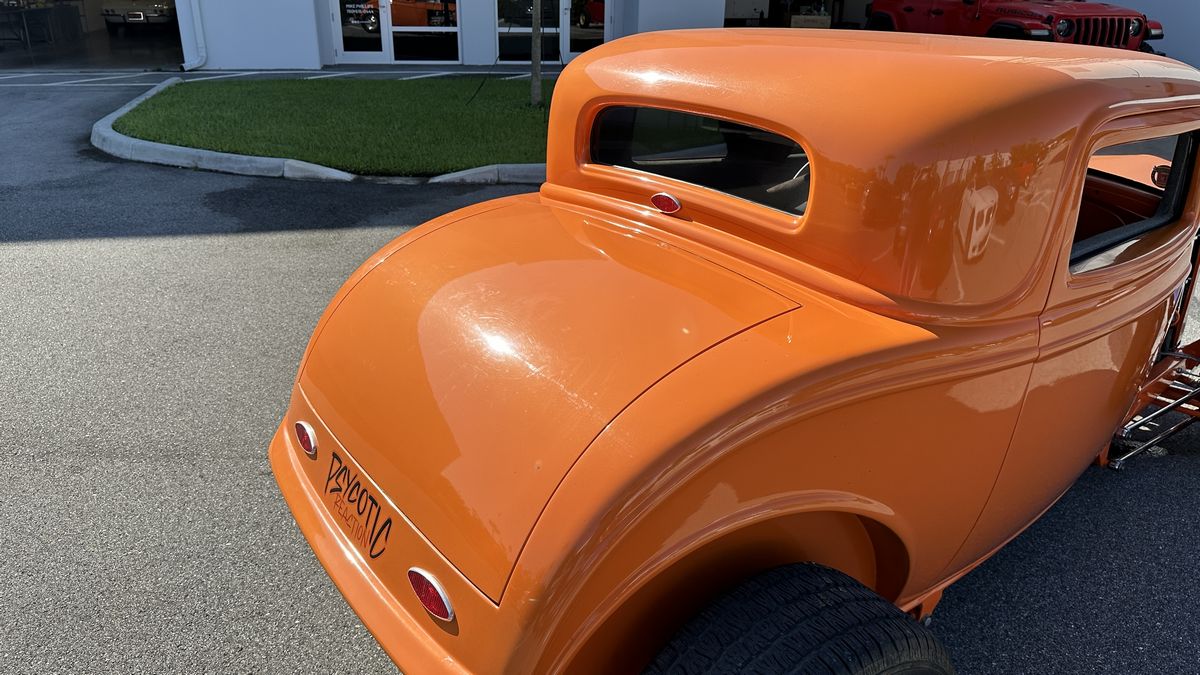
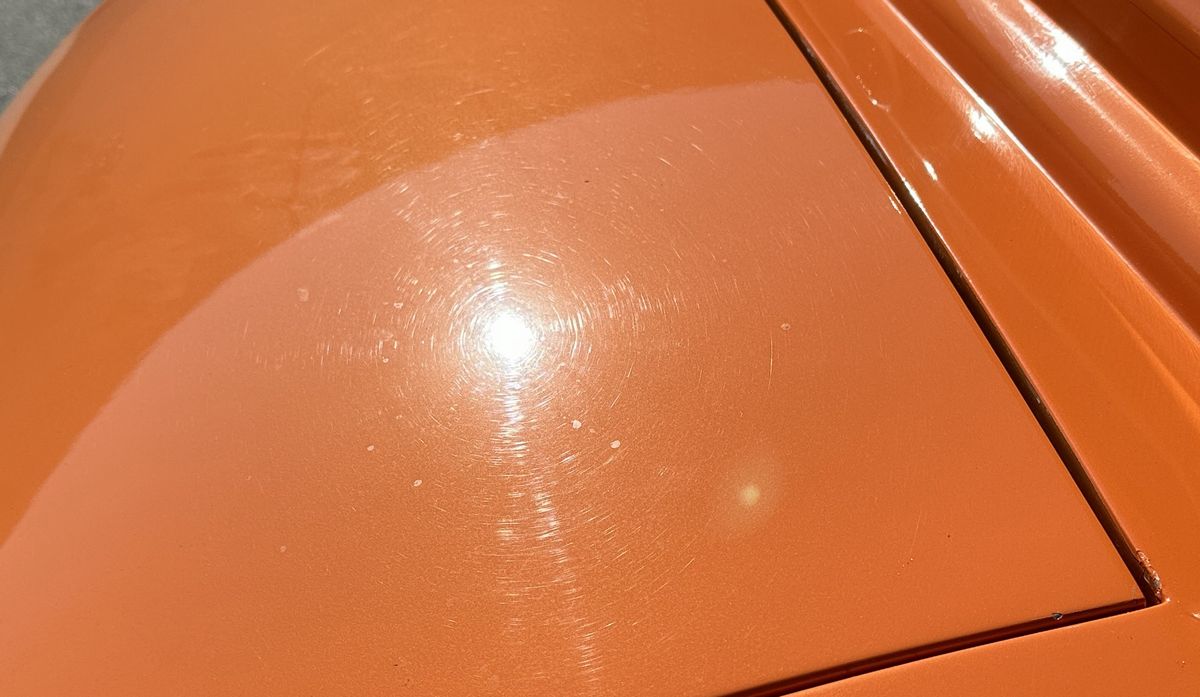
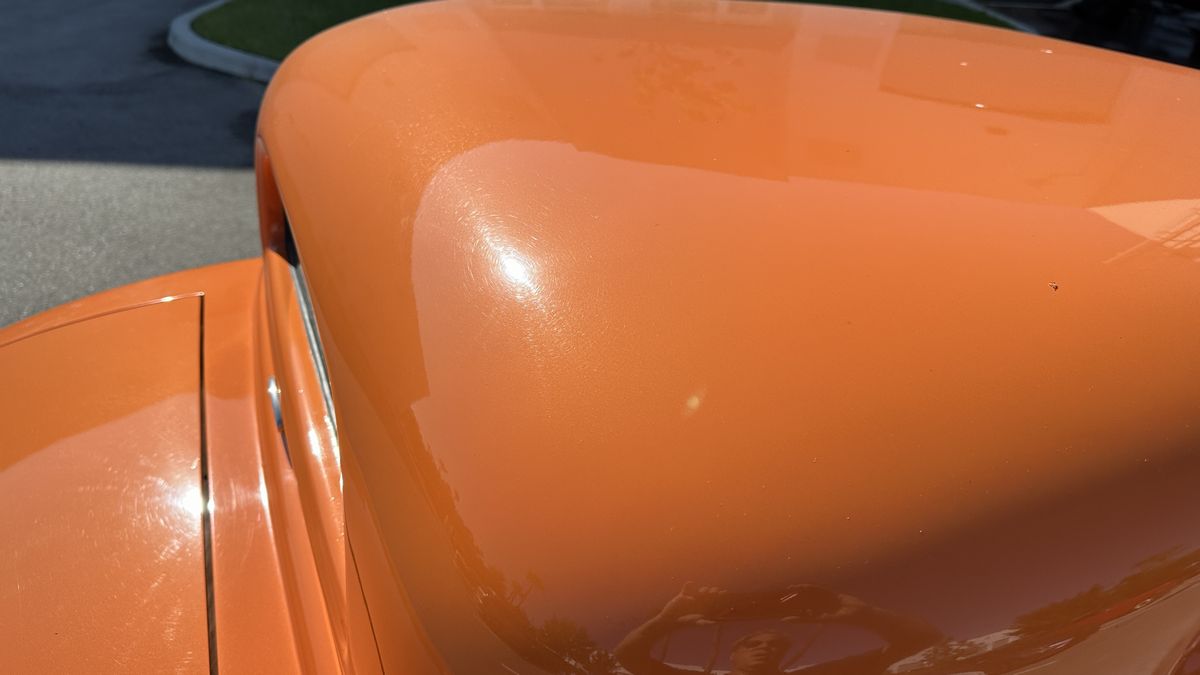
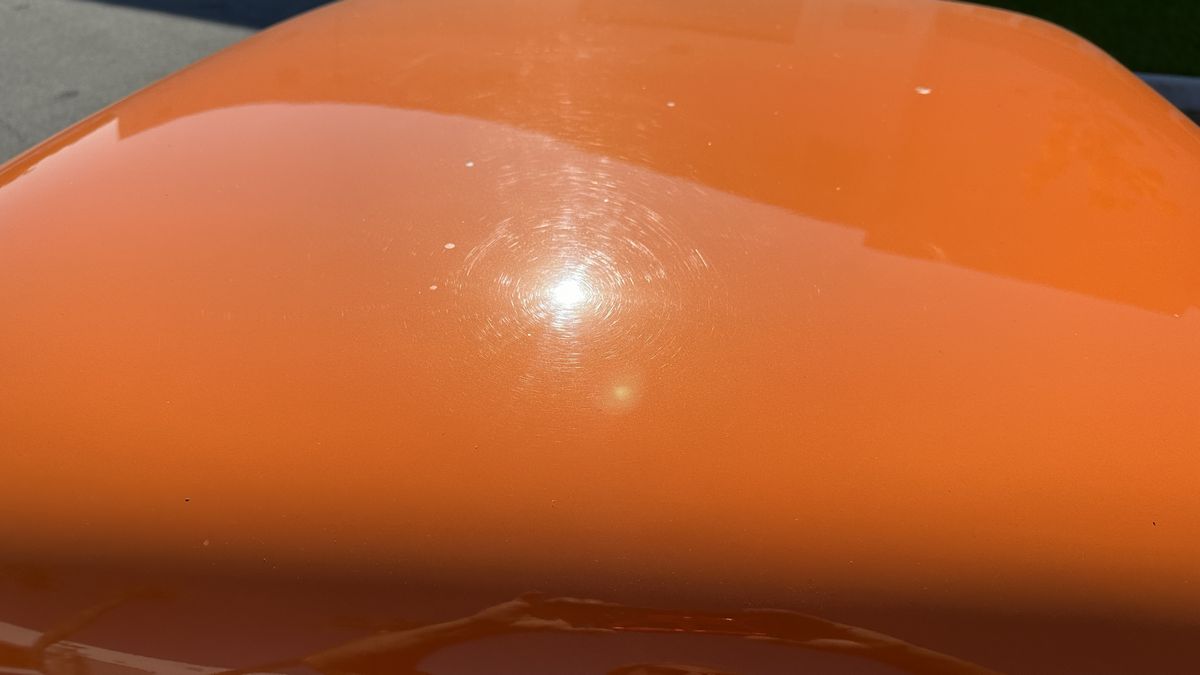
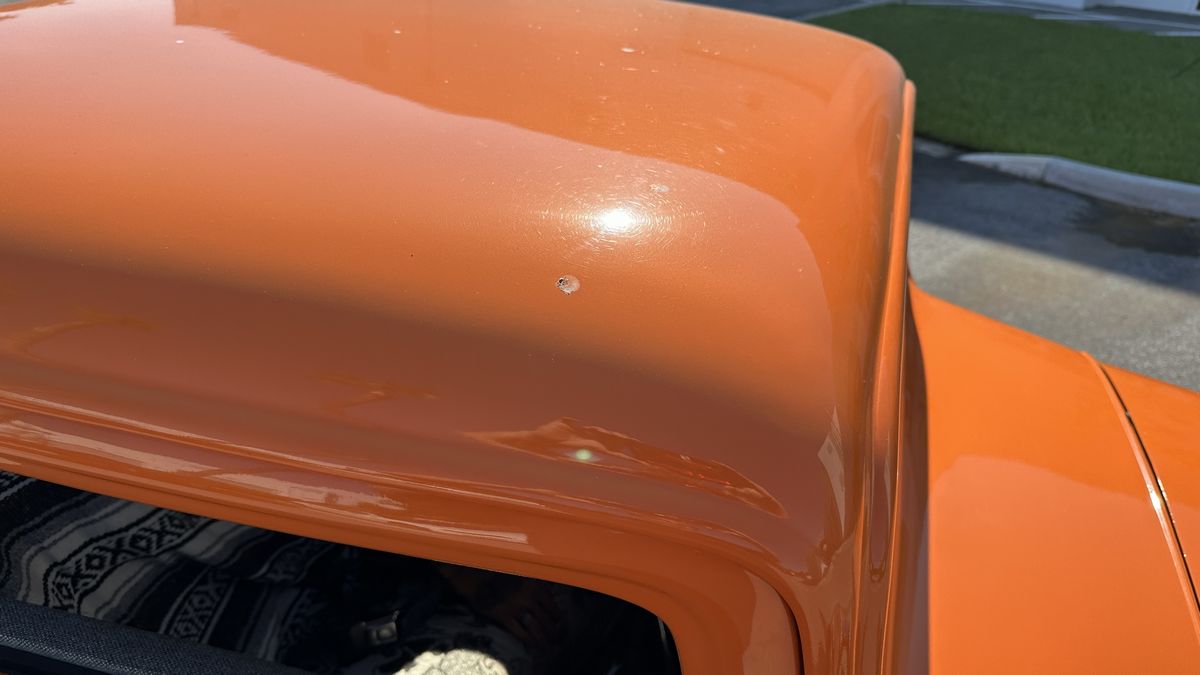
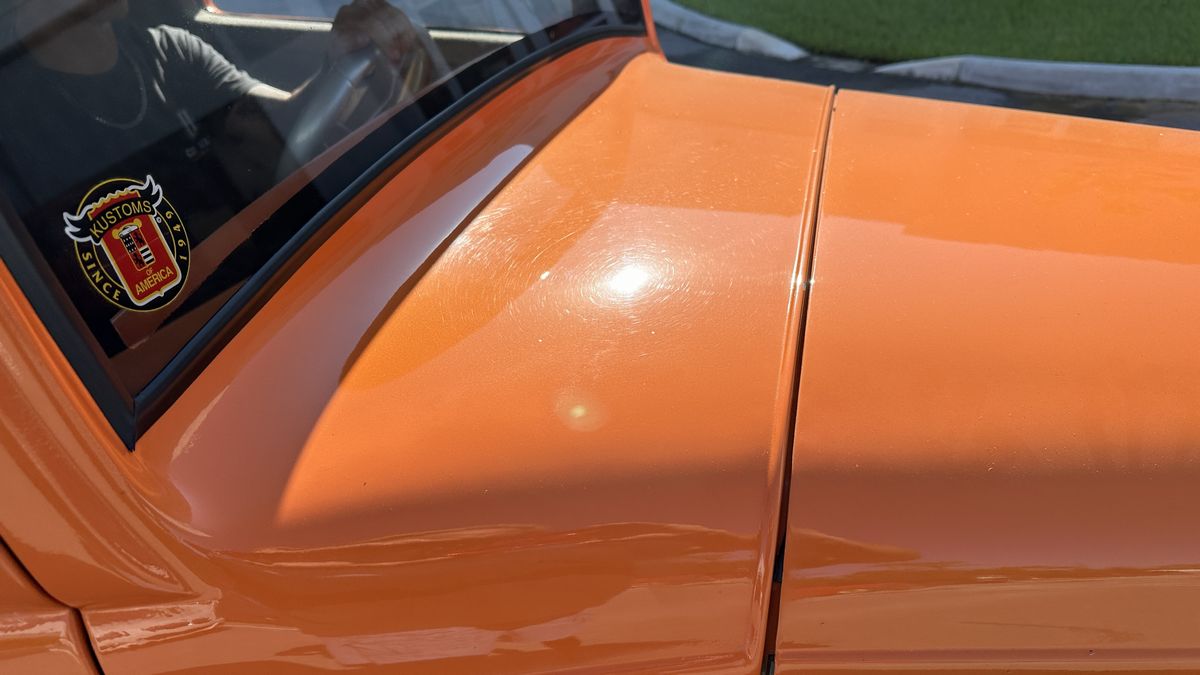
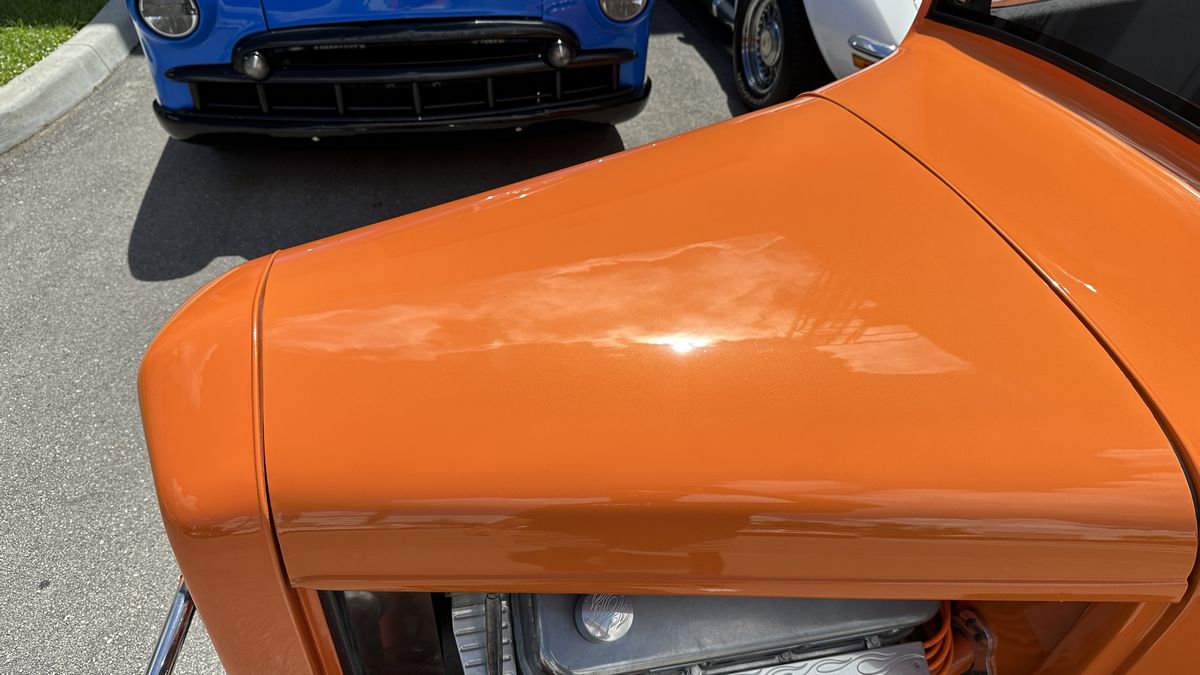
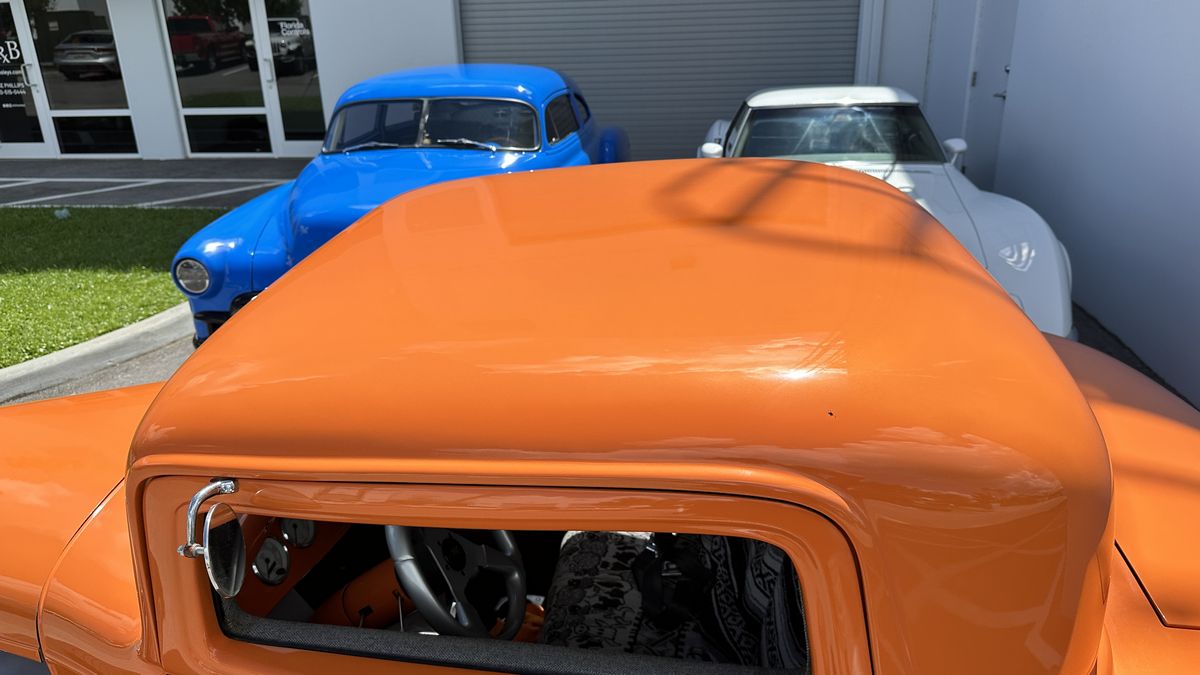
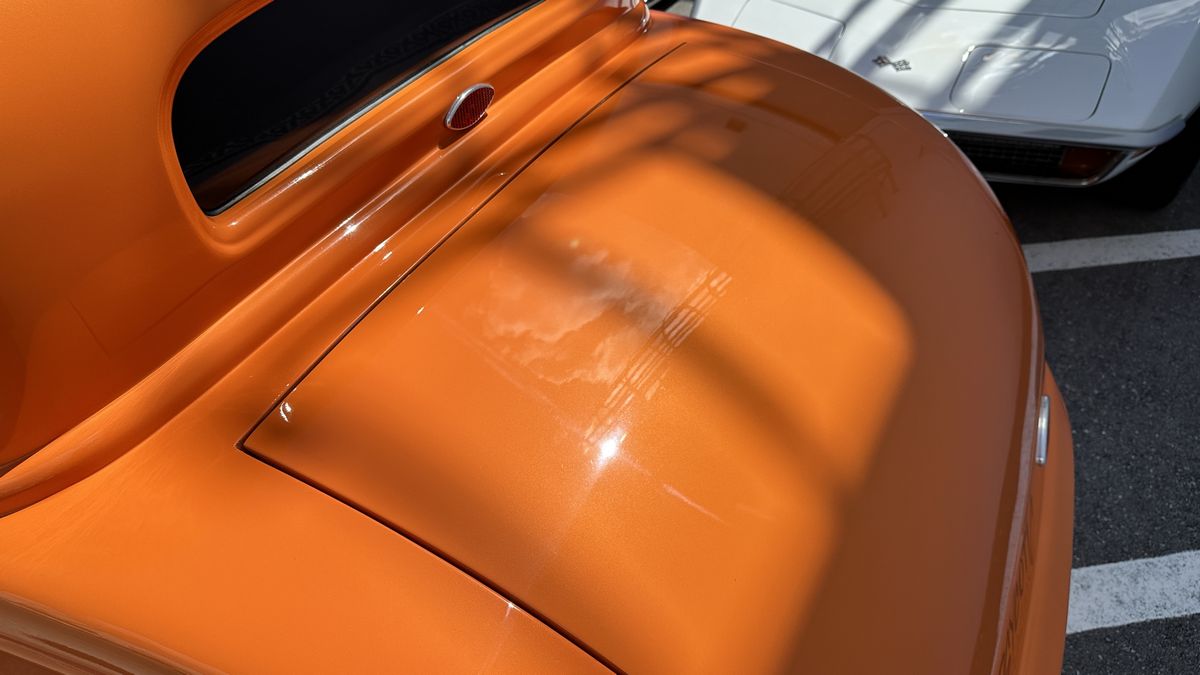
In keeping with my decades-long history of photo-documenting the BEFORE condition, here's some before for the orange 1932 Ford, at the time I'm creating this write-up, I cannot find any before pictures for the red 1932 Ford. The paint on the red 1932 Ford was in much better shape but still filled with light swirls and scratches.

full


full


full


full


full


full


full


RaggTopp Fabric Protectant
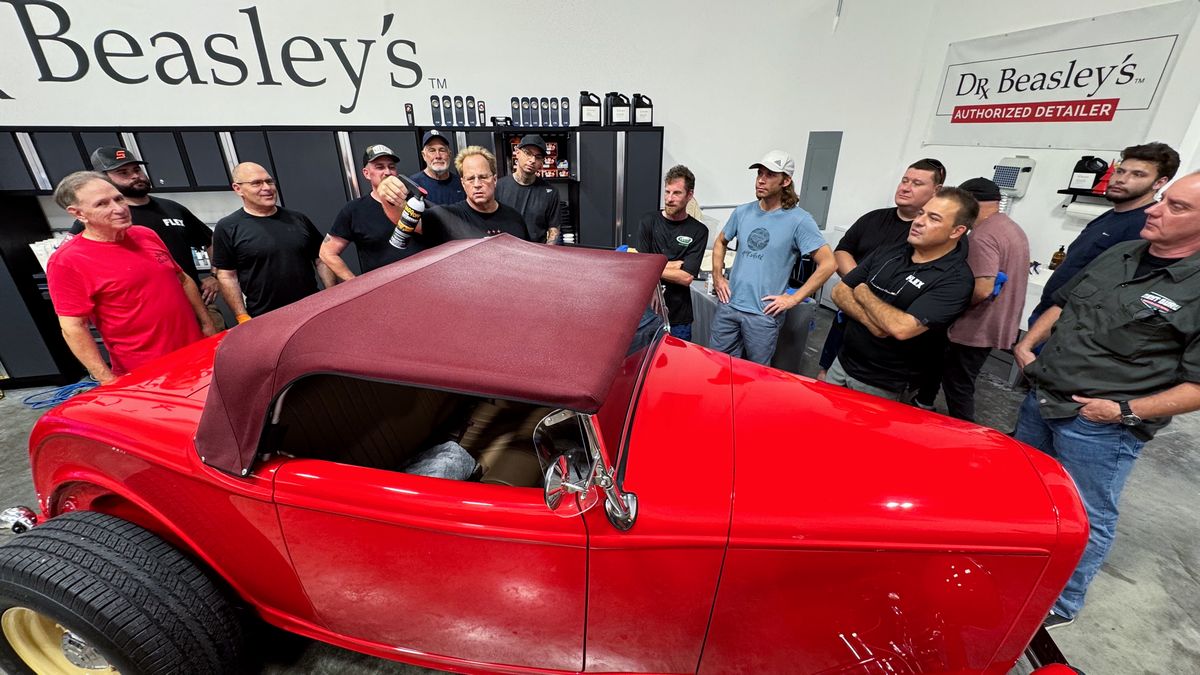
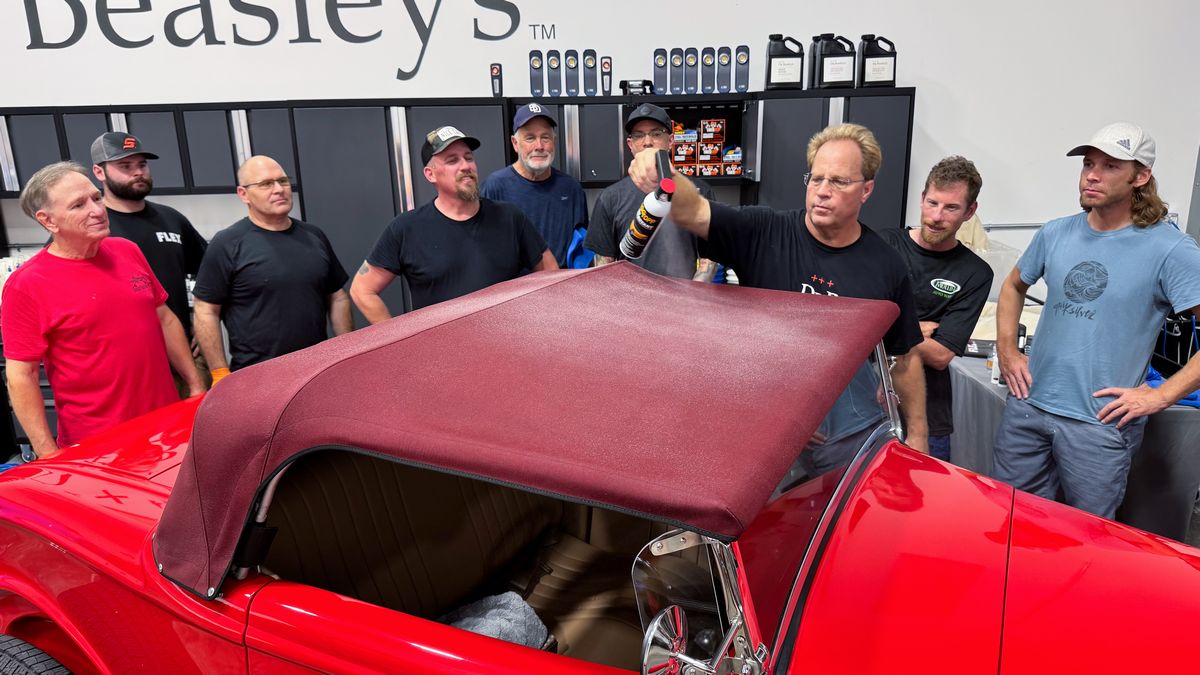
After washing and allowing a convertible cloth top to fully dry, next you want to apply a fabric protectant. For this 1932 Ford we're using the RaggTopp Fabric Protectant.

full


full


After draining an entire can of the RaggTopp Fabric Protectant, next we massage the product INTO the fabric and then we'll cover the top to protect it while we do the paint correction step.

The directions on the can state to spray and let dry, but back in 2016 I tested out massaging the product into the top and then letting it dry versus just letting it sit on the top where it looks like morning dew. The technique worked BETTER in my opinion, and when I shared this with the owner/founder of RaggTopp, Rich Goldstein, he gave the technique his blessing. The rest as the saying goes, is history. And now you see everyone using this technique.

full


full


full


One-Step Test Spots
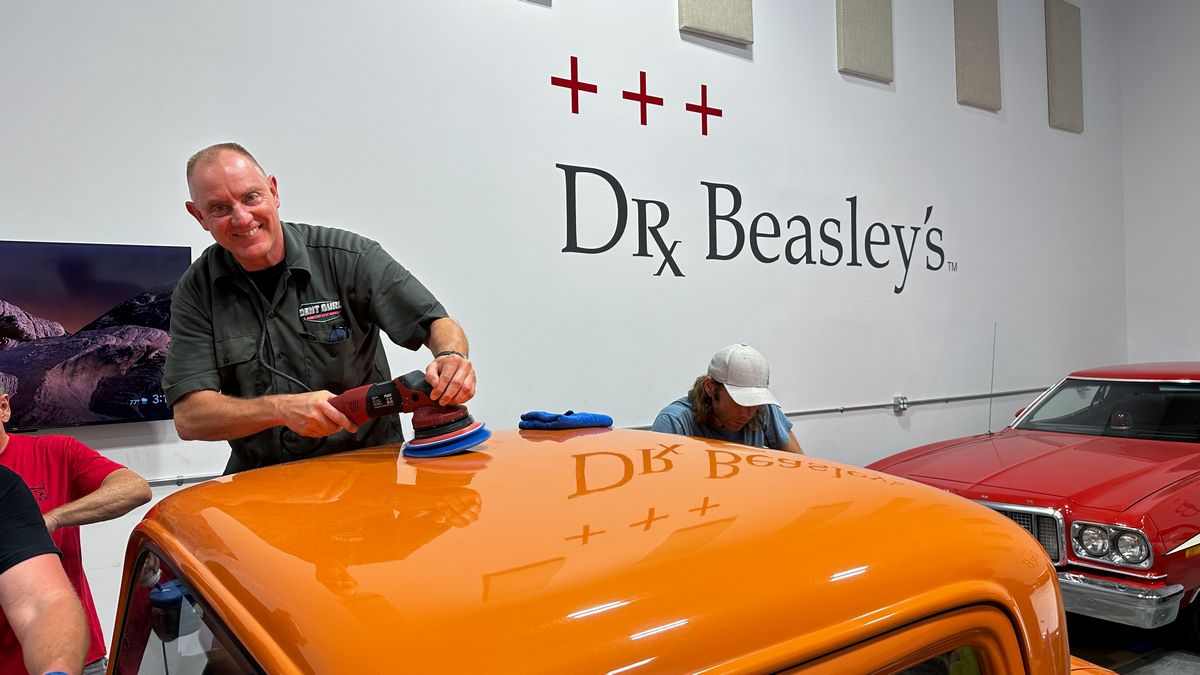
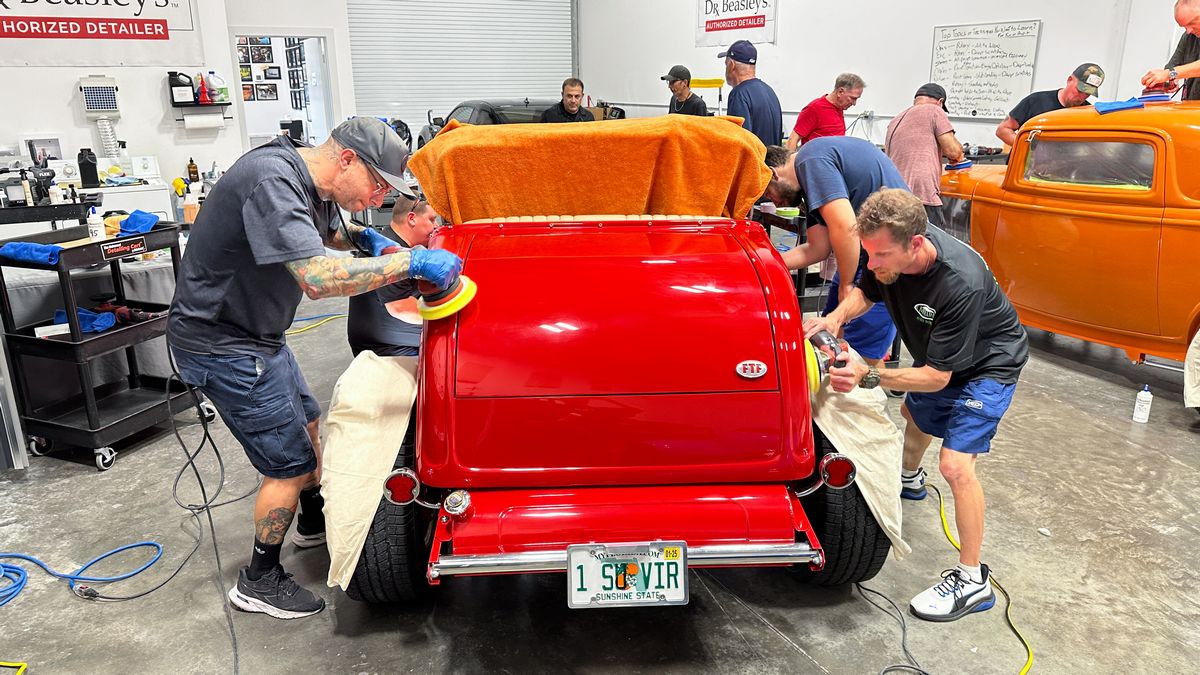
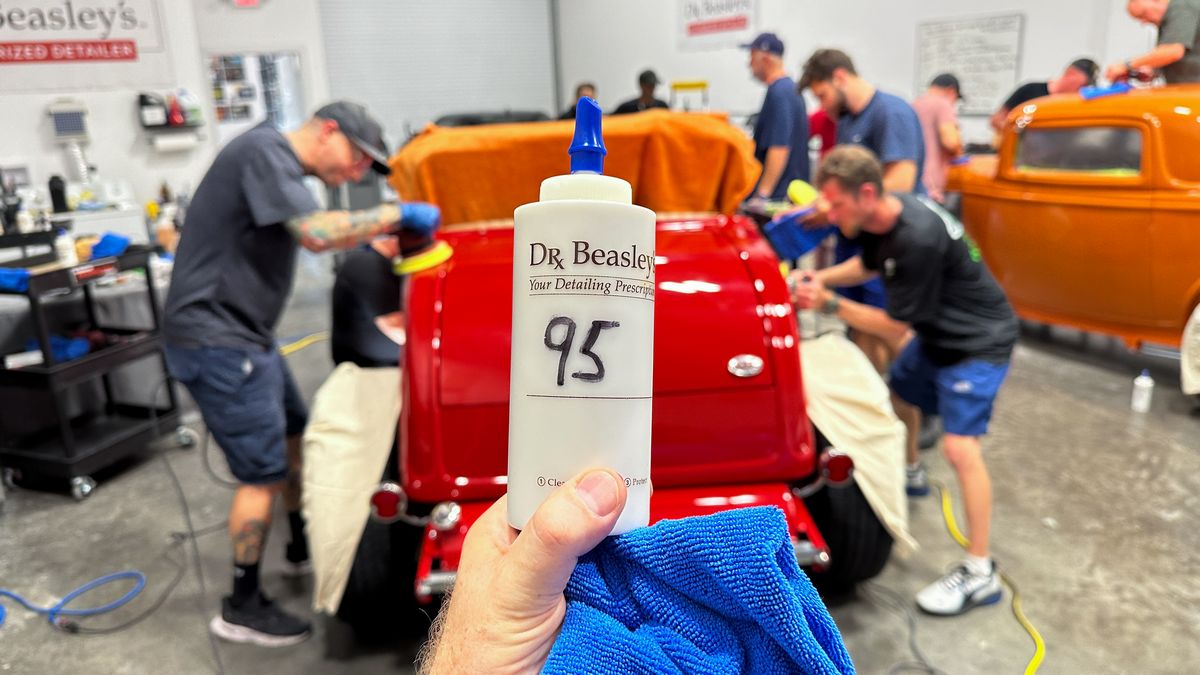
For the clearcoat paint on the red 1932 Ford, after doing a test spot, we found the Dr. Beasley's NSP 95 Primer plus a 6" yellow Buff and Shine EdgeGuard foam pad on FLEX gear-driven orbital polishers removed all the swirls and scratches to restore a true show car finish. Our Test Spot on the orange 1932 Ford showed us that in order to remove all the swirls and scratches we would need Dr. Beasley's NSP 150 Primer with 6" blue Buff and Shine EdgeGuard foam pads on FLEX BEAST 8mm gear-driven orbital polishers.

full


How do you learn?
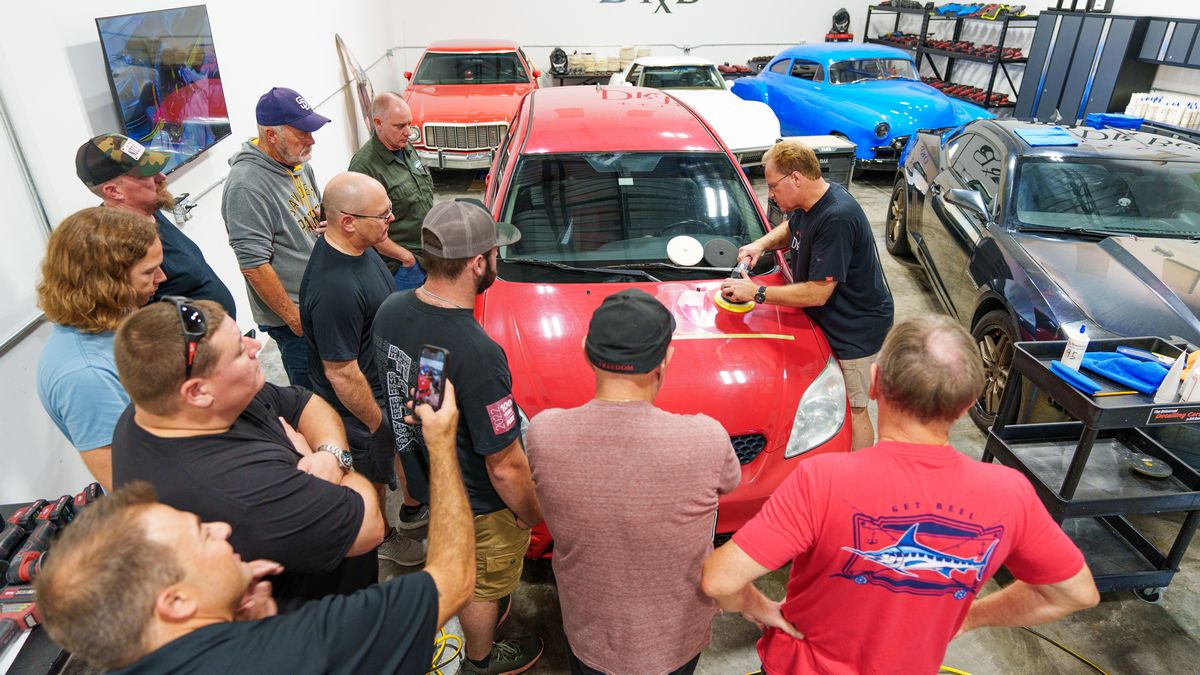
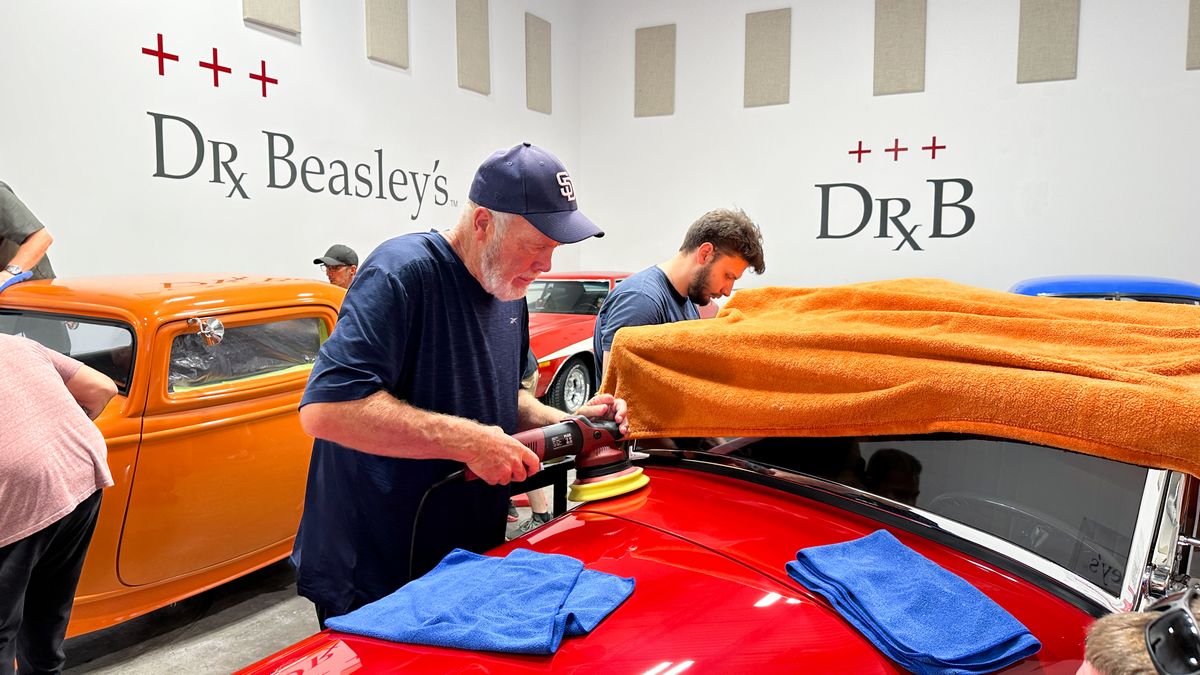
Before signing up for any class, TRY to find pictures like you see for our classes. In the pictures below, plus ALL the pictures in this recap article for this class, all you're going to see are people on their feet, tools in hand, training on actual cars, not demo hoods or test panels. And not just cars, but COOL cars.

If you're the kind of person that learns better by doing versus sitting in a chair, then clear your schedule, budget for your travel expenses, and make the trip to Stuart, Florid for a future class. You will never be disappointed. Future Classes

full


full


full


full


full


full


full


full


full


full


full


full


full


full


full


Mike
 
Last edited:
Continued....

Dr. Beasley's Nano-Resin MX Ceramic Coating
After all the paint correction work, next up the class installs the Dr. Beasley's Nano-Resin MX Ceramic Coating

full


full


full


full


Here's the final results!

full


full


full


full


full


full


Here's the team that made the magic happen!

full


Here's a few shots of the orange Deuce Coupe, I think by now the red Roadster had already been picked-up and headed home.

full


full


full


full


Mike
 
Last edited:
Continued....

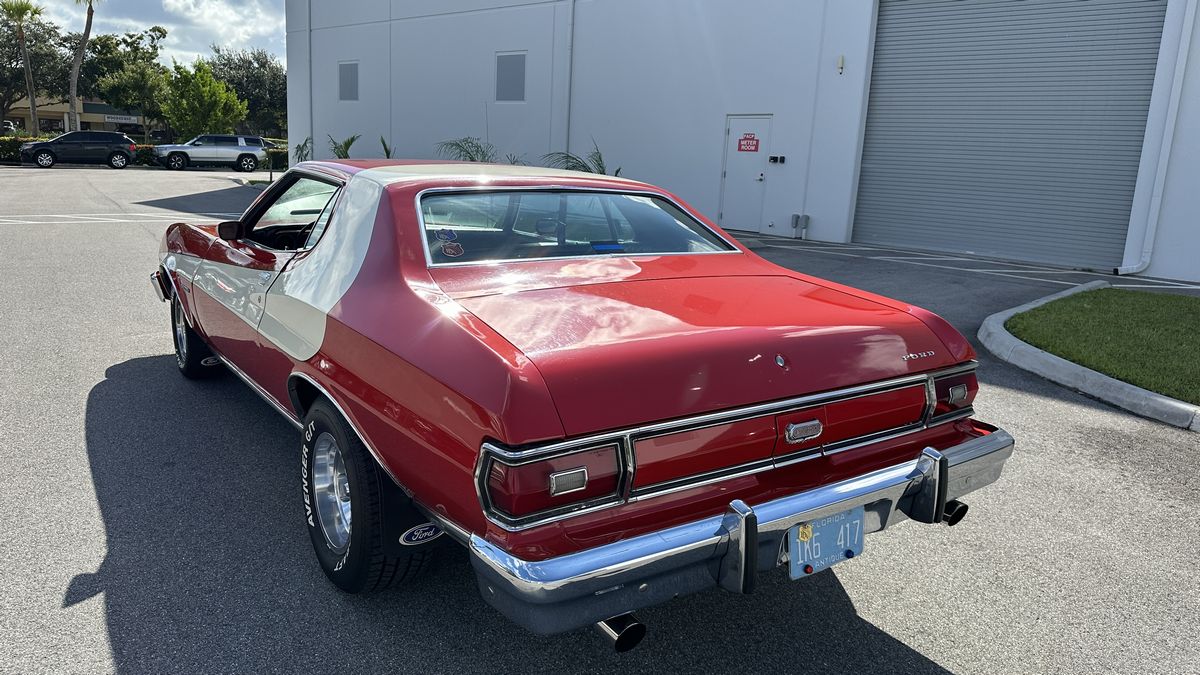
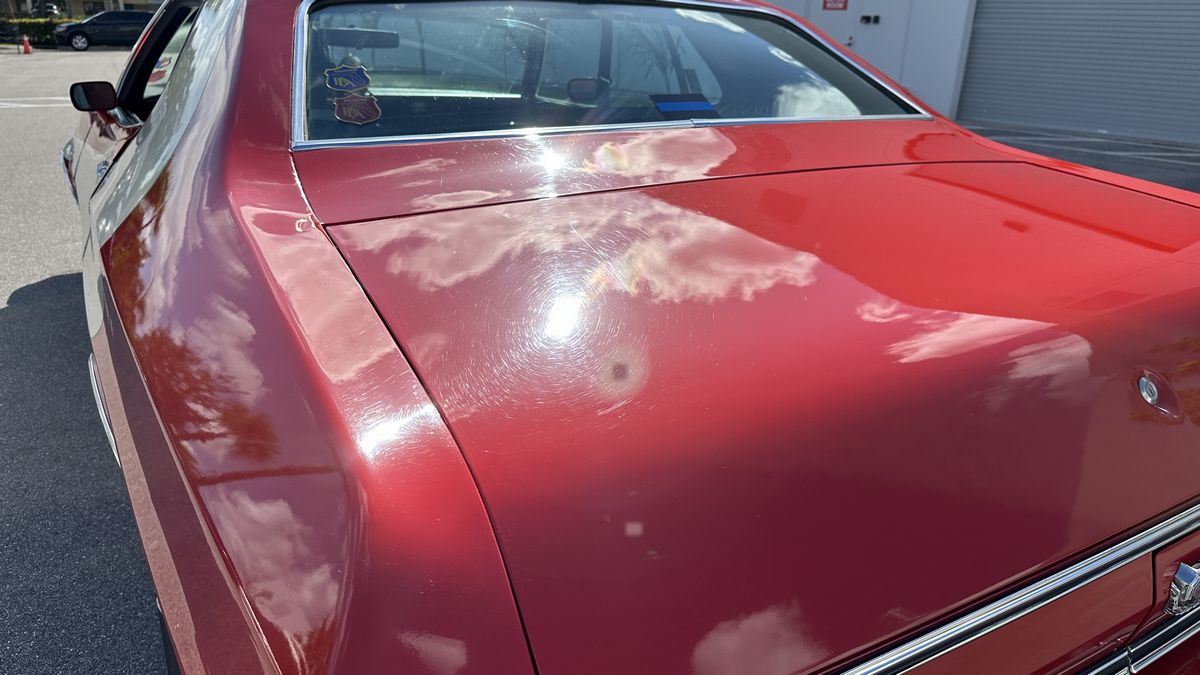
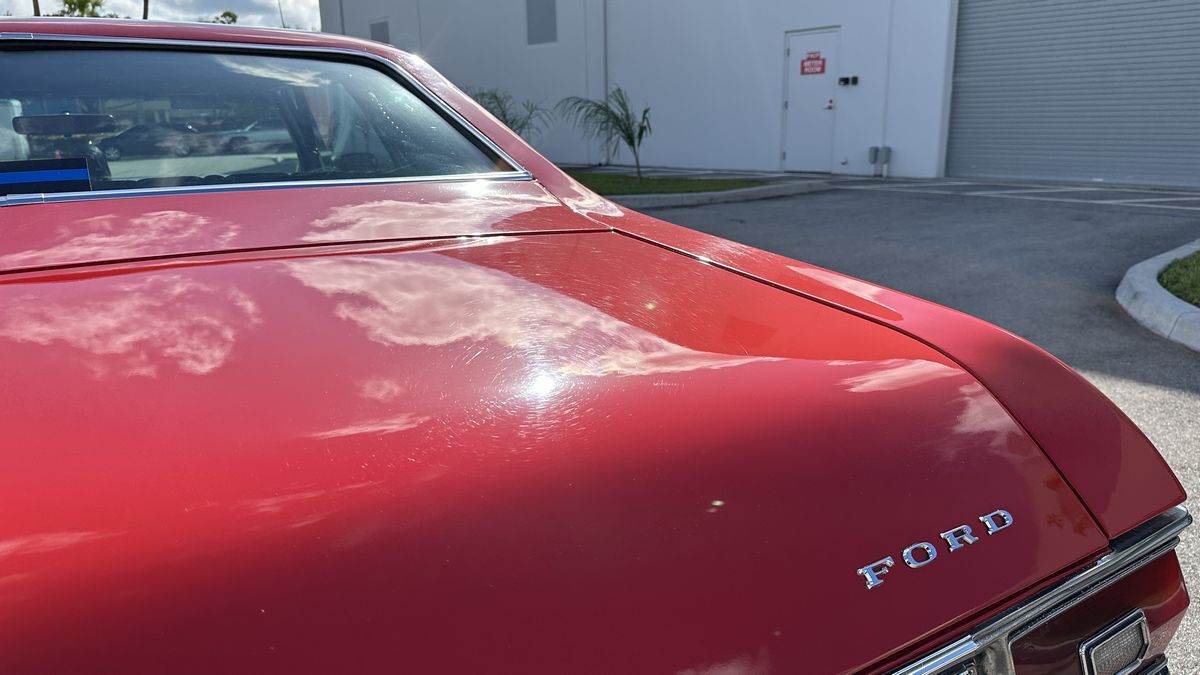
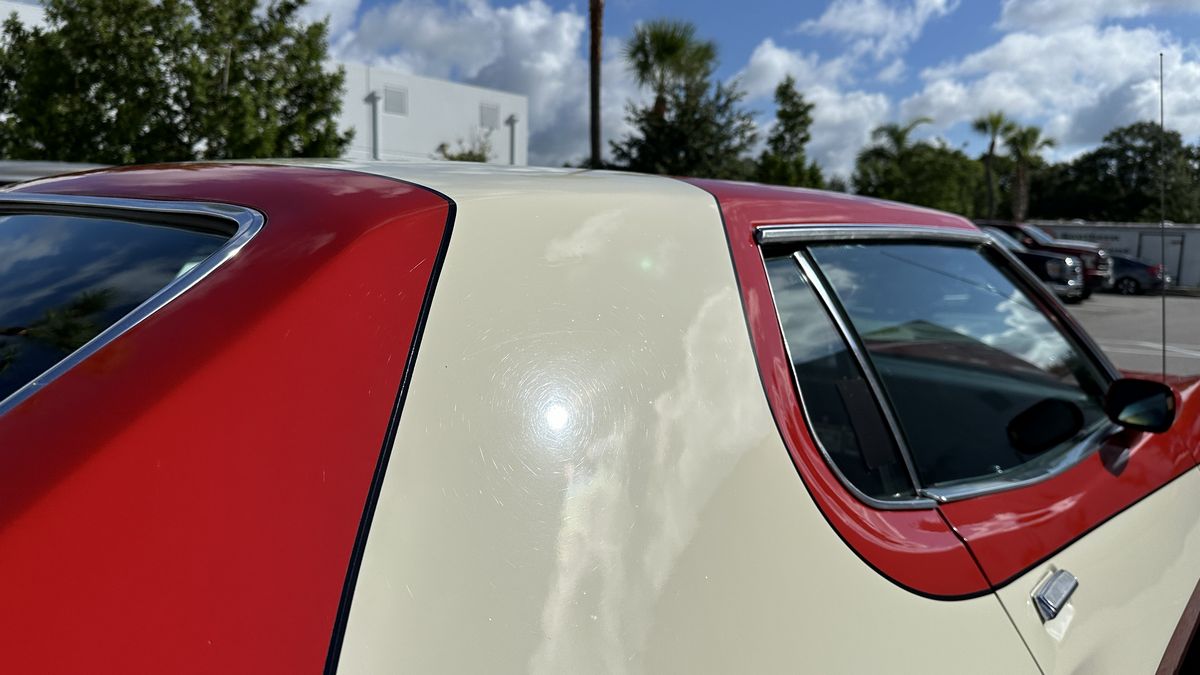
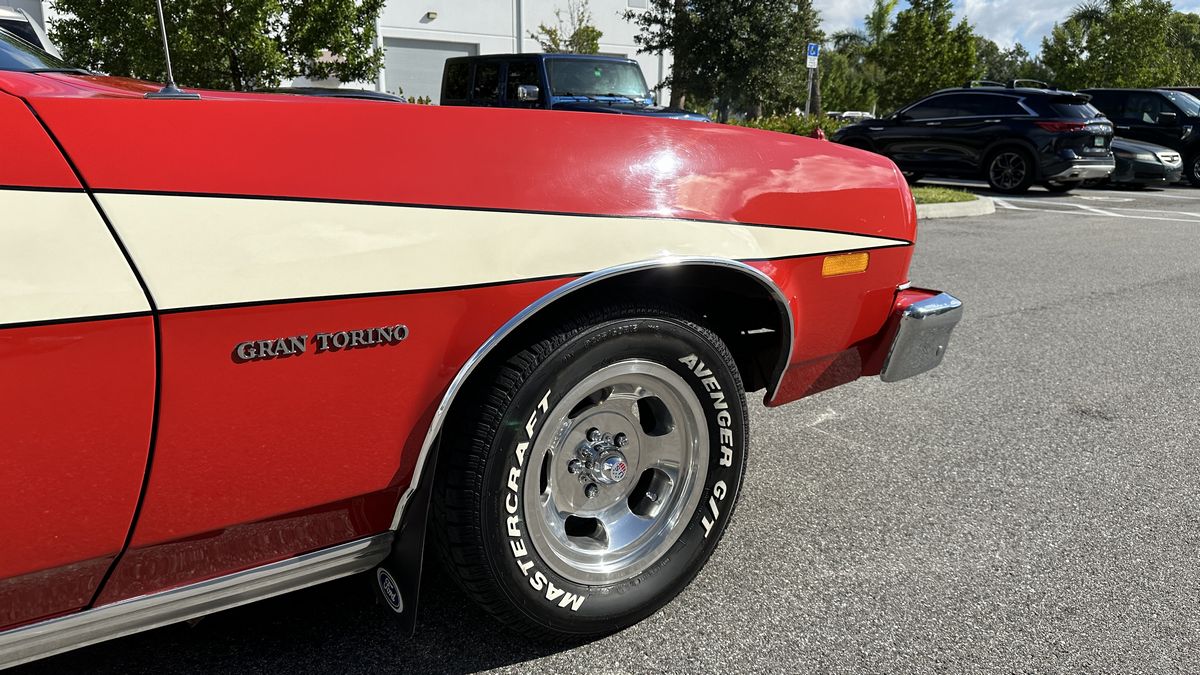
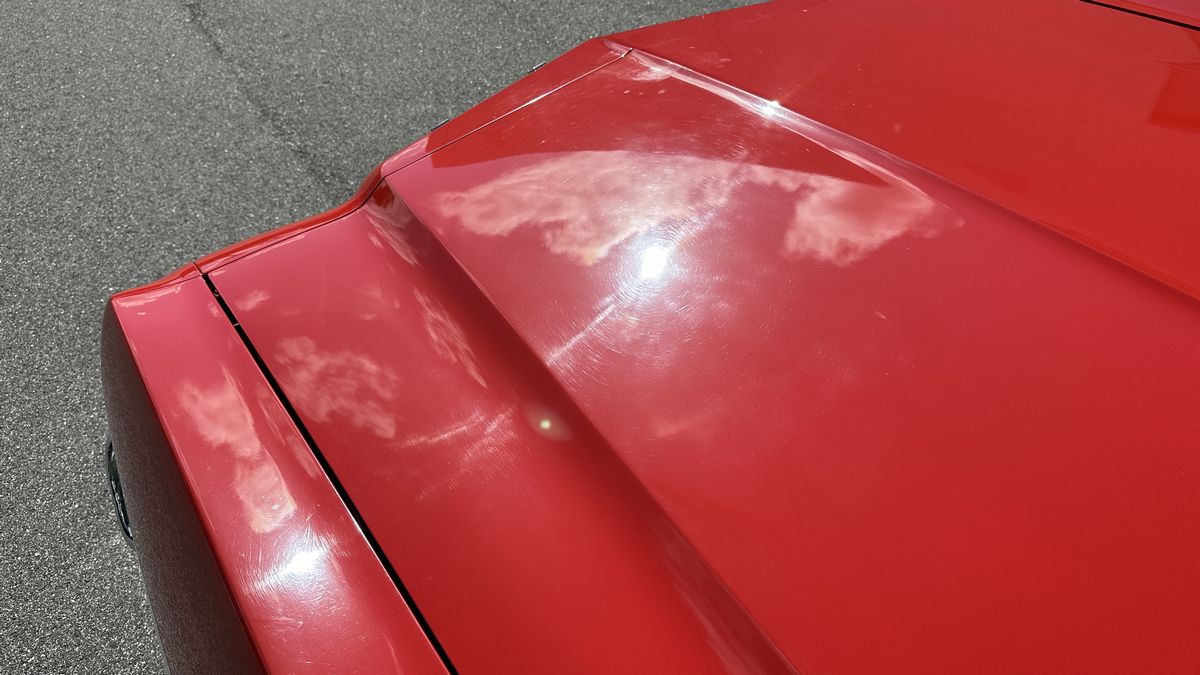
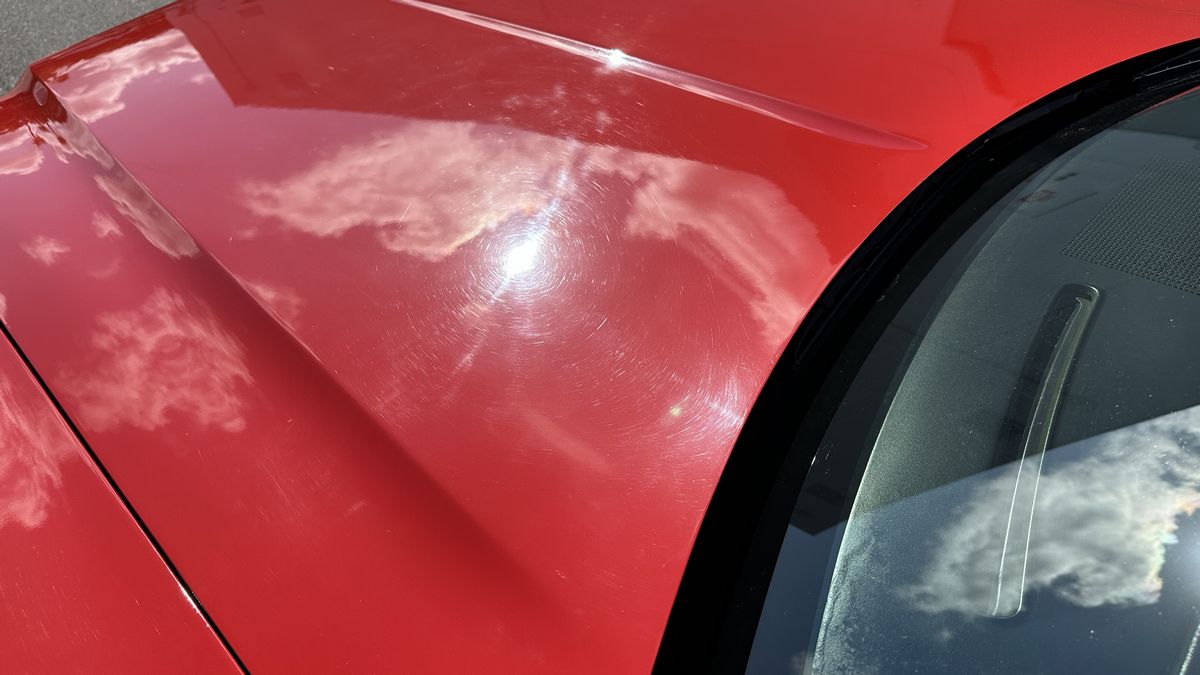
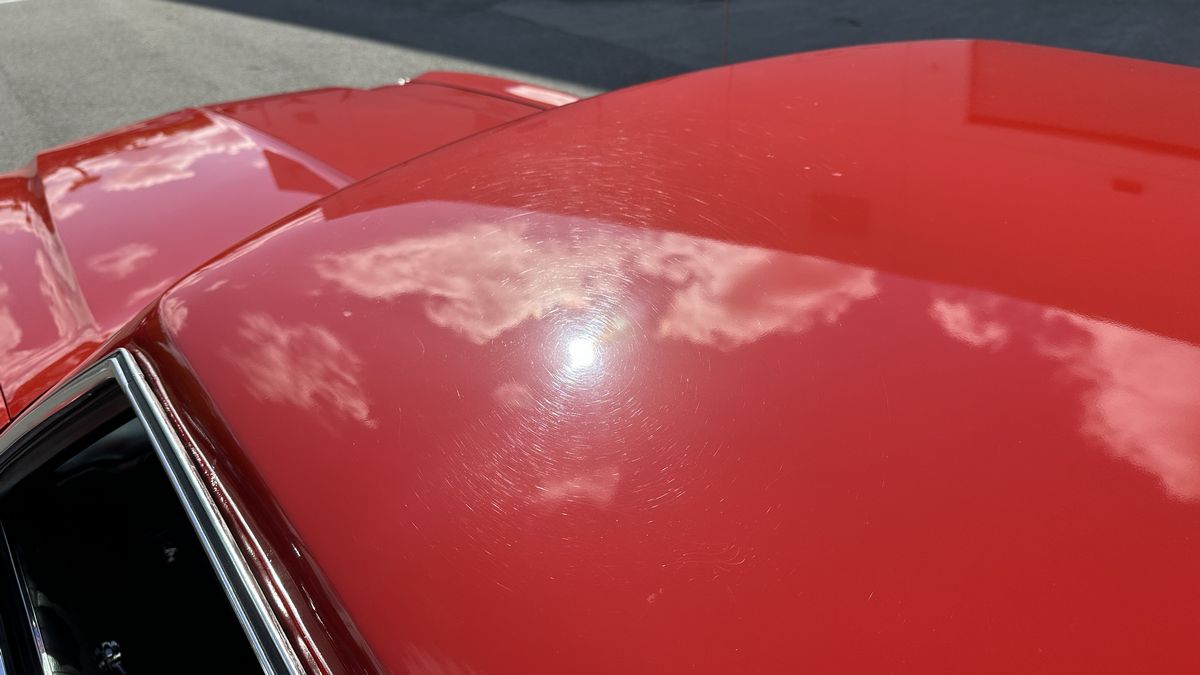
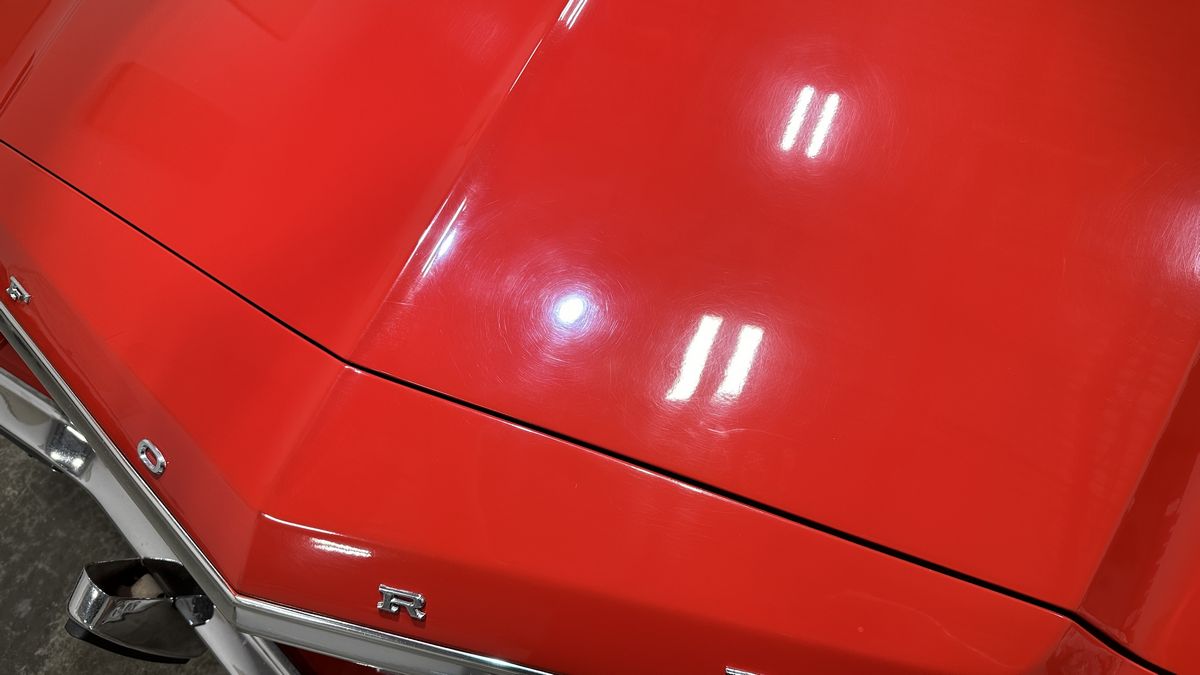
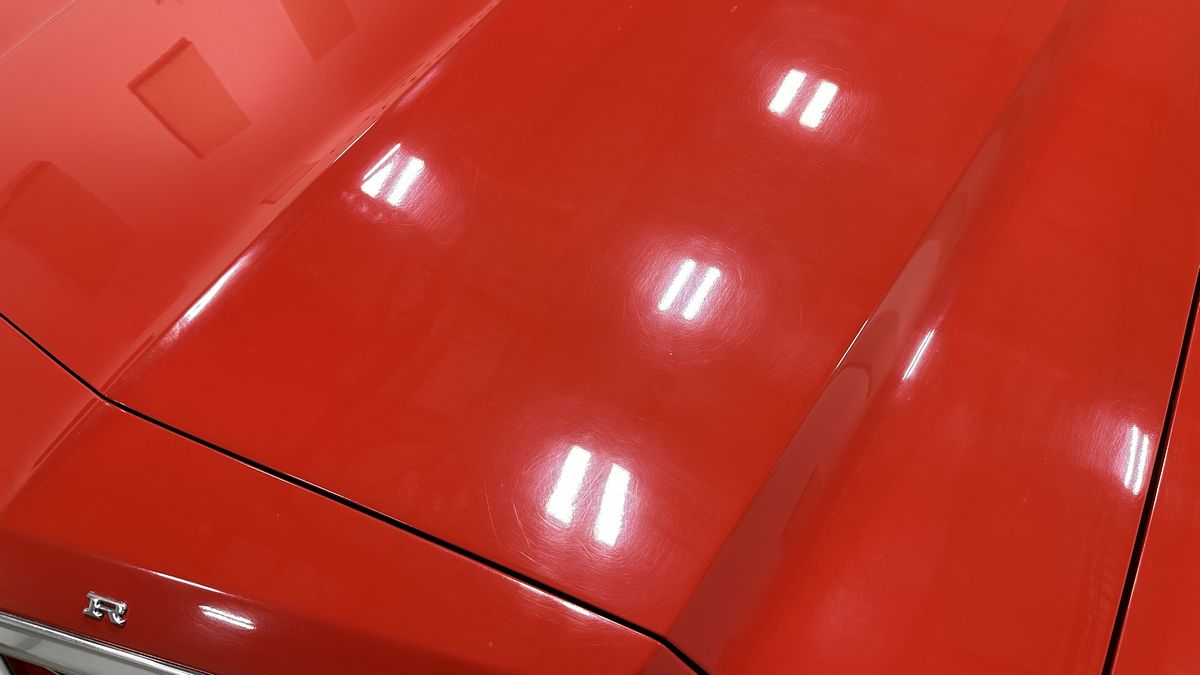
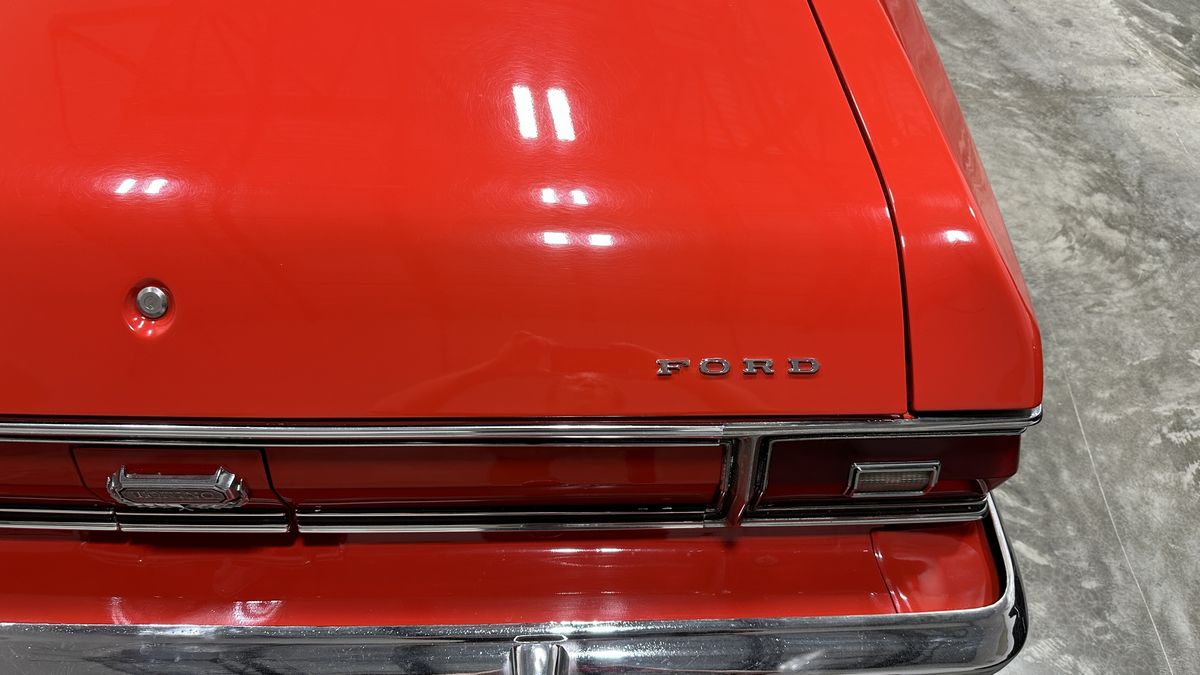
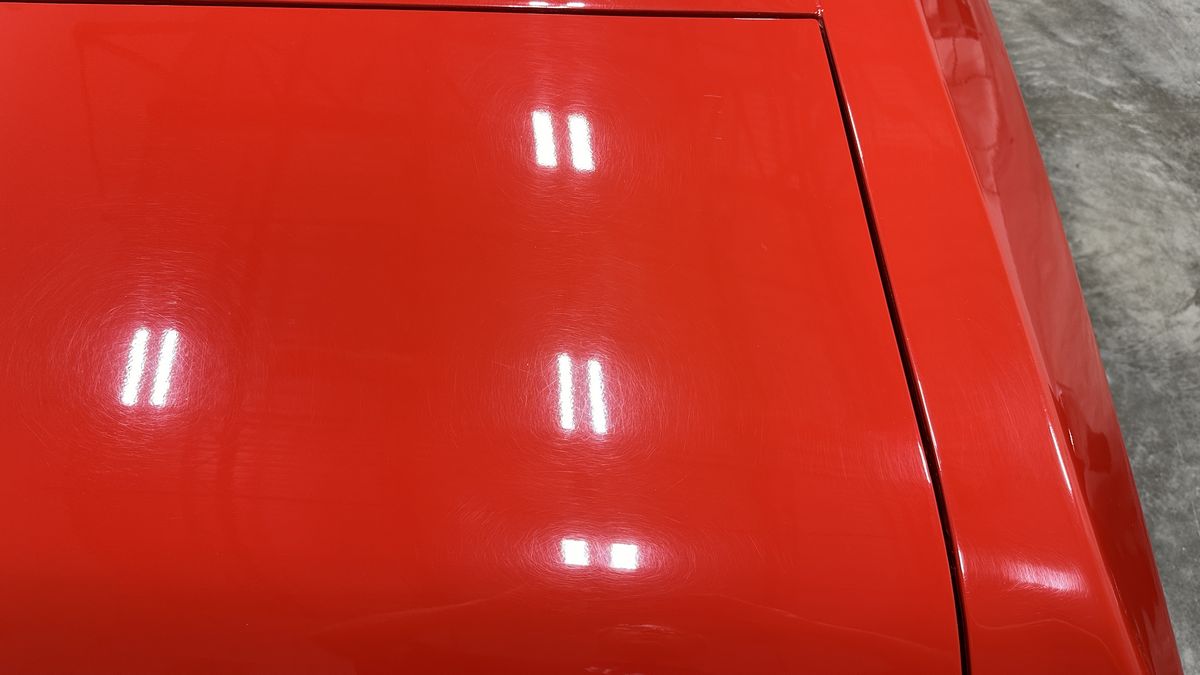
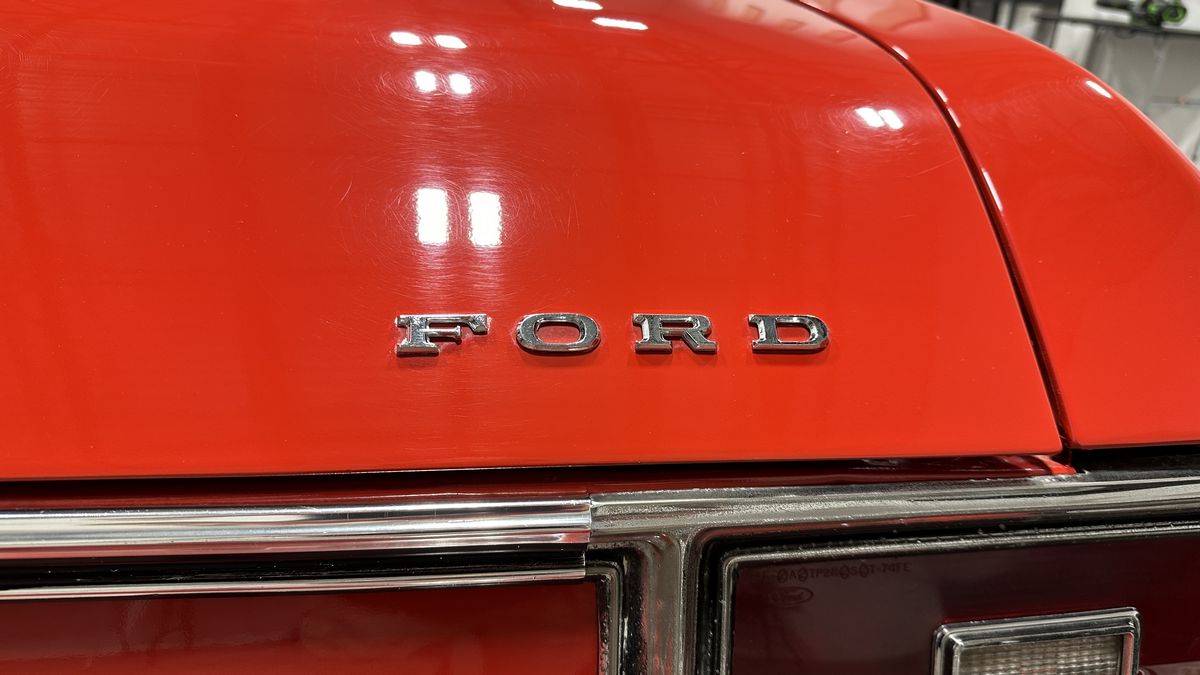
Let's check out the condition of the single stage paint on the 1976 Ford Grand Torino Starsky and Hutch Police Car with the car parked outside in FULL SUN.

full


full


full


full


full


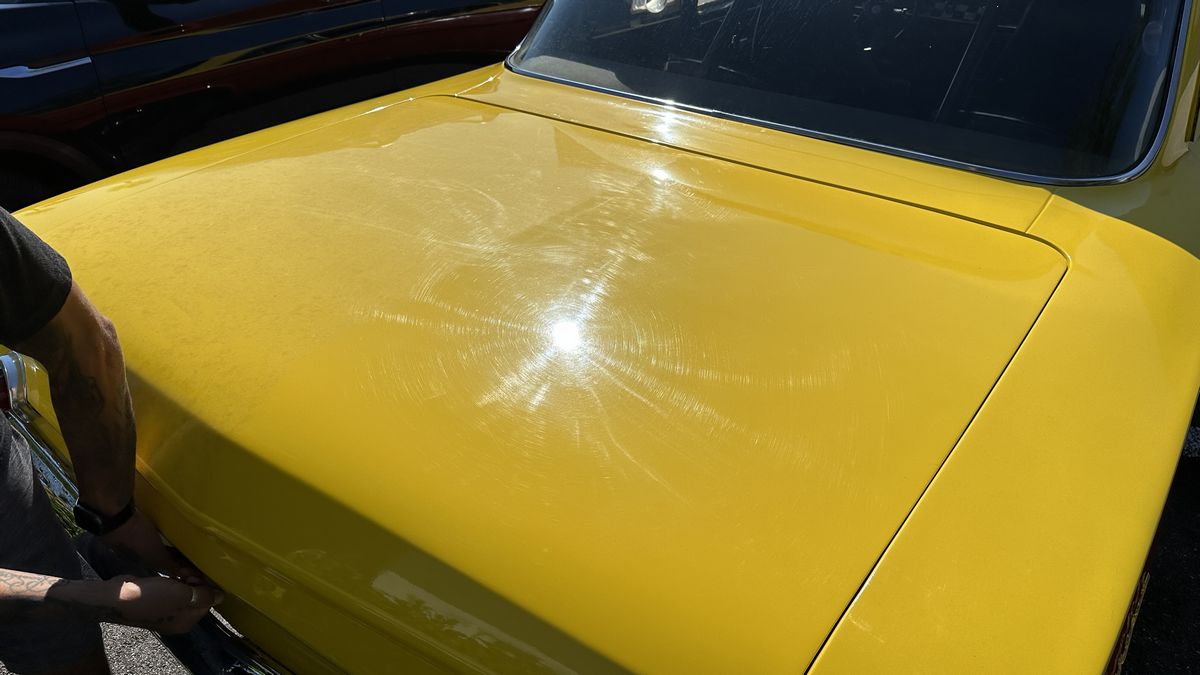
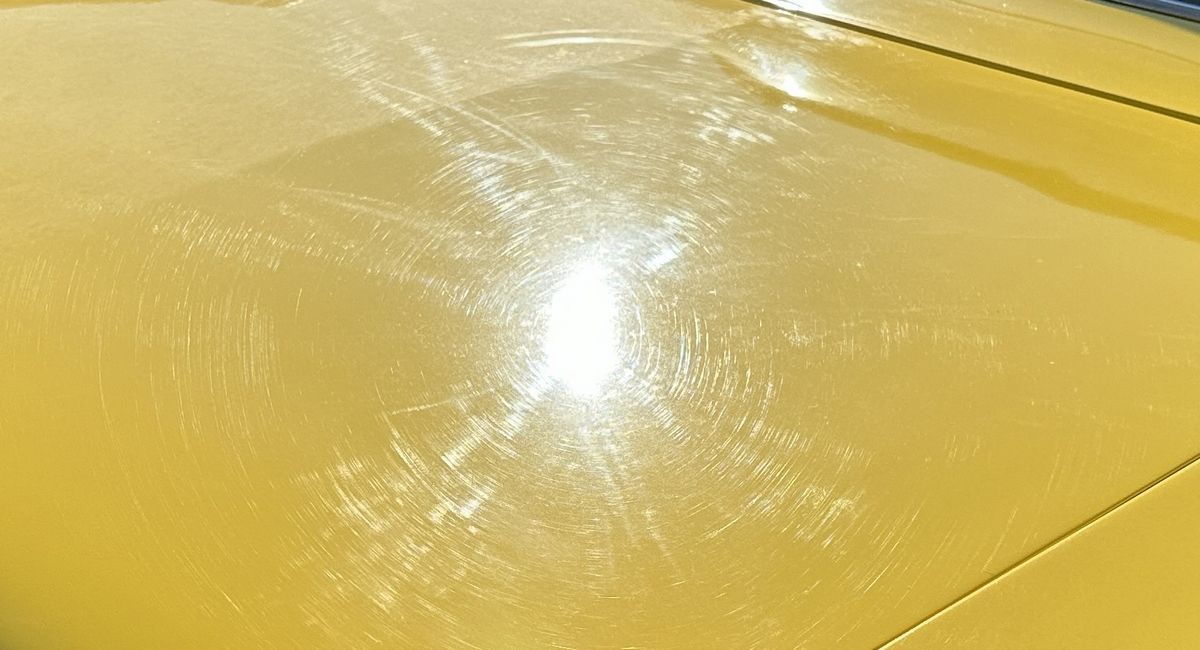
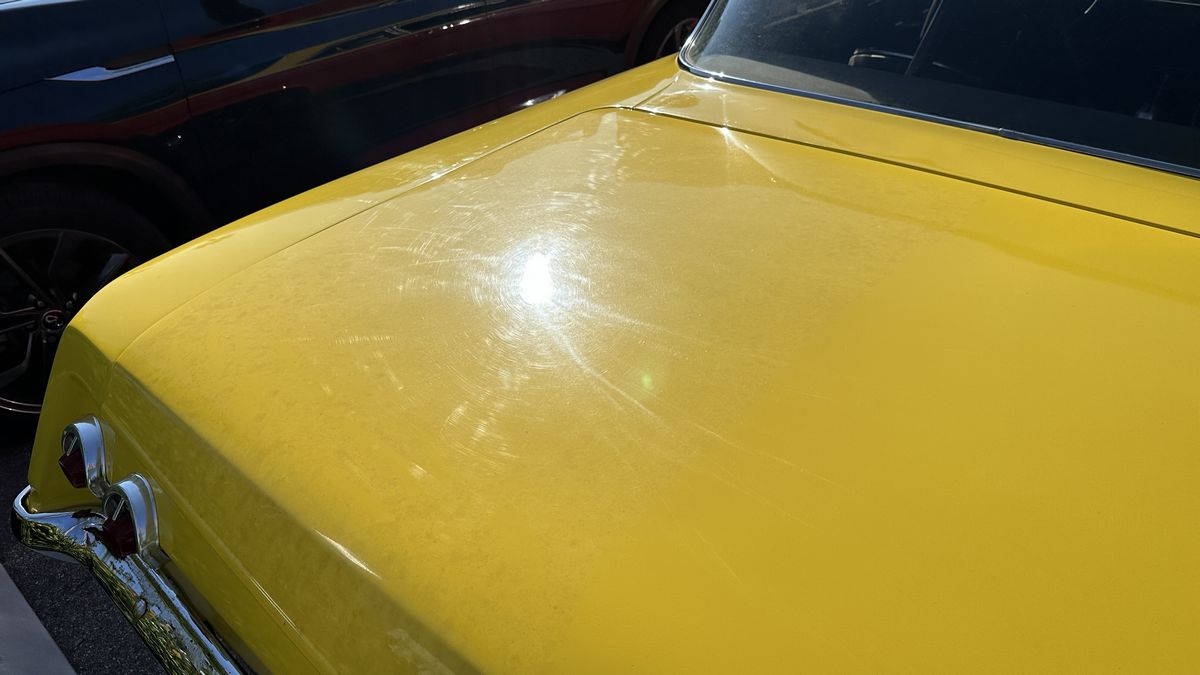
Every inch of the paint on this car is totally swirled-out.

full


full


full


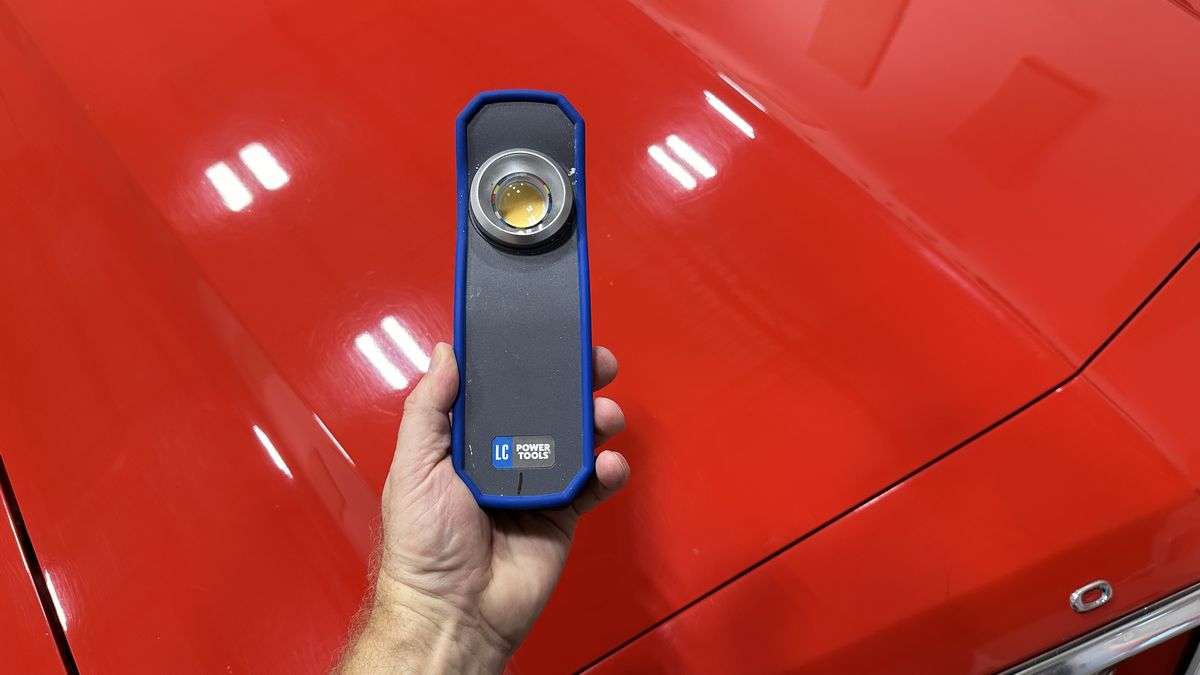
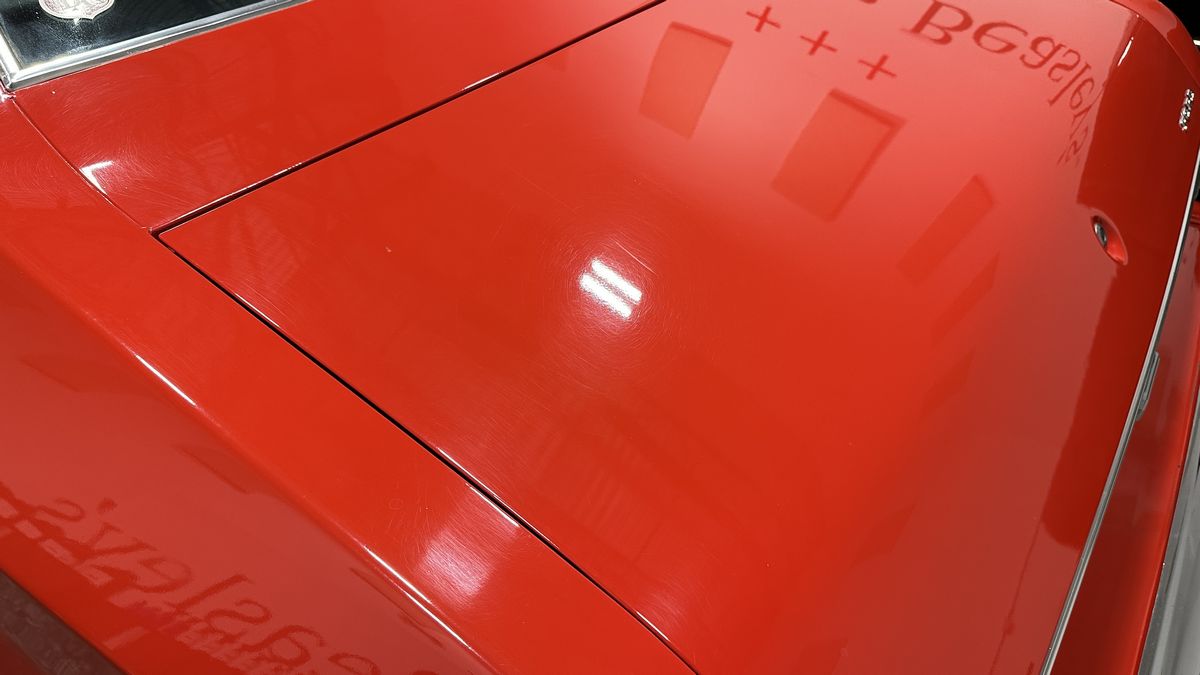
Now let's use the Lake Country Hand-Held Light and overhead LED lights to inspect with the car moved inside the Stuart, Florida O.R.

full


full


full


full


full


full


full


full


full


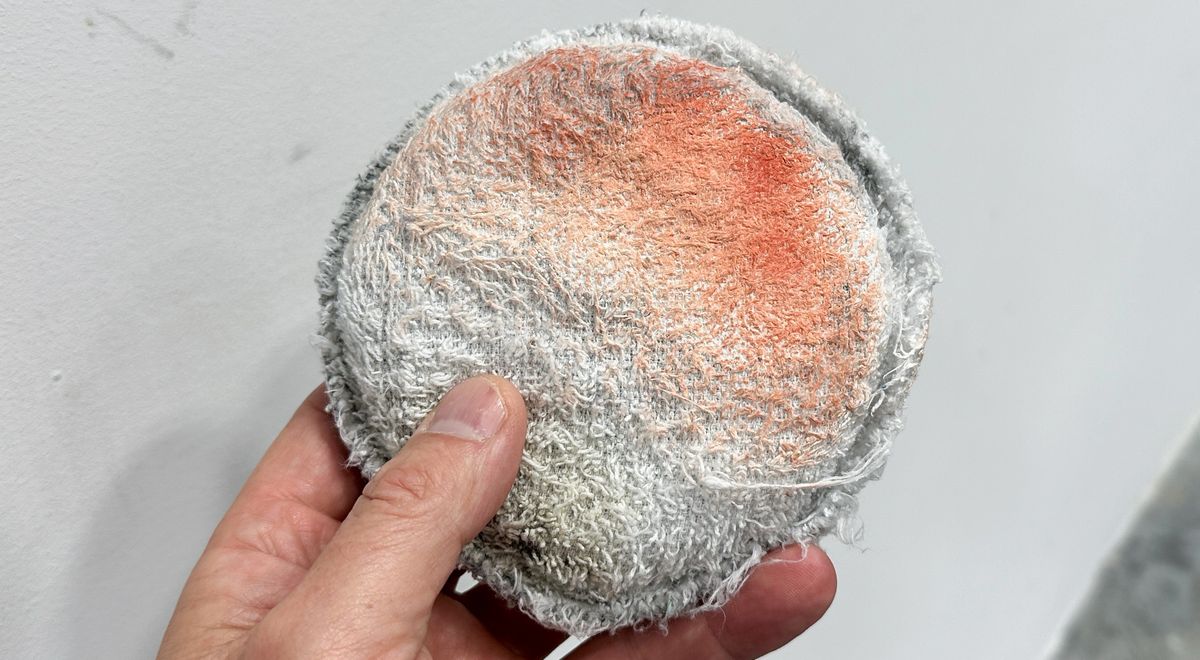
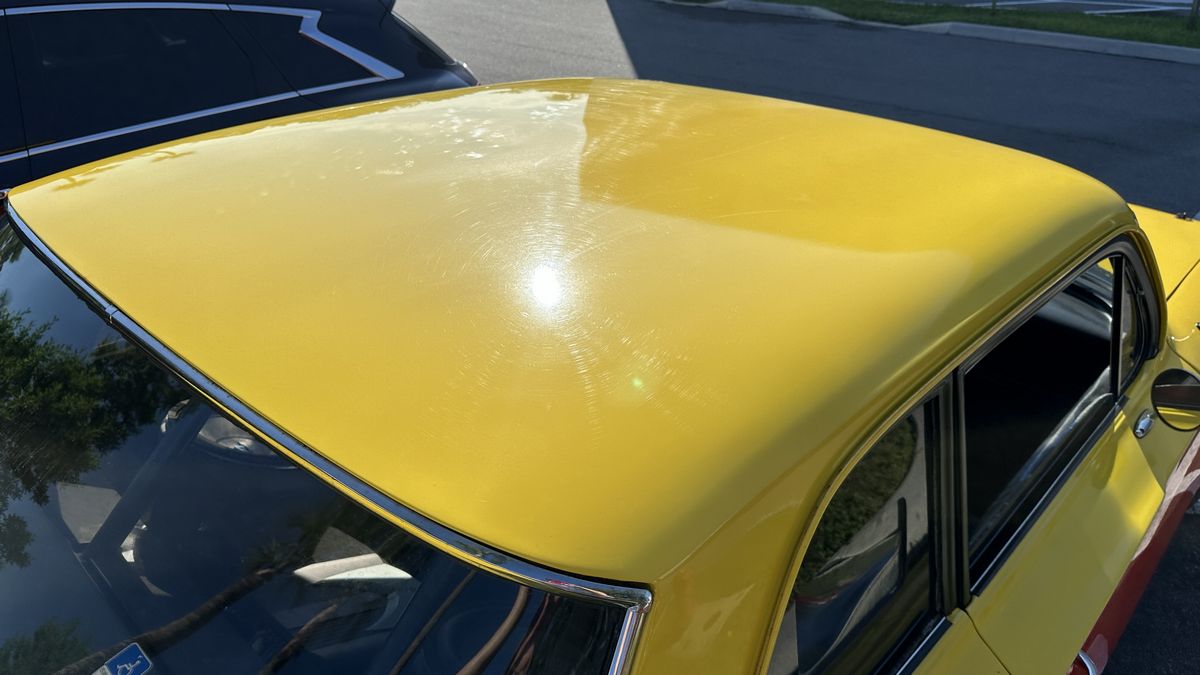
How to Test For Single Stage Paint
Testing is pretty easy for colored single stage paint, simply apply some white colored polish onto a white colored applicator or cloth, rub over the paint for a few seconds and then inspect. For WHITE single stage paint, it's a tick trickier because you'll want to use a dark colored cloth or applicator and if possible, a gray or colored polish.

full


An Ounce of Prevention is Worth a Pound of Cure
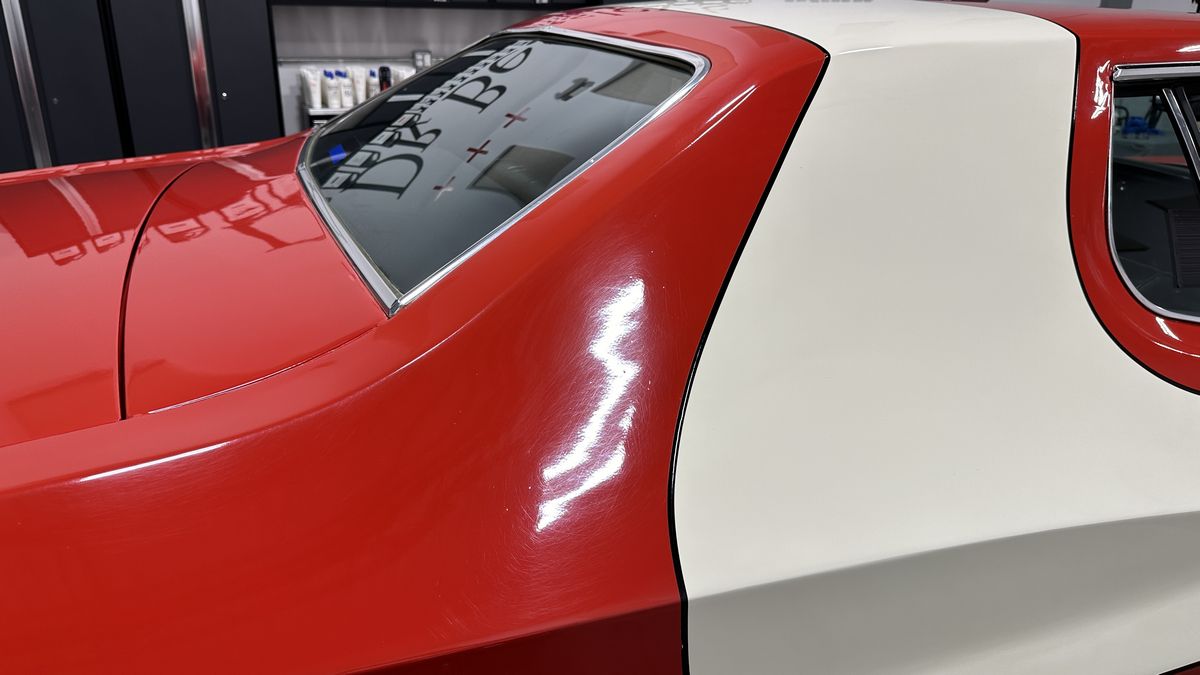
The owner is a super cool dude and because he knows what's involved with this type of paint restoration, he asked me to have the class be SUPER careful when buffing around the black vinyl pinstriping that separates any white painted sections for the red painted section, and we complied. You'll see a YELLOW painter's tape covering over and protecting the black vinyl pinstriping.


Mike
 
Last edited:
Continued....

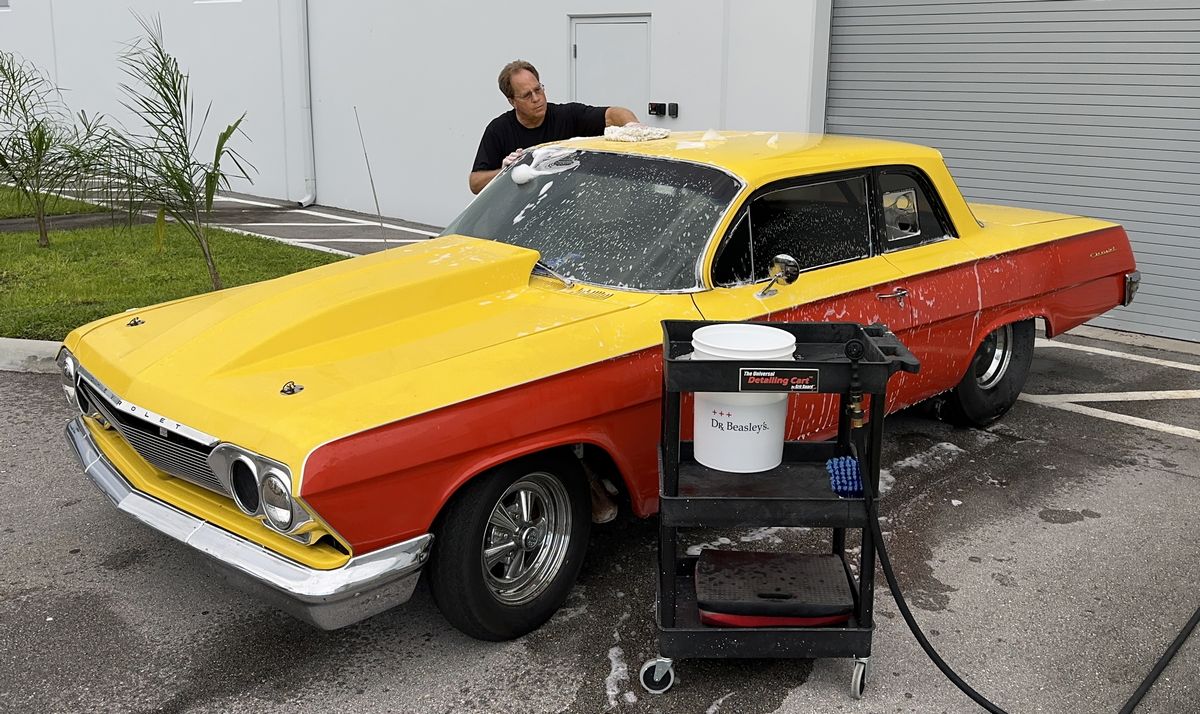
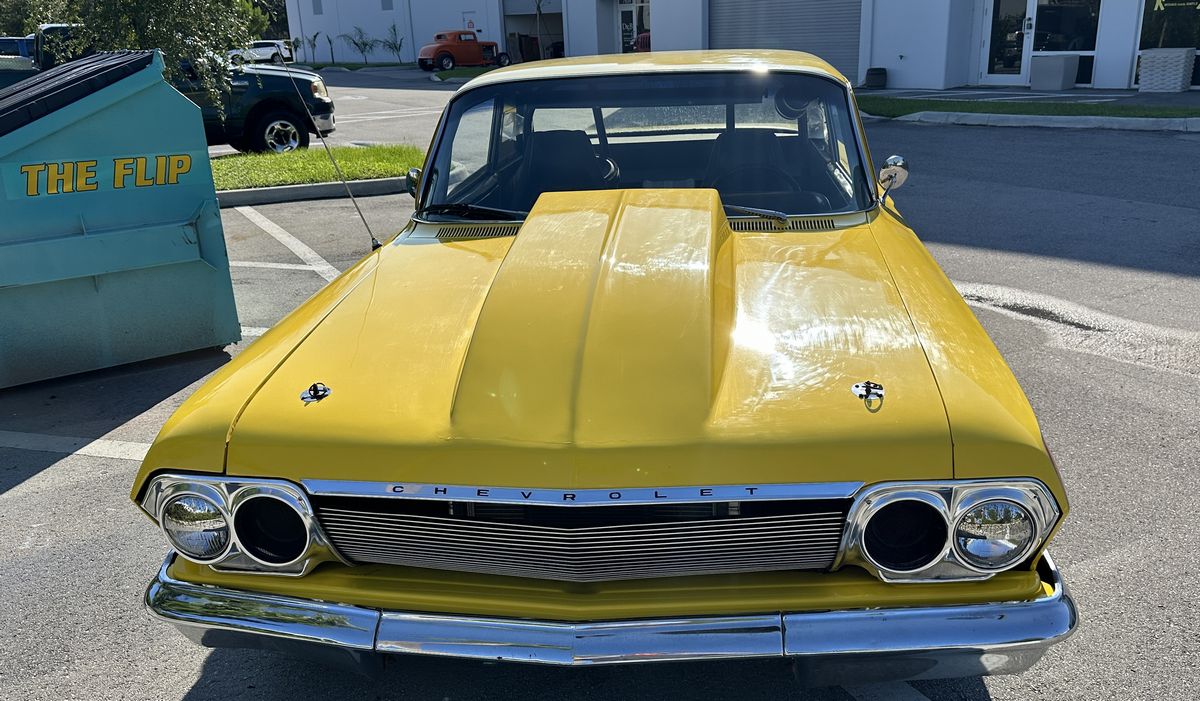
When is the last time you washed a Pro Street 1962 Chevrolet Biscayne?

While I do like to cover a LOT of tools, products and techniques when we do the class session on Extreme Prep Wash, I don't like to have my classes spend a lot of time washing cars, so I'm always happy to take care of washing most of the cars before class starts.

full


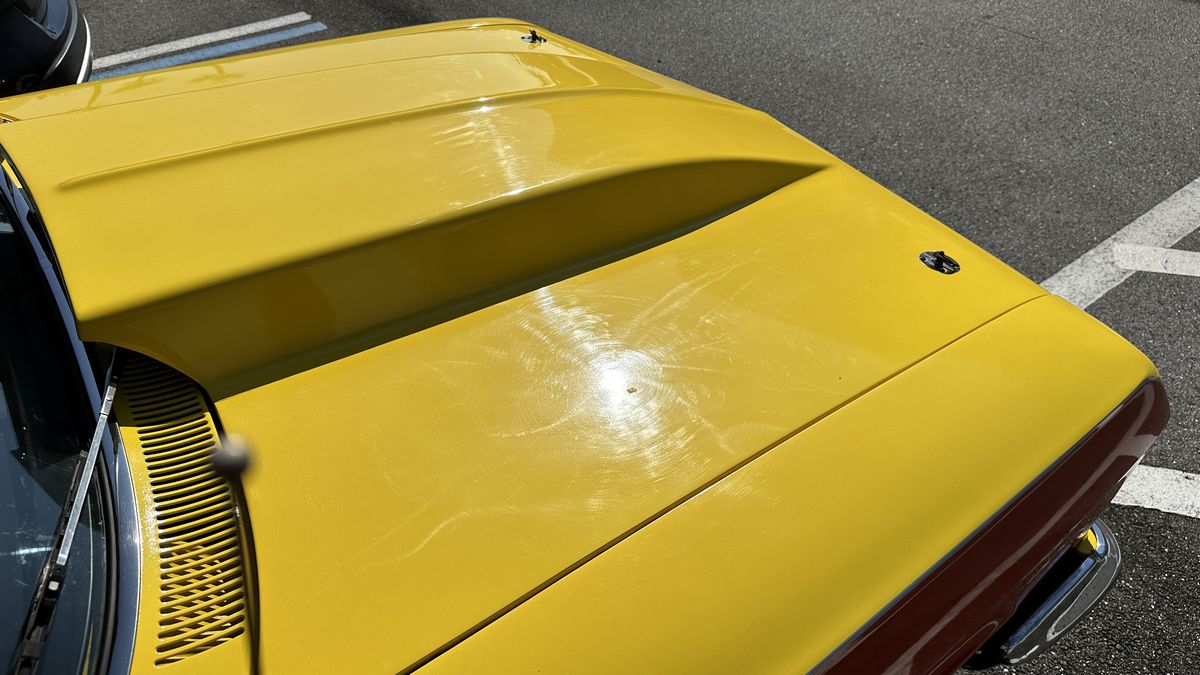
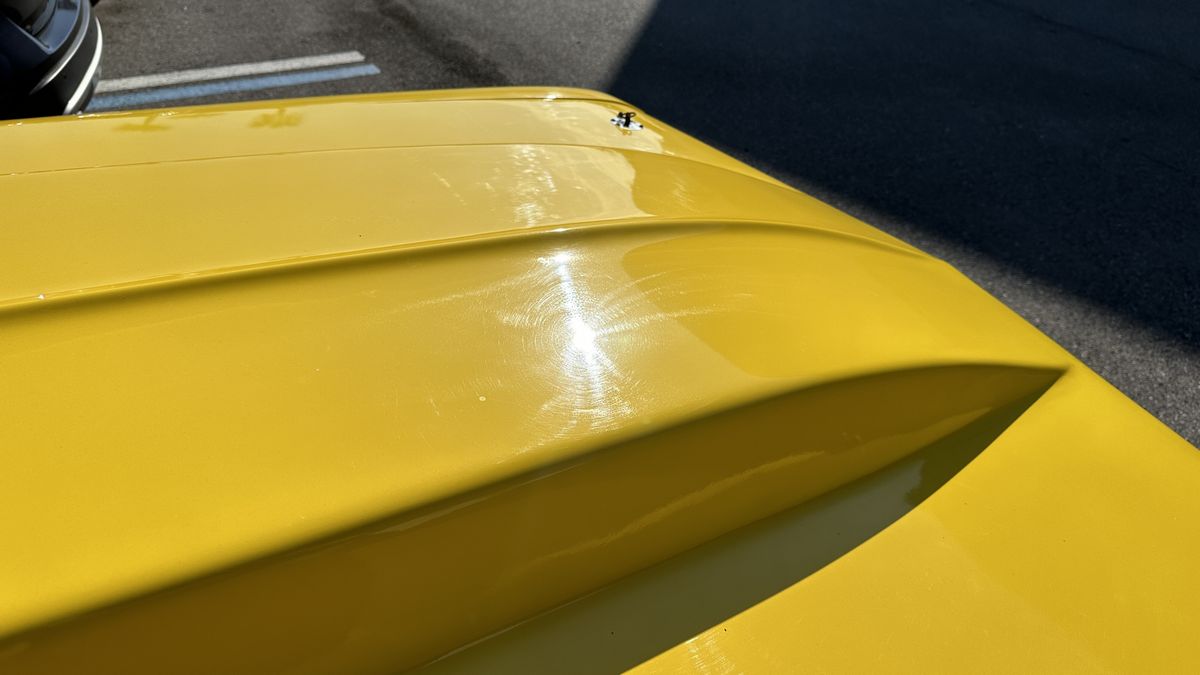
Swirl City
After a thorough bath, I invested a few minutes in photo-documenting the BEFORE condition.

full


full


full


full


full


She's incredibly abused by the misuse of a rotary polisher
I start my classes teaching people how to use a rotary polisher, but we always finish with ORBITAL polishers to 100%, absolutely avoid the entire hologram issue in the moment and way down the road after the owner has taken possession of all our hard work.


full


full


Mike
 
Last edited:
Back
Top