


Sanding scratches

PavoStyleDetaling

New member
Joined
May 26, 2026
Messages
12
Reaction score
9
Points
3
Location
Italiy
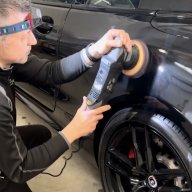
Ciao Mike, oggi ho lucidato una Porsche nera metallizzata. Un pannello era stato riverniciato e carteggiato in modo molto grossolano. Ho provato con un tampone di lana, ma il risultato è stato davvero pessimo. Da un metro di distanza, onestamente, è molto difficile da notare, ma avrei voluto poterlo sistemare anche se non fosse stato compito mio; avrei dovuto semplicemente eseguire un processo in un'unica fase. Pensi che avrei fatto la cosa giusta se avessi carteggiato quella zona con carta abrasiva a grana 1500/200/3000? Grazie, Mike🙏🏽


IMG_3607.jpeg

IMG_3603.jpeg

IMG_3608.jpeg


Here's what you shared in English


Hi Mike, today I polished a metallic black Porsche. One panel had been repainted and sanded very roughly. I tried using a wool pad, but the result was really poor.

Honestly, from a meter away it’s hard to notice, but I would have liked to fix it even though it wasn't part of the job—I was only supposed to perform a single-step process.

Do you think I would have done the right thing if I had sanded that area with 1500, 2000, and 3000-grit sandpaper?

Thanks, Mike.
 
Last edited by a moderator:
Hi Mike, today I polished a metallic black Porsche. One panel had been repainted and sanded very roughly. I tried using a wool pad, but the result was really poor.

Honestly, from a meter away it’s hard to notice, but I would have liked to fix it even though it wasn't part of the job—I was only supposed to perform a single-step process.

Do you think I would have done the right thing if I had sanded that area with 1500, 2000, and 3000-grit sandpaper?

Thanks, Mike.

Those sanding scratches look deep. The fact that you were able to get such a great picture showing the dimensions of the scratches makes me think whoever did the sanding used possibly 600 or 800 grit.

The only way to remover or flatten those sanding marks will be to re-sand like you stated. The problem is - will there be enough clearcoat to safely sand without sanding OR buffing through the clearcoat layer of paint. If you were only hired to do a one-step then call it good. Don't try to be the hero and end up paying to have some other dude's panel repainted.

Check out this recent article I wrote,

The difference between a hack and a professional is a professional knows when to stop


In Italian

Quei graffi di carteggiatura sembrano profondi. Il fatto che tu sia riuscito a scattare una foto così nitida, che ne mostra le dimensioni, mi fa pensare che chi ha eseguito la carteggiatura abbia usato una grana 600 o 800.

L'unico modo per eliminare o livellare quei segni è carteggiare nuovamente, come hai detto tu. Il problema è capire se ci sia abbastanza trasparente per intervenire in sicurezza, senza rischiare di oltrepassare lo strato di vernice trasparente durante la carteggiatura o la lucidatura. Se l'incarico prevedeva solo un trattamento "one-step", allora fermati lì. Non cercare di fare l'eroe, col rischio di dover poi pagare la riverniciatura del pannello di qualcun altro.

Dai un'occhiata a questo mio recente articolo:


La differenza tra un dilettante allo sbaraglio e un professionista è che il professionista sa quando fermarsi.


Mike
 
Those sanding scratches look deep. The fact that you were able to get such a great picture showing the dimensions of the scratches makes me think whoever did the sanding used possibly 600 or 800 grit.

The only way to remover or flatten those sanding marks will be to re-sand like you stated. The problem is - will there be enough clearcoat to safely sand without sanding OR buffing through the clearcoat layer of paint. If you were only hired to do a one-step then call it good. Don't try to be the hero and end up paying to have some other dude's panel repainted.

Check out this recent article I wrote,

The difference between a hack and a professional is a professional knows when to stop


In Italian

Quei graffi di carteggiatura sembrano profondi. Il fatto che tu sia riuscito a scattare una foto così nitida, che ne mostra le dimensioni, mi fa pensare che chi ha eseguito la carteggiatura abbia usato una grana 600 o 800.

L'unico modo per eliminare o livellare quei segni è carteggiare nuovamente, come hai detto tu. Il problema è capire se ci sia abbastanza trasparente per intervenire in sicurezza, senza rischiare di oltrepassare lo strato di vernice trasparente durante la carteggiatura o la lucidatura. Se l'incarico prevedeva solo un trattamento "one-step", allora fermati lì. Non cercare di fare l'eroe, col rischio di dover poi pagare la riverniciatura del pannello di qualcun altro.

Dai un'occhiata a questo mio recente articolo:


La differenza tra un dilettante allo sbaraglio e un professionista è che il professionista sa quando fermarsi.


Mike
Dear Mike, thank you so much for this reply. For me, having the opportunity to ask and receive an answer from a legend like you is priceless. Sincerely, thank you so much. It's a privilege and an honor to be on your forum.
 
Back
Top