

Navigation
Install the app
How to install the app on iOS
Follow along with the video below to see how to install our site as a web app on your home screen.
Note: This feature may not be available in some browsers.
More options
You are using an out of date browser. It may not display this or other websites correctly.
You should upgrade or use an alternative browser.
You should upgrade or use an alternative browser.
Rupes Mark V vs Flex XFE7-15
- Thread starter ag256
- Start date
- Admin
- #14
- Joined
- May 21, 2021
- Messages
- 2,607
- Reaction score
- 1,545
- Points
- 113
- Location
- Stuart, Florida
- Website
- themikephillipsforum.com
Hi Mike,
Any update on these with the videos or feedback?
Apologies, but I'm travelling to SEMA, can I get back to you when I return?
Mike
Looks like it is already on the Flex website with some others taking pre-orders. Can't wait to see the review if it meets Mike's stamp of approval

 www.flexpowertools.com
 www.autogeek.net
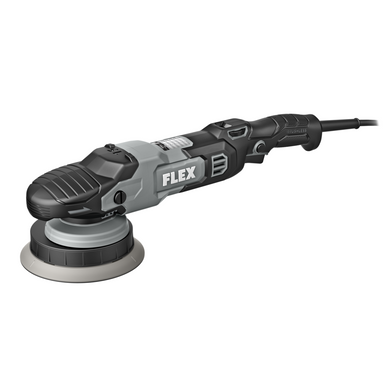
120V Brushless Random Orbital Polisher
Put the finishing touches on polishing work with the FLEX 120V Random Orbital Polisher, which delivers up to 4,350 RPM and 8,700 OPM. It’s an ideal polisher for finishing without hologram formation.
www.flexpowertools.com
FLEX Random Orbital Polisher (Corded)
Autogeek.net: Your trusted source for premium car care products, professional auto detailing supplies, and expert solutions.
www.autogeek.net
- Admin
- #17
- Joined
- May 21, 2021
- Messages
- 2,607
- Reaction score
- 1,545
- Points
- 113
- Location
- Stuart, Florida
- Website
- themikephillipsforum.com
Hi Mike,
Any update on these with the videos or feedback?
After using the new corded, brushless FLEX 15mm free spinning, random orbital polisher on a 1960 Corvette and a then using at SEMA - it's a fine tool for a tool in this category. I simply RARELY use free spinning, random orbital polishers from any company/brand. Too slow for me plus I don't like the Brain Drain that comes with marking the side of the backing plate and/or buffing pad and then the entire time I'm buffing paint I need to LOOK to SEE - if the pad is rotating and oscillating or just vibrating against the paint. (Brain Drain). Thus, I use the Supa BEAST as my go-to choice for orbital polisher.
IF I do need to use a free spinning, random orbital polisher due to trying to finish out on SOFT paint - then I use either the Porter Cable 7424XP and/or the Griot's Garage G9 - both of these are SHORT stroke polishers, not LONG stroke like the 15mm, 21mm and 25mm polishers. Both of these tools do a better job of maintaining pad rotation and pad oscillation when buffing out concave curves, thin panels and tight areas.
The longer the stroke, the more likely for pad stalling due to how the outer edges of the spinning buffing pad has leverage over the drive spindle. See my video below.
Do Long-Stroke Polishers Stall More? (Mike's Theory)
What Does Orbit Stroke Diameter on Polishers Mean? (Visual Explanation)
But as far as a corded, brushless long stroke 15mm free spinning, random orbital polisher goes - the new and the old FLEX 15mm Finishers perform as advertised.
Not sure if the above helps?
Mike
Setec Astronomy
Active member
I guess you can't wait to try the new Optimum 27mm stroke machine (perhaps you did if you got to walk around this year at SEMA). I just kind of shook my head at that one and wondered if Dr. G was just trying to one-up Yvan with his 25mm, and wondered who will be the first to come out with a 30mm stroke?IF I do need to use a free spinning, random orbital polisher due to trying to finish out on SOFT paint - then I use either the Porter Cable 7424XP and/or the Griot's Garage G9 - both of these are SHORT stroke polishers, not LONG stroke like the 15mm, 21mm and 25mm polishers. Both of these tools do a better job of maintaining pad rotation and pad oscillation when buffing out concave curves, thin panels and tight areas.
The longer the stroke, the more likely for pad stalling due to how the outer edges of the spinning buffing pad has leverage over the drive spindle.