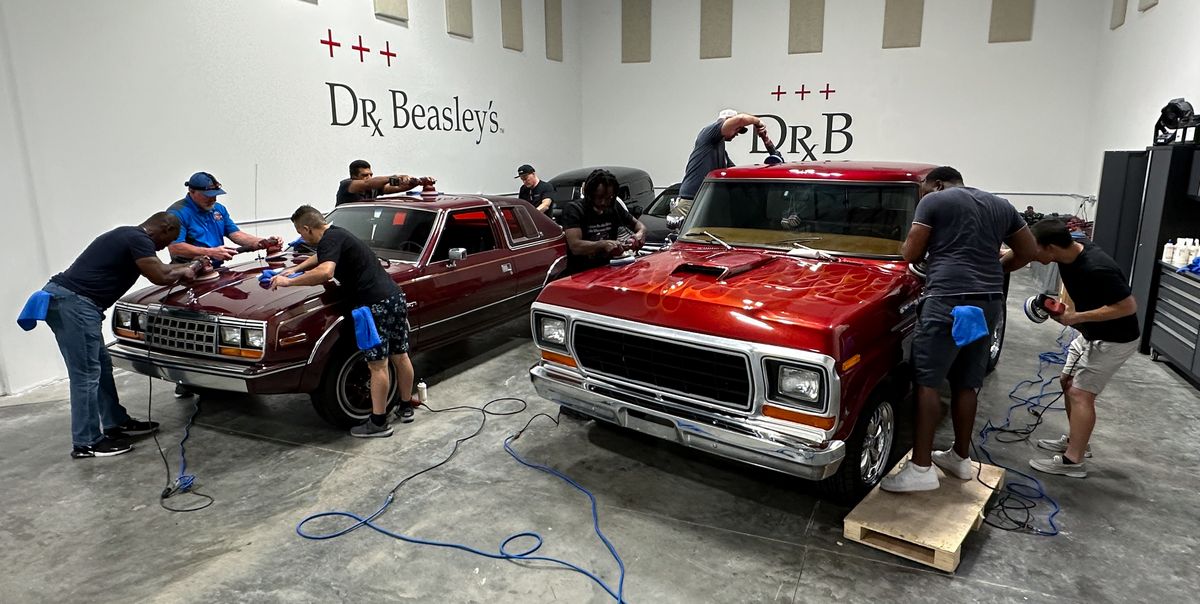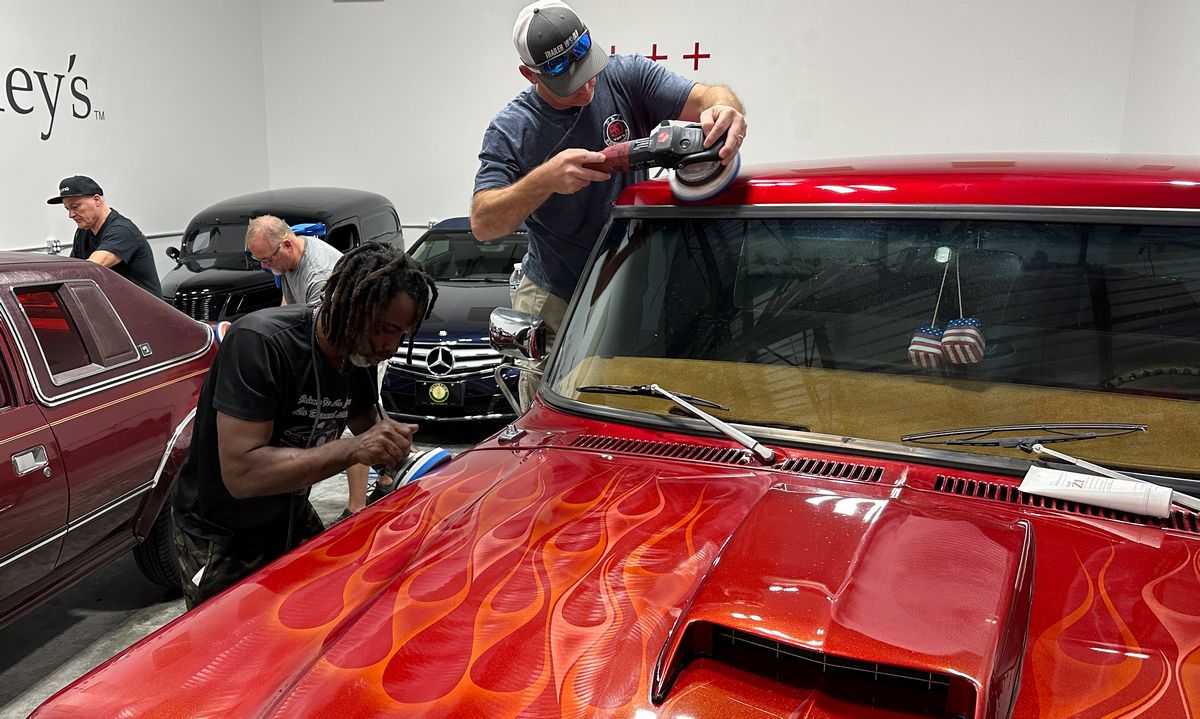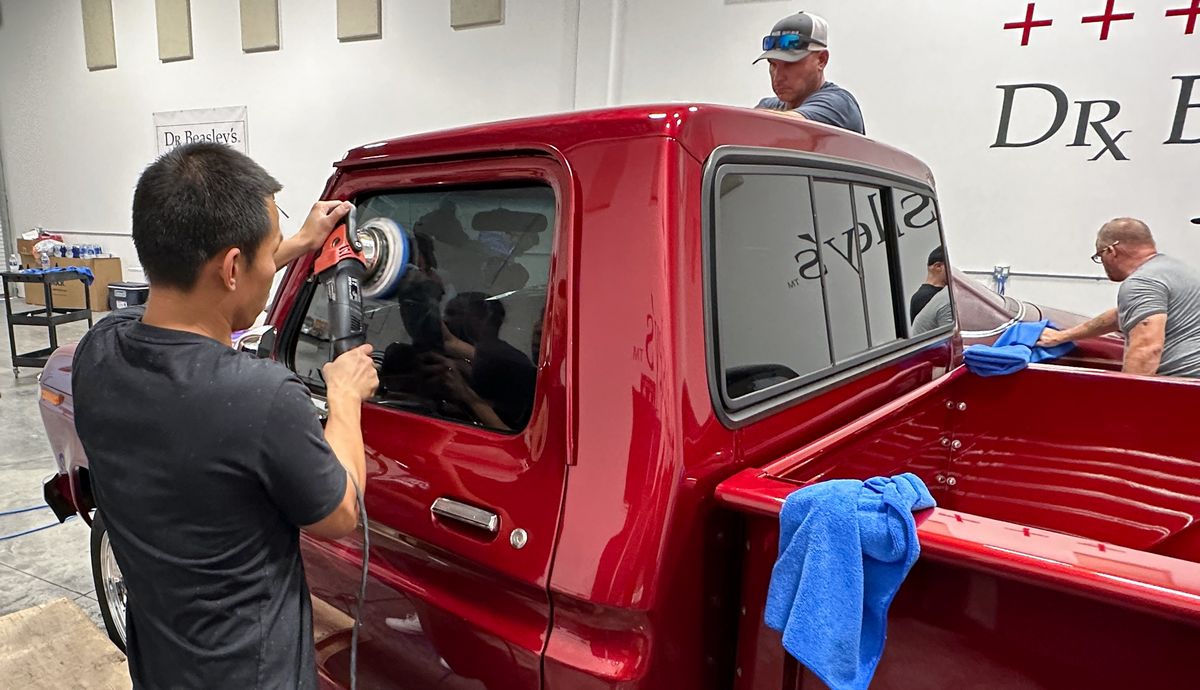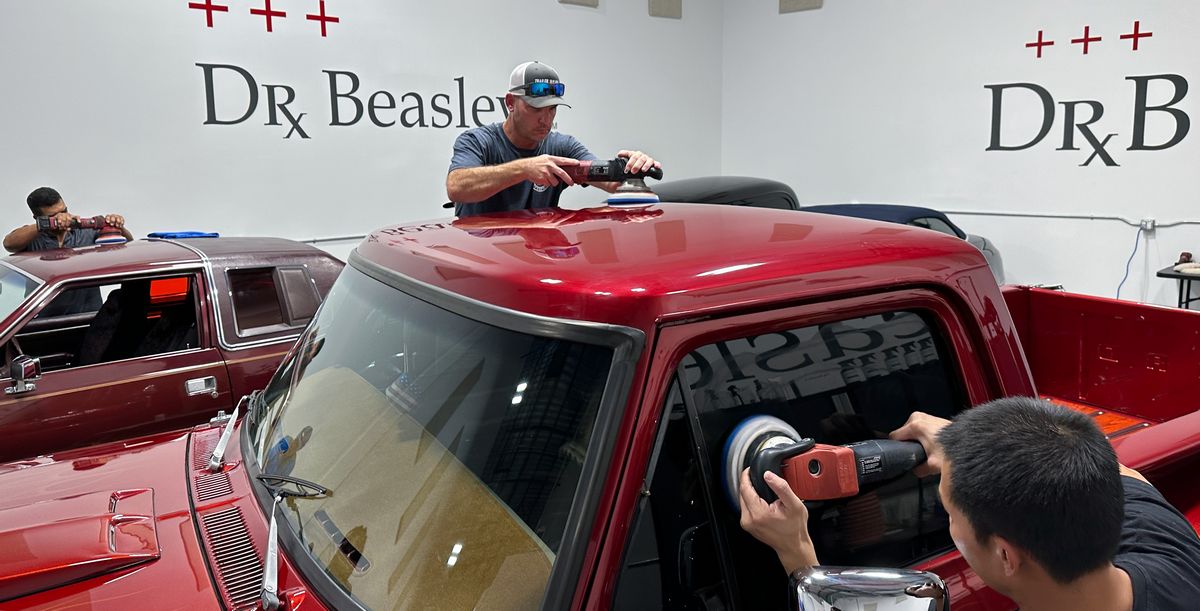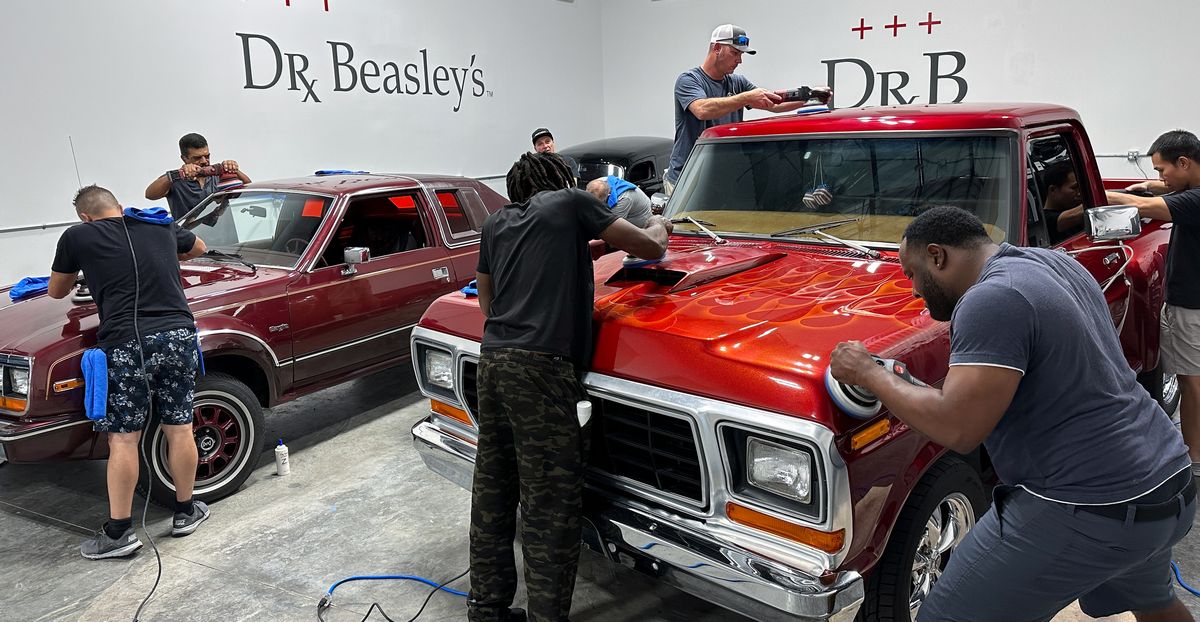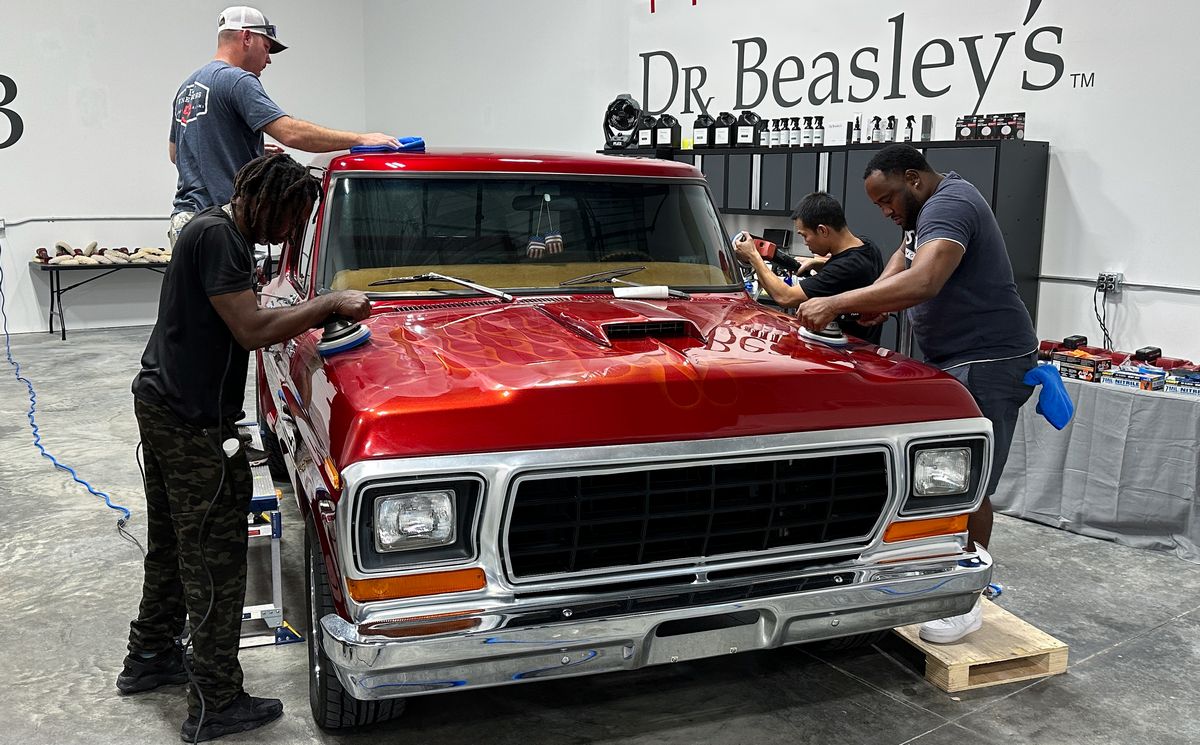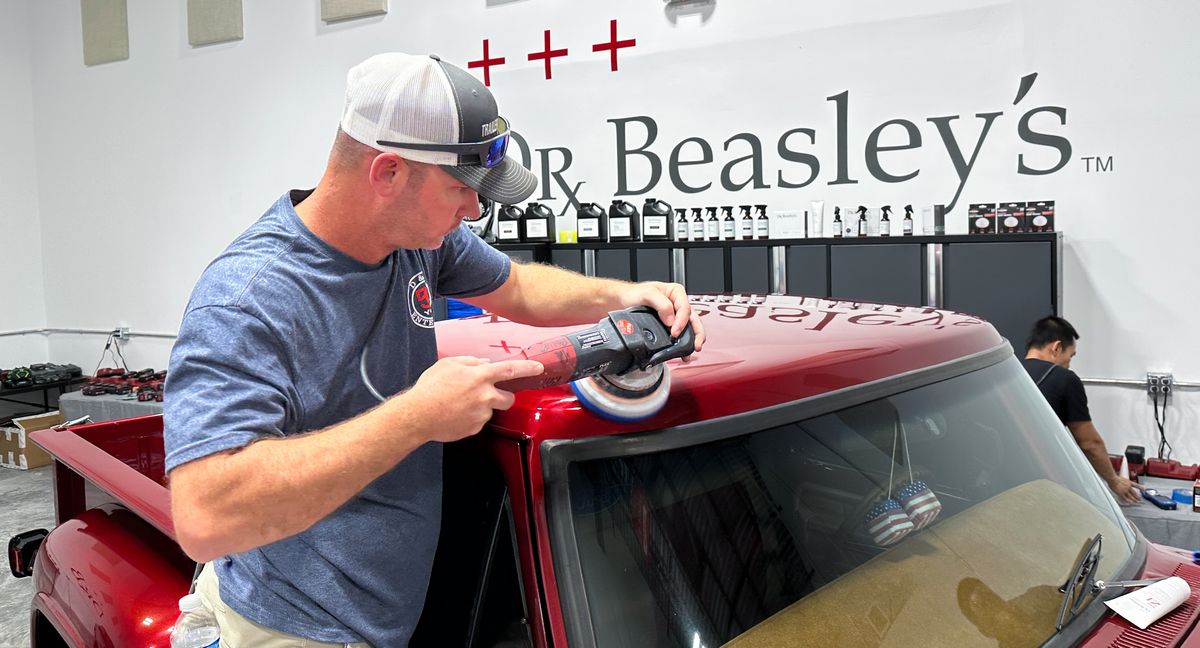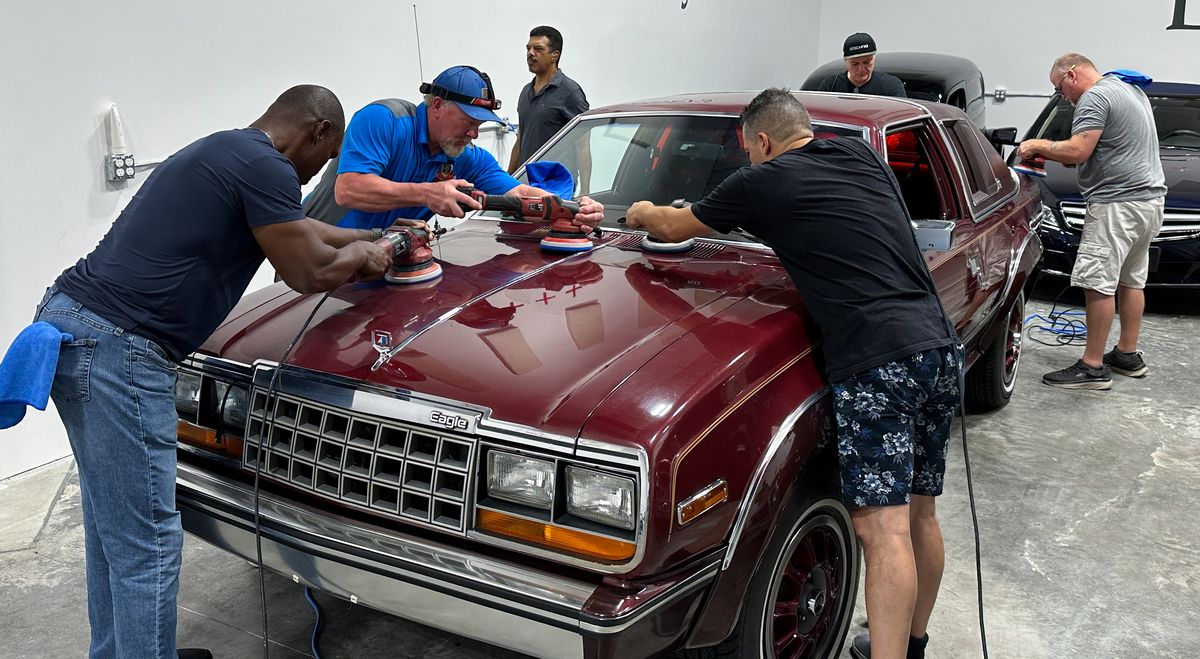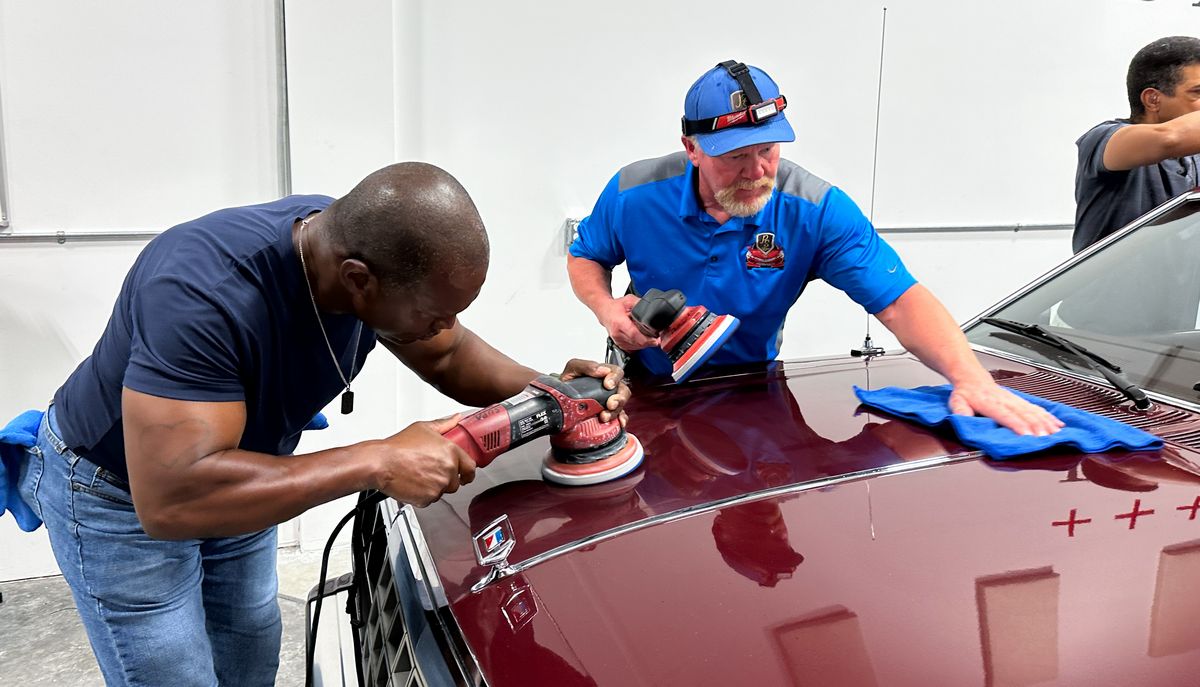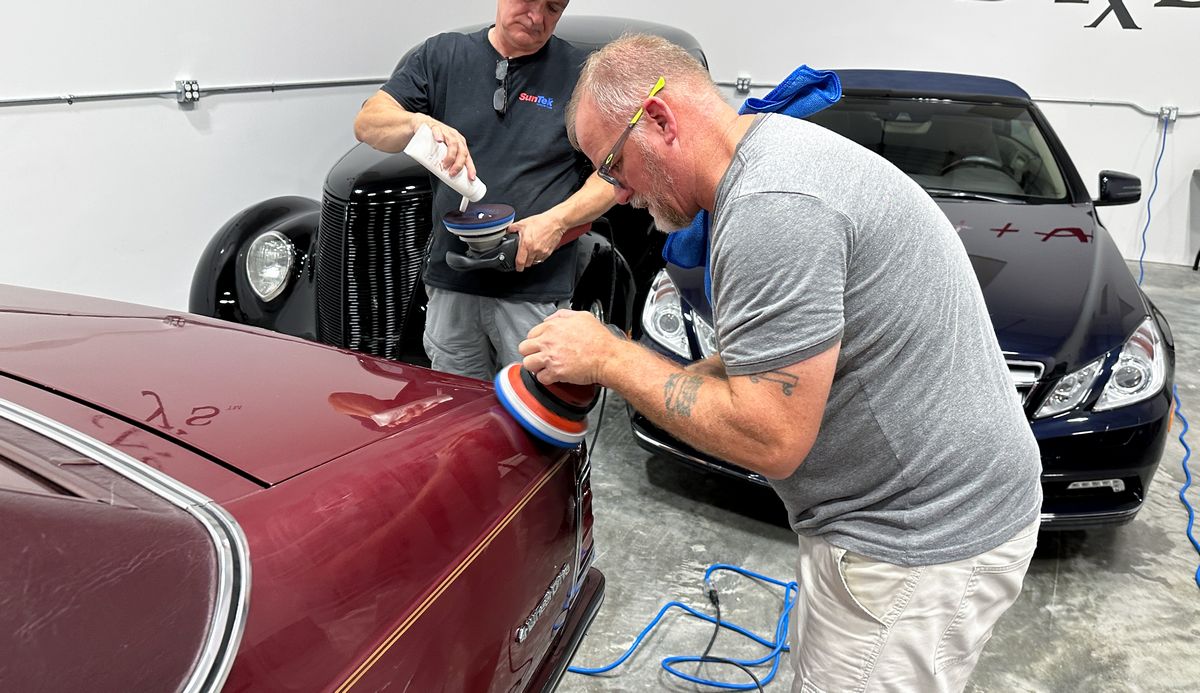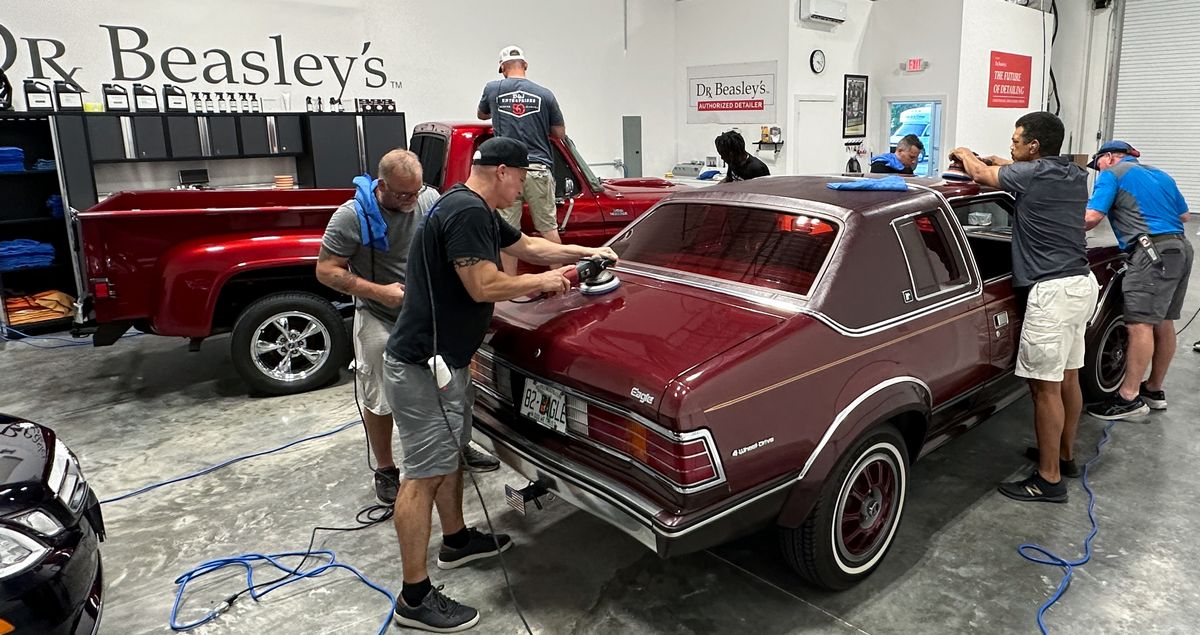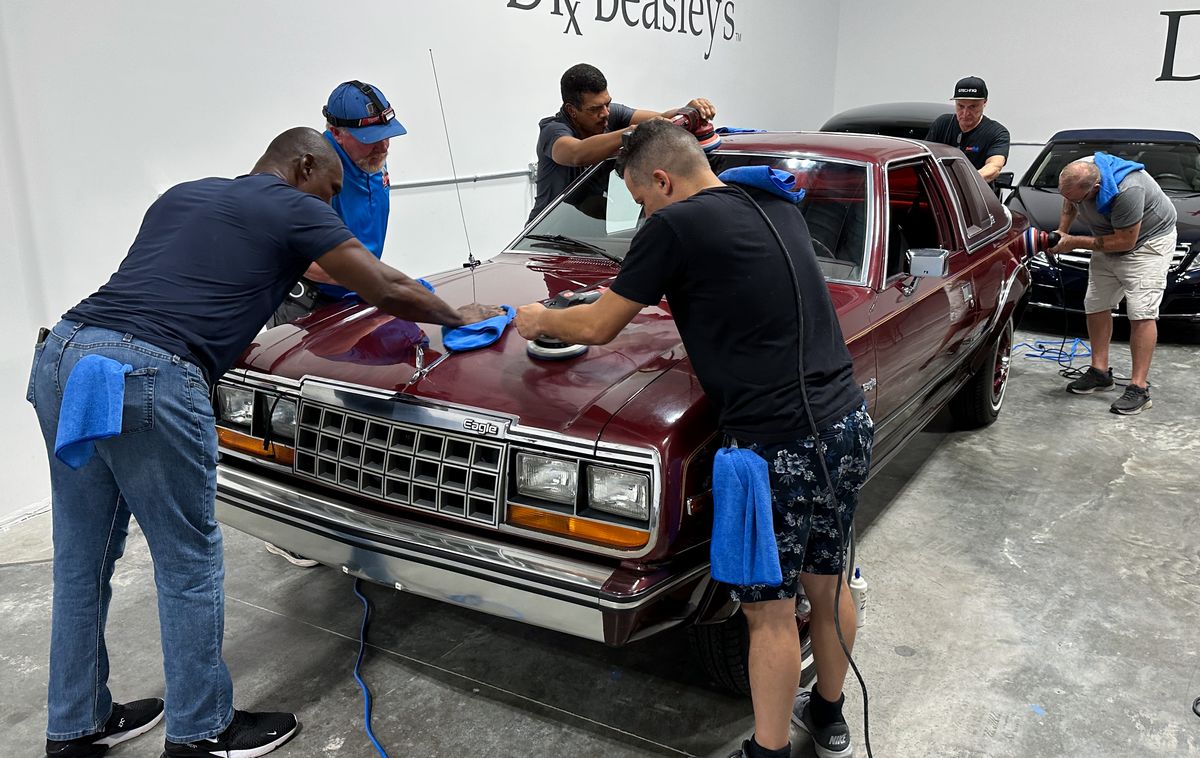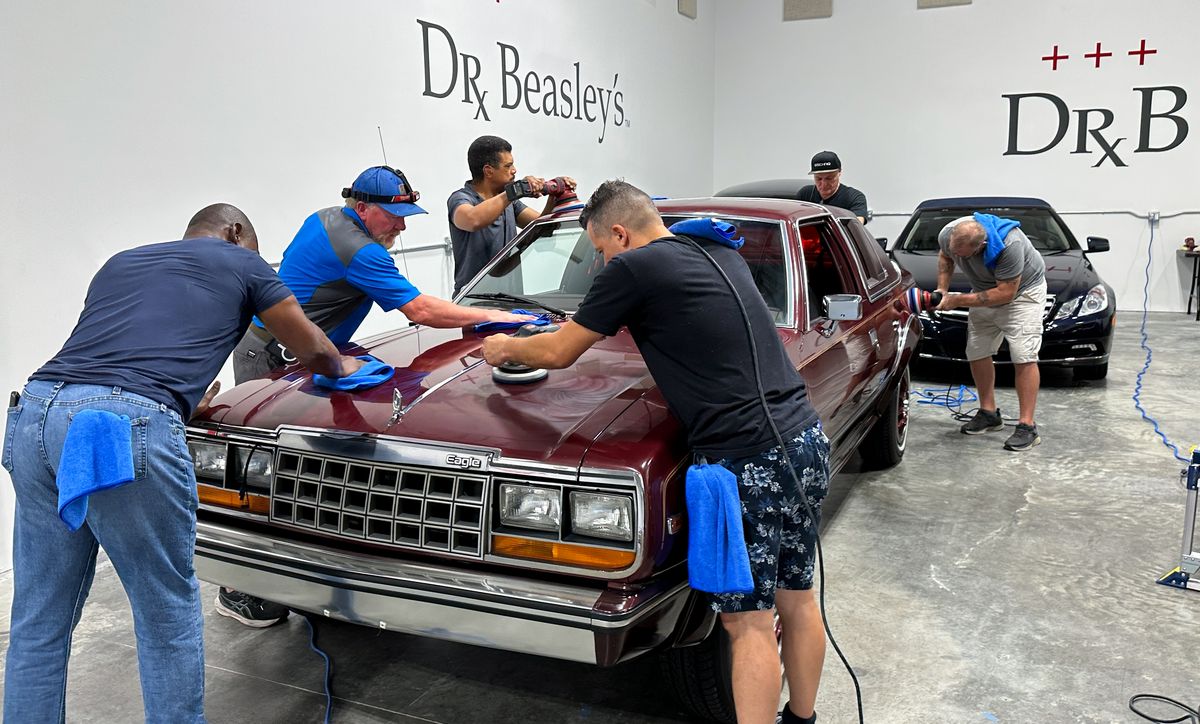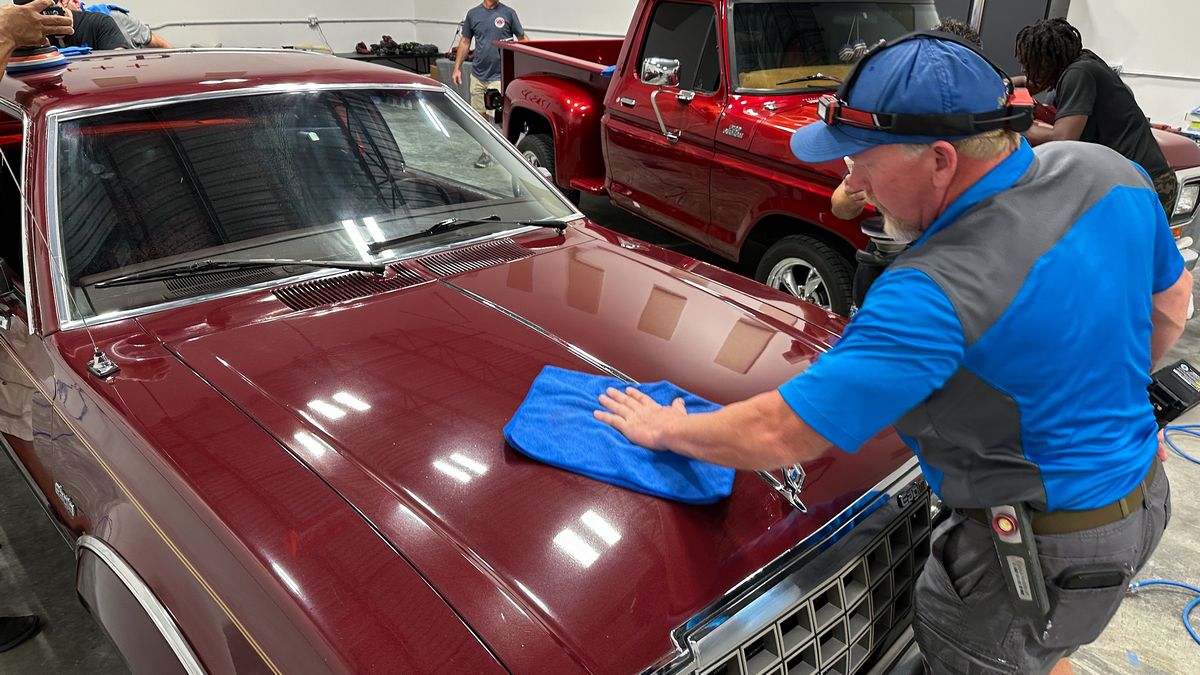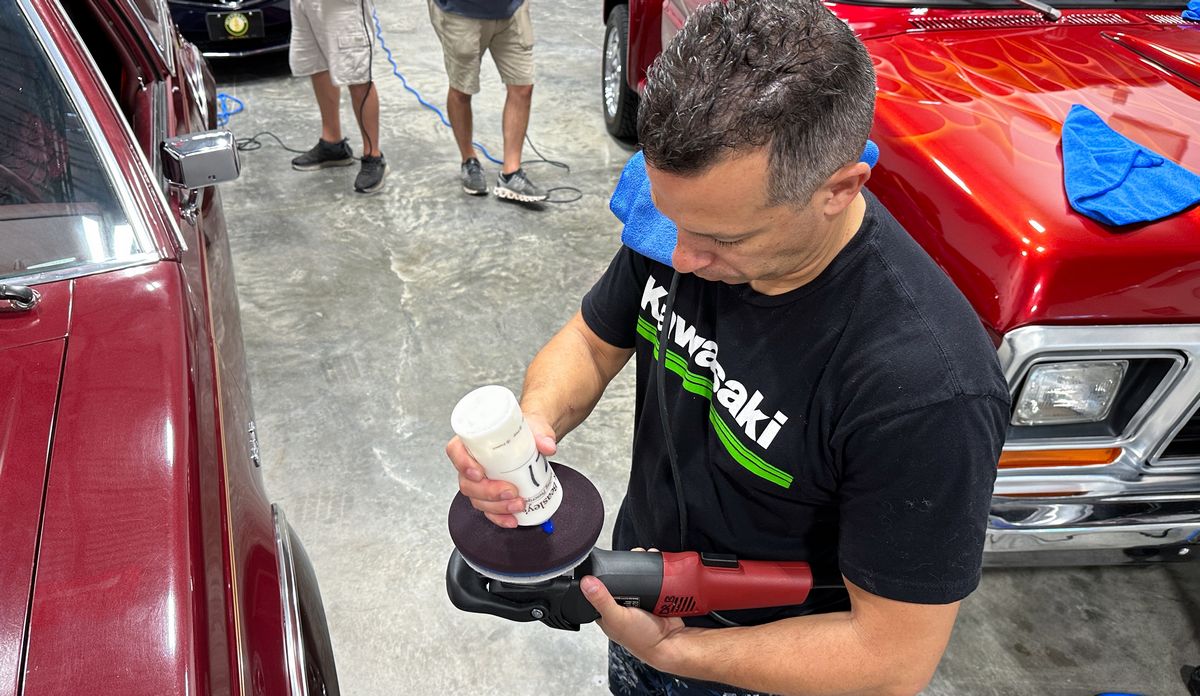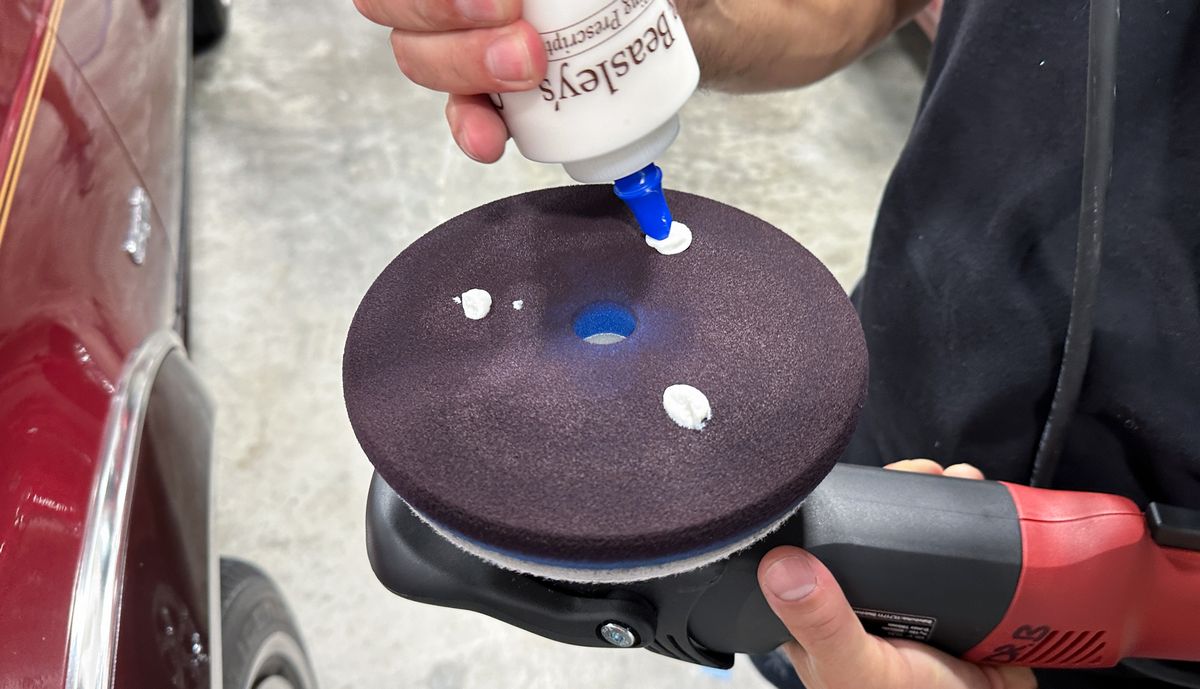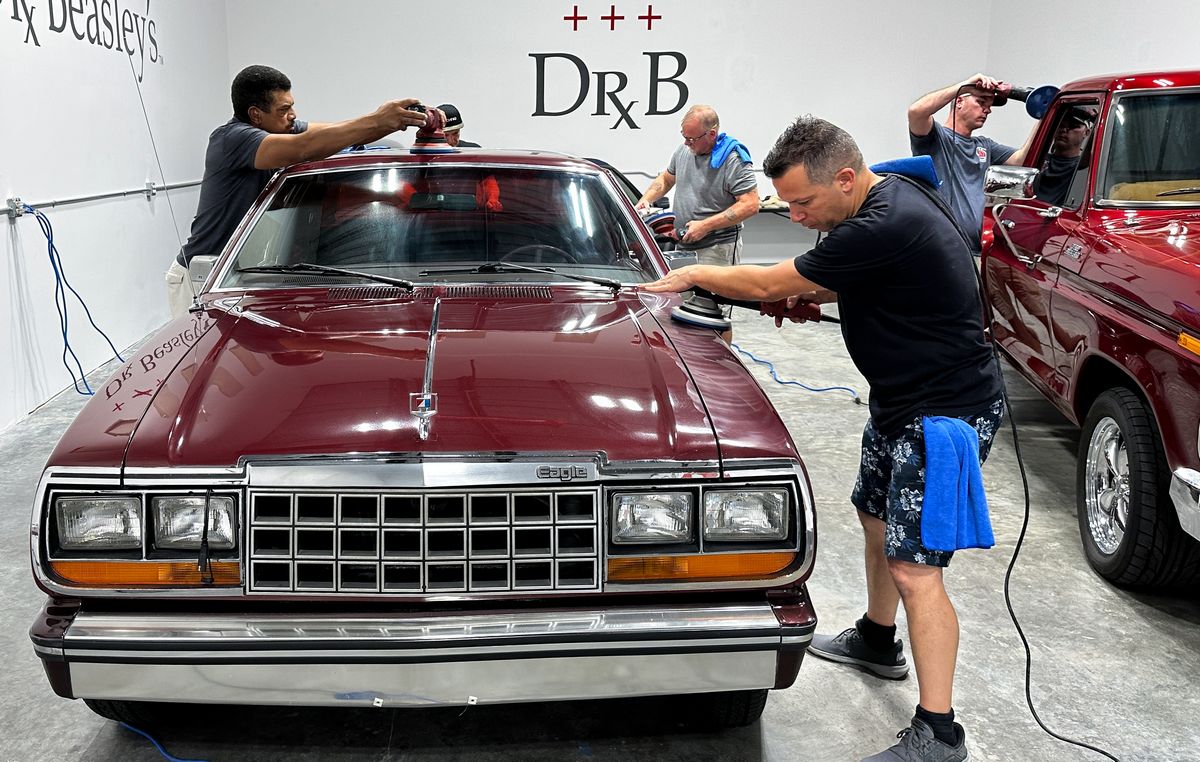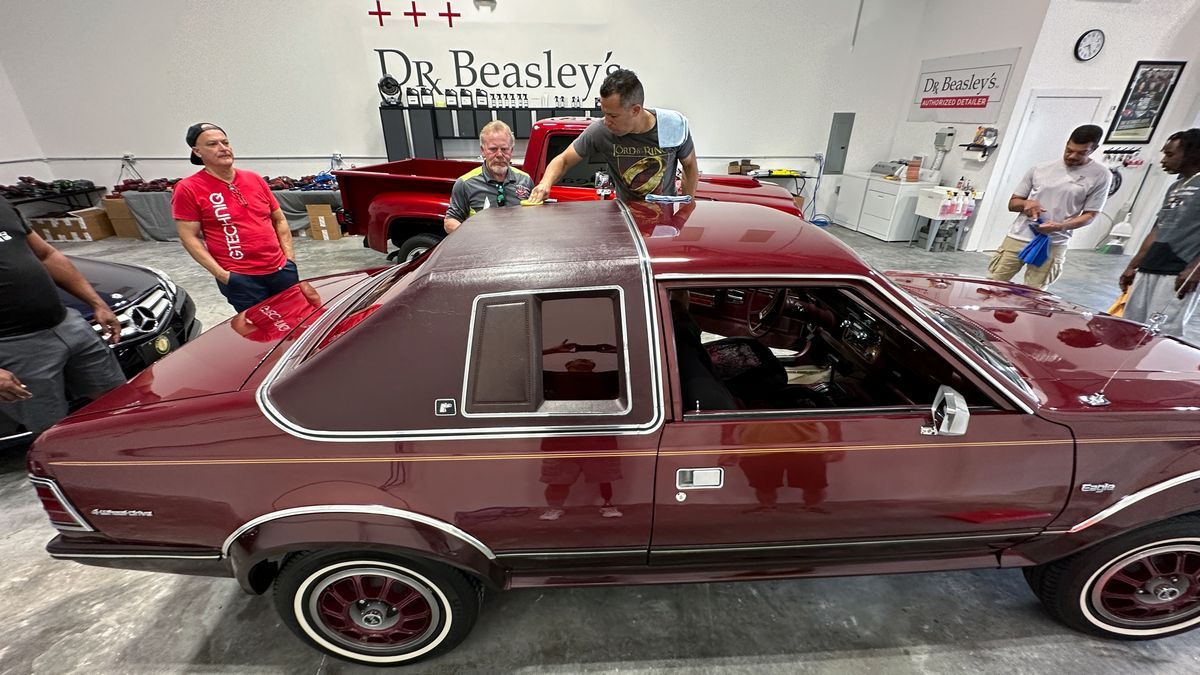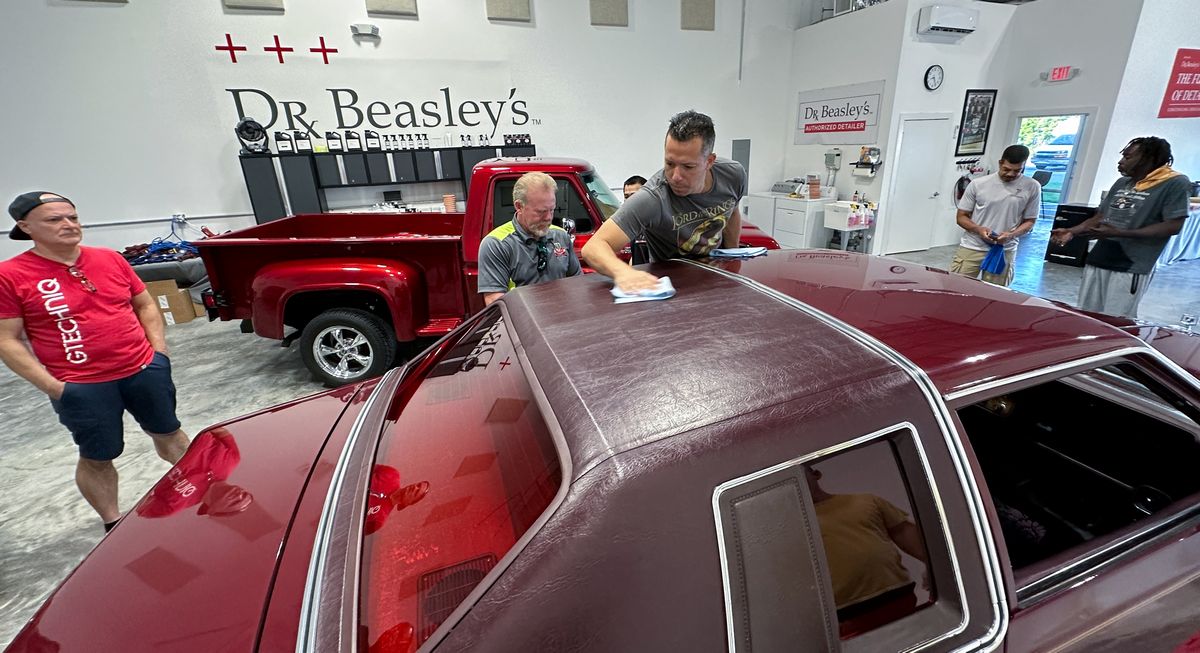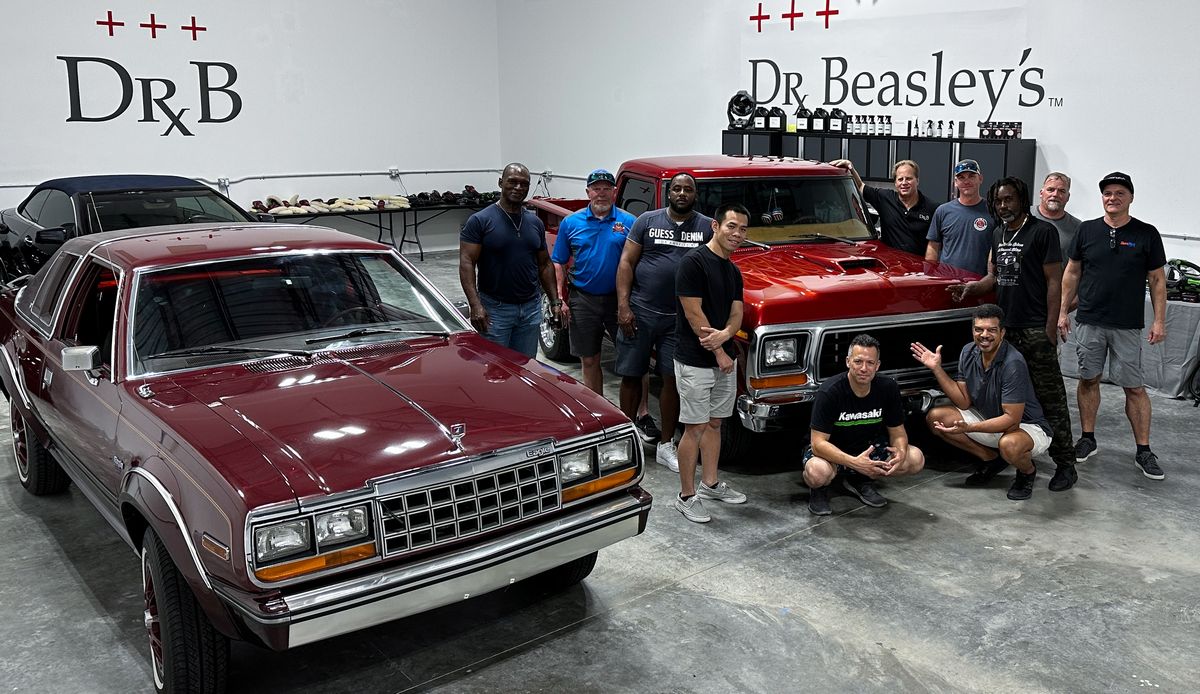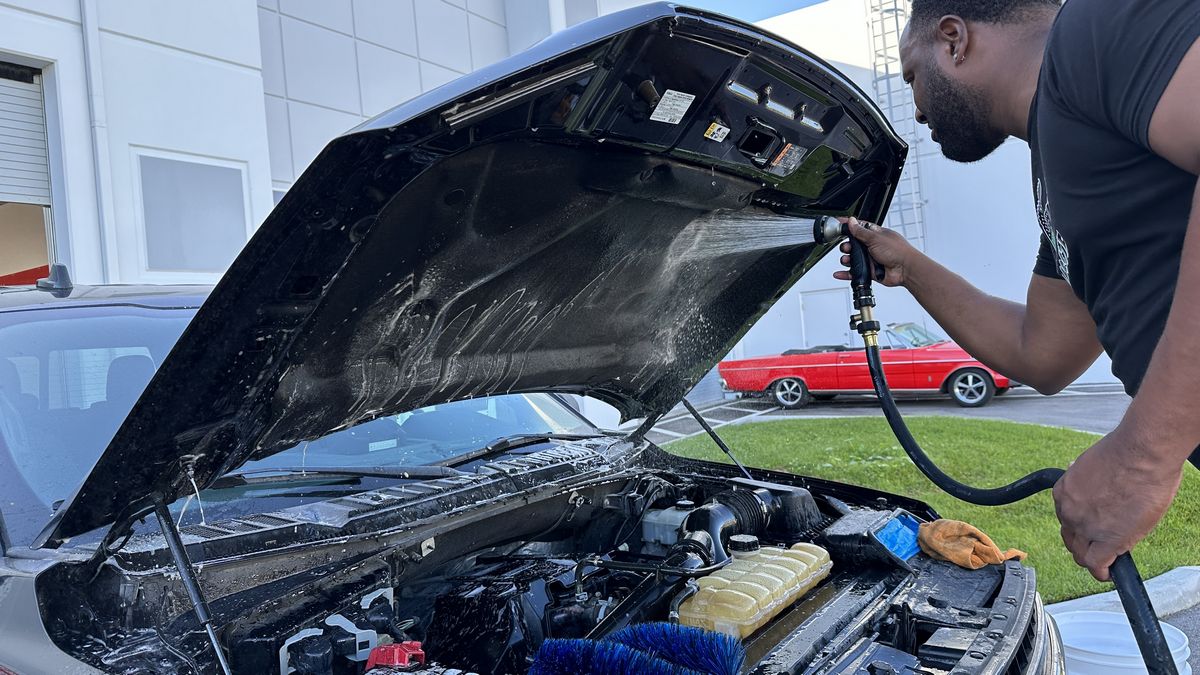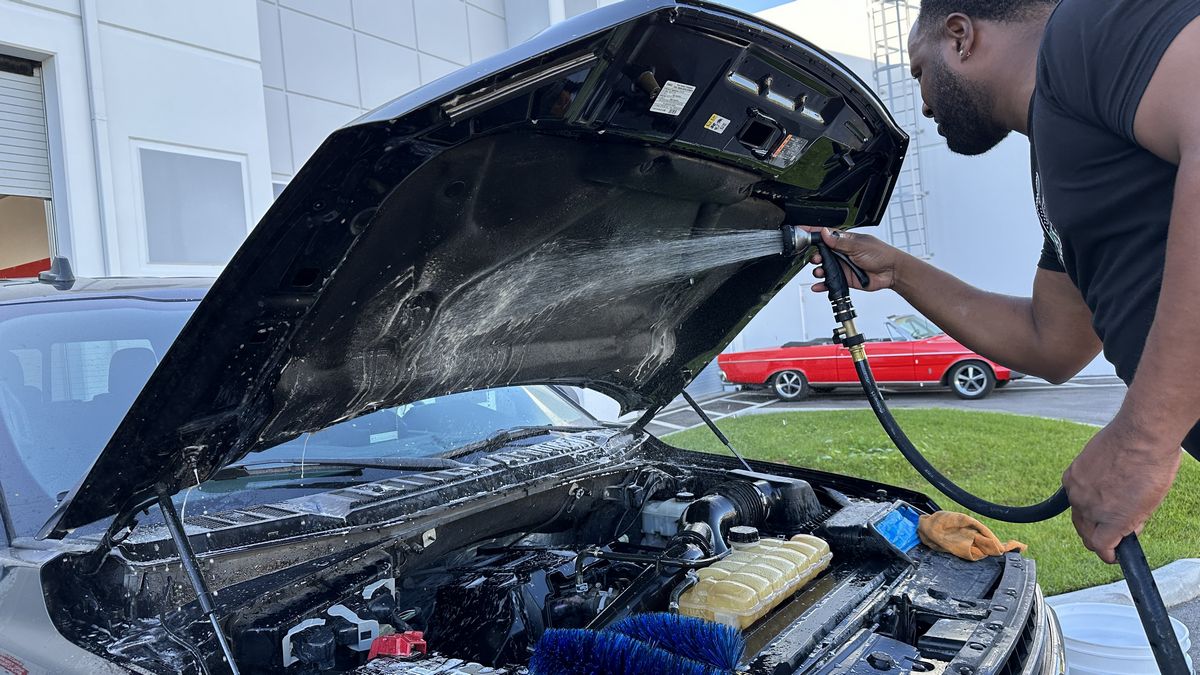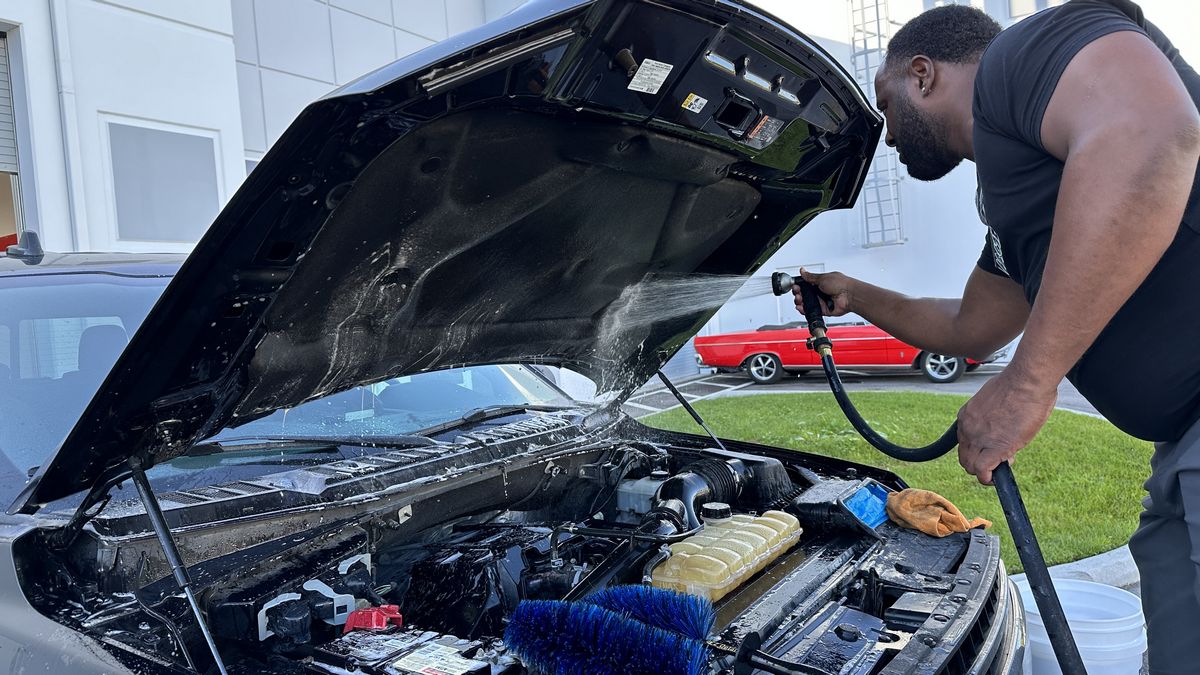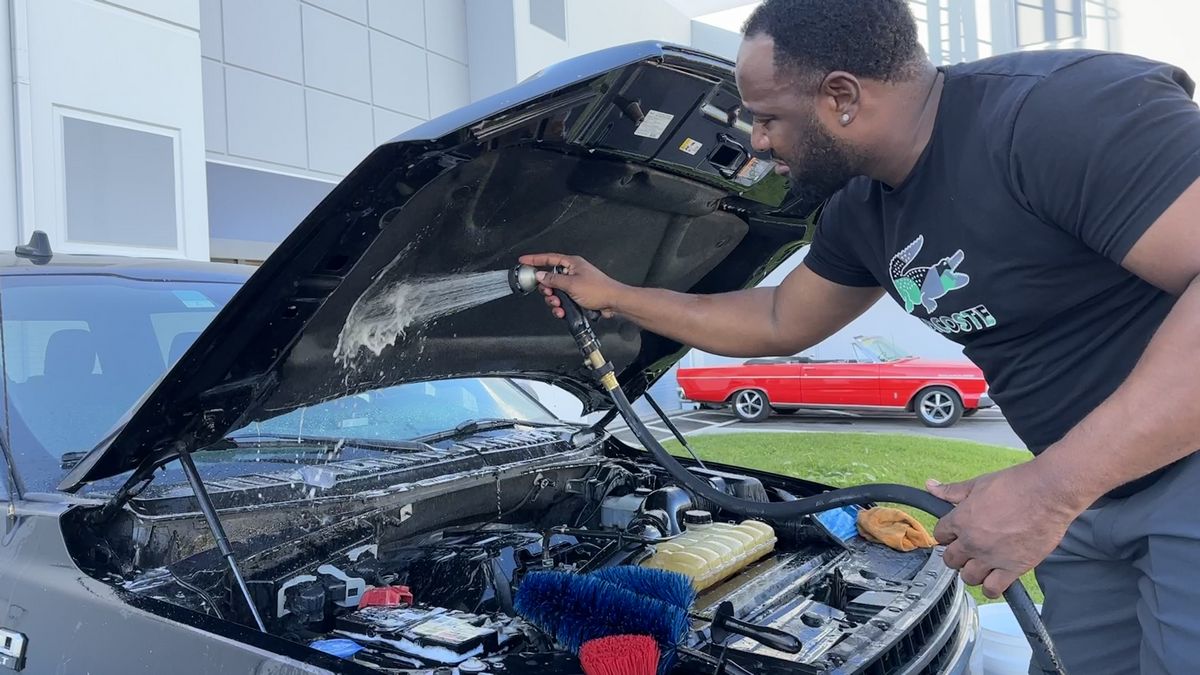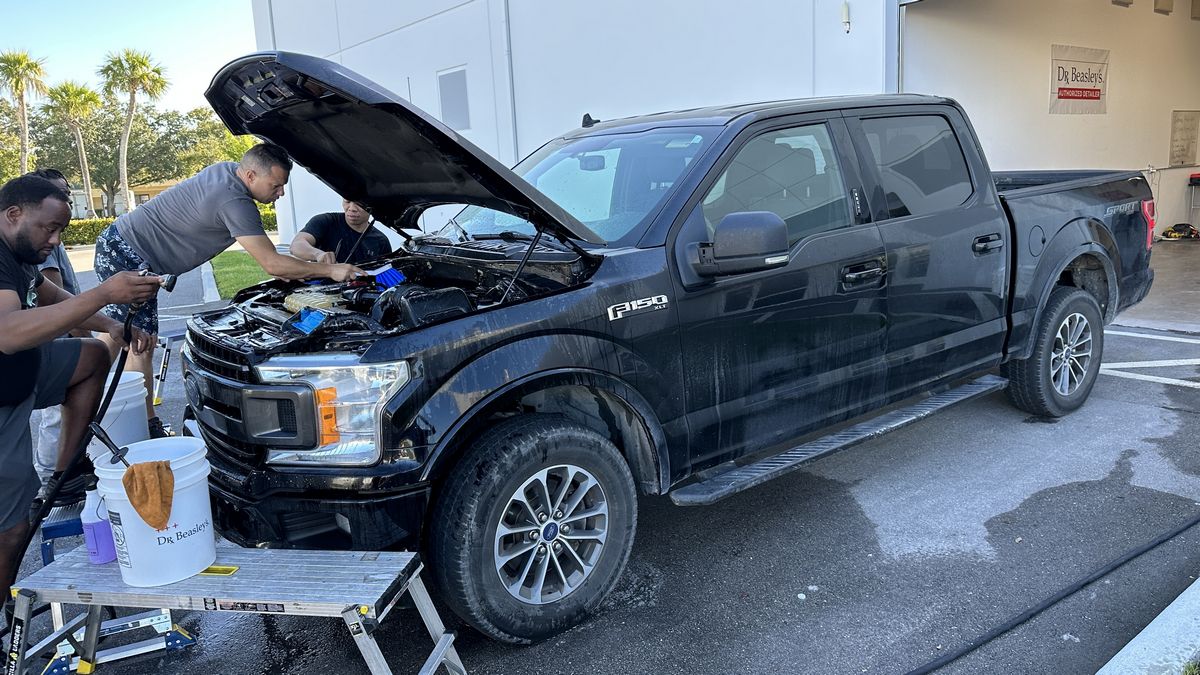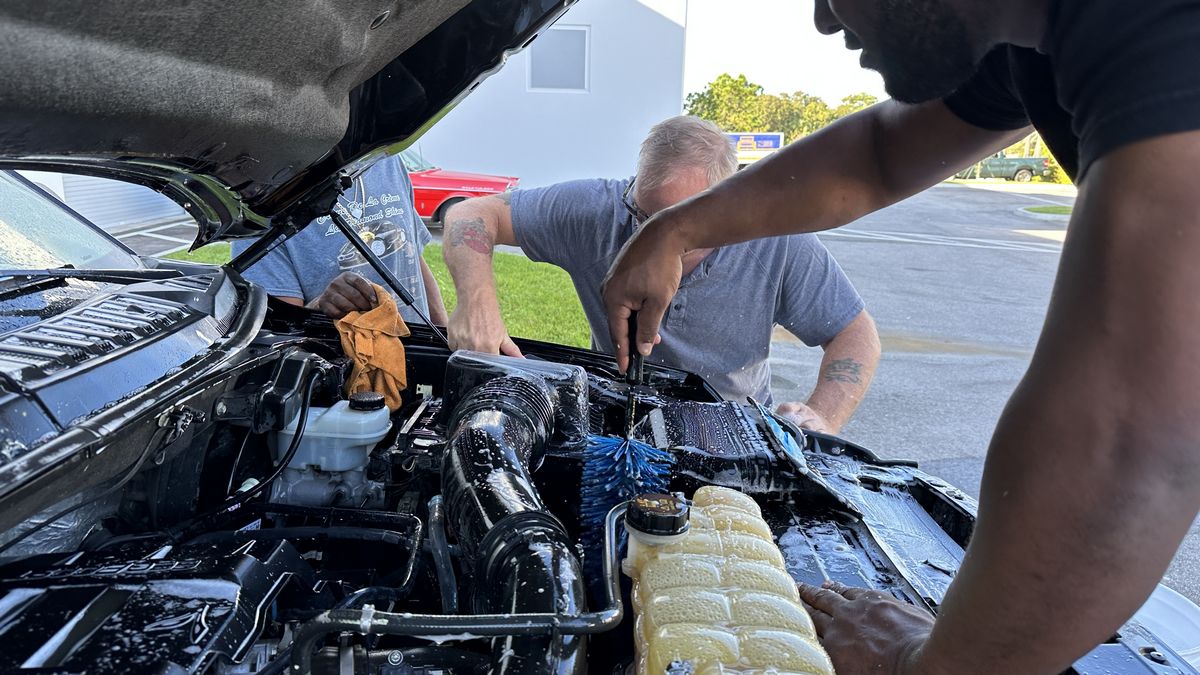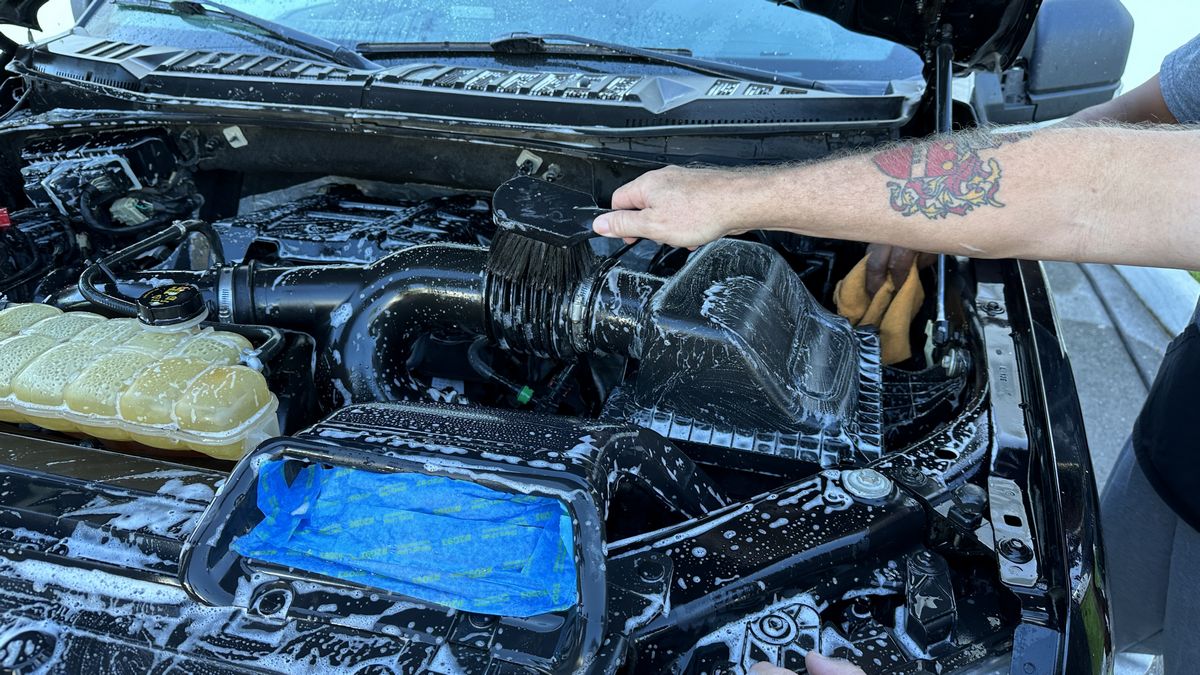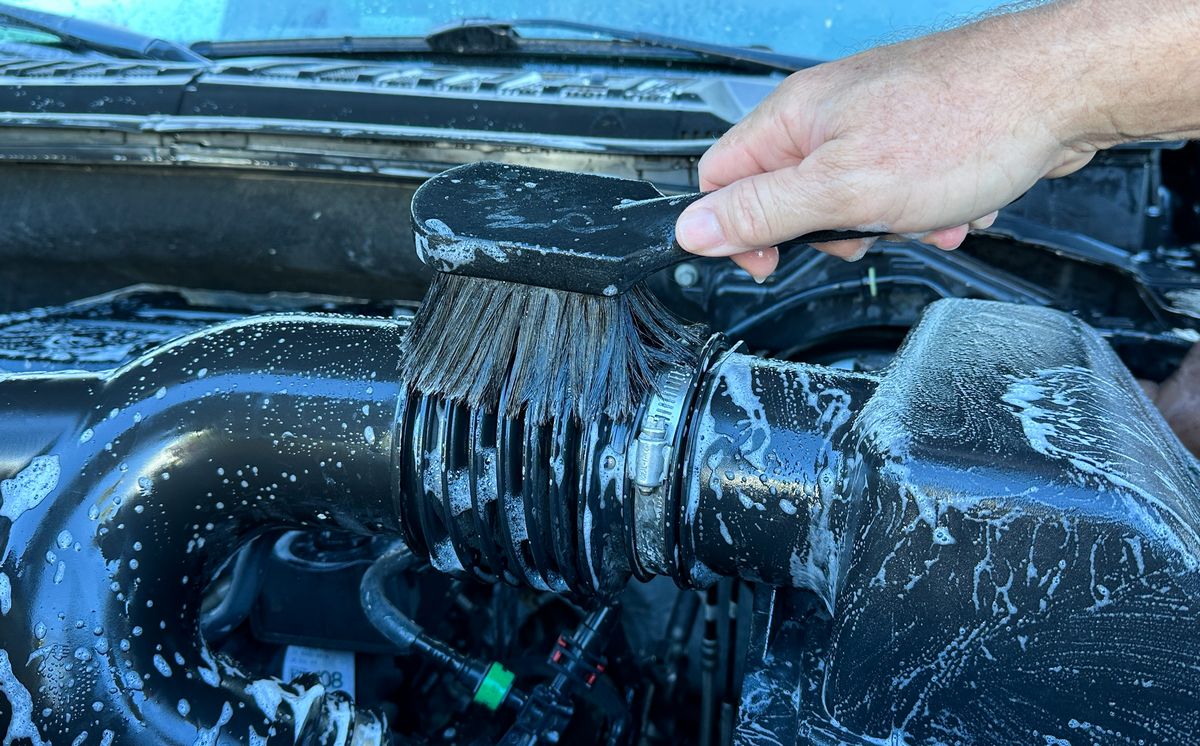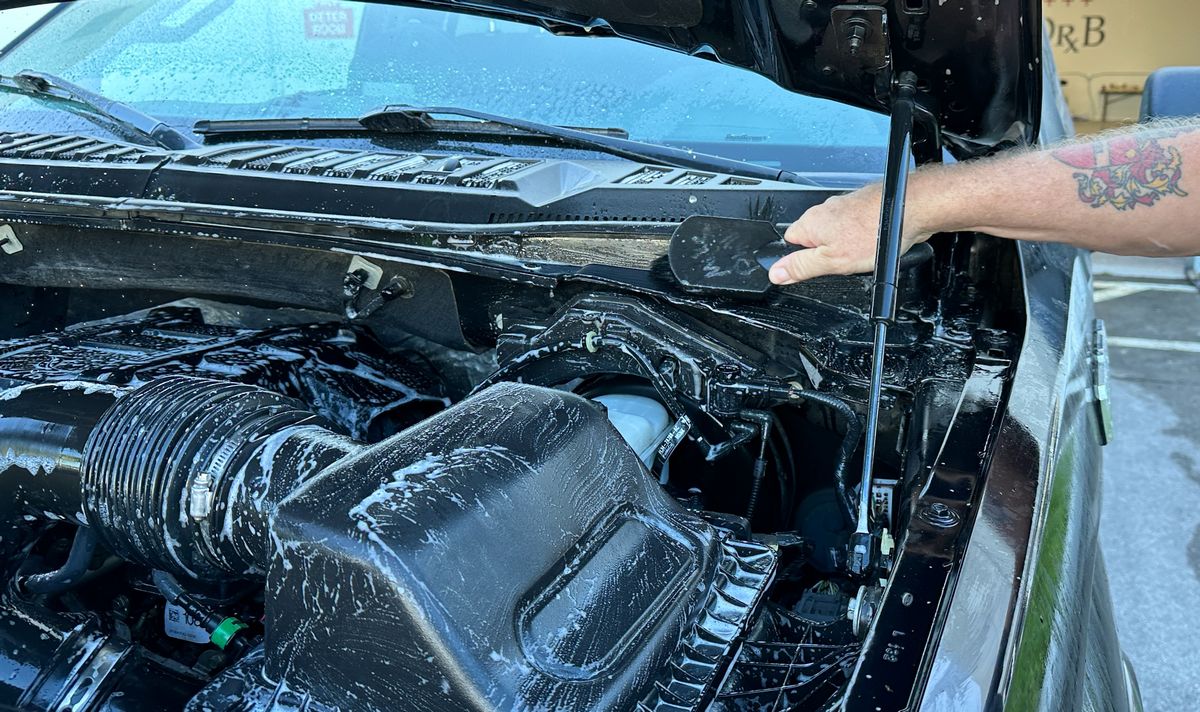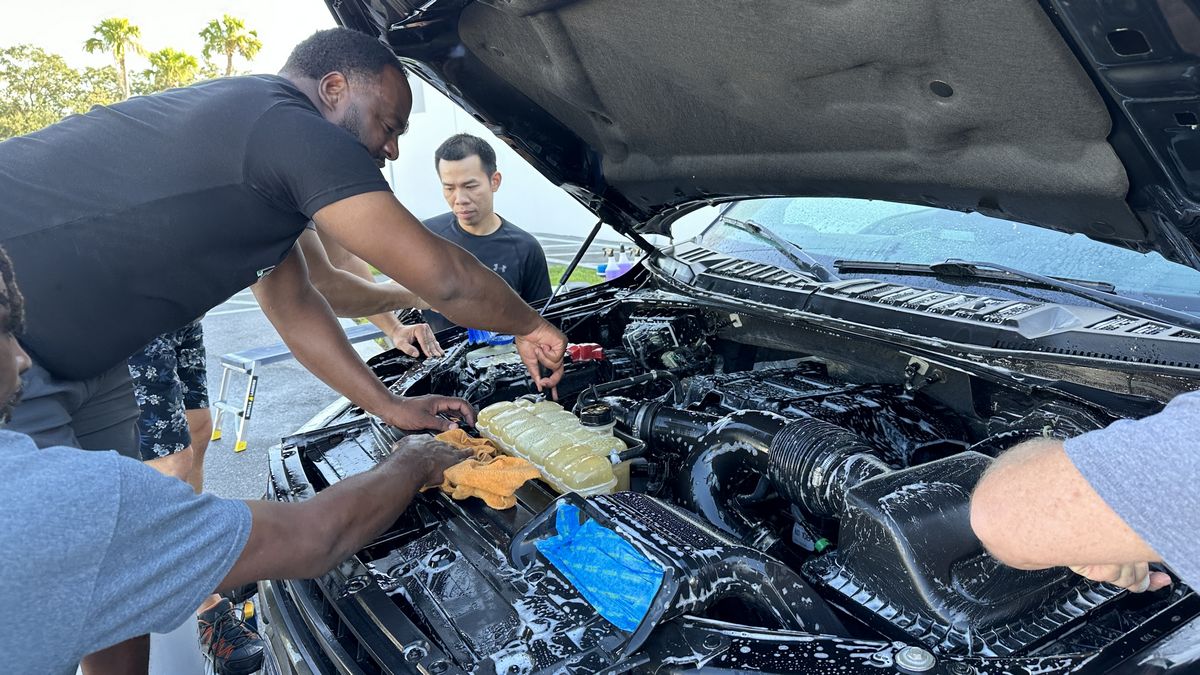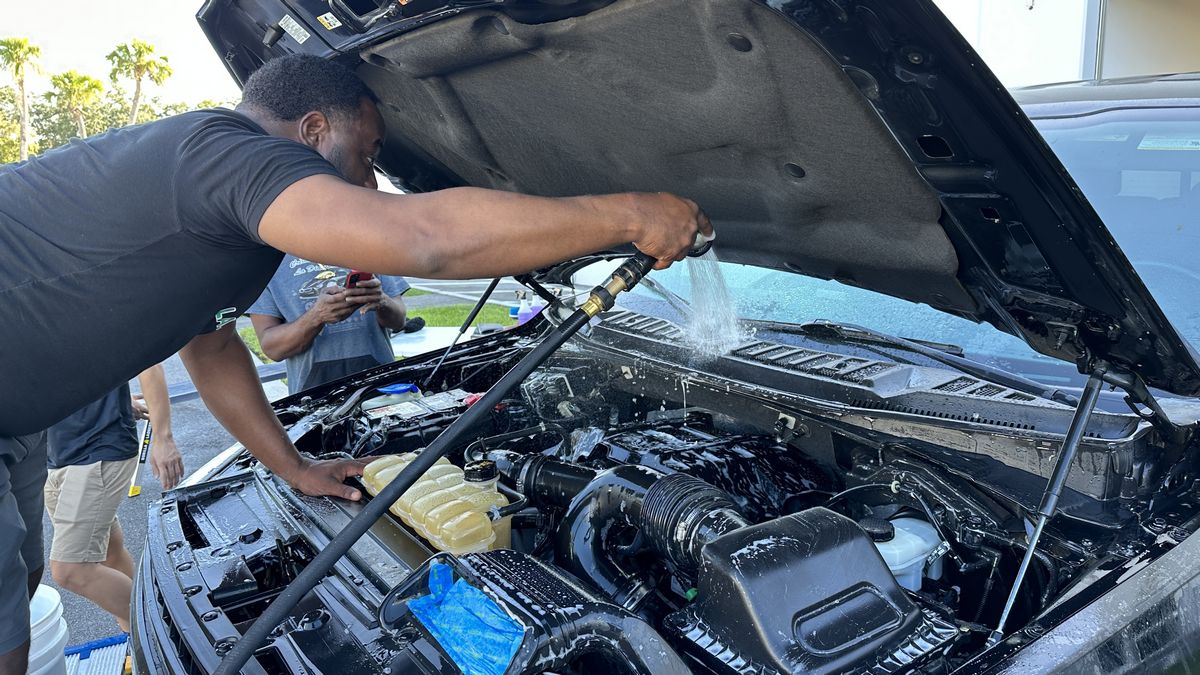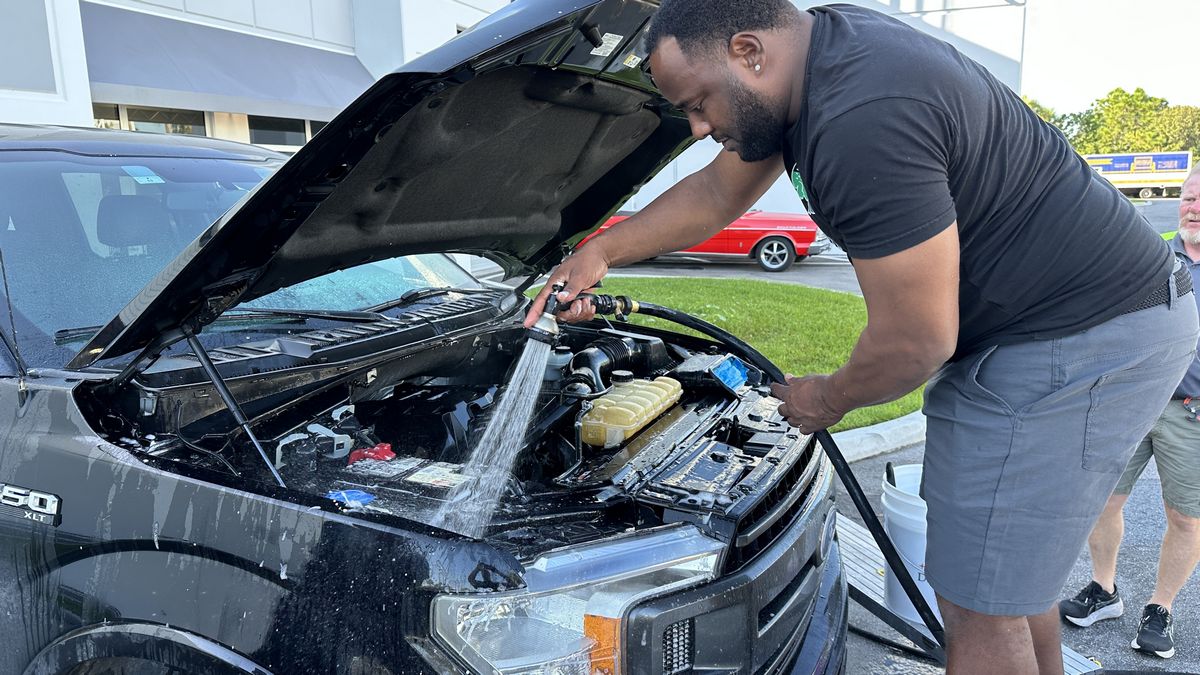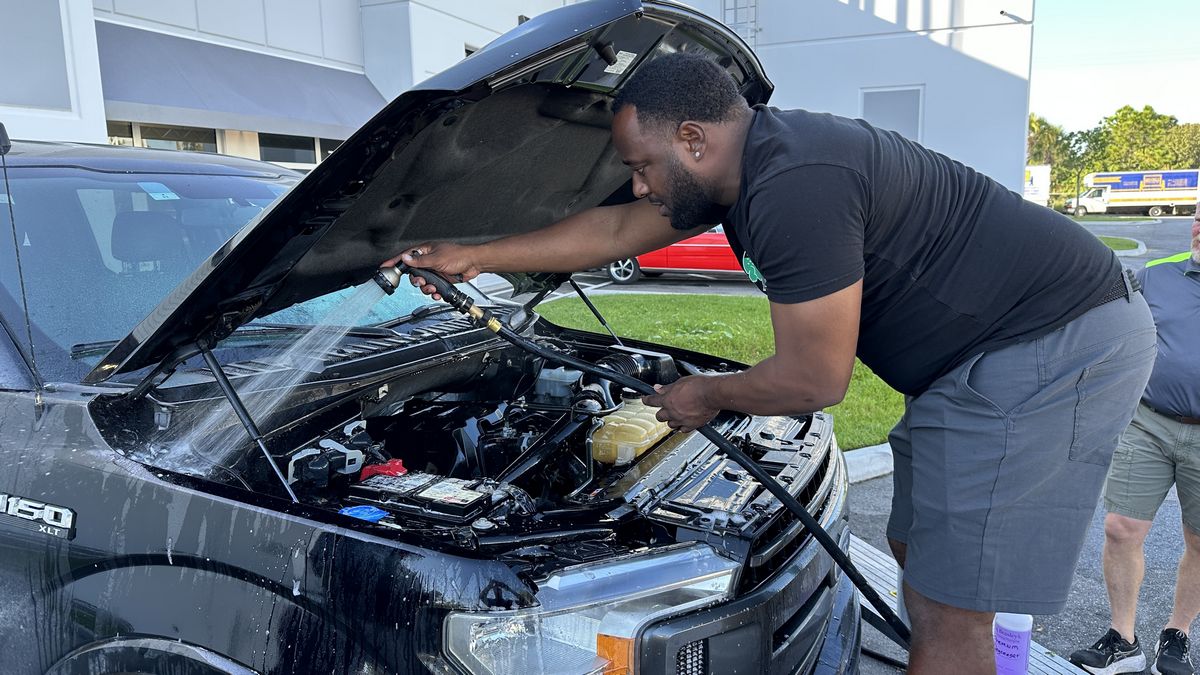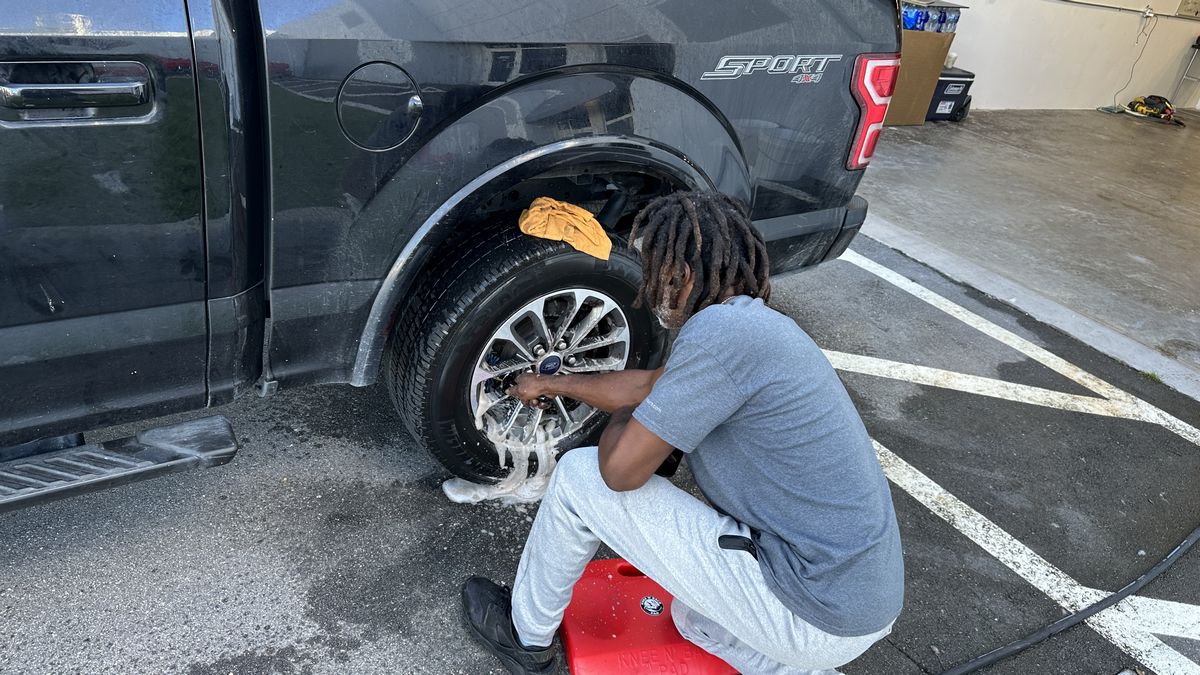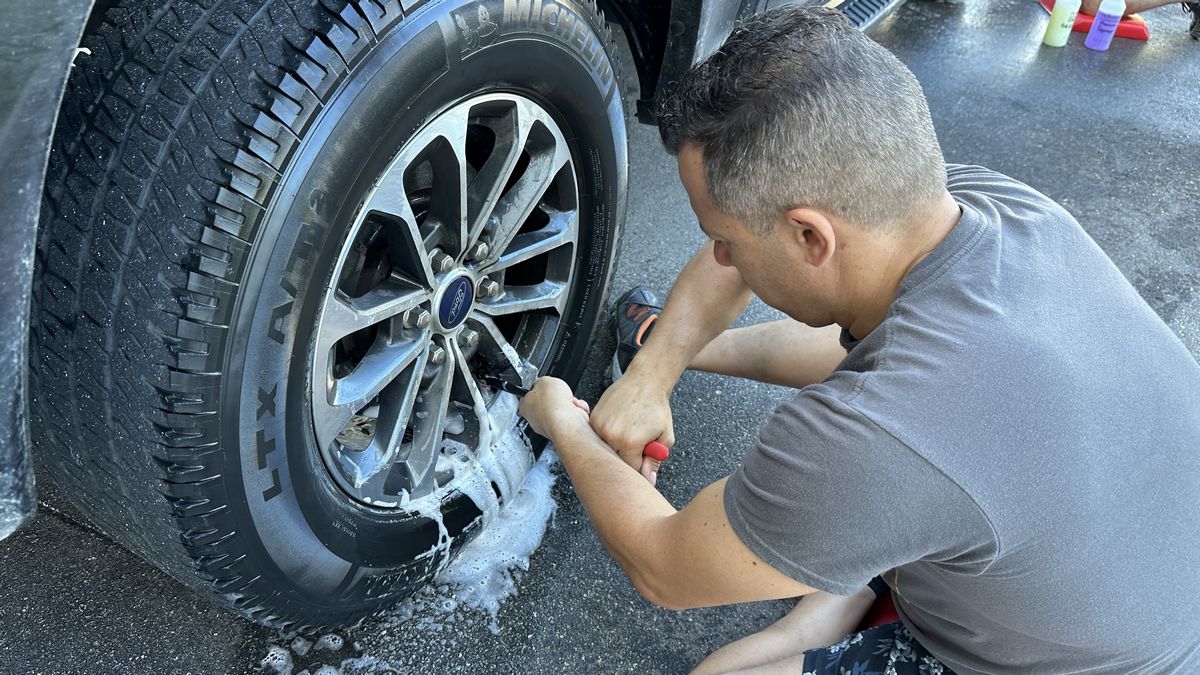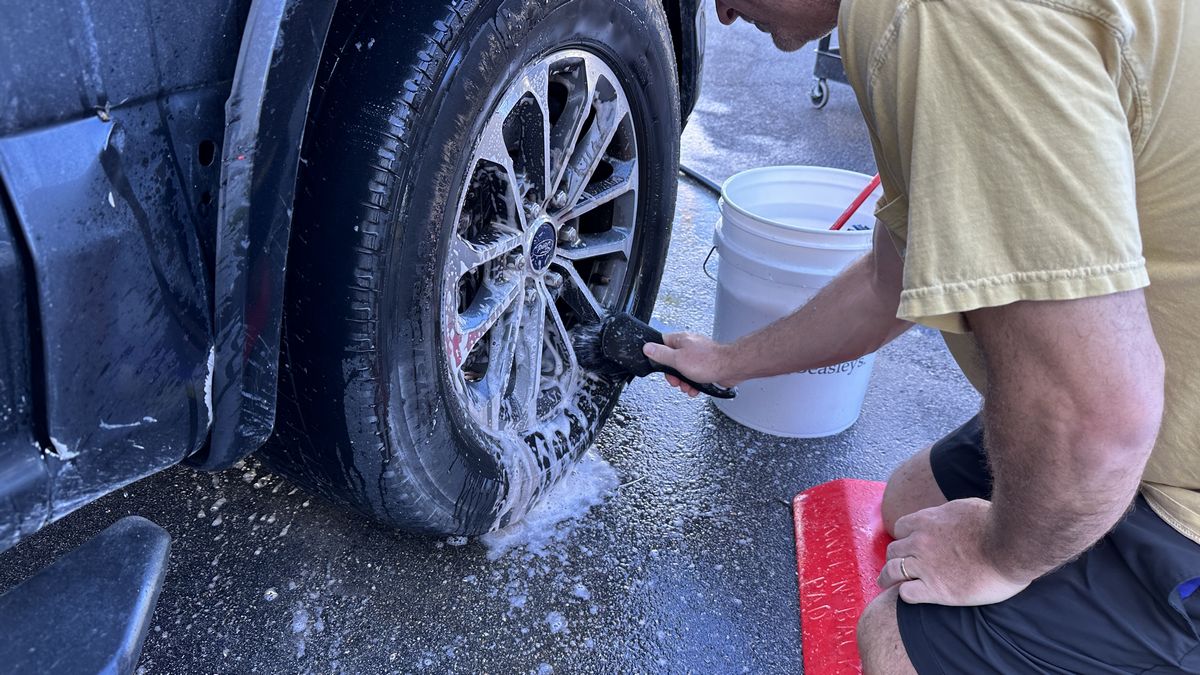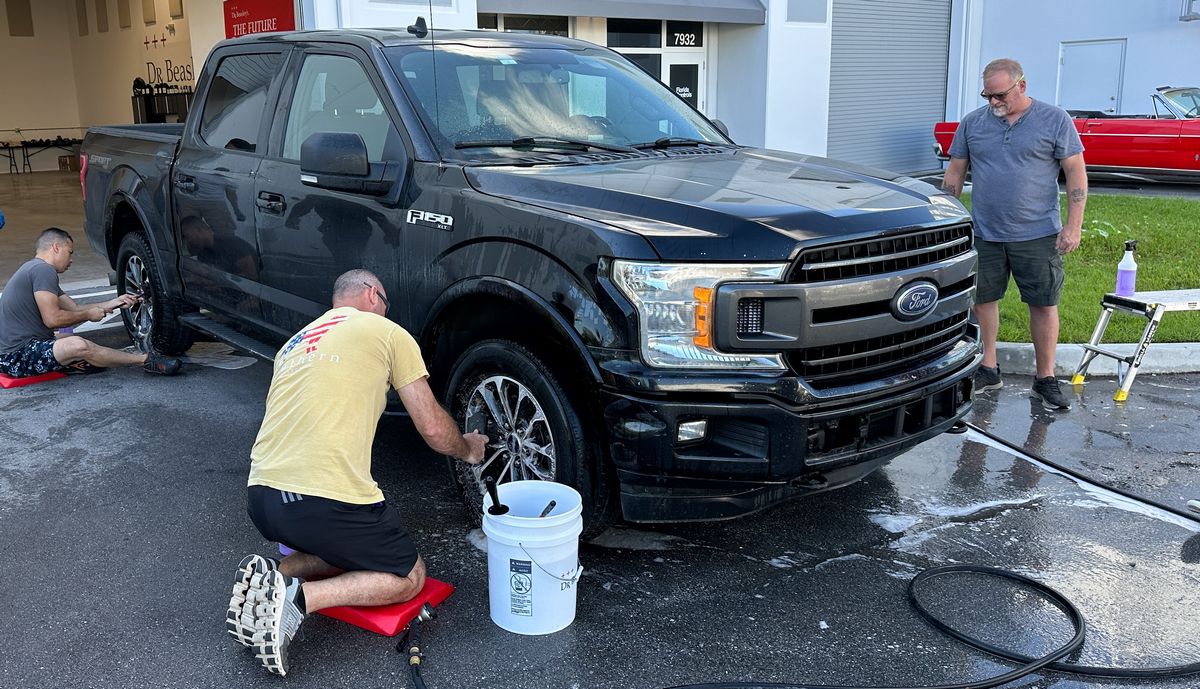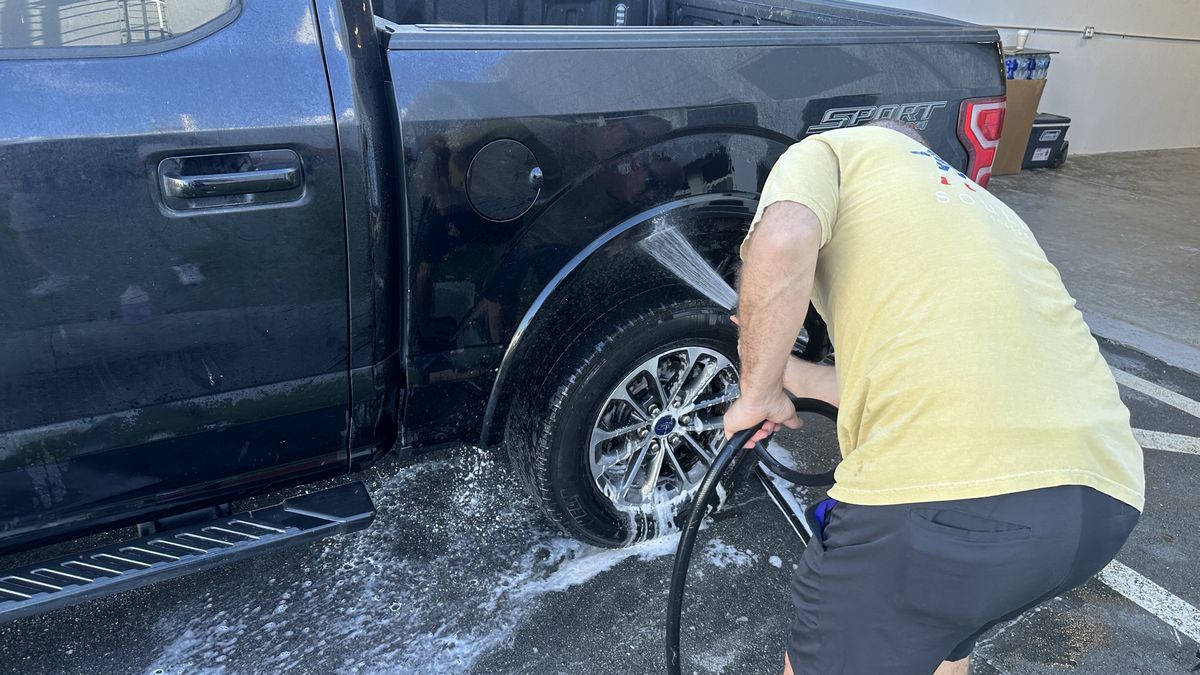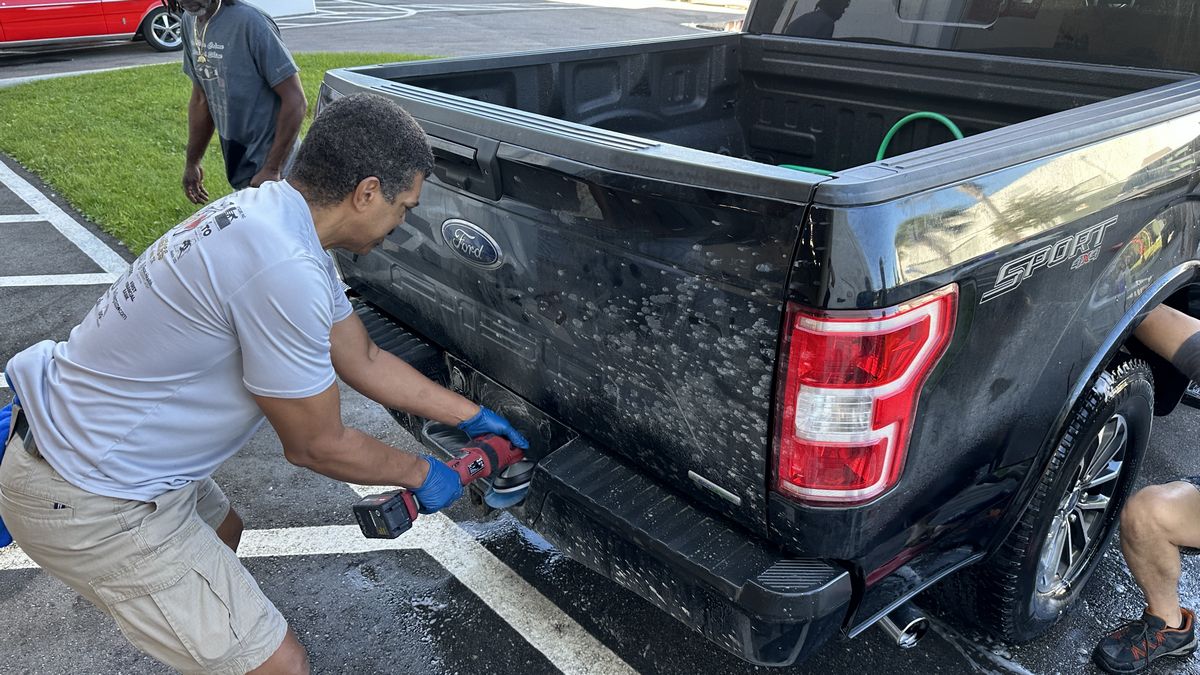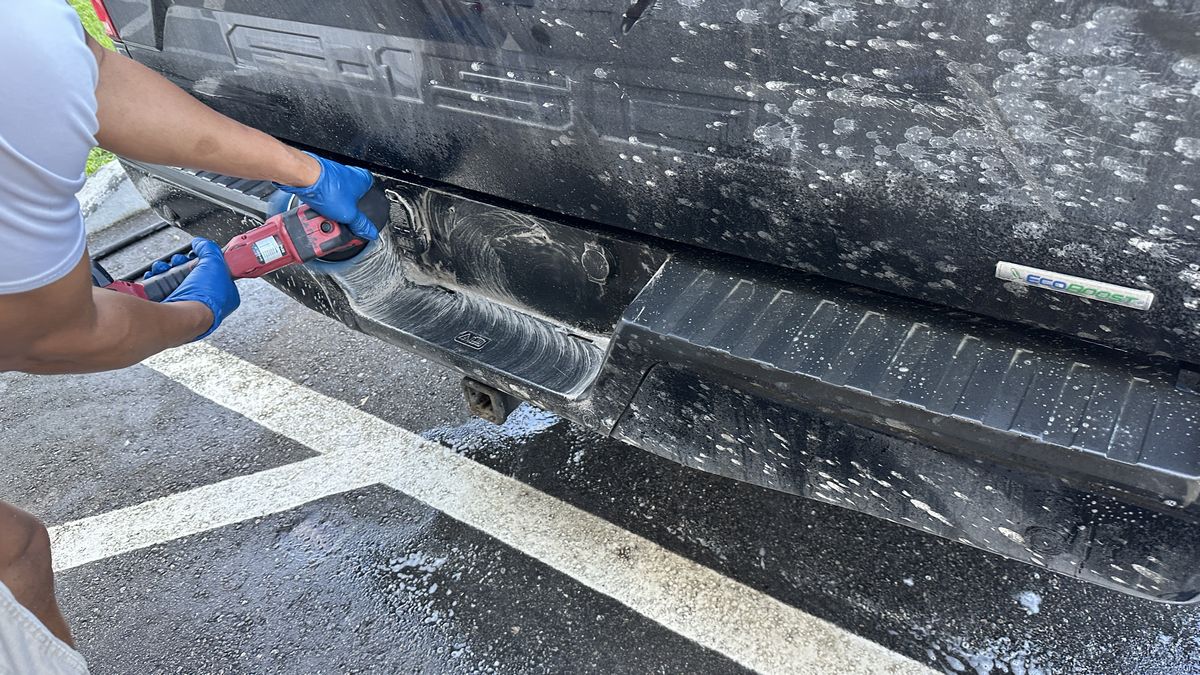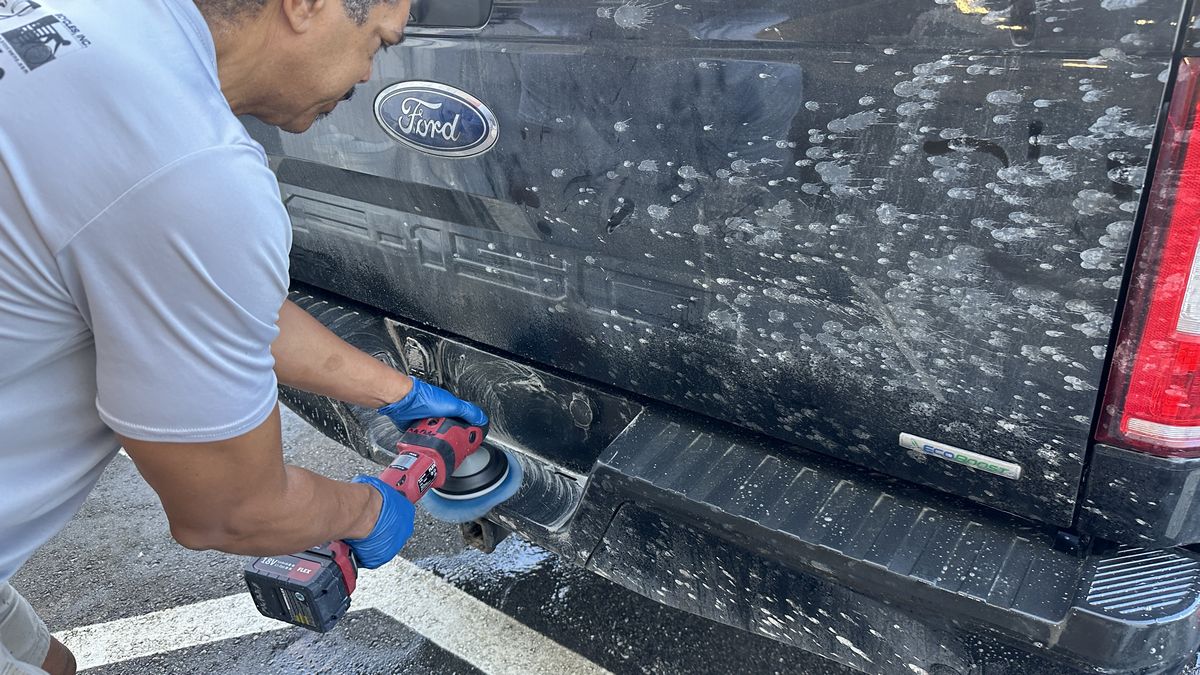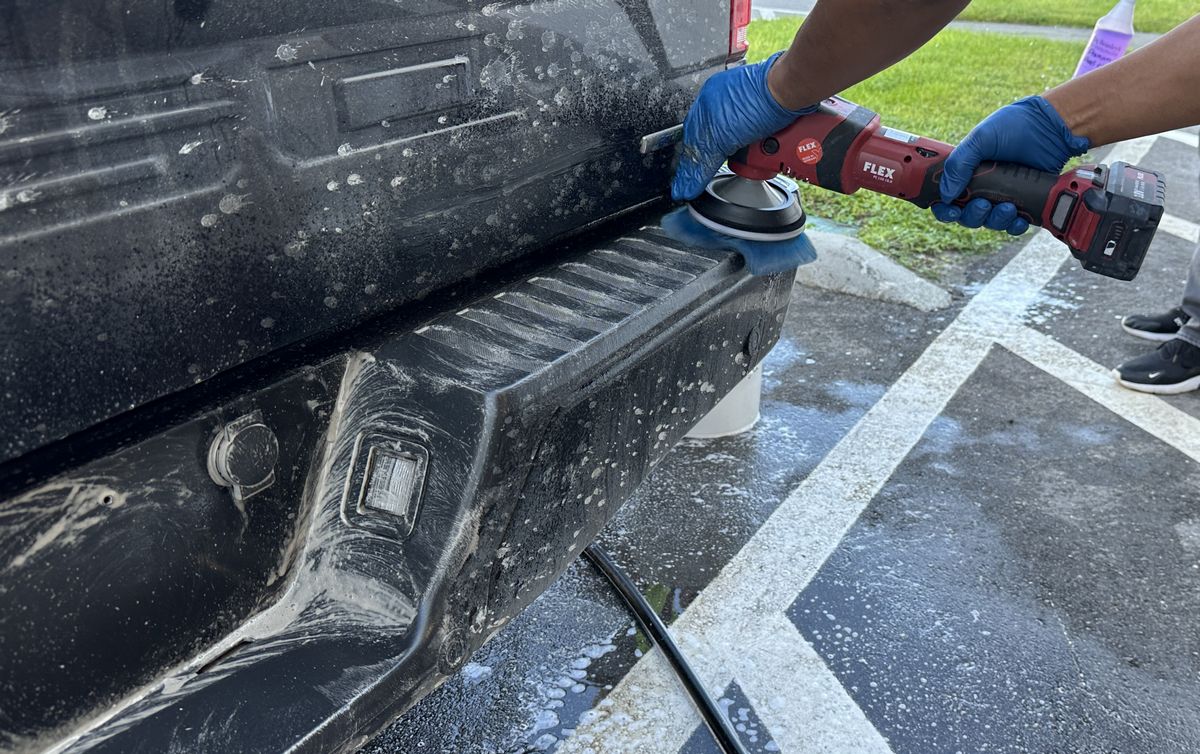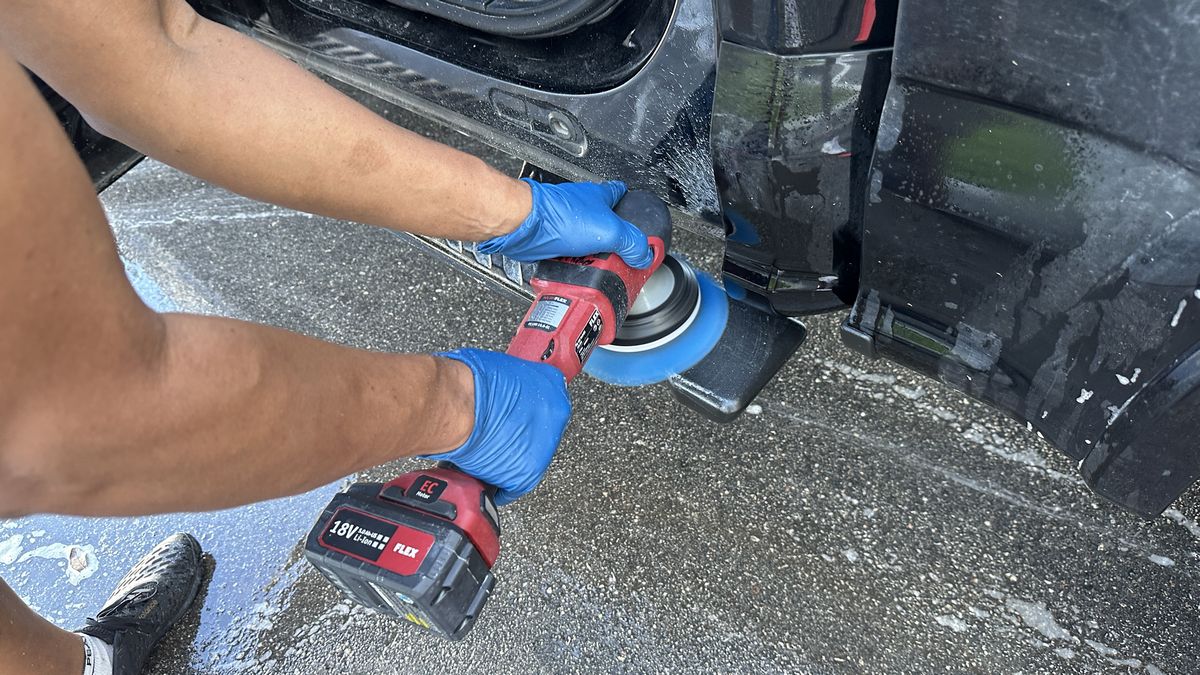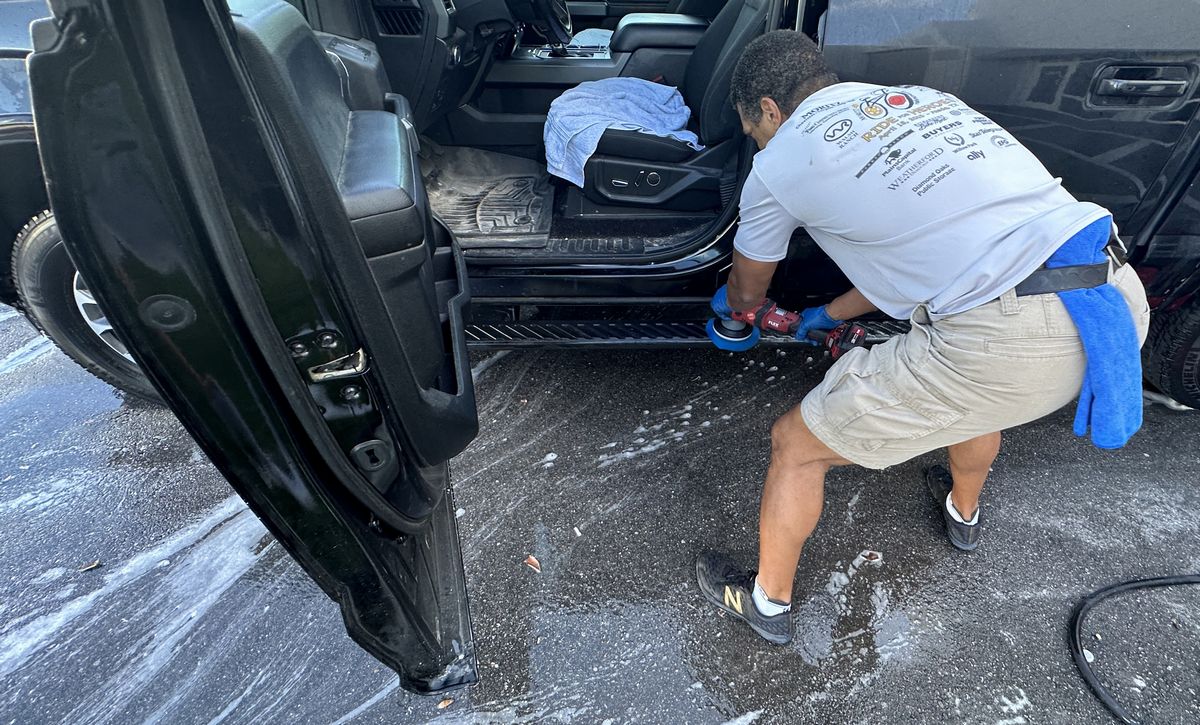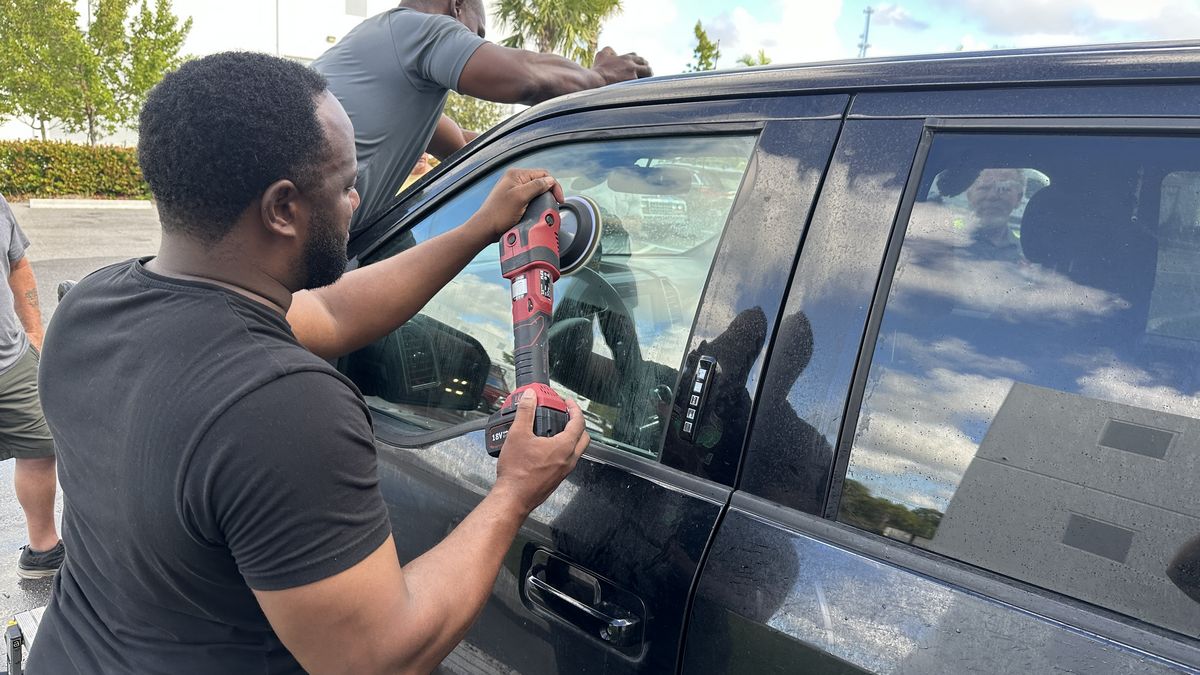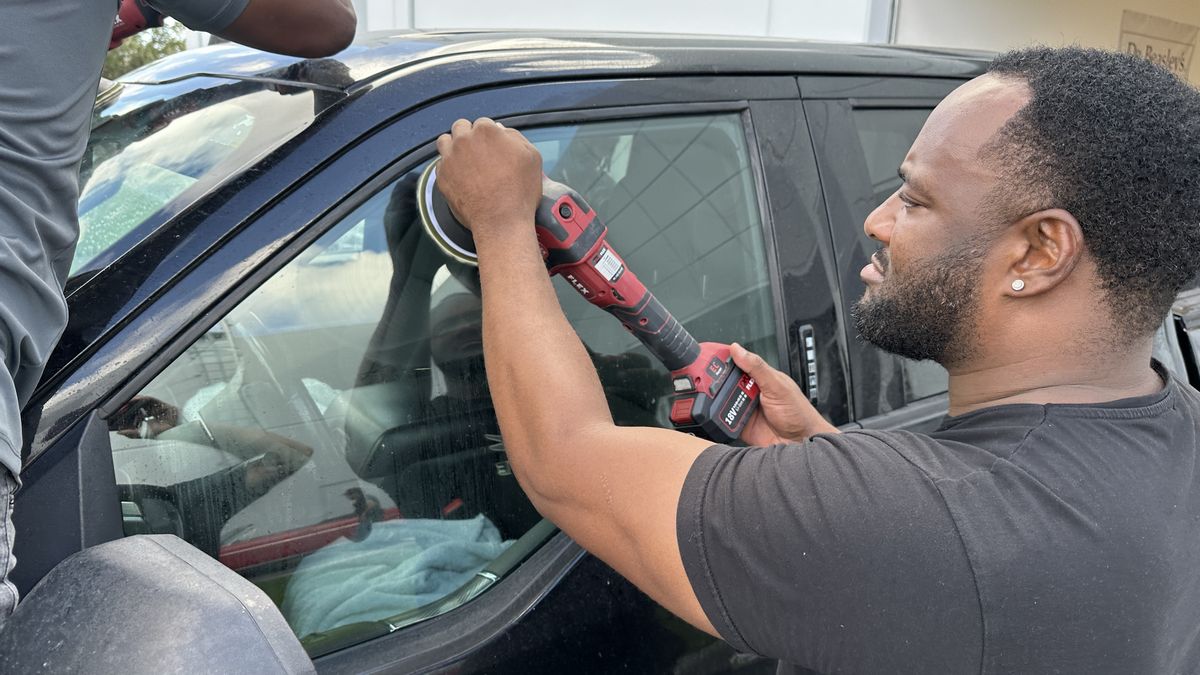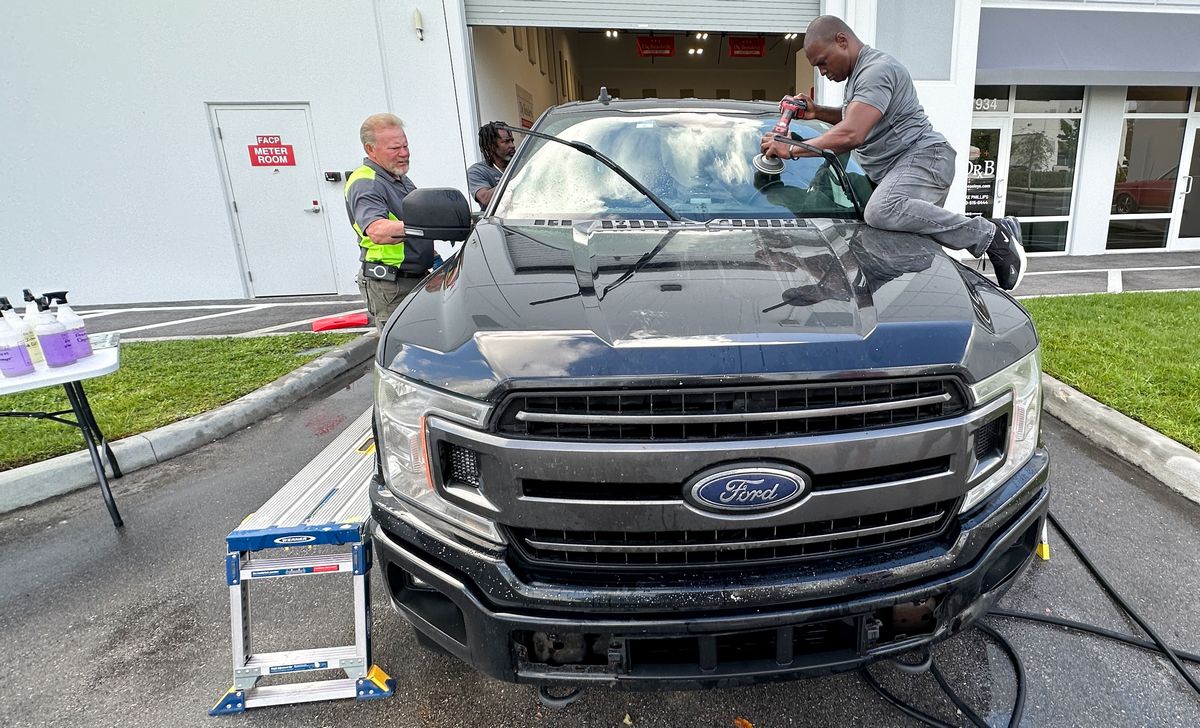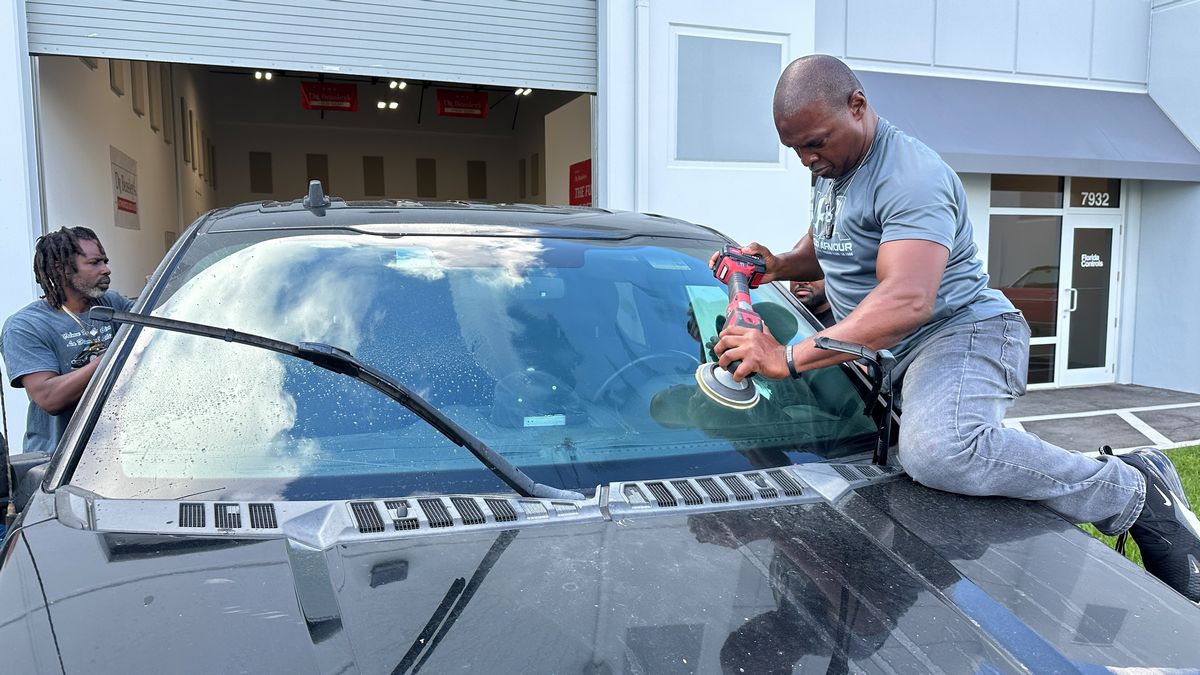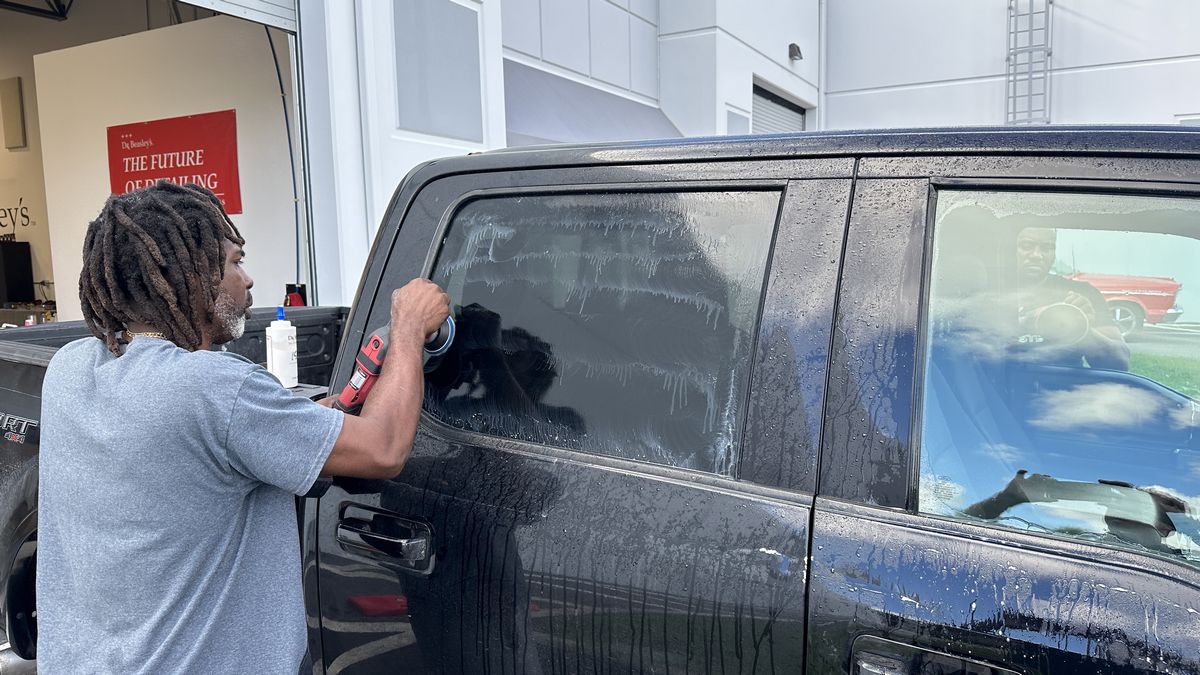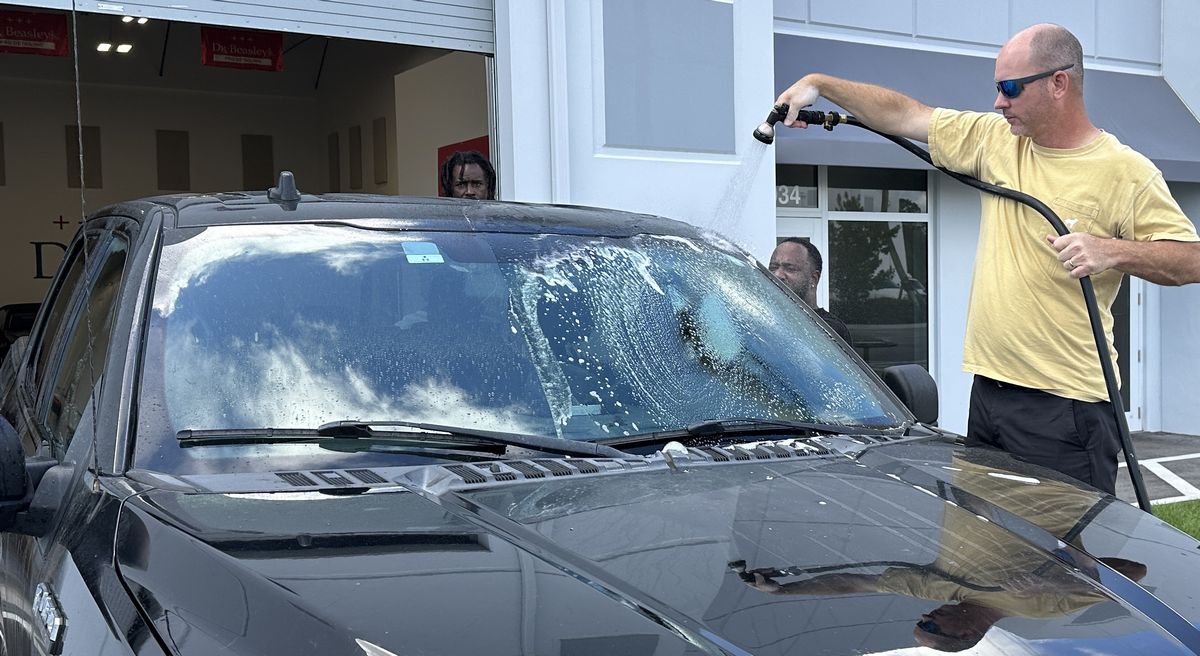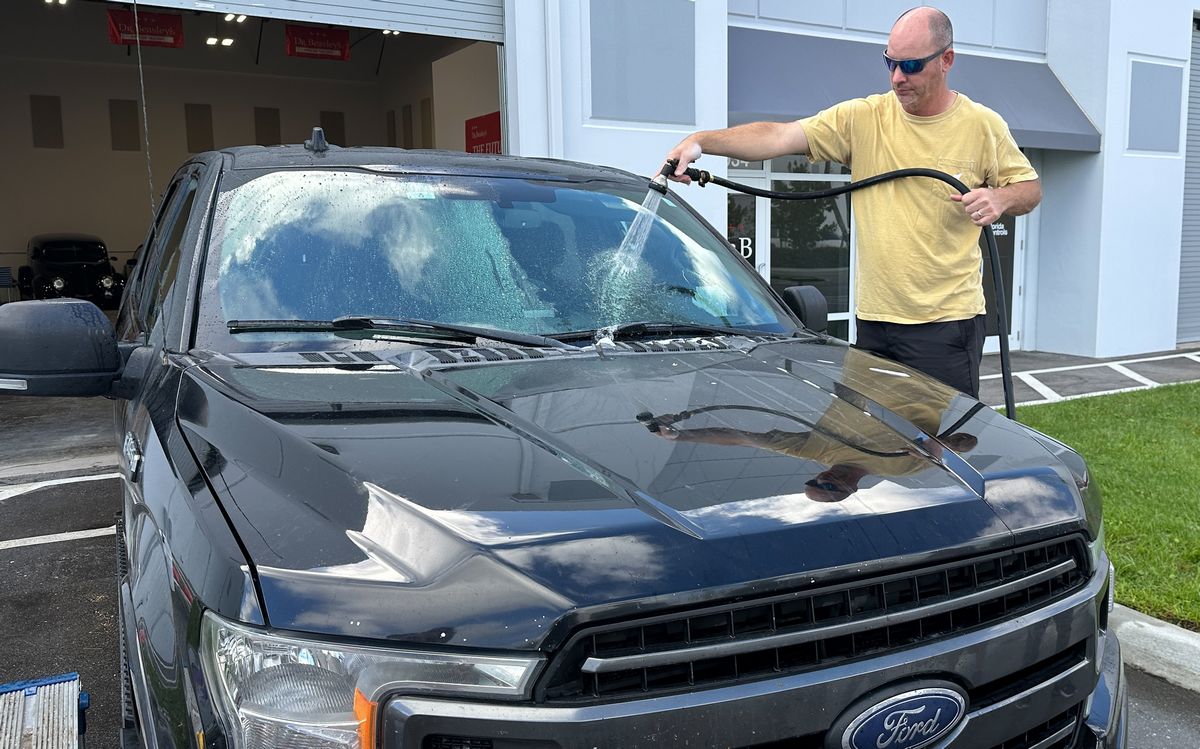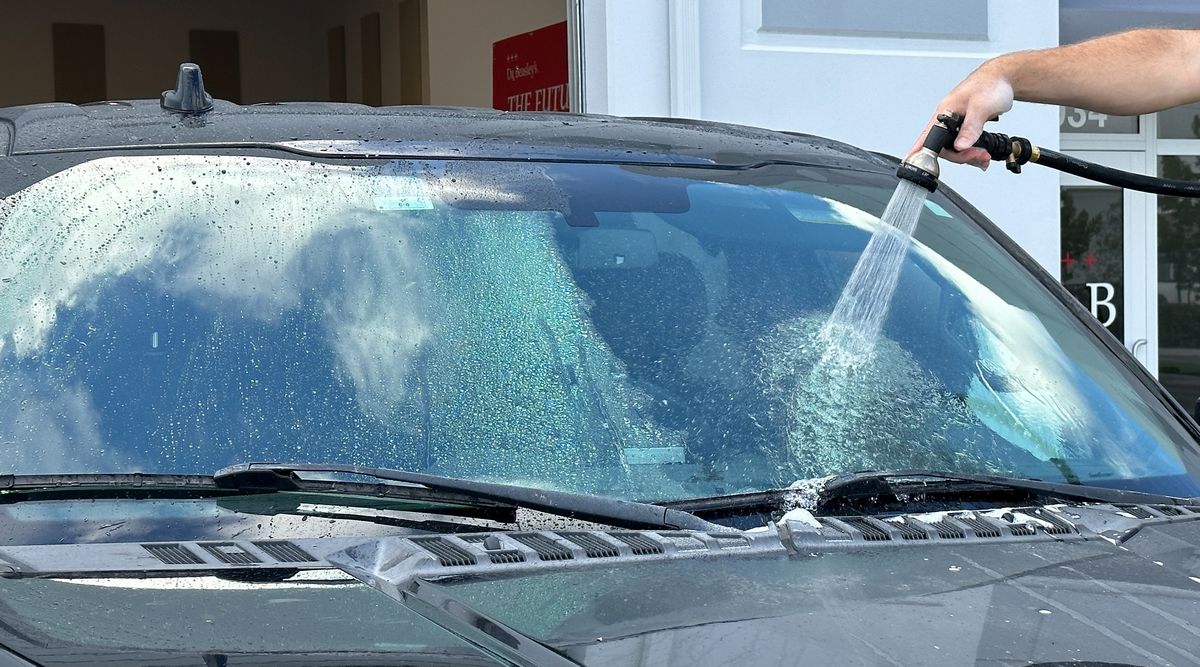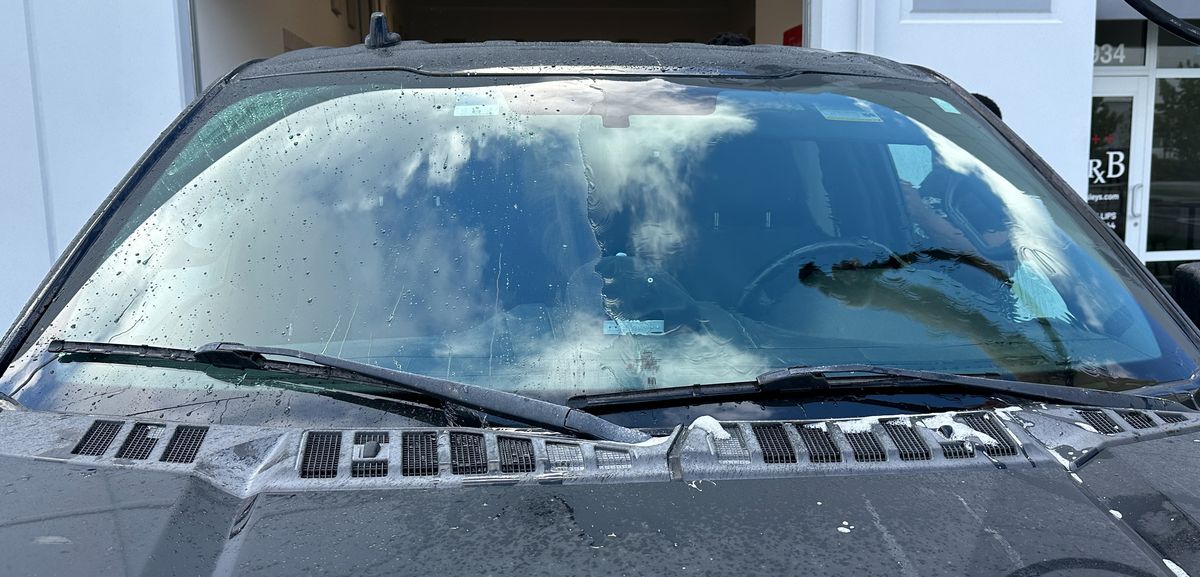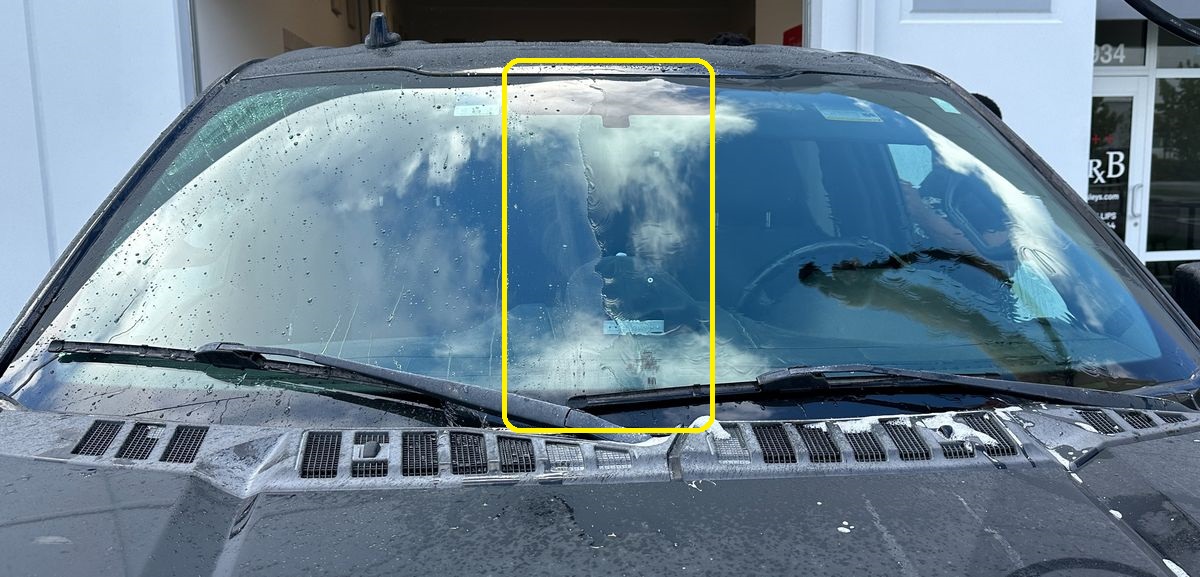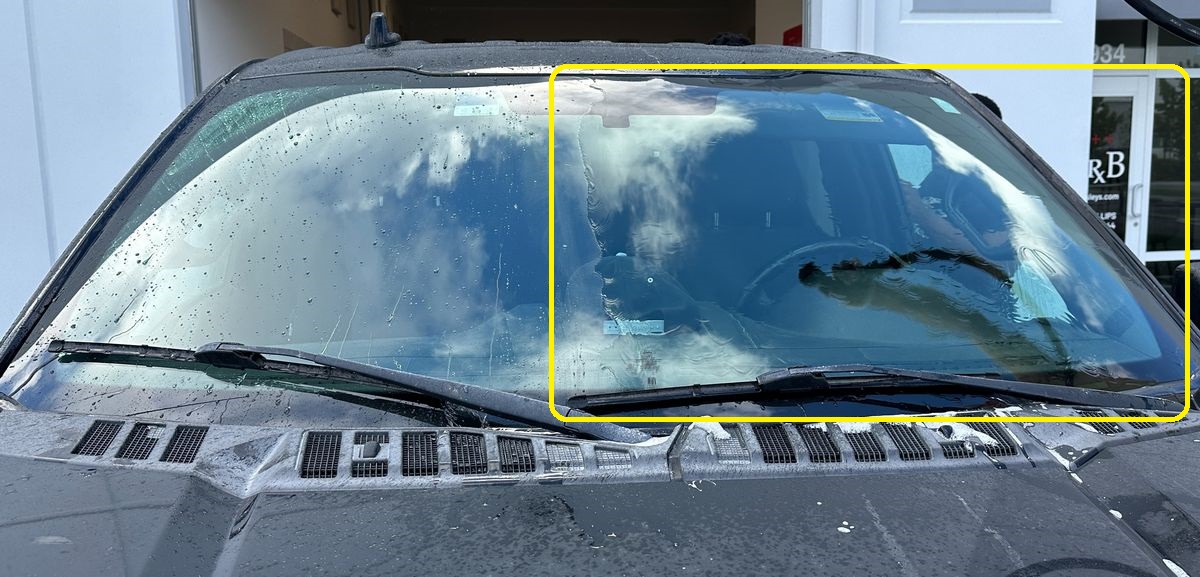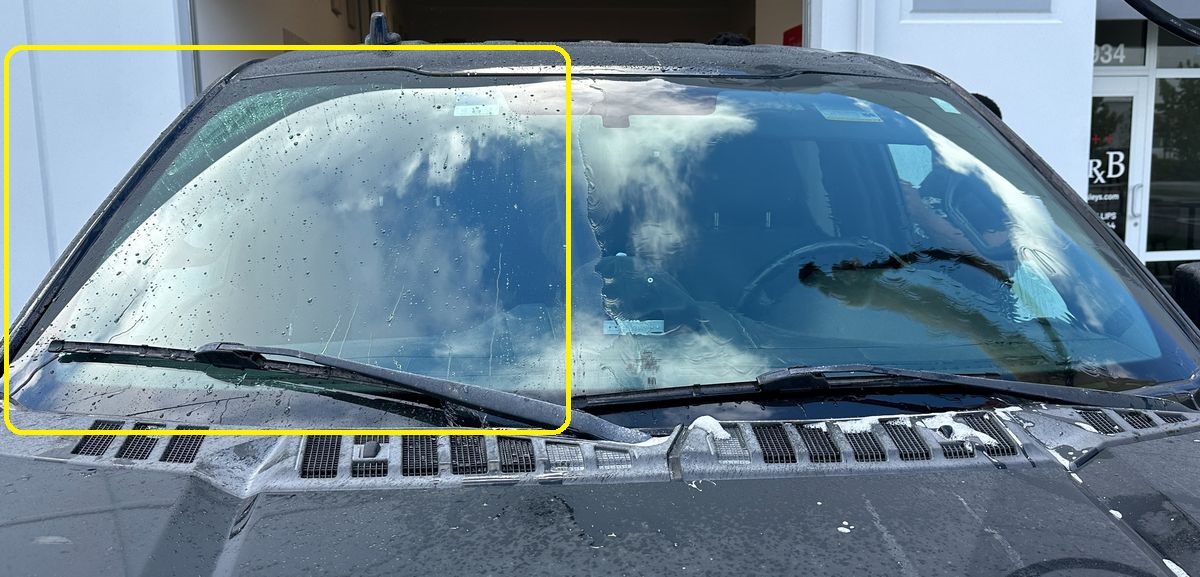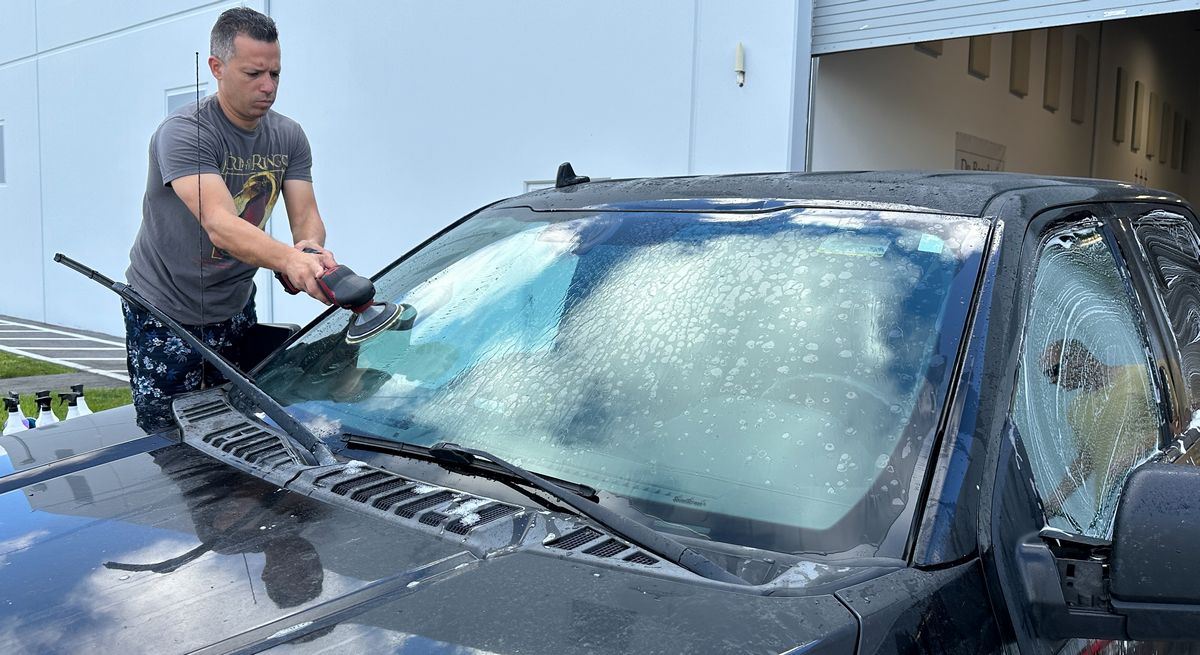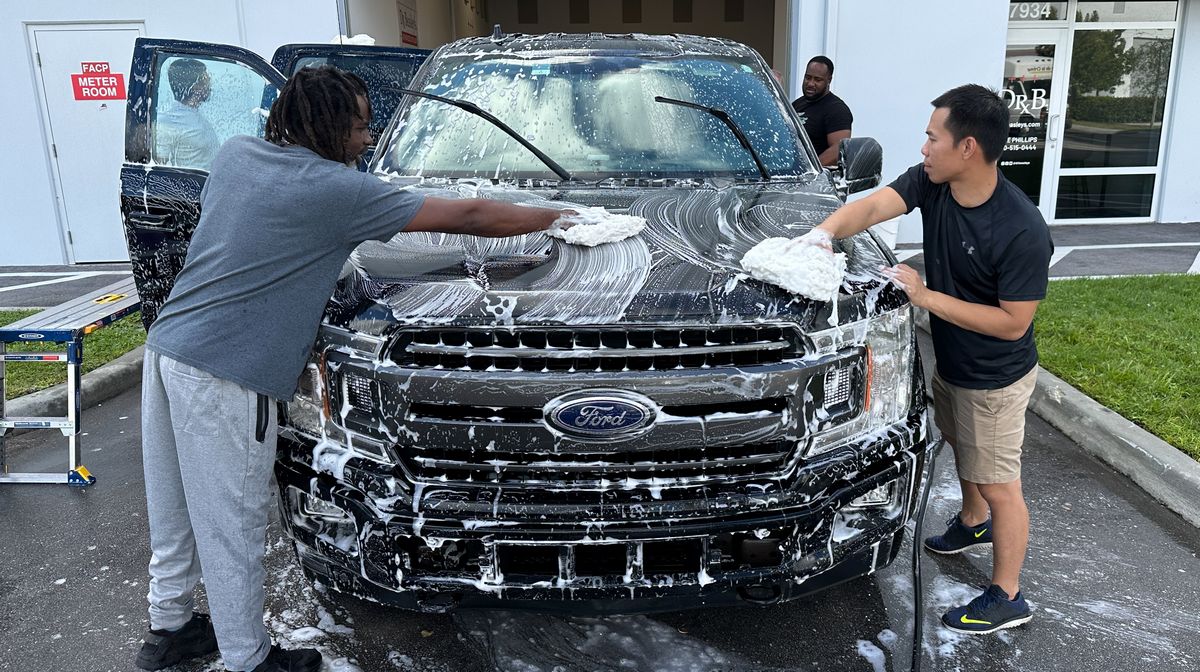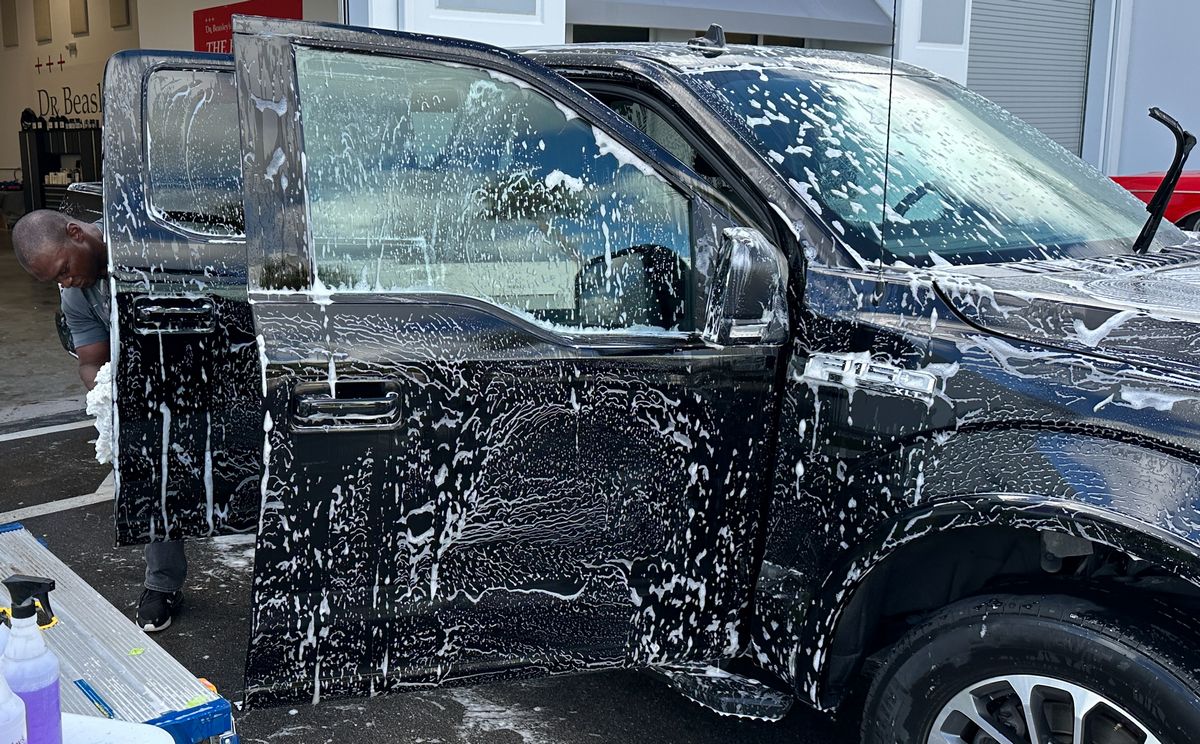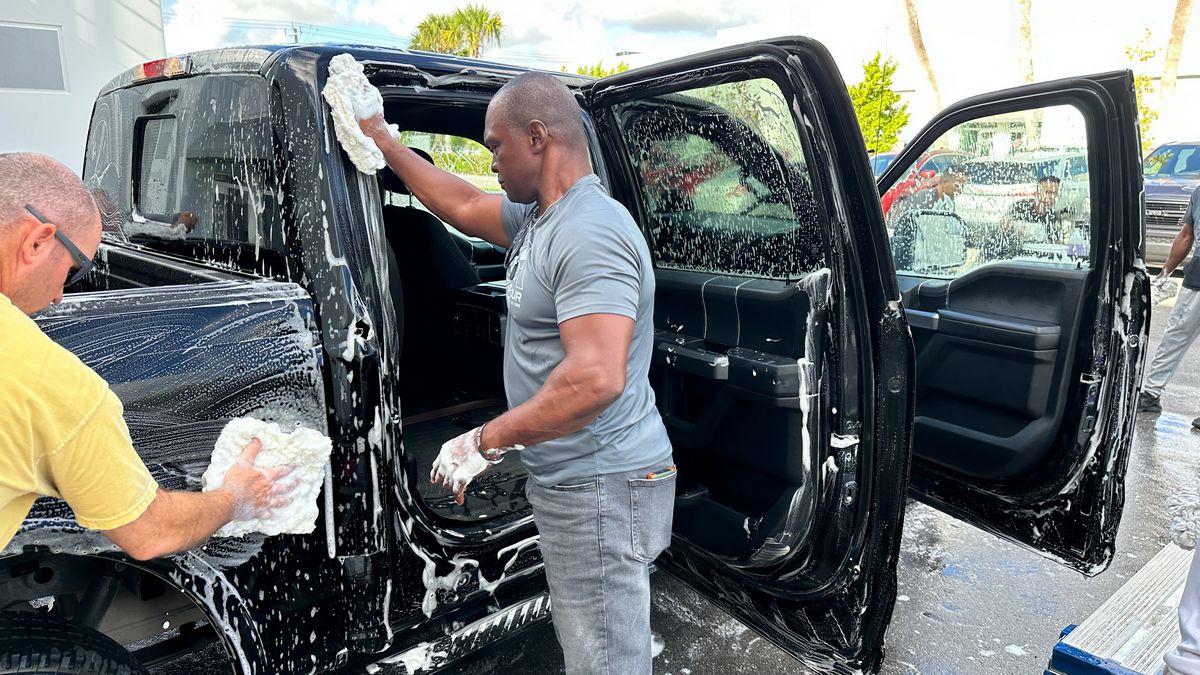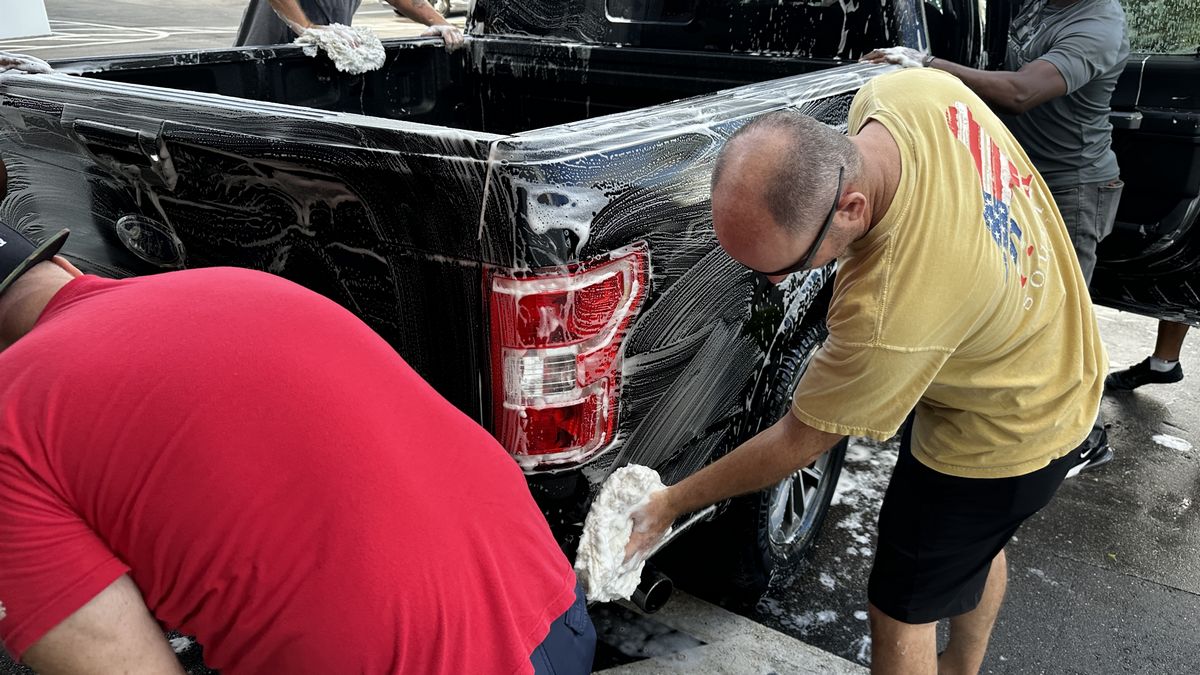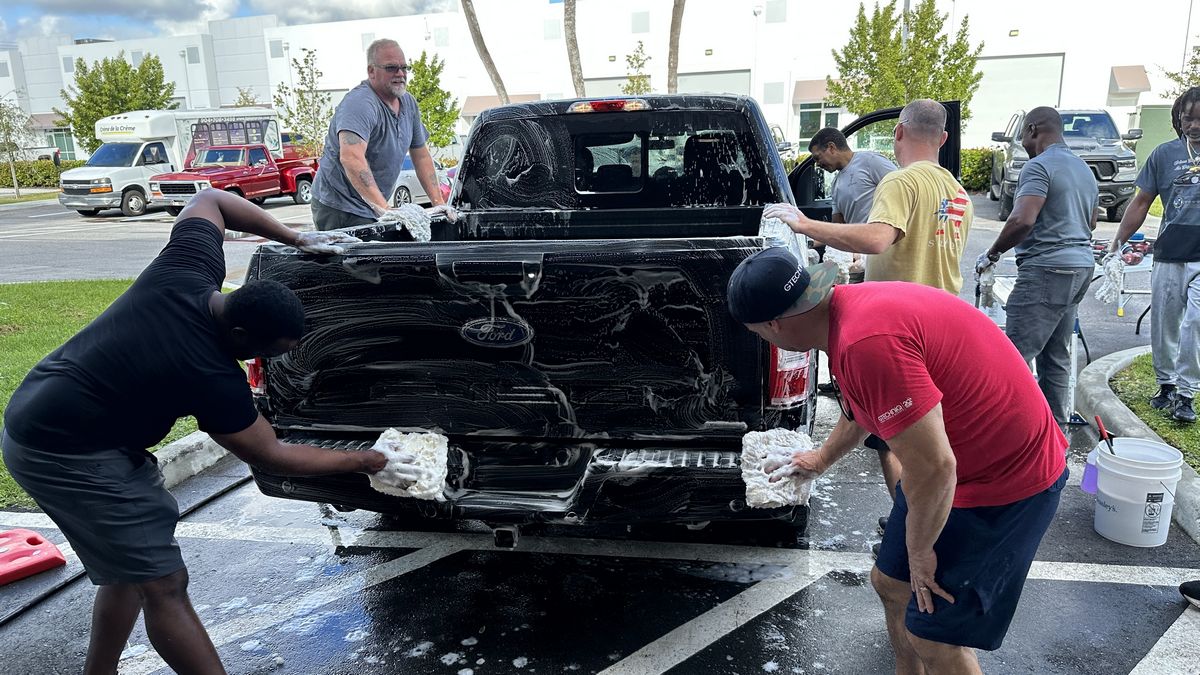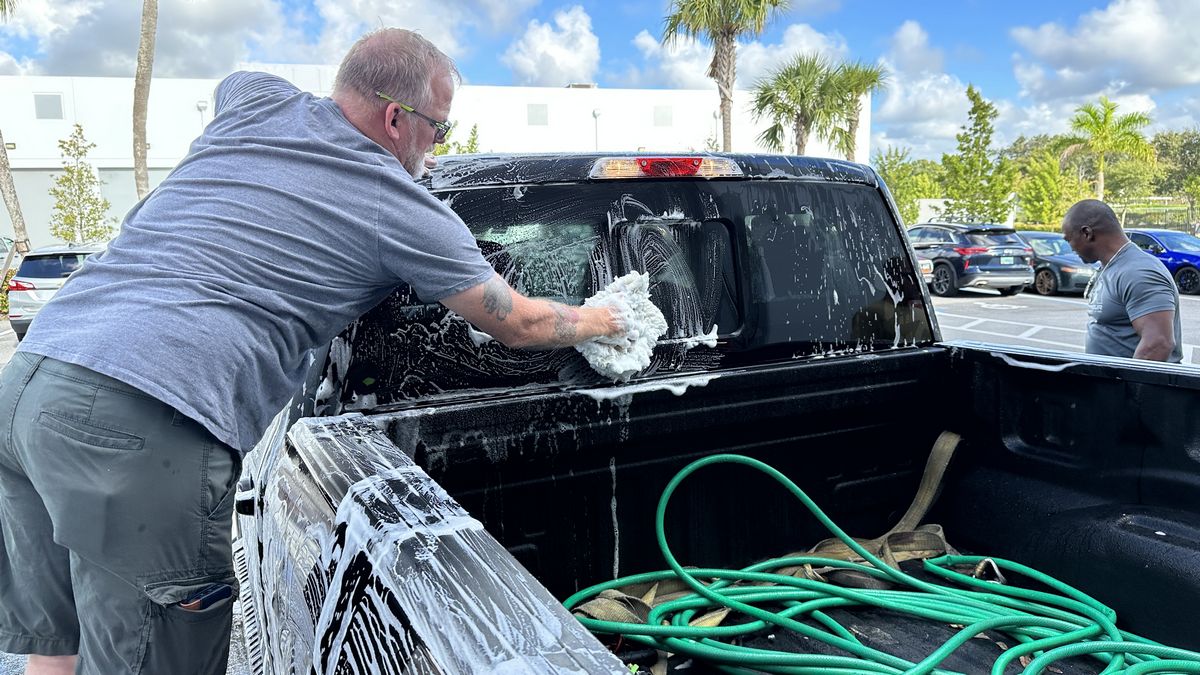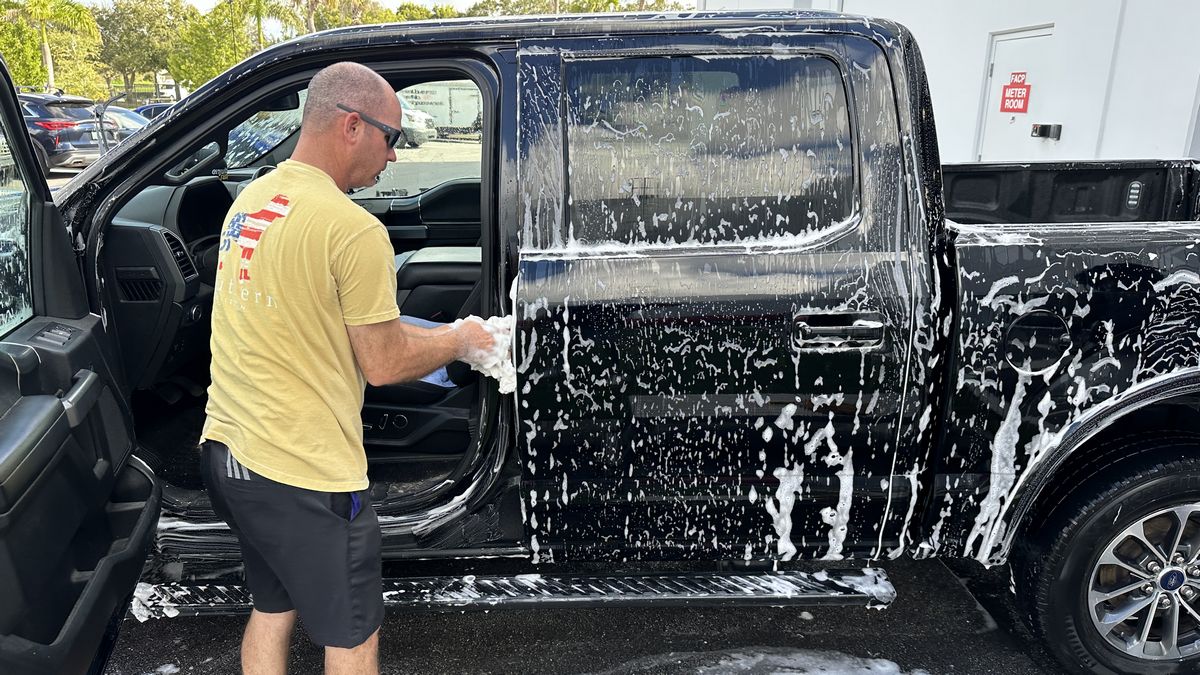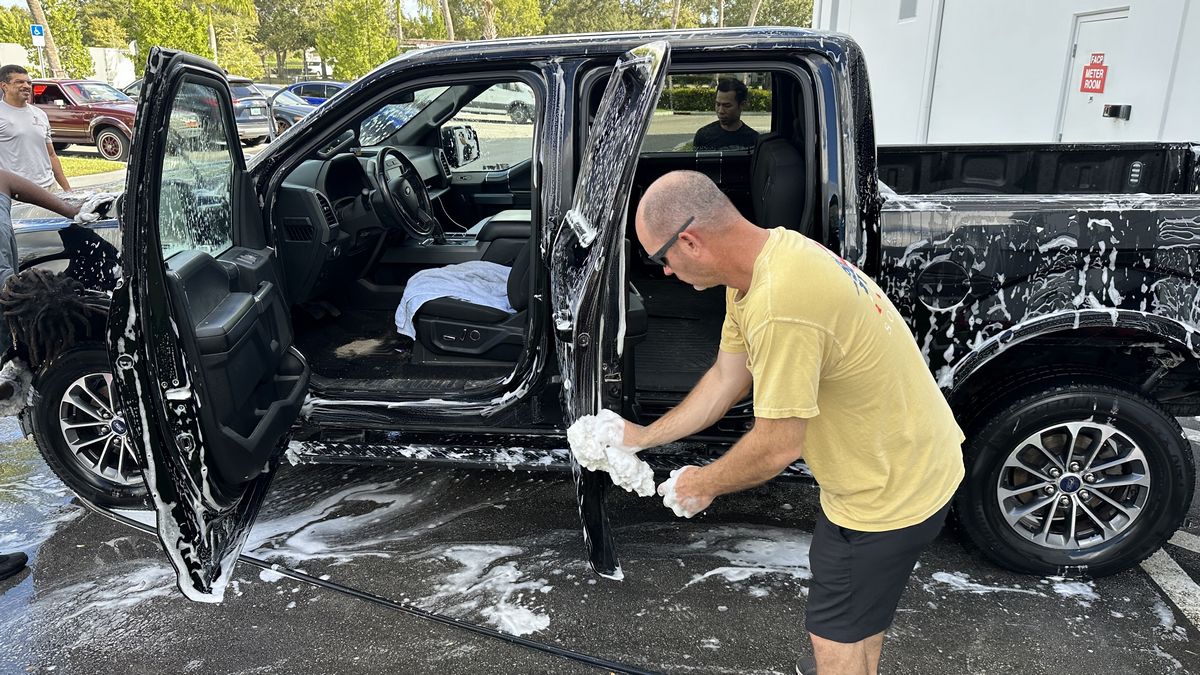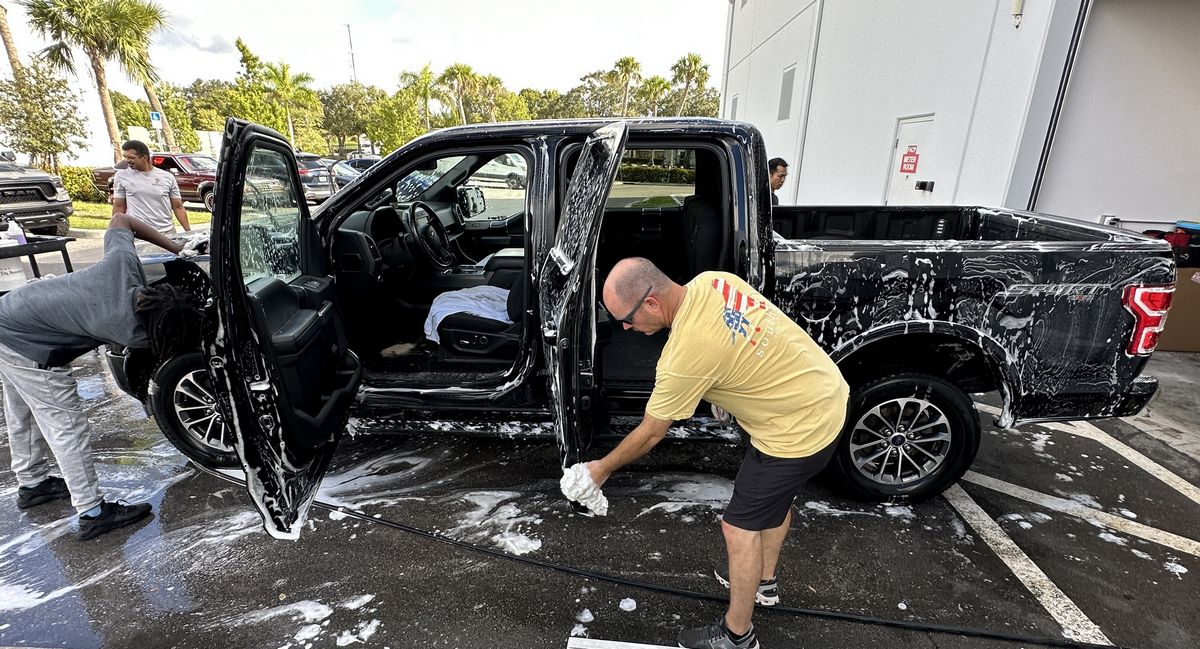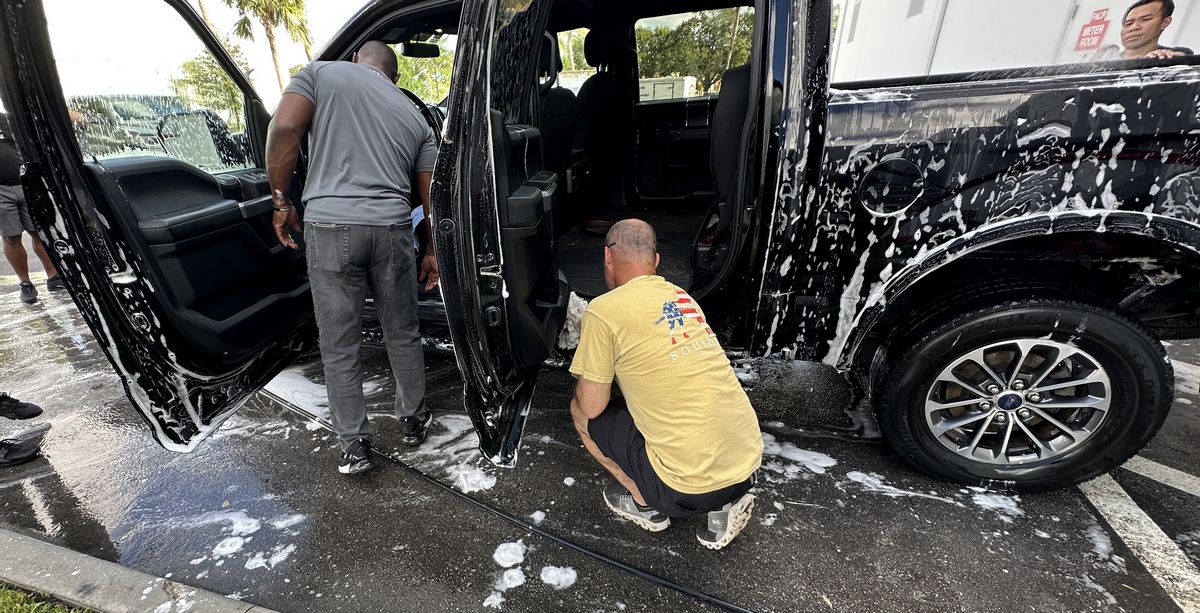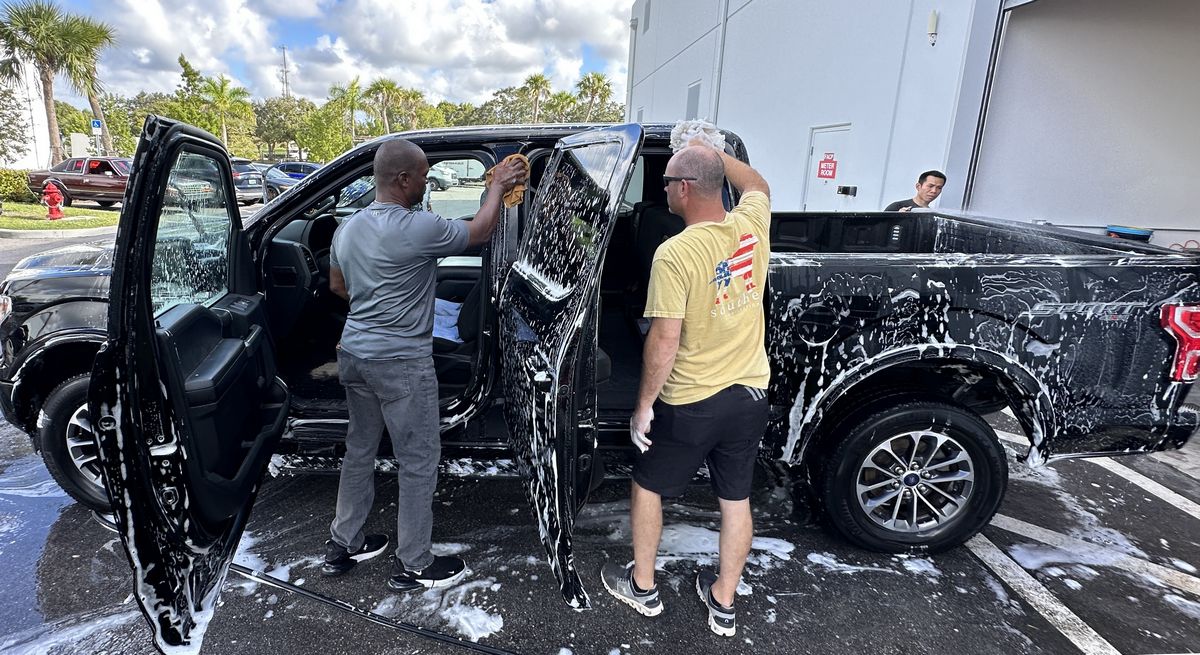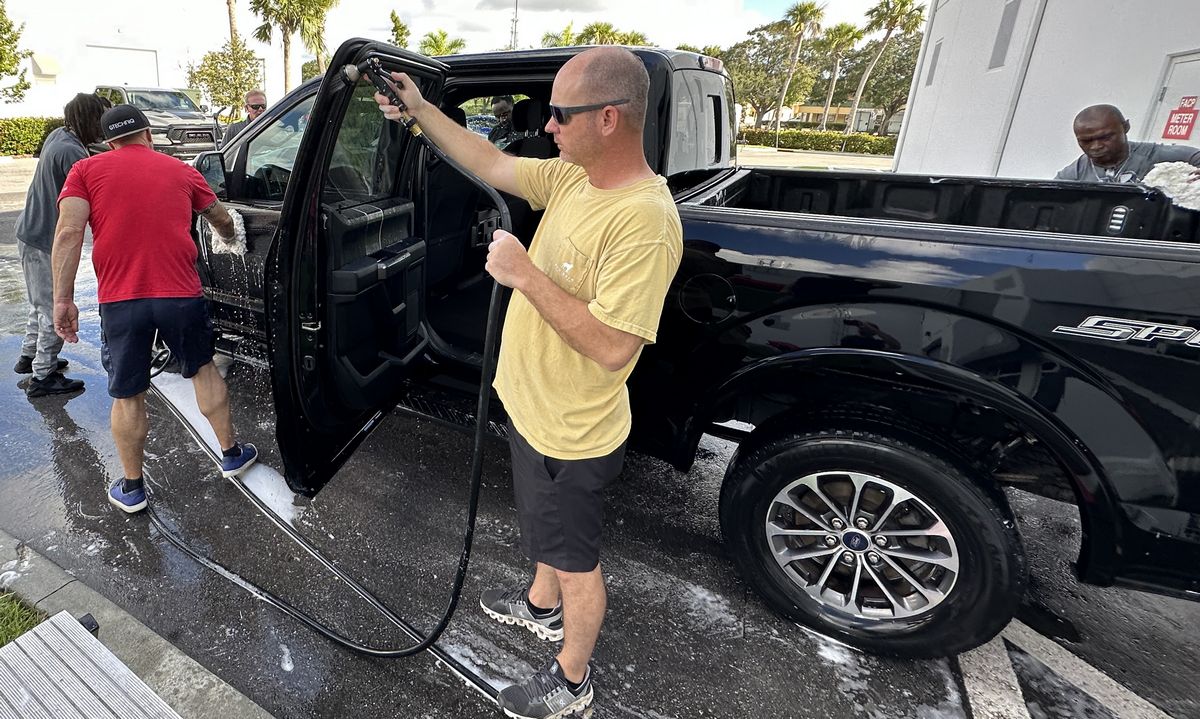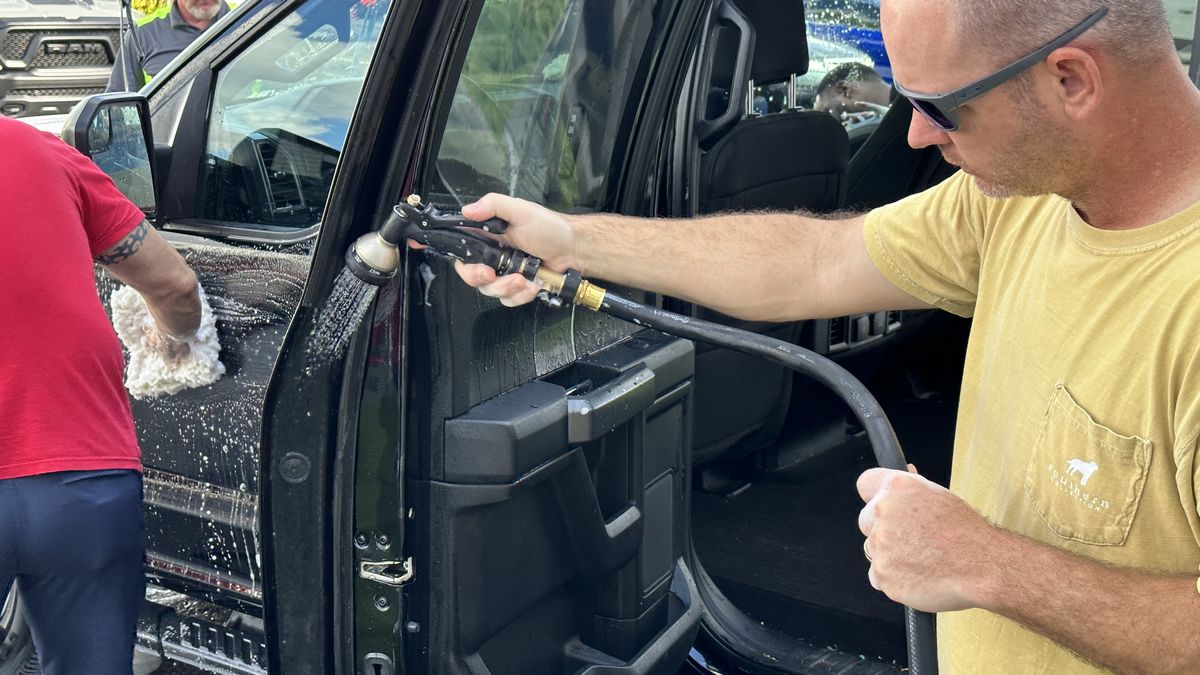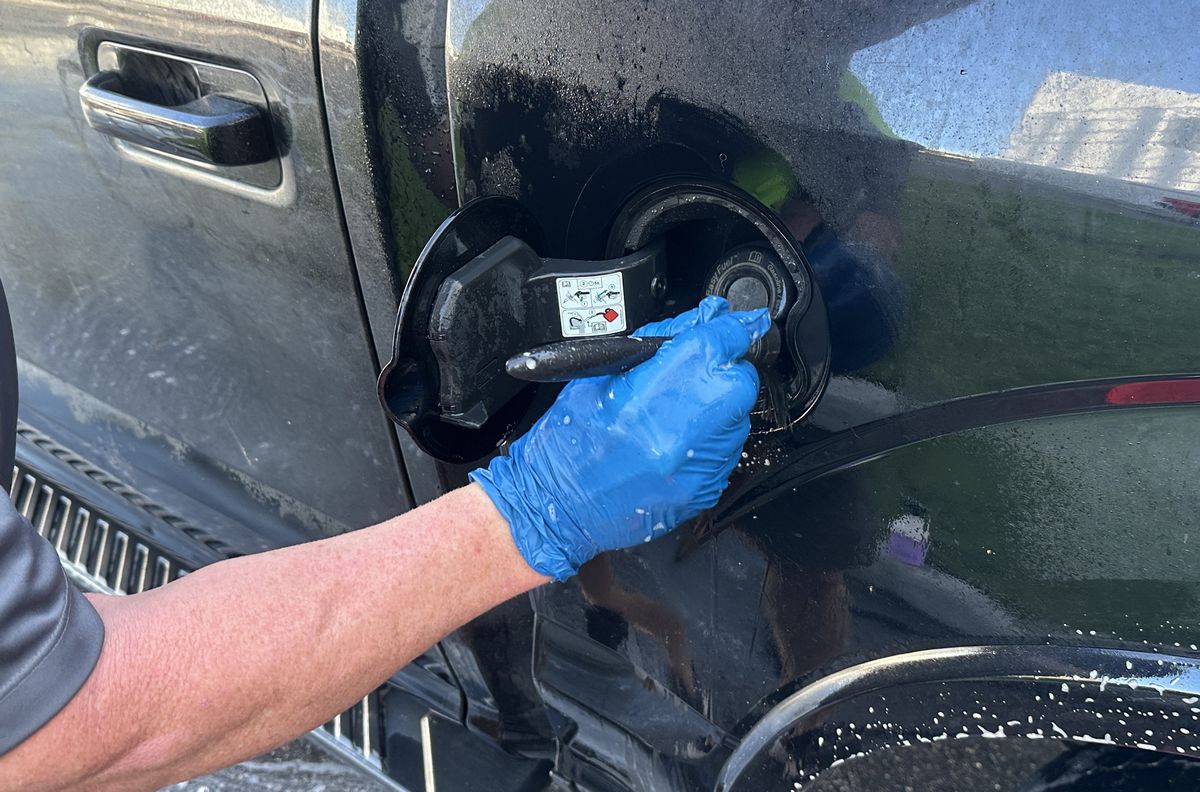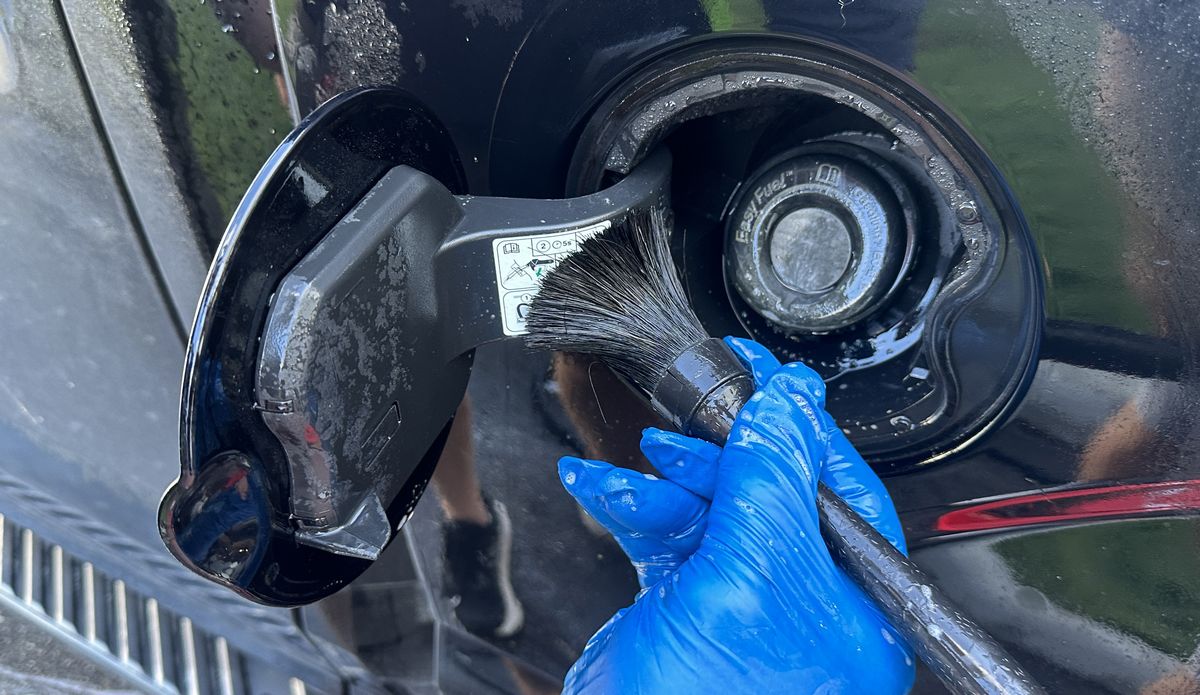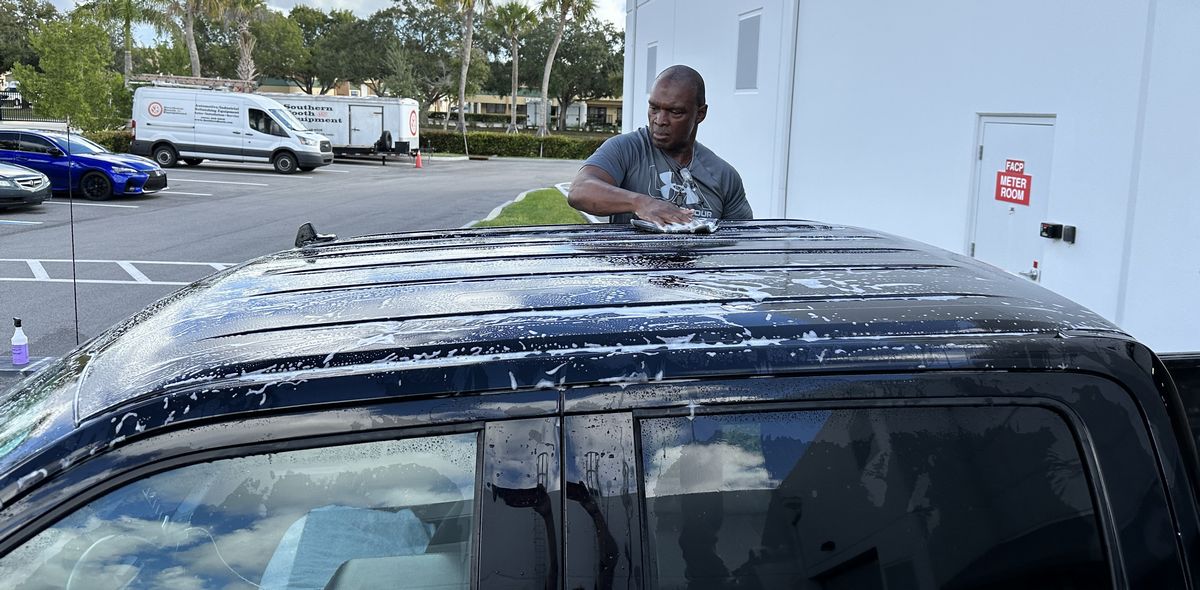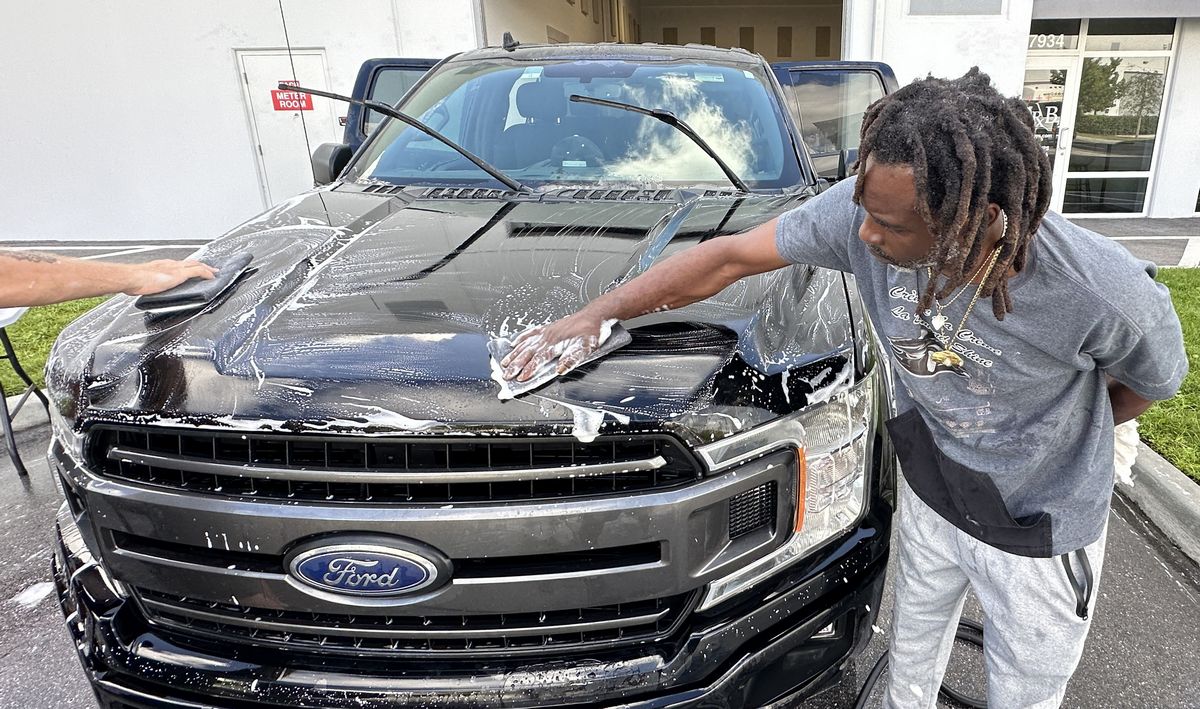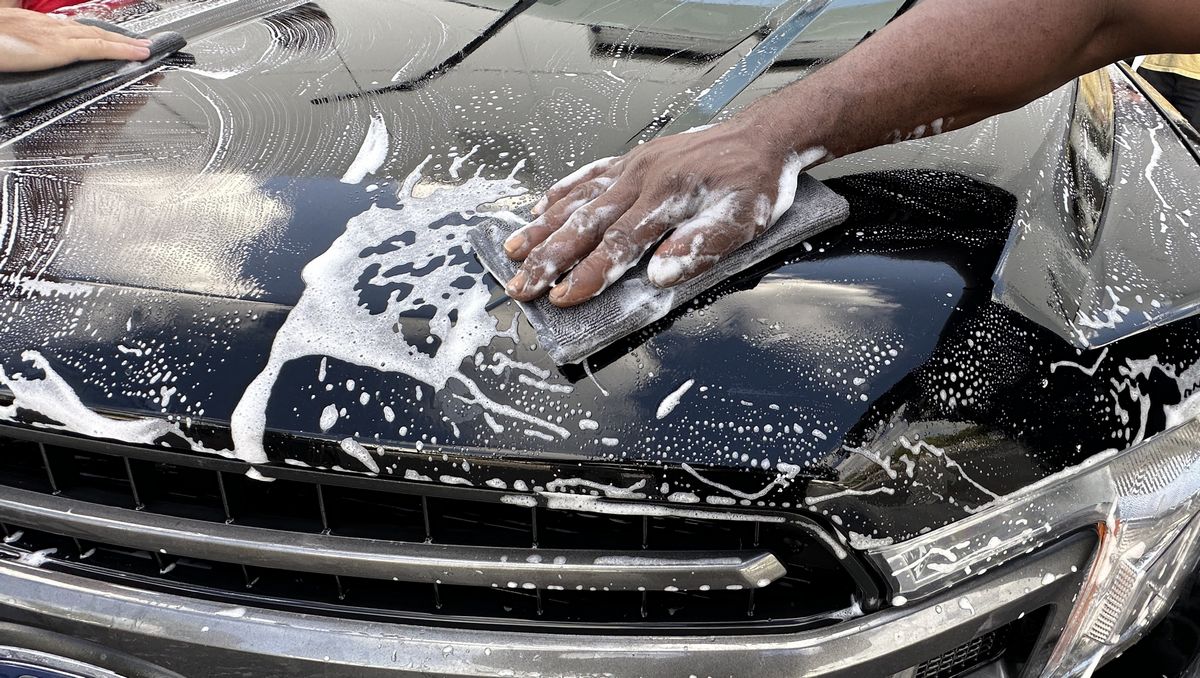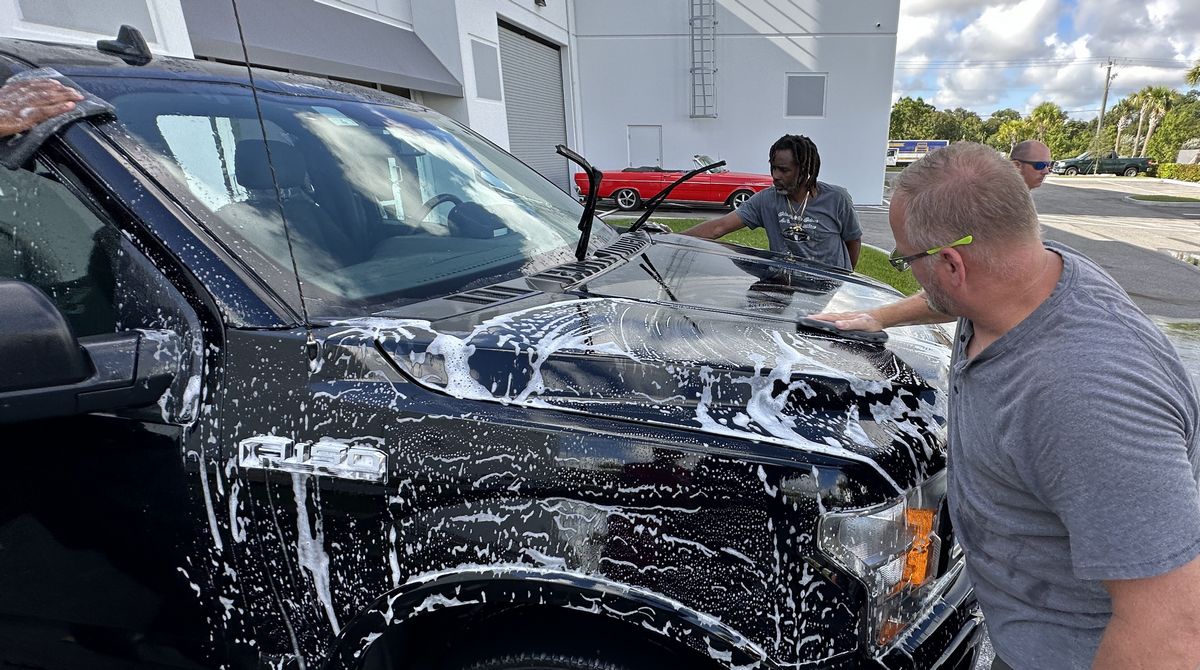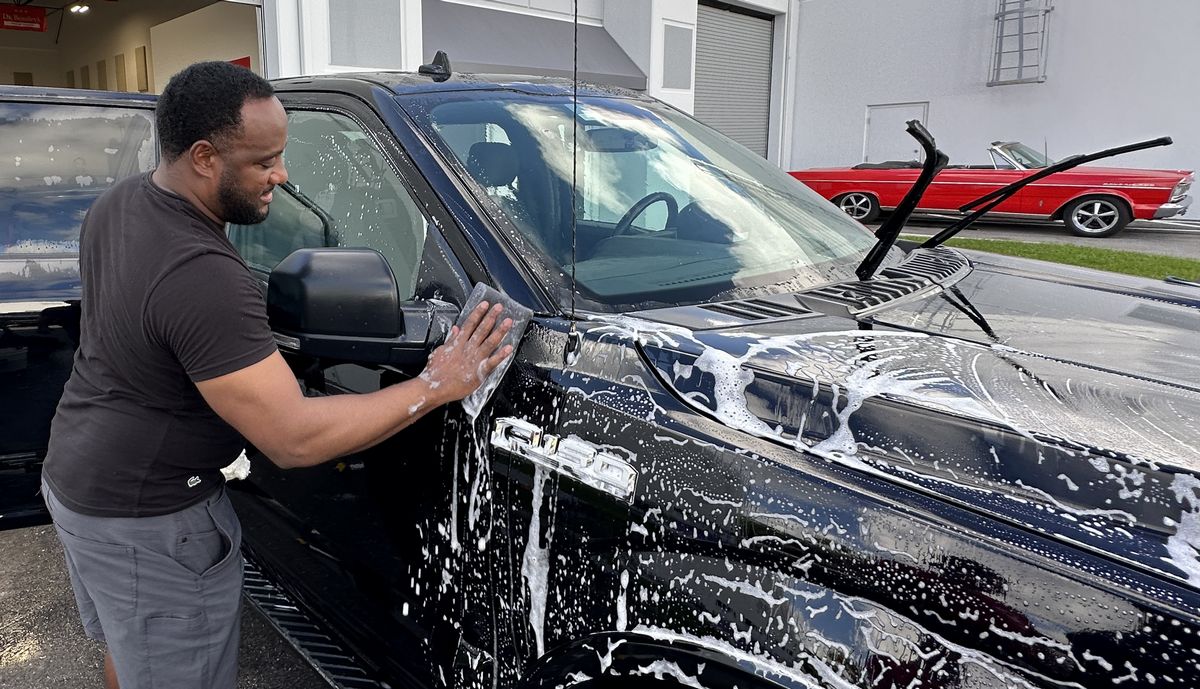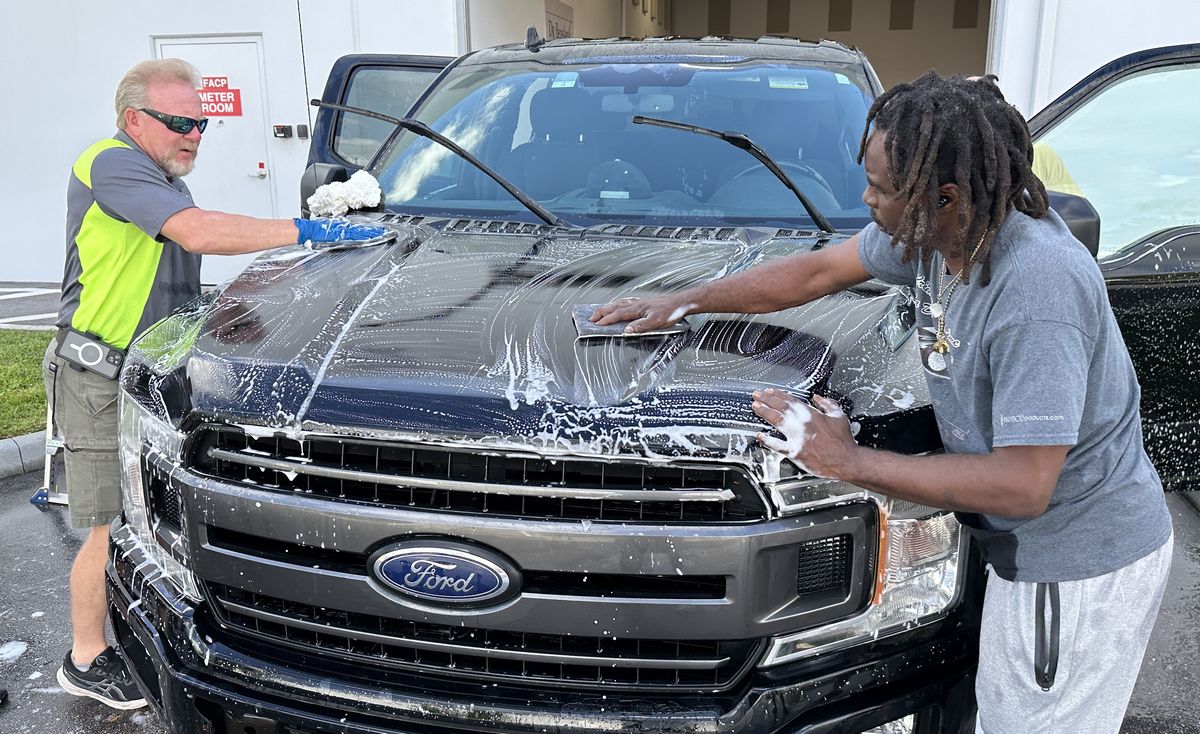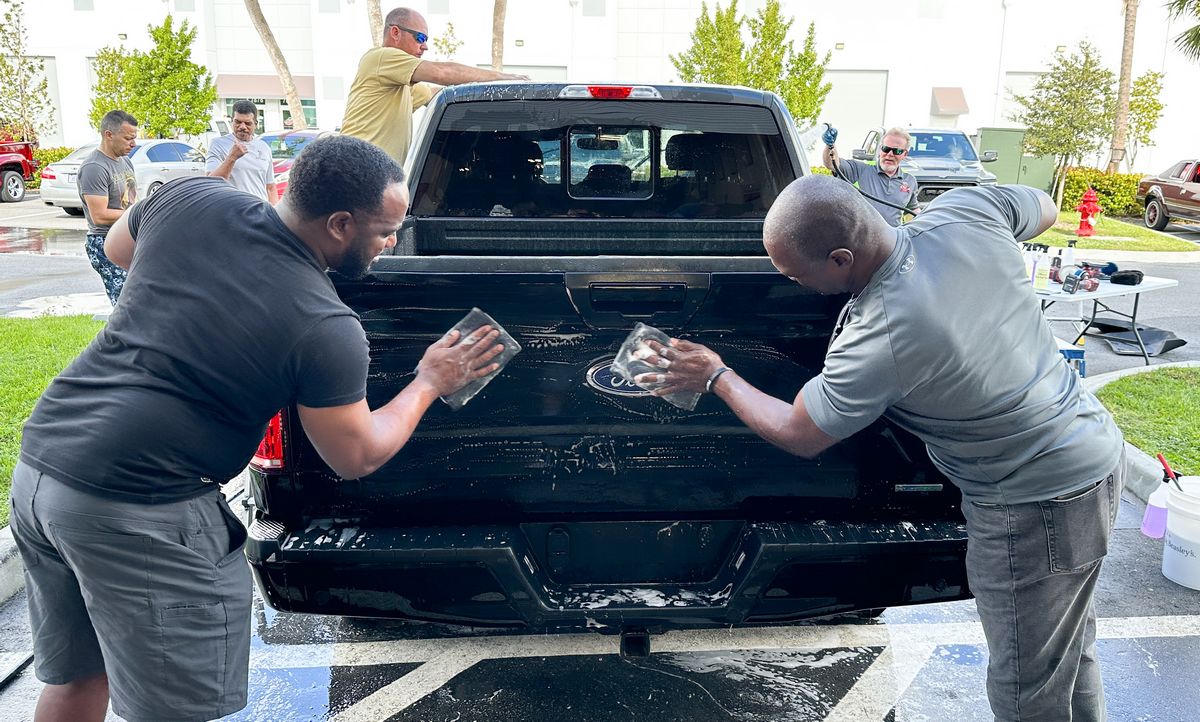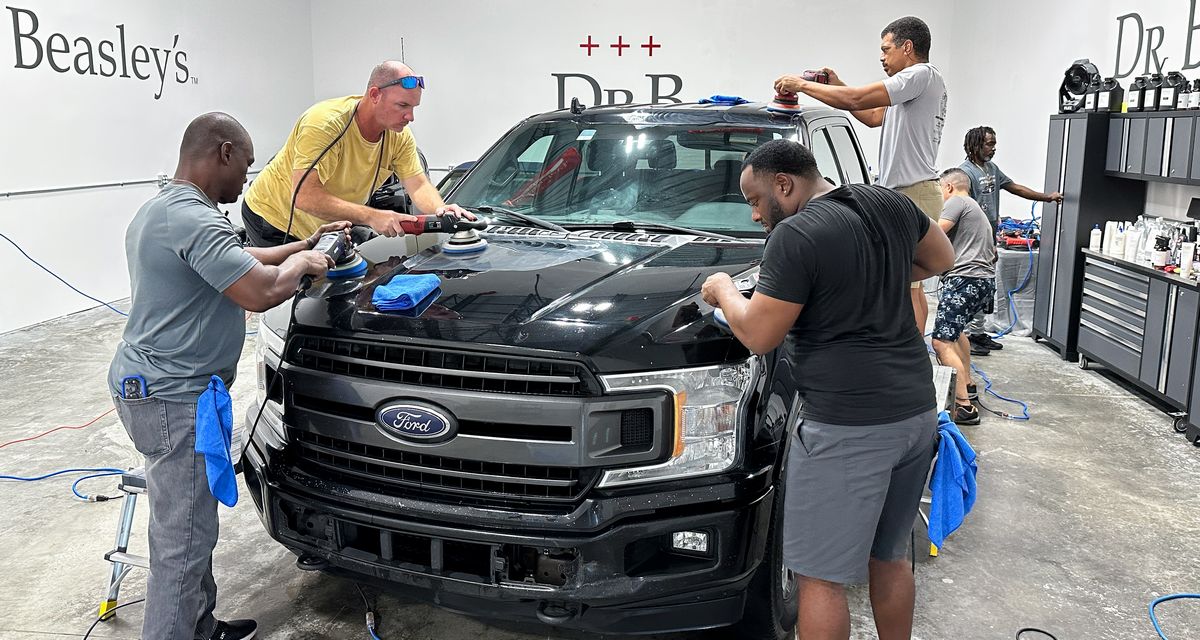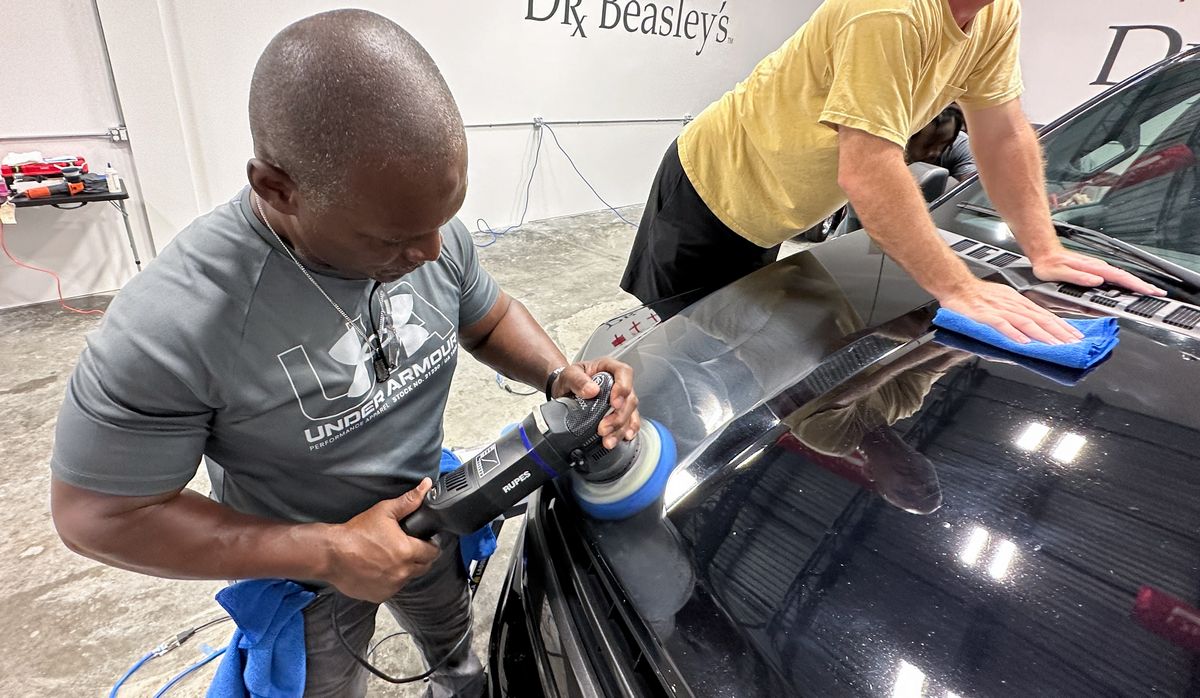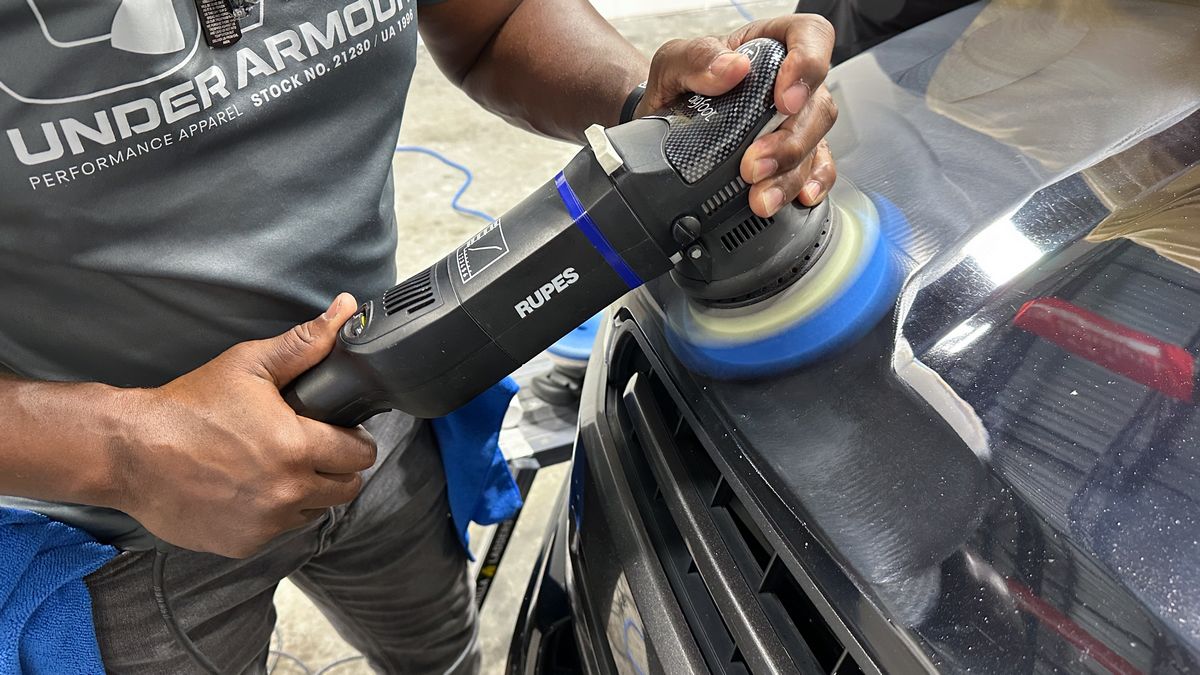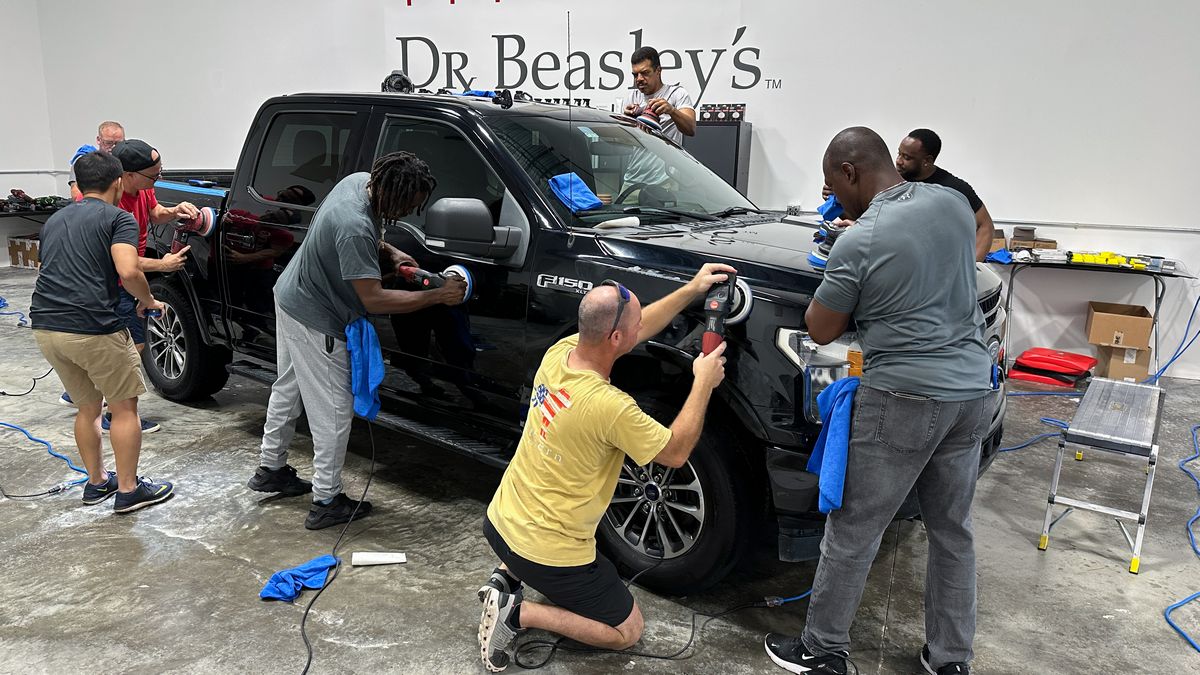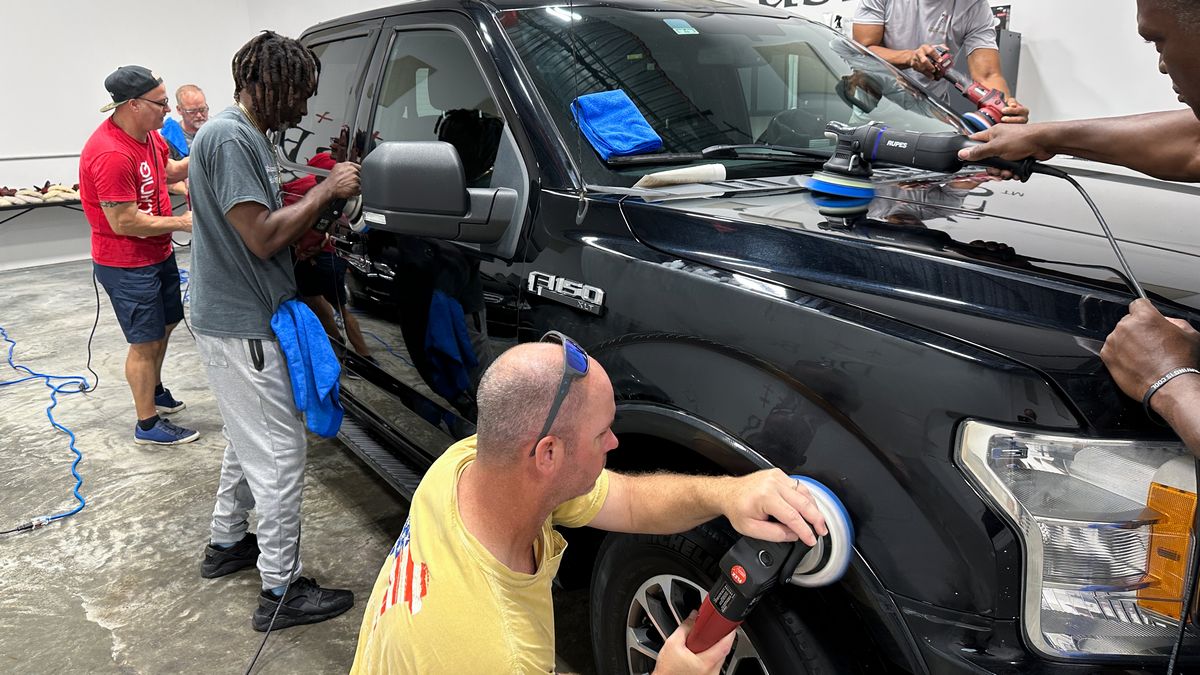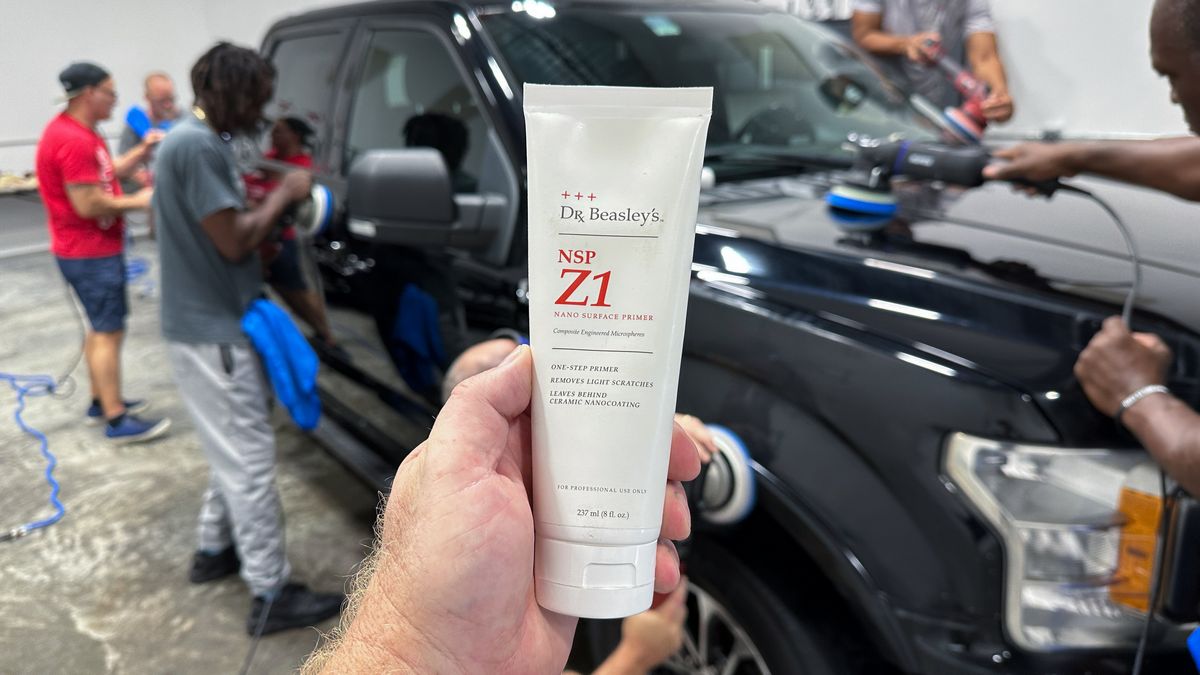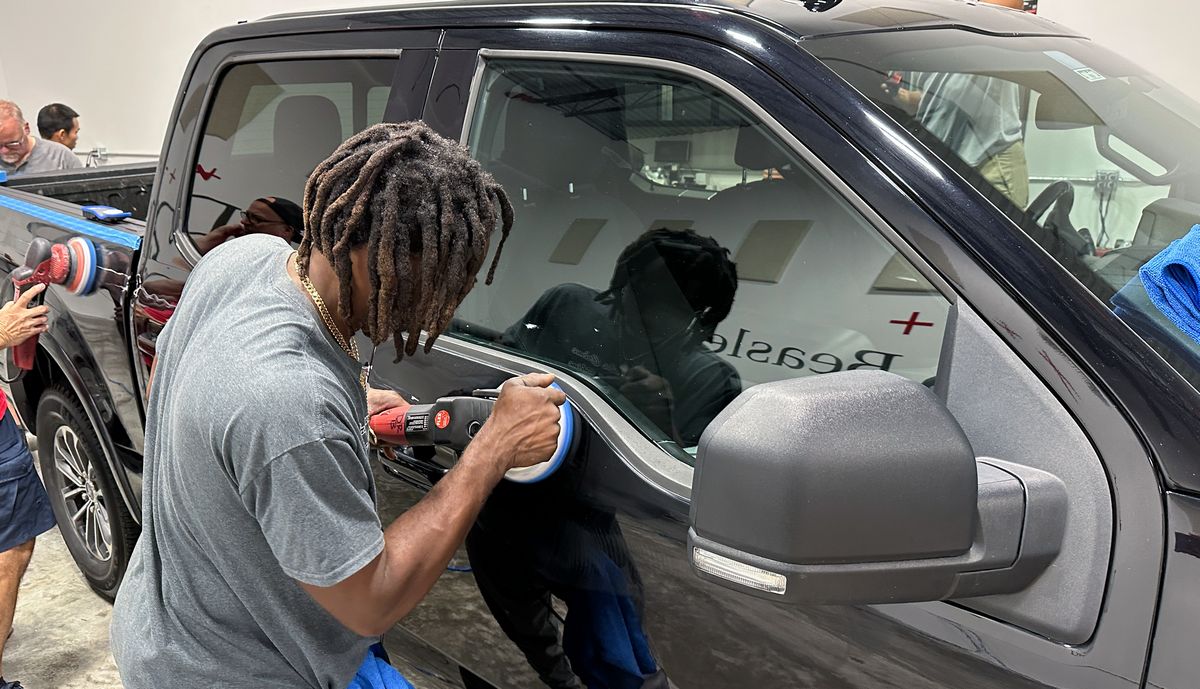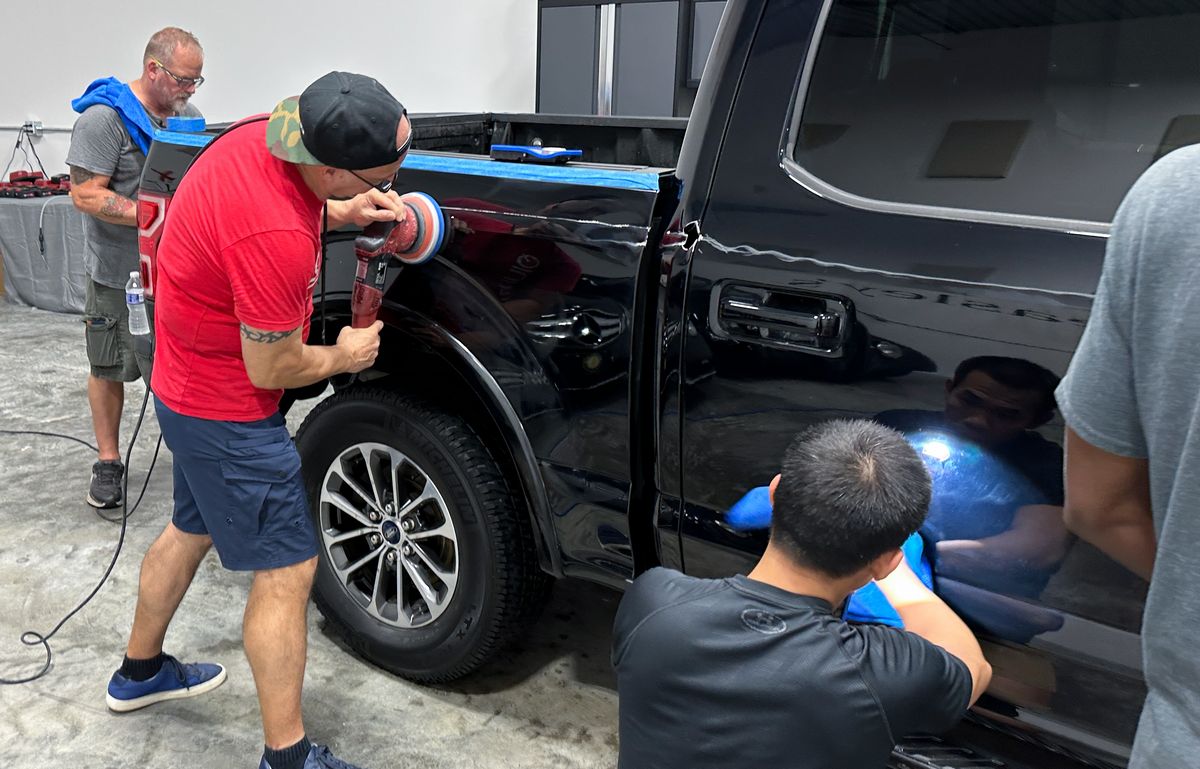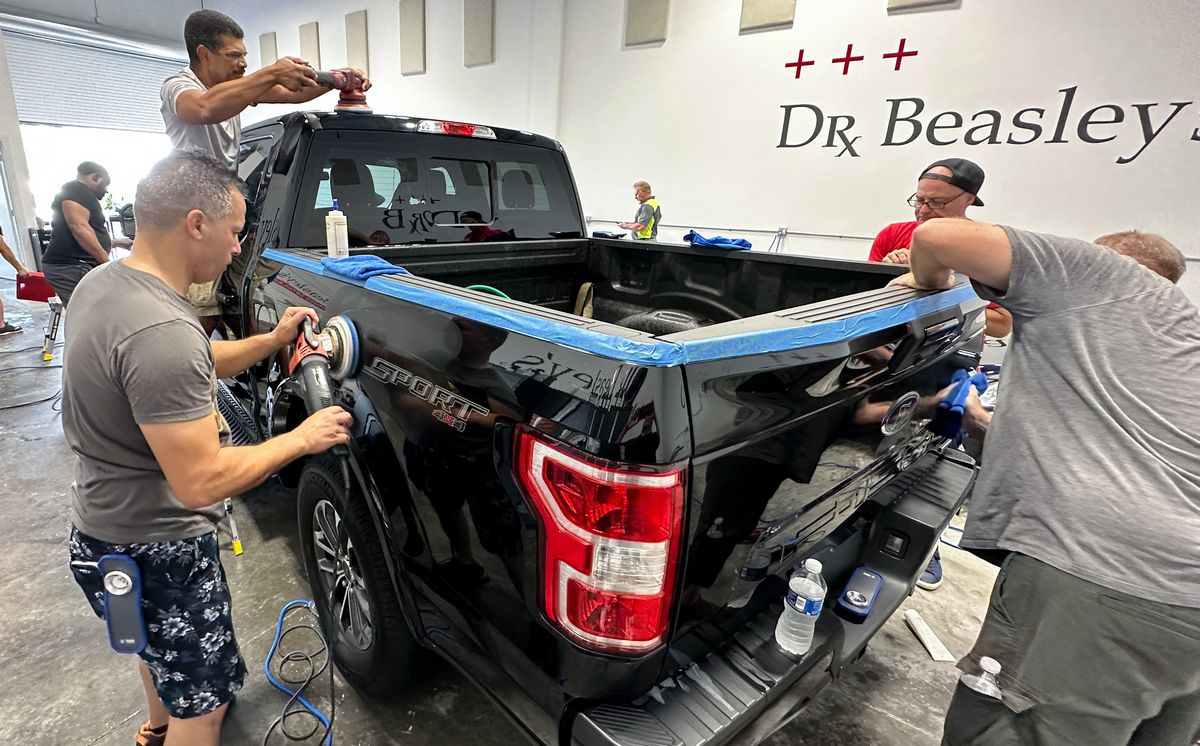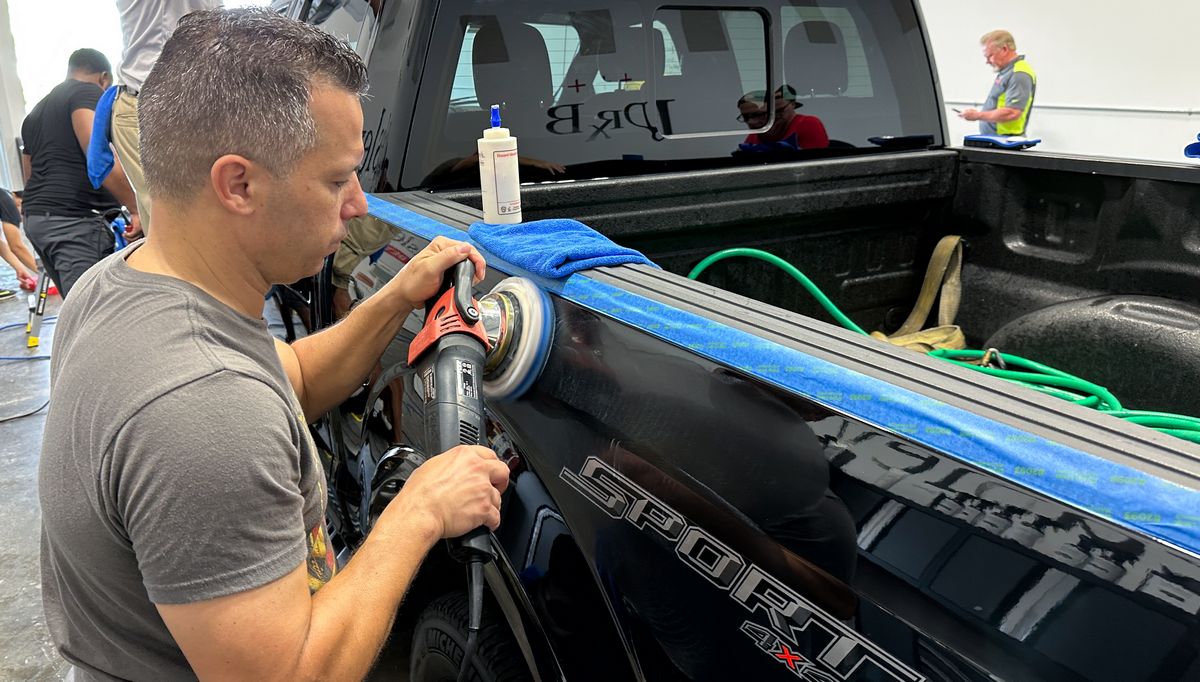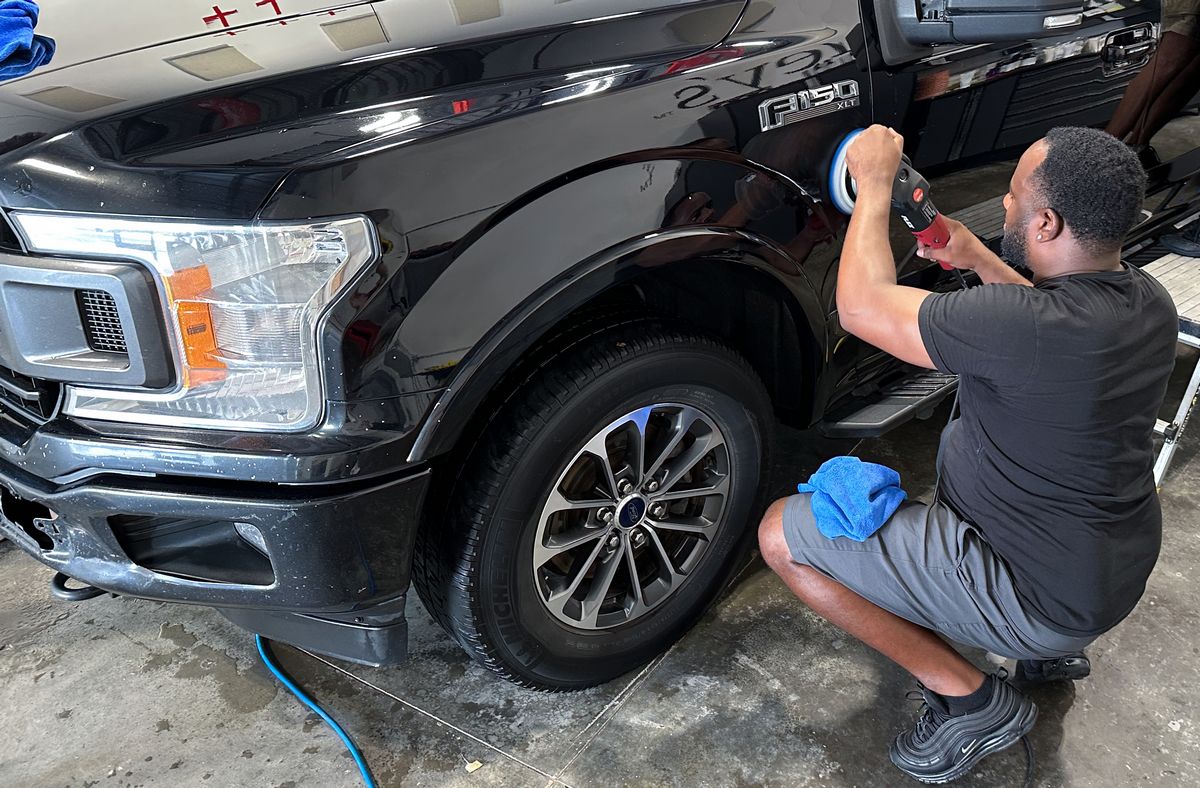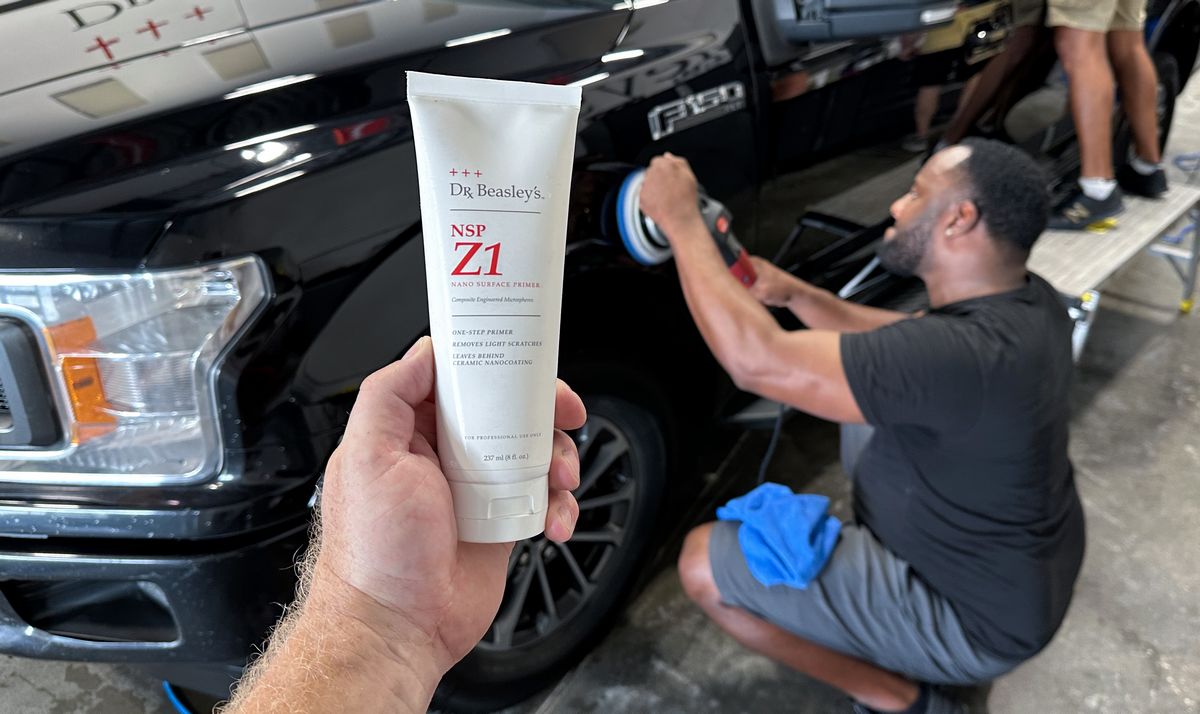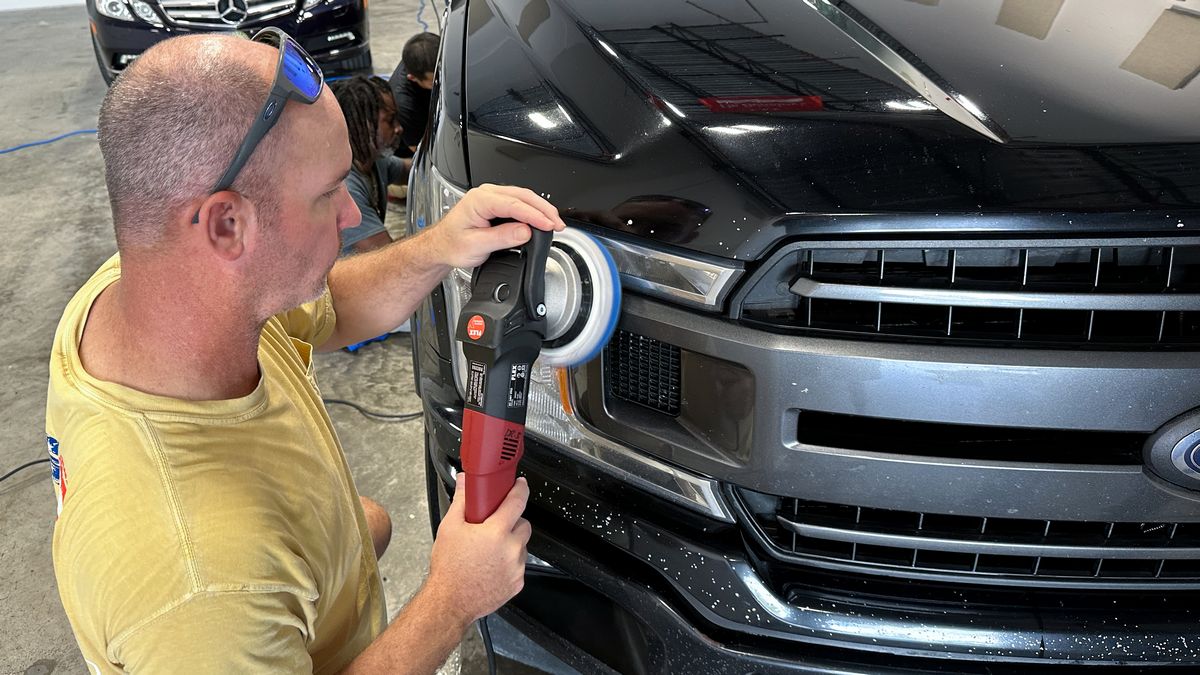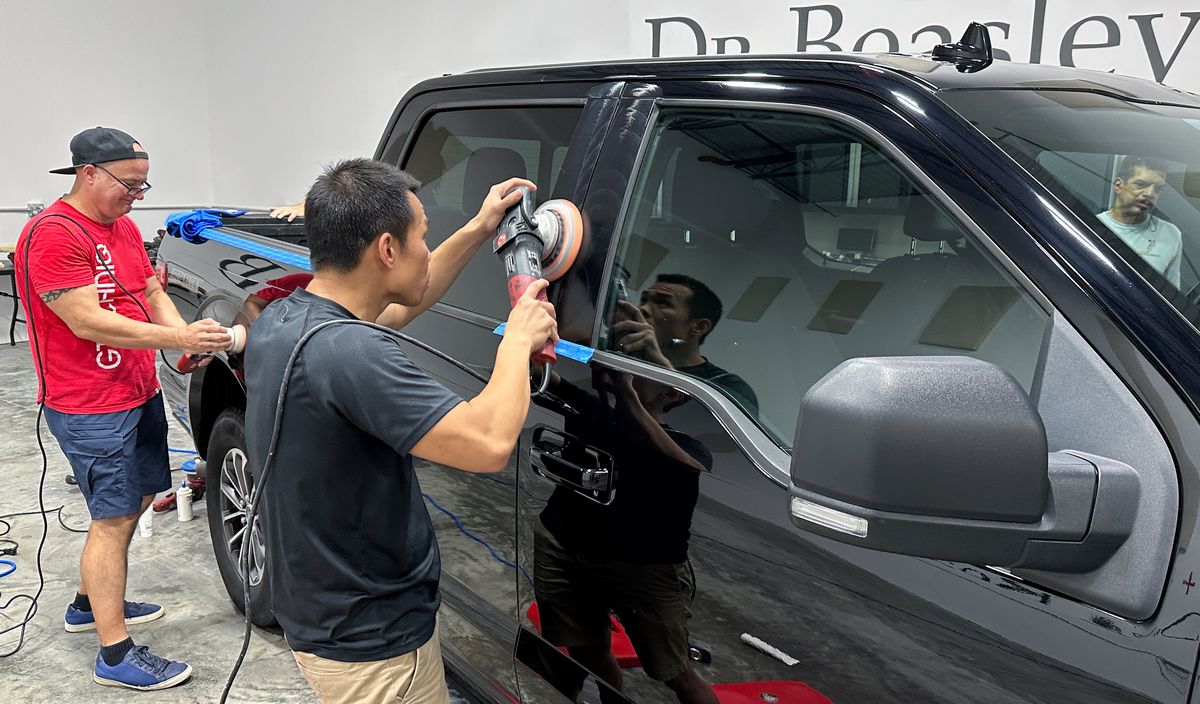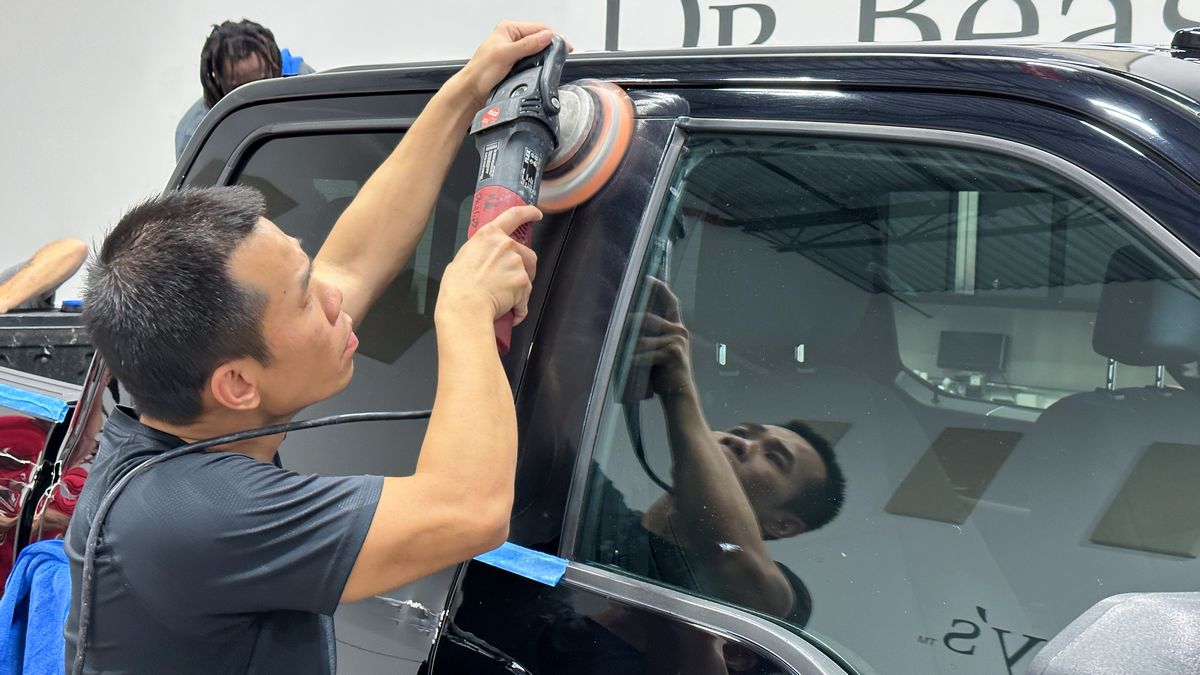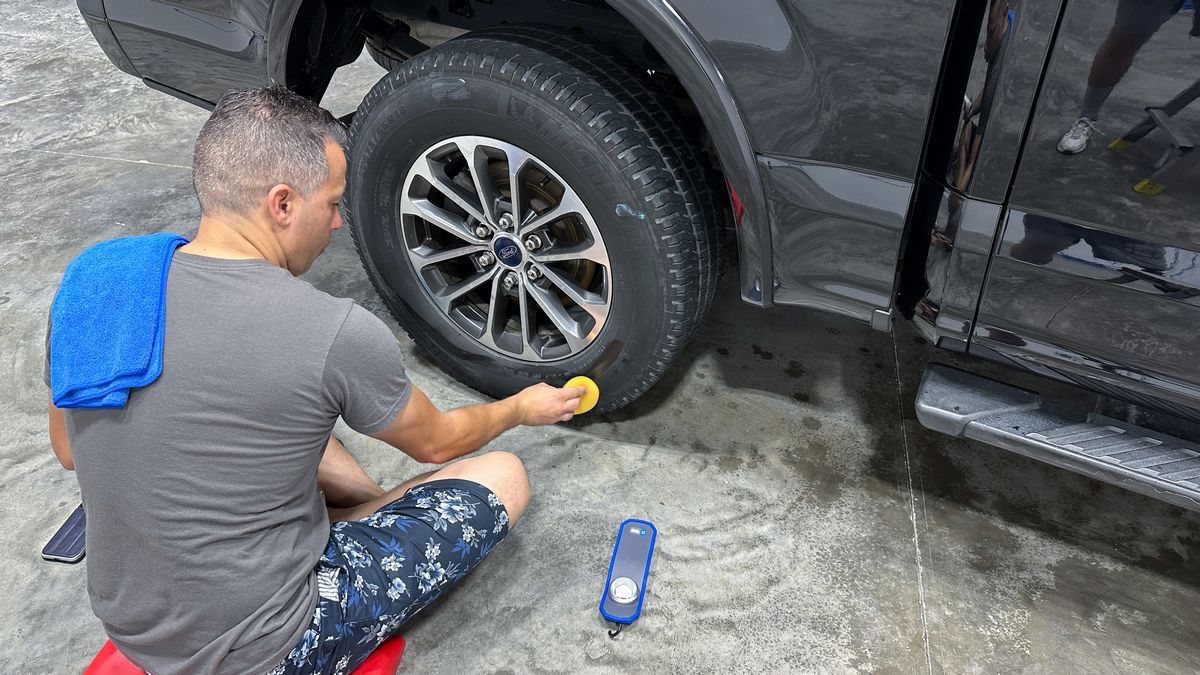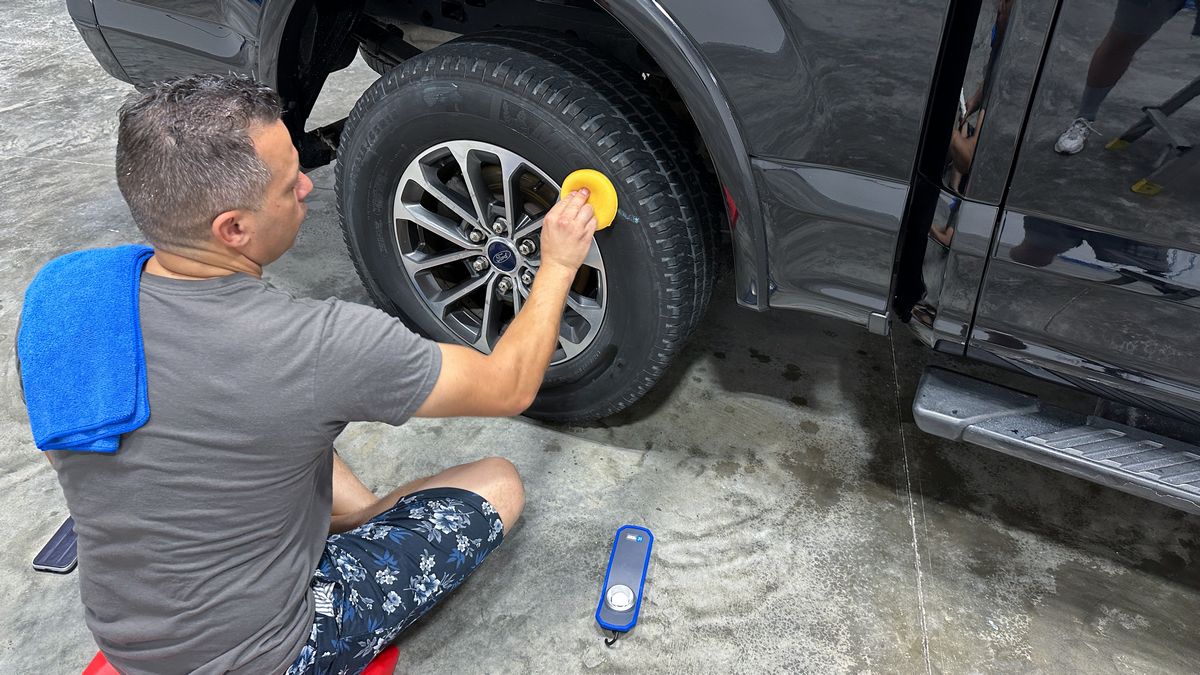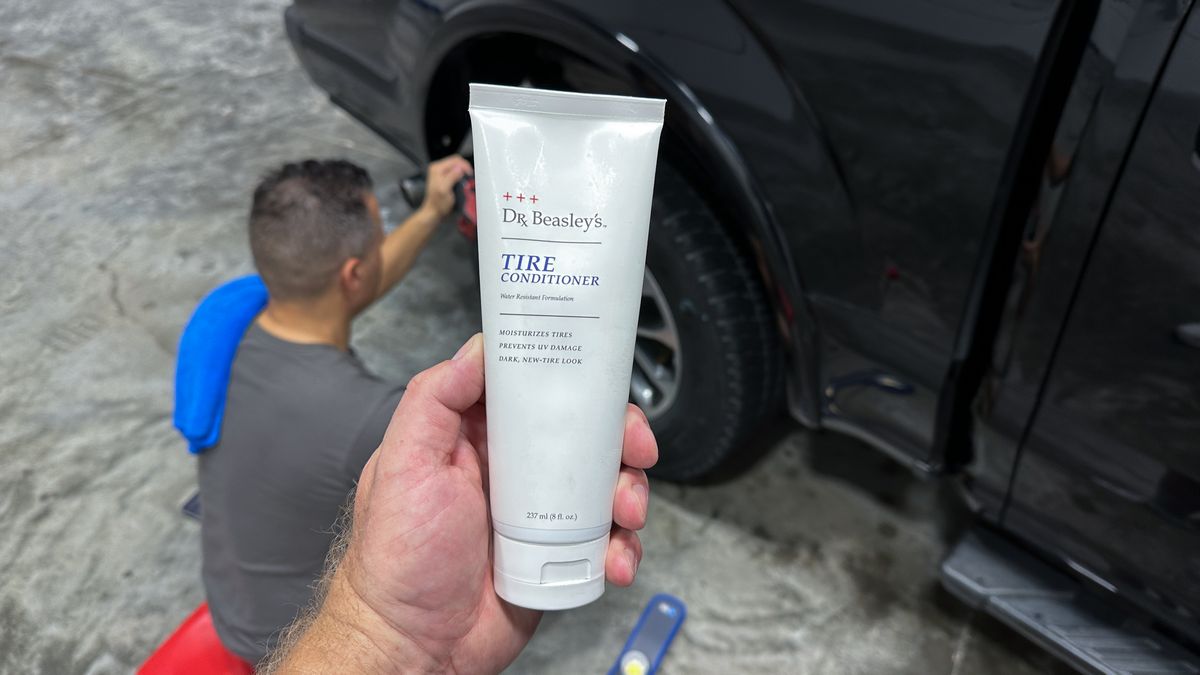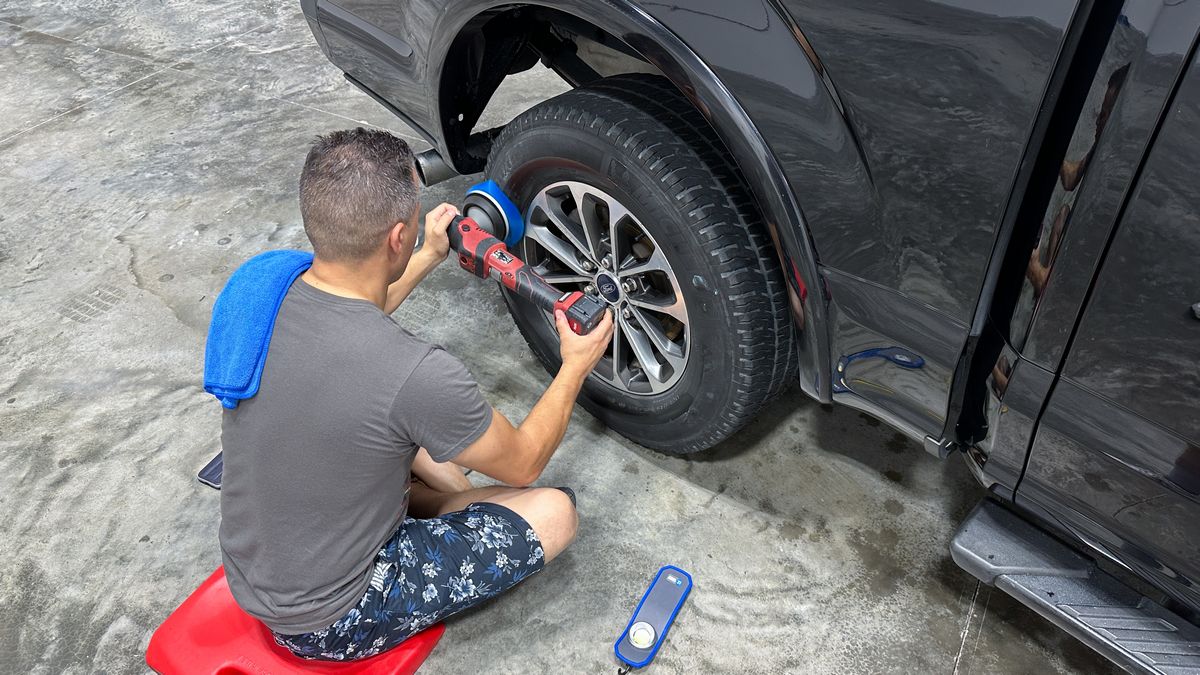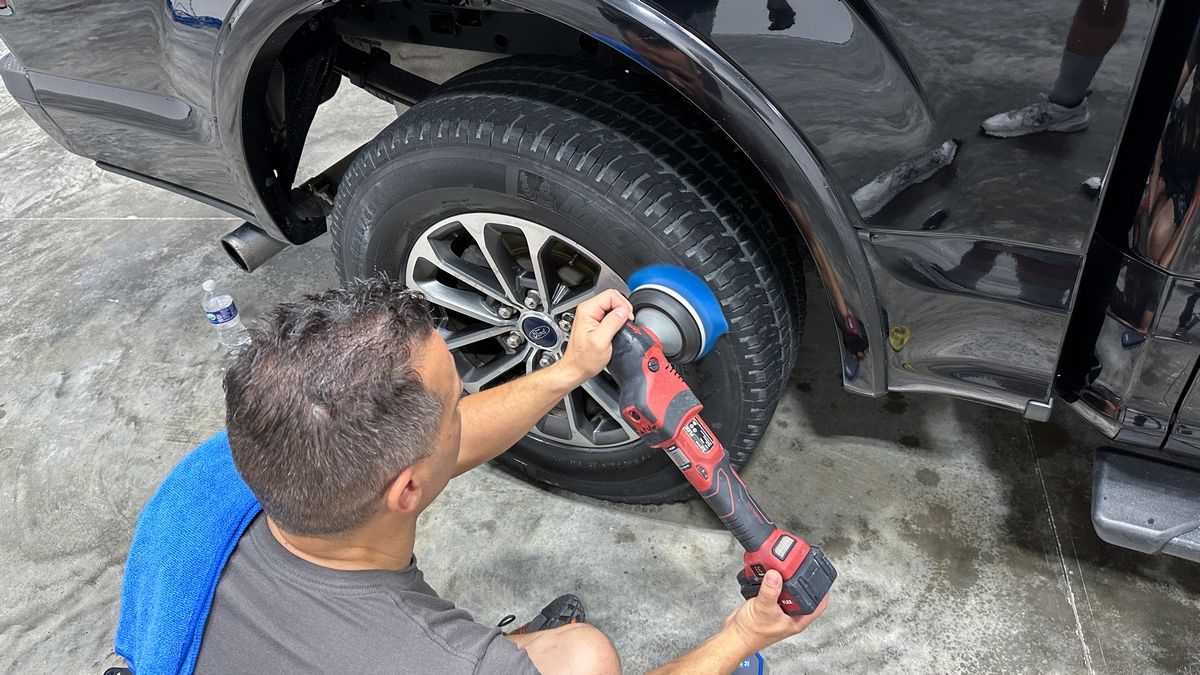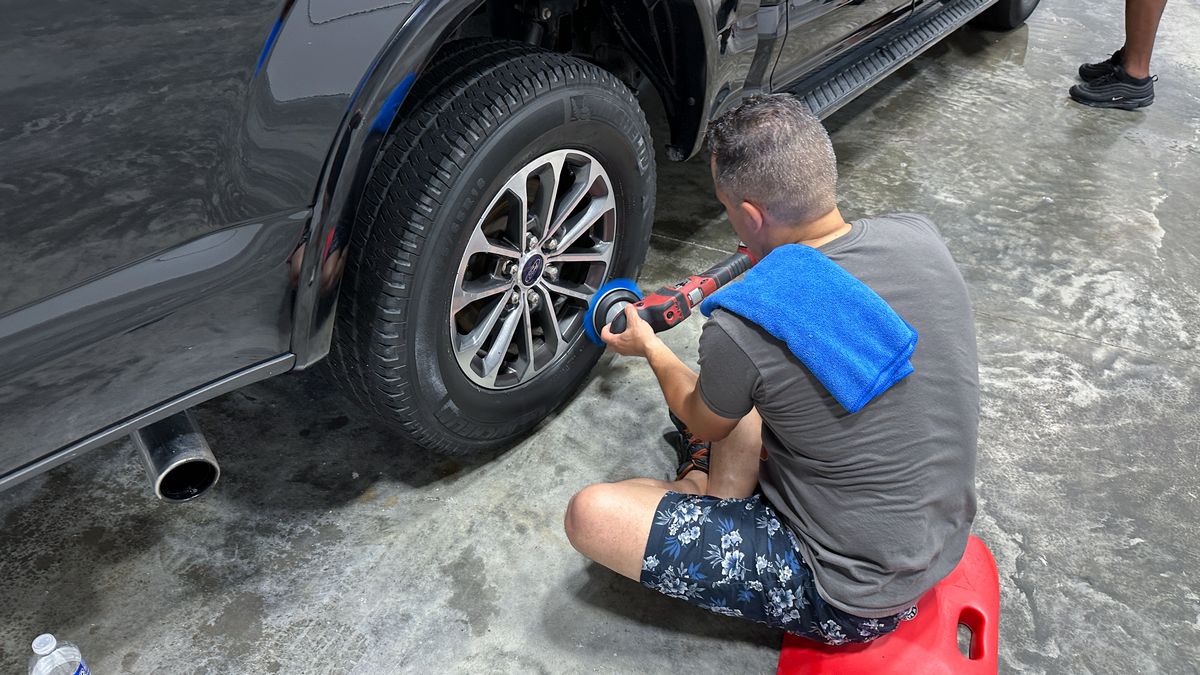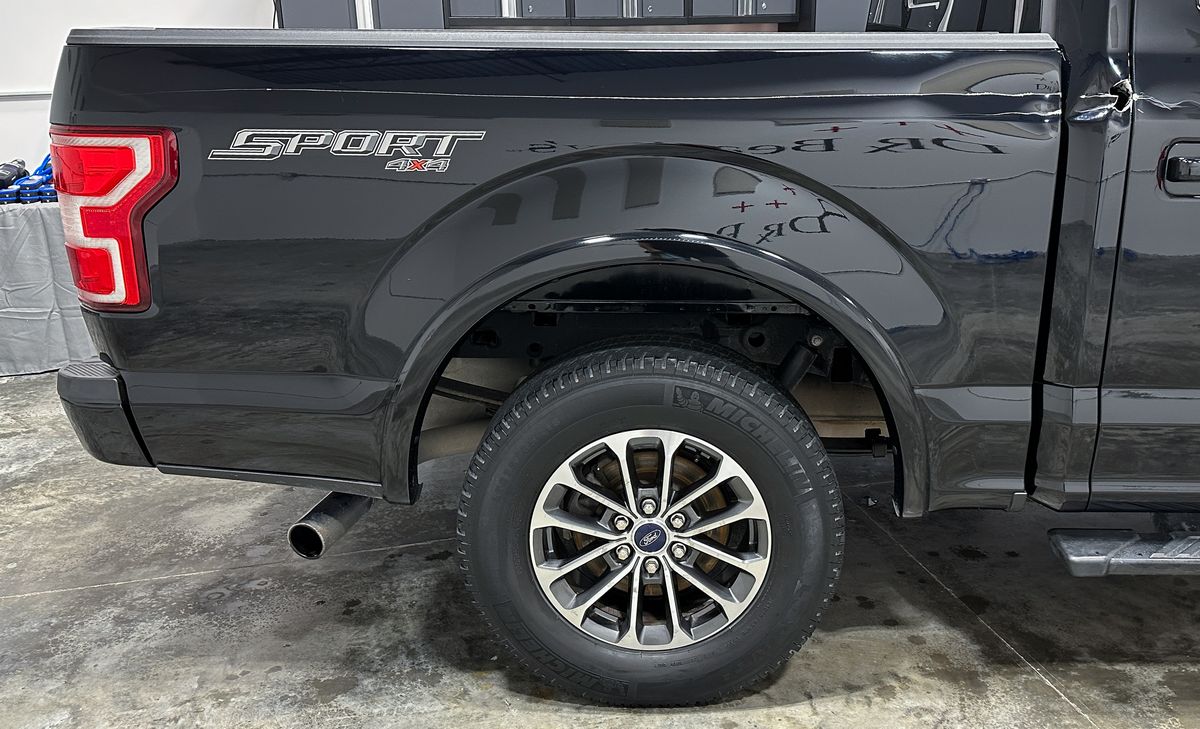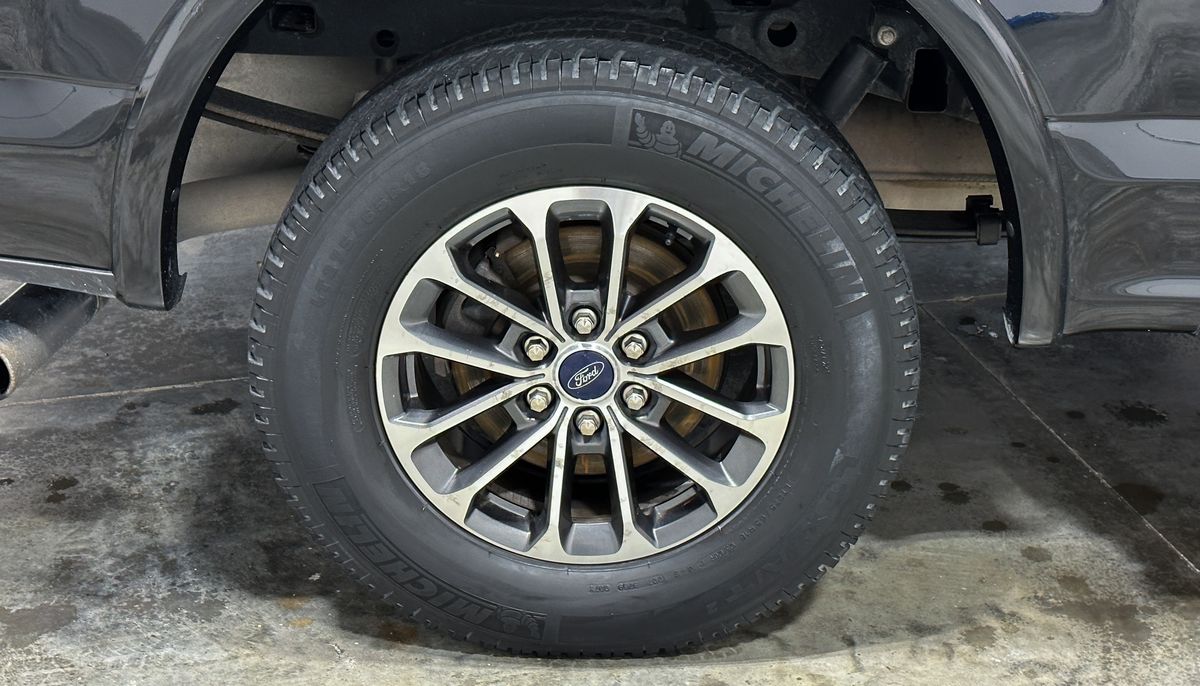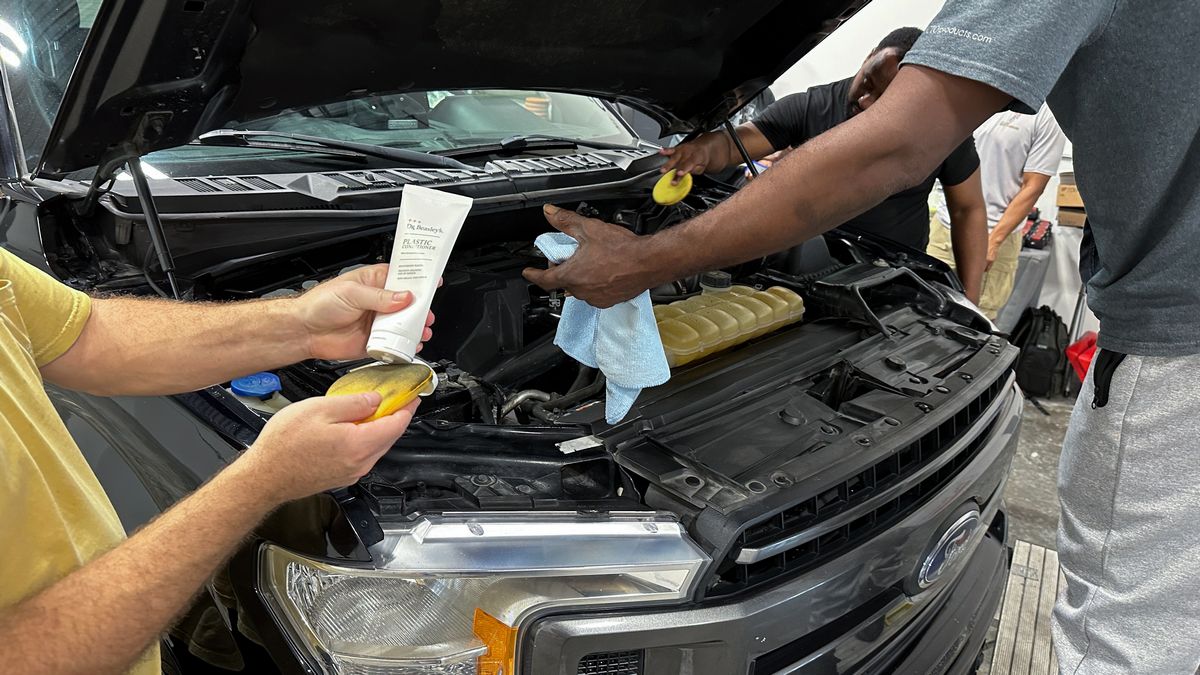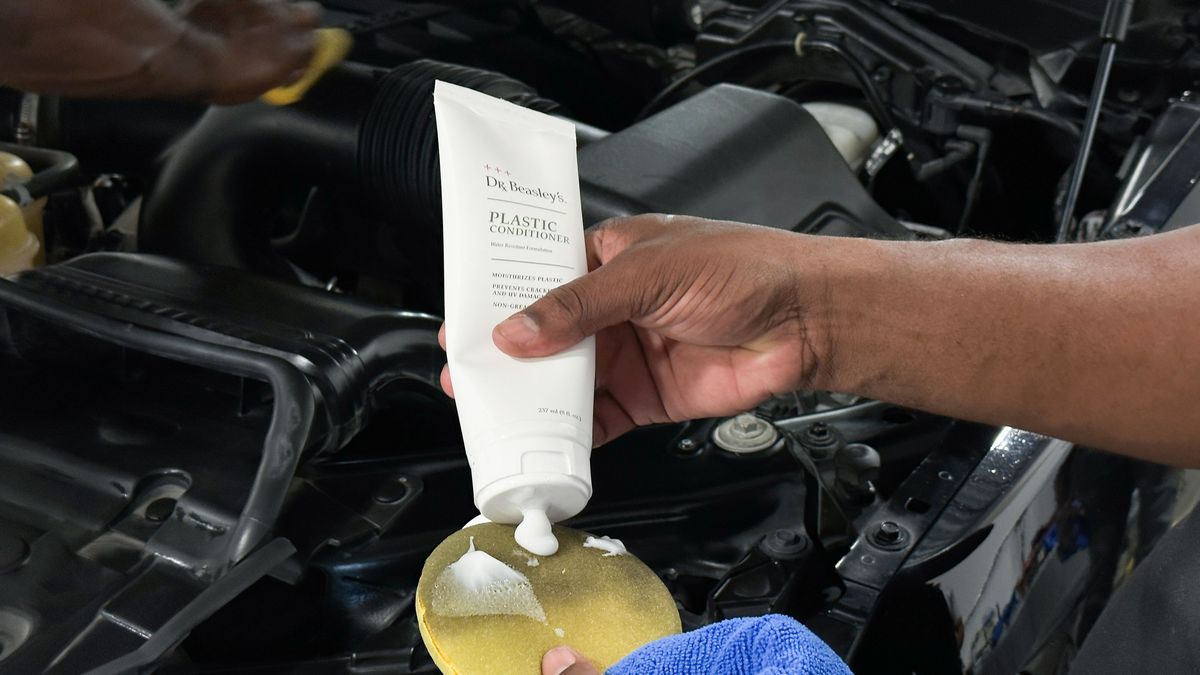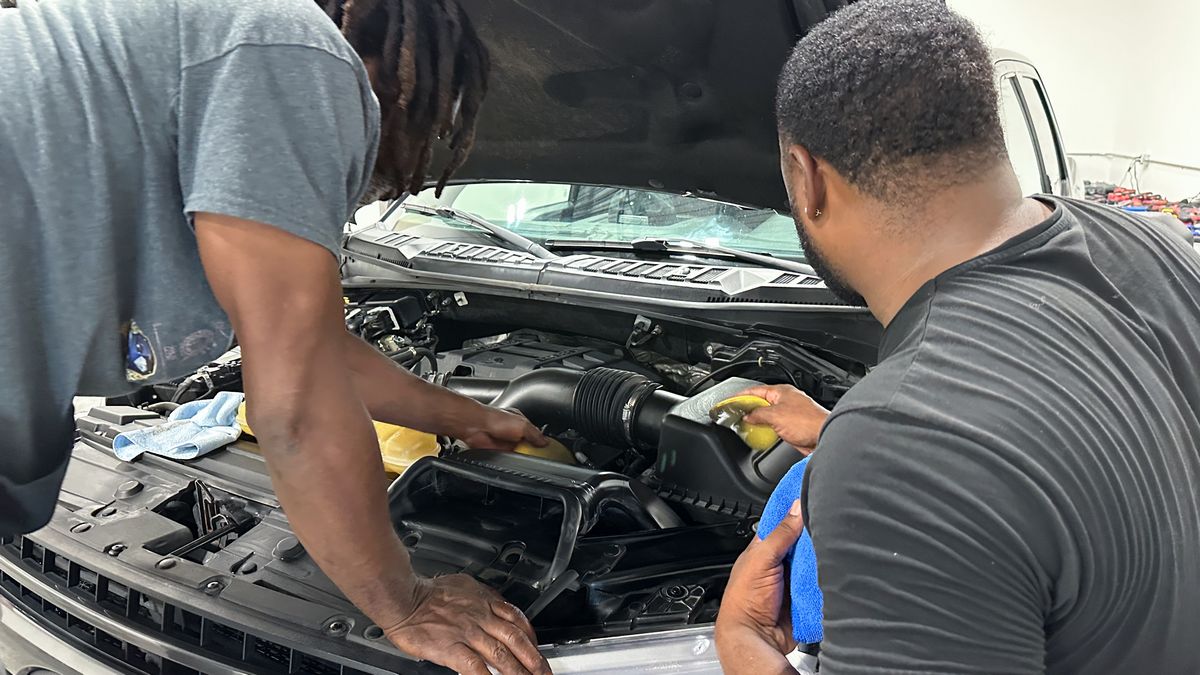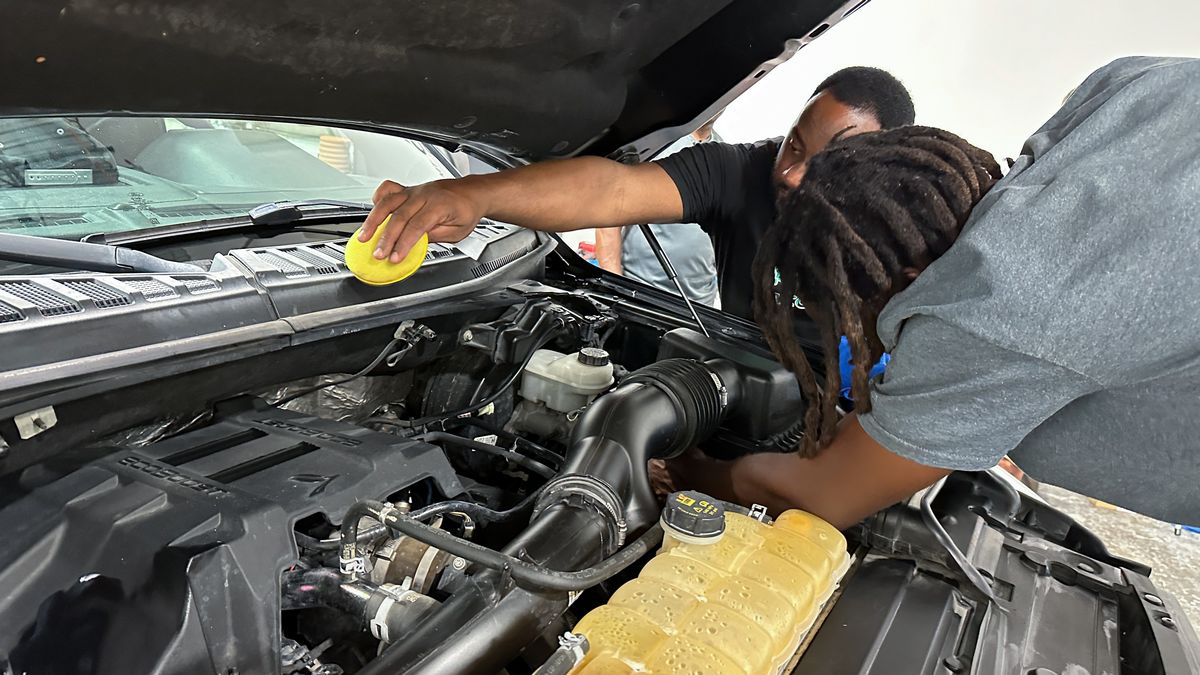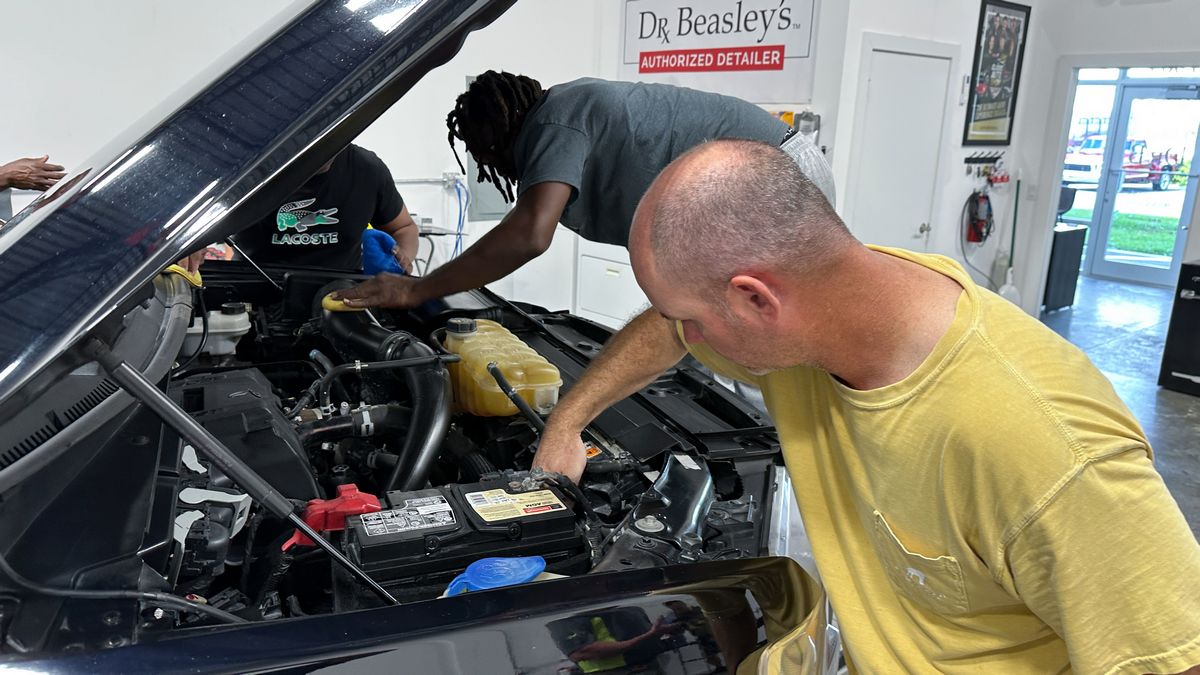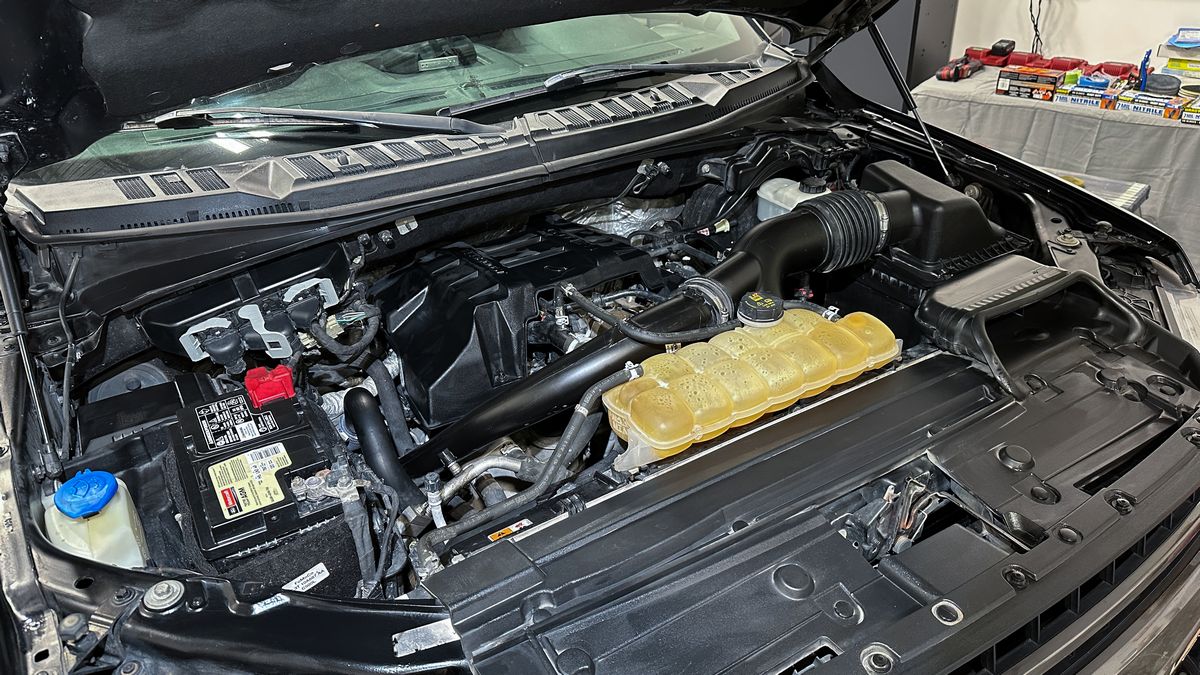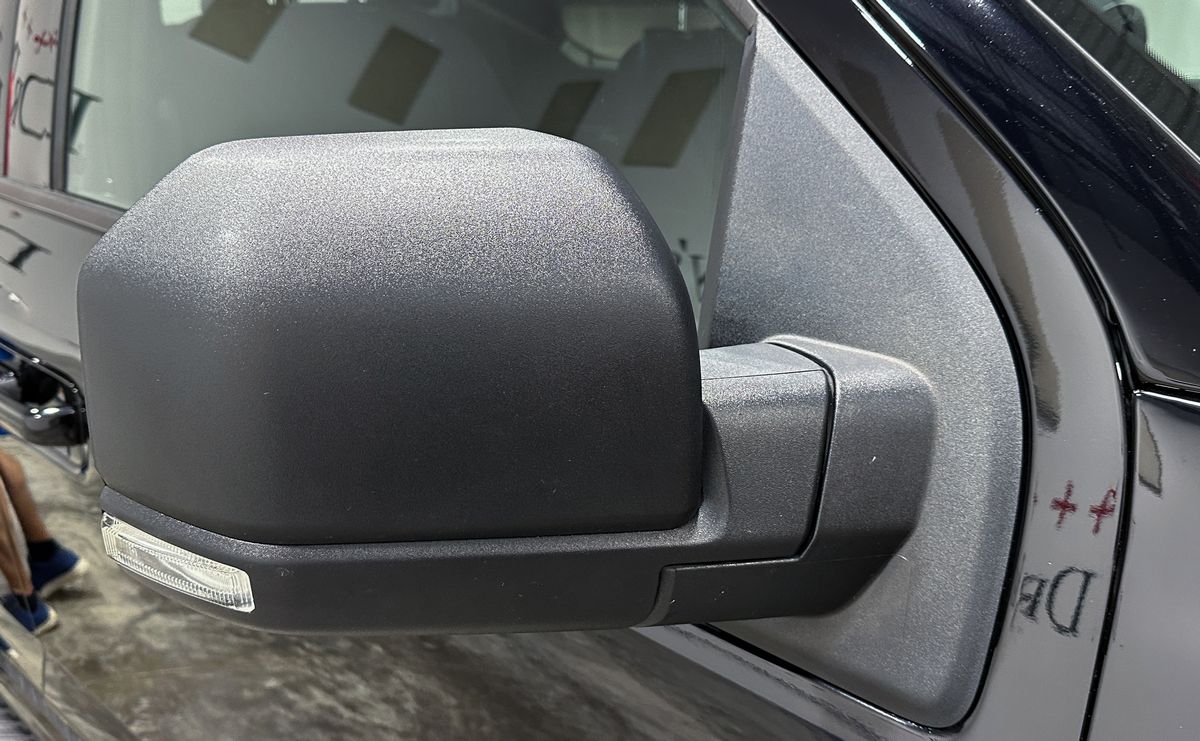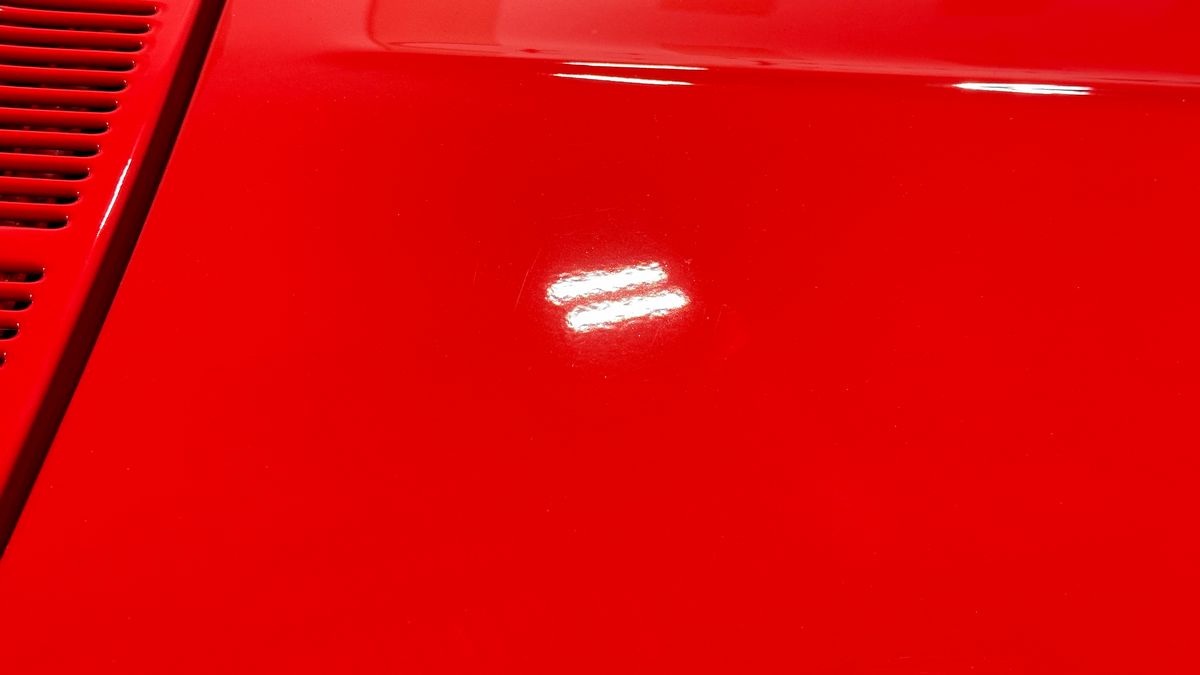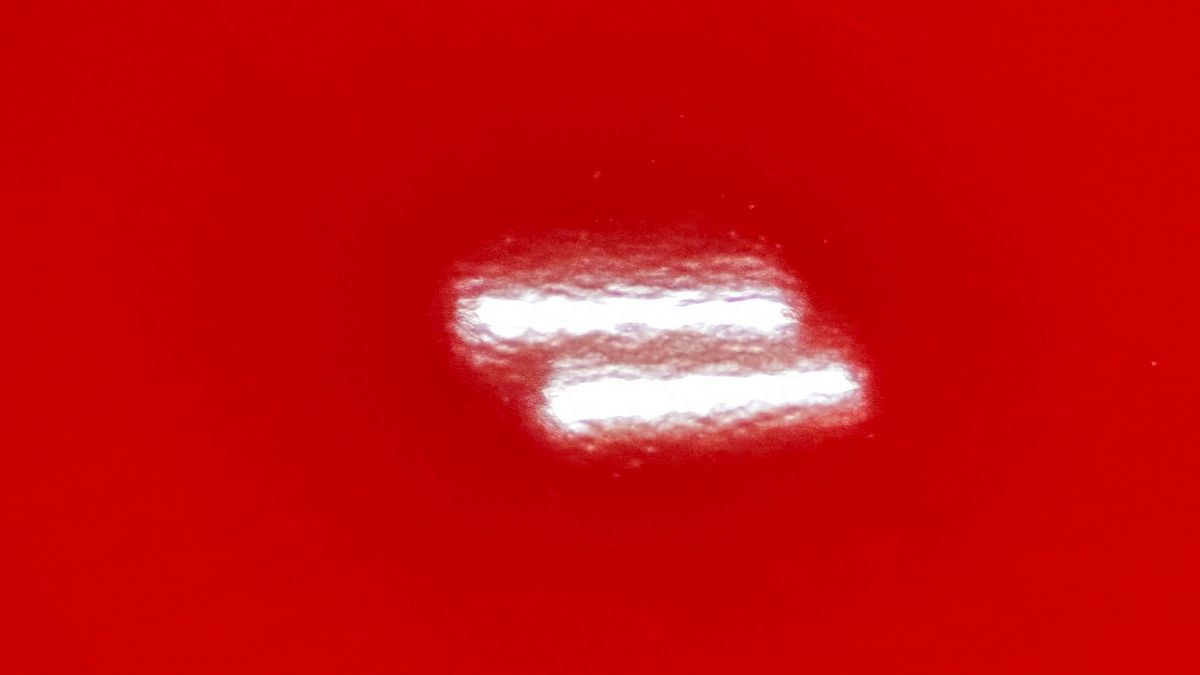

601 pictures - what a real hands-on detailing class looks like!

Continued...

One-Step Ceramic AIO Paint Correction

To recap, the class started out doing Multiple-Step Paint Correction and Ceramic Coatings, (the 1937 Ford), followed by One-Step Paint Correction and Ceramic Coatings, (the Mercedes-Benz), and now the class will learn One-Step Ceramic AIO Paint Correction.

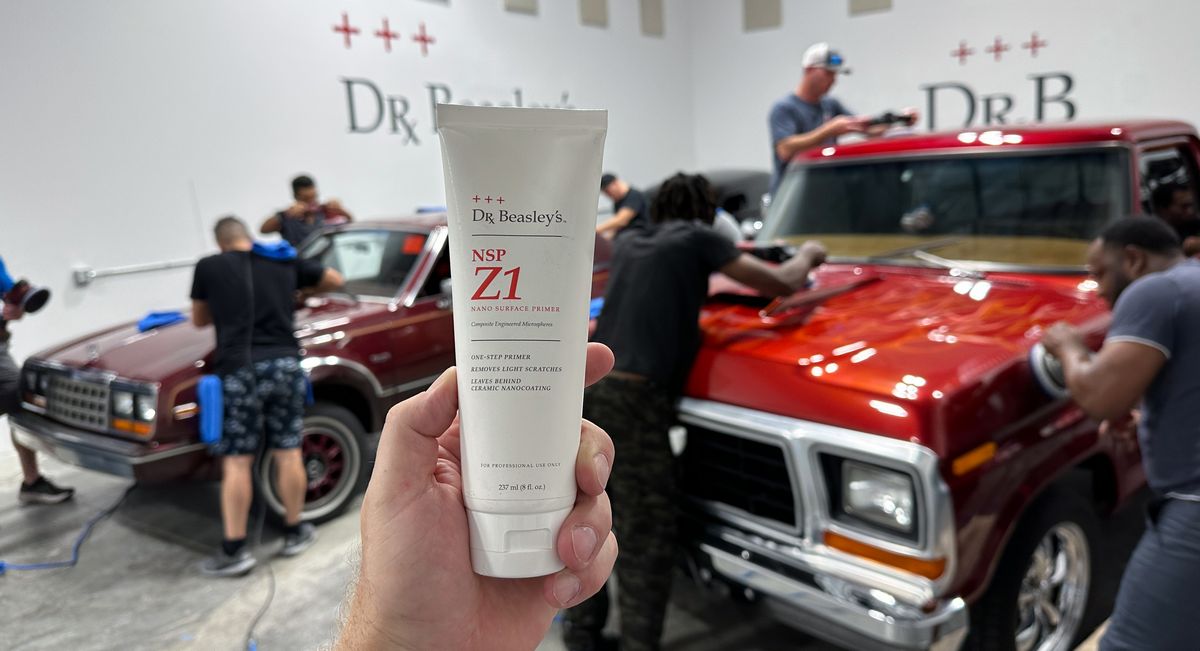
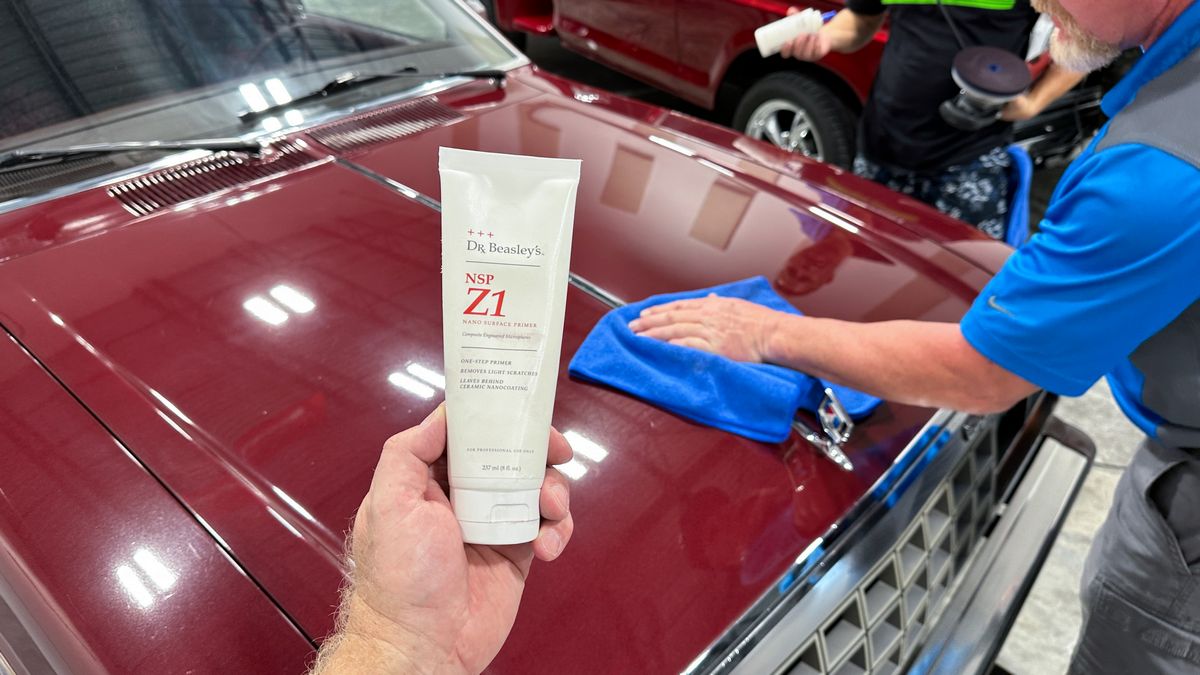
With this process, the class will use an AIO or All-in-One, which is the Dr. Beasley's Z1. The Dr. Beasley's Z1 will do 3 dedicated processes in a single step. Z1 will,

  1. Remove paint defects like swirls, scratches, water spots and oxidation.
  2. Polish the paint to a clear, smooth high gloss.
  3. Protect the paint with a layer of ceramic protection.

The BIG PICTURE idea is to learn 3 different approaches to detail cars, which if you detail for money, this is 3 different PACKAGES you can offer your customers. Which package your customer chooses depends upon their budget as well as the type and condition of their vehicle plus how they use it. There's a HUGE difference between doing Multiple-Step Paint Correction and Ceramic Coatings to a true show car like the 1937 Ford, where the goal is to create a perfect, swirl-free show car finish - and detailing a daily driver, that basically serves as a grocery getter and work transportation.

There are NO other classes that teach detailing with this approach. We incorporate REAL WORLD detailing in our classes whether you detail as a business or simply love to detail your own cars. No matter which type of person you are - you will still need to know these 3 different approaches and know when to use which process for your own cars or customer's cars.


Training cars to learn One-Step Ceramic AIO Paint Correction

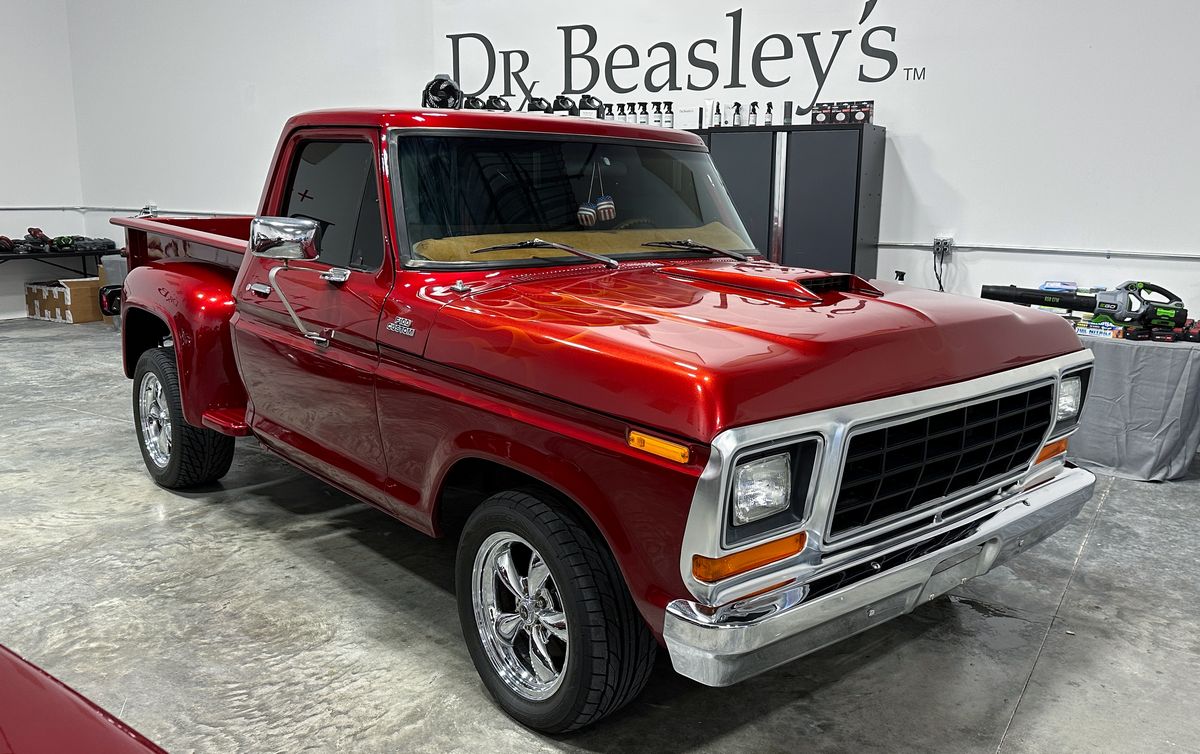
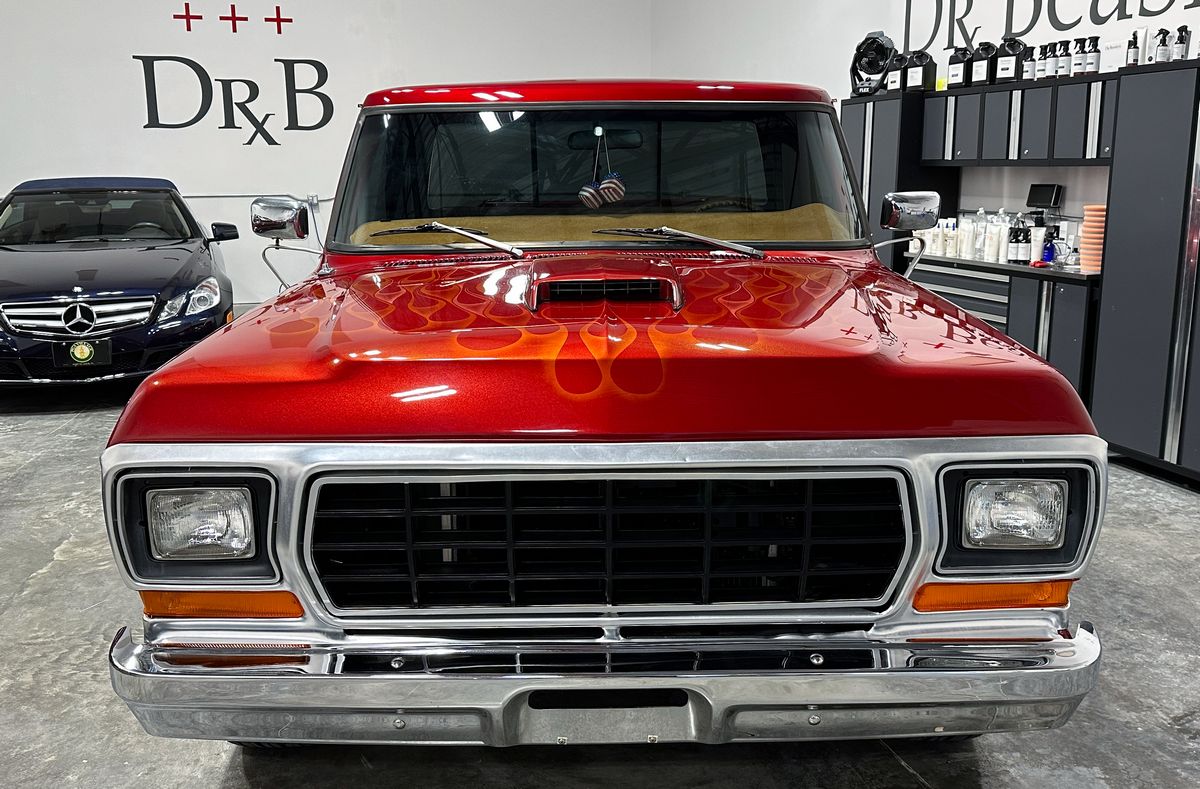
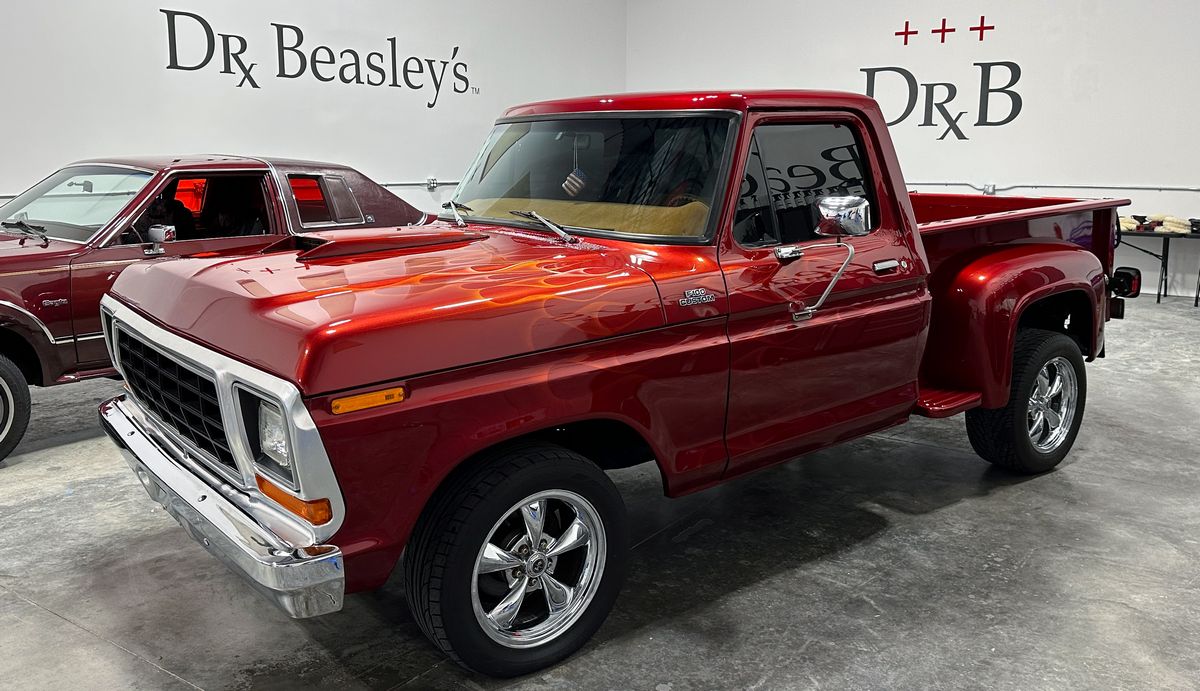
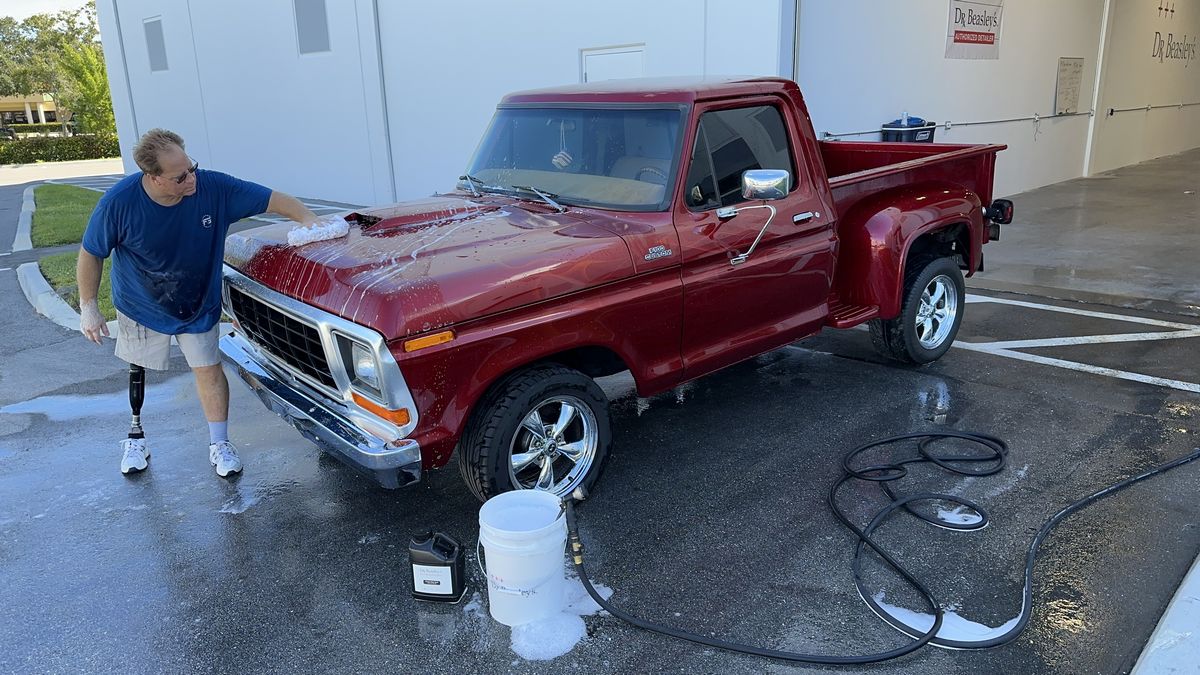
  1. 1979 Ford F150 Stepside Shorty Streetrod with a custom basecoat/clearcoat paint job
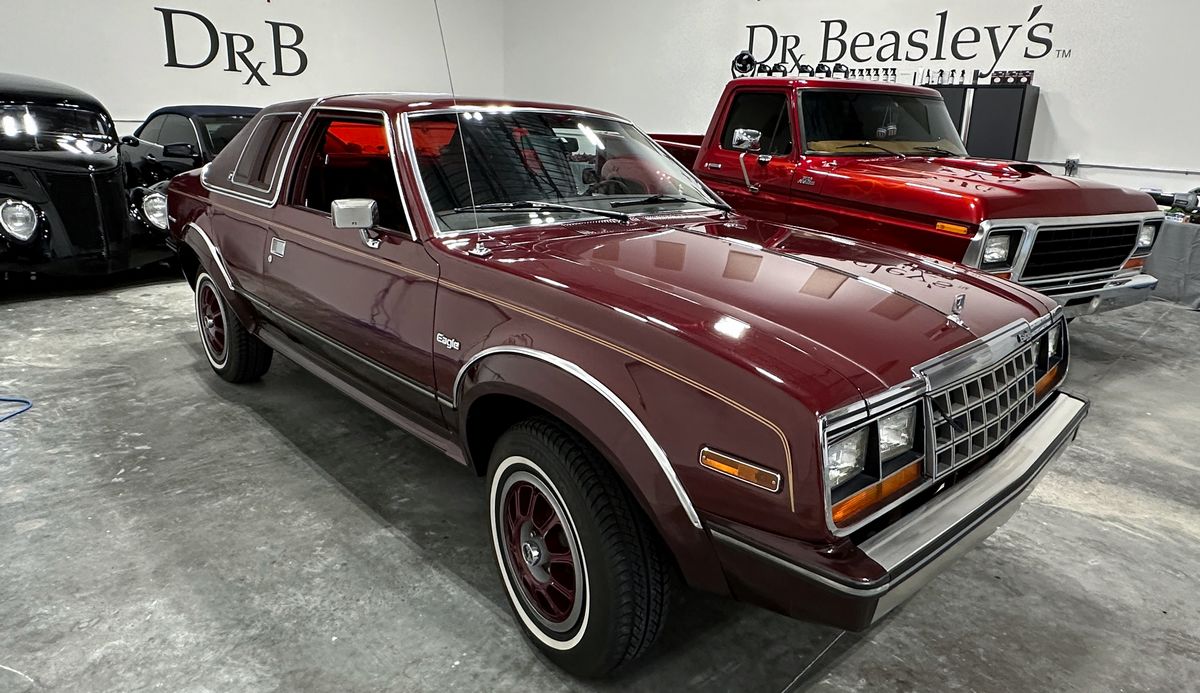
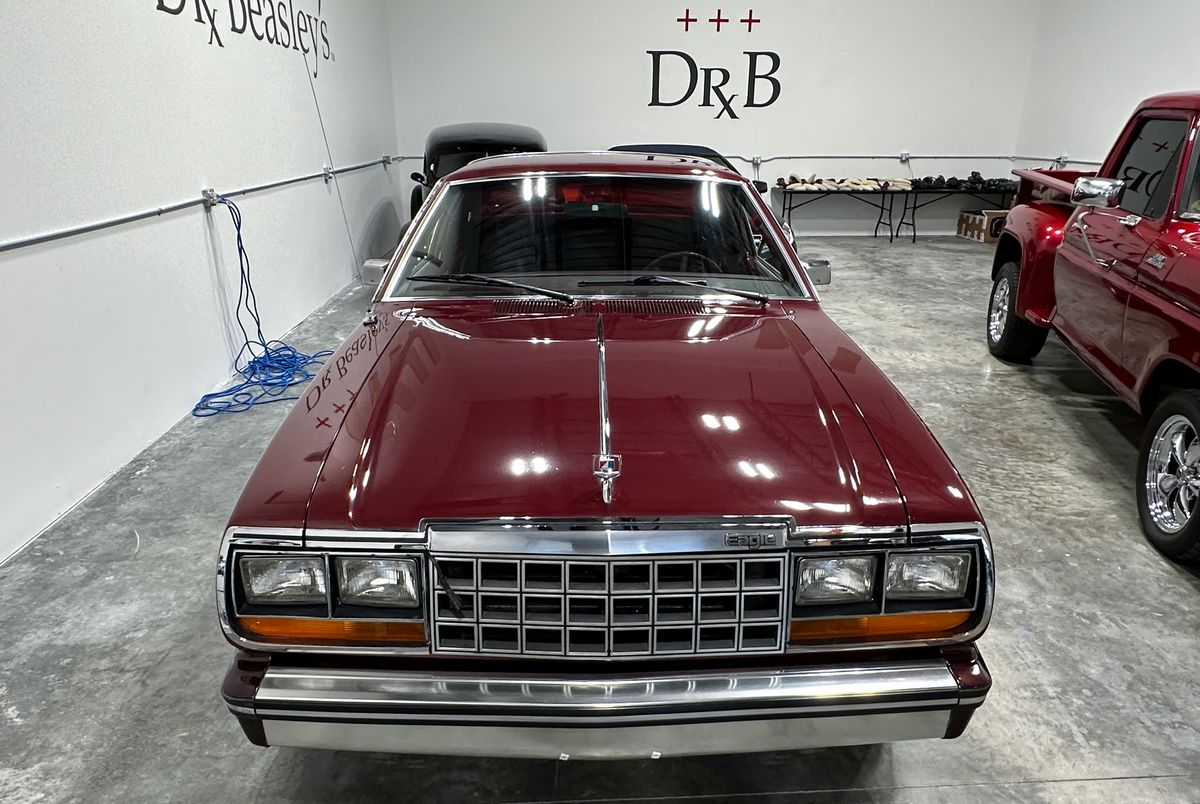
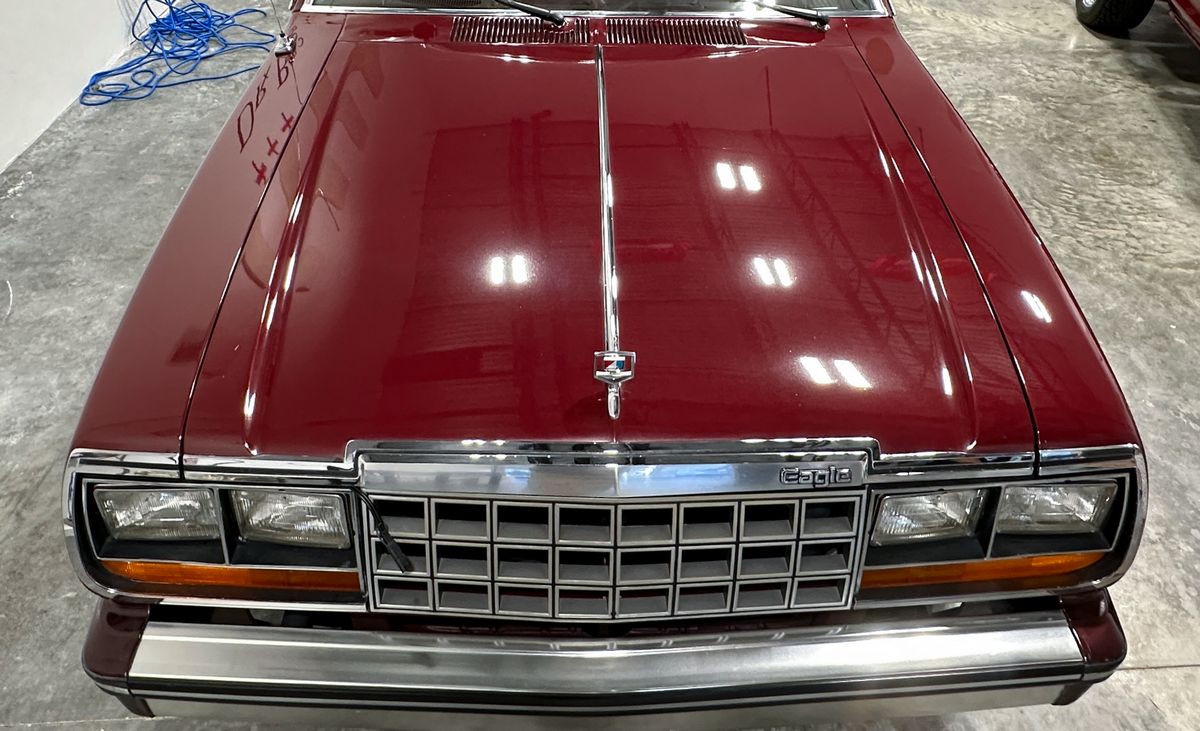
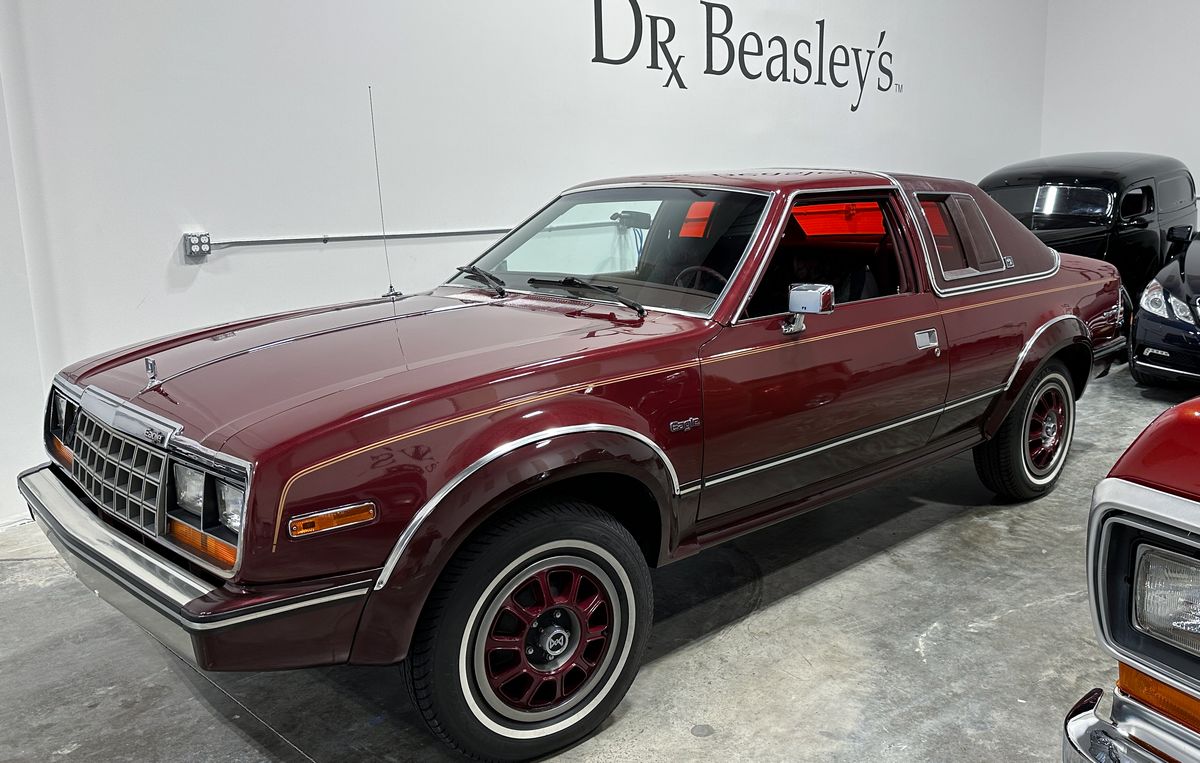
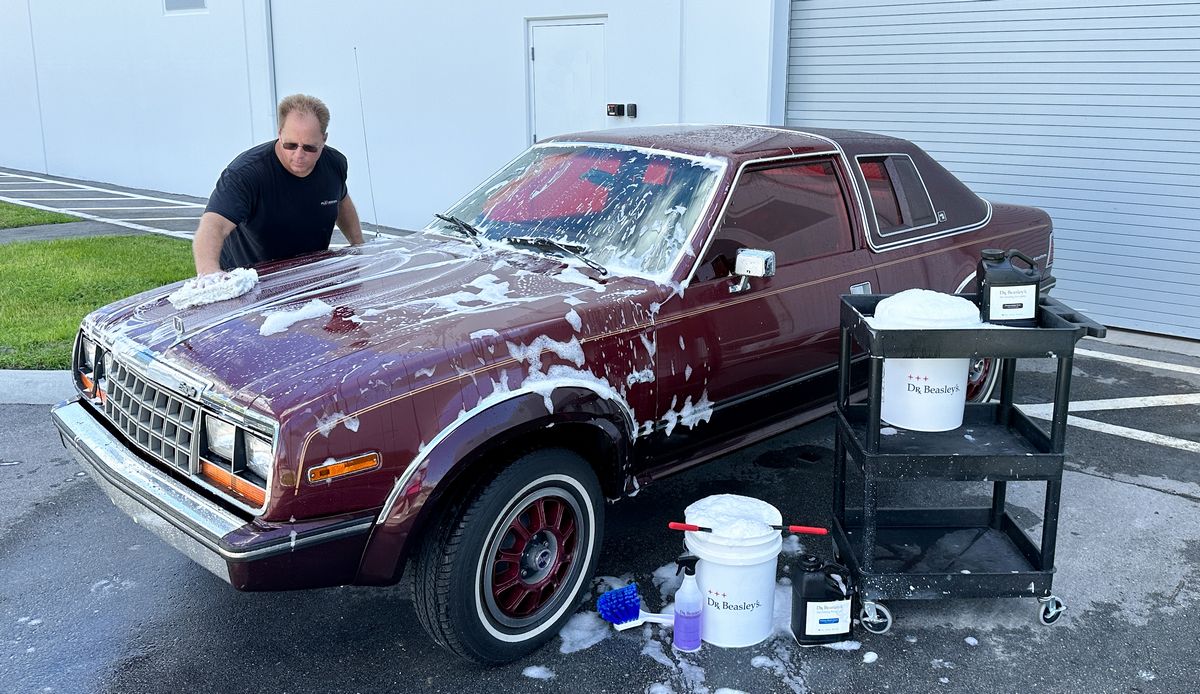
  2. 1982 AMC Eagle with original single stage paint and a vinyl top

We work real hard at bringing in real-world, unique and also fun vehicles to train on. For this class session, the class will have the opportunity to learn One-Step Ceramic AIO Paint Correction on a super cool classic truck and an original paint AMC Eagle.

Yours truly washed both the 1979 Ford Stepside Shorty and the AMC Eagle before the class started. I skipped the mechanical decontamination step on the Ford to let the class learn how to do this as a dedicated step after washing. I did however wash and mechanicaly decontaminate the panit on the 1982 AMC Eagle. We actually used the 1982 AMC Eagle for line of our LIVE Online Detailing Classes and you can watch the video here.
full


full


full


Go Time!
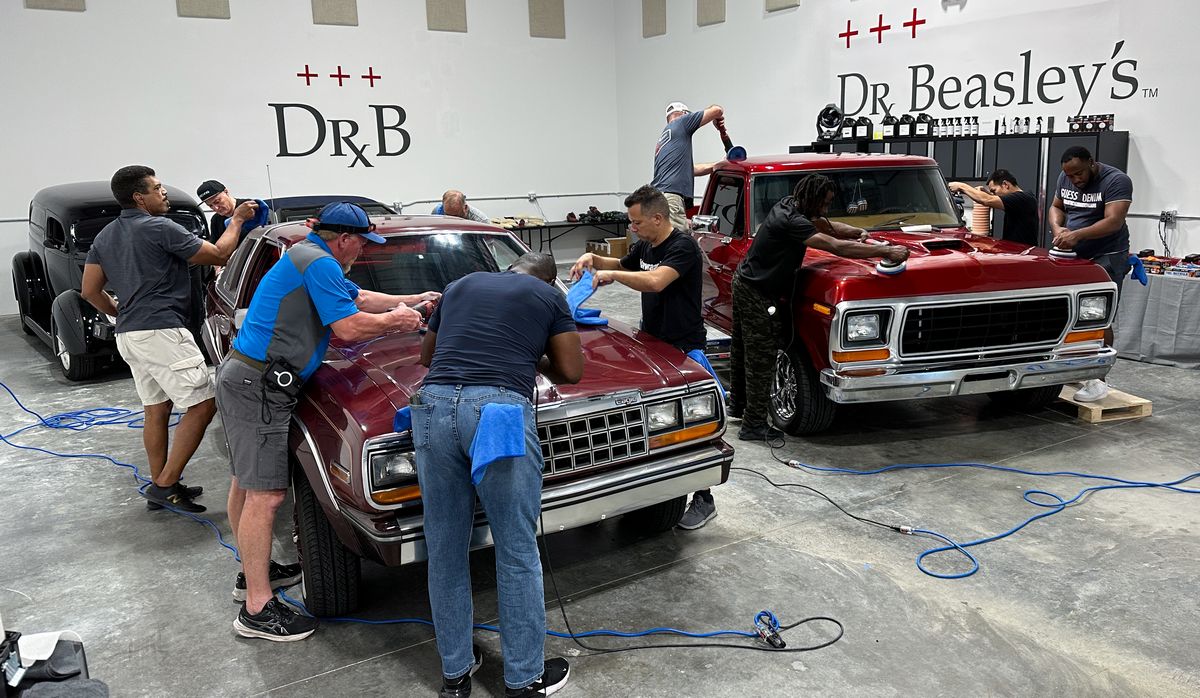
It's now late Friday afternoon. This class has already detailed 2 cars, washed 1 car and enjoyed the Dr. Color Chip Rock Chip Repair System presentation by Tony Pando. As well as had lunch. Next the class will tag-team these next two vehicles to round-out the topics, techniques, products and tools for this FIRST day of class. There are NO other classes with this much hands-on training in a single day let along 2 or 3 days. Most of the time, you would be sitting in a chair watching a PowerPoint Presentation. Take the challenge. TRY to find this many pictures showing YOU what you get to do for any other class on planet Earth. I challenge you. Try.


Mechanical decontamination
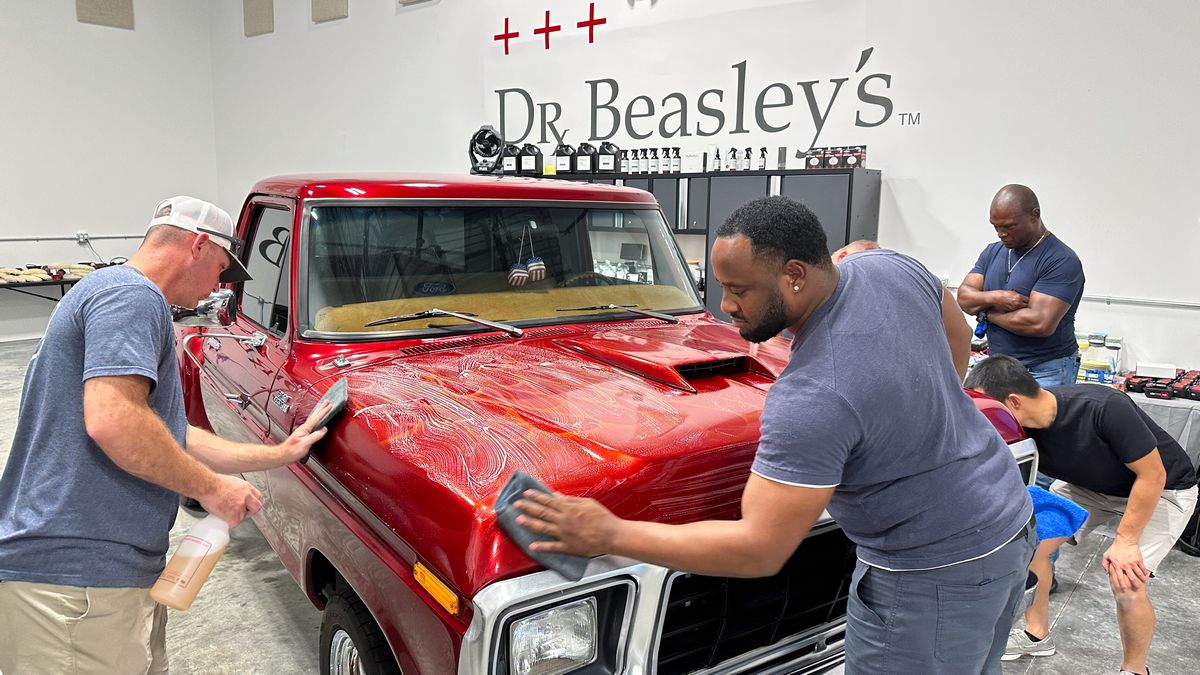
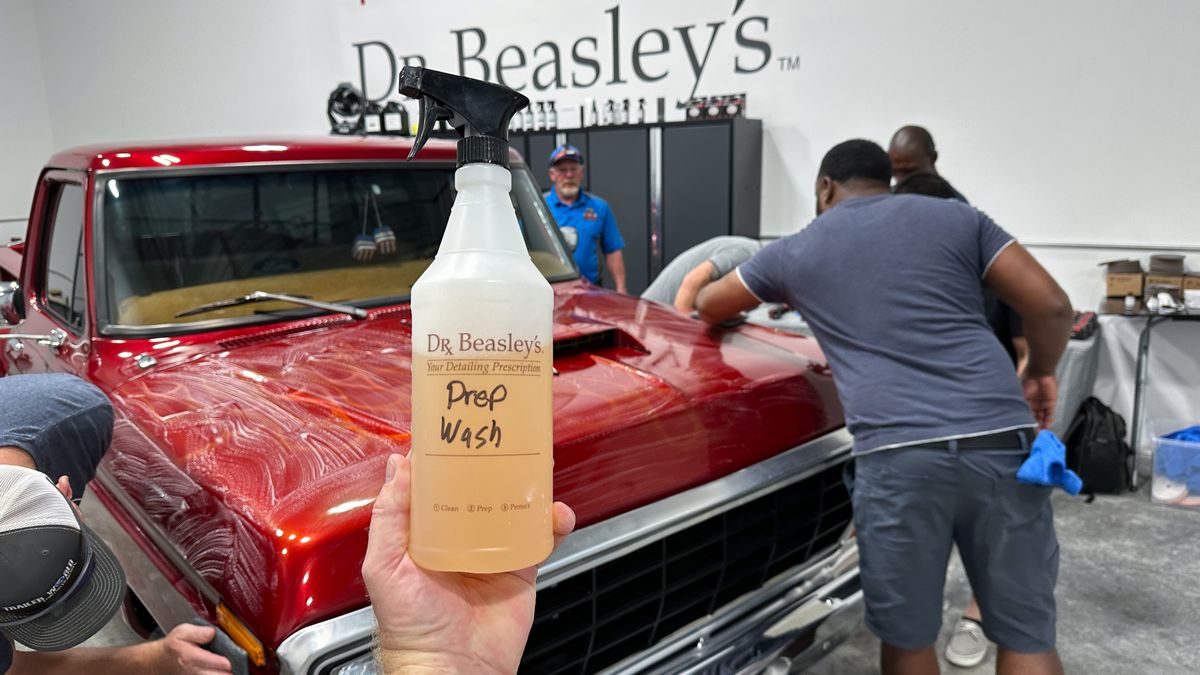
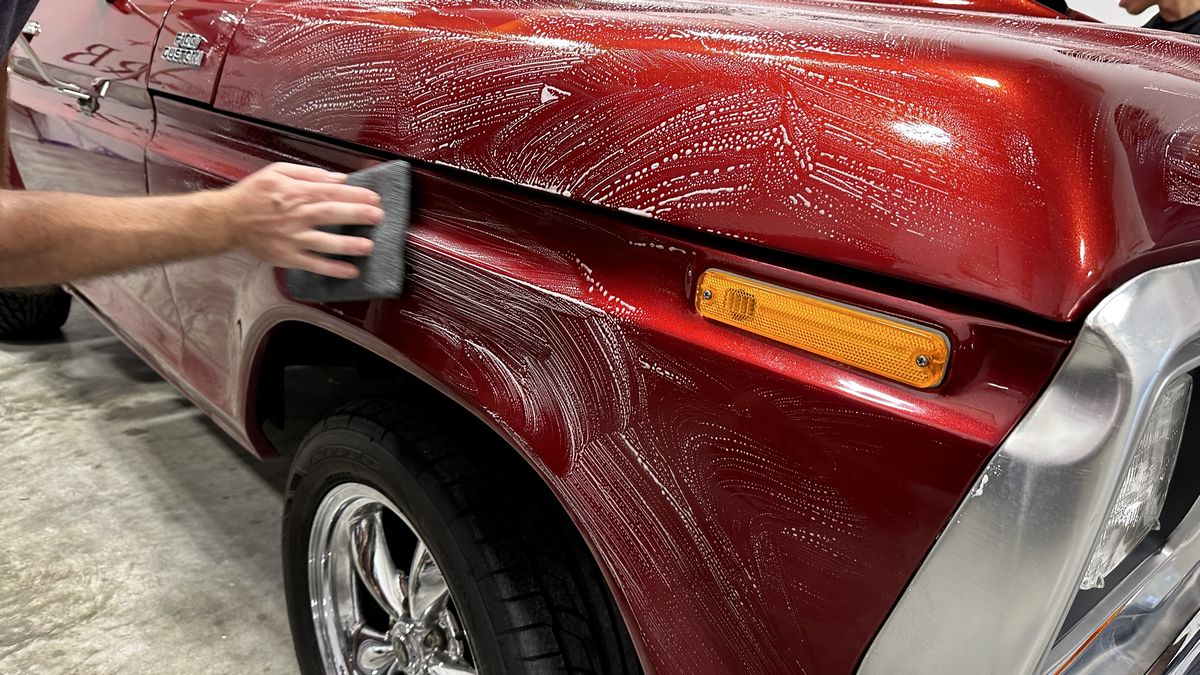
I washed the truck, but now the class will get to learn how to do mechanical decontamination as a stand-alone process. While it can save you time to do this step when you're washing the vehicle, there are actual reasons why to NOT do the mechanical decontamination step during the wash process and we share this reason in our classes.
full


full


full


full


full


full


full


full


full


full


full


full


full


full


full


full


full


full


full


full


full


full


full


full


full


full


full


full


full


full


full


full


full


full


full


Mike
 
Last edited:
More...

And here are the final results...

Friday Late Afternoon Session - Single step paint correction using orbital polishers and Dr. Beasley's Z1 Ceramic AIO or All-in-One.

1982 AMC Eagle - Original Single Stage Paint (rare)

We try to bring in a wide-spectrum of cars and different types of paint systems to provide the most well-rounded learning experience possible. This way, when our students return to their world they are the most prepared to tackle anything that drives up to their shop or garage.

full


full


full


full


full


1979 Ford F150 Stepside Shorty - Custom basecoat/clearcoat paint system

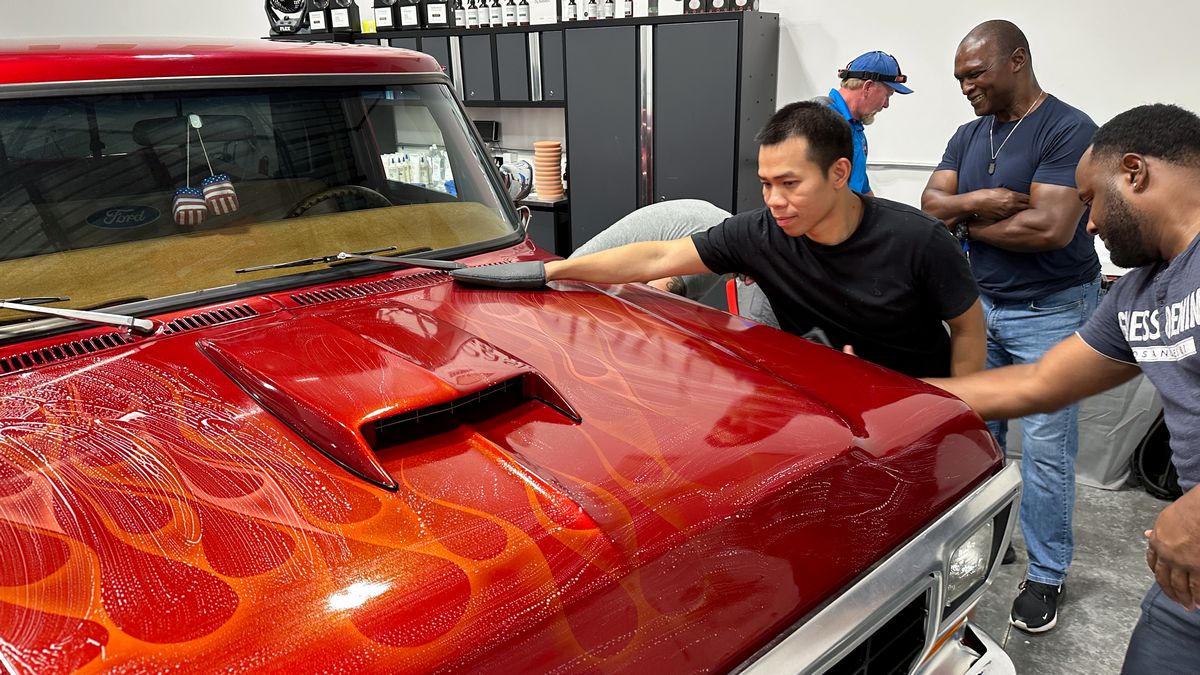
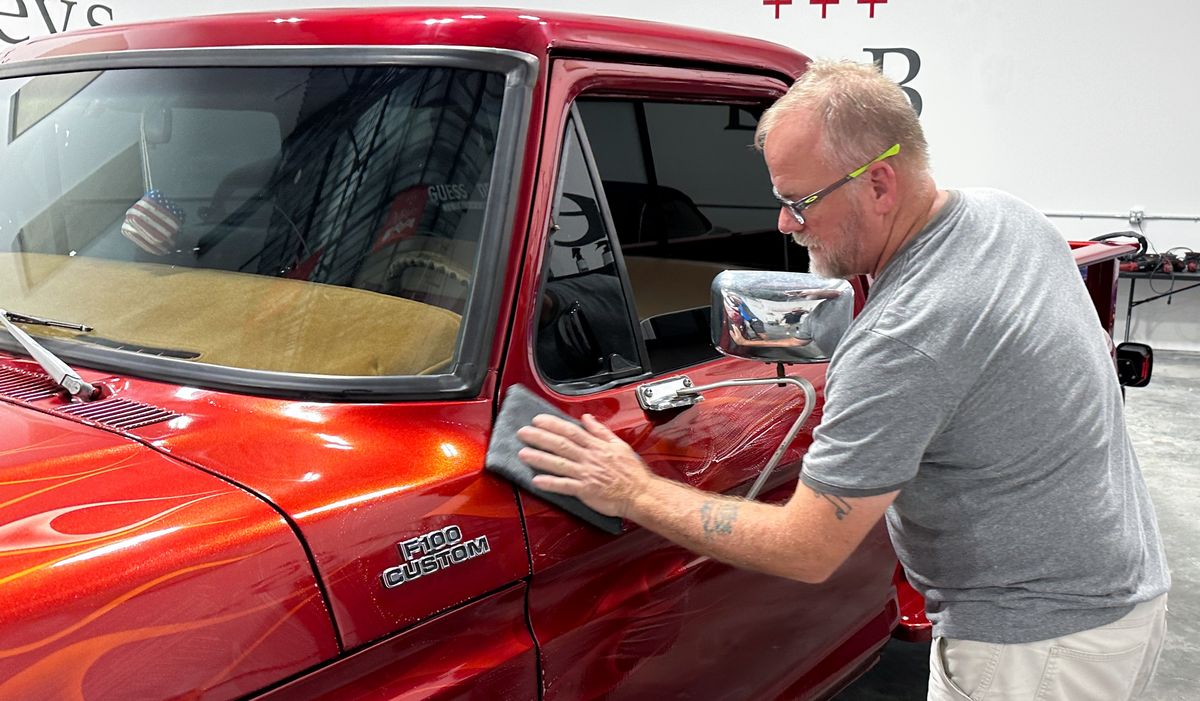
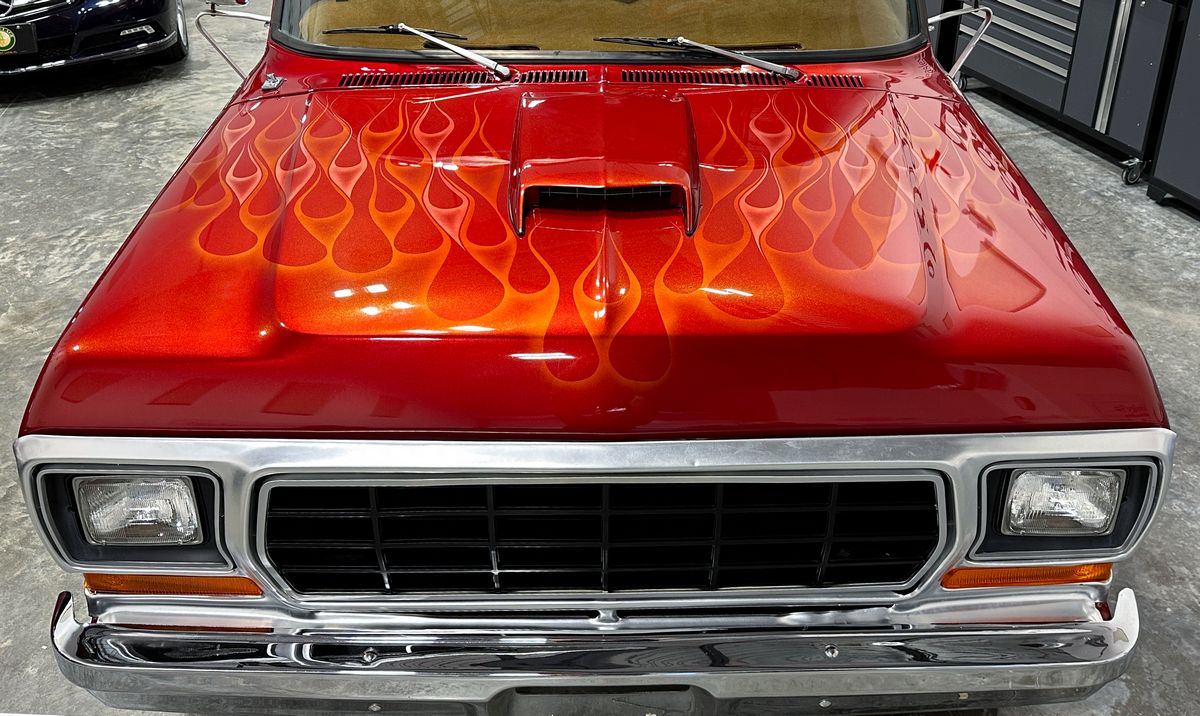
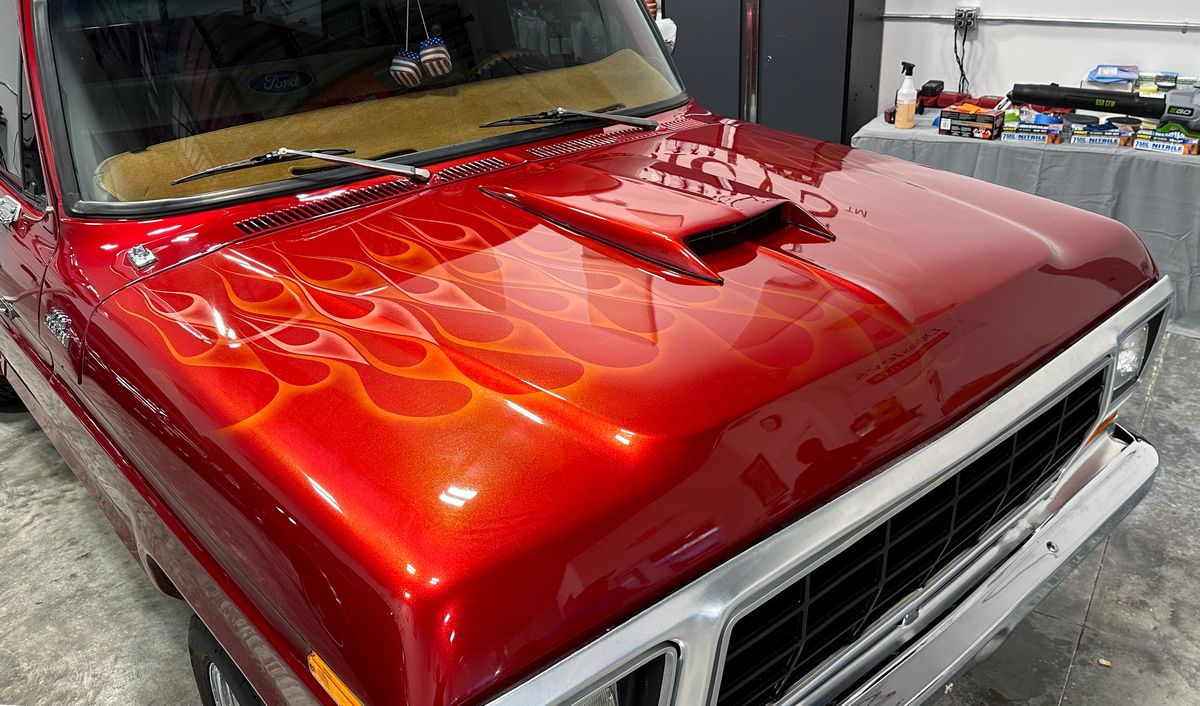
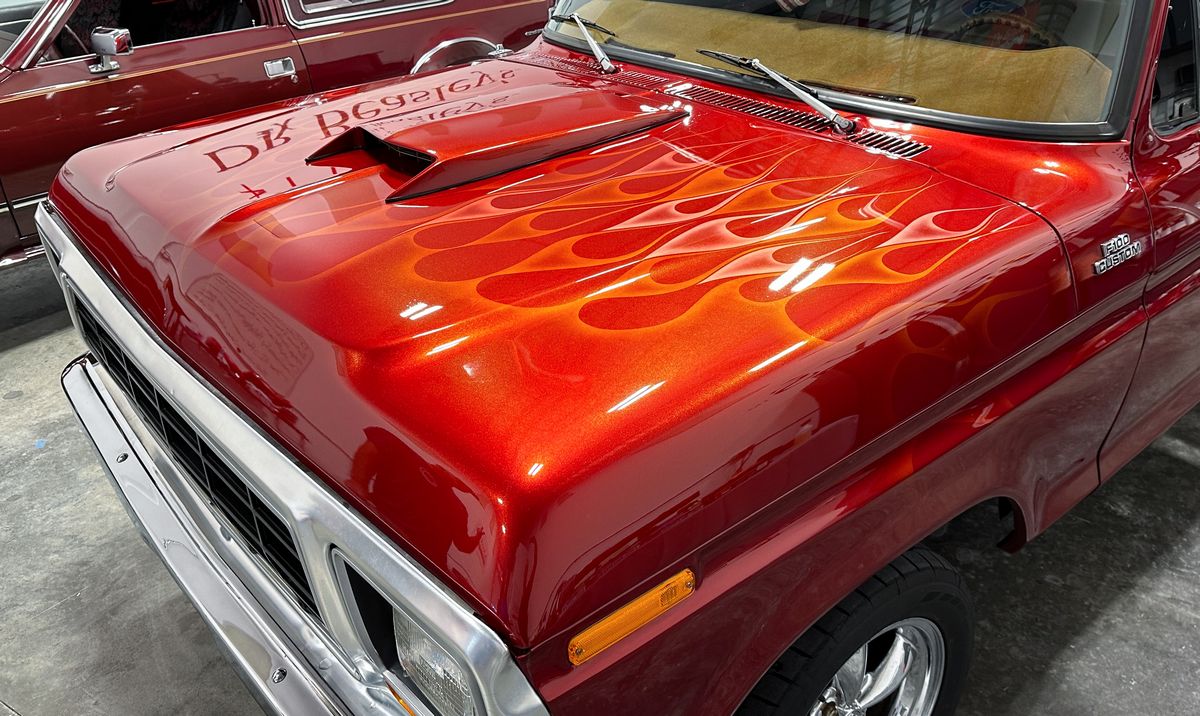
This custom built truck has a high dollar custom paint job including a wild flame job under the clearcoat finish. When it arrived here the paint was filled with the normal swirls and scratches and also holograms from the misuse of a rotary polisher. The class fixed this paint job using Dr. Beasley's Z1 Ceramic AIO.

full


full


full


full


full


full


:)
 
Last edited:
More....

Saturday Morning Session - Extreme Prep Wash

The first step in detailing a car is normally to wash the car using one of the many options available. What we teach in our classes is how to do an EXTREME Prep Wash and the reason for this is because a proper wash job will save you time, steps, energy, products, towels and create a vehicle that is surgically clean for all the next steps of the process.

The correct order of steps to do an Extreme Prep Wash

Doing a prep wash can include cleaning every aspect of a vehicle, or just the wash process. In this section I’ll cover every area you can clean during the washing process or as I like to call it, when doing the wet work. Of course, some of the listed areas to address may not apply, for example cleaning a canvas cloth top if the car has a painted roof or doing headlight correction if the car is brand new.

Work smarter, not harder

We all hear this cliché thrown around rather loosely, the problem is we’re often not told how to execute a process in order to actually fulfill the spirit of the cliché. I will show you how to work smarter and not harder.

The way you work smarter instead of harder during a prep wash is simply to avoid repeating steps. This means, washing the vehicle and cleaning any of the various areas that can be cleaned in the correct order so as to not repeat or duplicate steps.

Topics covered and the order to do each step when doing an Extreme Prep Wash. Feel free to modify to fit the vehicle and/or your detailing style or environment.

  1. Inspect for tar, sap, dead bugs and bug splatter.
  2. Headlight correction.
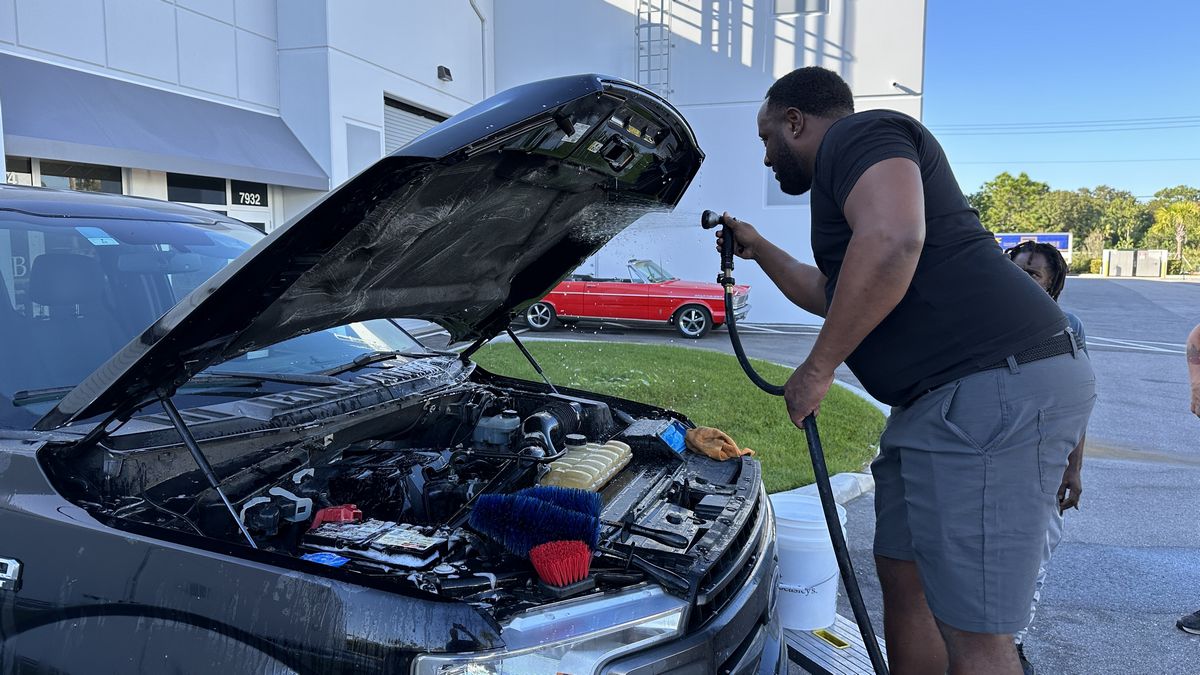
  3. Wet wash engine detailing.
  4. Topical and/or Sub-surface glass polishing.
  5. Wheel area – Rims, Tires & Wheel Wheels.
  6. Cleaning canvas cloth tops.
  7. Cleaning vinyl tops.
  8. Chemical decontamination.
  9. Wash car from the top down.
  10. Forgotten areas – fuel doors, fender lips, lower body panels, license plates, wiper arm facia, grills, emblems, badging.
  11. Hand or machine scrub neglected plastic – fender flairs, running boards, body cladding.
  12. Thorough rinse.
  13. Mechanical decontamination.
  14. Final rinse.
  15. Dry the car.
  16. Open all doors, trunk lid and hood, this is called stretching – wipe down all jambs.


Note: The reason you want to inspect for and remove any tar specifically before washing the car is so you don’t contaminate your wash mitt with tar. Kind of takes the wash mitt out of action.


Wet Work Table
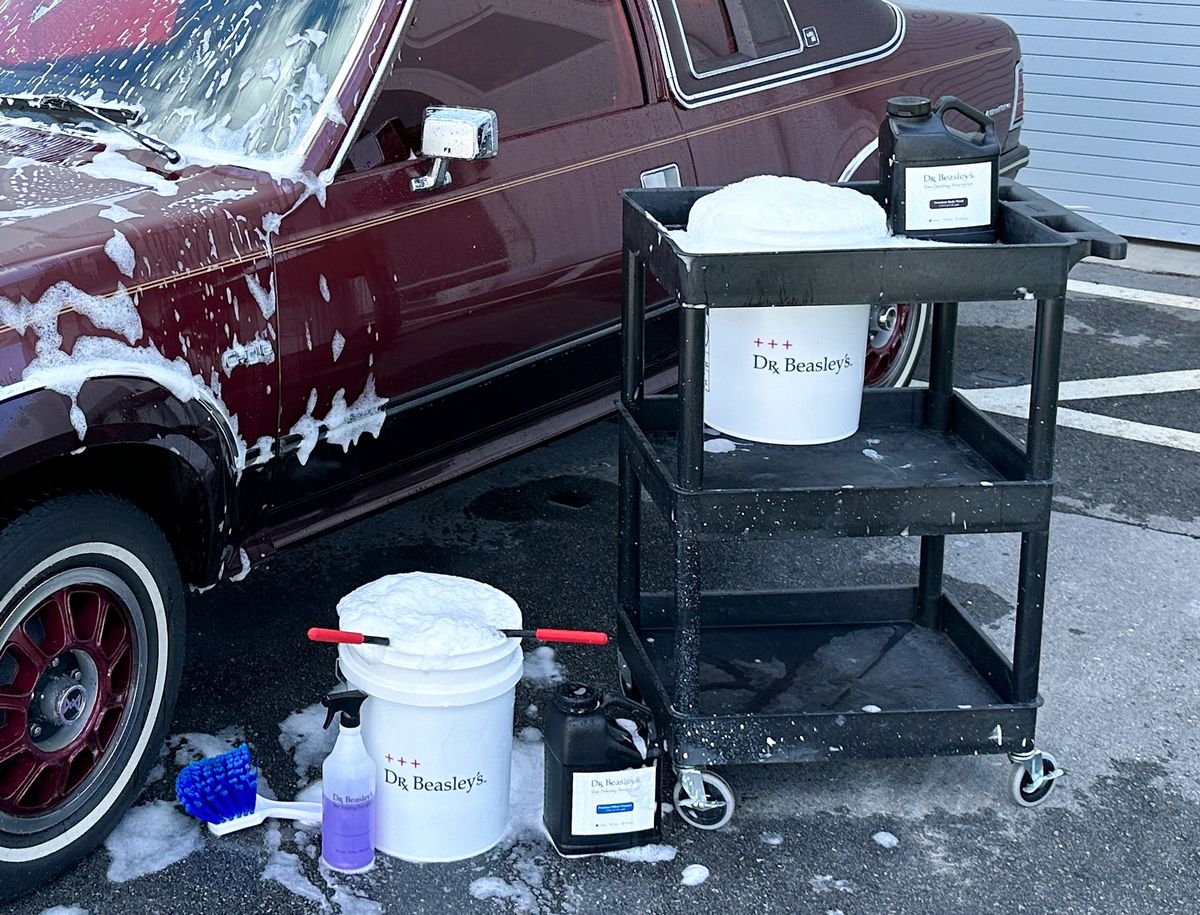
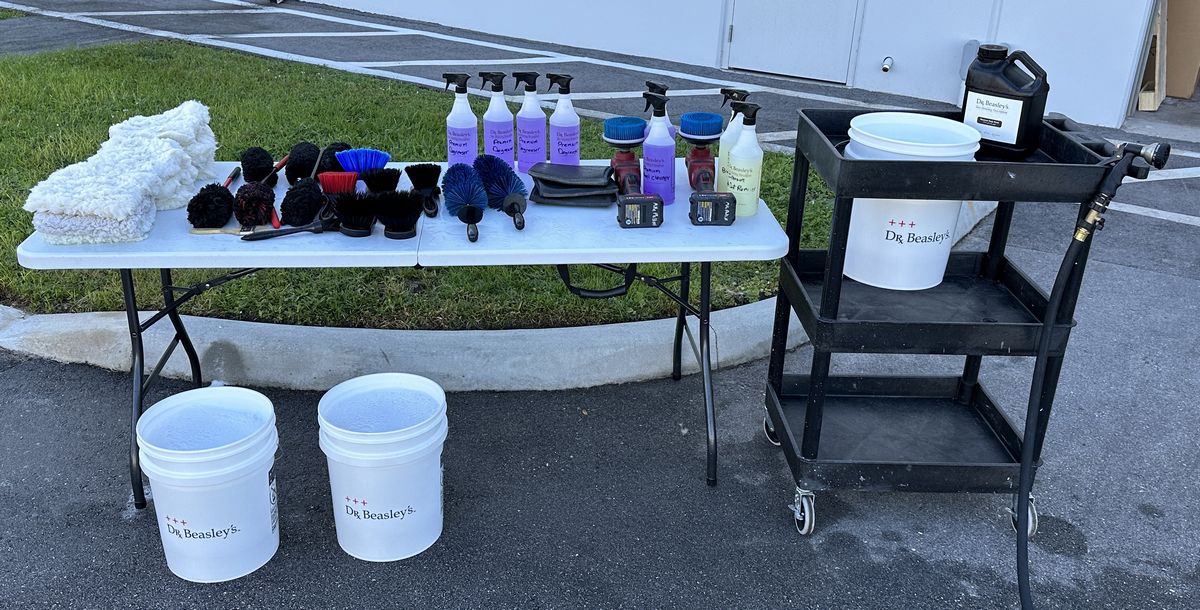
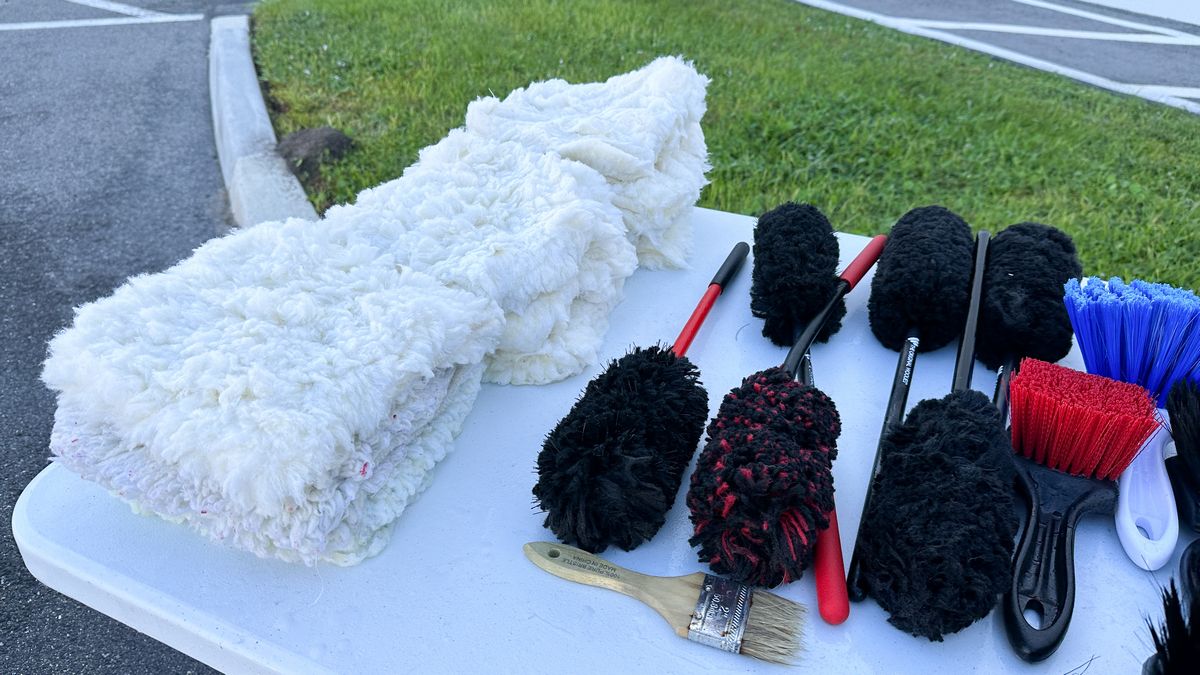
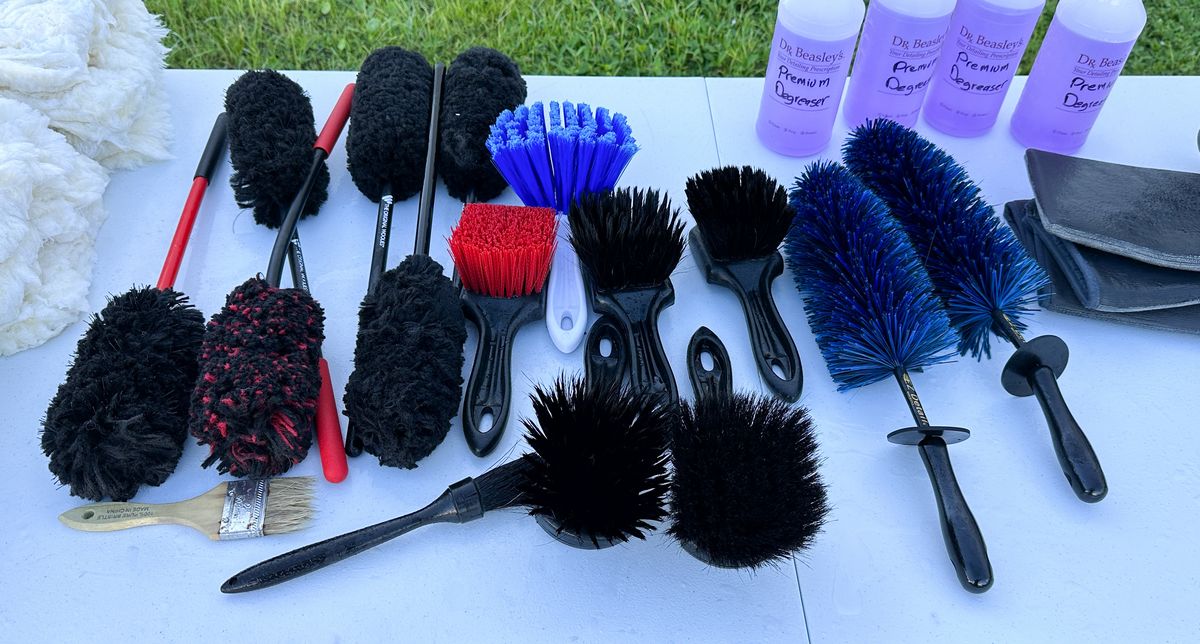
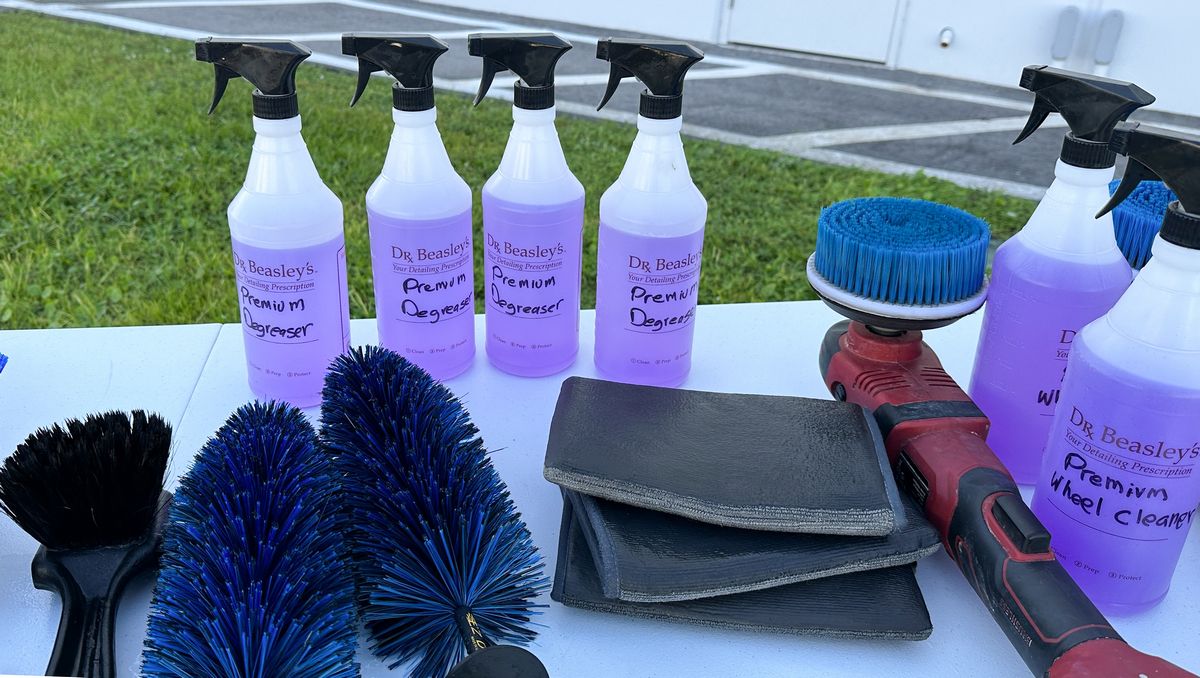
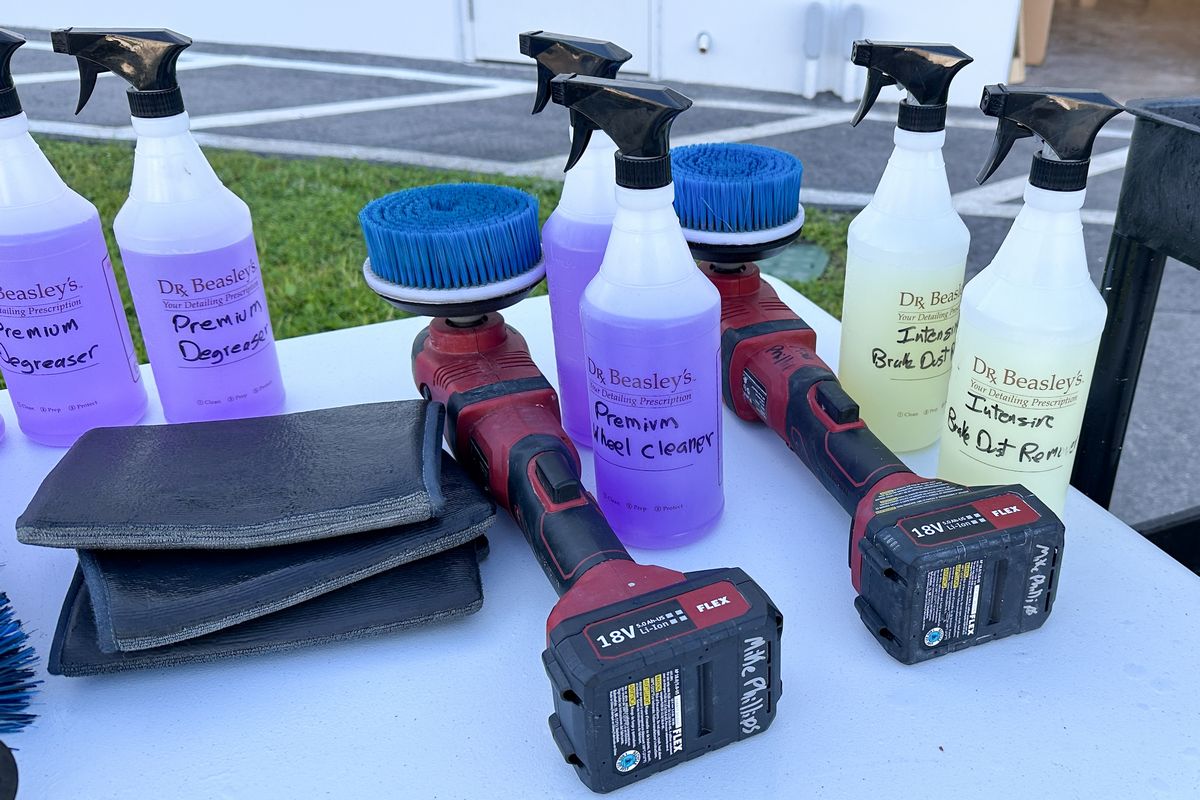
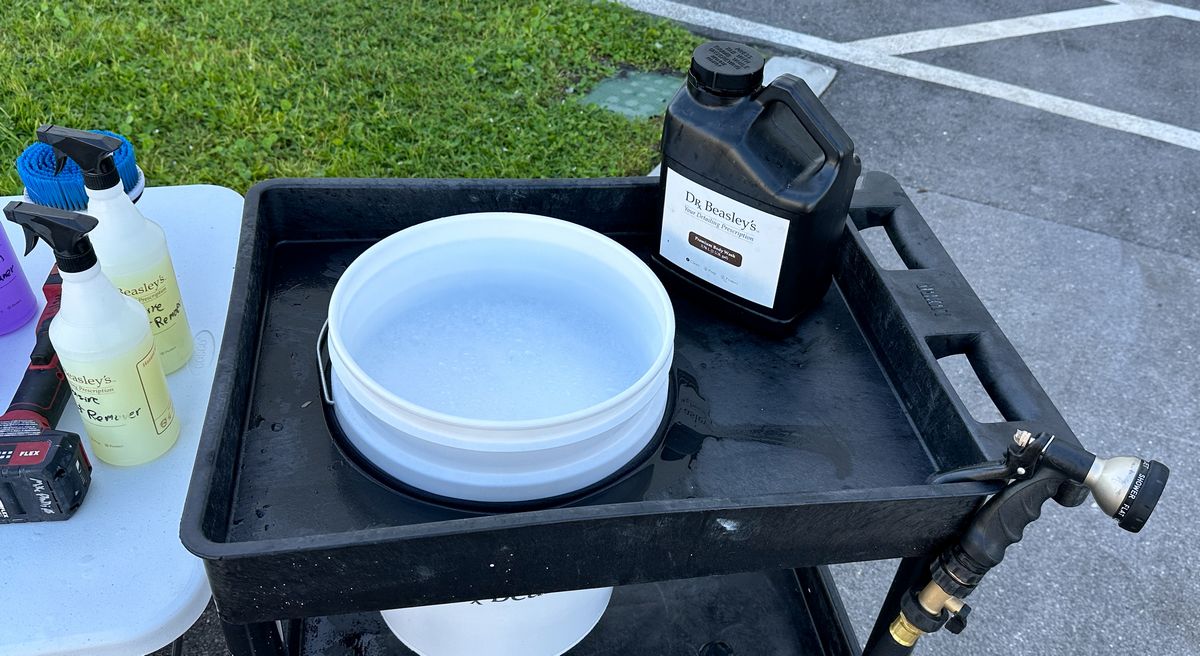
Setting up all the products you'll need to do a proper Extreme Prep Wash saves you time, energy and step. This includes all the tools, brushes, car cleaning chemicals and multiple wash buckets.

IDA SV TEST
A lot of what is covered below are the answers to questions asked when taking the IDA or International Detailing Association Skills Validation Test. I'm a RIT or Recognized Independent Trainer for the IDA so I have a pretty good feel for what's on the test and thus what to share in our Extreme Prep Wash.

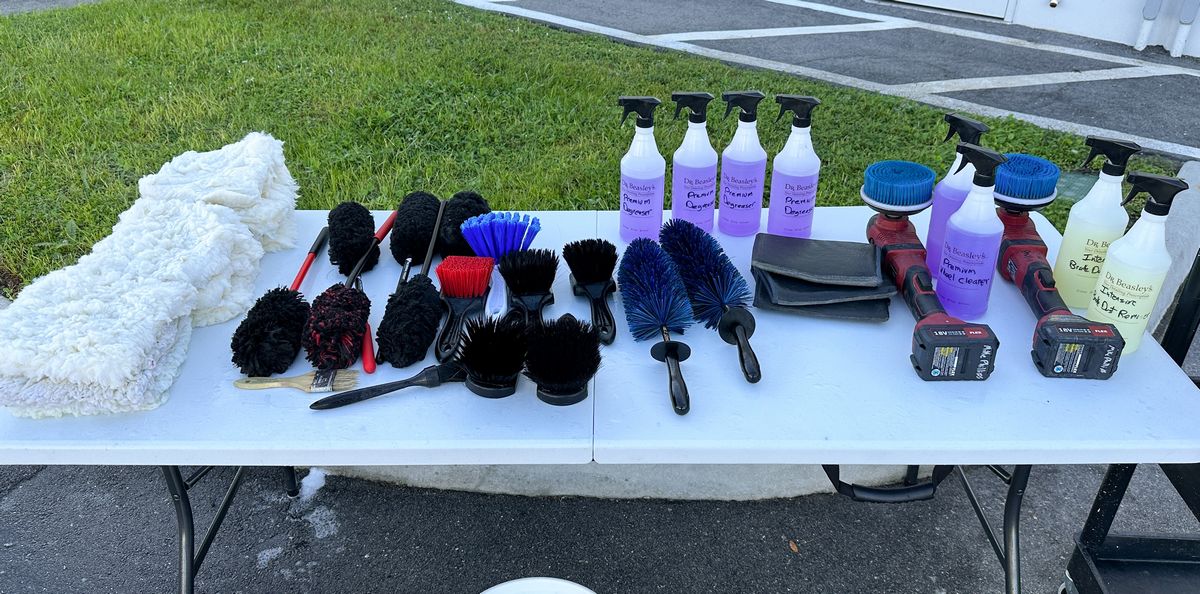
Here's our Wet Work Table all set up and ready to go.

full


full


Plenty of Dr. Beasley’s 9″ x 9″ Wash Mitts for doing the full body wash.

full


A selection of brushes including,

Wheel Woolies Wheel Cleaning Brushes - Great for cleaning wheel barrels.

Blue Wheel Brush - Great for wheels, bumpers, fender wells.

Bruan Wheel & Fender Brush Great for delicate wheels, grills, engine cleaning, interior cleaning.


full


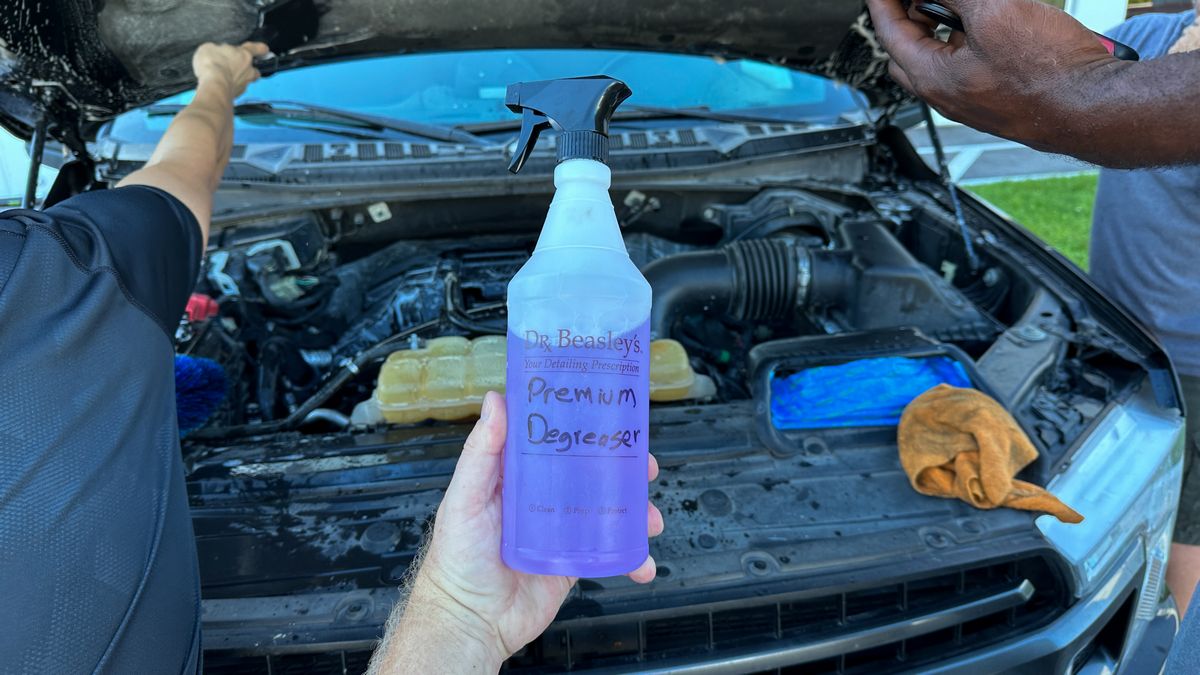
Dr. Beasley's Premium Degreaser - for engine detailing, cleaning tires and cleaning other excessively grimy areas and or components.

full


For cleaning wheels, Dr. Beasley's Premium Wheel Cleanser and for severely neglected wheels with baked-on brake-dust, Dr. Beasley's Intensive Brake Dust Remover

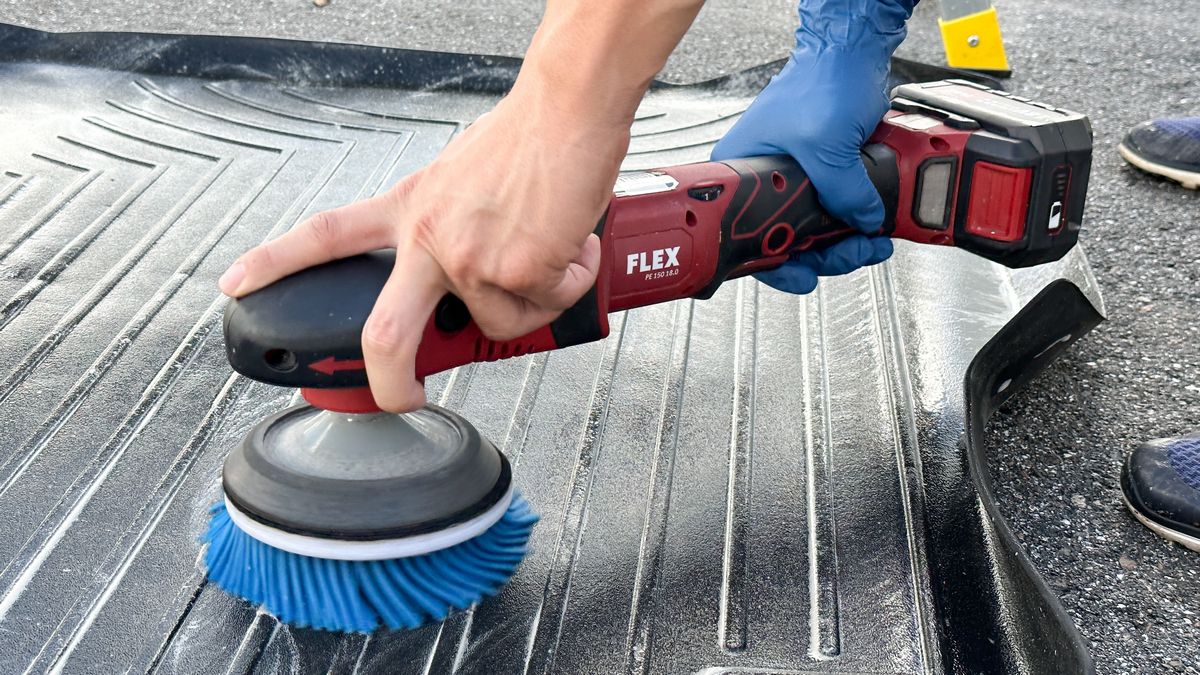
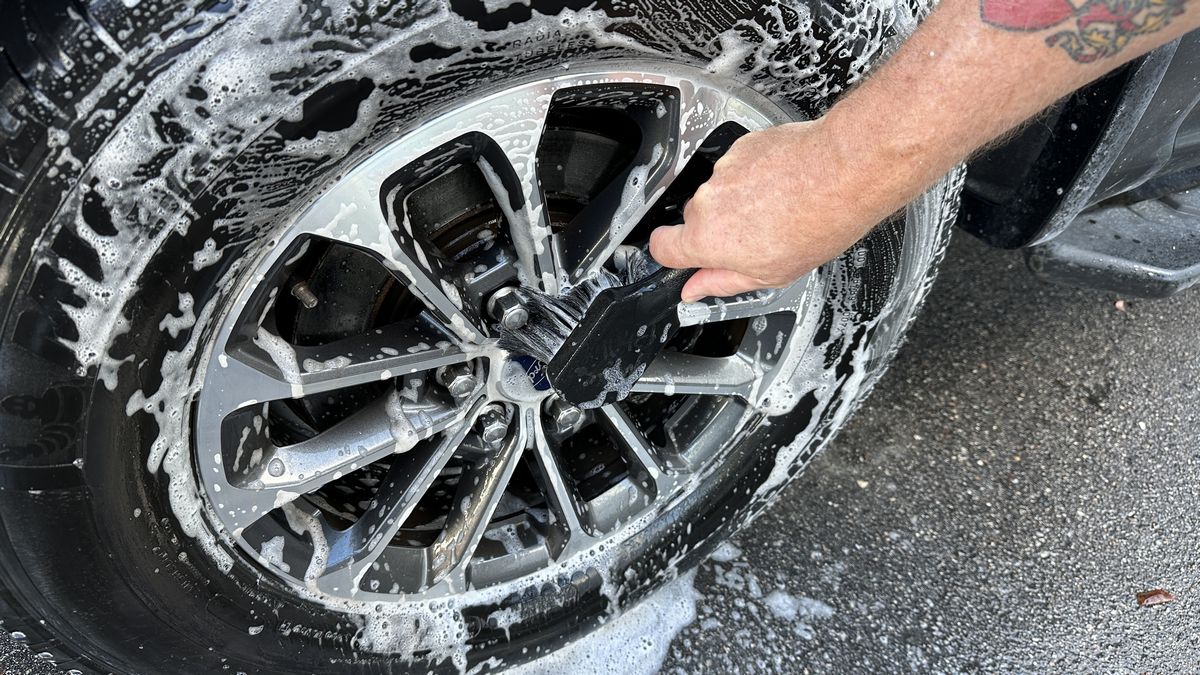
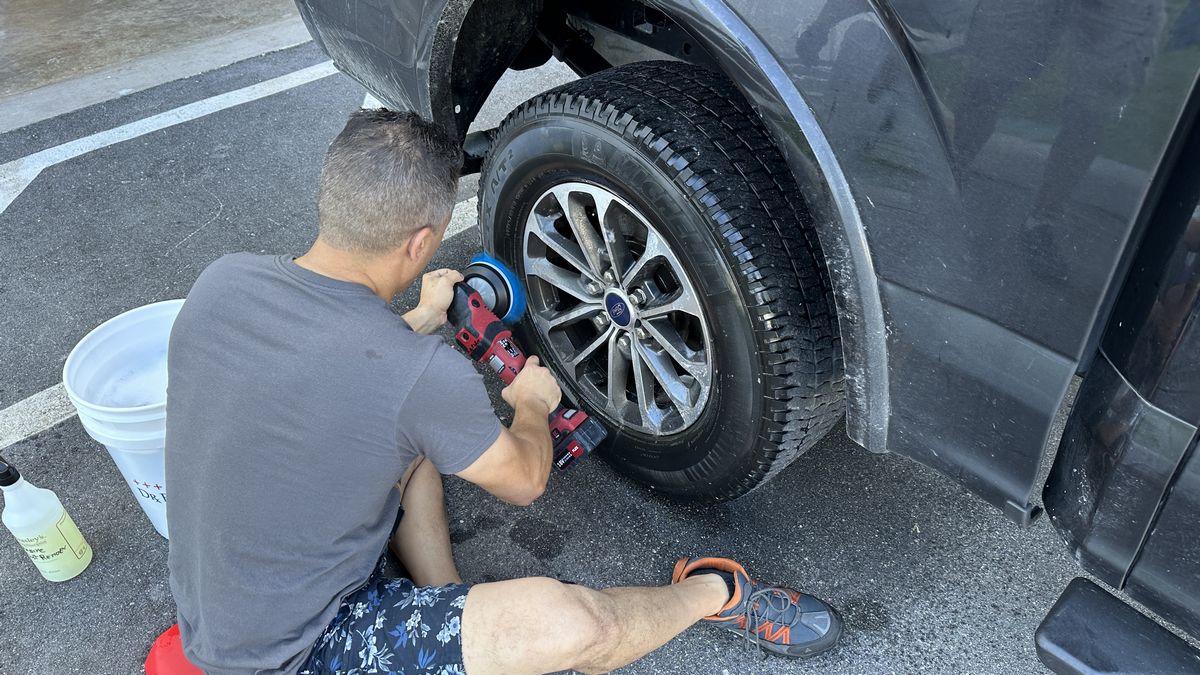
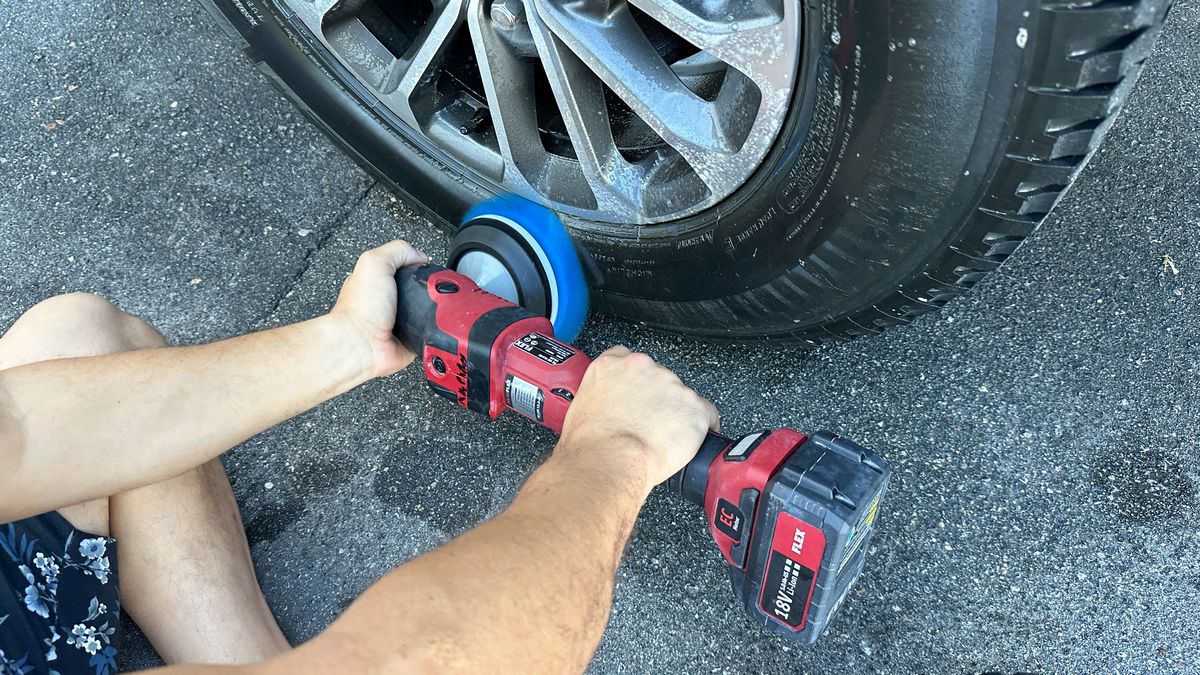
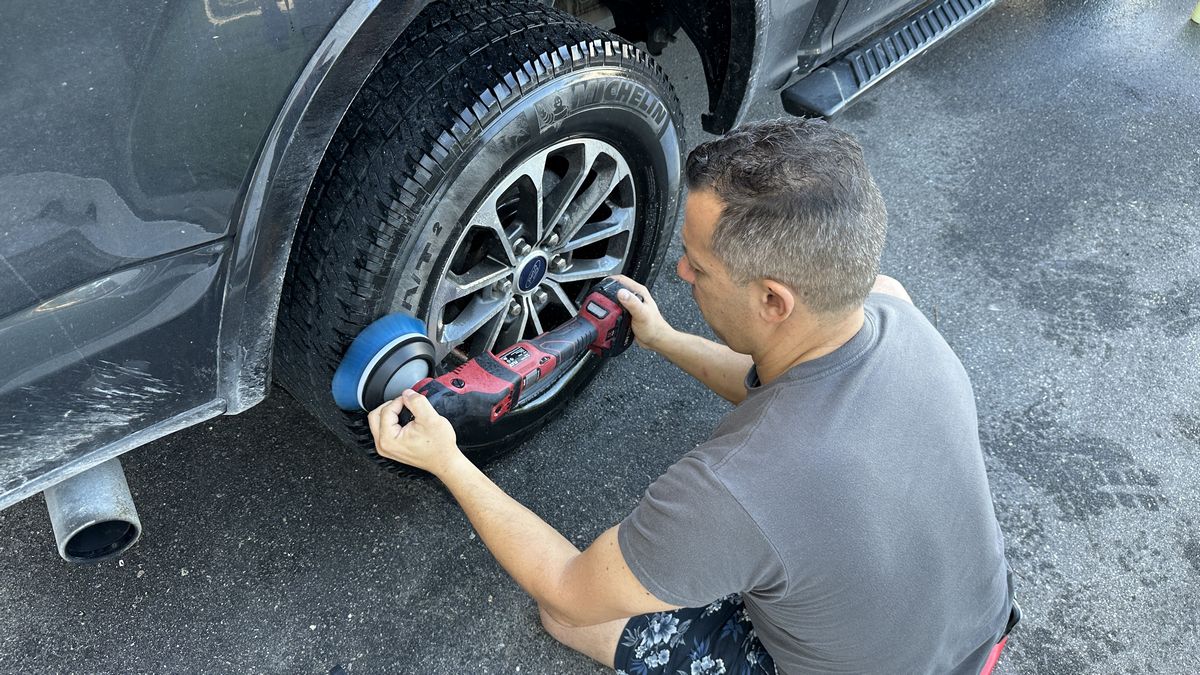
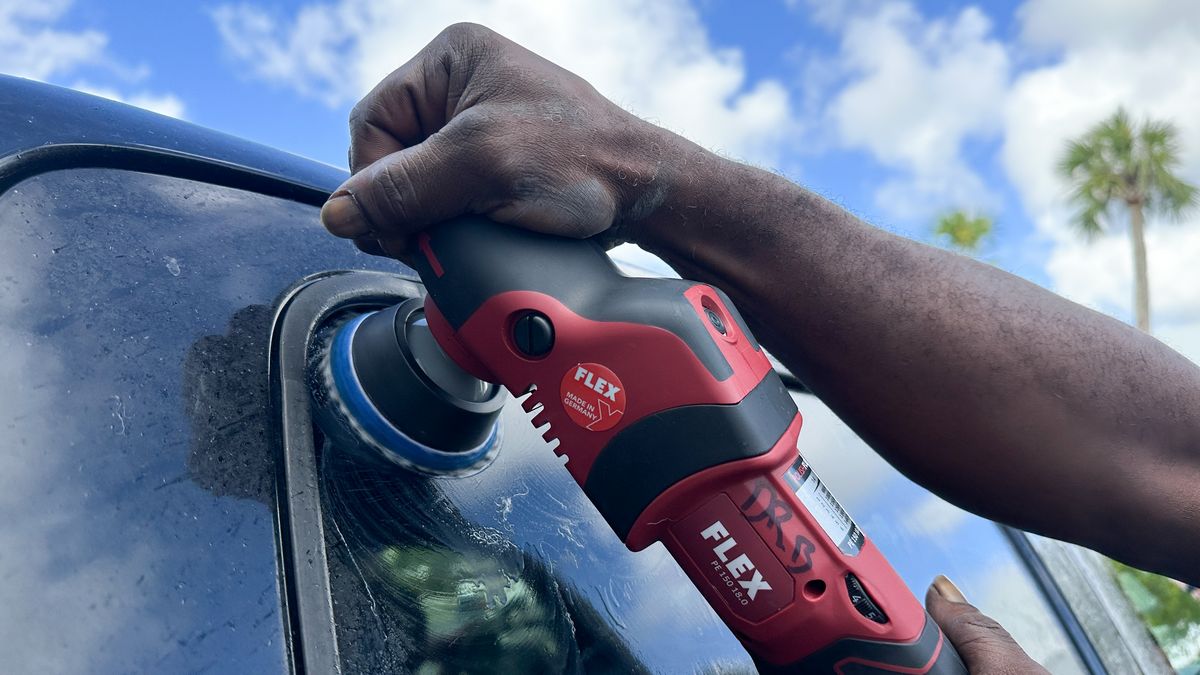
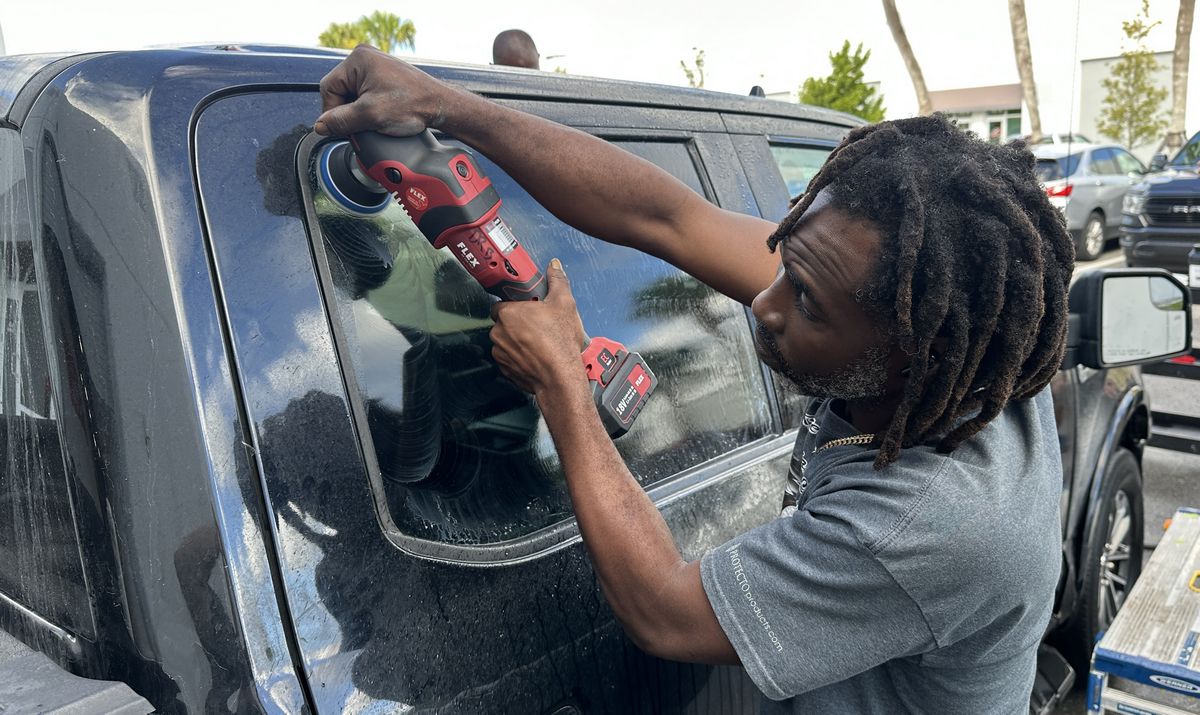
We teach machine scrubbing tires because machine scrubbing tires is faster and does a better job. The key thing when using power tools around water is to use CORDLESS tools to reduce and electric shock dangers. In our classes, we use the FLEX PE-150 Cordless Rotary Polisher with 5" Rotary Brushes. After the full body wash and rinse, we show Clay Mitts for doing the Mechanical Decontamination Step.

full


Wheel & Tire Brush Buckets
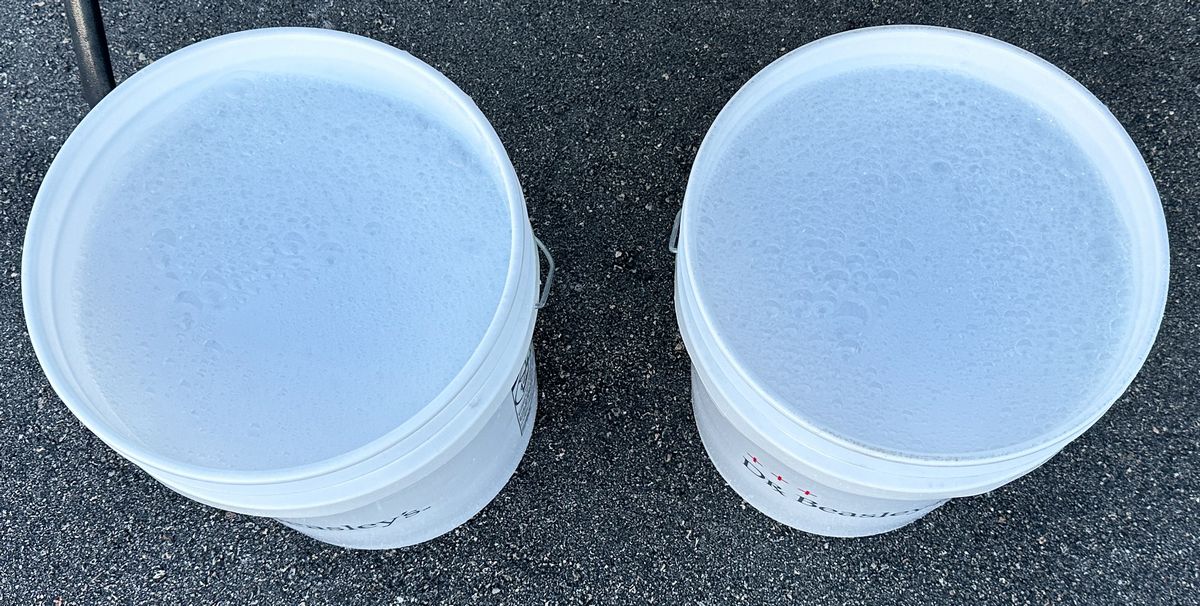
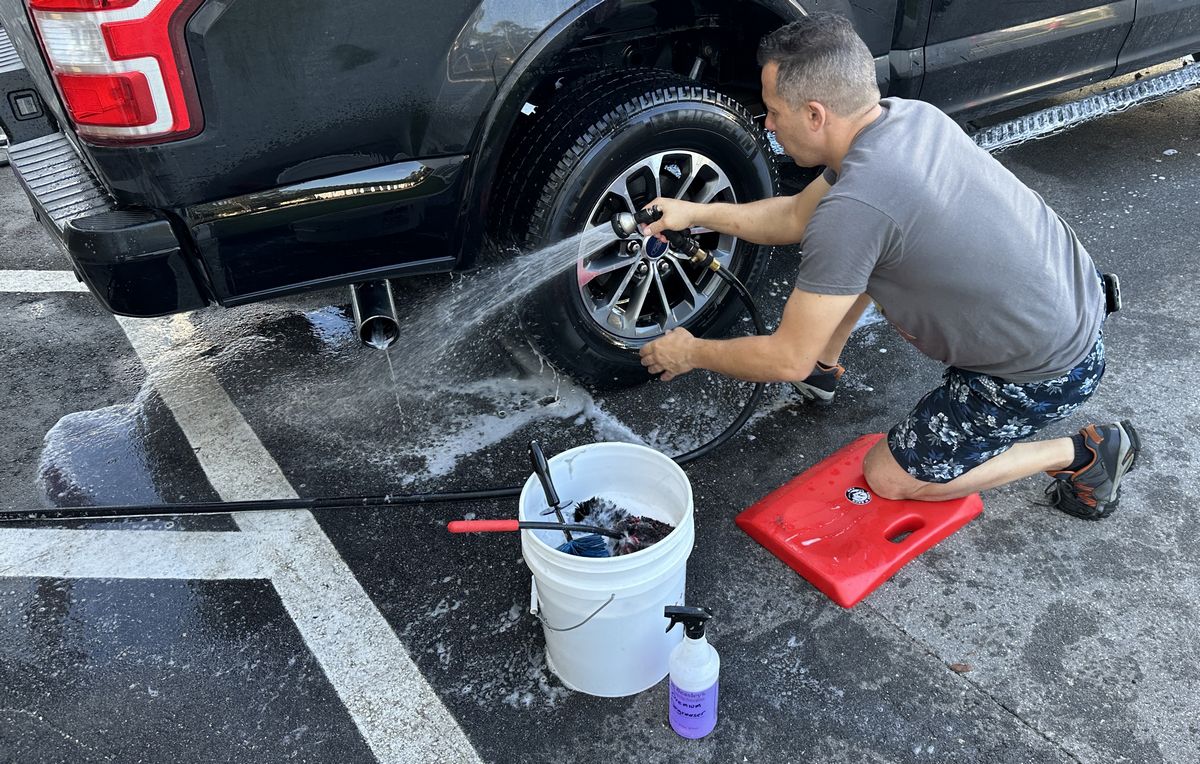
You should always have a dedicated wheel and tire brush bucket or in our case, buckets. The reason why is because when washing the wheel and tire area, you may pick up loose metallic brake dust particles on your brushes. When you return your brushes to the bucket, these abrasive particles will flush off the brush and into the soapy water solution. If you were to dip a wash mitt into this soapy solution and then wash a painted body panel - you risk scratching the paint. So always have a dedicated bucket of soapy water solution for your wheel cleaning brushes. This is on the IDA SV Test. For our Wheel and Tire Buckets we use Dr. Beasley’s Premium Body Wash for our soapy water solution.

full


pH Balanced Car Wash
For washing the exterior body panels, we use the Dr. Beasley’s Premium Body Wash when we teach Extreme Prep Wash. Later, after a car is detailed and ceramic coated, we show and encourage people to use our Ceramic Body Wash as a Maintenance Wash. And of course, for all our buckets we use the Dr. Beasley’s 5 Gallon Wash Buckets with Grit Guard Inserts

full


Wet Wash Engine Detail
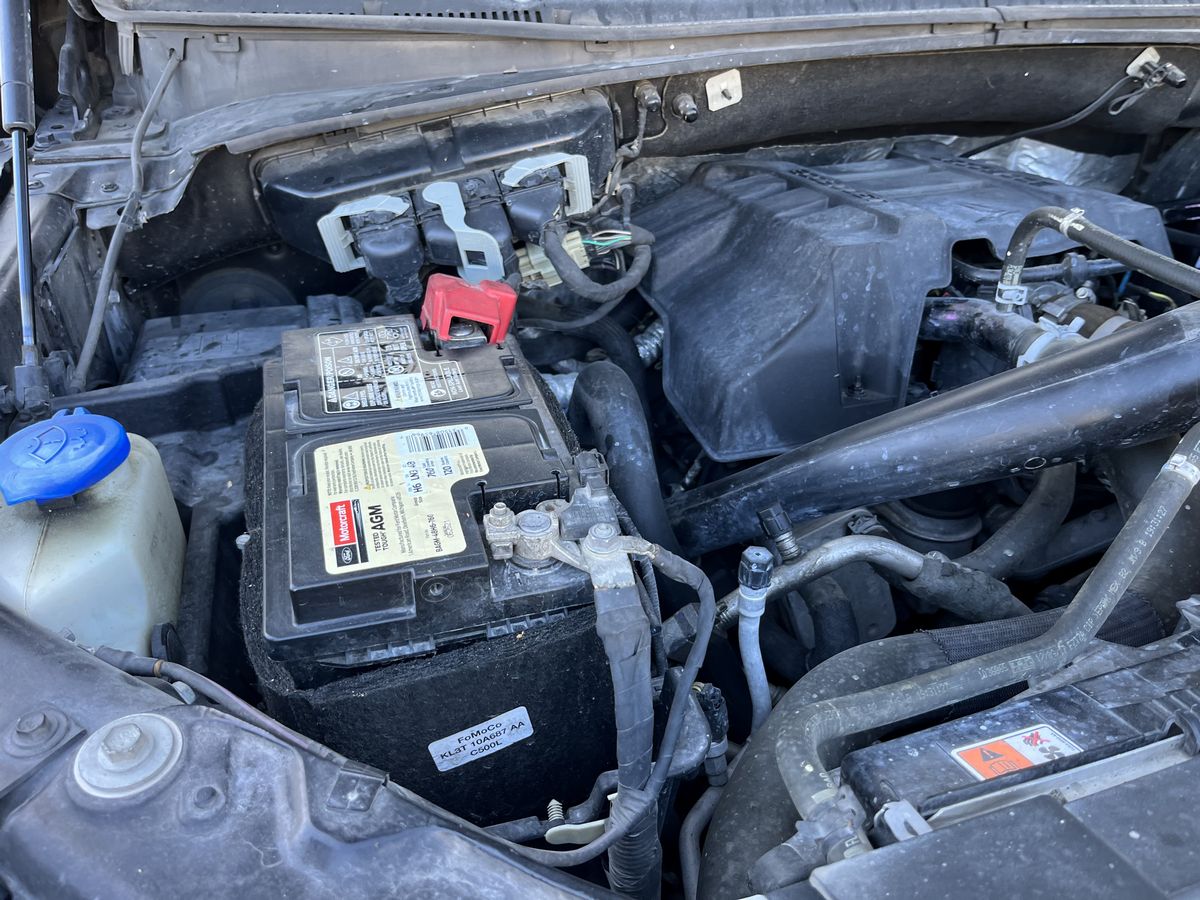
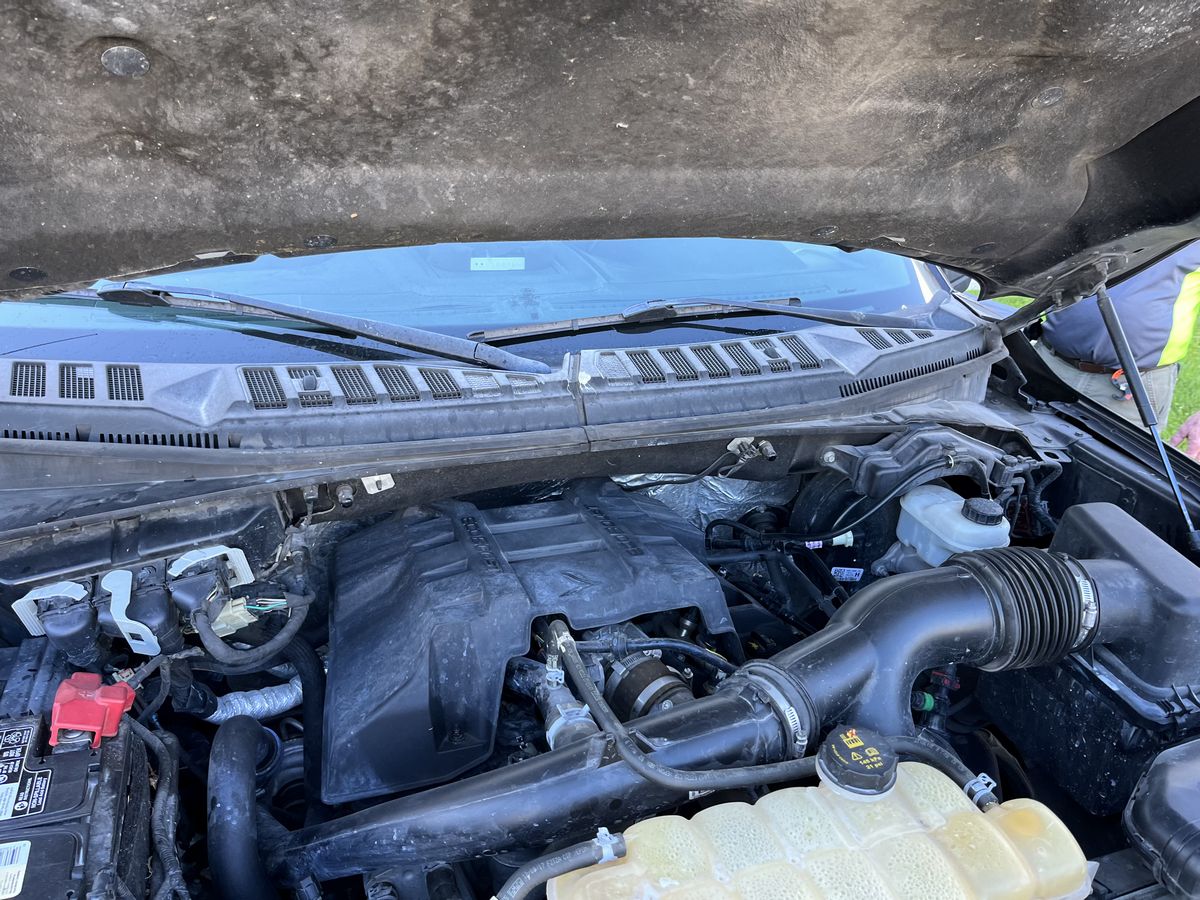
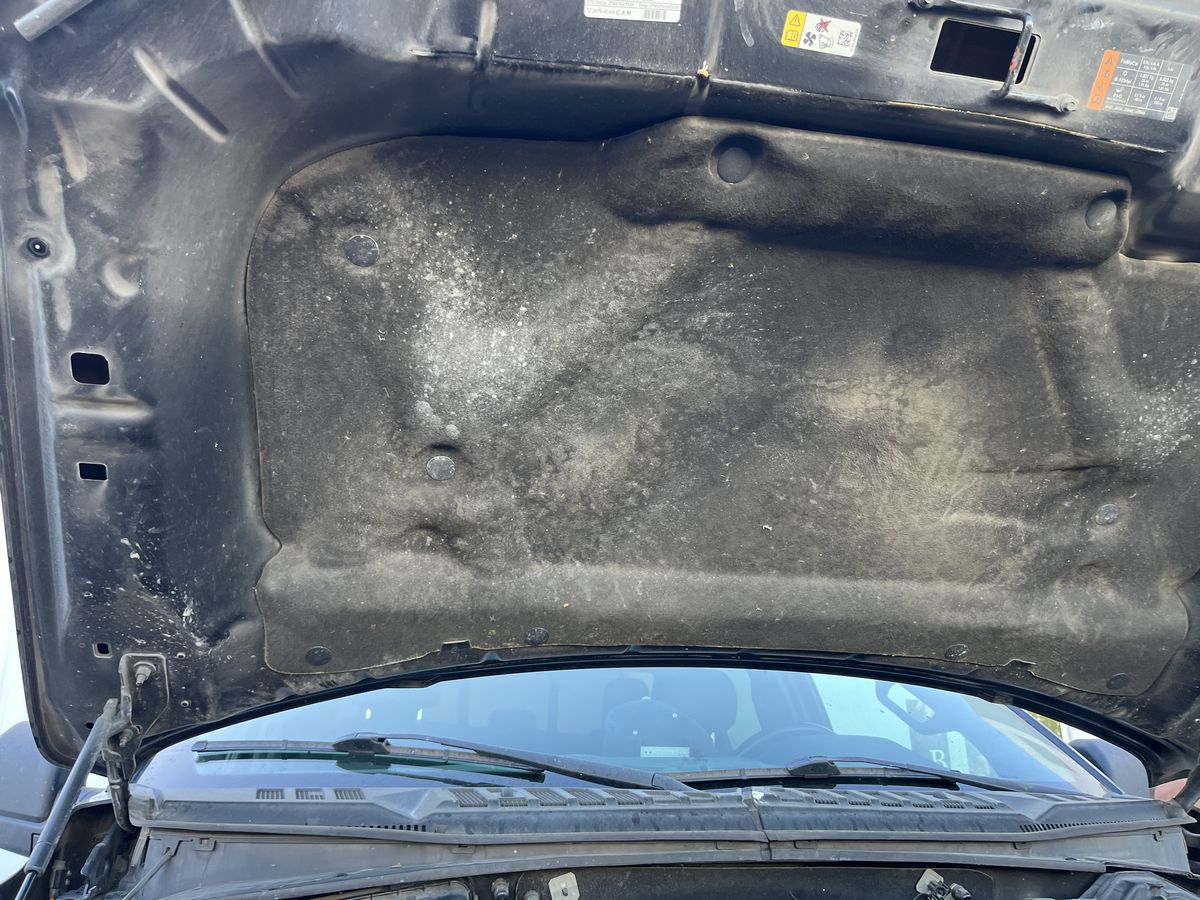
Because our training vehicle does NOT need headlight correction, we skip this step and start with doing a Wet Wash Engine Detail. If this vehicle had cloudy, hazy oxidized headlights, we would do the Headlight Correction Step BEFORE cleaning the engine and engine compartment. The reason for this is often times you will open the hood to remove any hood paint away from the headlights when sanding to avoid accidently sanding the paint on the hood next to the headlights. Sanding and buffing headlights will get splatter onto the engine and in the engine compartment. If you clean the engine first and then restore the headlights - you risk repeating steps. So work harder instead of smarter and clean headlights first, then clean the engine and engine compartment.


Before pictures...

full


full


full


Work from the top down
The first thing you do when cleaning an engine compartment is to clean the underside of the hood. If you clean the engine and engine compartment first and then clean the underside of the hood - you will get the now clean engine and engine compartment dirty with the drippings coming off the underside of the hood. So work smarter instead of harder and clean the underneath of the hood first.

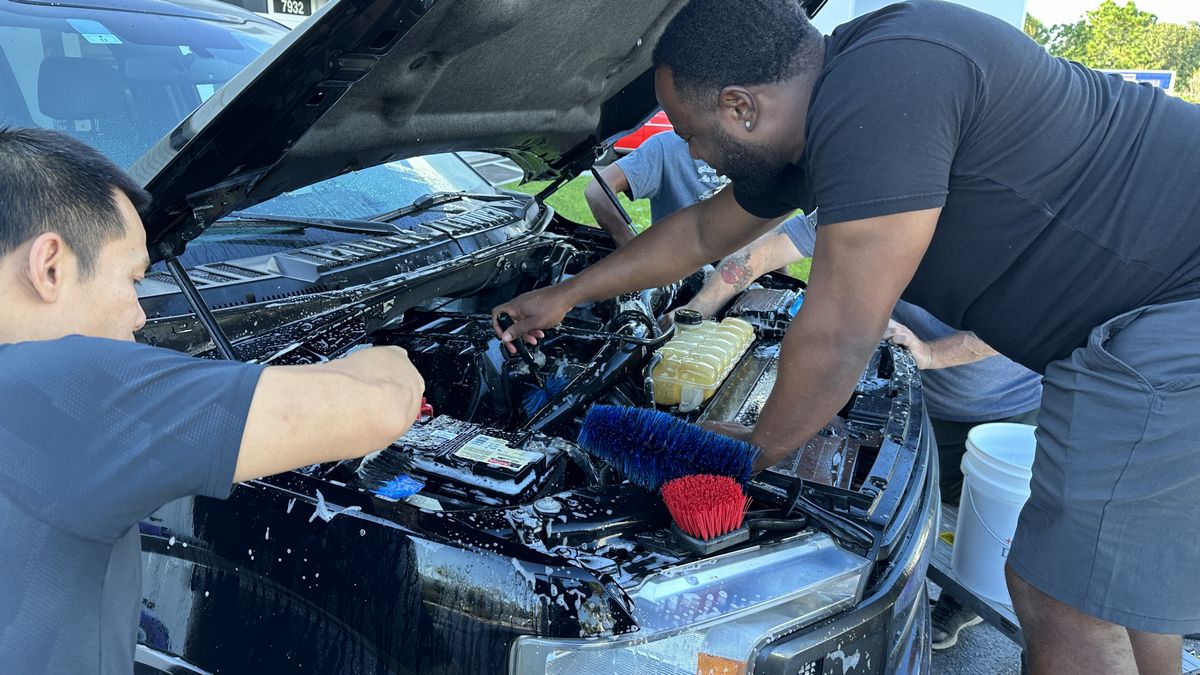
For this the class is using the Dr. Beasley's Premium Degreaser - for engine detailing and cleaning other excessively grimy areas and or components. with a variety of brushes to agitate the degreaser.

full


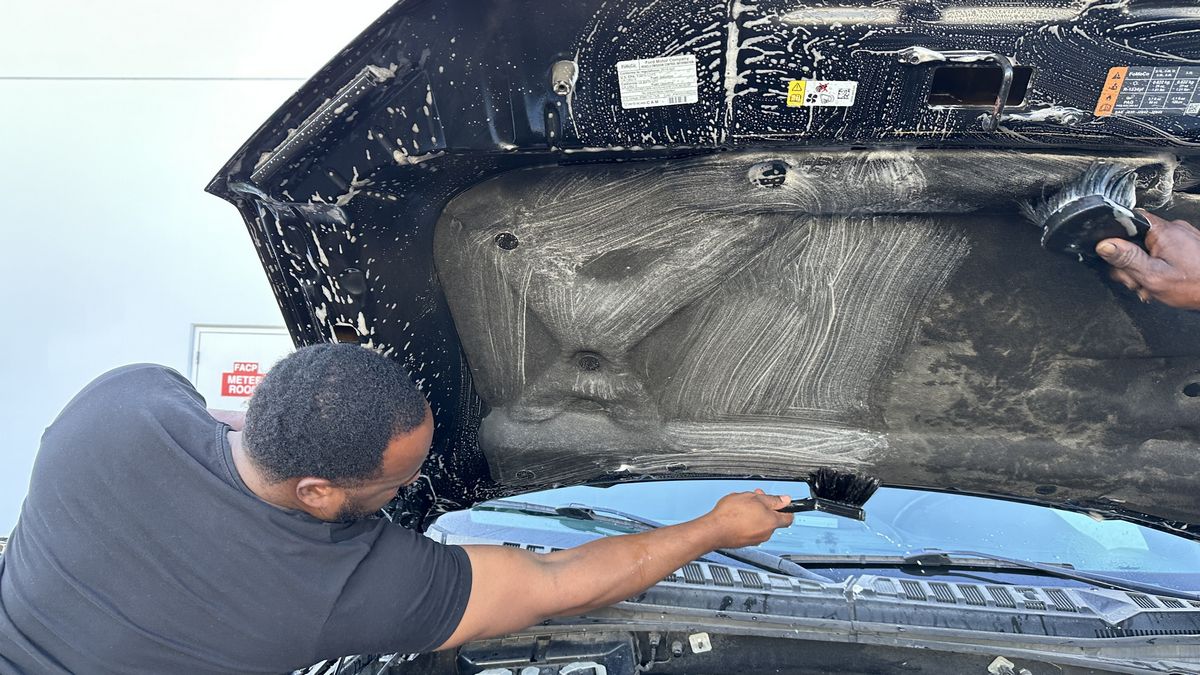
Under hood detailing - How to clean insulated heat and sound deadening mats
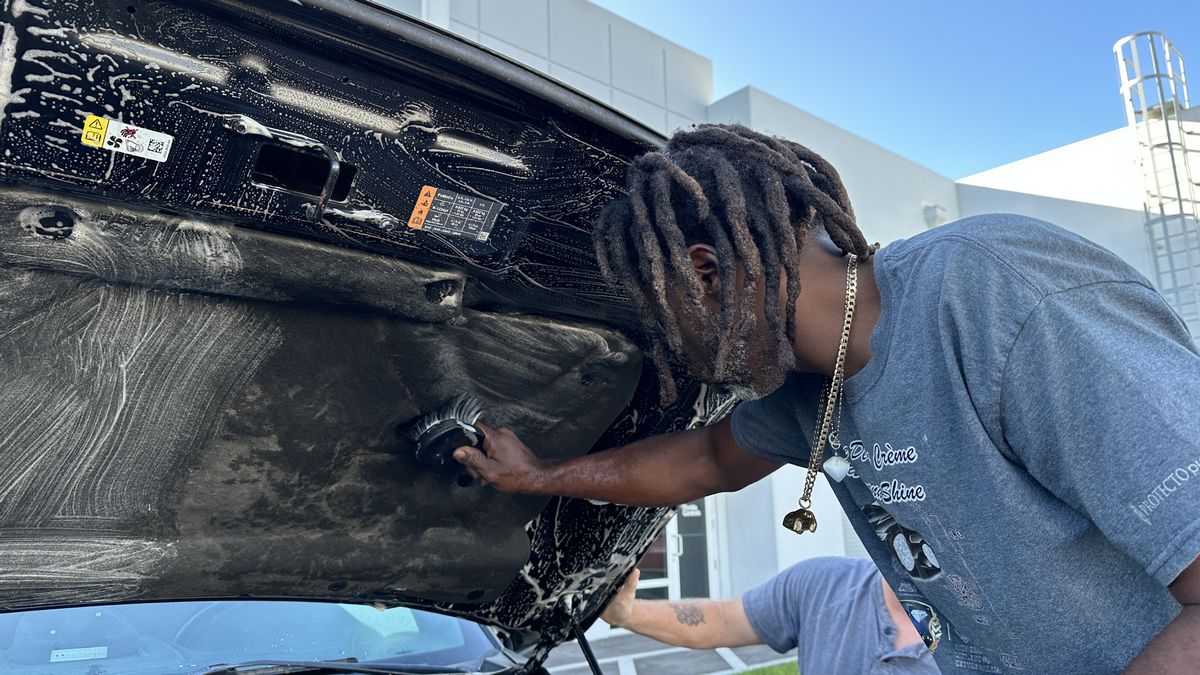
When possible, we show the least aggressive method for cleaning these delicate materials because they are easy to tear-up, especially when wet. For example, if the mat is only lightly dirty, you can often times clean it by wiping with a water-dampened microfiber towel. In this example however, the under hood mat is extremely dirty, so the class uses the Bruan Wheel & Fender Brushes, which are great for tasks like these.

Here's Meko and Derrick tag-teaming the underside of the hood.


full


full


Rinse thoroughly
For rinsing under the hood, the engine and engine compartment, we recommend getting a water sprayer that has a SHOWER setting. This flushes a gentle spray of water that is much safer to the mat and also to electrical connections and sensors in the engine compartment as compared to a spray with only a JET setting.

full


full


full


full


full


Wet Wash Engine Detailing
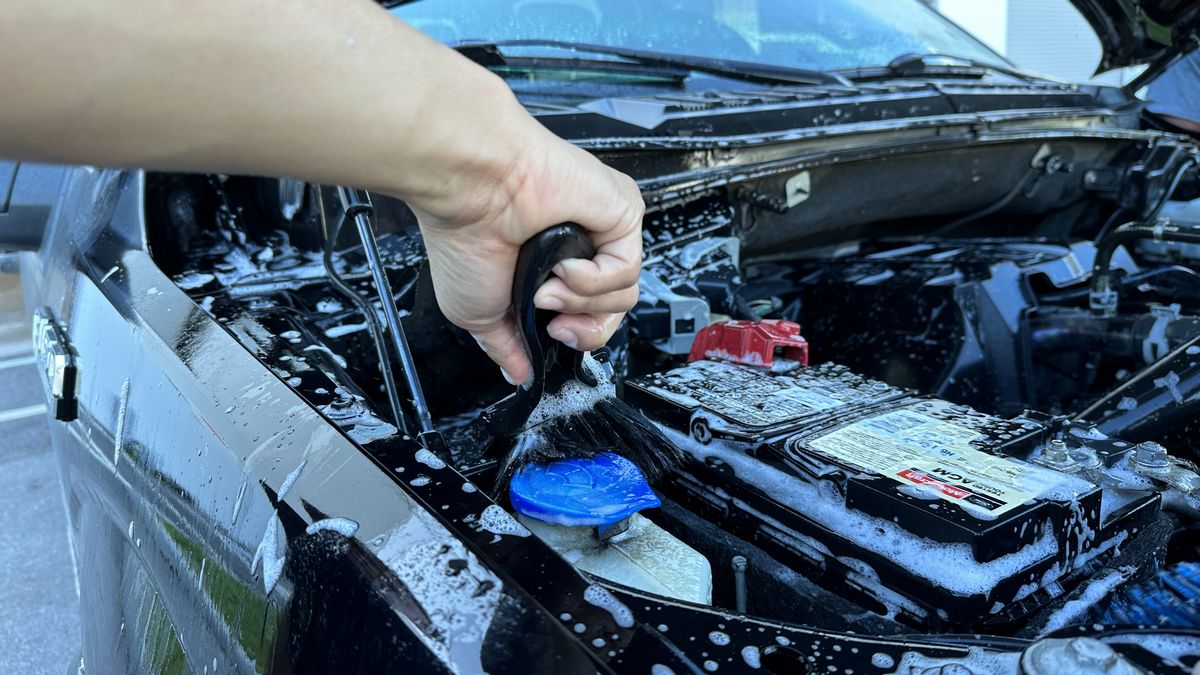
After cleaning the underneath of the hood, it's time to get the engine and engine compartment clean. For this the class will use the Dr. Beasley's Premium Degreaser plus a variety of brushes to agitate the degreaser. It's vital to have a good selection of different brushes to get into all the tight and intricate areas found in an engine compartment.

full


full


full


full


full


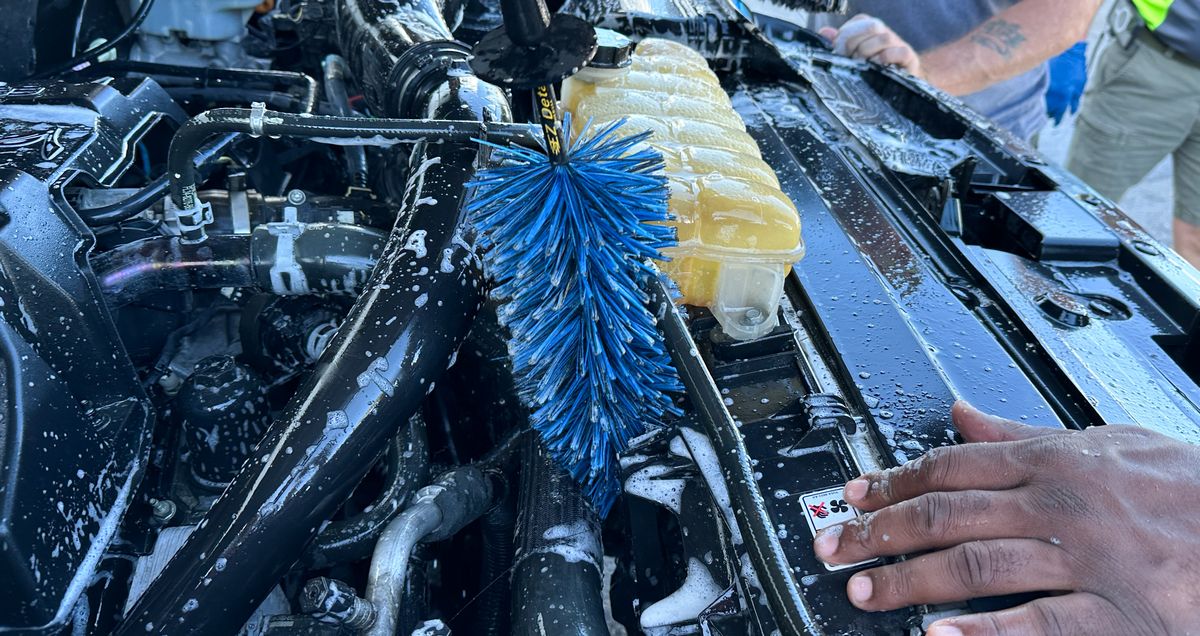
Bruan Wheel & Fender Brush
The Bruan Wheel & Fender Brush is actually a great engine and engine compartment cleaning brush. The bristles are 2' long and the perfect blend of not to limp or not to stiff so they can get into tight areas to loosen dirty, oily engine sludge.

full


See how the bristles easily getting into the corrugated air flow tubing?

full


full


full


Rinse thoroughly
Here's Meko rinsing all the dirt and oily grime off the engine and out of the engine compartment.

full


full


full


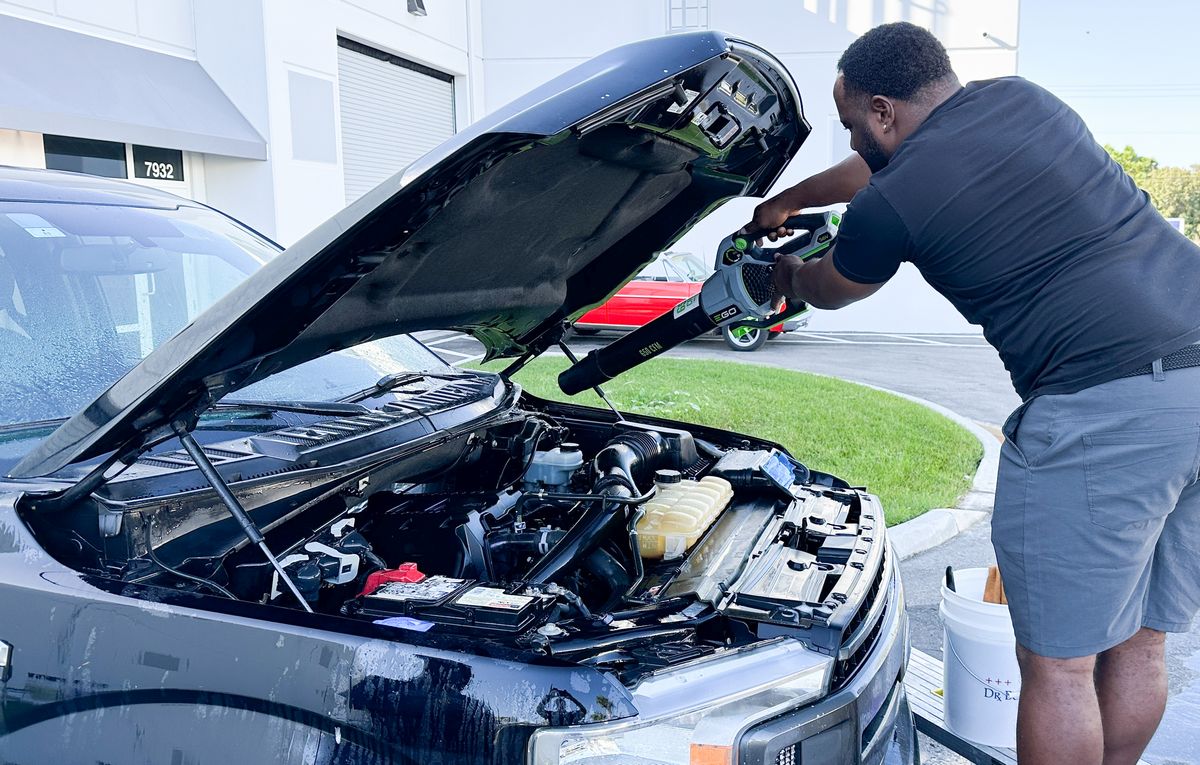
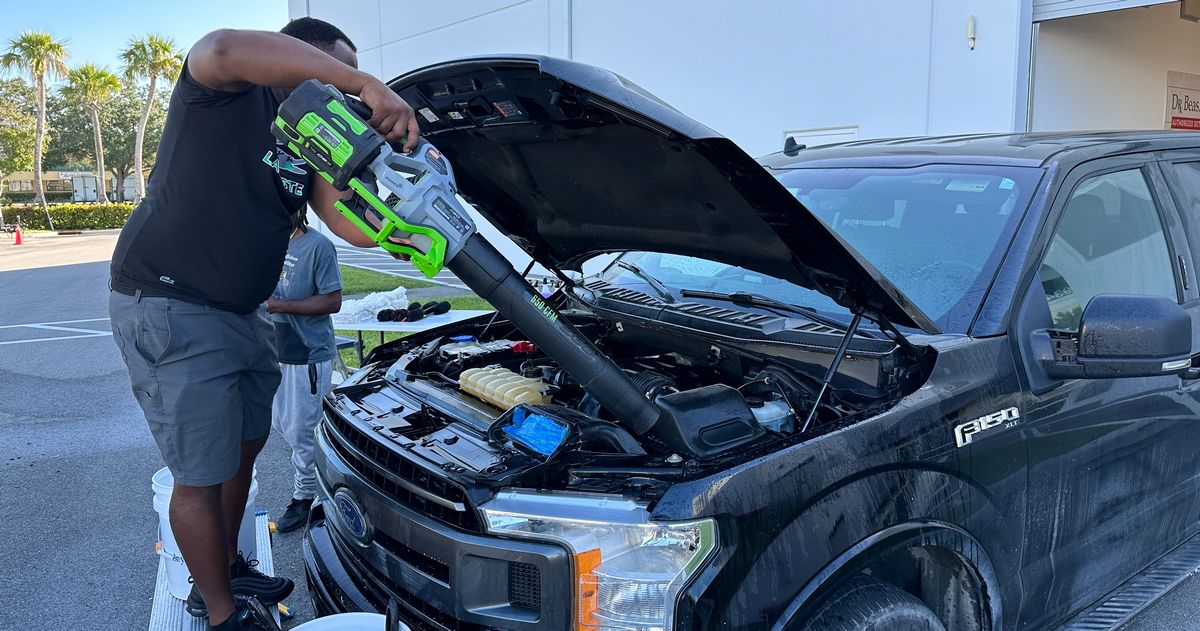
Air Dry
After rinsing the engine, it's a good idea to used some form of compressed air to blow any standing water out off of the engine and out of the engine compartment. I share a couple of important techniques for this step but you have to take the class to learn them.

full


full
 
Last edited:
More..


Remove mats - wash and dry
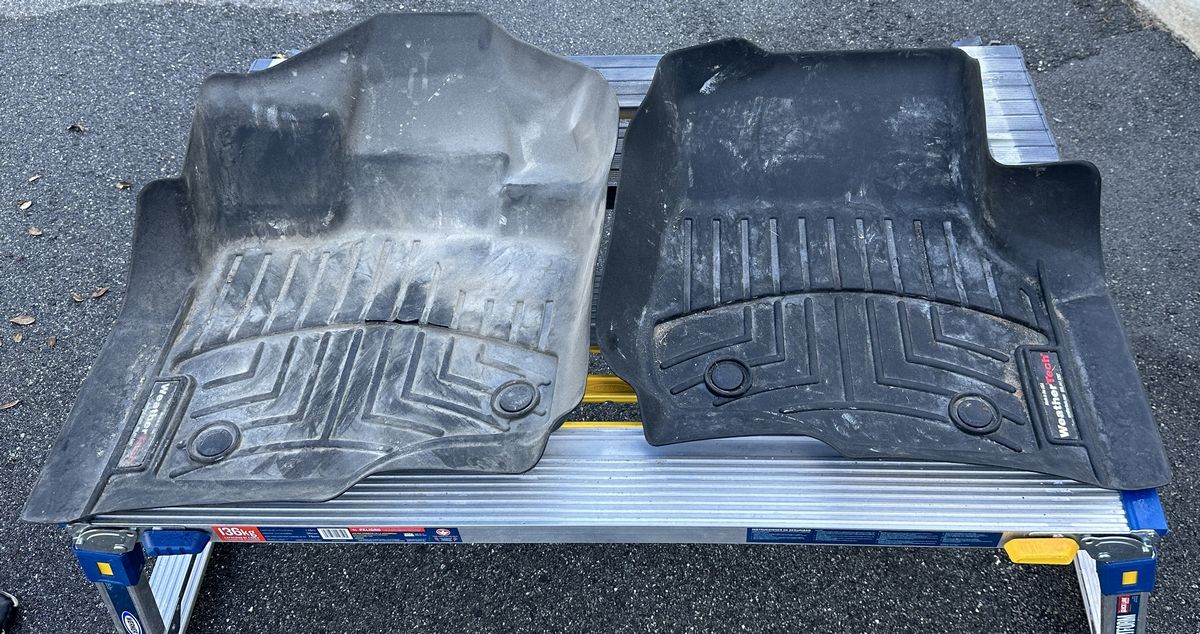
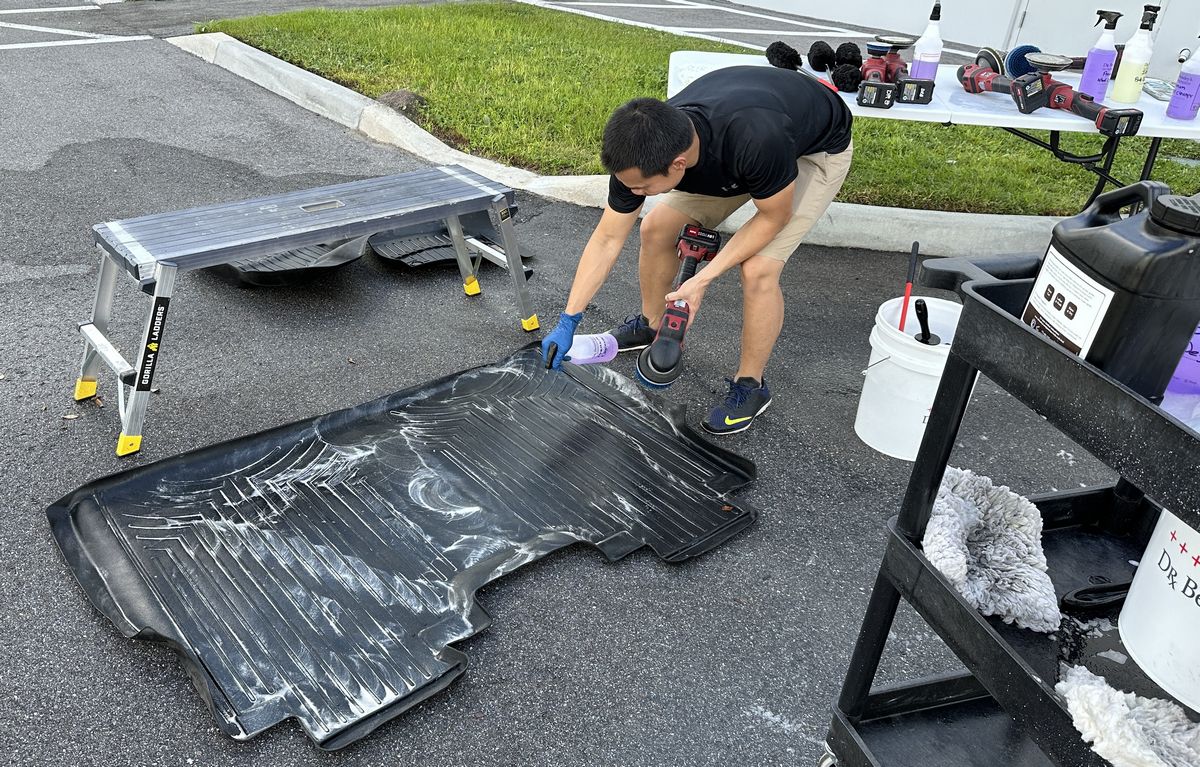
When you're new to detailing, sometimes you forget to remove the mats and wash them during the wash process. Then later, after the detail you open the door of the vehicle and see dirty mats. Make it a Best Practice to always remove mats and wash them at the start of the Extreme Prep Wash.

full


Tables or Work Platforms
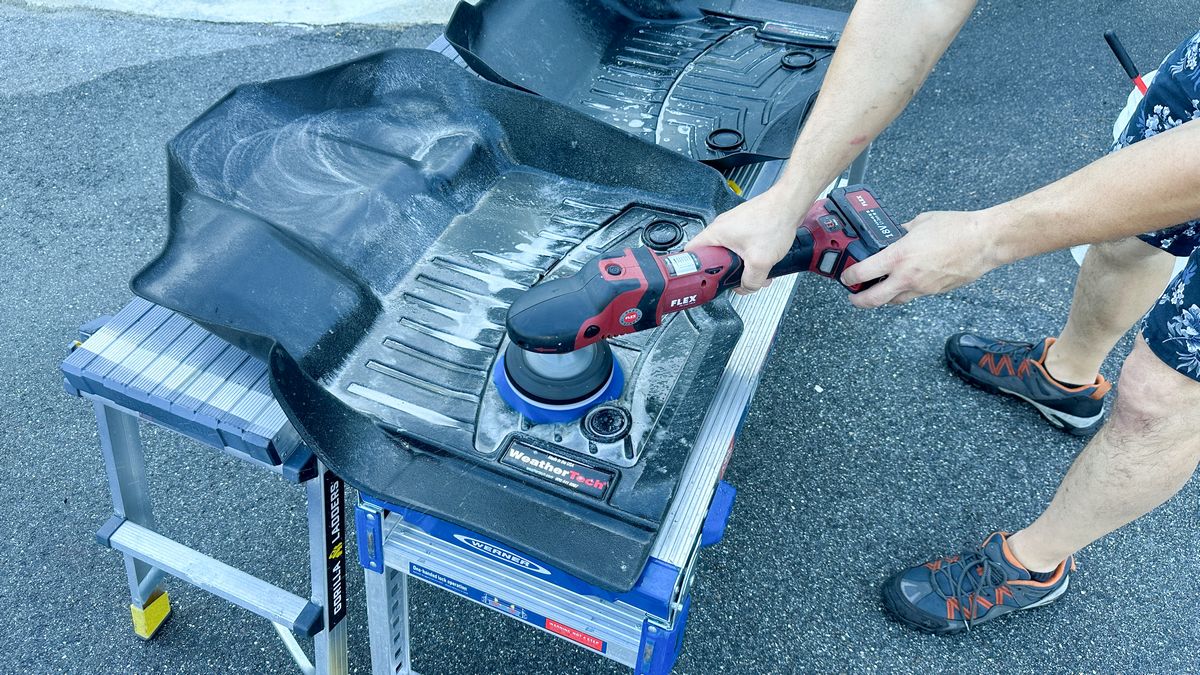
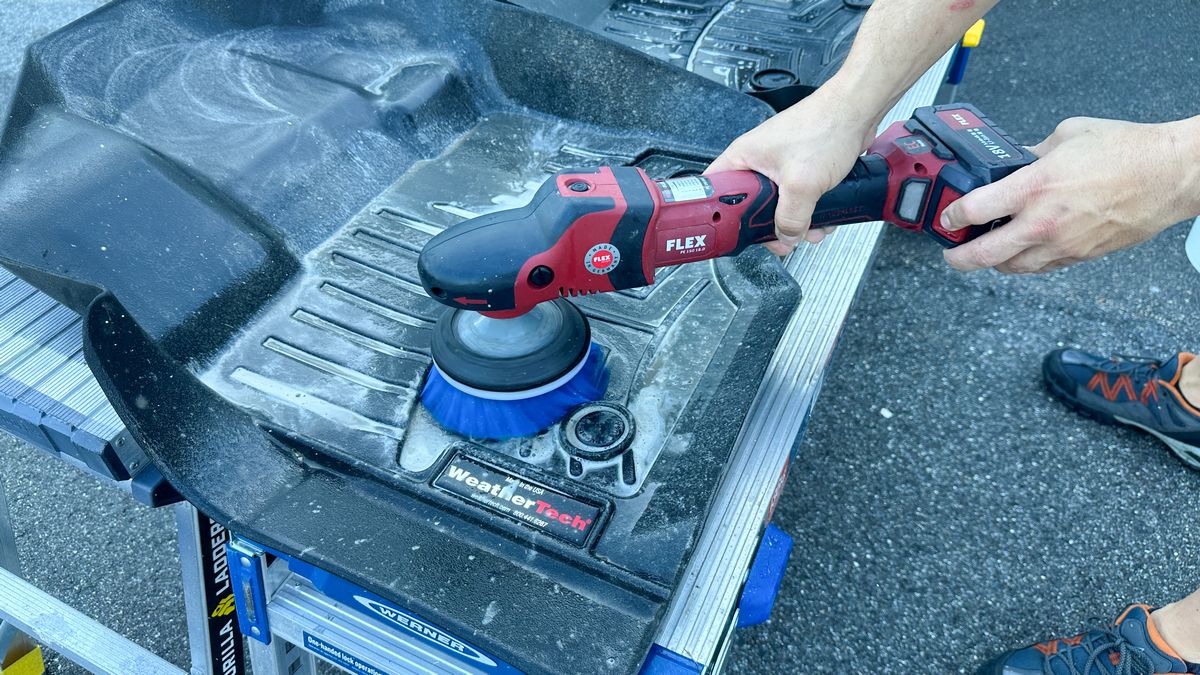
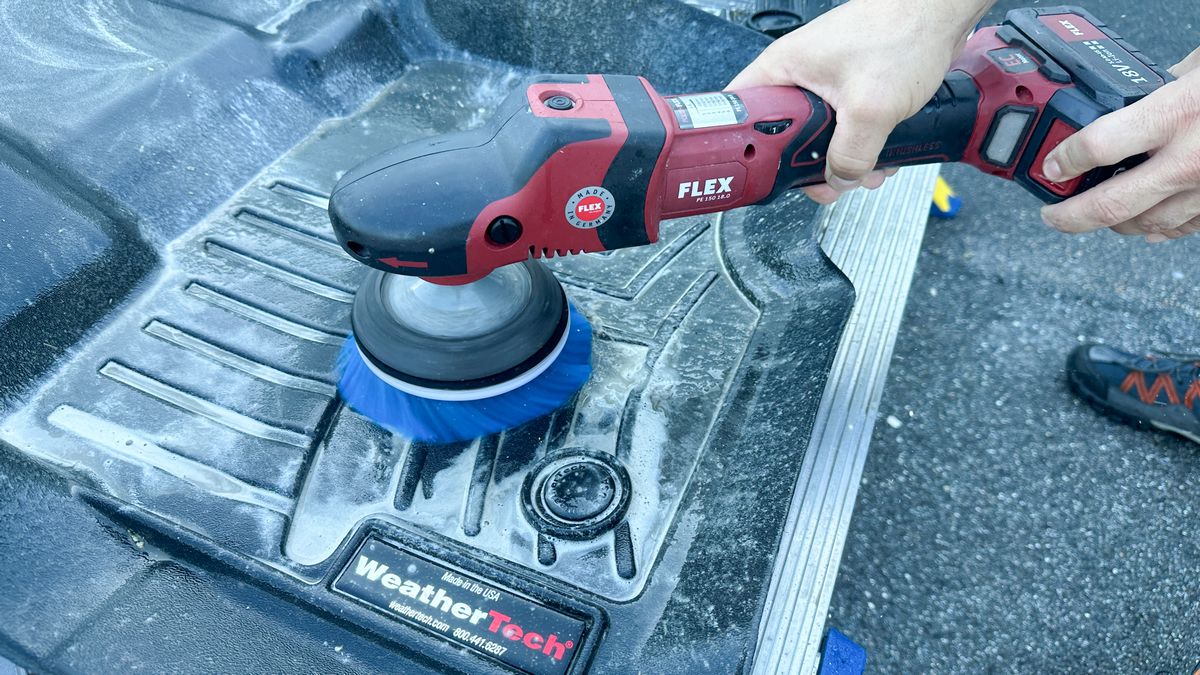
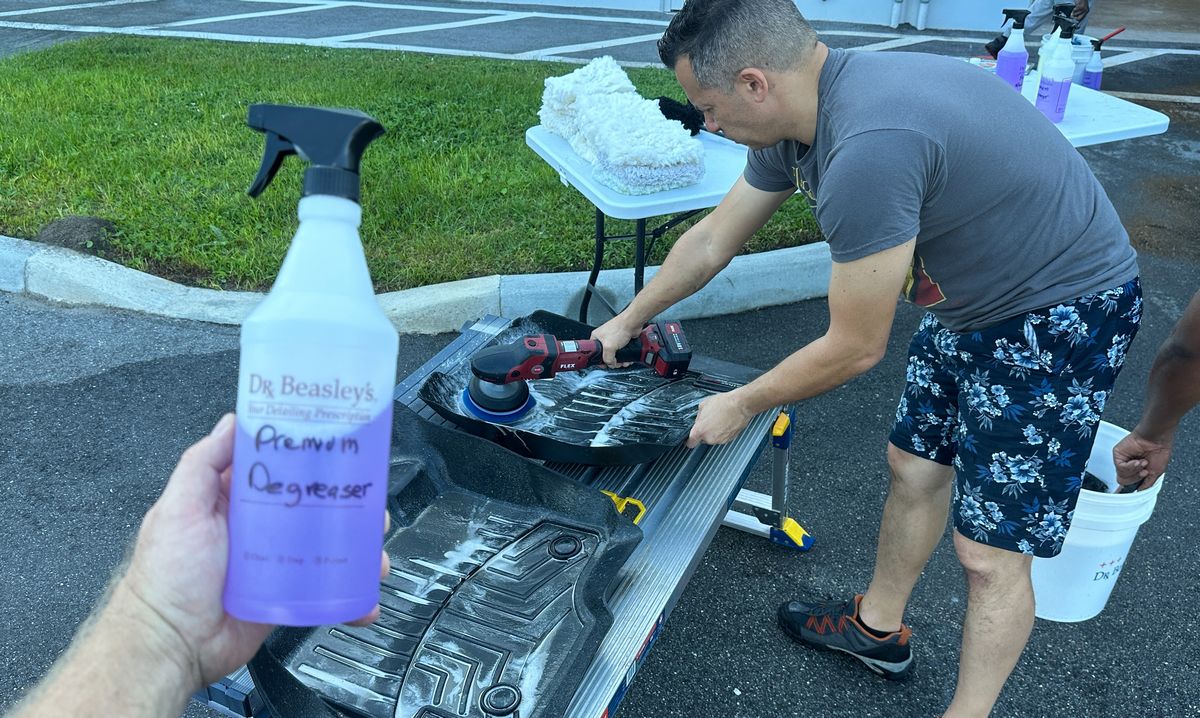
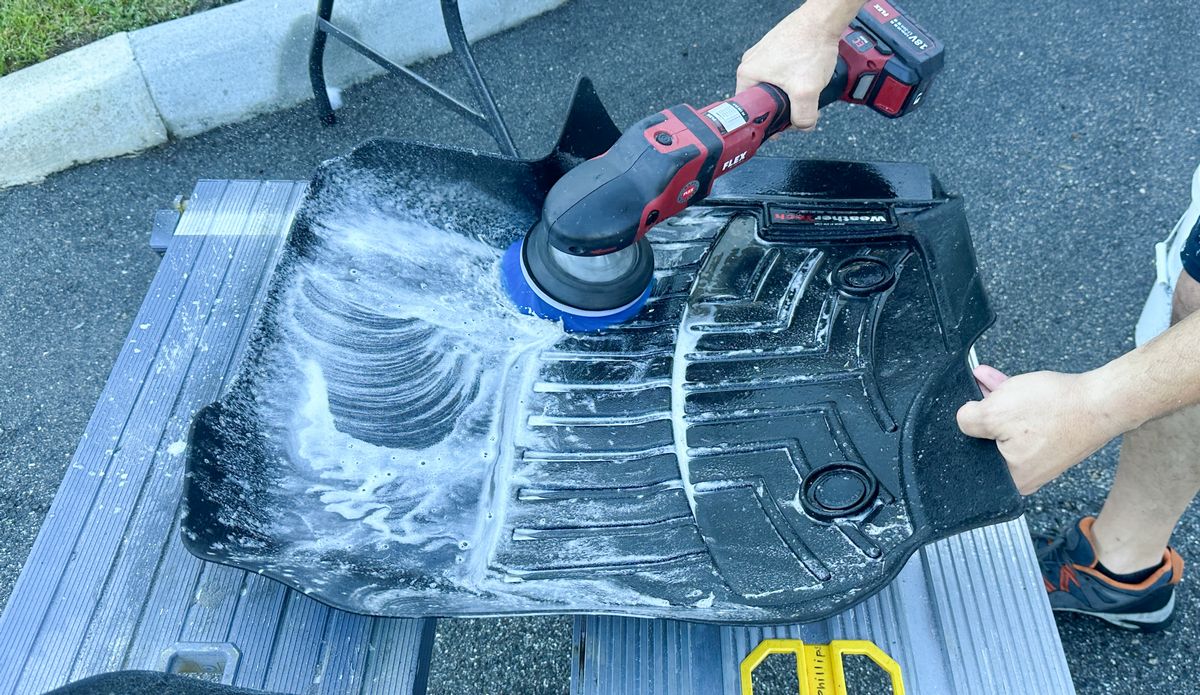
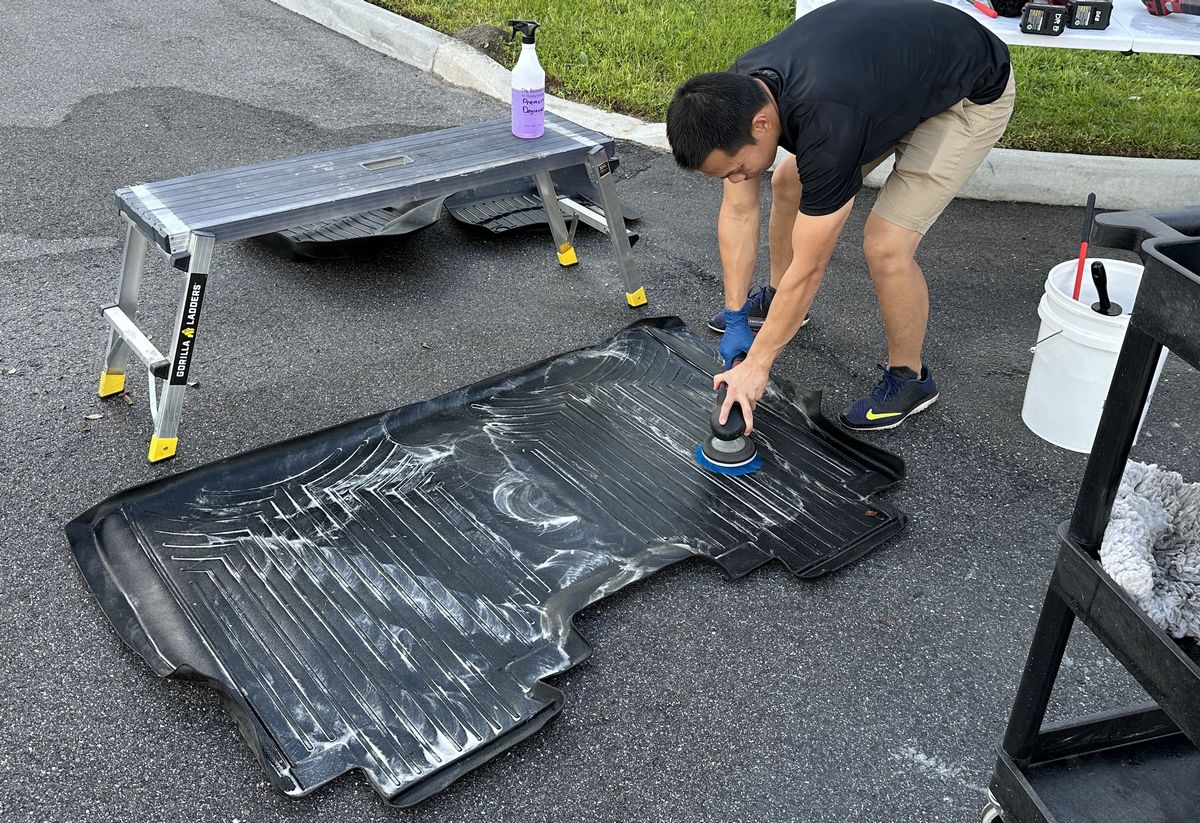
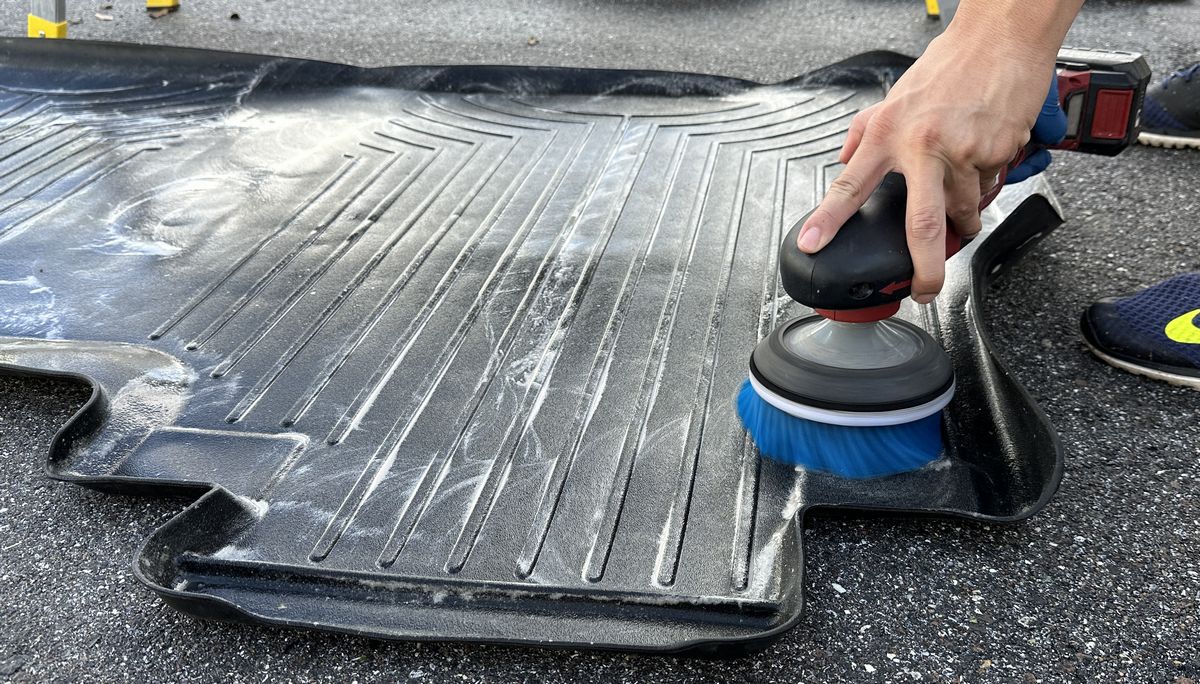
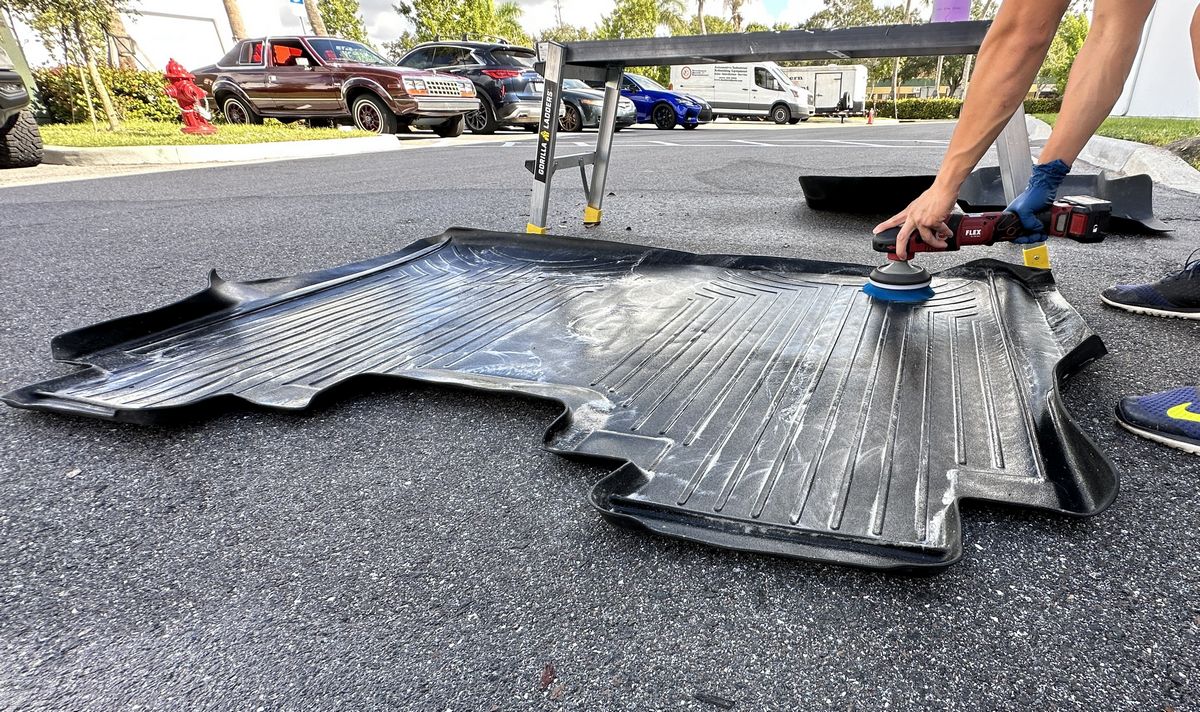
If you have work tables or even a couple of work platforms, these work great to get the mats off the ground to make cleaning them easier. In all our classes, we show machine scrubbing instead of hand scrubbing. Machine scrubbing does a better job and it's faster.

full


full


full


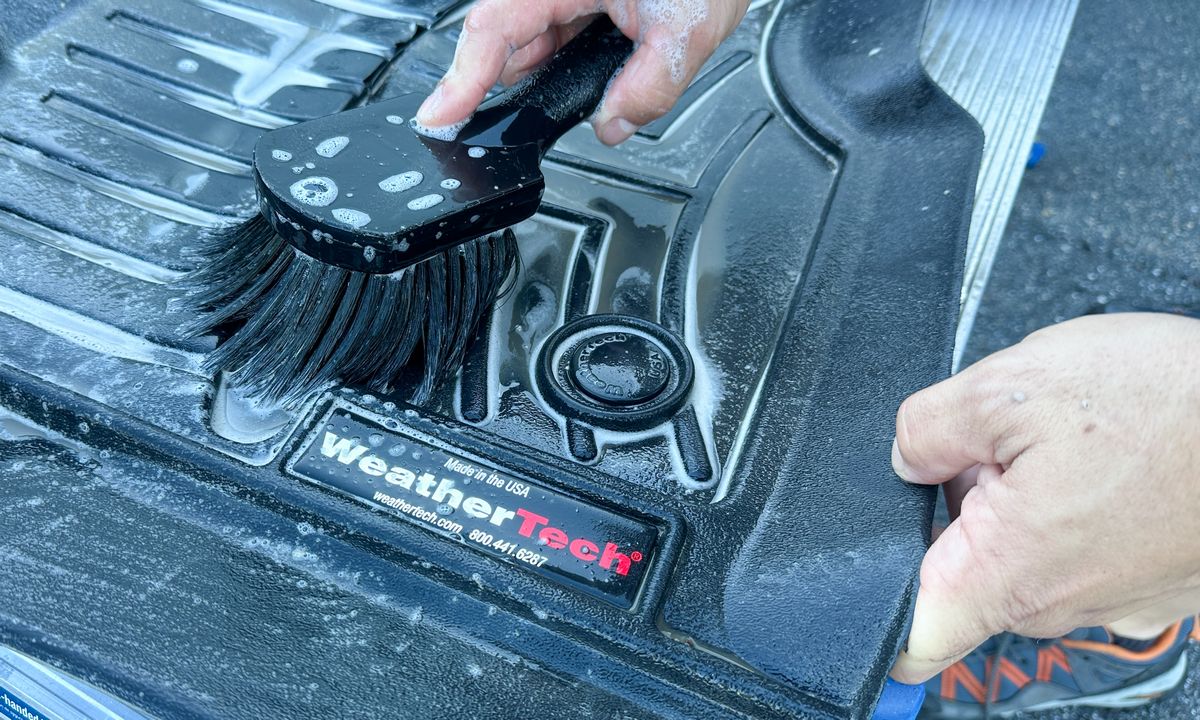
To clean these extremely soiled WeatherTech floor mats, we're using the Dr. Beasley's Premium Degreaser - for engine detailing and cleaning other excessively grimy areas and or components.

full


full


full


Someone borrowed one of the work platforms to reach the windshield, so Andy uses the ground table.

full


full


full


full


full


Clean wheels, tires and wheel wells
Most of our lives, anyone recognized as an authority in car care, when it comes to washing a vehicle, they will say,

Start at the top and work you’re way down.

Wrong. Anyone that’s washed and detailed more than a handful of cars in their lives understands that the order in which you wash the vehicle or the wheels and tires on the vehicle is relative, by this I mean, the car doesn’t care which area you wash and dry first and it makes no difference when it comes to the order EXCEPT as it related to avoiding water spots.

Water Spots in my opinion and experience are one of the worst types of defects to have to remove be they on glass, plastic, chrome or on or especially in paint. (There are 4 types of water spots and the type that are actual etchings IN the paint in most cases mean compounding the paint in order to remove them completely).

Here’s why a professional with experience will start with the wheels and tires first. It’s to avoid water spots on or in the paint. Let me explain.

It takes approximately 15 minutes to properly clean and rinse one wheel and tire. If you multiply this by 4 wheels and tires on a normal vehicles, this adds up to 1 hour to clean all 4 wheels and tires.

Now follow me,

If you wash the vehicle using the age-old advice of starting at the top and working your way down, after you have washed and rinsed the entire vehicle it will have standing water on it and drying, while you sit your but down in front of each wheel and tire to clean them for the next hour.

During this time, depending upon the ambient heat, sunlight heat, wind patterns and humidity, the standing water will be actively drying. Most water, be it city water or well water, is contaminated. Some water is so contaminated that as the water evaporates off the surface, the contaminants in the water make the water more and more corrosive. Then as this corrosive liquid is on the surface it can and does etch or eat into the clearcoat paint leaving a mark.

Light water marks might be able to be wash or wiped off, such as mineral deposits from hard water. But more severe water marks become imprint rings or crater etchings and this is where a portion of the clearcoat has been physically eaten away leaving these types of defects in the paint.

Like I said before, as a person that has been hired to do the paint correction to cars with imprint rings or crater etchings, these require machine polishing at a minimum and machine compounding in worst case scenarios to fully remove.


What about drying the car after washing and rinsing so there’s no standing water to cause water spots and then clean the wheels and tires?

This is a good and common question by people set on washing the car first but here are the issues with this approach. If you start with wheels and tires first, the ground where you will be sitting will be dry. Nuff said.

If you start with washing, rinsing and drying the vehicle first and then washing and rinsing the wheels, invariably you will get rinse water splatter on nearby panels thus causing you to waste time, energy and steps re-rinsing and re-drying these areas. You think it won’t happen because you’ll be careful but trust me, you’re going to end-up repeating steps.

Again – the order in which you wash the vehicle’s body panels versus the wheels and tires is relative, it just doesn’t matter to the car. It’s all about working smarter instead of harder.


Bonus reason
There’s another good reason to wash the wheels and tires first and then wash the car starting at the top and working your way down, and this is the cause and effect of gravity.

When you do a thorough job of washing wheels, this includes using products specifically formulated to remove brake dust and oily traffic film. After scrubbing the wheels and tires with brushes, next you rinse and at some point gather your supplies and move onto the next wheel and tire. While you’re cleaning the other wheels and tires, gravity take over and any loosened brake dust and traffic film plus the wheel and tire cleaners, will flow downward and pool in lower areas, often times behind the face of the wheel spokes, in the barrel and around the brakes. By washing the wheels and tires first, you’ll have multiple chances to blast the wheels and tires again as you wash the vehicle from the top down thus more thoroughly flushing these substances completely off the wheels and tires. Genius.


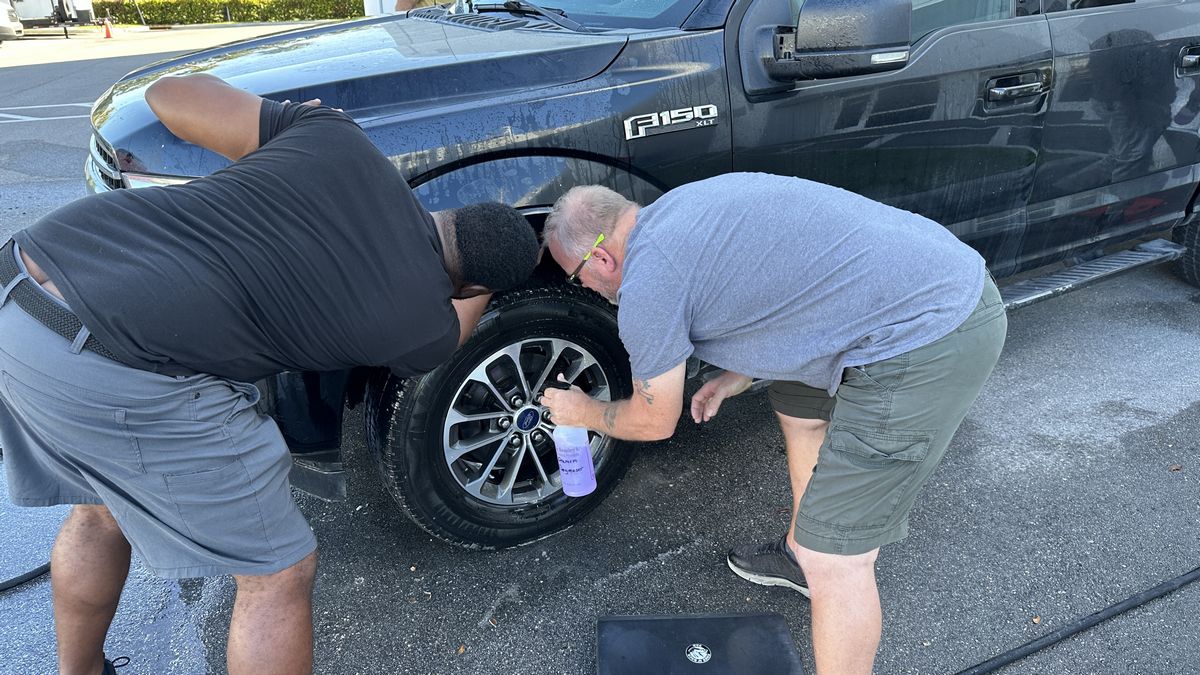
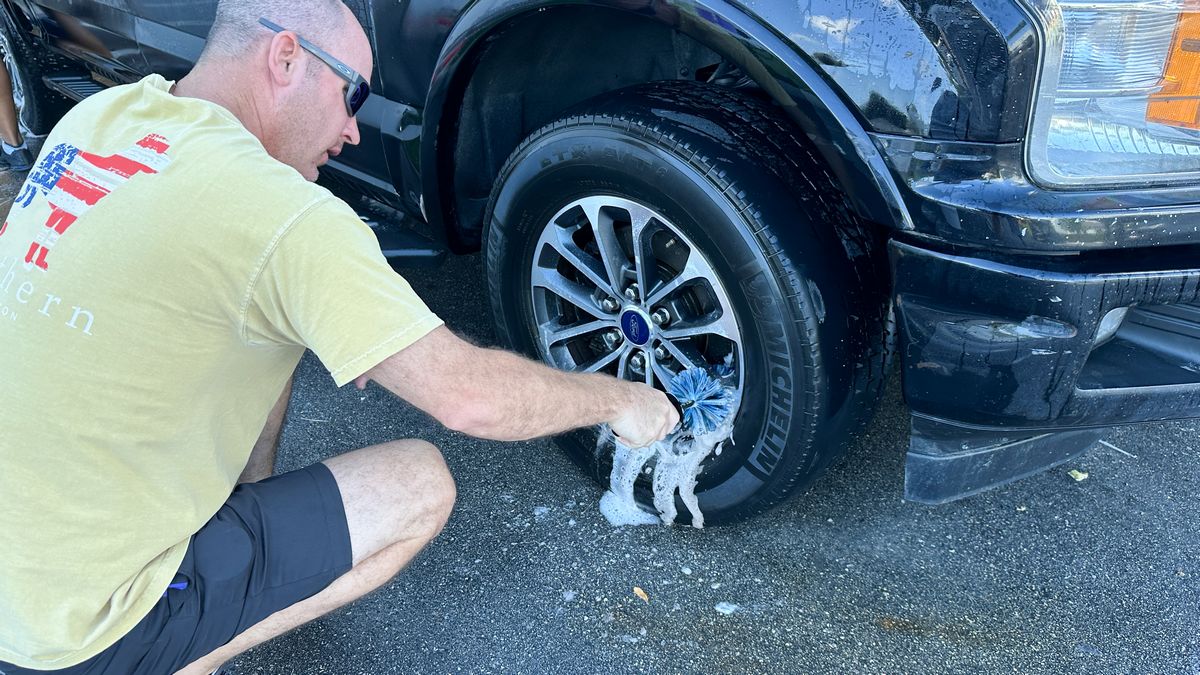
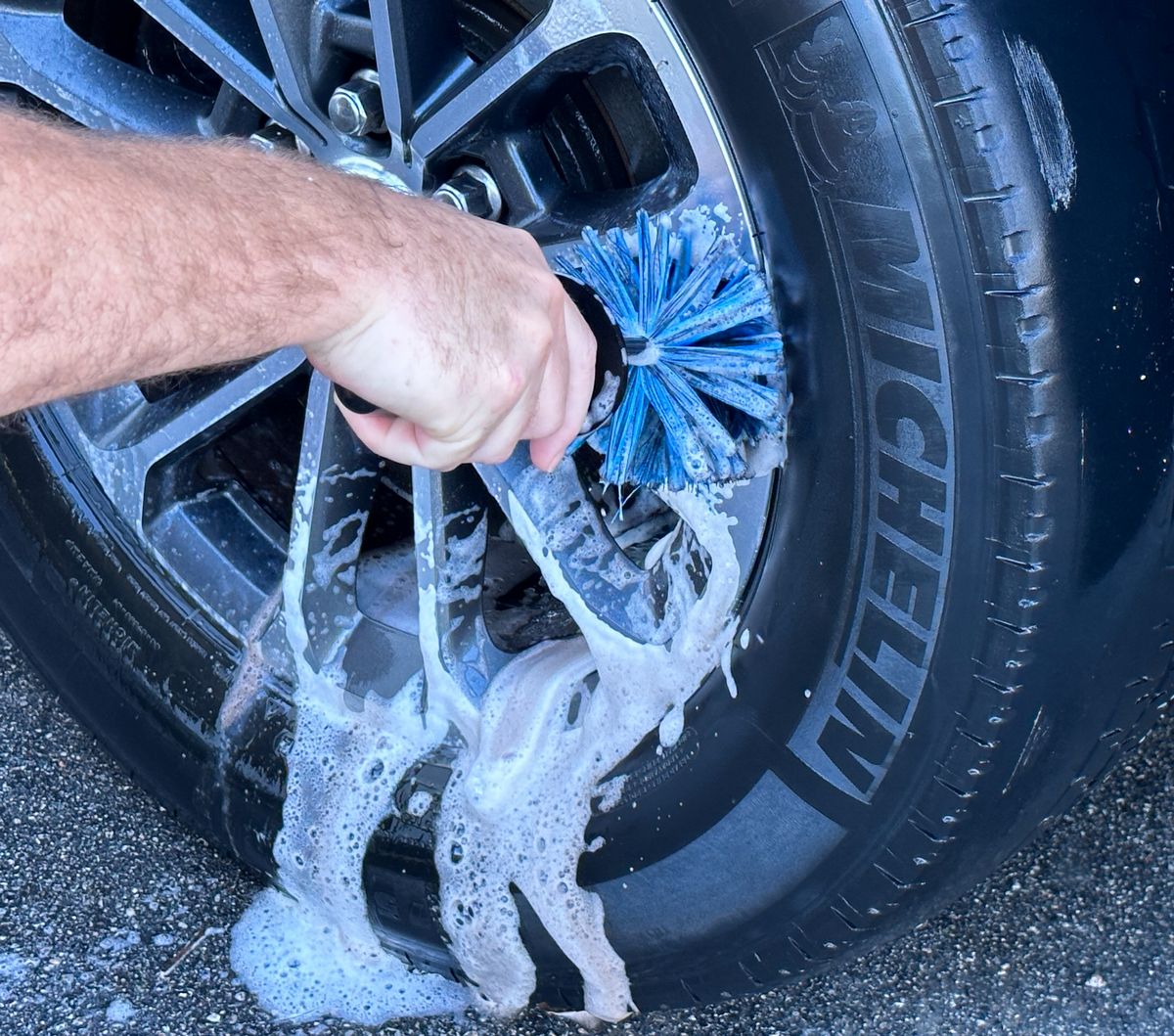
Here's Daniel using Dr. Beasley's Intensive Brake Dust Remover on the front wheels. Normally the front wheels will have a higher concentration of brake dust and traffic film, so the Dr. Beasley's Intensive Brake Dust Remover is a great choice.

full


If the front and back wheels are not to bad, then Dr. Beasley's Premium Wheel Cleanser will easily tackle the job.

full


full


Machine scrubbing tires
Once you machine scrub tires you'll never want to go back to hand scrubbing.

Here's Jhonathan machine scrubbing tires using the cordless FLEX PE-150 with Dr. Beasley's Premium Degreaser

full


full


full


full


full


full


full


full


full


Bennette Knee & Back Cushions
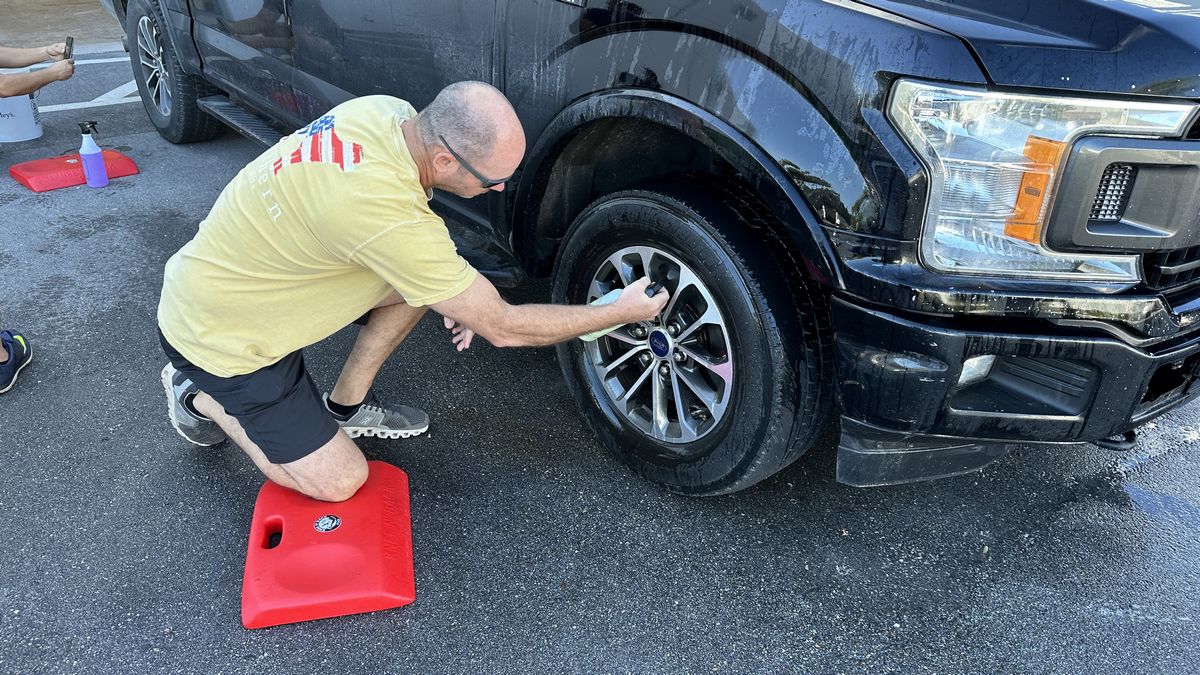
Considering if you're by yourself washing a car or truck, you're going to spend around 15 minutes minimum cleaning one wheel, tire and wheel well. Multiplied by 4 whees and tires equals 1 hour. It's a tick on the spendy side, but the Bennette Knee & Back Cushion provides plenty of cushion to sit on or kneel on plus it will keep your pants dry when the ground all around you is wet. The only place I know to get one of these is on Amazon - Bennette Design Group Knee and Back Cushions

full


full


full


Machine scrub any plastic cladding
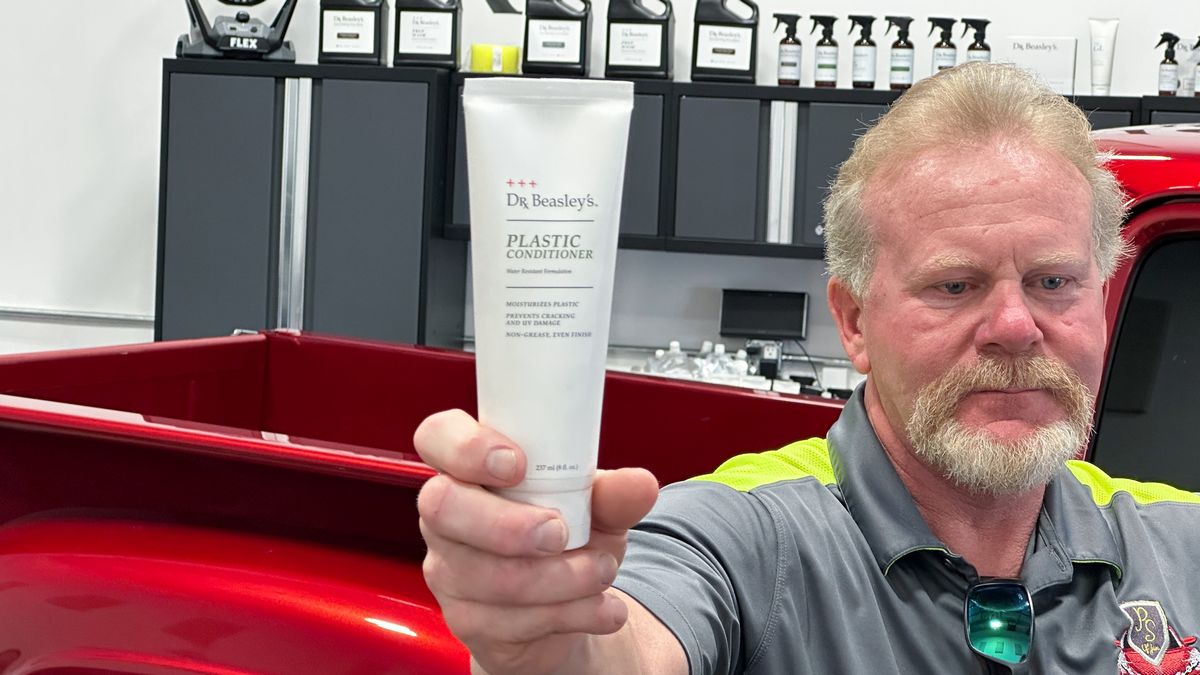
Lots of modern cars, trucks, vans and SUVs have plastic cladding on the exterior. This plastic oxidizes and fades over time. Dr. Beasley's has both a
Plastic Conditioner and a Plastic Trim Coating Kit that you can use to restore and protect plastic cladding and other types of plastic trim. The key is getting this material super clean and the best way is to machine scrub with Dr. Beasley's Premium Degreaser during the Extreme Prep Wash.

full


full


full


full


full


full


Topical Glass Polishing
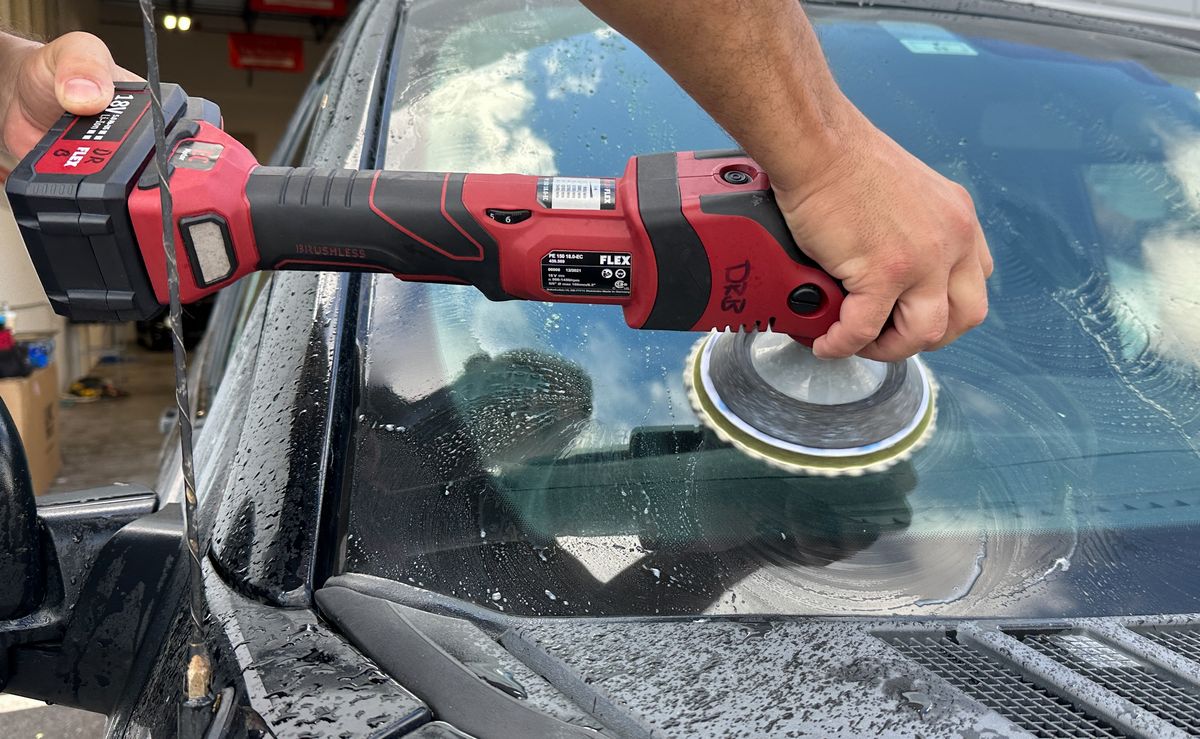
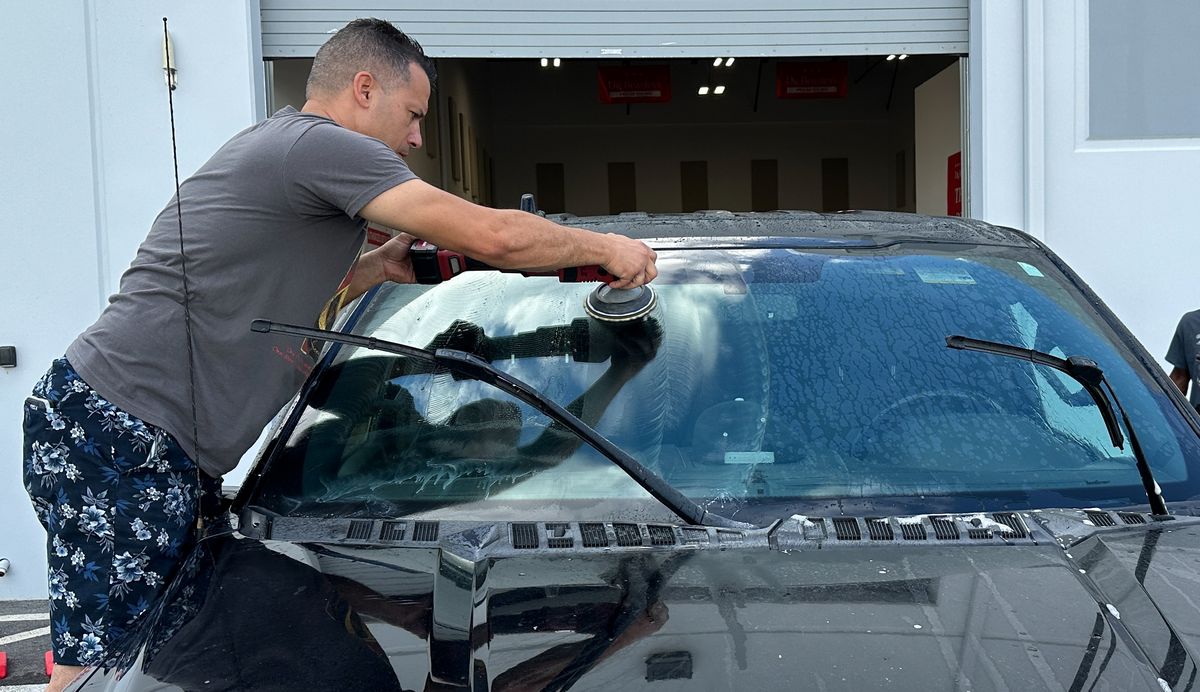
There are 2 types of glass polishing, topical and sub-surface glass polishing, and both are messy. The good news is the different products used to do both types while messy, will easily wash off when you wash the vehicle. If you do either type of glass polishing AFTER you wash and dry the car – now you get to re-clean all the major body panels a second time and thus you’re wasting time, energy and steps. Work smarter instead of harder and do any glass polishing before you wash the vehicle.

full


full


full


full


full


full


full


full


full


full


full


full


full


Now see the difference?
The water reacts very differently on the glass that has been machine polished.

full


full


full


And of course, after showing this visual way showing the water characteristics on the polished and unpolished sides of the windshield, we did go ahead and polish the glass on the passenger side. Here's Jhonathan taking on the job.

full


full


full


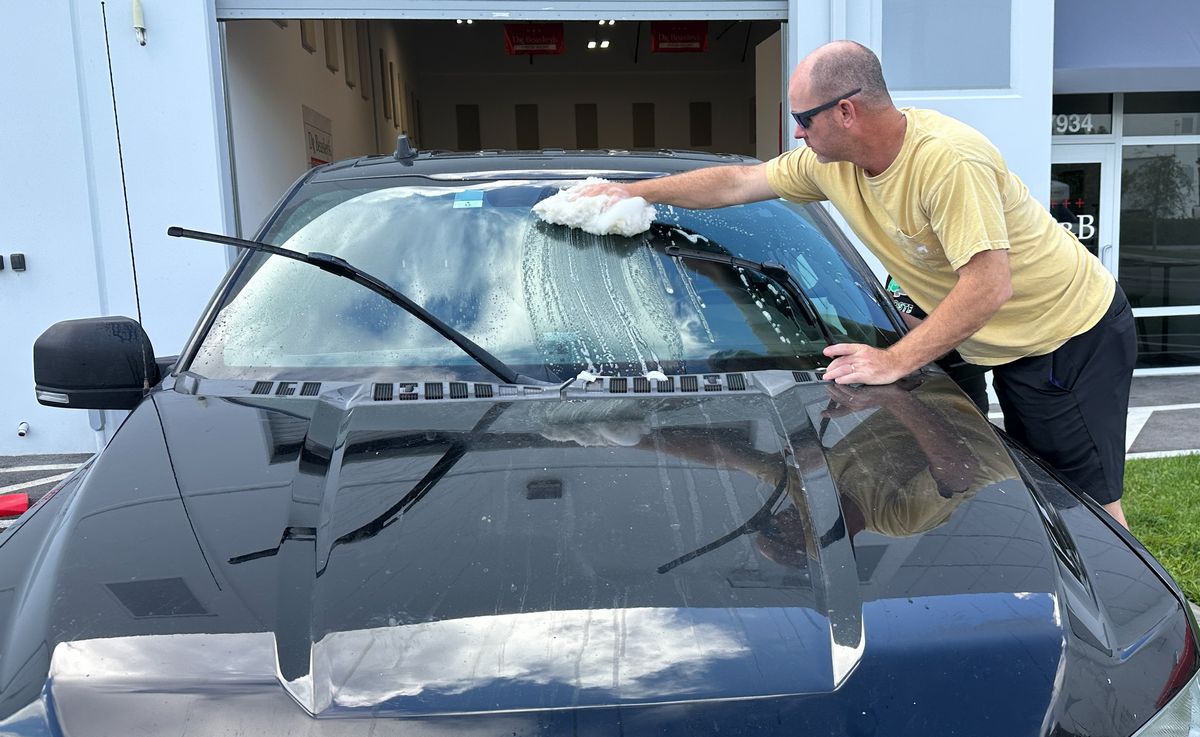
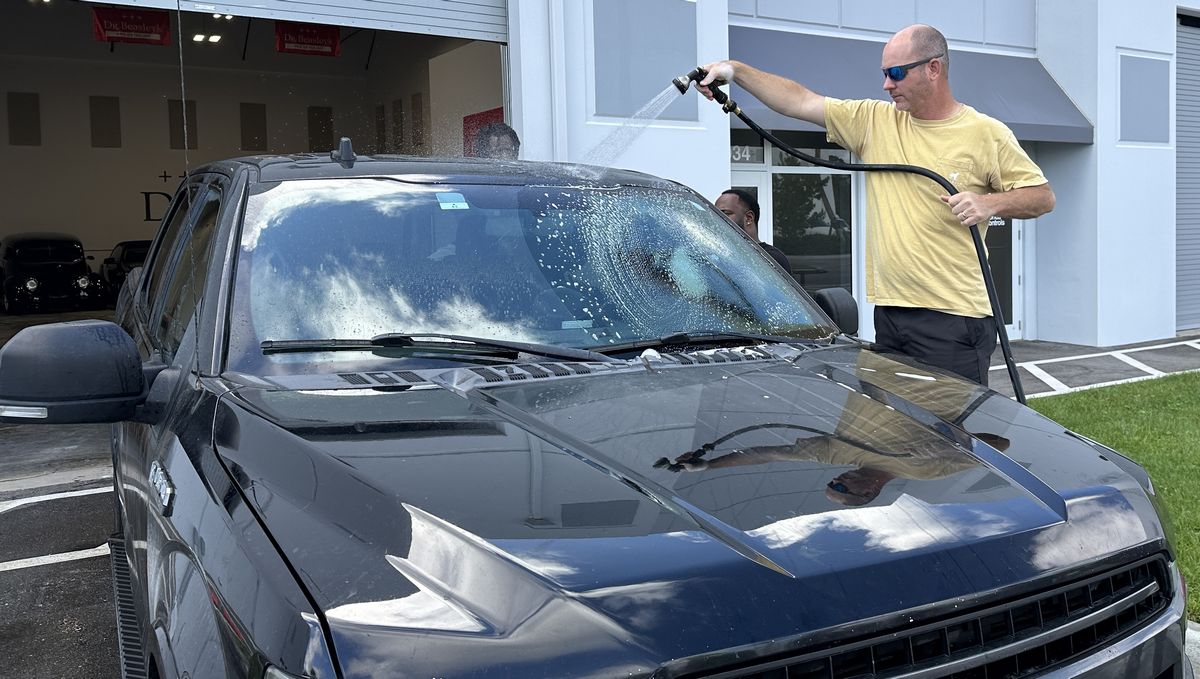
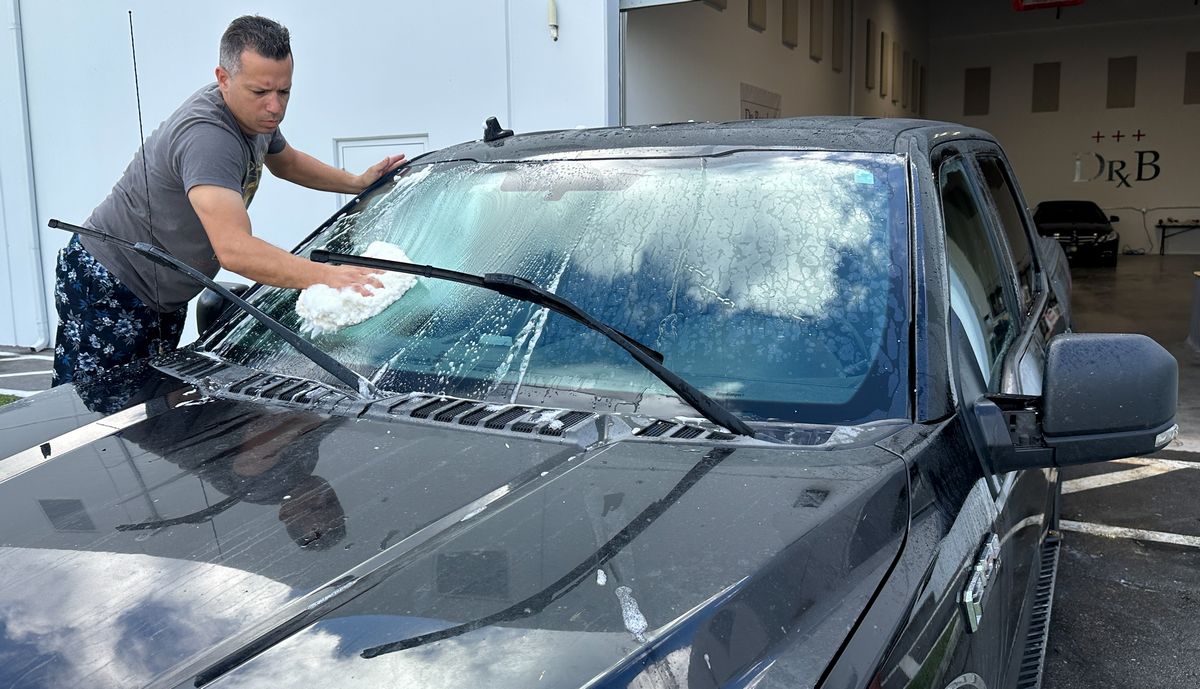
After machine topical glass polishing - then simply wash the windshield to was away any glass polishing residue. This saves you time, steps, energy, towels, etc., by doing this during the wet work versus washing and drying the vehicle and then polishing the glass and then having to remove the residue. Another example of working smarter instead of harder. This is actually a part of the next step - Full Body Wash.

full


Full body wash
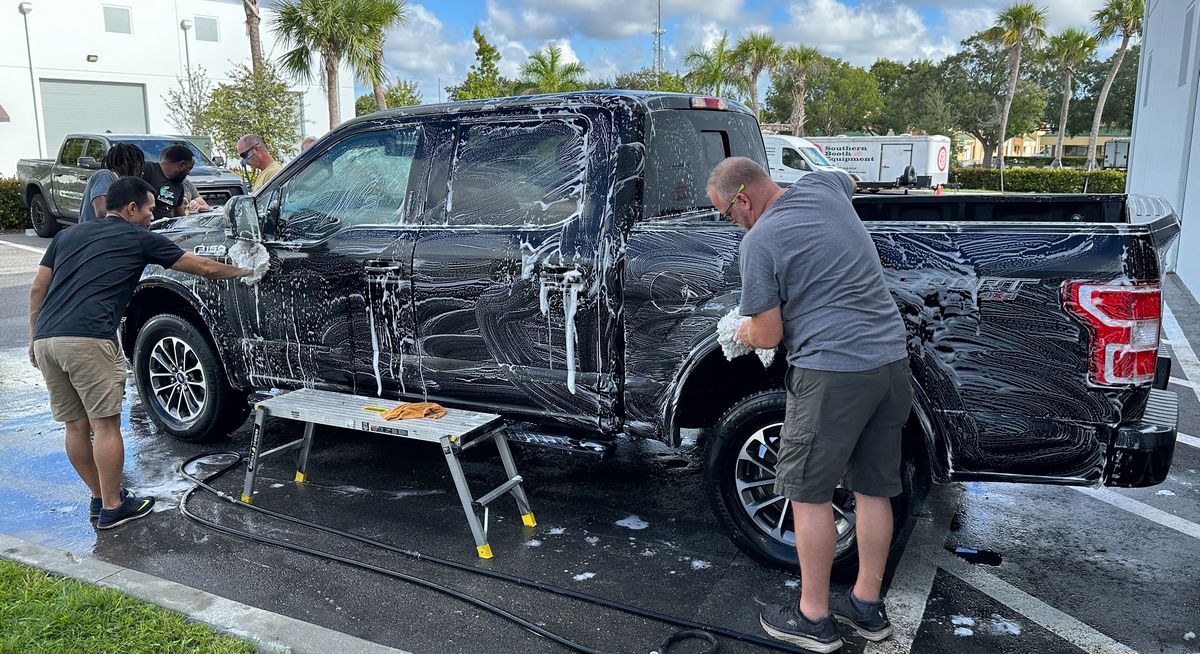
After wheels and tires, cleaning any plastic cladding, doing topical glass polishing, now it's time to wash the entire vehicle starting at the top and working your way down and around the vehicle.

full


full


Washing door, hood, trunk and hatchback jambs
Some people like to wash and clean all the jambs during the Extreme Prep Wash process. This too will save you time, steps, products and towels. The key is to be careful not to introduce water into the interior of the vehicle when rinsing these areas. The other option is to clean and dry these areas after washing and the final rinse. For this class session, we're going over washing jambs as a part of the wet work.

full


full


full


full


full


full


full


full


full


full


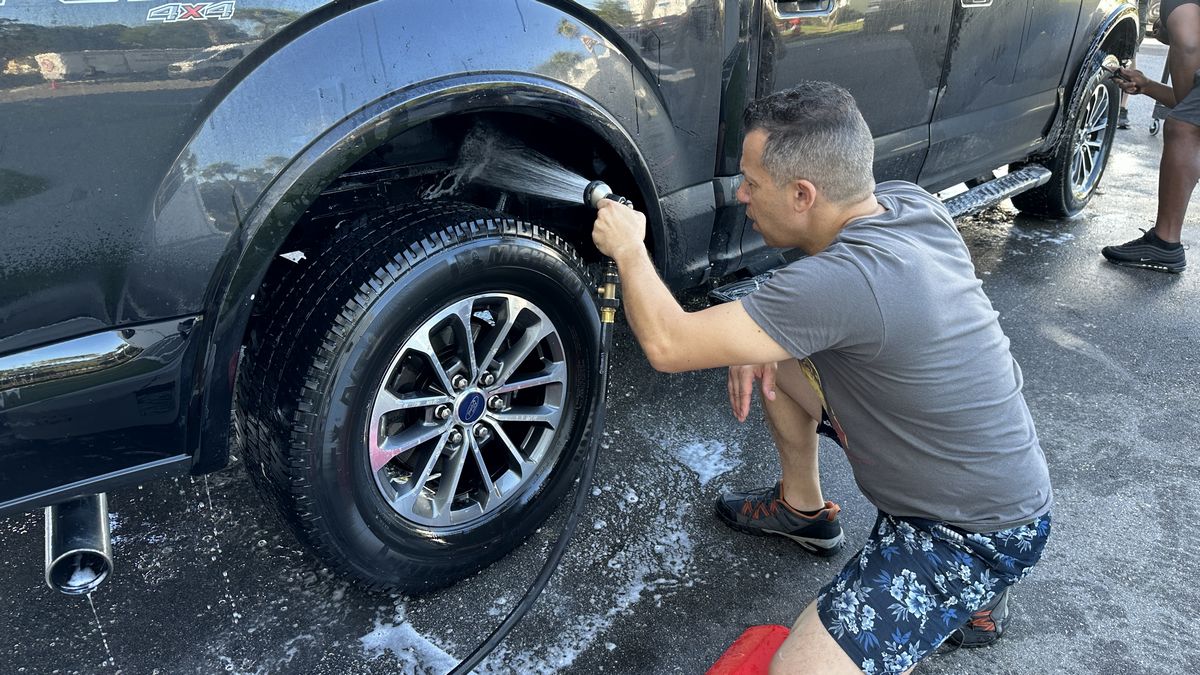
Here's Daniel carefully rinsing all the car wash soap and all the dirt that's been loosened off the jambs.

full


full


Be sure to wash and clean forgotten areas - This is on the SV Test for the IDA.

full


full


Mechanical Decontamination
When it comes to doing a prep wash, the vehicle in question is normally neglected and as such will have some form of contamination that is bonded to the paint and glass that will not wash off during the washing process. As an option, once the car is washed and fully and thoroughly rinsed, you can use a clay bar or a clay bar substitute like a clay towel or clay mitt, to remove the decontamination while the car is wet. This saves you 2 steps and is the technique I use and recommend to most people.

IMPORTANT - You must thoroughly rinse the vehicle after washing and before using any type of clay product on the paint. The reason why is so you don't grind loosened dirt into the paint with your clay tool.

Here's Godfrey using a clay mitt on the roof of the Ford F150 Pickup Truck

full


Here's Derick claying the hood...

full


full


David lends a hand...

full


So does Meko...

full


Even Russel gets into action!

full


Here's Meko and Godfrey mechanically decontaminating the tailgate.

full


After the mechanical decontamination step, give the vehicle one last final rinse. When done correctly, thoroughly and in the correct order you get the vehicle surgically clean, perfect for all the next steps in the shortest amount of time.


:)
 
Last edited:
More...

Saturday mid-morning session - One-step paint correction using a Ceramic AIO or All-in-One

Now that this truck is surgically clean, the class will now use the same process used for the 1979 Ford Stepside Shorty and also the 1982 AMC Eagle. This will reinforce the value in using a great AIO for daily drivers as well as get the paint on this truck ready for the Dr. Color Chip Rock Chip Repair System. On Friday morning the class learned all about the Dr. Color Chip system and had a chance to test the system out before polishing the paint on this truck. In the real world, you do all the paint correction FIRST and then do the rock chip touch-up repair work.

For this process, the class is using the Dr. Beasley’s NSP Z1 with thier choice of orbital polishers and the Dr. Beasley’s HDO Blue Cutting Pad.

Gelling
By this time, the class has now detailed 4 cars, this is Number #5 - and they class is really starting to gel. By this I mean, they are now working as a solidfied team.

full


Here's Godfrey using my personal RUPES Mark II BigFoot 21 - Serial Number 16
This polisher was given to me by RUPES at SEMA the year the Mark II polishers were introduced.

full


full


full


full


full


full


full


full


FLEX Red BEAST Inside
Here's Jhonathan using the FLEX RIB or Red BEAST Inside personally given to me by the President and CEO of FLEX Power Tools in Germany, Christian Neuner. This is #66 of #1000 tools produced to celebrate FLEX 100th Anniversary!

full


full


full


full


full


full


full


Machine Dressing Tires
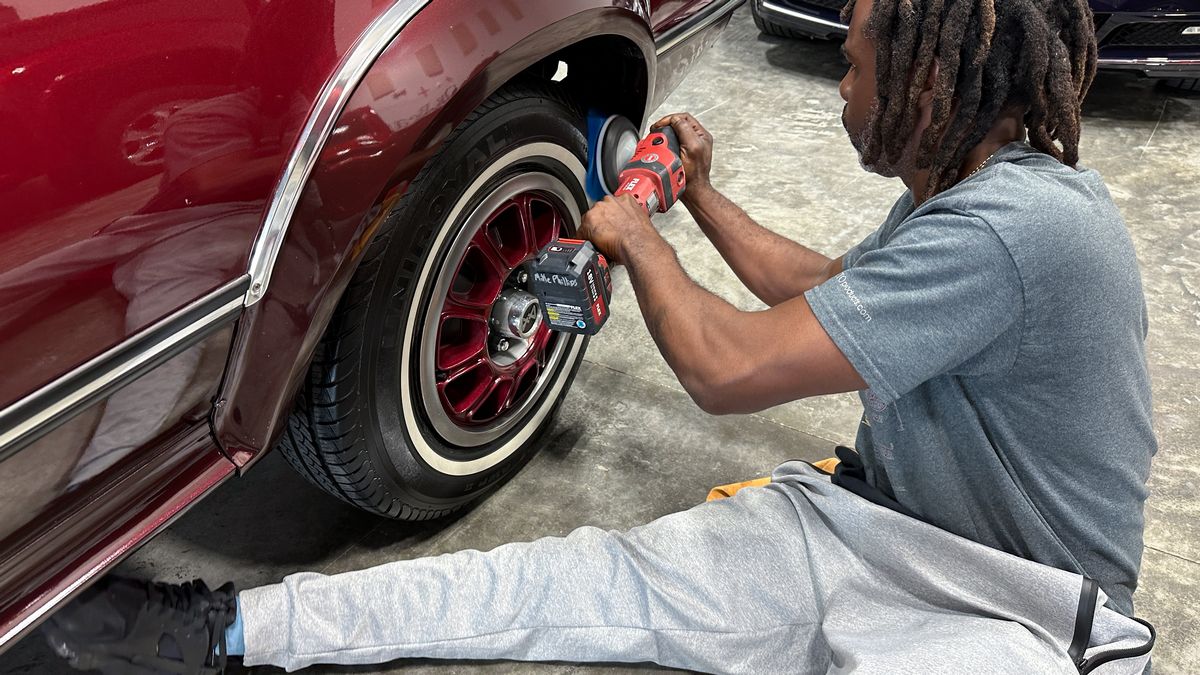
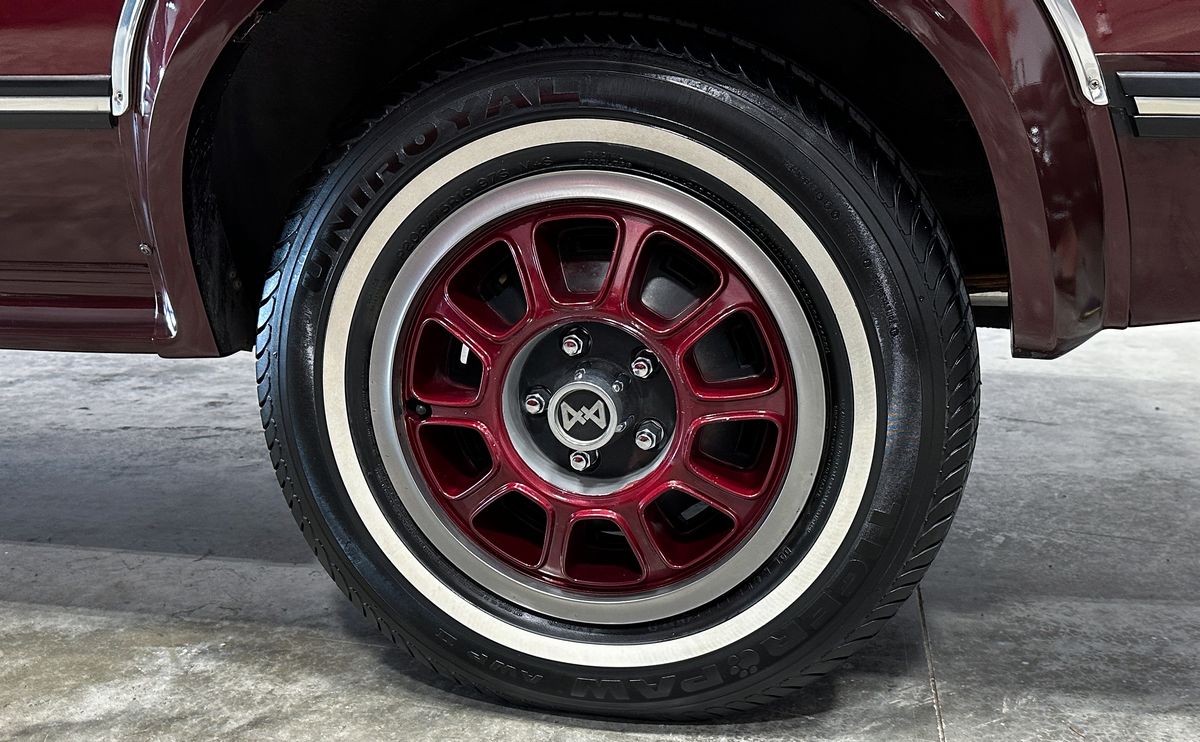
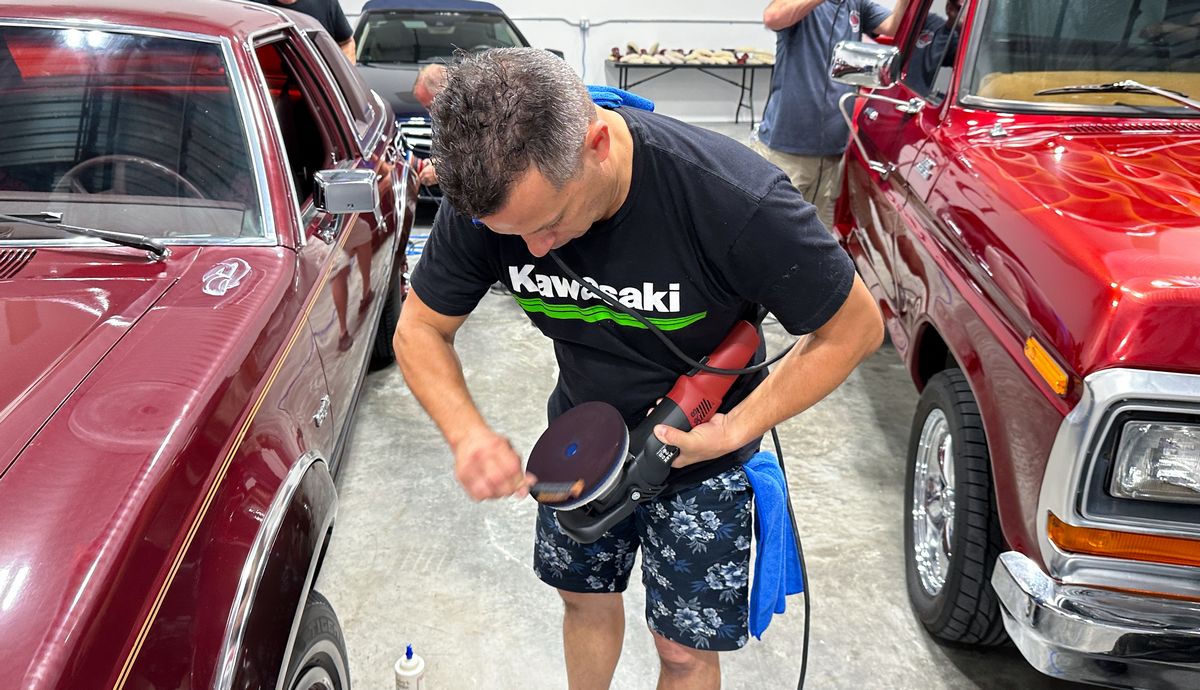
Here's something unique to our classes. Not only do we teach how to machine scrub tires - we also teach how to machine apply tire dressings. Simply put, the human hand with some form of applicator pad will never do as good as job as a 5" rotary brush on a FLEX cordless rotary polisher. The spinning bristles excel at massaging the dressing into the tire sidewall as well as any intricate lettering and siping. Siping are the likes you often find as a part of the design of a tire sidewall and they are difficult to get tire dressing into and out of. But not when you work by machine.
full


full


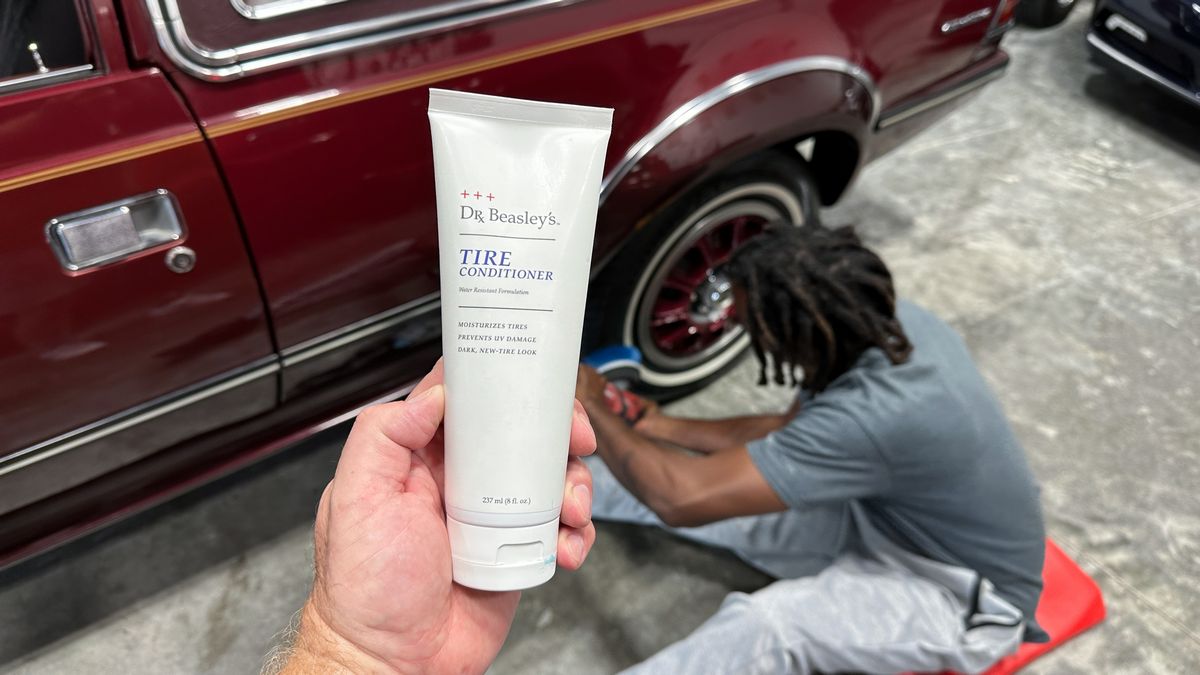
To dress these large tires, Jhonathan is using the Dr. Beasley's Tire Conditioner

full


full


full


full


full


full


Dressing the Engine & Engine Compartment

Remember the before pictures? Pretty ugly...

full


full


full


To restore a factory fresh appearance after a very thorough engine and engine compartment cleaning and scrubbing, the class applies the Plastic Conditioner


full


full


full


full


full


Here's the final results!
Not to shabby for a 6 year-old truck that's driven hard. And keep in mind, this was the first time for most of the class to do a proper Wet Wash Engine Detail.

full


full


Here's the final results...

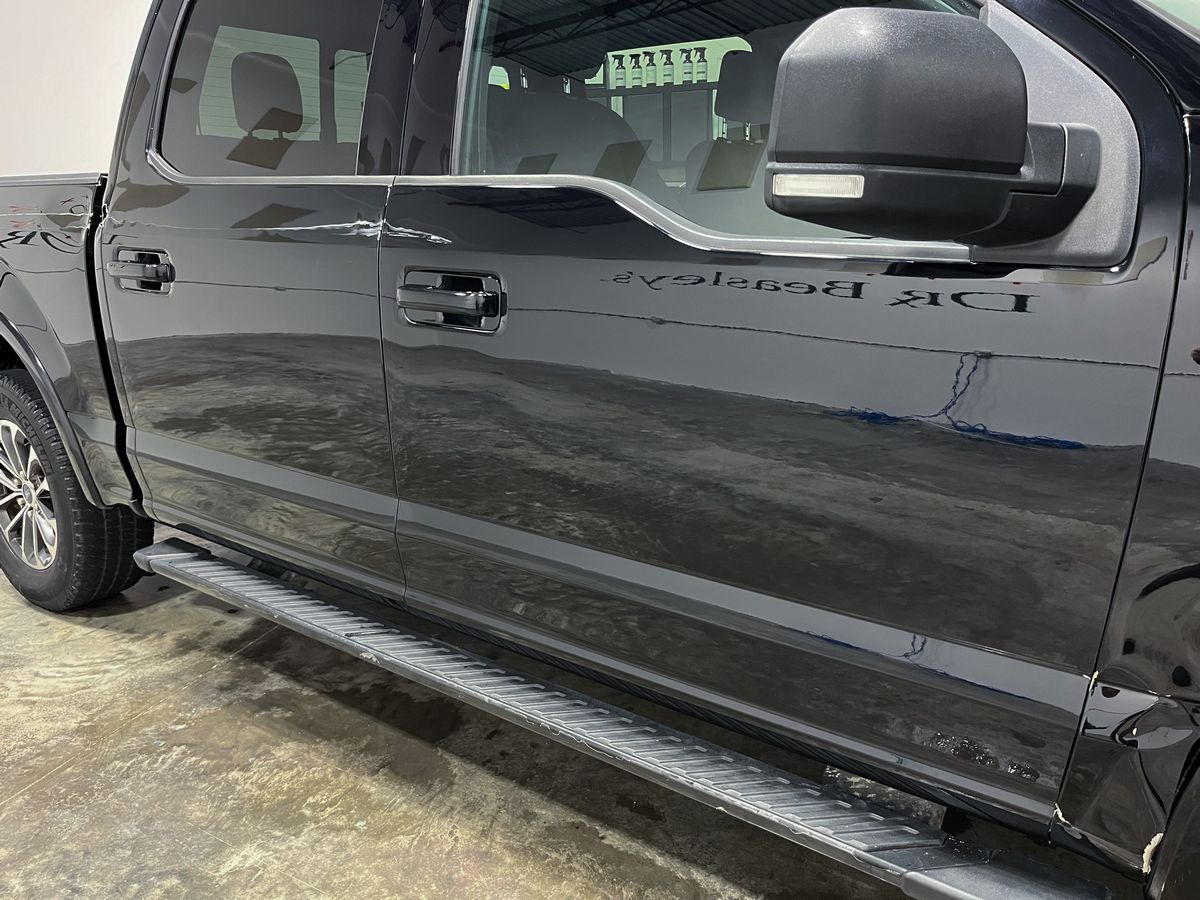
Apologies, I forgot to take the "after" shots for this truck, but Jhonathan sent me the below two pictures while the truck was still inside.

full


full


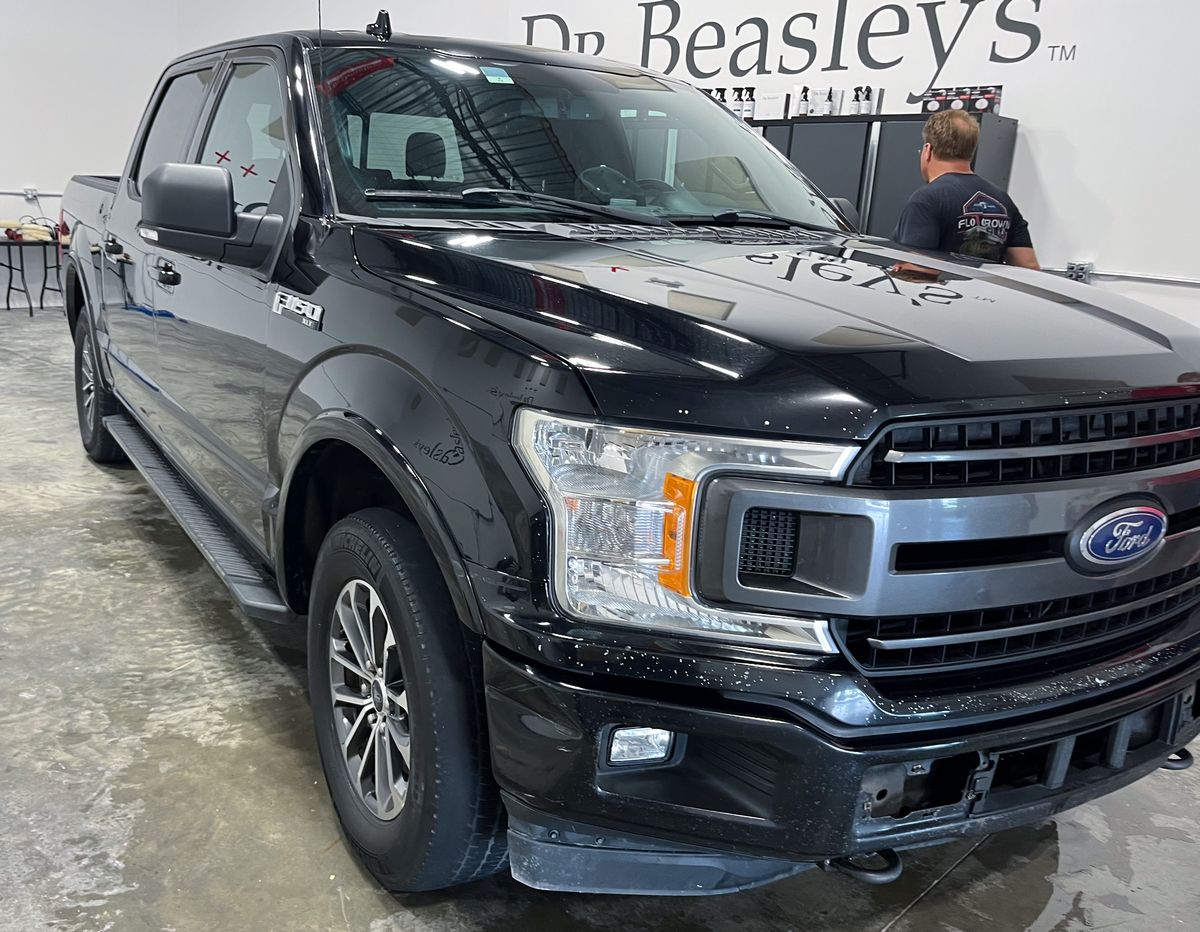
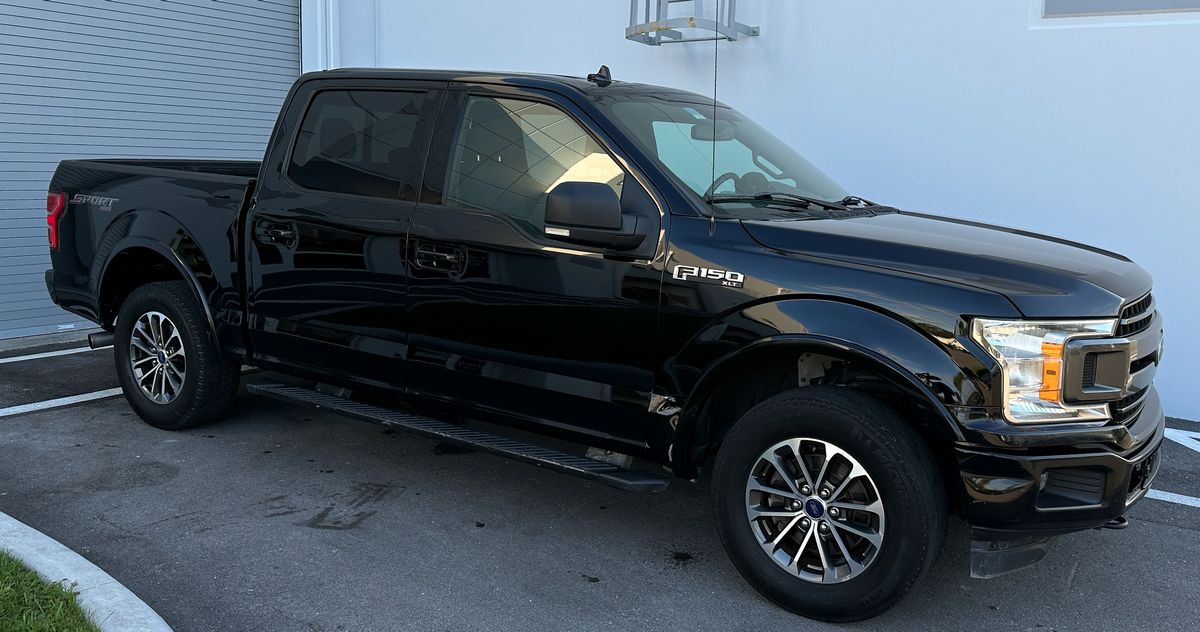
I did snag this photo after moving the truck outside. In this photo, the rock chips at the front of the truck have all been touched-up using the Dr. Color Chip Rock Chip Repair System.

full


And a short walk-around video by Jhonathan


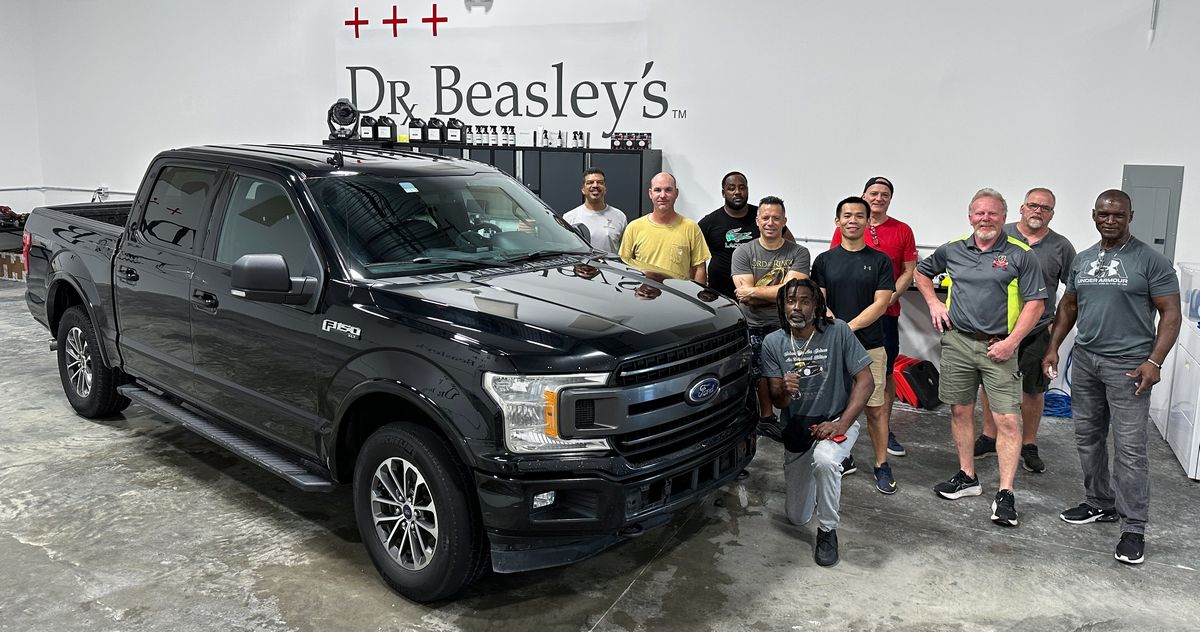
And here's the team that made the magic happen!

full


:)
 
Last edited:
More...

Saturday Afternoon Session - Hand & Machine Dry Sanding

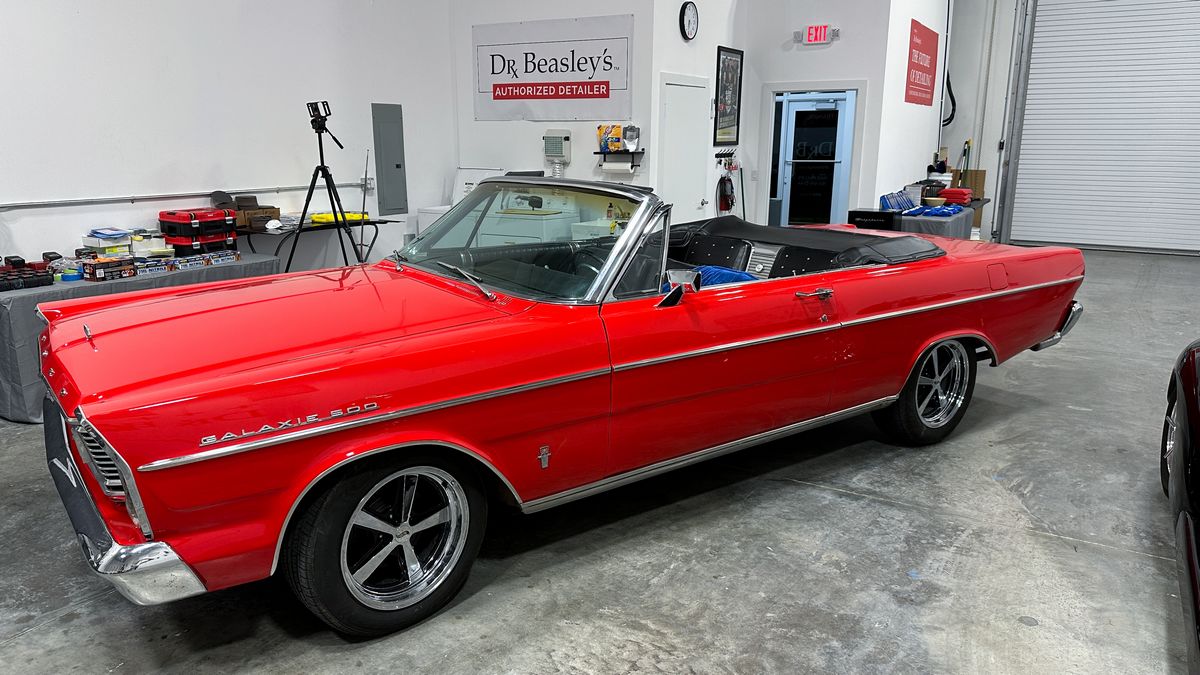
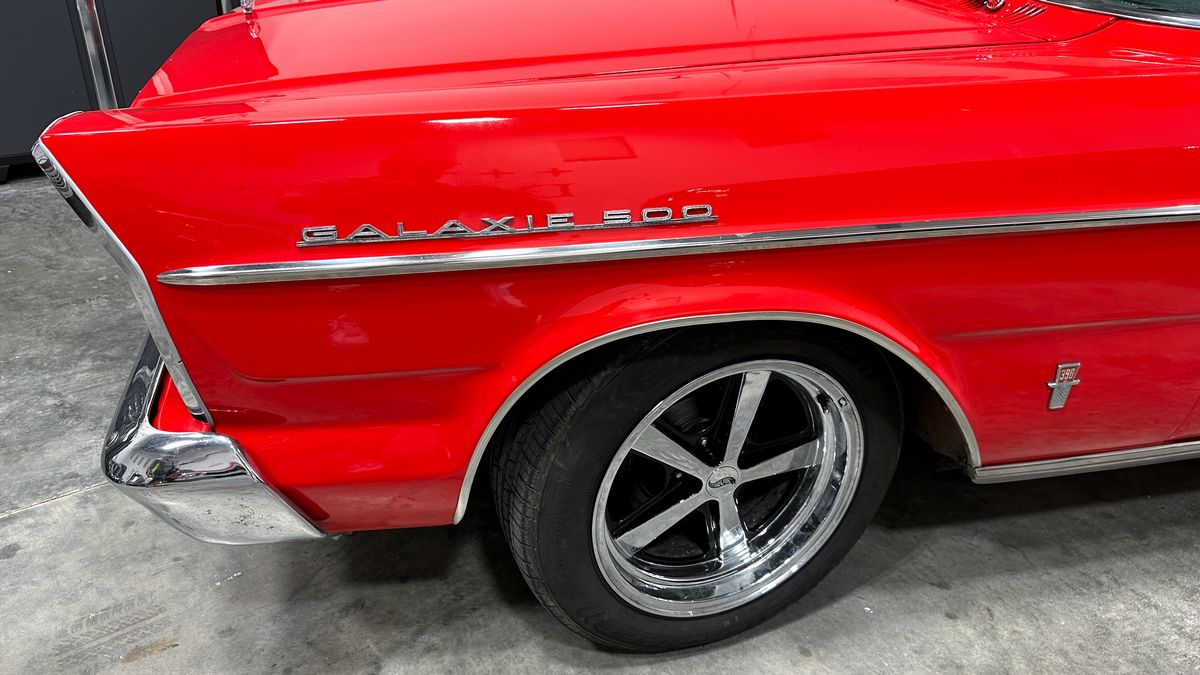
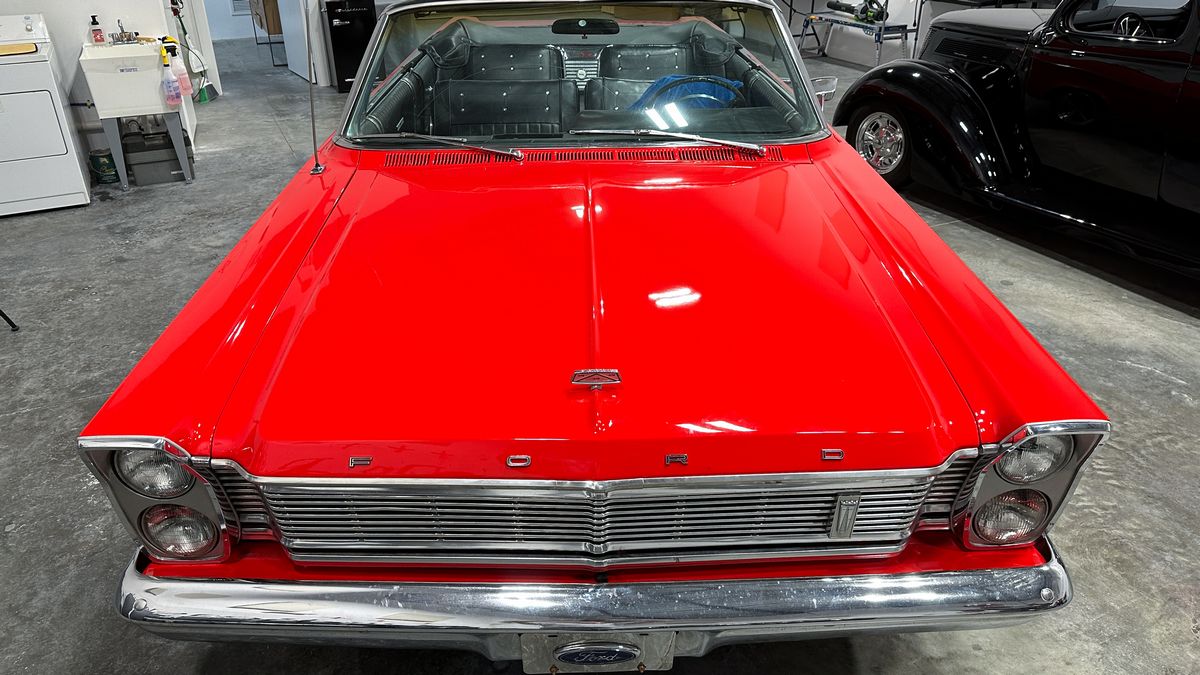
Now this is a very special are rare opportunity - the chance to remove the orange peel and create a swirl-free, show car finish on the custom paint job on this 1965 Ford Galaxie 500 Convertible.

full


full


Real cars - No demo hoods in our classes
At the majority of other classes on the market, IF they offer sanding in any of their classes, in most cases you will train on a demo hood or fender resting on a body shop fender stand or X-stand. The problem with this type of training is it's so easy that you simply don't learn much and there's definitely no IMPACT. When you train on a real car and the actual type of car that really gets a CUSTOM paint job and thus has real-world orange peel, dirt nibs, runs, sags and other surface texture - all of a sudden, the rubber meets the road. This is some other person's streetrod, not a lame demo hood. YOU have to be thinking. You have to be focusing on the task at hand. You have to be aware of edges and raised body lines as well as fresh air grills, antennas, door hands, chrome trim, emblems, etc.

For this training session, the class will use the best dry sanding brand on the market today, the Eagle Abrasives by KOVAX dry sanding system. After sanding the car down to remove the orange peel, the class will revisit and the rotary polisher they learned how to use on the 1937 Ford 2-Door Sedan Streetrod, plus revisit the techniques they learned using orbital polishers. The class will be using the Dr. Beasley's NSP Primers and Ceramic Coatings to complete this project.


What is Orange Peel?
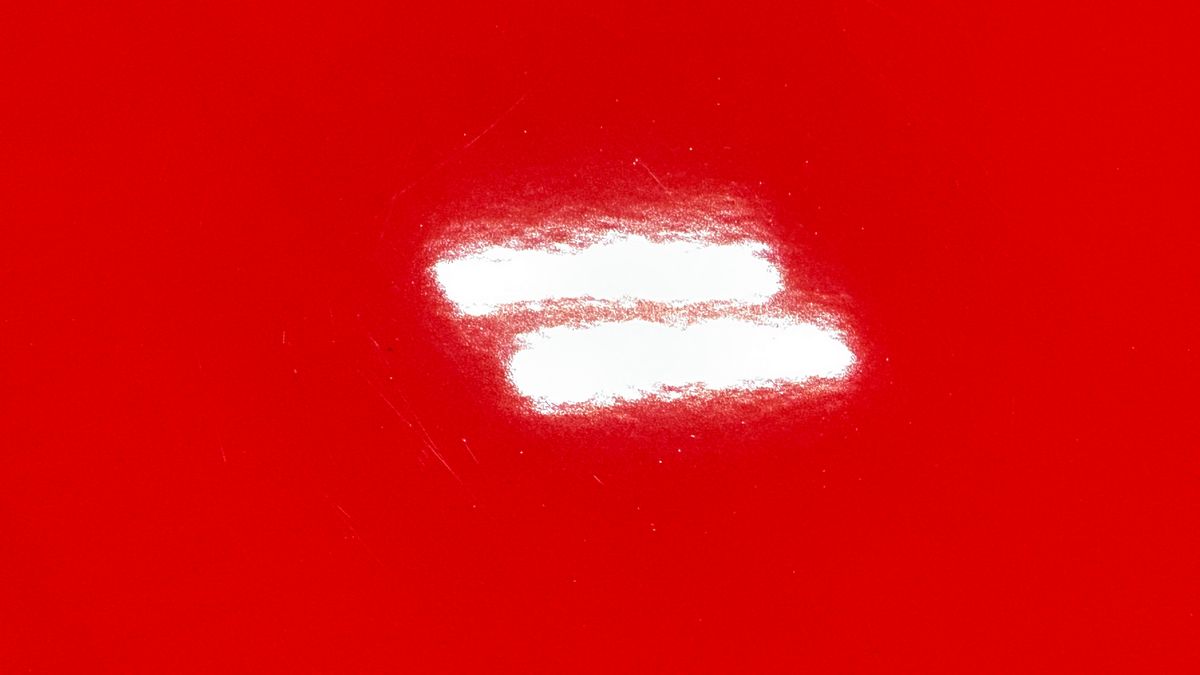
In the context of a custom paint job, the term orange peel refers to the way the surface of the paint, the topcoat looks after the paint is sprayed and dried. The surface of the paint resembles the surface of an orange - that is it has a bumpy, pebble like surface texture.

What's wrong with Orange Peel?
The problem with orange peel, in the context of a custom paint job is that normally anyone investing the quantity of money required to restore or hotrod a car, usually a classic car, muscle car, vintage car, exotic car, etc., these owners are looking for a show car finish, not a bumpy, lumpy, paint job with orange peel.

D.O.I.
The acronym D.O.I. stands for Distinction of Image. In the custom car world, builders, painters and most importantly - the owners, are looking for and hoping for a show car finish also called a MIRROR FINISH. Maybe you've heard someone comment about how certain car has a mirror finish. A mirror has a D.O.I. of 100% - this means it perfectly reflects and image with zero distortion. To create a mirror finish you must maximize the D.O.I. and in the context of custom paint jobs, this is done by making the paint surface as FLAT as possible. The flatter the surface, the higher the D.O.I. The way you make custom paint flat is via the sanding process.

Lots of options
When it comes to sanding paint, there are lots of options. In our classes we keep it real-world. By this I mean, the tools and techniques we teach are affordable and easily learned and mastered with practice and patience. If a person really wants to go deep down the rabbit hole on how to sand paint flat, the best thing they can do is get a job at a body shop that is known for doing show car work. You'll likely start at the bottom pushing a broom, but if you stick with it and work hard, the shop will provide more and more training as they are always in need of skilled craftsman to continue on their business model. Plus sanding and buffing is really hard work and shops are always wanting to attract and keep qualified technicians.


The Eagle Abrasives by KOVAX Dry Sanding System
I used to teach hand wet sanding for years, actually decades, when I started working as a Trainer for Meguiar's back in the 1980s and then continued this format when I worked for the geek. Once I discovered the Eagle Abrasives by KOVAX dry sanding system a few years ago, I switched over to this system for my own work and adopted it for our classes.
Sanding sheets & sanding discs
What's nice about the Eagle system is they make a wide spectrum of sanding tools including pre-cut sanding sheets for hand sanding and also circular sanding discs for machine sanding.

In a perfect world, you start out hard blocking the paint to get it absolutely flat. After hard blocking you then soft block sand the finish to maintain this flatness while refining your sanding marks. After the soft block step, some shops will start the buffing process. In my experience, this is the best approach when you're truly looking for the maximum D.O.I. for a true show car finish. That said, hand sanding brings with it an unwanted, deeper sanding scratch referred to as tracers. Tracers are almost impossible to avoid 100% and make the buffing process take longer and even make it more risky as a technical will tend to buff harder to remove tracers and sometimes this can lead to burn-through.

Machine sanding
Machine sanding also has a drawback called, pigtails. Pigtails are s squiggly circular scratch that looks like a curly pig tail. Like tracers, these are annoying to remove and cause the buffing process to take longer in order to remove them 100%. In my experience and my opinion, you're less likely to leave pigtails in than tracers. And also in my experience and my opinion, removing 100% of machine sanding marks is faster, easier and safer than removing 100% of hand sanding marks.

Well rounded class
In our classes we teach both hand sanding followed by machine sanding so our students will learn both techniques. This will give them a foundation for which they can then build-on if they choose to pursue doing more and more sanding work in the custom paint industry.


full


full


full


full


Up next... hand dry sanding some other guy's streetrod!


:)
 
Last edited:
Back
Top